Budapest Itineraries: 1 to 7 Days of Perfect Planning
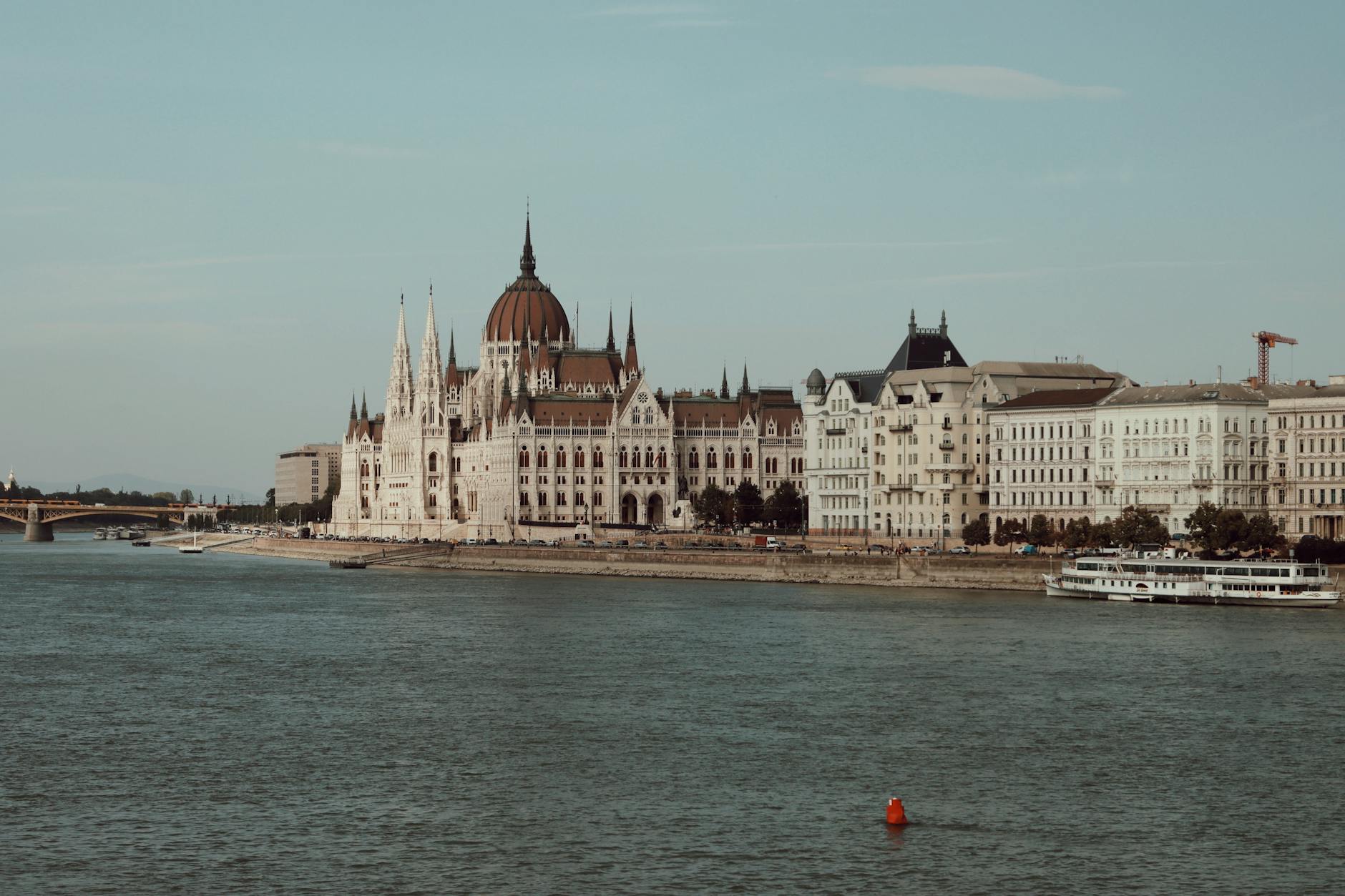
Planning the perfect Budapest itinerary can feel overwhelming when you consider just how much this magnificent city has to offer. From the medieval streets of Buda’s Castle District to the grand boulevards of Pest, from world-famous thermal baths to a vibrant ruin bar scene, Hungary’s capital packs centuries of history and culture into a city that straddles the Danube. Whether you have a single whirlwind day or a leisurely full week, this guide breaks down exactly what to see, when to see it, and how to make every hour count.
We have spent years exploring Budapest and have crafted these itineraries based on practical experience, local insight, and careful attention to logistics. A well-structured Budapest itinerary means less time figuring out where to go next and more time soaking in the city’s extraordinary atmosphere. Below, you will find day-by-day plans ranging from 1 to 7 days, complete with morning-to-evening schedules, budget tips, seasonal advice, and answers to the most common questions travelers ask before visiting Budapest.
How Many Days Do You Need in Budapest?
The short answer: most visitors need 3 to 4 days minimum to experience the best of Budapest without feeling rushed. In three days, you can cover the major landmarks on both the Buda and Pest sides, enjoy at least one thermal bath session, sample Hungarian cuisine, and take an evening Danube cruise. Four days gives you breathing room to linger at museums, explore local neighborhoods, and discover the city at a more relaxed pace.
That said, Budapest rewards longer stays handsomely. With five to seven days, you can venture beyond the city center to charming day-trip destinations like Szentendre and the Danube Bend, dive deeper into the city’s food scene, and spend unhurried afternoons people-watching in the Jewish Quarter’s quirky cafes. Even after a full week, you will likely leave feeling there is more to discover.
If you only have one day, do not worry. Budapest is compact enough that a focused itinerary can hit the highlights and still leave you with unforgettable memories. The key is knowing how to prioritize, and that is exactly what the itineraries below will help you do.
Budapest in 1 Day: The Highlights Itinerary
One day in Budapest is tight, but entirely doable if you start early and stay strategic. This itinerary focuses on the absolute must-see landmarks, giving you a taste of both Buda and Pest.
Morning: The Buda Side (8:00 AM – 12:30 PM)
8:00 AM: Breakfast near the Danube. Grab a quick coffee and pastry at a cafe on the Pest embankment, ideally with views across to Castle Hill. This is your chance to see the Buda skyline in morning light.
8:45 AM: Cross the Chain Bridge. Walk across the iconic Szechenyi Chain Bridge to the Buda side. Even if you have seen a hundred photos, the real thing is breathtaking, especially at sunrise when the stonework glows golden.
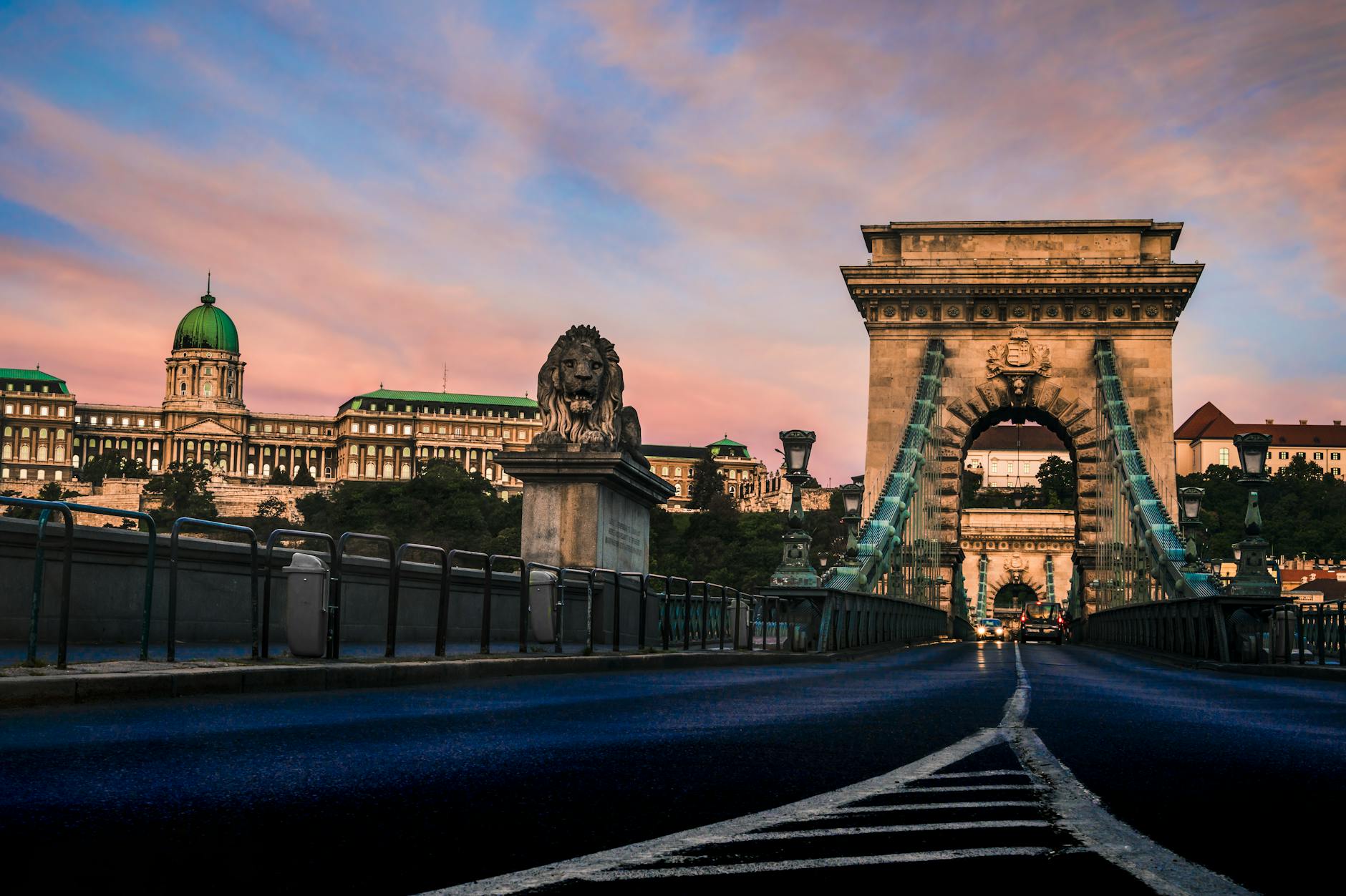
9:15 AM: Ascend Castle Hill. Take the funicular or walk up the path to Buda Castle. The Royal Palace houses the Hungarian National Gallery and the Budapest History Museum, but with only one day, admire the exterior and focus on the panoramic views from the terrace.
10:00 AM: Fisherman’s Bastion. Walk north through the Castle District to Fisherman’s Bastion. The neo-Romanesque terraces offer the single best viewpoint in Budapest, looking straight across to the Parliament Building. Arrive early to beat the crowds. The upper terraces have a small fee, but the lower levels are free and almost equally impressive.
10:30 AM: Matthias Church. Right next to Fisherman’s Bastion, the Church of Our Lady (Matthias Church) features a stunning tiled roof and richly decorated interior. A quick visit takes about 20 minutes.
11:15 AM: Wander the Castle District. Stroll through the cobblestone streets, peek into courtyards, and browse the small shops. The medieval atmosphere is unlike anything on the Pest side.
Afternoon: The Pest Side (12:30 PM – 6:00 PM)
12:30 PM: Lunch in Pest. Head back across the river (bus 16 runs from Castle Hill to the Pest center) and have lunch near the Parliament area. Try a traditional Hungarian restaurant for goulash or chicken paprikash.
1:30 PM: Hungarian Parliament Building. Even if you skip the interior tour, the Parliament’s exterior is a masterpiece of Gothic Revival architecture and the third-largest parliament building in the world. Walk along the Danube promenade to see it from multiple angles.
2:15 PM: Shoes on the Danube Bank. A short walk south along the embankment brings you to this haunting Holocaust memorial: 60 pairs of cast-iron shoes commemorating the victims shot into the river during World War II.
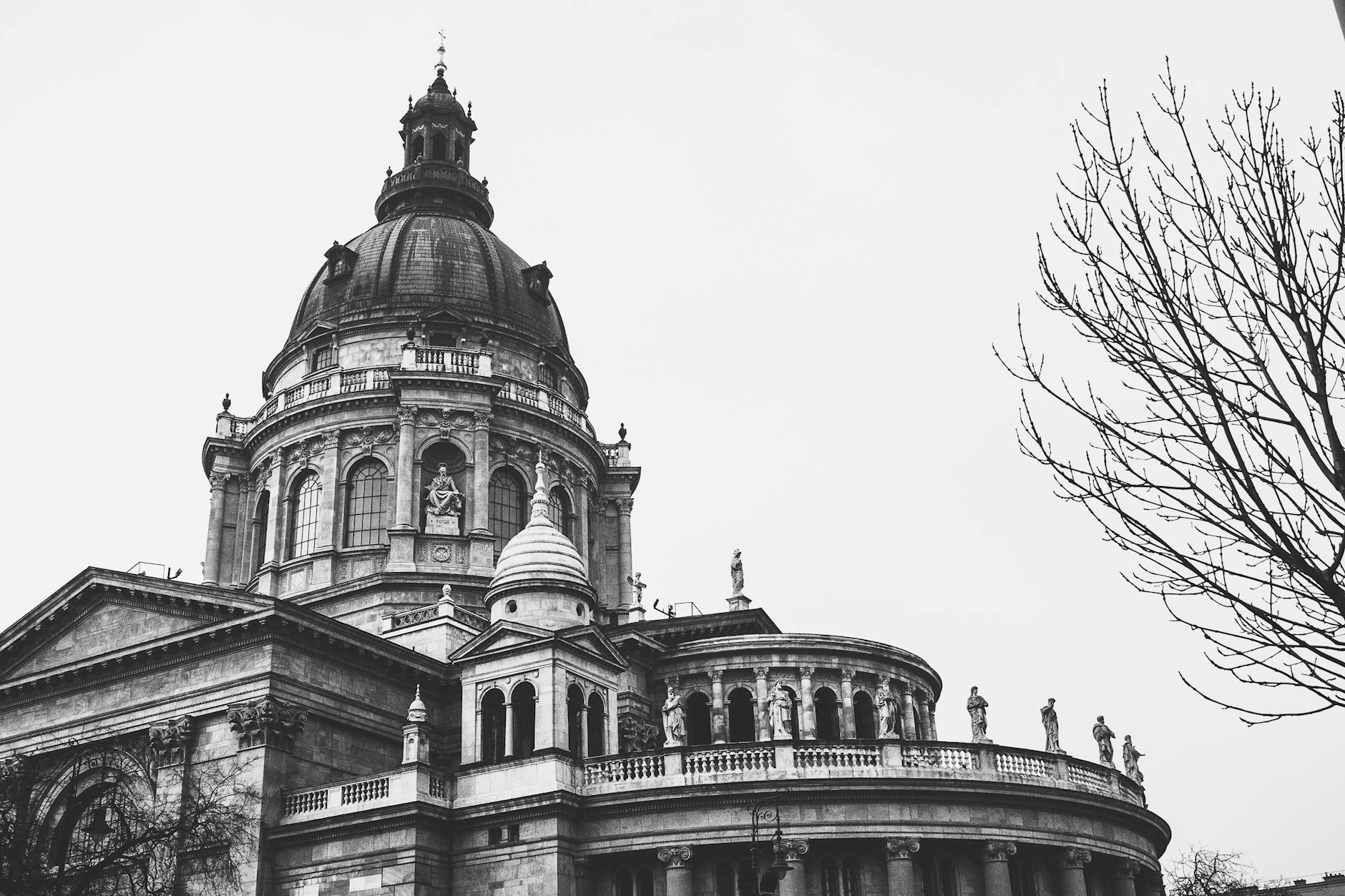
2:45 PM: St. Stephen’s Basilica. Walk inland to Budapest’s largest church. The interior is free to enter (donations welcome), and for a small fee, you can climb to the dome for a 360-degree city panorama. Allow 30 to 45 minutes.
3:45 PM: Andrassy Avenue stroll. Walk down Budapest’s answer to the Champs-Elysees, a UNESCO World Heritage boulevard lined with Neo-Renaissance mansions, designer shops, and the Hungarian State Opera House.
4:30 PM: Heroes’ Square. At the end of Andrassy Avenue, Heroes’ Square features the imposing Millennium Monument flanked by the Museum of Fine Arts and the Hall of Art. This is one of Budapest’s most photogenic spots.
5:15 PM: Quick visit to City Park. Just behind Heroes’ Square, take a short walk into City Park to see the fairy-tale Vajdahunyad Castle (exterior only for today).
Evening: Danube Magic (6:00 PM onward)
6:00 PM: Dinner in the Jewish Quarter. Head to Budapest’s vibrant District VII for dinner. The neighborhood is packed with restaurants ranging from traditional Hungarian to modern fusion.
8:00 PM: Danube River Cruise. End your one day in Budapest with an evening river cruise. As darkness falls, the Parliament, Chain Bridge, and Buda Castle are illuminated in golden light, creating one of Europe’s most spectacular urban panoramas. Cruises depart regularly from multiple points along the Pest embankment and typically last 60 to 90 minutes.
Budapest in 2 Days: Expanded Exploration
Two days in Budapest lets you cover the one-day itinerary at a more comfortable pace and adds several important experiences. Here is how to split your time.
Day 1: Buda Side and the Danube
Follow the one-day morning itinerary above for Castle Hill, Fisherman’s Bastion, and Matthias Church, but take your time. With two days, you can actually go inside the Hungarian National Gallery in the Royal Palace (allow 1 to 1.5 hours for the highlights). After lunch, add the Gellert Hill hike for sunset views from the Citadella. The climb takes about 20 minutes from the base and rewards you with a panorama that rivals Fisherman’s Bastion, but with a completely different perspective looking down at the Danube’s curve through the city.
Evening on Day 1: Explore the Buda side’s quieter restaurant scene. Tabani Terasz or Mandragora offer excellent Hungarian cuisine without the tourist markups of the Castle District. If you are up for it, visit Rudas Baths for their rooftop pool, which stays open late on weekends and offers stunning nighttime views.
Day 2: Pest Side and Nightlife
9:00 AM: Start at the Parliament Building. If you want to see the interior, book the guided tour in advance online. The Crown Jewels and the ornate central staircase are genuinely worth it.
10:30 AM: Walk to St. Stephen’s Basilica. Climb to the dome observation deck for the best aerial view of Pest.
11:30 AM: Stroll down Andrassy Avenue to the Opera House. Check if daytime tours are running, as the recently restored interior is dazzling.
12:30 PM: Lunch at one of the cafes around Liszt Ferenc Square, a leafy pedestrian square buzzing with energy.
2:00 PM: Continue to Heroes’ Square and City Park. Spend more time at Vajdahunyad Castle and, if the weather is warm, rent a rowboat on the park’s lake.
4:00 PM: Head to the Jewish Quarter. Visit the Dohany Street Synagogue, the largest synagogue in Europe, and wander through the neighborhood’s eclectic streets filled with street art and quirky shops.
6:30 PM: Dinner in the Jewish Quarter. Mazel Tov and Kolo are both excellent choices with lively atmospheres.
8:30 PM: Experience Budapest’s famous ruin bar scene. Start at Szimpla Kert, the original ruin bar that launched the movement. It occupies a former factory and is decorated with everything from bathtubs to vintage TVs. From there, bar-hop through the quarter’s many options including Instant-Fogas and Ellato Kert.
The Perfect 3-Day Budapest Itinerary
Three days is the sweet spot for most visitors and our most recommended duration for a first trip. This itinerary covers all the essentials with enough flexibility for spontaneous detours. Here is the detailed day-by-day plan.
Day 1: Castle Hill, Buda, and Gellert Hill
Morning (8:30 AM – 12:30 PM)
8:30 AM: Breakfast at a Buda cafe. Start your day on the Buda side. Deja Vu Cafe near Batthyany Square is a solid choice with river views and affordable prices.
9:00 AM: Chain Bridge crossing. Walk across the famous bridge from the Buda embankment (or from Pest, depending on your hotel). Take photos, admire the stone lions, and enjoy the morning light on the water.
9:30 AM: Buda Castle and Royal Palace. Take the funicular or walk up to Castle Hill. Explore the exterior terraces of the Royal Palace, which offer sweeping views of the Pest skyline. If you are interested in art, the Hungarian National Gallery inside the palace houses an excellent collection of Hungarian paintings and sculpture from the medieval period to the 20th century. Budget 1 to 1.5 hours if you go inside.
11:00 AM: Fisherman’s Bastion and Matthias Church. Walk through the Castle District’s atmospheric streets to Fisherman’s Bastion. The seven towers represent the seven Magyar tribes that founded Hungary. Matthias Church next door hosted royal coronations for centuries and features an interior covered in elaborate painted patterns.
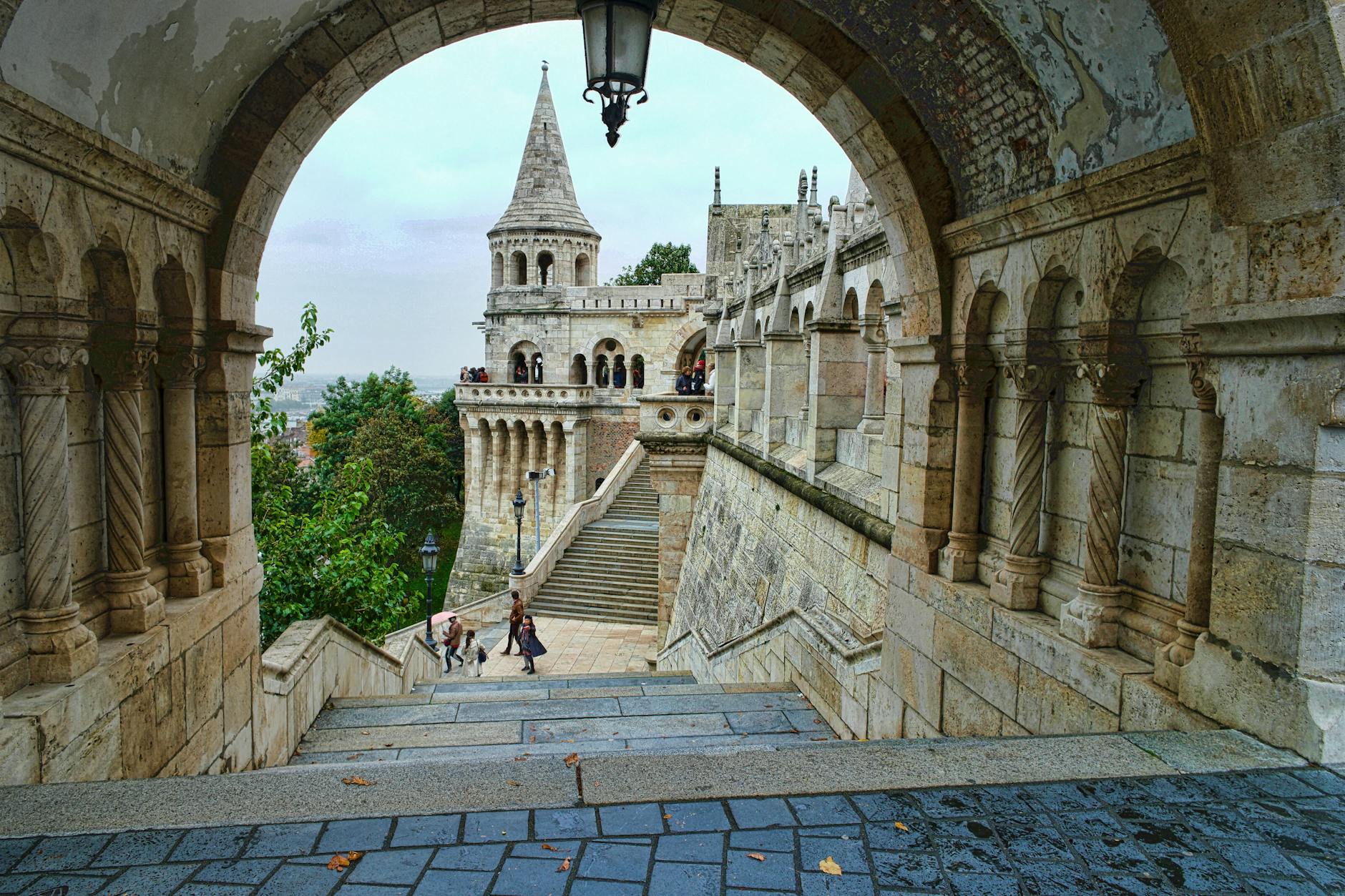
12:00 PM: Explore the Castle District. Wander the narrow cobblestone lanes. Look for the medieval Jewish prayer house, the Hospital in the Rock (a fascinating underground hospital and bunker), and the charming Szentharomsag Square.
Afternoon (12:30 PM – 6:00 PM)
12:30 PM: Lunch in the Castle District or Vizivaros. Descend from Castle Hill to the Vizivaros neighborhood below for more affordable dining. Batthyany ter Market Hall has great langos (fried dough) and other Hungarian street food.
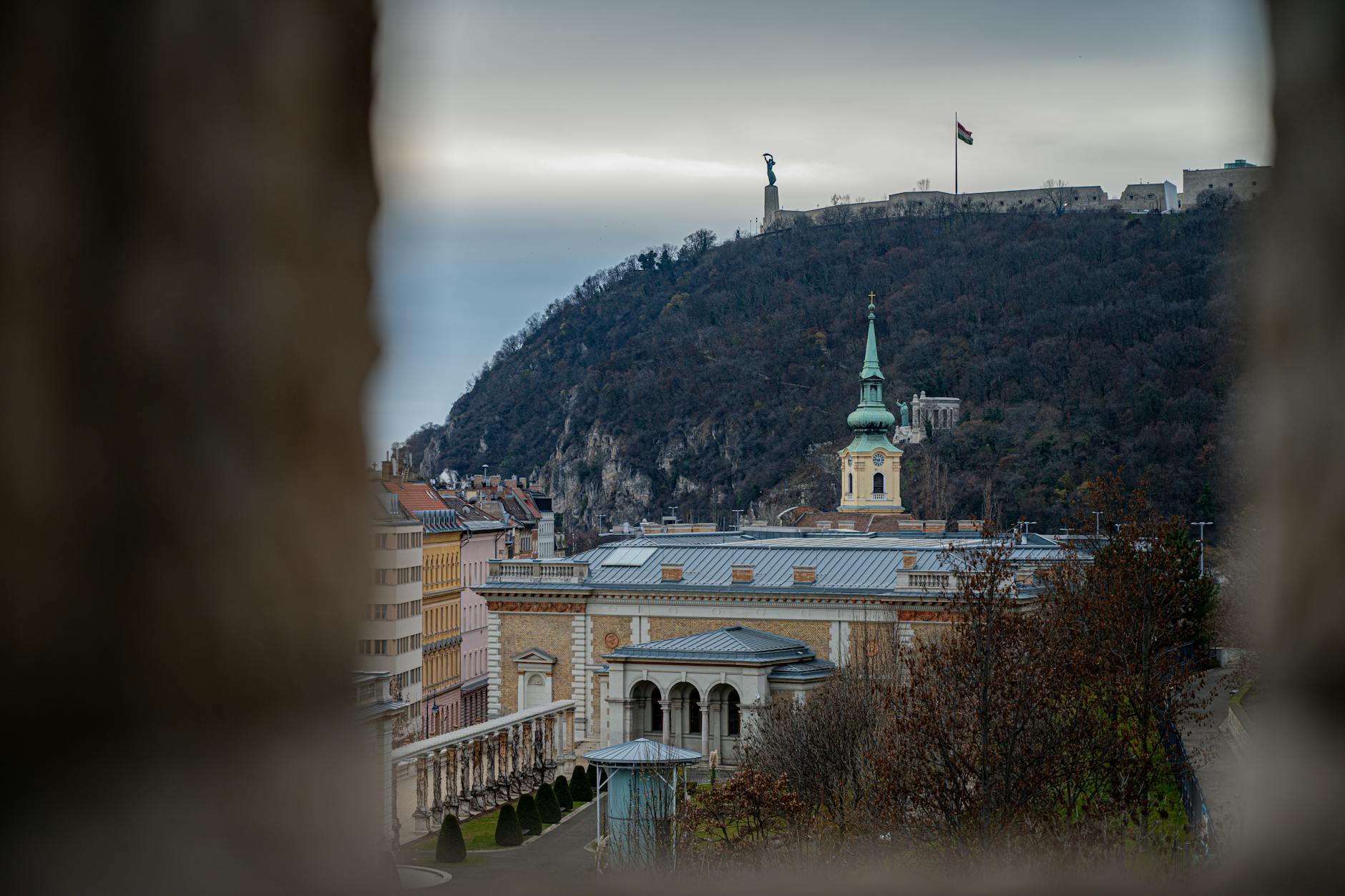
2:00 PM: Gellert Hill hike. Walk south along the Buda embankment to the base of Gellert Hill. The 20-minute climb through wooded paths leads to the Citadella fortress at the summit and the Liberty Statue. The 360-degree panorama is arguably even better than Fisherman’s Bastion because you can see the Bastion itself, plus both bridges and the full sweep of the Danube.
3:30 PM: Rudas Baths. Descend from Gellert Hill to Rudas Thermal Bath at its base. This Ottoman-era bathhouse dates to the 1550s and features an octagonal main pool under a domed ceiling pierced with star-shaped openings. The rooftop pool has spectacular views. Note: the Gellert Spa next door is closed for renovation until 2028, so Rudas is the top bath choice on this side of the river.
5:30 PM: Liberty Bridge sunset. Walk to the nearby Liberty Bridge (Szabadsag hid), one of Budapest’s most photogenic bridges. In warmer months, locals sit on the bridge’s railings to watch the sunset, creating a wonderful communal atmosphere.
Evening (6:30 PM onward)
6:30 PM: Dinner in the Belvaros. Cross to the Pest side and dine in the city center. Borkonyha Winekitchen is a Michelin-starred restaurant with surprisingly reasonable prices, or try Babel Budapest for contemporary Hungarian cuisine.
8:30 PM: Evening walk along the Danube. Walk the Pest embankment promenade as the city lights up. The illuminated Parliament, Chain Bridge, and Buda Castle create a scene that never gets old. Stop at the Shoes on the Danube Bank memorial for a quiet moment of reflection.
Day 2: Parliament, Basilica, and the Pest Side
Morning (9:00 AM – 1:00 PM)
9:00 AM: Hungarian Parliament Building. Book the English-language guided tour in advance at the official website. The 45-minute tour takes you through the ornate main staircase, the old House of Lords, and past the Hungarian Crown Jewels. The building contains 40 kilograms of gold in its decoration. If you prefer not to tour the inside, walk the exterior perimeter and visit Kossuth Square.
10:15 AM: Walk to St. Stephen’s Basilica. A pleasant 15-minute walk through Pest’s downtown streets brings you to the Basilica. Go inside to see the ornate interior and the holy relic of St. Stephen’s mummified right hand. Then climb the 364 steps (or take the elevator) to the dome for a magnificent view.
11:15 AM: Coffee at a grand cafe. Budapest’s cafe culture is legendary. Stop at the New York Cafe for the most opulent interior you have ever sipped coffee in, or head to Centralis Grand Cafe and Bar for a less touristy but equally historic experience.
12:00 PM: Andrassy Avenue. Walk the full length of this UNESCO-listed boulevard. Highlights include the Hungarian State Opera House (check for available tours), the House of Terror Museum at number 60 (a powerful museum covering Hungary’s fascist and communist periods), and countless beautiful Neo-Renaissance facades.
Afternoon (1:00 PM – 6:00 PM)
1:00 PM: Lunch near Oktogon. The intersection of Andrassy Avenue and the Grand Boulevard is surrounded by restaurants. Try Menza for retro-styled Hungarian comfort food at fair prices.
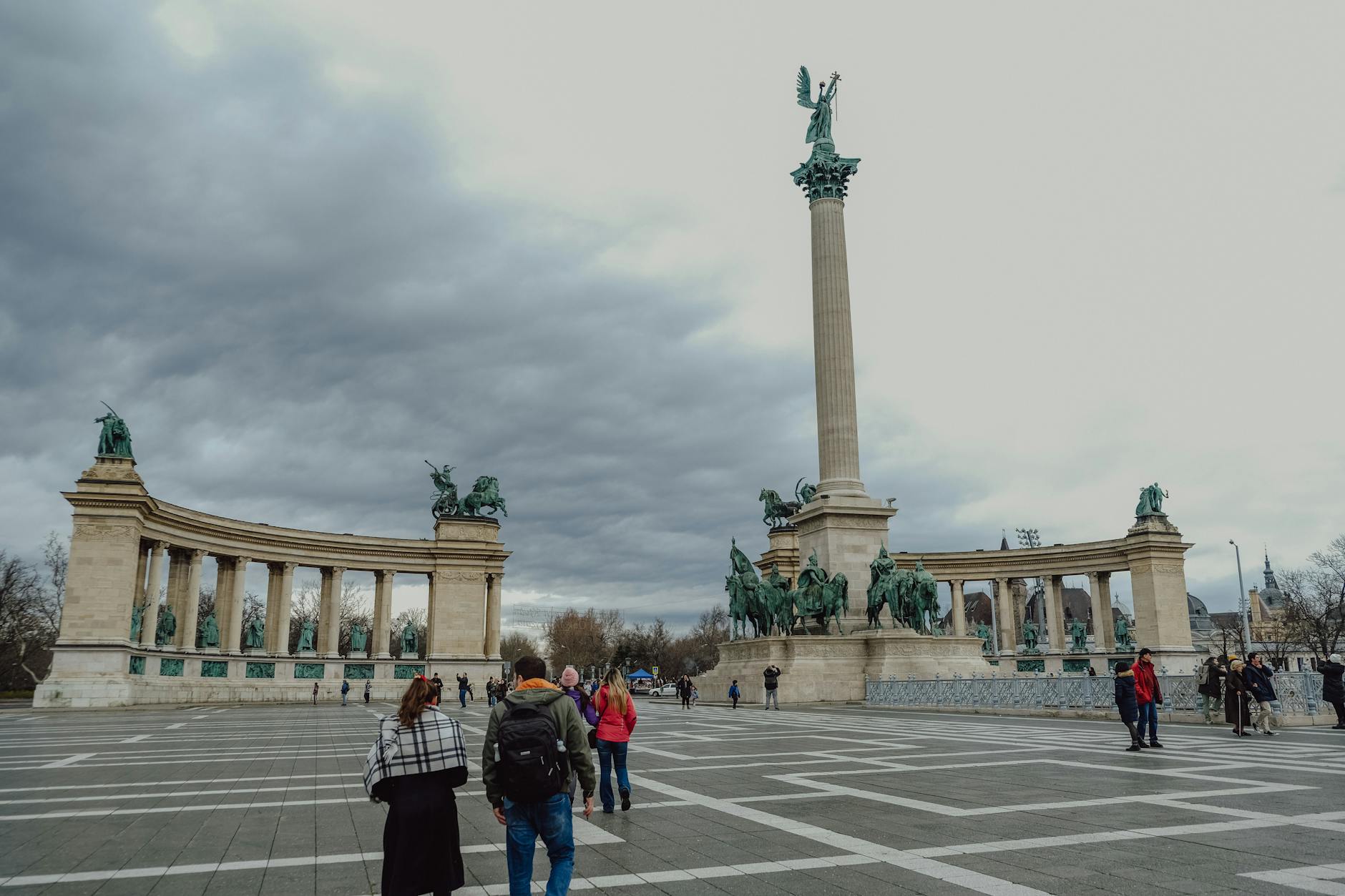
2:15 PM: Heroes’ Square and City Park. Continue down Andrassy Avenue to its grand terminus at Heroes’ Square. The Millennium Monument is surrounded by statues of Hungarian historical leaders on horseback. Behind the square, City Park offers Vajdahunyad Castle (free to walk through the grounds), the park lake, and the Budapest Zoo if you are traveling with children.
3:30 PM: House of Music Hungary. This stunning modern building in City Park, designed by Sou Fujimoto, opened recently and is both an architectural marvel and a world-class music venue. The building itself, with its perforated roof and light-filled interior, is worth visiting even if you are not a music enthusiast.
4:45 PM: Great Market Hall. Take the M1 metro (the oldest on the European continent) back toward the center and head to the Great Market Hall at the Pest end of Liberty Bridge. The three-story iron structure is a feast for the senses: ground floor stalls sell paprika, sausages, foie gras, and produce, while the upper floor has food stalls and folk art souvenirs.
Evening (6:30 PM onward)
6:30 PM: Dinner on Raday Street. This pedestrianized restaurant row south of the Market Hall offers dozens of options at every price point.
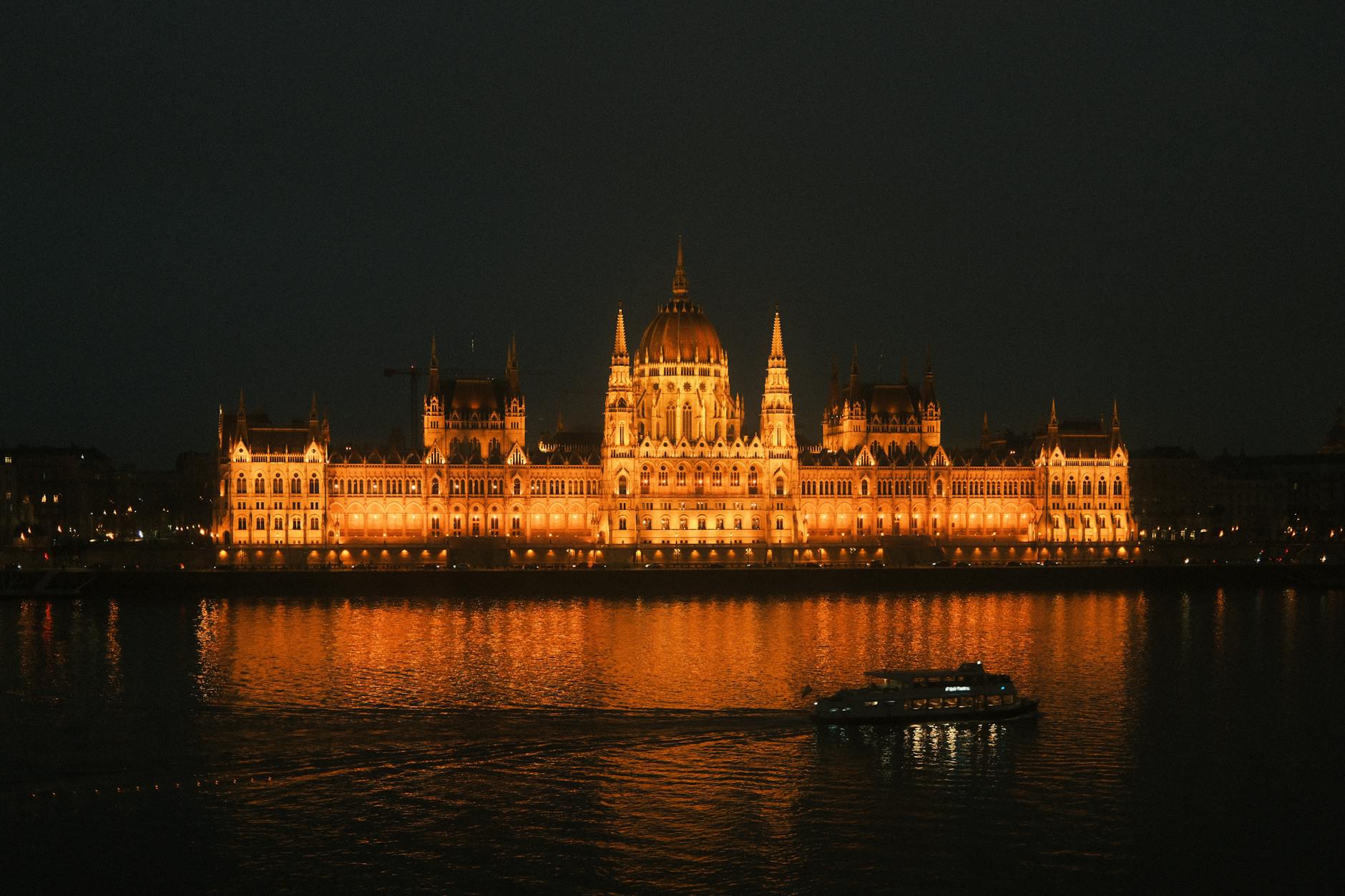
8:30 PM: Danube River Cruise. An evening cruise is one of the absolute highlights of any Budapest itinerary. Several companies offer cruises ranging from basic sightseeing to dinner cruises with live music. Even the simplest one-hour cruise is unforgettable as you glide past the illuminated landmarks.
Day 3: Jewish Quarter, Thermal Baths, and Hidden Budapest
Morning (9:00 AM – 12:30 PM)
9:00 AM: Dohany Street Synagogue. Start early at the Great Synagogue, the largest in Europe and second largest in the world. The Moorish Revival architecture is extraordinary, and the complex includes the Jewish Museum, the Raoul Wallenberg Memorial Garden, and the Tree of Life memorial. Guided tours are highly recommended and take about 45 minutes.
10:15 AM: Jewish Quarter walking exploration. The neighborhood around the synagogue is Budapest’s most eclectic. Walk through the narrow streets to discover street art, hidden courtyards, independent boutiques, and the remains of the former ghetto walls. Kazinczy Street and Kiraly Street are particularly interesting.
11:30 AM: Brunch in the Jewish Quarter. The neighborhood has become Budapest’s culinary hotspot. Mazel Tov occupies a beautiful courtyard and serves Middle Eastern-inspired dishes, while Kelet Cafe is perfect for a more traditional brunch.
Afternoon (1:00 PM – 6:00 PM)
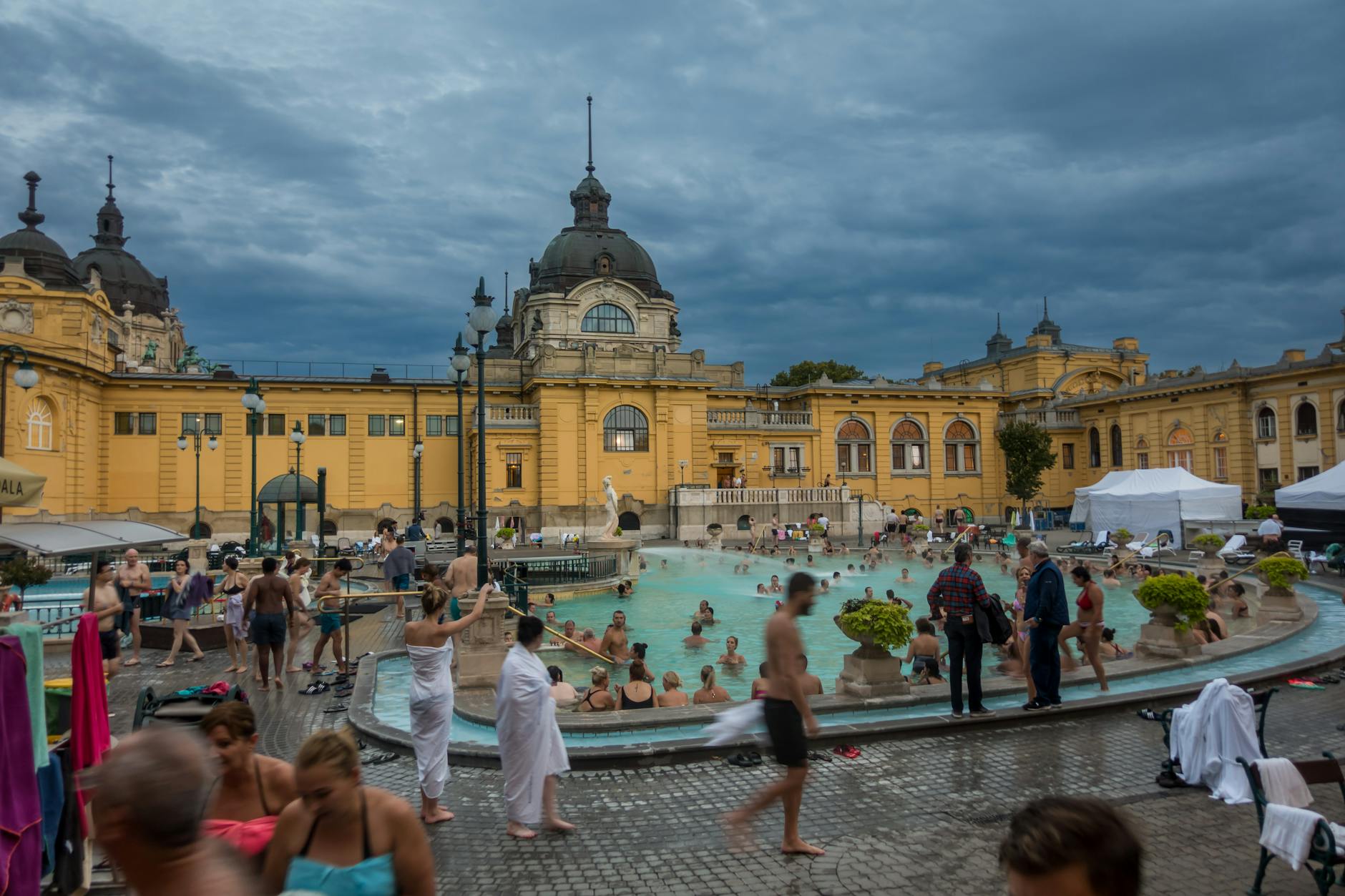
1:00 PM: Szechenyi Thermal Bath. This is the big one. Szechenyi is Europe’s largest medicinal bath complex, housed in a stunning Neo-Baroque palace in City Park. The outdoor pools steam dramatically in cooler weather, creating iconic photo opportunities. Bring your swimsuit, towel (or rent them), and plan to spend at least 2 to 3 hours. The complex includes 18 pools ranging from cold plunges to steaming hot thermal pools, plus saunas and steam rooms.
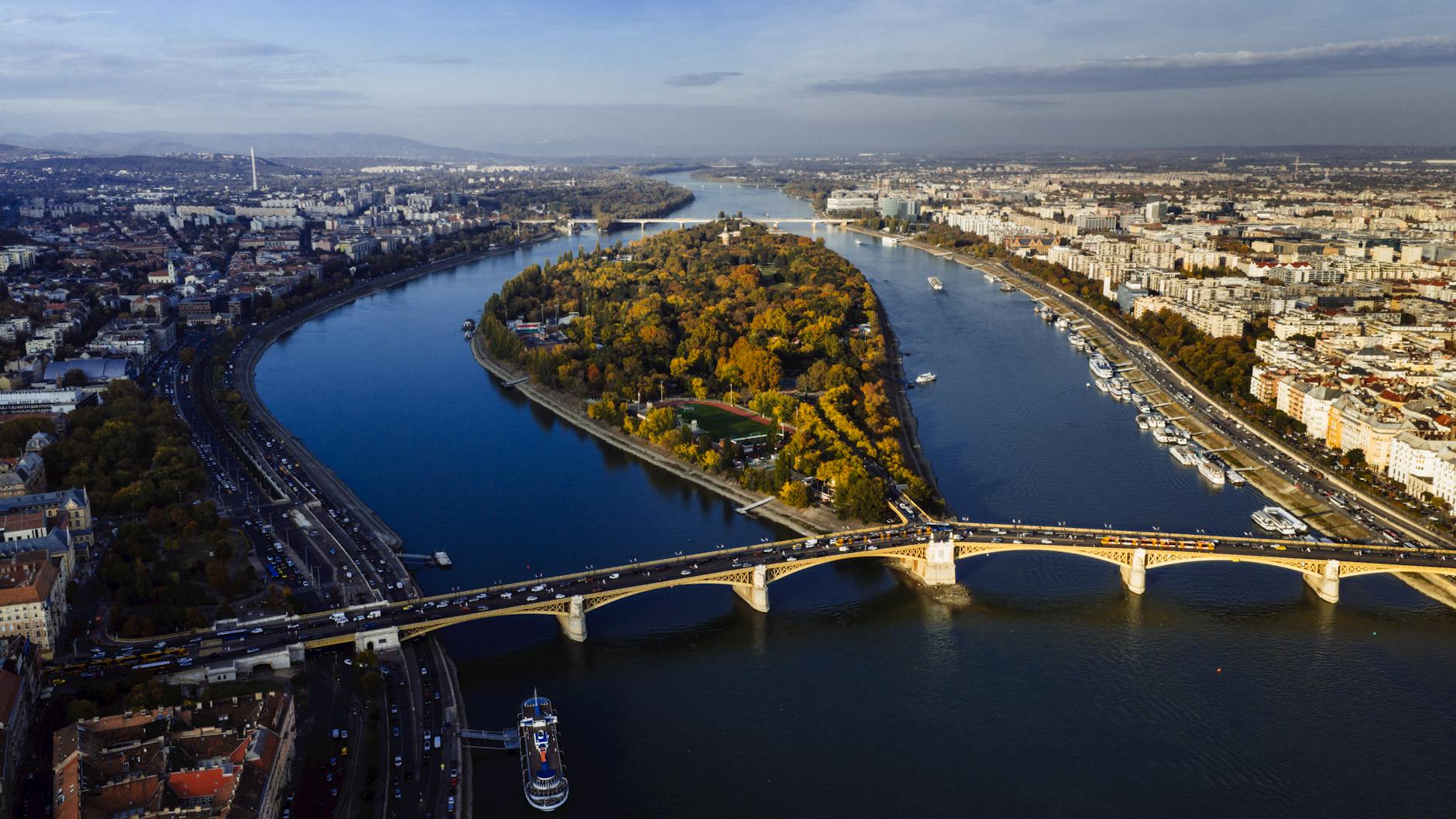
4:00 PM: Margaret Island. After the baths, take a taxi or bus to Margaret Island, the leafy oasis in the middle of the Danube between Margaret Bridge and Arpad Bridge. Rent a four-wheeled bike cart (they are everywhere on the island), stroll through the rose garden, see the ruins of a 13th-century Dominican convent, and relax on the grass. In summer, the musical fountain puts on light shows in the evenings.
Evening (7:00 PM onward)
7:00 PM: Farewell dinner. For your last evening, treat yourself to something special. Onyx (two Michelin stars) and Costes (one Michelin star) represent Budapest’s fine dining scene, but you can eat extraordinarily well at mid-range spots like Rosenstein or Borkonyha too.
9:00 PM: Ruin bar exploration. No three-day Budapest itinerary is complete without a proper ruin bar evening. Start at Szimpla Kert to experience the original, then wander to nearby bars. Instant-Fogas is a massive multi-level complex, Ellato Kert has a more laid-back garden vibe, and Doboz offers live music.
Budapest in 4-5 Days: Going Deeper
With four to five days, you have covered the main attractions in the first three days and now have time to explore the side of Budapest that most tourists never see. These extra days transform a great trip into an unforgettable one.
Day 4: Thermal Baths Deep Dive, Museums, and Local Neighborhoods
9:00 AM: Rudas Thermal Bath. If you visited Szechenyi on Day 3, today try Rudas for a completely different thermal bath experience. While Szechenyi is grand and social, Rudas is intimate and atmospheric. The main Ottoman-era pool, dating from the 1550s, sits under a domed ceiling with light filtering through star-shaped openings. The rooftop pool offers spectacular Danube views. Important note: the Gellert Spa, often recommended in older guides, is currently closed for extensive renovation and will not reopen until 2028. Rudas is an excellent alternative on the Buda side, and many locals actually prefer it.
11:30 AM: House of Terror Museum. This powerful museum at Andrassy Avenue 60 chronicles Hungary’s suffering under both the Arrow Cross (fascist) and communist regimes. The building itself was the actual headquarters of the secret police. Allow at least 1.5 to 2 hours, as the exhibits are extensive and deeply moving.
2:00 PM: Lunch and explore the Palace Quarter (District VIII). South of the Jewish Quarter, this formerly neglected neighborhood has undergone a renaissance. The National Museum anchors the district, and the surrounding streets are lined with independent coffee shops, vintage stores, and street art. Corvin Quarter and Palota Negyed have a very different vibe from the tourist center, offering a glimpse into everyday Budapest life.
4:00 PM: Raday Street and the Ninth District. Continue south into the Ninth District (Ferencvaros), which has transformed from a working-class neighborhood into one of Budapest’s trendiest areas. Walk along Raday Street’s cafe-lined pedestrian zone, then explore the backstreets where you will find some of the city’s best craft beer bars and contemporary art galleries.
7:00 PM: Dinner in the Ninth District. SALT Budapest, Costes Downtown, or the many options along Raday Street offer an excellent dinner scene away from the tourist core.
Day 5: Art, Architecture, and the Buda Hills
9:00 AM: Museum of Fine Arts or Ludwig Museum. Choose based on your interests. The Museum of Fine Arts at Heroes’ Square holds an outstanding collection of European old masters, including works by Raphael, El Greco, and Goya. The Ludwig Museum of Contemporary Art, located in the Palace of Arts complex along the Danube, focuses on modern and contemporary works.
12:00 PM: Lunch in Buda. Head to the Buda side for lunch at a neighborhood restaurant in Krisztinavaros or the area around Deli Station.
1:30 PM: Children’s Railway and Buda Hills. This is one of Budapest’s hidden gems. Take the cogwheel railway from Varosmajor up to Szechenyihegy, then board the Children’s Railway, a narrow-gauge line staffed almost entirely by children aged 10 to 14 (a legacy of the Pioneer Movement, now a beloved tradition). The train winds through the forested Buda Hills with several stops for hiking. Get off at Janos-hegy for the Erzsebet Lookout Tower, the highest point in Budapest at 527 meters, with views stretching to the distant plains.
4:30 PM: Descend via chairlift. From Janos-hegy, take the open-air chairlift down to Zugliget. It is a wonderfully scenic 15-minute ride through the treetops.
6:30 PM: Dinner in Obuda. The oldest part of Budapest, Obuda retains a village feel despite being absorbed into the city long ago. Fo Square is charming, and restaurants like Kehelj or Uj Sipos Halaszkert serve traditional Hungarian dishes at local prices.
Budapest in 6-7 Days: Day Trips and Deeper Exploration
A full week in Budapest opens up some of Hungary’s most rewarding day-trip destinations. The Danube Bend region north of the city is particularly spectacular, and the distances are short enough that you will be back in Budapest for dinner.
Day 6: Szentendre and the Danube Bend
8:30 AM: HEV train to Szentendre. From Batthyany ter in Buda, the HEV suburban train takes just 40 minutes to reach Szentendre, a picturesque artists’ colony on the banks of the Danube. The train runs frequently and is covered by the Budapest transit pass with an extension ticket.
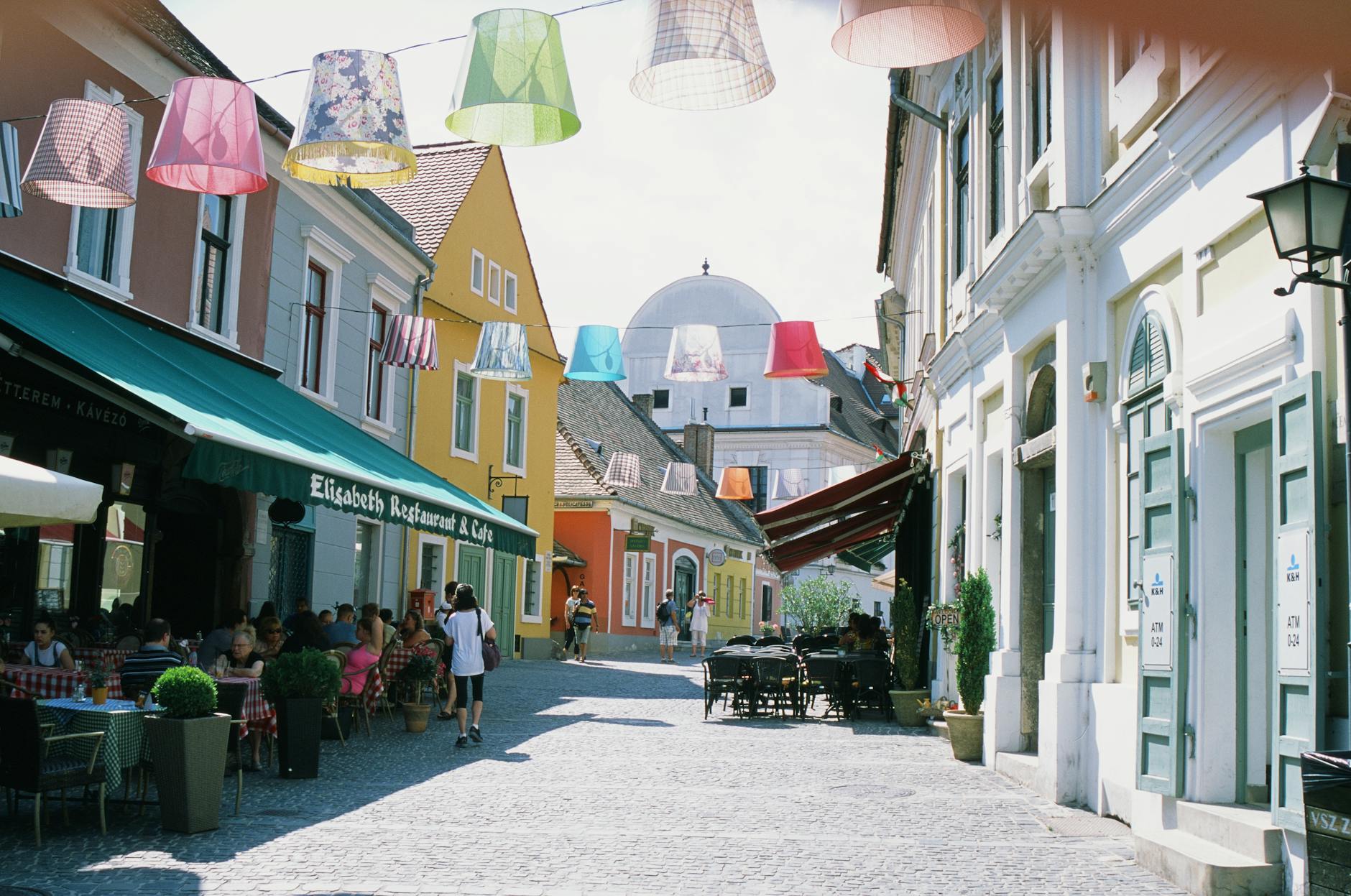
9:15 AM: Explore Szentendre. This small town is a feast for the eyes. Narrow cobblestone streets wind between colorful Baroque and Rococo houses, many now converted into art galleries and craft shops. Visit the main square (Fo Ter) with its Plague Cross and surrounding Serbian Orthodox churches, a legacy of the Serbian community that settled here in the 17th century.
10:30 AM: Margit Kovacs Museum. This small museum showcases the ceramic art of Margit Kovacs, one of Hungary’s most beloved 20th-century artists. Her whimsical figures and folk-inspired works are enchanting.
11:30 AM: Hungarian Open Air Museum (Skanzen). A short bus ride from the town center, this open-air museum recreates traditional Hungarian village life with authentic buildings transported from across the country. Allow at least 1.5 hours to explore the farmhouses, churches, and workshops.
1:30 PM: Lunch in Szentendre. Return to the town center for lunch. Promenade restaurant on the Danube waterfront combines good food with beautiful views.
Option: Extended Danube Bend trip. If you are feeling adventurous, continue from Szentendre by bus to Visegrad (30 minutes), where a hilltop citadel offers dramatic river valley views, and then to Esztergom (another 30 minutes), home to Hungary’s largest basilica. The full Danube Bend loop, covering Szentendre, Visegrad, and Esztergom, can be done in a long day. Alternatively, organized tours from Budapest cover all three towns with transport and a guide.
4:00 PM: Return to Budapest. Take the HEV back (or continue from Esztergom by train to Budapest’s Nyugati Station). Spend your evening revisiting a favorite neighborhood or checking something you missed.
Day 7: Eger Day Trip or Budapest’s Hidden Side
For your seventh day, you have two excellent options.
Option A: Day Trip to Eger. The beautiful Baroque town of Eger is about 1.5 hours from Budapest by train. Famous for its castle (which repelled an Ottoman siege in 1552), the Valley of the Beautiful Women (a horseshoe of wine cellars where you can taste Egri Bikaver, or Bull’s Blood wine), and its own thermal baths, Eger makes a fantastic final day trip. Trains depart from Budapest’s Keleti Station regularly.
Option B: Budapest’s Hidden Gems. Alternatively, spend your last day exploring the Budapest most tourists miss. Visit the Kerepesi Cemetery, a sprawling 19th-century necropolis with spectacular mausoleums. Explore the Eighth District’s backstreets. Take tram 2 along the Pest embankment, widely considered one of the most scenic tram rides in the world. Visit the Pinball Museum for a quirky afternoon. Or return to your favorite thermal bath for one last soak.
Evening: Final Danube walk. On your last evening in Budapest, simply walk. Cross a bridge at sunset, find a bench on the Pest embankment, and watch the city transform as the lights come on. It is the perfect way to say goodbye to one of Europe’s greatest cities.
Budapest Itinerary Comparison: What You Can Cover
The following table summarizes what each itinerary duration allows you to experience.
| Duration | What You Can Cover | Thermal Baths | Day Trips | Pace |
|---|---|---|---|---|
| 1 Day | Castle Hill, Parliament exterior, Basilica, Heroes’ Square, Danube cruise | None | None | Very rushed |
| 2 Days | All of the above plus Gellert Hill, Jewish Quarter, ruin bars, deeper Pest exploration | 1 quick visit | None | Busy |
| 3 Days | Full Buda and Pest coverage, museums, Margaret Island, Great Market Hall | 1-2 visits | None | Comfortable |
| 4-5 Days | Everything above plus local neighborhoods, Buda Hills, multiple museums, food tours | 2-3 visits | Possible | Relaxed |
| 6-7 Days | Complete city coverage plus Szentendre, Danube Bend, Eger, hidden gems | 3+ visits | 2-3 trips | Leisurely |
Budget Tips for Your Budapest Itinerary
Budapest remains one of Europe’s best-value capital cities, though prices have risen in recent years. Here are practical ways to stretch your budget without missing out on the best experiences.
Get a Budapest Card. The Budapest Card covers unlimited public transport, free entry to many museums and attractions, discounted thermal bath entry, and various restaurant and tour discounts. The 72-hour card typically pays for itself if you visit two or more museums and use public transport regularly. Compare the 48-hour and 72-hour options based on your itinerary length.
Use public transport wisely. Budapest’s public transport system, operated by BKK, is extensive and efficient. Buy a 24-hour or 72-hour travel pass (or, for a full week, the monthly Budapest-pass, as there is no longer a 7-day pass) rather than individual tickets. The metro, trams, and buses cover virtually everywhere you need to go. Notably, the 4/6 tram runs 24 hours a day along the Grand Boulevard, so you are never stranded late at night.
Eat where locals eat. Avoid the restaurants directly on Vaci Street and around the major tourist sites, where prices are highest and quality is inconsistent. Instead, venture one or two blocks away and look for places with Hungarian-language menus. Langos from market stalls, kifli (crescent rolls) from bakeries, and the daily lunch menus (napi menu) offered by many restaurants for a fraction of dinner prices are all excellent budget options.
Free and low-cost highlights. Many of Budapest’s best experiences cost nothing. Walking across the Chain Bridge, hiking Gellert Hill, wandering the Jewish Quarter’s street art, sitting in City Park, exploring Margaret Island, and strolling the Danube embankment at night are all free. Several churches, including the interior of St. Stephen’s Basilica, are free to enter (dome access is extra). Free walking tours operate daily from Deak Square and work on a tip-based model.
Thermal bath savings. Visit baths in the afternoon when some offer reduced entry. Bring your own towel and flip-flops to avoid rental fees. Szechenyi and Rudas both offer locker options that are cheaper than private cabin options.
Airport transfer. From Budapest Airport (BUD), the cheapest option is the 100E express bus to Deak Square in central Budapest. It costs a fraction of what a taxi charges and takes about 35 to 45 minutes. Buy tickets at the airport BKK counter or through the BKK app.
Best Time to Visit Budapest
Budapest is a year-round destination, but each season offers a distinctly different experience.
Spring (April to May): Our top recommendation for most travelers. Temperatures are pleasant (15 to 22 degrees Celsius), crowds are manageable, and the city’s parks and gardens are in full bloom. Prices are lower than peak summer, and you get longer daylight hours for sightseeing. The outdoor thermal bath pools are comfortable without the summer heat.
Summer (June to August): Warmest weather (25 to 35 degrees Celsius) and longest days, ideal for outdoor activities, Danube cruises, and Margaret Island. However, this is peak tourist season with the highest prices and biggest crowds. Air conditioning is not universal in older buildings. The Sziget Festival in August draws massive international crowds.
Autumn (September to October): Another excellent time to visit. Temperatures cool to comfortable levels, summer crowds thin out, and the city takes on golden autumn colors. September weather is often superb. By late October, some outdoor attractions begin winding down.
Winter (November to March): Cold (often below freezing) but magical. The Christmas markets in November and December are among Europe’s best, particularly at Vorosmarty Square and St. Stephen’s Basilica. Thermal baths are at their atmospheric best with steam rising from outdoor pools into cold air. January and February are the quietest and cheapest months, though daylight hours are short and some outdoor attractions may have limited hours.
This planner assumes you already know which sights you want. If you are still deciding, start with the priced and ranked attractions guide — it gives every major sight a cost, a time allowance and an honest verdict, which makes the day-by-day sequencing below a good deal easier to commit to.
Every day below assumes you are moving on foot and by tram rather than by taxi, which is what makes the timings work. If you want the reasoning — which travelcard covers what, which trams are worth learning by number, and why the funicular never appears in any of these plans — see getting around Budapest.
Frequently Asked Questions About Budapest Itineraries
Is 3 days enough for Budapest?
Yes, three days is enough to see the major highlights of Budapest, including Castle Hill, the Parliament area, the Jewish Quarter, at least one thermal bath, and an evening Danube cruise. You will not have time for day trips or deep neighborhood exploration, but you will experience the essence of the city. If you can stretch to four days, you will have a noticeably more relaxed pace.
Should I stay on the Buda side or the Pest side?
For most first-time visitors, we recommend staying on the Pest side. The majority of restaurants, nightlife, and attractions are in Pest, and it is better connected by public transport. Districts V (Belvaros), VI (Terezvaros), and VII (the Jewish Quarter) are all excellent bases. Buda is quieter and more residential, which some travelers prefer, but you will spend more time commuting to the action.
How do I get around Budapest?
Budapest has an excellent public transport network run by BKK that includes four metro lines, an extensive tram network, buses, trolleybuses, and the HEV suburban railway. A multi-day travel pass is the most economical choice for tourists. The city center is also very walkable, and most attractions in Pest are within a 30-minute walk of each other. Taxis are reasonably priced, and every licensed cab charges the same regulated tariff; the Bolt app, which in Budapest dispatches licensed taxis, is the easiest way to book one. There is no Uber, which left Hungary in 2016, and no private ride-sharing.
Which thermal bath should I visit if I only have time for one?
Szechenyi Thermal Bath is the classic choice for first-time visitors. It is the largest, most photogenic, and most social of Budapest’s baths, with massive outdoor pools set in a grand Neo-Baroque building. If you prefer a more intimate, historical experience, Rudas Thermal Bath has an authentic Ottoman-era atmosphere and a rooftop pool with Danube views. Note that the Gellert Spa is currently closed for renovation until 2028.
Is Budapest safe for tourists?
Budapest is generally very safe for tourists. Violent crime targeting visitors is rare. The main concerns are pickpocketing in crowded tourist areas (especially on public transport and at the Great Market Hall) and occasional scams at certain bars and restaurants. Use common sense: keep valuables secure, be wary of overly friendly strangers inviting you to specific bars, and always check restaurant menus for prices before ordering. The ruin bar district is lively but safe, even late at night.
Do I need to speak Hungarian?
No. English is widely spoken in Budapest’s tourist areas, hotels, restaurants, and attractions. Younger Hungarians in particular tend to speak good English. Learning a few basic Hungarian words (koszonom for thank you, szia for hello/goodbye) is appreciated but not necessary. Restaurant menus in tourist areas almost always have English translations, and major attractions offer English-language tours and signage.
What currency does Budapest use and can I pay by card?
Hungary uses the Hungarian Forint (HUF), not the Euro. Card payments are widely accepted in restaurants, shops, and attractions in central Budapest. However, carrying some cash is advisable for smaller purchases, market stalls, some thermal bath services, and tipping. ATMs are plentiful throughout the city. Avoid the currency exchange booths at the airport and on Vaci Street, which typically offer poor rates. Use ATMs from major banks instead.
Explore More of Budapest
This itinerary guide is just the beginning of planning your Budapest adventure. Dive deeper into specific topics with our comprehensive guides to make the most of your trip.
For a comprehensive overview of activities and attractions, read our guide to things to do in Budapest, which covers dozens of experiences beyond what any single itinerary can include. If thermal baths are a priority (and they should be), our Budapest thermal baths guide breaks down every major bathhouse with practical tips for first-time visitors.
Hungarian cuisine is one of the country’s greatest treasures. Our Budapest food guide covers everything from street food and market halls to fine dining, including the dishes you absolutely must try and where to find them. Choosing the right neighborhood to stay in can make or break your trip, so check our where to stay in Budapest guide for district-by-district recommendations at every budget level.
First-time visitors should also consult our complete Budapest travel guide for essential practical information including transport, money, safety, and packing tips. And if you want to experience the city’s legendary after-dark scene beyond the ruin bars, our Budapest nightlife guide covers everything from rooftop bars to underground clubs and live music venues.
Budapest is a city that reveals new layers with every visit. Whether you are here for one action-packed day or a full leisurely week, the memories you make in this extraordinary city will stay with you long after you leave. Start planning your Budapest itinerary today, and prepare to fall in love with the Pearl of the Danube.
Pick the Itinerary That Fits Your Stay
However long you’ve got, there’s a ready-made plan below — plus seasonal versions for winter and summer trips.
- one day in Budapest — the perfect single-day route if you’re tight on time.
- a weekend in Budapest — two days that hit the essentials without rushing.
- three days — our most popular plan, with room to wander.
- five days — time for the baths, a day trip and the deeper cuts.
- a full week — the slow-travel version, side trips included.
- Budapest in winter — thermal baths in the snow and Christmas-market season.
- Budapest in summer — festivals, river beaches and beating the heat.
Fill In the Gaps
These itineraries name the stops. These guides explain them.
- day trips from Budapest — the natural addition once you hit day four or five
- Budapest history and culture — the background to the sights each of these days is built around
- festivals and events — check this before you fix your dates
- Budapest with kids — the same days, re-paced for a family
- romantic Budapest — the couples’ rewrite of the weekend plan
- shopping in Budapest — where to slot the markets and boutiques into a tight schedule