Budapest Thermal Baths: The Definitive Guide (2026)
Budapest is known worldwide as the City of Spas, and for good reason. Sitting atop one of the richest networks of thermal springs in Europe, the Hungarian capital has been drawing visitors to its healing waters for over two thousand years. With more than 120 natural hot springs feeding dozens of bathhouses across the city, Budapest thermal baths are not just a tourist attraction — they are a living tradition that stretches back to the Roman era and was perfected during centuries of Ottoman rule.
Whether you are looking for a grand Neo-Baroque palace with outdoor pools where locals play chess in steaming water, an intimate Ottoman hammam with a rooftop pool overlooking the Danube, or a quiet neighborhood bath where you can soak alongside Budapestians who have been coming every morning for decades, this guide will help you find your perfect Budapest thermal bath experience.
In this definitive guide to Budapest thermal baths, we cover every major bathhouse in the city, compare prices and facilities, explain the etiquette you need to know before your first visit, and share insider tips to help you make the most of one of Europe’s most unique wellness traditions.
A Brief History of Budapest’s Thermal Bathing Culture
The story of Budapest’s thermal baths begins long before the city itself existed. The Celtic tribe known as the Eravisci, who inhabited the area before Roman conquest, called this land Ak-ink, meaning “Abundant Water” — a name that perfectly captured the geothermal wealth bubbling beneath the surface. When the Romans established their provincial capital of Aquincum (in what is now Óbuda), they quickly built elaborate public baths fed by the local thermal springs. The remains of the Thermae Maiores near Flórián tér stand as evidence of a sophisticated bathing culture that included piped hot and cold water and underfloor heating systems.
The golden age of Budapest’s bath culture arrived with the Ottoman Turks, who occupied Hungary from the mid-16th to late 17th century. The Ottomans brought their own deeply rooted hammam tradition, constructing elegant bathhouses with distinctive octagonal pools beneath high domed ceilings pierced with small glass openings that allowed shafts of light to filter through the steam. Several of these Ottoman-era baths — most notably Rudas and Veli Bej — survive to this day and remain in active use (the historic Király bath also survives, though it is currently closed for restoration), making them among the oldest functioning bathhouses in Europe.
The 19th and early 20th centuries saw a new wave of bathhouse construction as Budapest flourished as the co-capital of the Austro-Hungarian Empire. Grand establishments like Széchenyi Baths (opened 1913) and Gellért Baths (opened 1918) were built in the ornate Neo-Baroque and Art Nouveau styles of the era, transforming bathing from a simple health practice into an architectural spectacle. Budapest officially earned its designation as a “City of Spas” in the 1930s, and that reputation has only grown stronger in the century since.
Why Visit Budapest Thermal Baths? Health Benefits and Beyond
Budapest’s thermal waters are not simply warm — they are rich in dissolved minerals including calcium, magnesium, hydrogen carbonate, sodium, sulfate, chlorides, and metaboric acid. These minerals are absorbed through the skin during bathing and have been used therapeutically for centuries. Modern clinical research supports many of the traditional claims: a systematic review published in the journal Evidence-Based Complementary and Alternative Medicine found that balneotherapy with Hungarian thermal-mineral waters is an effective treatment for lower back pain as well as knee and hand osteoarthritis.
The health benefits of regular thermal bathing extend well beyond joint pain relief. The heat of the mineral-rich water dilates blood vessels, improving circulation and helping to lower blood pressure. Magnesium absorbed through the skin can reduce muscle tension, ease nerve pain, and improve sleep quality. Many visitors also report significant improvements in skin conditions such as eczema and psoriasis, as the minerals help reduce inflammation and encourage skin regeneration. The sulfate content of the water has natural detoxifying properties that can aid in overall wellness.
Beyond the physical health benefits, Budapest thermal baths offer something harder to quantify but equally valuable: a chance to slow down. In a city that balances its Central European energy with a distinctly Hungarian appreciation for the good life, spending a few hours soaking in warm mineral water, moving between pools of different temperatures, and perhaps treating yourself to a massage is one of the most authentic local experiences you can have. It is no exaggeration to say that visiting at least one thermal bath is the single most essential Budapest experience.
The Complete Guide to Budapest’s Thermal Baths
Budapest has more than a dozen thermal bathing facilities, ranging from grand historic complexes to small neighborhood baths. Below, we cover every major option in detail so you can choose the one — or ones — that best match your interests, schedule, and budget.
Széchenyi Thermal Bath — The Iconic Grand Dame
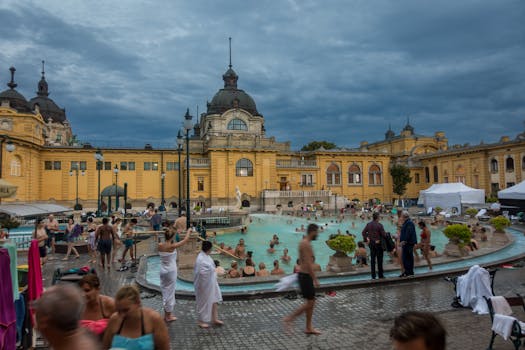
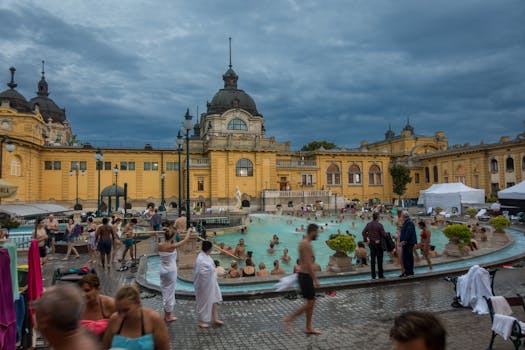
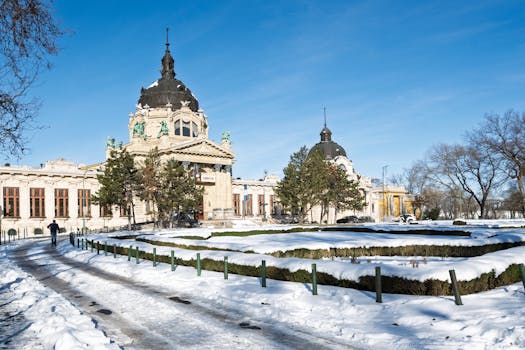
Széchenyi Baths (Széchenyi Gyógyfürdő) is the most famous thermal bath in Budapest and the largest medicinal bath complex in Europe. Located in the heart of City Park (Városliget), this striking Neo-Baroque building was designed by Győző Czigler and Ede Dvorzsák, with the main building completed in 1913 and expanded in 1927. With approximately 18 pools — including three spectacular outdoor pools, more than a dozen indoor thermal pools, and a variety of saunas and steam rooms — Széchenyi is a destination unto itself.
The outdoor pools are the star attraction and what makes Széchenyi truly iconic. The large central pool is kept at a warm 38°C year-round, meaning you can bathe outdoors even in the depths of a Hungarian winter. Few travel experiences compare to soaking in steaming water while snow falls around you. The outdoor area also features a swimming pool and a fun pool with a whirlpool current. Look for the groups of older Hungarian men playing chess on floating boards in the warm pool — a beloved tradition that has become one of Budapest’s most photographed scenes.
Practical Information for Széchenyi Baths:
Address: Állatkerti krt. 9-11, District XIV (City Park)
Opening Hours: Daily 7:00 AM – 8:00 PM (last entry 7:00 PM)
2026 Prices: Weekday locker entry from 13,200 HUF (~$35 USD), weekend from 14,800 HUF (~$39 USD). Cabin upgrade adds approximately 1,000 HUF.
Getting There: M1 metro to Széchenyi fürdő station (direct entrance to the baths), or Bus 72 and 75
Best For: First-time visitors, photographers, families with teenagers, anyone wanting the quintessential Budapest bath experience
Tip: Arrive before 9:00 AM on weekdays to avoid the largest crowds. The baths are busiest between 11:00 AM and 3:00 PM on weekends.
Rudas Baths — Ottoman Heritage Meets Modern Rooftop

Rudas Baths (Rudas Gyógyfürdő) is perhaps the most atmospheric thermal bath in Budapest. Built by the Ottoman Turks between 1550 and 1556 under the rule of Pasha Sokoli Mustafa, the heart of Rudas is its original Turkish octagonal pool beneath a stunning 10-meter domed ceiling punctuated by colored glass star-shaped openings. Bathing in this 500-year-old pool, surrounded by Ottoman stone columns with shafts of light cutting through the steam, is a genuinely transporting experience.
But Rudas is far more than its historical core. A major renovation and expansion completed in 2014 added a sleek modern wellness section that includes a panoramic rooftop pool with what may be the best view of any thermal bath in the world. From the rooftop, you can gaze across the Danube to the Pest skyline, with the Parliament Building visible in the distance. The complex now offers more than 10 pools in total, including a 20-meter swimming pool, several thermal pools at varying temperatures (from 28°C to 42°C), and the famous rooftop pool kept at a comfortable 36°C.
Practical Information for Rudas Baths:
Address: Döbrentei tér 9, District I (Buda, at the foot of Gellért Hill)
Opening Hours: Daily 6:00 AM – 8:00 PM. Night bathing on Friday and Saturday until 4:00 AM.
2026 Prices: Weekday all-zone access from 12,000 HUF (~$32 USD). Weekend prices are higher.
Getting There: Tram 19 or 56 to Rudas Gyógyfürdő, or Bus 7 to Döbrentei tér
Best For: History enthusiasts, couples seeking a romantic experience, night owls (Friday/Saturday night sessions), anyone who appreciates stunning views
Tip: The Friday and Saturday night bathing sessions (10:00 PM – 4:00 AM) offer a completely different atmosphere — moody lighting, fewer crowds, and the rooftop pool under the stars. Note that photography is strictly prohibited inside Rudas.
Gellért Baths — The Art Nouveau Masterpiece (Closed for Renovation)
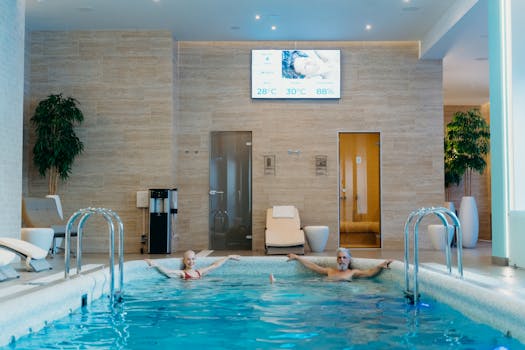
Gellért Baths (Gellért Gyógyfürdő), attached to the Danubius Hotel Gellért at the foot of Gellért Hill, has long been considered the most beautiful thermal bath in Budapest. Opened in 1918, its Art Nouveau interior features intricate mosaic tiles, stained-glass windows, marble columns, and carved stone details that make bathing here feel like stepping into a palace. The famous outdoor wave pool — one of Europe’s first — has been a summer fixture for over a century.
Important 2026 Update: Gellért Baths closed on October 1, 2025 for a comprehensive renovation project. The reopening is currently projected for 2028. While this is disappointing news for visitors planning a trip in the near future, the renovation is expected to restore the building to its full Art Nouveau glory while modernizing facilities. We will update this guide as reopening details are announced. In the meantime, Rudas Baths — located just a 10-minute walk away along the Danube — is the best alternative in the same neighborhood.
Lukács Thermal Bath — The Authentic Local Experience
If Széchenyi is where the tourists go and Rudas is where the architecture lovers go, Lukács Thermal Bath (Szent Lukács Gyógyfürdő) is where the locals go. Tucked along the Buda bank of the Danube in District II, Lukács has been a neighborhood institution since 1894, though thermal springs on this site have been used since the 12th century. The atmosphere here is unpretentious and genuine — you will be soaking alongside retired Hungarians who have been visiting every morning for years, local office workers on their lunch break, and perhaps a handful of travelers who have ventured beyond the guidebook recommendations.
What Lukács lacks in architectural grandeur it makes up for in authenticity and value. The complex includes thermal pools, a swimming pool, a cold plunge pool, saunas, and steam rooms. The outdoor terrace area is a pleasant surprise in summer, with deck chairs and a relaxed social atmosphere. Lukács is also one of the most affordable thermal baths in Budapest.
Practical Information for Lukács Baths:
Address: Frankel Leó út 25-29, District II (Buda)
Opening Hours: Daily 6:00 AM – 8:00 PM
2026 Prices: From approximately 7,000 HUF (~$19 USD), making it one of the cheapest major thermal baths in Budapest
Getting There: Tram 17 to Lukács Gyógyfürdő, or HÉV suburban railway to Margit híd stop
Best For: Budget-conscious travelers, repeat visitors who want something more authentic, anyone looking for a low-key experience without tourist crowds
Tip: Lukács is popular with the local creative and intellectual crowd. The summer terrace often has a lively social scene on weekend afternoons.
Veli Bej Bath — The Hidden Ottoman Gem
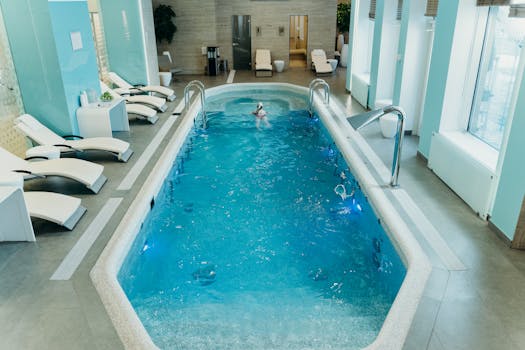
Veli Bej Bath is one of Budapest’s best-kept secrets and a favorite among locals who prefer a more intimate, tranquil bathing experience. Originally built during the Ottoman era (around 1574), this small bathhouse was beautifully restored and reopened in 2012. The centerpiece is a magnificent domed Turkish pool surrounded by four smaller pools at different temperatures, all illuminated by soft lighting that filters through the historic dome.
What sets Veli Bej apart is its exclusivity by design: the bath intentionally limits visitor numbers to maintain a peaceful atmosphere. There are no massive outdoor pools or party nights here — just warm therapeutic water, beautiful Ottoman architecture, and quiet. The water in the main Turkish pool comes from the same thermal springs that feed the nearby Lukács and Király baths and is rich in calcium, magnesium, and fluoride.
Practical Information for Veli Bej Bath:
Address: Árpád fejedelem útja 7, District II (Buda, adjacent to Lukács)
Opening Hours: Daily, typically 6:00 AM – 12:00 PM and 2:00 PM – 9:00 PM (check current hours as they vary by season)
2026 Prices: 3-hour visits from 5,700–7,200 HUF (~$15–19 USD) depending on day and time
Getting There: Same as Lukács — Tram 17 or HÉV to Margit híd
Best For: Repeat visitors, couples seeking intimacy and quiet, anyone who values authentic Ottoman architecture without crowds
Tip: Book your slot in advance, especially on weekends. The limited capacity means Veli Bej can fill up.
Király Baths — Ottoman Classic (Temporarily Closed)
Király Baths (Király Gyógyfürdő), built between 1565 and 1572, is one of the most historically significant bathhouses in Budapest. Commissioned by Ottoman Pasha Arslan during the Turkish occupation, Király features the classic Ottoman bathhouse layout: a central octagonal pool beneath a large dome, surrounded by smaller pools and steam rooms. What makes Király architecturally unique is that it was built deliberately away from the main Buda spring line, so that the garrison would still have access to thermal waters even if the city fell under siege.
2026 Update: Király Baths is currently closed for major restoration work. No confirmed reopening date has been announced — optimistic estimates suggest sometime in 2026, but it may be later. Check official sources for the latest status before planning a visit. When it reopens, Király will be an unmissable destination for anyone interested in Budapest’s Ottoman bathing heritage.
Palatinus Strand and Dagály — Summer and Family Baths
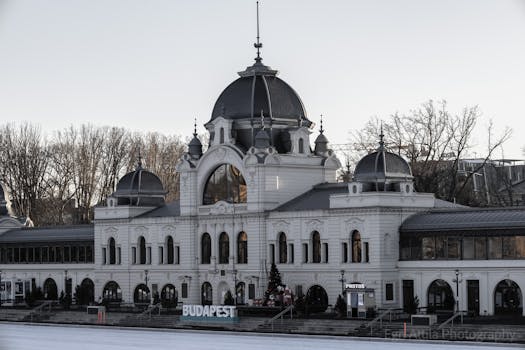
Not all of Budapest’s bathing options are focused on thermal soaking. Two major complexes cater specifically to families and summer visitors looking for a more recreational experience.
Palatinus Strand on Margaret Island is Budapest’s most popular outdoor bathing complex in summer. With multiple open-air pools (including wave pools and water slides), vast green lawns for sunbathing, and a beautiful island setting in the middle of the Danube, Palatinus is the perfect destination on a hot July day. There are also thermal pools on site for those who want warm mineral water. The complex is typically open from May through September.
Dagály Thermal Bath and Swimming Complex in District XIII is one of Budapest’s largest facilities, featuring both thermal pools and Olympic-standard swimming pools. Recently modernized, Dagály is a favorite among locals for serious swimming and wellness routines. The outdoor lido area is popular in summer, while the indoor thermal section operates year-round. Dagály tends to be significantly less crowded than Széchenyi or Rudas, making it a solid choice for travelers who want a thermal bath experience without the tourist density.
Budapest Thermal Baths Comparison: Which Bath Is Right for You?
Choosing between Budapest’s thermal baths depends on what matters most to you. Here is a quick comparison to help you decide:
| Bath | Best For | 2026 Price (from) | Atmosphere | Status |
|---|---|---|---|---|
| Széchenyi | First-timers, iconic experience | 13,200 HUF (~$35) | Grand, lively, social | Open |
| Rudas | History buffs, rooftop views | 12,000 HUF (~$32) | Atmospheric, romantic | Open |
| Gellért | Art Nouveau architecture | N/A | Elegant, artistic | Closed until 2028 |
| Lukács | Budget travelers, authenticity | 7,000 HUF (~$19) | Local, unpretentious | Open |
| Veli Bej | Quiet, intimate Ottoman bath | 5,700 HUF (~$15) | Serene, exclusive | Open |
| Király | Ottoman heritage | N/A | Historic, traditional | Closed (restoration) |
| Palatinus | Families, summer fun | Varies | Recreational, outdoor | Seasonal (May–Sep) |
| Dagály | Swimmers, fewer crowds | Varies | Modern, spacious | Open |
Budapest Thermal Bath Etiquette: What You Need to Know
Hungarian thermal baths have their own set of customs and expectations. While staff at the more tourist-oriented baths like Széchenyi are accustomed to visitors who do not know the rules, following proper etiquette will enhance your experience and earn you approving nods from the regulars.
Shower Before Entering: This is the single most important rule. You must take a thorough shower before getting into any pool. Every bathhouse has shower facilities in the changing area — use them. This is not optional, and staff may intervene if you skip this step.
Wear Appropriate Swimwear: Swimsuits are required in all public areas of Budapest thermal baths. Nudity is not permitted in pool areas or communal spaces. The only exception is in designated single-sex areas at some traditional baths where swimwear is optional.
Bring Flip-Flops: Pool sandals or flip-flops are strongly recommended and practically essential. The floors in changing areas, corridors, and around pools can be very slippery. Wearing footwear also helps with hygiene.
Bring Your Own Towel: This is an important change from pre-pandemic times: most Budapest thermal baths no longer offer towel rental. Széchenyi is the main exception, offering towels with premium packages. Plan to bring your own towel, or purchase one from the on-site shops.
Respect the Quiet: Thermal pools are meant to be relaxing spaces. Keep your voice down, especially in indoor pools and relaxation areas. Loud conversations, splashing, and rowdy behavior are frowned upon.
No Glass: For safety reasons, glass containers are prohibited in all bath areas. If you bring drinks, use plastic bottles.
Photography Rules: Photography policies vary by bath. Outdoor photos are generally permitted at Széchenyi, but indoor photography is discouraged or prohibited at most baths. Rudas has a strict no-photography policy throughout. Always check posted signs and respect the privacy of other bathers.
Swimming Caps: If you plan to use the swimming or lap pools (as opposed to the thermal pools), you will typically need to wear a swimming cap. These can usually be purchased on-site.
What to Bring to Budapest Thermal Baths
Packing the right items will make your thermal bath visit significantly more comfortable. Here is a complete checklist of what to bring:
Essential items: Swimsuit (women can wear one-piece or bikini, men should wear proper swim trunks rather than board shorts), towel (your own, since most baths no longer rent them), flip-flops or pool sandals, a plastic bag for wet items, and a water bottle (plastic, not glass). You will dehydrate faster than you expect in the hot water — the baths have refill fountains.
Recommended extras: A swimming cap (required for lap pools), shower gel and shampoo (showers are available but soap is not always provided), a small padlock if you prefer extra locker security, and sunscreen if you plan to use outdoor pools. A light snack can be helpful for long visits, though eating near pools is prohibited.
What to leave behind: Expensive jewelry, large amounts of cash, and valuable electronics you cannot afford to lose. Lockers are generally secure, but a thermal bath is not the place for your best watch. Most baths have secure locker systems using an electronic wristband key, but minimizing valuables is always wise.
Insider Tips for Getting the Most Out of Budapest Thermal Baths
Visit early in the morning: Nearly every bath is at its quietest and most atmospheric in the first hour after opening. Early morning is also when many regulars visit, giving you a glimpse into authentic local bathing culture. At Széchenyi, the difference between 7:00 AM and noon is dramatic.
Weekdays are significantly less crowded: If your schedule allows, visit thermal baths on a weekday rather than a weekend. Saturday afternoons at Széchenyi can feel overwhelmingly packed, while a Tuesday morning at the same bath offers a completely different experience.
Work your way up in temperature: Start with the cooler pools and gradually move to warmer ones. Jumping straight into a 40°C pool can cause dizziness, especially if you are not accustomed to thermal bathing. Most baths have pools ranging from 28°C to 42°C.
Stay hydrated: This cannot be emphasized enough. The combination of heat and mineral water causes rapid dehydration. Bring a water bottle, use the refill fountains, and do not wait until you feel thirsty or dizzy.
Budget two to four hours: A thermal bath visit is not something to rush. Allow at least two hours to properly enjoy the experience, and three to four hours if the bath has extensive facilities. Most admission tickets are for a full day, so there is no reason to hurry.
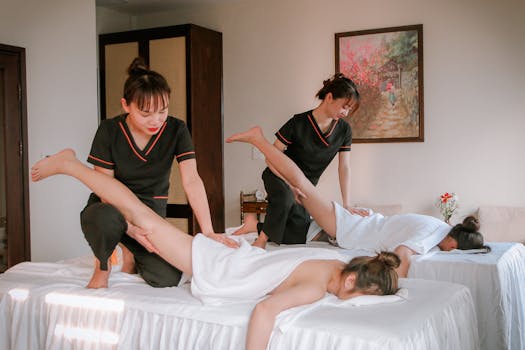
Try a thermal bath massage: Most major baths offer massage services ranging from basic relaxation massages to specialized therapeutic treatments. Prices are remarkably affordable by Western European or North American standards — a 20-minute massage at Széchenyi costs around 8,000–12,000 HUF ($21–32). Book at the reception upon arrival, as popular time slots fill up.
Consider the Budapest Card: If you are planning to visit multiple thermal baths during your trip, the Budapest Card offers discounted entry to several baths along with free public transport and other benefits. It can represent significant savings over individual tickets.
Budapest Spa Parties: The Sparty Experience
For something completely different from a traditional daytime thermal bath visit, Budapest offers one of Europe’s most unique nightlife experiences: the Sparty (a portmanteau of “spa” and “party”). Held most Saturday nights at Széchenyi Baths, the Sparty transforms the grand Neo-Baroque complex into an enormous pool party with DJ performances, elaborate light shows, fire displays, and hundreds of revelers dancing in and around the steaming outdoor pools.
The Sparty runs from 9:30 PM to 2:00 AM, with last entry at 1:00 AM. Standard tickets cost approximately €59 per person and include entry and a locker. Premium tickets at around €87 add drink coupons and access to a warm-up party. The event is strictly for adults aged 18 and over. While the Sparty is undeniably a tourist-oriented event and a far cry from a traditional thermal bathing experience, it is an undeniably memorable night out and a uniquely Budapest way to party.
Planning Your Budapest Thermal Bath Visit: Practical Advice
Best time of year: Budapest thermal baths are a year-round attraction, and each season offers a different experience. Winter (December through February) is arguably the most magical time to visit outdoor baths like Széchenyi — soaking in 38°C water while snow falls around you is unforgettable. Spring and autumn offer pleasant temperatures and fewer crowds. Summer is ideal for the outdoor complexes like Palatinus.
How many baths to visit: If you have time for only one bath, choose Széchenyi for the iconic experience or Rudas for the most atmospheric one. With two or three days, add Rudas (or Széchenyi, whichever you did not do first) and Veli Bej or Lukács for a contrast. Dedicated spa enthusiasts visiting for a week could easily visit a different bath each day.
Booking tickets: For Széchenyi and Rudas, buying tickets online in advance is recommended, especially during peak tourist season (June through August) and on weekends. Online tickets sometimes offer small discounts and guarantee entry during busy periods. Smaller baths like Lukács and Veli Bej can usually be visited without advance booking, though Veli Bej’s limited capacity means checking availability is wise.
Age restrictions: Children must be at least 14 years old to use the thermal pools at most Budapest baths, as the high water temperatures (up to 42°C) can affect young cardiovascular systems. Swimming pools and recreational areas generally have lower age restrictions. Palatinus is the most family-friendly option, with pools and attractions suitable for all ages.
Accessibility: Most major thermal baths in Budapest have made significant accessibility improvements in recent years, but the historic buildings do present challenges. Széchenyi and the modernized sections of Rudas offer the best wheelchair access. Contact the specific bath before your visit if you have mobility concerns.
Budapest’s Thermal Water: The Science Behind the Healing
Budapest sits on a geological fault line where the Buda Hills meet the Great Hungarian Plain. This unique geology creates a network of over 120 natural thermal springs beneath the city, some pushing water to the surface from depths of over 1,000 meters. The water temperature at the source ranges from 21°C to 77°C depending on the spring, and the mineral content varies significantly between different parts of the city — which is why each Budapest thermal bath has its own distinct water composition and therapeutic profile.
The thermal waters of Budapest are classified as “medicinal waters” under Hungarian law, meaning they have been scientifically tested and officially certified for therapeutic use. This is not mere marketing — Hungary has one of the world’s most rigorous systems for certifying therapeutic waters, requiring clinical evidence of health benefits before a spring can be designated as medicinal. Several Budapest baths operate licensed medical departments where doctors prescribe specific bathing regimens for patients with chronic conditions.
The most common minerals found in Budapest’s thermal waters include calcium (beneficial for bone health and circulation), magnesium (muscle relaxation and nerve function), sulfate (detoxification and joint pain relief), hydrogen carbonate (digestive health), and fluoride (dental health). The specific mineral profile differs between baths: the waters at Széchenyi are particularly rich in calcium and magnesium sulfate, while the Rudas springs contain high concentrations of sodium, calcium, and hydrogen carbonate. Veli Bej and Lukács share similar calcium-magnesium-fluoride rich waters from the same spring system.
Clinically documented benefits of regular thermal bathing in Budapest’s mineral waters include relief from chronic joint pain and arthritis (particularly osteoarthritis of the knee and hand), reduction in lower back pain, improved circulation and blood pressure regulation, relief from certain skin conditions including psoriasis and eczema, reduced muscle tension and faster recovery from physical exertion, improved sleep quality, and significant stress reduction. The thermal waters are not a cure-all, but for many conditions they offer a pleasant and effective complement to conventional medical treatments.
Choosing Your Bath: Recommendations by Traveler Type
First-time visitor with limited time: Go to Széchenyi. It is the most iconic, the most photogenic, the easiest to navigate, and offers the widest range of pools and facilities. The outdoor pools alone justify the visit, and you will leave understanding why Budapest is called the City of Spas.
History and architecture enthusiast: Rudas is your bath. The 500-year-old Ottoman pool is genuinely awe-inspiring, and the contrast between the ancient Turkish section and the modern rooftop is fascinating. If Király has reopened by the time of your visit, pair it with Rudas for a full Ottoman bath experience.
Couple on a romantic trip: Rudas during the Friday or Saturday night session is hard to beat — the rooftop pool under the stars with Pest glittering across the river is unforgettable. For a daytime option, Veli Bej offers the most intimate and peaceful atmosphere of any Budapest bath.
Budget traveler: Lukács offers a genuine thermal bath experience at nearly half the price of Széchenyi. Veli Bej is also very affordable, especially for the quality of the experience. Both are authentic, uncrowded, and popular with locals.
Family with teenagers: Széchenyi has the most to offer for families — the large outdoor pools, the variety of indoor thermal baths, and the on-site restaurant make it possible to spend an entire day comfortably. Remember that children under 14 are generally not permitted in thermal pools.
Family with young children: Palatinus on Margaret Island is your best option in summer, with its water slides, wave pools, and grassy play areas. In winter, Dagály offers family-friendly facilities including pools suitable for younger children.
Repeat visitor looking for something new: If you have already done Széchenyi and Rudas, try Veli Bej for its Ottoman charm and serene atmosphere, or explore Dagály for its modern facilities and local crowd. The Sparty at Széchenyi on Saturday nights offers a completely different perspective on a bath you may already know.
Budapest Thermal Baths by Season
Winter (December – February): This is peak thermal bath season and arguably the most magical time to visit. The experience of soaking in steaming outdoor pools at Széchenyi while the temperature outside drops below freezing is one of the most iconic Budapest moments. Steam rises dramatically from the water, creating an almost otherworldly atmosphere. Rudas’s rooftop pool is equally stunning in winter. Indoor baths like Veli Bej and Lukács are cozy retreats from the cold. Expect larger crowds during the Christmas and New Year holidays.
Spring (March – May): An excellent time to visit thermal baths, with comfortable weather, manageable crowds, and the city coming alive with spring blooms. Outdoor pools at Széchenyi are pleasant without the intensity of summer heat or winter cold. The cherry blossoms in City Park near Széchenyi add a beautiful backdrop in April.
Summer (June – August): The hottest months bring the largest tourist crowds to Budapest’s baths. Széchenyi and Rudas can be very busy during peak hours. However, summer opens up the seasonal outdoor complexes — Palatinus on Margaret Island and the outdoor areas of Dagály become the local favorites. Early morning or late afternoon visits to the major baths help avoid the worst crowds.
Autumn (September – November): Perhaps the ideal season for a thermal bath visit. Tourist numbers drop after summer, temperatures are cooling (making the warm water more inviting), and the autumn foliage in City Park around Széchenyi is gorgeous. This is the sweet spot between summer crowds and the holiday rush.
Frequently Asked Questions About Budapest Thermal Baths
Are Budapest thermal baths mixed gender? Yes, all major Budapest thermal baths are mixed gender throughout the week. The old tradition of gender-segregated bathing days has largely been discontinued. Rudas was the last major bath to end its single-sex schedule, and now welcomes all genders daily.
Can I use the thermal baths if I am pregnant? Most Budapest baths advise pregnant women to consult their doctor before using thermal pools, particularly those above 38°C. The cooler swimming pools and pools under 37°C are generally considered safe, but medical advice specific to your situation is always recommended.
How long should I spend at a thermal bath? Most visitors spend between two and four hours. Do not stay in any single hot pool for longer than 20 minutes at a time — alternate between warm and cool pools, take breaks, and drink plenty of water. You can stay all day if you pace yourself properly.
Do I need to book tickets in advance? For Széchenyi and Rudas, advance online booking is strongly recommended during peak season (June through August) and on weekends year-round. Smaller baths like Lukács, Veli Bej, and Dagály can usually be visited without advance booking, though checking availability for Veli Bej is wise given its limited capacity.
Is there food available at the baths? Most major baths have on-site cafeterias or restaurants. Széchenyi has a full restaurant as well as smaller food and drink vendors. However, eating near or in the pools is prohibited for hygiene reasons. Bring snacks for between-pool breaks if you plan a long visit.
Are the baths accessible for visitors with disabilities? Accessibility varies by bath. Széchenyi and the newer sections of Rudas offer the best wheelchair access and adapted facilities. The historic Ottoman baths (Király, Veli Bej) present more accessibility challenges due to their age and architecture. Contact your chosen bath in advance to discuss specific needs.
Can I visit multiple baths in one day? You can, but most people find that one bath per day is plenty. Thermal bathing is physically tiring — the heat, mineral absorption, and relaxation all take a toll on your energy levels. If you want to compare baths, spread your visits across different days for the best experience.
Explore More of Budapest
Budapest thermal baths are just one part of what makes this city extraordinary. For a comprehensive overview of everything the Hungarian capital has to offer, check out our guide to things to do in Budapest, covering landmarks, river cruises, ruin bars, markets, and much more.
We have detailed individual guides to each major bath — including Széchenyi, Rudas, Lukács and more — linked throughout this page and below. Bookmark it and check back for the latest updates on Budapest’s incredible thermal bathing scene.
Every Budapest Thermal Bath, Reviewed
Each bath has its own personality. Here’s our full write-up on each one, plus the practical guides that make a first visit painless.
- Széchenyi Baths — the grand yellow palace bath — tickets, timing and the outdoor pools.
- Rudas Baths — the 16th-century Ottoman dome and the rooftop tub over the Danube.
- Gellért Baths — the Art Nouveau showpiece with mosaic-tiled halls, closed for renovation until around 2028.
- Lukács Baths — the locals’ bath, low-key and serious about its healing water.
- Király Baths — the intimate, candle-lit Ottoman bath in Buda.
- our bath comparison — which bath to choose based on what you actually want from the day.
- bath etiquette — what to bring, what to wear and the unwritten rules.
- the famous Sparty — everything to know about the night-time spa parties at Széchenyi.
Beyond the Baths
A bath day anchors a Budapest trip rather than filling it. Here is what to build around it.
- the Budapest travel guide — transport passes, currency and the admin that makes a bath day easy
- what to eat afterwards — a long soak leaves you starving — this is where to go next
- where to stay — including which districts put you walking distance from a bathhouse
- Budapest itineraries — where a half-day at the baths fits without wrecking the rest of the plan
- Budapest nightlife — the ruin bars and rooftops that pair well with an early-evening soak
- day trips from Budapest — when you want a change of scene between spa days
- the city’s Ottoman and imperial history — the story of why a landlocked capital ended up with 100+ thermal springs
- festivals and events — including the Sparty season and what else is on while you are here
- Budapest with kids — which pools actually welcome children and which quietly do not
- romantic Budapest — couples’ cabins, private packages and the rooftop soak at sunset
- shopping in Budapest — from market paprika to the swim kit you forgot to pack