Budapest History & Culture: From Roman Ruins to Ruin Bars
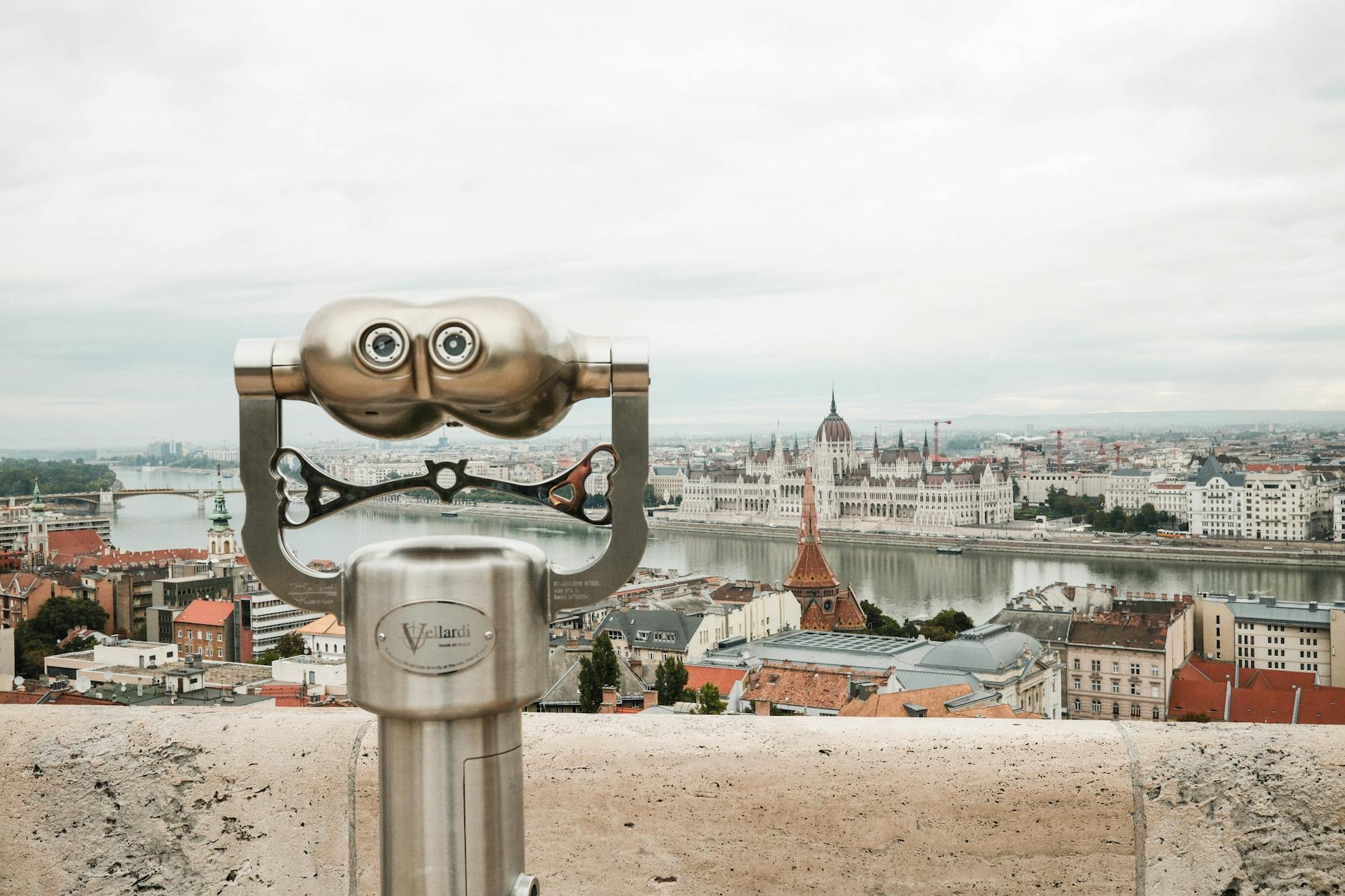
Few European capitals can rival the sheer depth of story woven into every cobblestone, thermal spring, and baroque facade quite like Budapest. Straddling the Danube with Buda’s ancient hills on one bank and Pest’s grand boulevards on the other, this city has been shaped by Roman legions, Magyar horsemen, Ottoman sultans, Habsburg emperors, and twentieth-century revolutions. Budapest history stretches back over two thousand years, and its UNESCO World Heritage-listed riverbanks and castle quarter stand as living testimony to one of the most dramatic urban stories in all of Europe. Whether you are wandering through a sixteenth-century Turkish bathhouse or gazing up at the Neo-Gothic spires of Parliament, you are walking through layers of civilisation that few cities can match.
Budapest earned its place on the UNESCO World Heritage List in 1987, with extensions added in 2002, recognising the panorama of the Danube banks, the Buda Castle District, and Andrássy Avenue. The designation is well deserved: this is a city where Roman ruins sit beneath apartment blocks, where a medieval church shares a hilltop with a fairy-tale bastion, and where bullet holes from the 1956 Revolution are still visible on residential walls. Understanding Budapest history is not just an academic exercise — it is the key to unlocking why this city looks, feels, and functions the way it does today.
In this comprehensive guide, we cover everything a curious traveller needs to know about Budapest’s past and present culture. From a concise historical timeline to the Ottoman bath legacy, Jewish heritage, world-class museums, architectural masterpieces, and living traditions, we have designed this article to help you plan meaningful visits to the sites that matter most. We include practical tips on entry fees, opening hours, and transport so you can move from reading to exploring with confidence.
A Brief Timeline of Budapest History
Understanding Budapest history becomes far easier once you have a mental map of the major eras that shaped the city. Below is a concise timeline covering more than two millennia of change, conquest, and renewal.
Roman Aquincum (1st–5th century AD) — The Romans established the military and civilian town of Aquincum on the west bank of the Danube around 89 AD, making it the capital of the province of Pannonia Inferior. At its peak, roughly 30,000 people lived here. Today, you can still visit the Aquincum Museum and archaeological park in Óbuda, where mosaic floors, an amphitheatre, and a reconstructed organ hint at the sophistication of Roman life on the frontier.
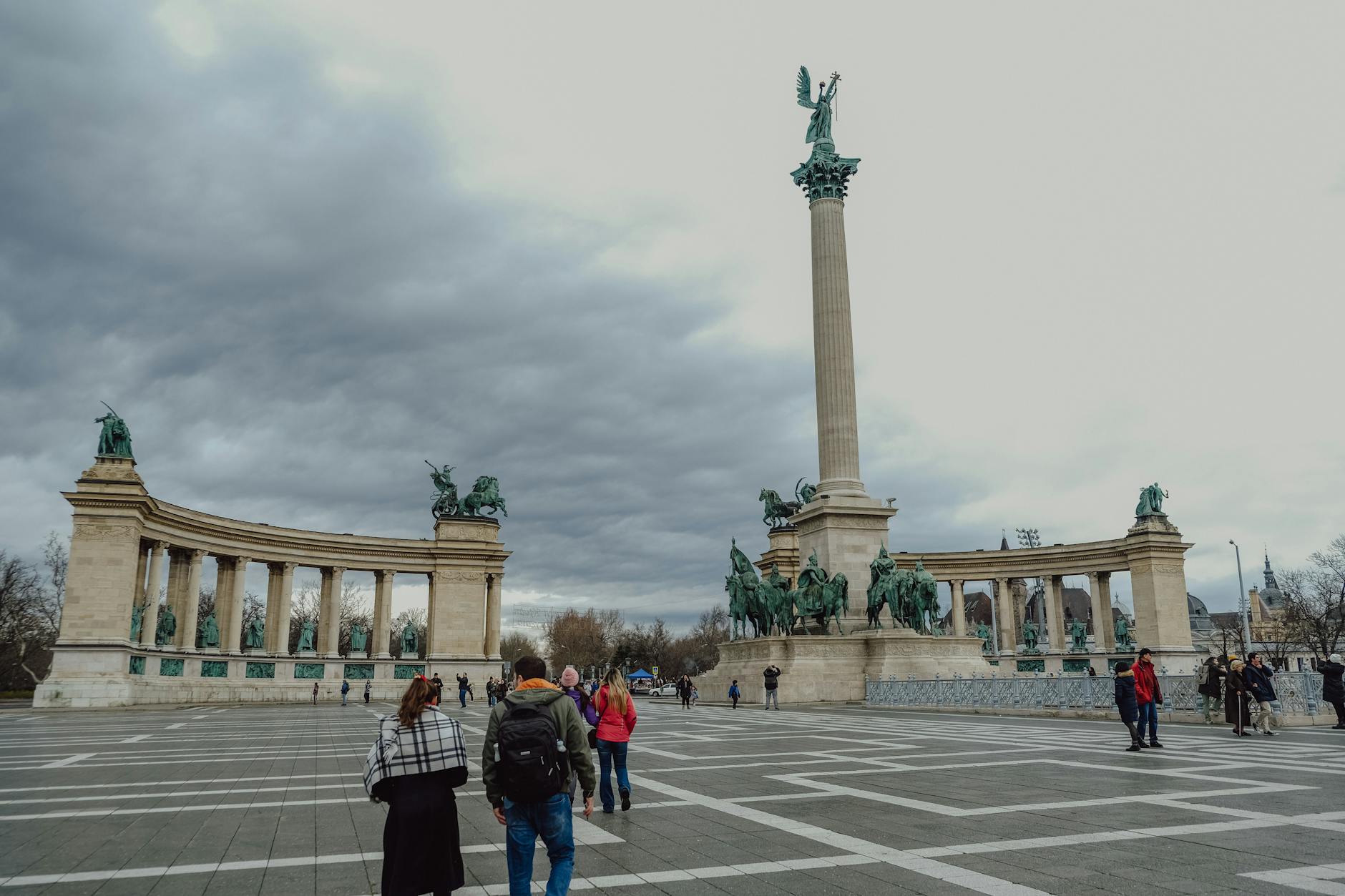
Magyar Conquest (896 AD) — The seven Magyar tribes, led by Árpád, crossed the Carpathian Mountains and settled the Pannonian Basin in 896. This founding moment, known as the Honfoglalás, is commemorated at Heroes’ Square and remains central to Hungarian national identity. The Árpád dynasty would go on to establish the Kingdom of Hungary and define the region’s political structure for centuries.
Medieval Buda (13th–15th century) — After Mongol invasions devastated the lowlands in 1241–1242, King Béla IV built a fortified castle atop Buda Hill. The city flourished under King Matthias Corvinus in the fifteenth century, becoming one of the great Renaissance courts of Europe. Buda’s Royal Palace hosted scholars, artists, and a legendary library — the Bibliotheca Corviniana.
Ottoman Occupation (1541–1686) — The Ottoman Empire captured Buda in 1541, beginning nearly 150 years of Turkish rule. The Ottomans transformed churches into mosques, built magnificent bathhouses fed by the city’s thermal springs, and left an indelible mark on Budapest’s identity. The siege of 1686 by the Holy League finally ended Ottoman control but left much of the city in ruins.
Habsburg Era (1686–1867) — Under Habsburg rule, Buda and Pest were gradually rebuilt in baroque and neoclassical styles. The Chain Bridge, completed in 1849, was the first permanent bridge linking the two cities. Tensions between Hungarian nationalists and the Austrian crown erupted in the failed 1848–1849 Revolution led by Lajos Kossuth.
The Compromise & Dual Monarchy (1867–1918) — The Ausgleich of 1867 created the Austro-Hungarian Empire, granting Hungary significant self-governance. This unleashed a building boom: the Parliament, the Opera House, Andrássy Avenue, and the Millennium Underground Railway (continental Europe’s first metro) all date from this golden age. In 1873, the three cities of Buda, Pest, and Óbuda were officially unified to create Budapest.
Belle Époque & Early 20th Century — By 1900, Budapest was a glittering metropolis of over 700,000 people, boasting grand cafés, thermal palaces, and Art Nouveau masterpieces. The city hosted the 1896 Millennium celebrations with enormous civic pride. World War I ended the dual monarchy, and the Treaty of Trianon (1920) stripped Hungary of two-thirds of its territory — a wound that still echoes in national memory.
World War II — Hungary’s alliance with Nazi Germany brought devastation. The Jewish population suffered mass deportations, and the Siege of Budapest (1944–1945) was one of the bloodiest urban battles of the war. Every bridge across the Danube was destroyed by retreating German forces.
1956 Revolution — On 23 October 1956, Hungarians rose up against Soviet-backed communist rule. For thirteen extraordinary days, freedom seemed possible before Soviet tanks crushed the uprising. Around 2,500 Hungarians died, and 200,000 fled the country. The revolution remains a defining moment in Budapest history.
Communist Era (1956–1989) — Under János Kádár’s “Goulash Communism,” Hungary became the most liberal state in the Soviet bloc, yet censorship, secret police surveillance, and political repression persisted. Soviet-era housing blocks reshaped the city’s skyline.
1989 Transition & Modern Budapest — Hungary’s peaceful transition to democracy in 1989 — symbolised by the ceremonial reburial of Imre Nagy — opened the door to EU membership (2004) and a cultural renaissance. Today, Budapest is one of Europe’s fastest-growing tourism destinations, blending its turbulent heritage with a vibrant contemporary arts, food, and nightlife scene.
Buda Castle District: The Heart of Budapest History
The Buda Castle District is where Budapest history feels most tangible. Perched on a limestone plateau above the Danube, this UNESCO-listed quarter contains the Royal Palace, medieval streets, and some of the city’s most photographed landmarks. We recommend setting aside at least half a day to explore properly.
The Royal Palace (Budavári Palota) dominates the southern end of Castle Hill. Originally built in the thirteenth century, it has been destroyed and rebuilt multiple times. Today, the palace complex houses three major institutions. The Hungarian National Gallery (Wings B–D) showcases Hungarian art from the medieval period to the present, including stunning Gothic altarpieces and works by Mihály Munkácsy. Entry is free for permanent exhibitions. The Budapest History Museum (Wing E) takes you through the city’s evolution from Roman Aquincum to the modern era, with vaulted medieval halls in the basement. Entry costs around 2,400 HUF (approximately 6 EUR). The National Széchényi Library (Wing F) holds over eight million items, including Corvinian manuscripts.
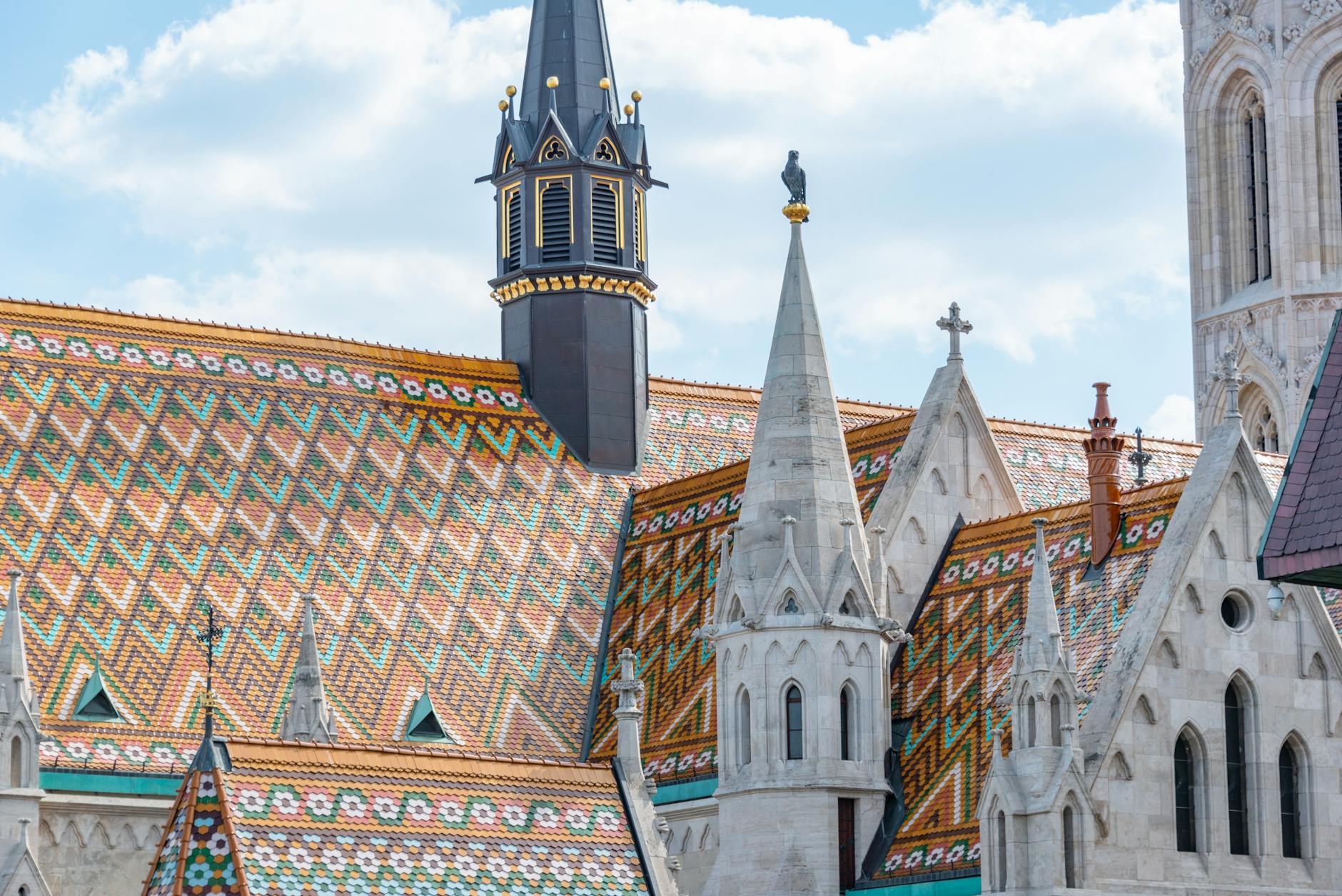
Matthias Church (Mátyás-templom), originally consecrated in 1269, is one of Budapest’s most distinctive buildings with its colourful Zsolnay ceramic roof tiles. It served as a coronation church for Hungarian kings and was converted into a mosque during Ottoman rule. Entry costs 2,500 HUF (about 6.50 EUR), and the church frequently hosts classical concerts with superb acoustics.
Just steps away, Fisherman’s Bastion (Halászbástya) offers the most iconic panoramic view of the Parliament Building and the Pest skyline. The Neo-Romanesque terrace, designed by Frigyes Schulek and completed in 1902, is free to visit at ground level. Access to the upper turrets costs 1,200 HUF (about 3 EUR) from mid-March to mid-October; it is free outside peak season.
Holy Trinity Square (Szentháromság tér) anchors the district, with its ornate plague column and views stretching to the Buda Hills. The surrounding medieval streets — Úri utca, Országház utca, Táncsics Mihály utca — are atmospheric for a stroll, lined with painted facades and hidden courtyards.
Practical tips: You can reach Castle Hill by the historic Budavári Sikló funicular from Clark Ádám Square (1,400 HUF one way, 2,500 HUF return), or walk up for free via the staircase next to it. Bus 16 from Deák Ferenc tér is another convenient option. Most outdoor areas are free; paid entries apply to the museums, Matthias Church, and the upper bastion turrets in summer.
The Ottoman Legacy in Budapest
The 150 years of Ottoman rule (1541–1686) left fewer visible monuments than you might expect — much was destroyed during the siege of Buda — but the cultural imprint is profound. The most enduring Ottoman gift to Budapest is, without question, its thermal bath culture. The Turks recognised the value of the city’s 120-plus natural hot springs and built elaborate bathhouses that still function today.
Rudas Baths, built in 1550 under Pasha Sokollu Mustafa, retain their original octagonal Ottoman pool beneath a domed ceiling pierced by star-shaped light openings. A modern rooftop pool was added in 2014, offering stunning Danube views. Entry starts at around 4,900 HUF (13 EUR) on weekdays. Király Baths, another sixteenth-century Ottoman original, reopened after careful restoration and offer a more intimate experience. Veli Bej Baths, once part of a complex built by Pasha Veli Bej, were beautifully restored in 2012 and are less crowded — a local favourite.
Beyond the baths, the Gül Baba Türbe (Tomb of Gül Baba) on Rózsadomb — the “Hill of Roses” — is the northernmost place of Islamic pilgrimage in Europe. This hexagonal tomb honours a Bektashi dervish who died during the capture of Buda in 1541. Restored with funding from the Turkish government, the site reopened in 2018 with a surrounding rose garden. Entry is free. Nearby, a small plaque marks the Tomb of Abdurrahman, the last Ottoman pasha of Buda, who died defending the city in 1686 — a poignant reminder that Budapest history encompasses many perspectives.
While few Ottoman-era buildings survive intact, keen observers will notice Turkish-influenced architectural traces: pointed arches, hammam layouts, and the occasional carved stone fragment built into later structures. We recommend combining a visit to Rudas or Király Baths with a walk to the Gül Baba Türbe for a half-day exploration of Budapest’s Ottoman heritage.

Jewish Heritage in Budapest
Budapest’s Jewish Quarter (District VII, also known as Erzsébetváros) is one of Europe’s most significant sites of Jewish heritage and one of the most emotionally powerful areas a visitor can explore. Before World War II, Budapest was home to one of the largest Jewish communities on the continent, numbering over 200,000 people. The Holocaust devastated this community — an estimated 565,000 Hungarian Jews were murdered — and the neighbourhood carries that memory alongside a resilient cultural revival.
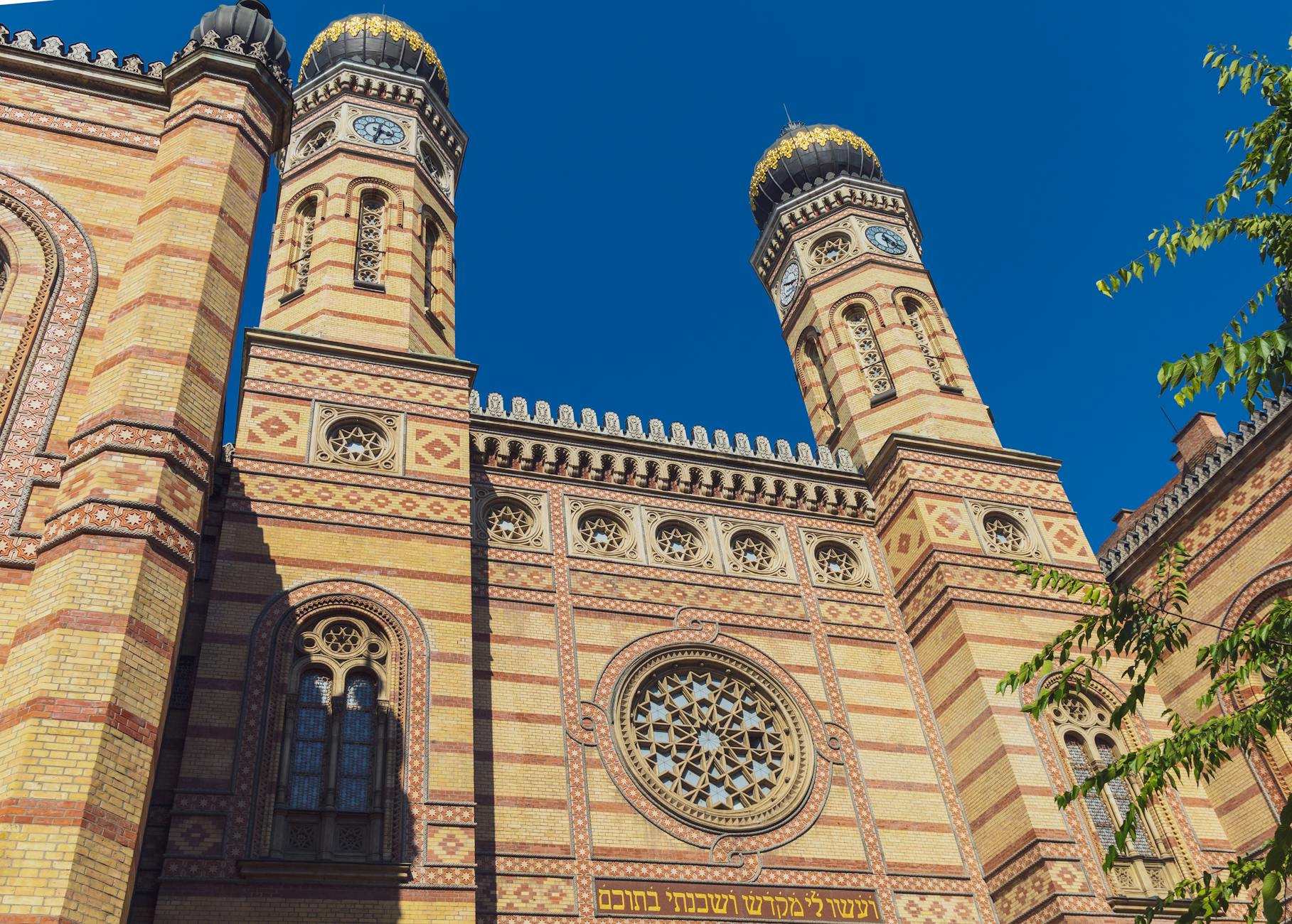
The Dohány Street Synagogue (Dohány utcai zsinagóga), built between 1854 and 1859 in Moorish Revival style, is the largest synagogue in Europe and the second largest in the world. Its twin onion-domed towers are an unmistakable landmark. Entry costs 7,000 HUF (about 18 EUR) and includes a guided tour, access to the Jewish Museum next door, the Heroes’ Temple, and the moving rear courtyard where the Emanuel Tree — a metal weeping willow by sculptor Imre Varga — bears the names of victims on its leaves. We strongly recommend the guided tour for the historical context it provides.
Along the Danube embankment between the Chain Bridge and the Parliament, the Shoes on the Danube Bank memorial is one of Budapest’s most haunting sites. Sixty pairs of cast-iron shoes, created by sculptor Gyula Pauer and filmmaker Can Togay in 2005, mark the spot where Arrow Cross militiamen forced Jewish victims to remove their shoes before shooting them into the river during the winter of 1944–1945. The memorial is always open and free to visit. We ask visitors to approach with quiet respect.
The story of Raoul Wallenberg, the Swedish diplomat who saved tens of thousands of Hungarian Jews by issuing protective passports and establishing safe houses, is inseparable from Budapest history. Several memorials honour his courage, including a statue on Szilágyi Erzsébet fasor near Buda. The Holocaust Memorial Center (Páva utca 39) offers a deeply researched permanent exhibition on the Hungarian Holocaust. Entry is 1,600 HUF (4 EUR). Guided walking tours of the Jewish Quarter, available through several operators, typically run two to three hours and cost 4,000–8,000 HUF (10–20 EUR).
Museums Worth Your Time
Budapest’s museums cover an extraordinary range, from ancient artefacts to Cold War secrets. Here are the institutions we consider most rewarding for visitors interested in Budapest history and Hungarian culture.
The Hungarian National Museum (Magyar Nemzeti Múzeum), founded in 1802, traces Hungarian history from the prehistoric era to the fall of communism. Highlights include the coronation mantle of St. Stephen and archaeological treasures from the Magyar conquest. Entry: 3,200 HUF (8 EUR). Located on Múzeum körút, it is easily reached by metro (M3, Kálvin tér).
The Museum of Fine Arts (Szépművészeti Múzeum), reopened after extensive renovation, sits at the western edge of Heroes’ Square. Its collection spans Egyptian antiquities, Old Masters (including works by El Greco, Raphael, and Monet), and one of Europe’s finest collections of Spanish painting outside Spain. Entry: 4,200 HUF (11 EUR).
The House of Terror (Terror Háza, Andrássy út 60) occupies the former headquarters of both the Arrow Cross (Nazi-allied) and ÁVH (communist secret police). The museum documents the horrors of both regimes through immersive exhibitions, including a reconstructed basement prison. It is one of the most affecting museum experiences in Europe. Entry: 4,000 HUF (10 EUR). Open Tuesday to Sunday, 10:00–18:00.
The Hospital in the Rock (Sziklakórház) is a secret underground hospital and nuclear bunker carved into the caves beneath Castle Hill. Used during the 1944–1945 Siege and the 1956 Revolution, it is accessible only by guided tour (every hour, in multiple languages). Entry: 5,000 HUF (13 EUR). We consider this one of Budapest’s most unique and underrated attractions.
Memento Park (Szoborpark), located about 20 minutes by bus from the city centre, is an open-air museum displaying monumental communist-era statues removed from public spaces after 1989. Towering Lenin figures, Soviet soldier memorials, and propagandist worker statues create a surreal landscape. Entry: 2,500 HUF (6.50 EUR). Direct bus services run from Deák tér daily.
The Ludwig Museum of Contemporary Art, housed in the Palace of Arts (MÜPA) complex on the Pest Danube bank, showcases Hungarian and international contemporary works. Entry: 2,400 HUF (6 EUR). It pairs well with a concert or performance at MÜPA itself.
Architectural Highlights of Budapest
Budapest’s architectural landscape is a living catalogue of European styles, from Romanesque and Gothic through Baroque, Neoclassical, Art Nouveau, and even Soviet Brutalist. Few cities offer such variety within walking distance.
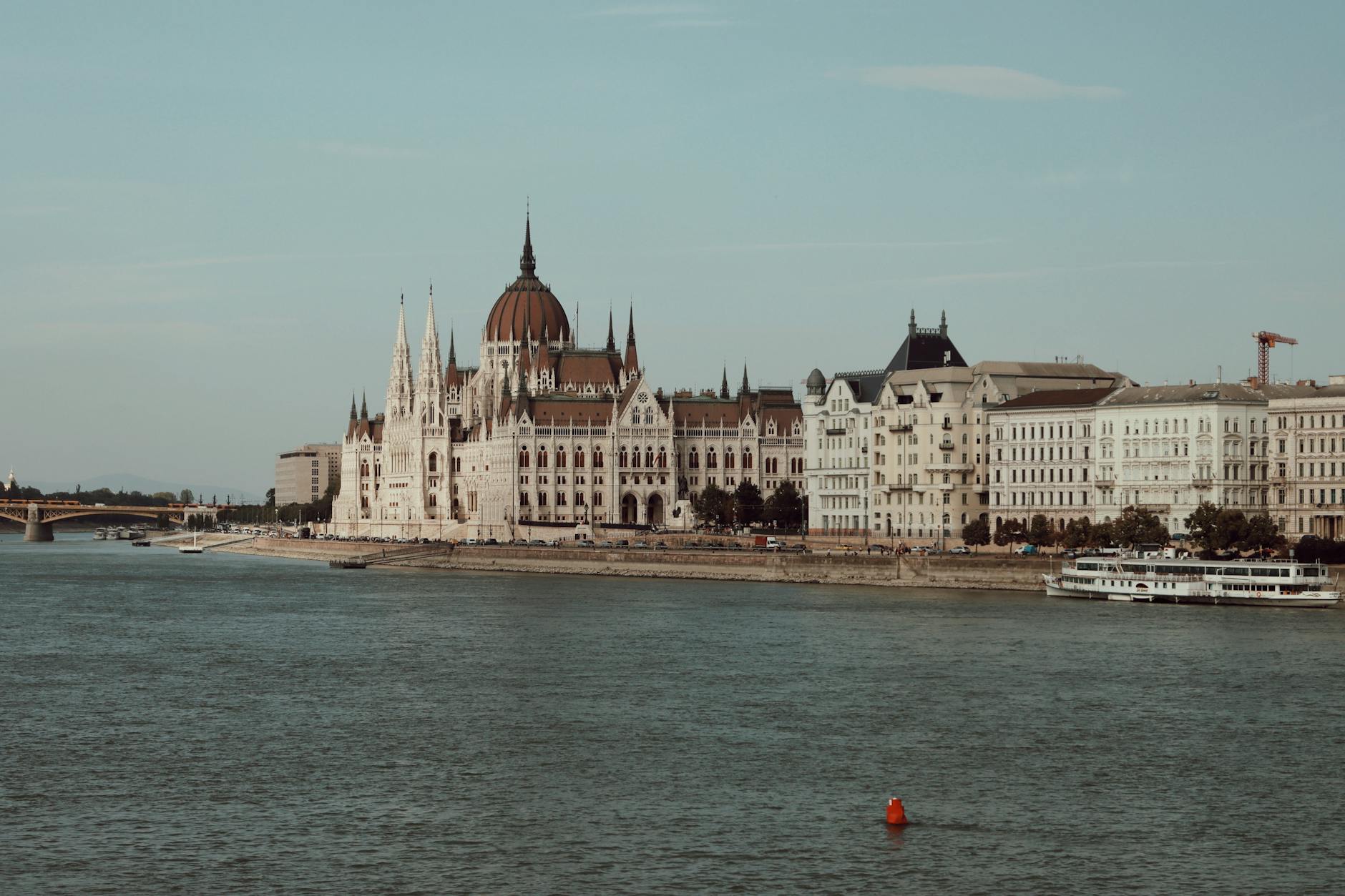
The Parliament Building (Országház), completed in 1904 and designed by Imre Steindl, is Hungary’s most iconic structure. This Neo-Gothic masterpiece stretches 268 metres along the Danube and contains 691 rooms. Guided tours (available in multiple languages) last about 45 minutes and include the ornate central staircase and the Crown Jewels display. Tour tickets cost 6,000 HUF (15 EUR) for EU citizens and 12,000 HUF (30 EUR) for non-EU visitors. We recommend booking online in advance as tours sell out, especially in summer. Open daily except on days when Parliament is in session.
St. Stephen’s Basilica (Szent István-bazilika) is Budapest’s tallest building (jointly with Parliament at 96 metres — a deliberate symbolic choice referencing the year 896). The basilica houses the mummified right hand of St. Stephen, Hungary’s first king. Entry to the church is by donation (suggested 600 HUF / 1.50 EUR); the panoramic observation deck costs 2,000 HUF (5 EUR) and offers sweeping views over Pest.
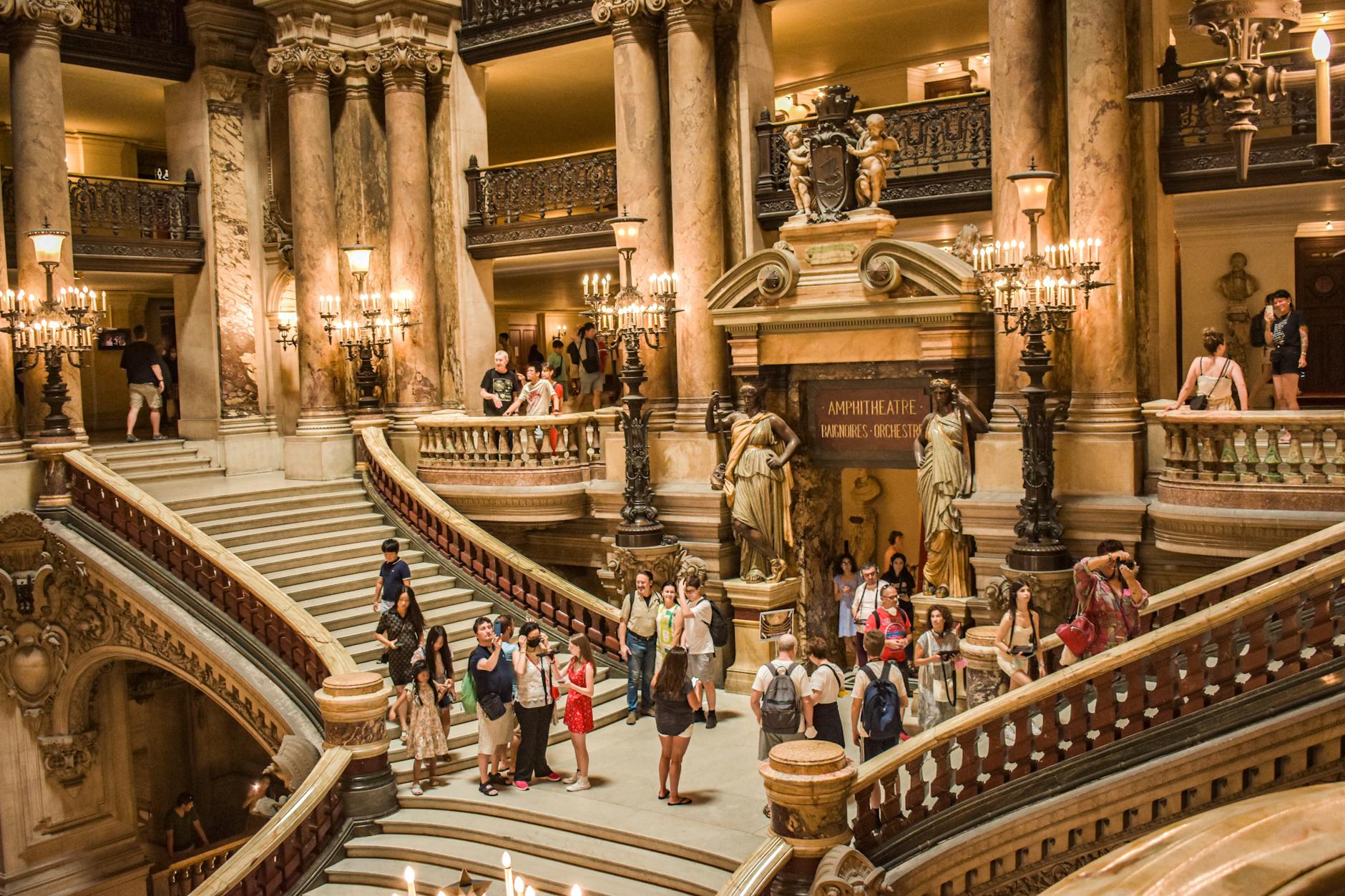
The Hungarian State Opera House (Magyar Állami Operaház), designed by Miklós Ybl and opened in 1884, is a Neo-Renaissance jewel. After a major renovation completed in 2022, its gilded interior is even more dazzling. Guided tours run daily at 14:00 and 15:00 (5,990 HUF / 15 EUR), or you can simply attend a performance — opera tickets start from as little as 1,500 HUF (4 EUR) for restricted-view seats.
The legendary New York Café, opened in 1894 inside the New York Palace (now a hotel), is arguably the most opulent coffee house in the world. Its frescoed ceilings, gilded columns, and marble staircases make it worth a visit even if a coffee costs 3,000–5,000 HUF (8–13 EUR). The café was a hub for writers and journalists during Budapest’s literary golden age.
Budapest’s Art Nouveau heritage is spectacular. The Gresham Palace (now the Four Seasons Hotel), facing the Chain Bridge, features stained glass by Miksa Róth. The Museum of Applied Arts (Iparművészeti Múzeum), designed by Ödön Lechner with its Zsolnay-tiled roof, is a masterpiece of the Hungarian Secession style. The ornate facade of the Gellért Baths and the interiors of the Geology Institute are also worth seeking out.
For something different, Soviet and Brutalist architecture enthusiasts should note buildings such as the Budapest Technical University campus and various prefabricated housing blocks (panelházak) in outer districts. While not conventionally beautiful, they are important chapters in Budapest history and increasingly appreciated for their bold geometric forms.
The 1956 Revolution: A Defining Chapter in Budapest History
No event in modern Budapest history resonates more deeply than the 1956 Revolution. On 23 October 1956, a student-led demonstration in front of the Parliament swelled into a national uprising against Soviet occupation and the Stalinist regime. For thirteen days, Hungarians — many of them teenagers — fought Soviet tanks with small arms and Molotov cocktails in the streets of Budapest. The uprising was ultimately crushed by a massive Soviet military intervention beginning on 4 November, and Prime Minister Imre Nagy, who had sided with the revolutionaries, was later arrested and executed in 1958.
Several sites across Budapest allow visitors to connect with this pivotal moment. Corvin Passage (Corvin köz), a narrow alley near Corvin Cinema in District VIII, was one of the fiercest battlegrounds where young fighters held off Soviet forces. Today, a memorial and statues honour their courage. Kossuth Square, in front of Parliament, bears a memorial to the protesters killed there by ÁVH secret police gunfire on 25 October 1956. The Imre Nagy statue — depicting the reformist prime minister standing on a bridge — was relocated from its prominent Parliament-adjacent position in 2018 but remains an important symbol.
Understanding the 1956 Revolution matters because it shaped everything that followed: the relative liberalisation under Kádár, the moral authority Hungary carried into the 1989 transition, and the deep-rooted national pride in resistance that you will encounter throughout Hungarian society. We recommend visiting the House of Terror on Andrássy Avenue for the most comprehensive exhibition on both the Nazi and communist eras, including the events of 1956.
Music, Theatre & Performing Arts
Budapest has been a powerhouse of classical music since the nineteenth century, and its performing arts scene today is as vibrant as ever. Two of the most important composers in Western classical music — Franz Liszt and Béla Bartók — called Budapest home, and their legacy permeates the city’s musical institutions.
The Hungarian State Opera House, mentioned earlier for its architecture, is equally impressive for its programming. The resident company performs opera and ballet at both the main house on Andrássy Avenue and the newer Eiffel Art Studios. Ticket prices are remarkably affordable by Western European standards, with many performances available for 3,000–15,000 HUF (8–40 EUR).
The Palace of Arts (MÜPA), opened in 2005 on the southern Pest embankment, is Budapest’s premier contemporary concert venue. It houses the Béla Bartók National Concert Hall, which boasts exceptional acoustics and hosts the acclaimed Budapest Festival Orchestra, led by renowned conductor Iván Fischer. MÜPA’s programming ranges from world-class classical concerts and jazz to folk music and contemporary dance. Tickets typically run 3,000–12,000 HUF (8–30 EUR).
The Liszt Academy of Music (Liszt Ferenc Zeneművészeti Egyetem), founded by Franz Liszt himself in 1875, is both a working conservatory and a stunning Art Nouveau concert venue. Student recitals are often free or very low cost, offering a chance to hear future stars in a breathtaking setting. The ornate main hall and Solti Chamber Hall underwent meticulous restoration in 2013.
Beyond classical music, Budapest offers lively folk dance performances — look for shows at the Hungarian Heritage House (Hagyományok Háza) or the Danube Folk Ensemble. The city’s famous ruin bars, particularly Szimpla Kert in the Jewish Quarter, regularly host live music spanning jazz, electronic, and indie genres. For a unique experience, we recommend checking listings at Akvárium Klub (beneath Erzsébet Square) and A38 Ship, a converted Ukrainian stone-carrying ship turned concert venue moored on the Danube.
Hungarian Traditions & Customs
Understanding a few Hungarian culture basics will enrich your visit and earn appreciative nods from locals. Hungarian (Magyar) is a Finno-Ugric language unrelated to any of its neighbours’ tongues, which means it can feel impenetrable at first — but a handful of phrases goes a long way.
- Köszönöm (KØ-sø-nøm) — Thank you
- Szia (SEE-ya) — Hi / Bye (informal)
- Egészségedre (EG-ays-shay-ged-reh) — Cheers (when drinking)
- Jó napot (YOH NAH-pot) — Good day (formal greeting)
- Kérem (KAY-rem) — Please
Tipping is customary in Budapest. In restaurants, 10–15% is standard (leave it in cash even if paying by card, or tell the server the total you would like to pay). In taxis, rounding up by 10% is appreciated. At thermal baths, tipping the massage therapist 500–1,000 HUF is a kind gesture.
Hungarians celebrate name days (névnap) — each day of the calendar is associated with one or more given names, and people receive small gifts and congratulations on “their” day, much like a second birthday. You will often see name day greetings on Hungarian television and in shops.
Hungary punches well above its weight in inventions and innovations. The Rubik’s Cube was invented by Budapest professor Ernő Rubik in 1974. László Bíró, a Hungarian-Argentine journalist, patented the modern ballpoint pen. Other Hungarian contributions include the theory of the hydrogen bomb (Edward Teller), holography (Dennis Gabor, Nobel Prize), and the foundations of computing (John von Neumann). Budapestians are quietly proud of this intellectual heritage.
Paprika is not merely a spice in Hungary — it is a cultural institution. Introduced in the sixteenth century (possibly through Ottoman trade routes), paprika now comes in eight official grades, from delicate sweet to fiery hot. You will find it in gulyás, chicken paprikás, fisherman’s soup, and on market stalls in every size of bag. The Great Market Hall (Nagyvásárcsarnok) is the best place to buy quality paprika as a souvenir.

Best Cultural Experiences for Visitors
To help you plan, we have compiled a table of our top recommended cultural experiences in Budapest, with practical details.
| Experience | Location | Duration | Cost (approx.) | Best For |
|---|---|---|---|---|
| Buda Castle District walking tour | Castle Hill, District I | 2–3 hours | Free–6,000 HUF (0–15 EUR) | History lovers, first-time visitors |
| Ottoman bath soak at Rudas | Döbrentei tér 9 | 2–4 hours | 4,900–9,900 HUF (13–25 EUR) | Relaxation, Ottoman heritage |
| Dohány Synagogue guided tour | Dohány utca 2, District VII | 1–1.5 hours | 7,000 HUF (18 EUR) | Jewish heritage, architecture |
| House of Terror | Andrássy út 60 | 1.5–2 hours | 4,000 HUF (10 EUR) | 20th-century history buffs |
| Parliament Building guided tour | Kossuth Lajos tér 1–3 | 45 minutes | 6,000–12,000 HUF (15–30 EUR) | Architecture, national history |
| Hospital in the Rock tour | Lovas út 4/c, Castle Hill | 1 hour | 5,000 HUF (13 EUR) | WWII and 1956 history |
| Opera House performance | Andrássy út 22 | 2–3 hours | 1,500–25,000 HUF (4–65 EUR) | Music fans, couples |
| Memento Park visit | Balatoni út – Szabadkai utca corner | 1–2 hours | 2,500 HUF (6.50 EUR) | Communist-era history |
| Folk dance show | Hungarian Heritage House | 1.5 hours | 3,000–6,000 HUF (8–15 EUR) | Families, cultural immersion |
| Jewish Quarter walking tour | District VII | 2–3 hours | 4,000–8,000 HUF (10–20 EUR) | History, street art, food |

Of everything in this guide, one memorial does more with less than any other: sixty pairs of iron shoes on the riverbank, and twenty-five words of explanation. Our Shoes on the Danube guide supplies the history the site itself deliberately withholds, along with the rescuers who worked a few streets away.
The 1873 union of Buda, Óbuda and Pest, and the 1950 creation of Greater Budapest, still shape how the city is organised today. Our guide to the Budapest districts traces how each of the 23 grew up, from Roman Aquincum to the industrial island of Csepel.
Frequently Asked Questions About Budapest History and Culture
How old is Budapest?
The area has been continuously inhabited for over 2,000 years, since the Romans founded Aquincum in the first century AD. However, Budapest as a unified city only came into being in 1873, when Buda, Pest, and Óbuda merged. The Magyar settlement of the region dates to 896 AD.
Why is Budapest a UNESCO World Heritage Site?
Budapest was inscribed on the UNESCO World Heritage List for the outstanding universal value of its Danube riverbank panorama, the Buda Castle District, and Andrássy Avenue. These sites represent exceptional examples of urban landscapes shaped by multiple historical periods, from medieval fortifications to nineteenth-century boulevard architecture. The Millennium Underground Railway beneath Andrássy Avenue, continental Europe’s first metro line, is included in the designation.
Is Budapest safe for tourists interested in history walks?
Yes. Budapest is generally very safe for tourists, including those exploring on foot. The main historical districts — Castle Hill, the Jewish Quarter, the Danube promenade, and Andrássy Avenue — are well-lit, well-policed, and accustomed to visitors. As with any major city, we recommend standard precautions against pickpocketing, particularly on public transport and in crowded tourist areas.
How many days do I need to explore Budapest’s historical sites?
We recommend a minimum of three to four full days to cover the major historical and cultural attractions at a comfortable pace. A week allows you to include day trips to nearby historical sites like Esztergom, Visegrád, and Szentendre. For a well-structured plan, see our Budapest itinerary guide.
Can I visit the thermal baths in winter?
Absolutely — and many visitors consider winter the best time. The outdoor pools at Széchenyi and the rooftop pool at Rudas are heated to 36–40°C year-round, making a soak in steaming water while snow falls around you one of Budapest’s most memorable experiences. The baths are open daily throughout the year.
What language do I need to speak to enjoy Budapest’s cultural sites?
English is widely spoken at all major tourist sites, museums, and guided tours. Audio guides in English (and often German, French, Spanish, and other languages) are available at most museums and landmarks. While Hungarian is a challenging language, locals genuinely appreciate any effort — even a simple köszönöm (thank you) will be met with a warm smile.
Explore Budapest’s History and Culture — In Depth
Each of the sites and themes below has its own dedicated guide, written on the ground with 2026 prices and opening hours. Start wherever your curiosity takes you.
- Buda Castle and Castle Hill — the palace’s much-rebuilt history, the museums inside, the funicular and the free ways up.
- touring the Hungarian Parliament — what the 45-minute tour actually shows you, the crown jewels, and why you must book ahead.
- the Jewish Quarter — District VII’s synagogues, Holocaust memorials, kosher food and the ruin bars layered on top.
- the House of Terror — Andrássy út 60 floor by floor — the building’s dark double history and what to expect inside.
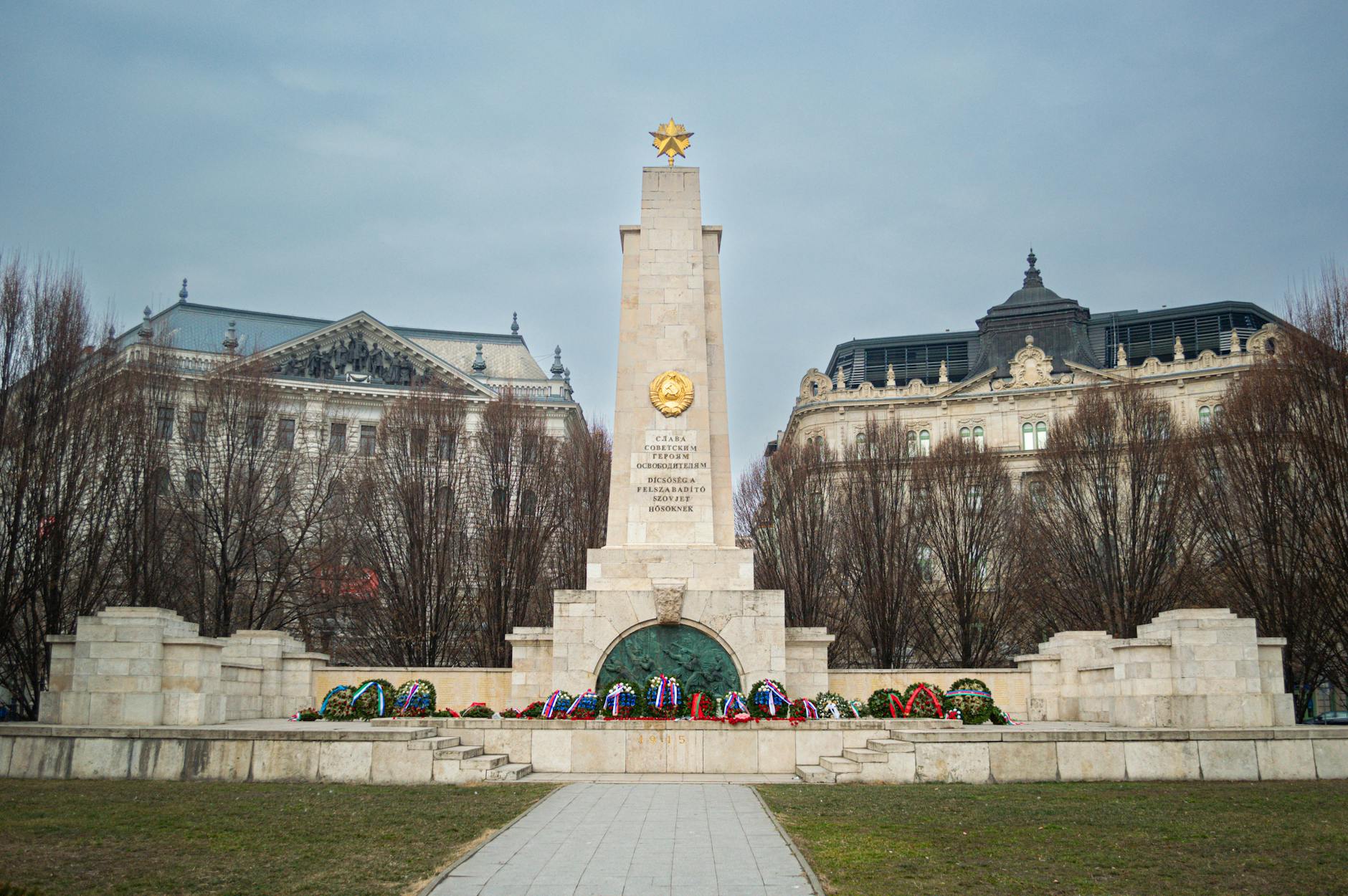
- communist-era Budapest — Memento Park’s exiled statues, Cold War bunkers, the Liberty Statue and the 1956 sites.
- the Hospital in the Rock — the WWII hospital and secret nuclear bunker tunnelled under Castle Hill.
- Budapest’s Art Nouveau buildings — Lechner’s tiled masterpieces, the Gresham Palace and a self-guided walking route.
- the best museums in Budapest — 20 picks across art and history, from City Park’s new showpieces to the quiet favourites.
Plan Your Budapest History and Culture Trip
Budapest is a city that rewards the curious traveller. The more you understand its layered past — from Roman garrisons and Ottoman hammams to Habsburg grandeur and Cold War resistance — the richer your experience will be. We hope this guide has given you both the context and the practical details to explore Budapest’s history and culture with confidence.
Ready to start planning? Explore our other in-depth Budapest guides to build your perfect trip:
- Budapest Travel Guide — Everything you need to know before you go
- Things to Do in Budapest — Top attractions, activities, and hidden gems
- Budapest Food Guide — Hungarian cuisine, best restaurants, and street food
- Where to Stay in Budapest — Neighbourhood guide and hotel recommendations
- Budapest on a Budget — How to enjoy the city without breaking the bank
- Budapest Nightlife Guide — Ruin bars, clubs, and evening entertainment
- Budapest Itinerary — Day-by-day plans for 2, 3, 4, or 7 days
- Day Trips from Budapest — Danube Bend, wine regions, and more
Take the History Outside
History here is not confined to museums. These guides show you where it turns up.
- Budapest’s thermal baths — Ottoman domes and Art Nouveau halls you can actually get into the water in
- festivals and events — the national holidays and commemorations worth planning around
- Budapest with kids — the museums and sites that hold a child’s attention
- romantic Budapest — the imperial-era Budapest that still does the heavy lifting for couples
- shopping in Budapest — Herend, Zsolnay and the antiques with a century behind them