Things to Do in Budapest: The Ultimate Guide (2026)
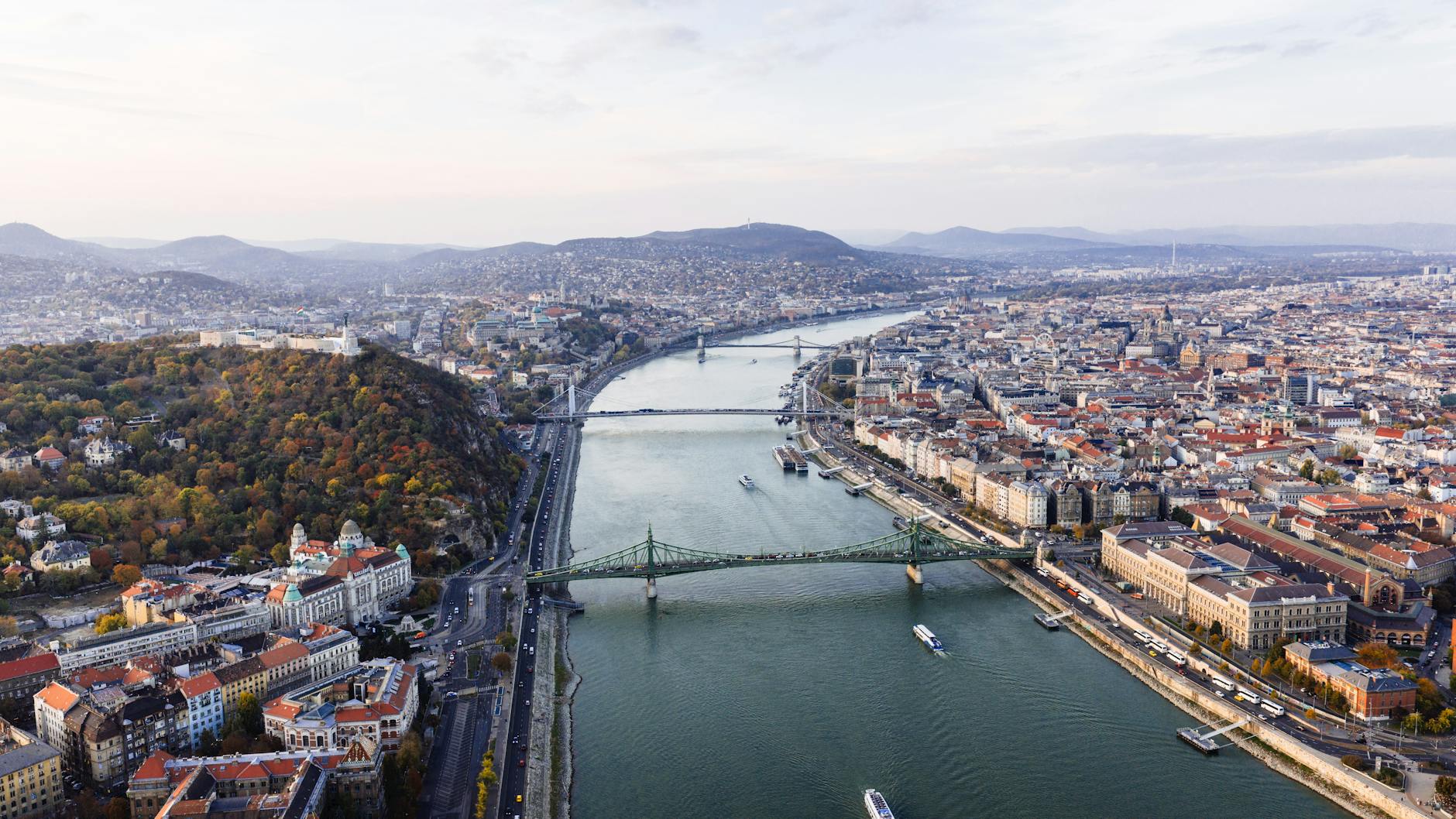
Budapest is one of Europe’s most captivating capital cities — a place where Roman ruins sit beneath Ottoman-era thermal baths, where grand Habsburg-era boulevards lead to gritty ruin bars, and where the mighty Danube divides historic Buda from cosmopolitan Pest. Whether you’re drawn by the promise of soaking in centuries-old hot springs, gawking at some of the continent’s finest architecture, or dancing until dawn in a converted factory, this city delivers far more than most visitors expect. No matter your travel style, you’ll find plenty of things to do in Budapest to fill your itinerary.
This guide covers over 75 things to do in Budapest, organized by category so you can build the perfect itinerary whether you have two days or two weeks. We include practical details — entry fees, opening hours, and insider tips — so you can spend less time planning and more time experiencing everything this extraordinary city has to offer.
Best Things to Do in Budapest: Iconic Landmarks and Historic Monuments
Budapest wears its history on its sleeve. Centuries of Roman, Ottoman, Habsburg, and communist rule have layered the city with an astonishing collection of architectural landmarks. These are the sites that define Budapest’s skyline and fill every postcard rack in the city.
Hungarian Parliament Building
The Hungarian Parliament Building is not just a political seat — it is one of the most breathtaking buildings in all of Europe. Completed in 1902 in a Gothic Revival style, this colossal structure stretches 268 meters along the Danube embankment and contains 691 ornately decorated rooms, 20 kilometers of internal stairways, and 40 kilograms of gold used throughout its interior. It houses the Hungarian Crown Jewels, including the Holy Crown of Hungary, which has crowned the nation’s monarchs since the 12th century.
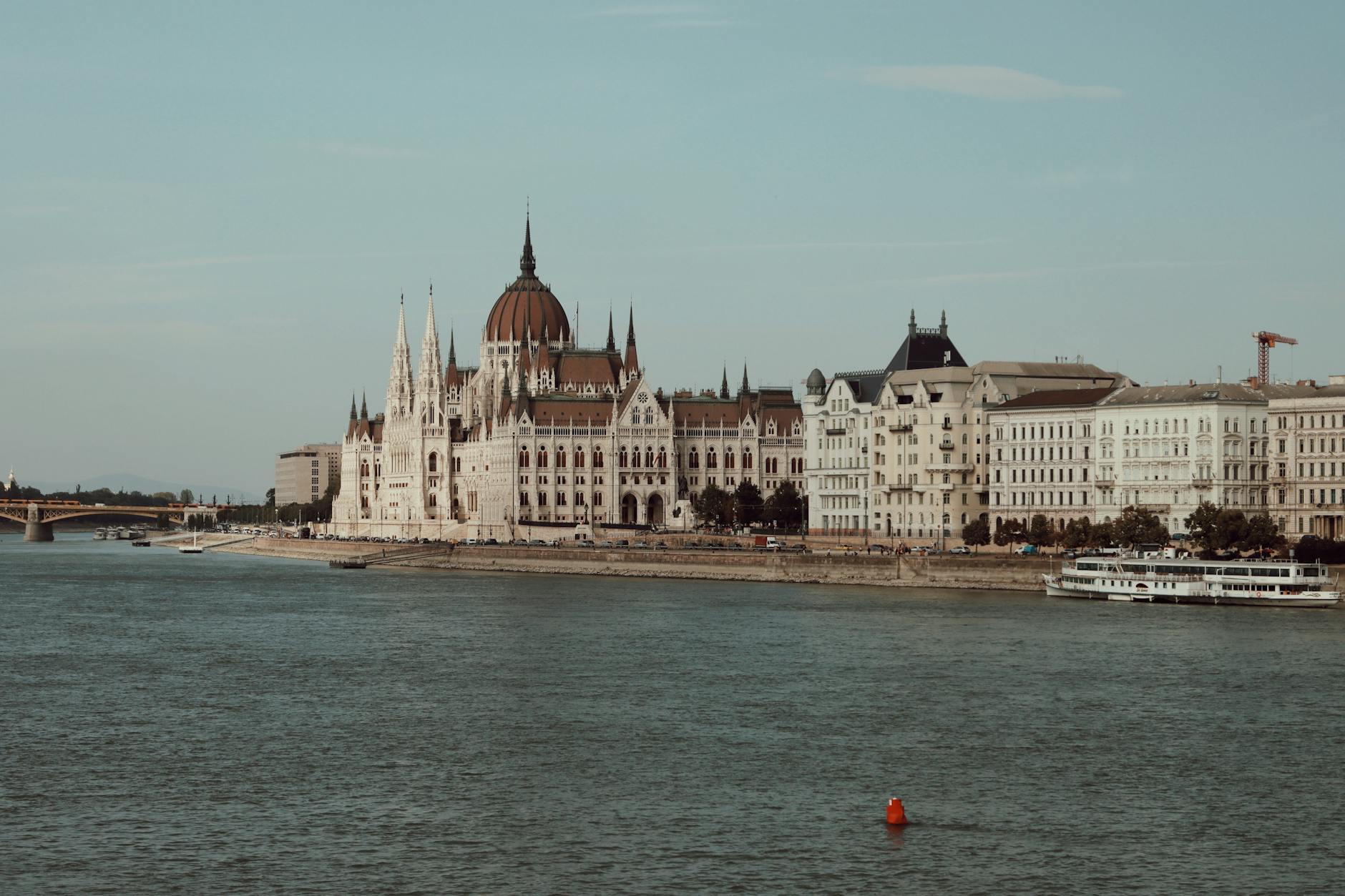
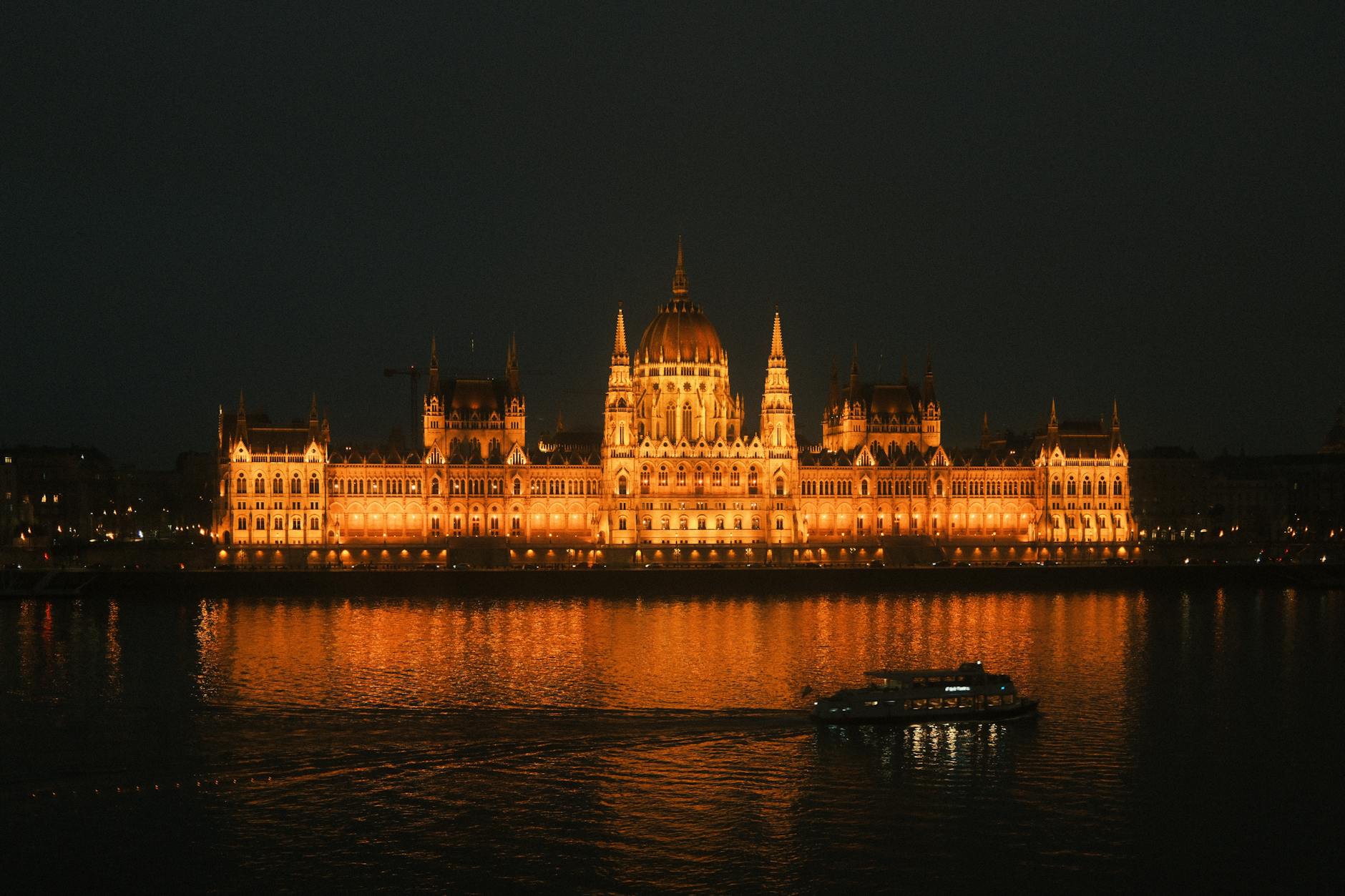
Guided tours run daily and last approximately 45 minutes. Tickets cost around 6,000 HUF for EU citizens and 12,000 HUF for non-EU visitors. You should book online in advance through the official Parliament website, especially during peak season (June through August), as tours sell out quickly. The building is also magnificent when viewed from the outside — catch it illuminated at night from the Buda side of the river for an unforgettable photo opportunity.
Pro tip: For the best exterior photos, head to Batthyány Square on the Buda side at sunset. The golden light on the Parliament facade with the Danube in the foreground is one of Budapest’s most iconic views.
Buda Castle (Royal Palace)
Perched atop Castle Hill on the Buda side of the Danube, Buda Castle has been a royal residence since the 13th century. The current Baroque palace was largely rebuilt after World War II and now houses the Hungarian National Gallery, the Budapest History Museum, and the National Széchényi Library. The castle complex itself is free to explore from the outside, and the terraces offer sweeping views across the river to Pest.
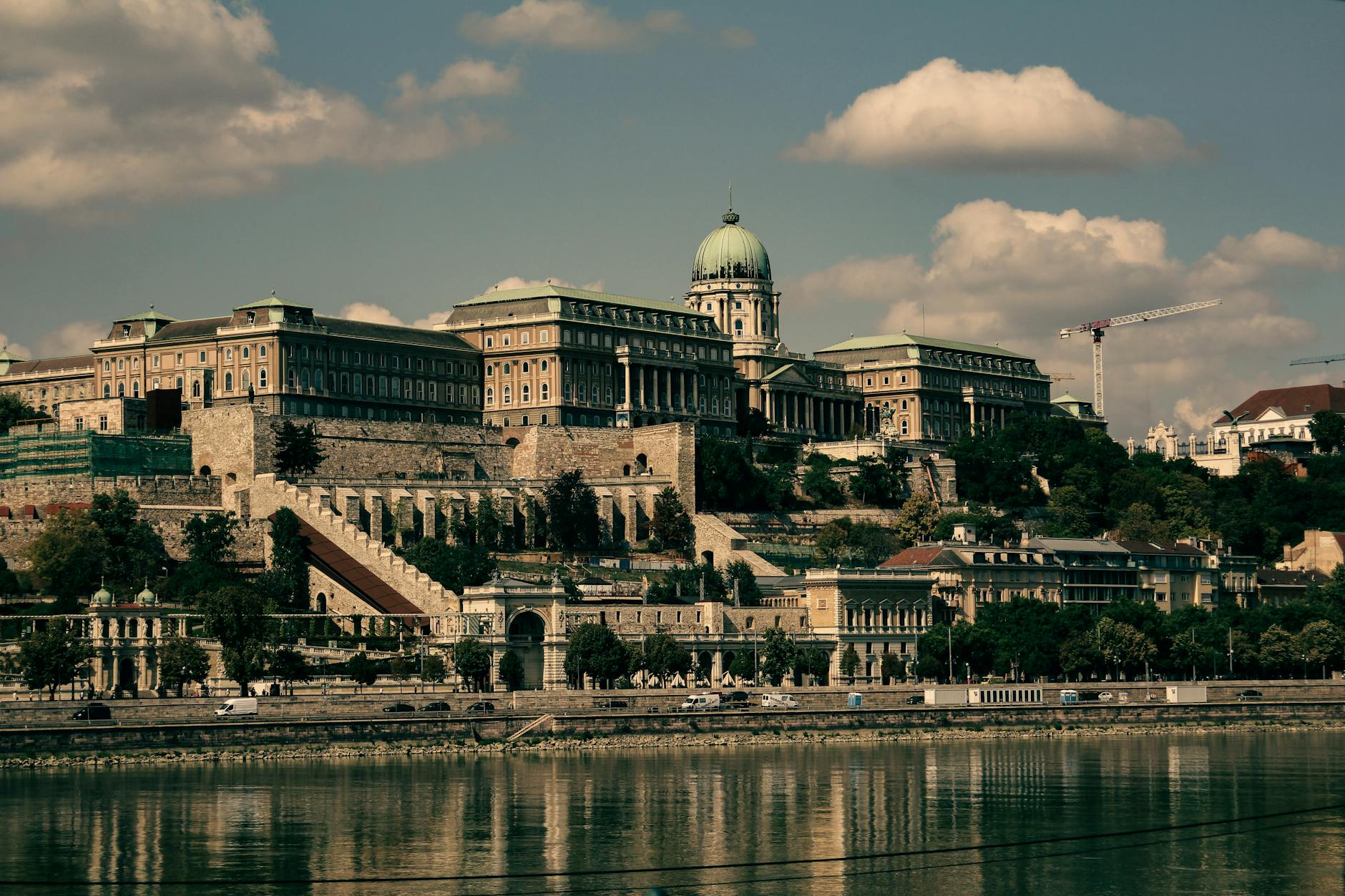
Getting up to Castle Hill is half the fun. You can take the Castle Hill Funicular (Budavári Sikló) from Clark Ádám Square near the Chain Bridge — a charming ride that costs around 4,000 HUF one-way. Alternatively, local buses 16 and 16A run from Széll Kálmán Square, or you can simply walk up the hill through the Vienna Gate for free. The Hungarian National Gallery inside the palace is one of the country’s finest art museums, with a comprehensive collection spanning medieval altarpieces to 20th-century Hungarian art.
Fisherman’s Bastion
Just steps from Buda Castle, Fisherman’s Bastion (Halászbástya) is a neo-Gothic and neo-Romanesque terrace that looks like something straight out of a fairy tale. Its seven turrets represent the seven Magyar tribes that founded Hungary in 895 AD. The panoramic views from here are widely considered the best in Budapest — you can see the Parliament Building, the Chain Bridge, St. Stephen’s Basilica, and the entire Pest skyline laid out before you.
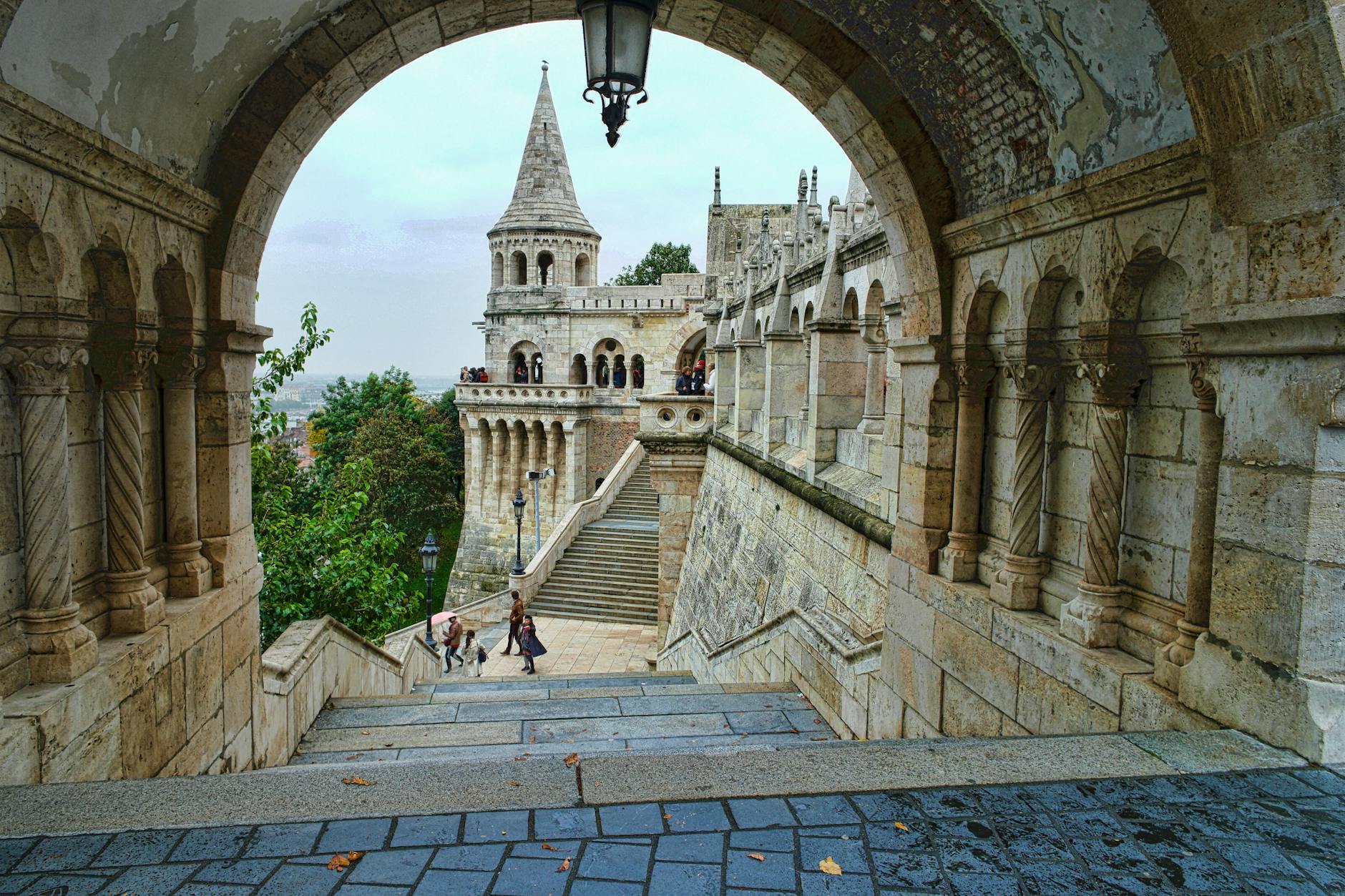
The lower terraces are free to access year-round. During the peak summer season (March 16 through October 15), access to the upper turrets costs 1,200 HUF, though early birds who arrive before 9:00 AM can visit for free. Next to the bastion stands the beautiful Matthias Church, a 14th-century Gothic masterpiece with colorful Zsolnay ceramic roof tiles that is worth stepping inside to admire (entry around 3,000 HUF).
St. Stephen’s Basilica
Named after Hungary’s first king, St. Stephen’s Basilica is the tallest building in Budapest (along with Parliament — both are exactly 96 meters, symbolizing the year 896 AD when the Magyars settled in Hungary). The neoclassical basilica took over 50 years to build and houses the mummified right hand of King Stephen I, one of Hungary’s most sacred relics.
Entry to the basilica itself is free (though a 200 HUF donation is suggested). The real draw for many visitors is climbing to the observation deck at the top of the dome, which offers a stunning 360-degree panorama of the city for around 2,000 HUF. There’s both a staircase and an elevator. On clear days, the views rival those from Fisherman’s Bastion but from the Pest side of the city.
Széchenyi Chain Bridge
The Széchenyi Chain Bridge was the first permanent stone bridge to connect Buda and Pest when it opened in 1849, and it remains the most iconic of Budapest’s nine bridges. Flanked by stone lions and suspended by enormous iron chains, the bridge is beautiful by day but truly spectacular at night when golden lights illuminate its entire span.
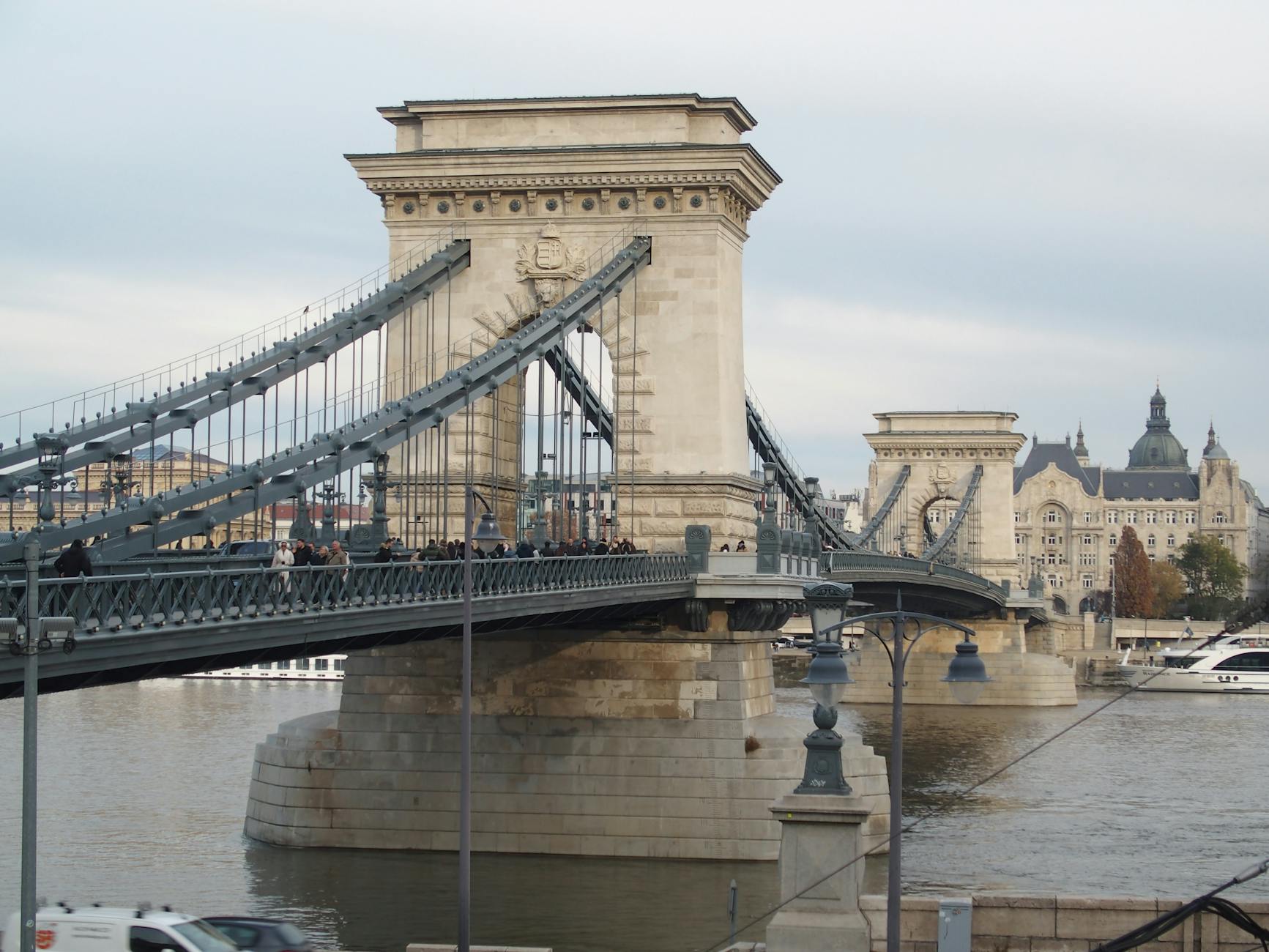
After a major renovation completed in 2023, the bridge is now fully restored to its former glory. Walking across it — particularly at dusk, when the city lights begin to twinkle — is one of Budapest’s essential free experiences. Start on the Pest side near Széchenyi István Square and walk toward Buda Castle for the most dramatic approach.
Heroes’ Square and City Park
At the end of the grand Andrássy Avenue, Heroes’ Square (Hősök tere) opens up into one of Budapest’s most impressive public spaces. The Millennium Monument at its center — a 36-meter pillar topped by the Archangel Gabriel — commemorates the thousandth anniversary of the Hungarian conquest. Flanking colonnades feature statues of Hungary’s most important historical leaders.
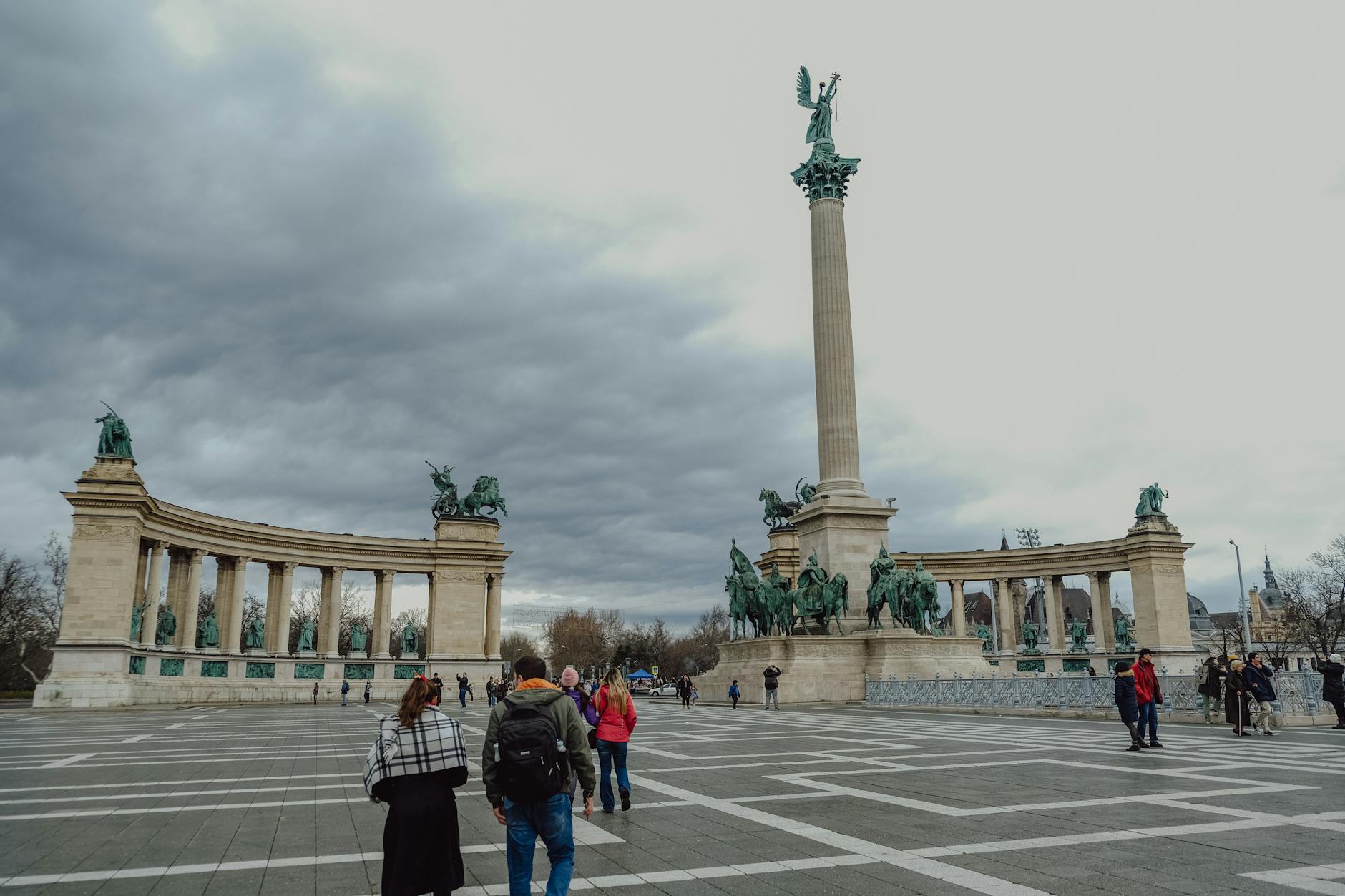
Behind the square lies Városliget (City Park), a sprawling green space that houses Széchenyi Thermal Bath, the Budapest Zoo, the Vajdahunyad Castle (a romantic architectural pastiche built for the 1896 Millennium Exhibition), and the Museum of Fine Arts. The park is ideal for a half-day of wandering, with boating on the lake in summer and an ice rink in winter.
Shoes on the Danube Bank
One of Budapest’s most poignant memorials, the Shoes on the Danube Bank consists of 60 pairs of iron shoes cast along the river’s edge between the Chain Bridge and Parliament. The memorial honors the Jews who were shot along the bank by fascist Arrow Cross militiamen during World War II, who ordered victims to remove their shoes before being murdered. The shoes — men’s, women’s, and children’s — are a quietly devastating reminder of this dark chapter. The memorial is free to visit at any time and is particularly moving at sunset or after dark.
Things to Do in Budapest: Thermal Baths and Spa Experiences
Budapest sits atop one of the most geologically active thermal zones in Europe, with over 120 natural hot springs feeding the city’s famous bathhouses. Bathing culture here stretches back more than 2,000 years — the Romans built the first thermal complexes, the Ottoman Turks expanded them in the 16th century, and the grand 19th-century spa palaces cemented Budapest’s reputation as the “City of Spas.” Today, a visit to at least one thermal bath is an essential Budapest experience.
Széchenyi Thermal Bath
Széchenyi is the largest medicinal bath complex in Europe and probably the most photographed bathhouse in the world. Set in a grand neo-baroque palace in City Park, it features 18 pools — including three enormous outdoor pools where steam rises photogenically in cooler months — along with saunas, steam rooms, and an array of wellness treatments.
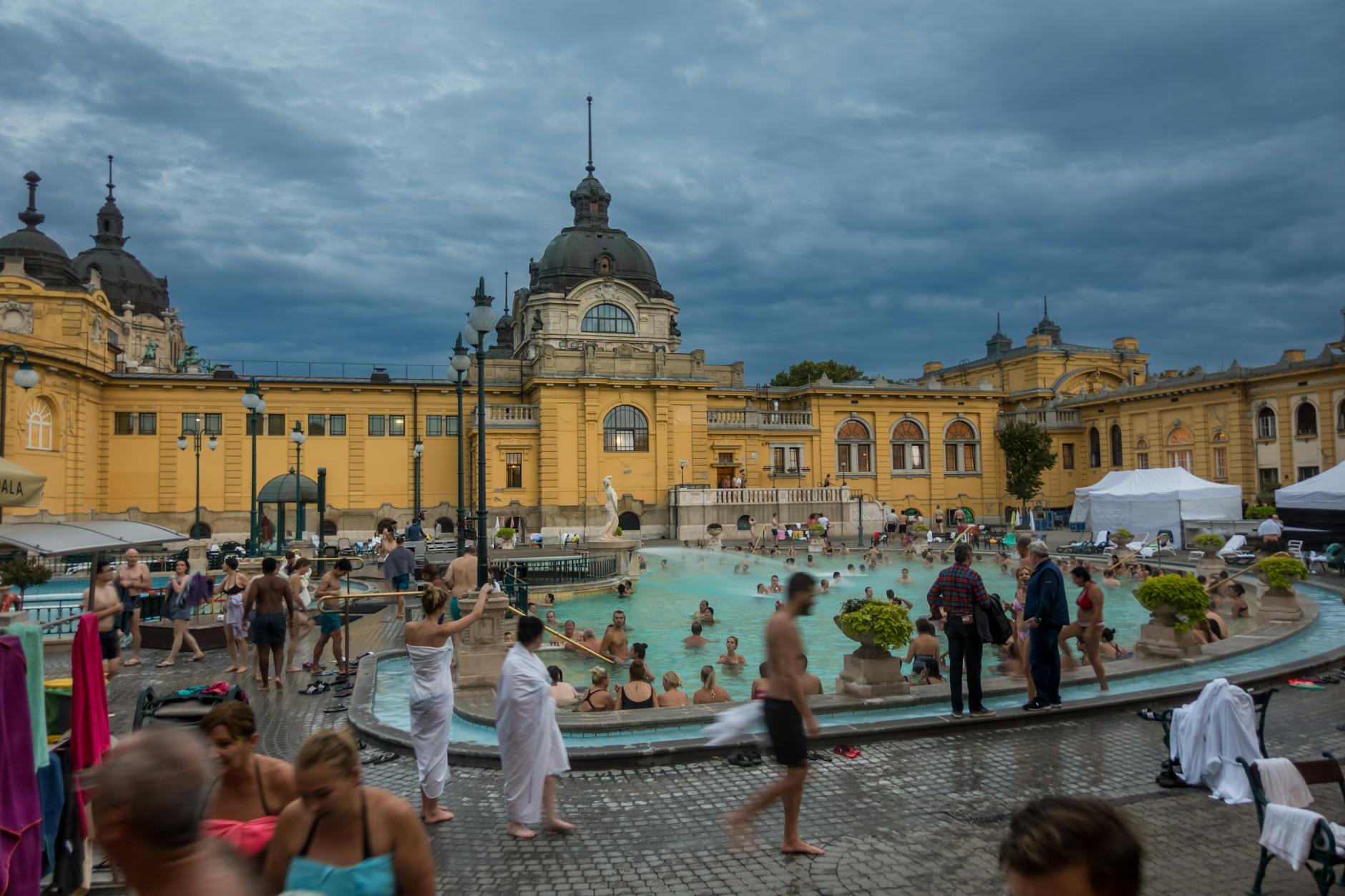
The thermal water at Széchenyi Thermal Bath ranges from 27°C to 38°C and is rich in calcium, magnesium, and sulphate — locals swear by its benefits for joint pain and arthritis. Entry costs approximately 13,200 HUF on weekdays and 14,800 HUF on weekends (2026 prices), which includes locker access. Cabin access costs extra but offers more privacy. The bath is open daily from 6:00 AM to 10:00 PM.
Pro tip: Visit on a weekday morning to avoid the heaviest crowds. The outdoor pools are especially magical in winter when the cold air meets the warm water, creating thick clouds of steam. Bring your own towel and flip-flops to save on rental fees.
Rudas Baths
For a more atmospheric and less crowded experience, Rudas Baths is the connoisseur’s choice. The main octagonal pool sits under a stunning 16th-century Ottoman dome — the oldest and best-preserved Turkish bath structure in Budapest. Columns of light stream through star-shaped openings in the dome, creating an almost meditative atmosphere.
Rudas also boasts a rooftop thermal pool on the sixth floor with arguably the best views of any bath in Budapest — you can soak while gazing across the Danube toward the Pest skyline. Entry to the thermal pools costs around 5,600 HUF on weekdays. On Friday and Saturday nights, the baths stay open until 4:00 AM for “night bathing” sessions with colored lighting and a DJ — a uniquely Budapest experience.
Gellért Thermal Bath
The Gellért Baths, located inside the Art Nouveau Gellért Hotel at the foot of Gellért Hill, are famous for their ornate interior — think marble columns, mosaic floors, and stained-glass windows. Important note for 2026 visitors: The Gellért Baths are currently undergoing a major renovation and are expected to remain closed through 2028. Check the latest status before planning a visit.
Lukács Baths
If you want to bathe like a Budapest local rather than a tourist, head to Lukács Baths on the Buda side. This 12th-century bath is far less crowded than Széchenyi, considerably cheaper (around 5,500 HUF entry), and popular with regulars who come daily. The thermal pools here are genuine medicinal baths, and the walls are covered with plaques from grateful patients who credit the waters with healing their ailments. Free entry is included with the Budapest Card.
Király Baths
Another beautifully preserved Ottoman-era bathhouse, Király Baths dates to 1565 and features a central octagonal pool beneath a domed ceiling punctuated with small star-shaped skylights. It is smaller and more intimate than Rudas, with fewer tourists. The pools range from cool to hot, and the atmosphere feels genuinely timeless. Entry costs approximately 5,200 HUF.
Ruin Bars and Budapest Nightlife
Budapest’s ruin bar scene is unlike anything else in Europe. In the early 2000s, creative entrepreneurs began converting abandoned buildings in the Jewish Quarter (District VII) into makeshift bars filled with mismatched flea-market furniture, graffiti art, and an infectious DIY spirit. What started as a quirky local phenomenon has since become one of Budapest’s biggest cultural exports.
Szimpla Kert
Szimpla Kert is the original ruin bar — the one that started it all in 2002. Located at Kazinczy utca 14, this sprawling multi-room venue occupies a former factory and apartment building and is packed with art installations, vintage furniture, hanging bicycles, old bathtubs, and an ever-evolving collection of eclectic decor. Every room has a different vibe, from intimate nooks to open courtyards to dance floors.
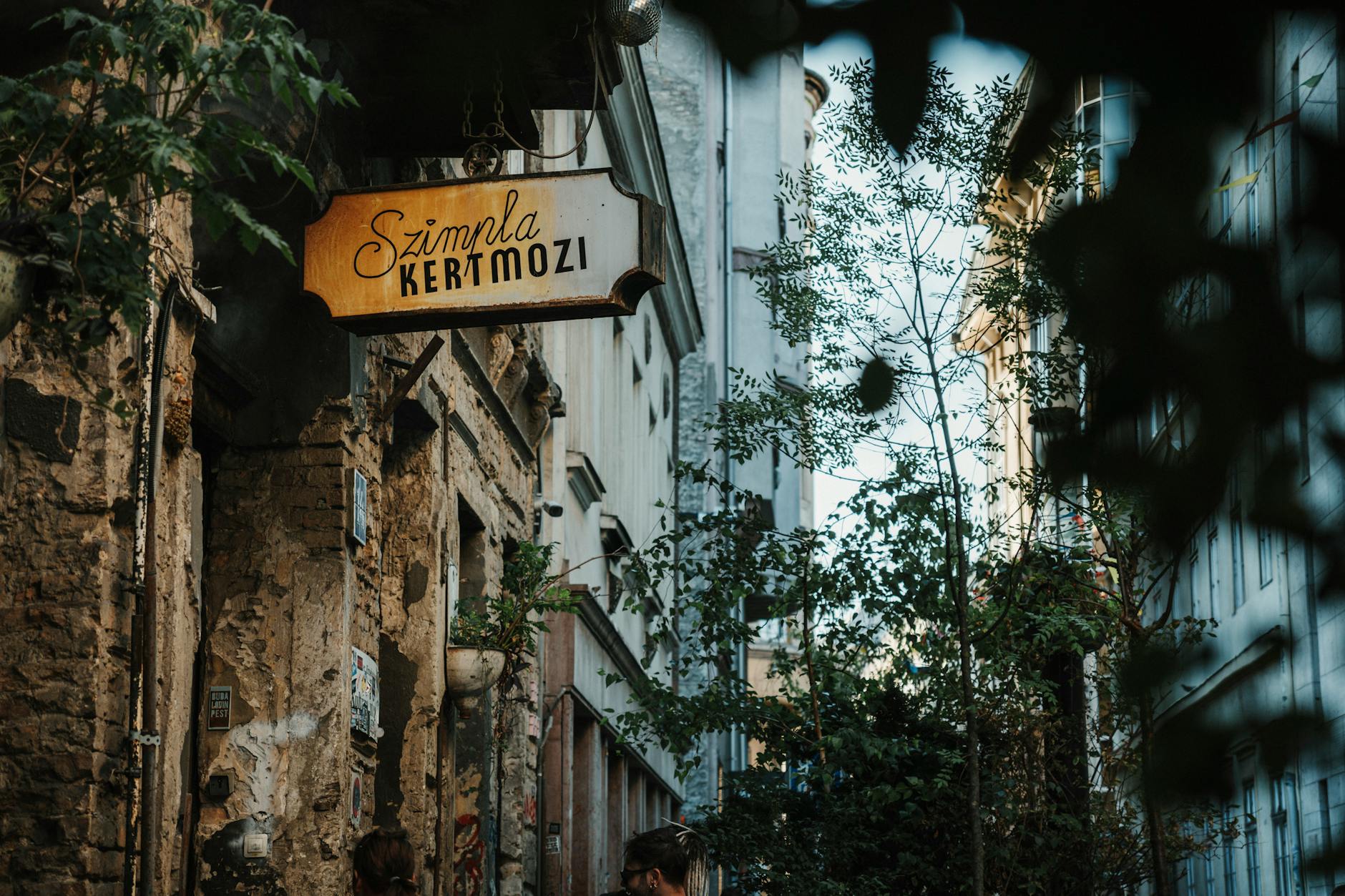
Entry is free, and drinks are reasonably priced (a beer costs around 1,200–1,800 HUF). The bar is open from noon to 4:00 AM daily. For a quieter, more photogenic experience, visit during the afternoon. The party atmosphere kicks in after 10:00 PM, especially on weekends. Don’t miss the Sunday Farmers’ Market (9:00 AM – 2:00 PM), where local producers sell organic cheese, honey, fresh bread, sausages, and craft spirits in the bar’s courtyard.
More Ruin Bars Worth Visiting
Instant-Fogas is the mega-venue of Budapest nightlife — a fusion of two former ruin bars spread across multiple floors with 18 bars and 7 dance floors. It’s the best spot for dancing and often hosts international DJs. Mazel Tov blurs the line between ruin bar and restaurant, serving excellent Middle Eastern food in a gorgeous garden courtyard strung with lights. Anker’t offers a more relaxed, hipster-friendly atmosphere with a large open-air courtyard that’s perfect for afternoon drinks. Csendes Vintage Bar is one of the more artistic ruin bars, with walls covered in movie posters, old advertisements, and vintage objects.
Beyond ruin bars, Budapest’s nightlife includes riverside clubs along the Danube (check out the A38 Ship, a converted Ukrainian stone-carrier ship that’s now one of the best live music venues in Europe), the Akvárium Klub beneath Erzsébet Square, and rooftop bars with stunning views like 360 Bar atop an Andrássy Avenue building.
Food, Drink, and Culinary Experiences
Hungarian cuisine is hearty, flavorful, and deeply tied to the country’s pastoral traditions. Budapest is the best place in the country to explore both traditional dishes and the new wave of modern Hungarian cooking that’s been gaining international attention.
Great Market Hall (Nagyvásárcsarnok)
The Great Market Hall is Budapest’s largest and oldest indoor market, housed in a stunning iron-framed building near the Liberty Bridge. The ground floor is a wonderland of fresh produce, Hungarian salami, paprika in every form, foie gras, pickles, and Tokaji wine. The upper floor features food stalls serving traditional Hungarian street food — this is the best place to try your first lángos (deep-fried dough topped with sour cream and cheese).
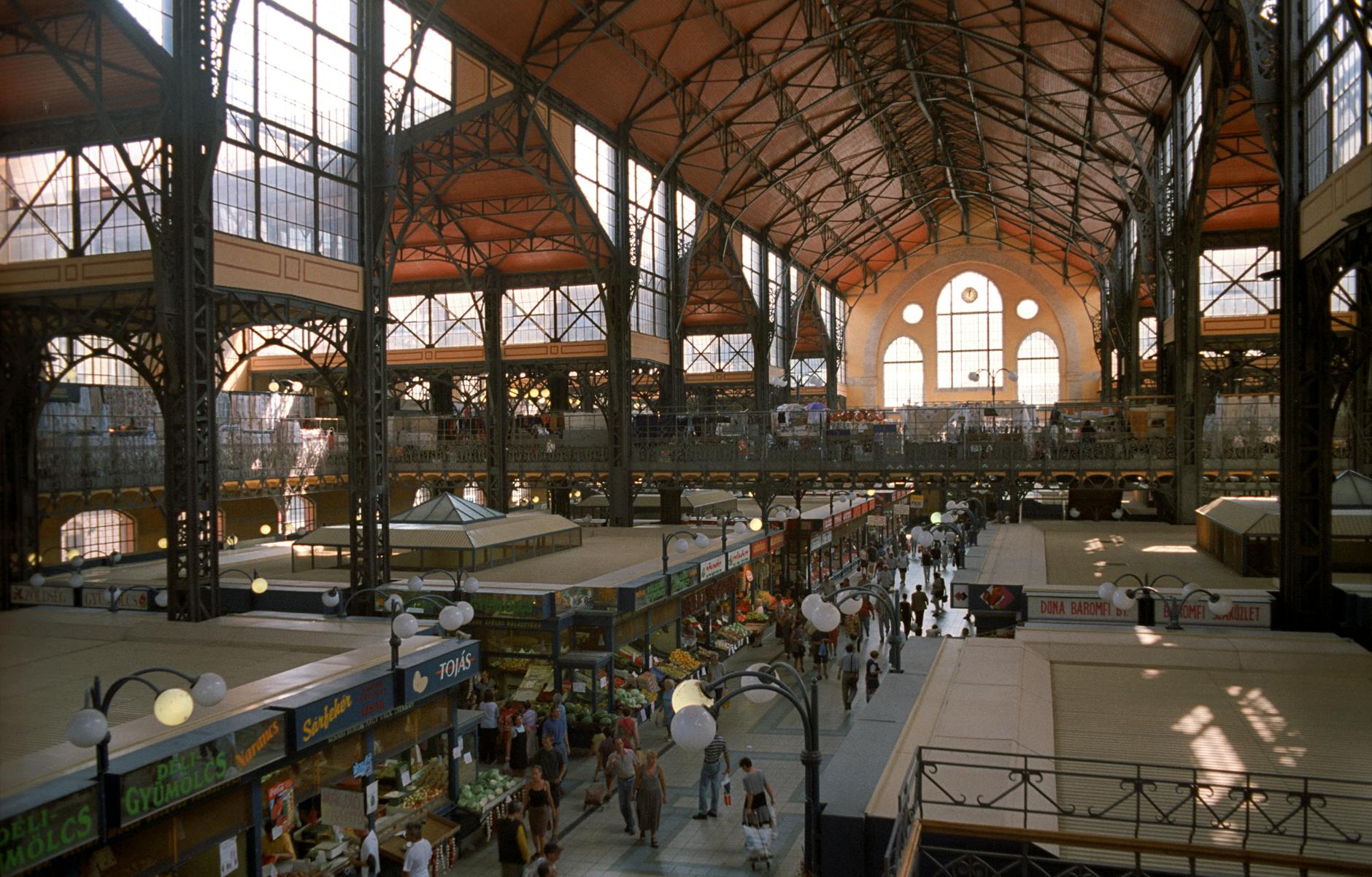
The market is open Monday through Saturday (closed Sundays). Arrive early on weekday mornings for the most authentic local experience — by mid-morning, tourist groups begin arriving in force. For even more local flavor, try the smaller Fény Street Market Hall near Széll Kálmán Square, where prices are lower and the atmosphere is more authentically working-class Budapest.
Must-Try Hungarian Dishes
Gulyás (Goulash): The national dish, though what you’ll find in Budapest is more of a soup than the thick stew most foreigners expect. Made with beef, onions, paprika, tomatoes, and potatoes, authentic gulyás is a warming, deeply savory experience. Try it at Belvárosi Disznótoros or Kéhli Vendéglő for a traditional version.
Lángos: Deep-fried flatbread traditionally topped with sour cream and grated cheese, though modern versions come loaded with everything from garlic butter to Nutella. Available at the Great Market Hall, street carts, and dedicated lángos shops throughout the city.
Kürtőskalács (Chimney Cake): A sweet, spiral-shaped pastry rolled in sugar, cinnamon, or crushed walnuts, cooked over charcoal until the outside caramelizes. You’ll find them at markets and street stalls everywhere, especially in the Castle District.
Pörkölt: A paprika-based meat stew (usually pork or beef) that’s actually closer to what most people picture when they think of “goulash.” Served with nokedli (Hungarian egg noodle dumplings), it’s comfort food at its finest.
Töltött Káposzta: Stuffed cabbage rolls filled with a mixture of ground pork and rice, slow-cooked in a smoky, paprika-laced sauerkraut sauce. A staple of Hungarian home cooking.
Dobos Torta: A layered sponge cake with chocolate buttercream and a distinctive caramel topping, invented by Hungarian confectioner József Dobos in 1884. Sample it at the legendary Café Gerbeaud on Vörösmarty Square.
Budapest’s Café Culture
Budapest’s historic coffeehouse tradition rivals Vienna’s. The New York Café, often called “the most beautiful café in the world,” is a jaw-dropping gilded affair with chandeliers, frescoed ceilings, and marble columns. Expect to wait for a table and pay premium prices, but the interior is genuinely worth seeing. For a more affordable (and equally beautiful) experience, try the Café Gerbeaud on Vörösmarty Square, Central Kávéház, or the understated elegance of Hadik Kávéház in the artsy District XI.
Wine and Pálinka
Hungary produces world-class wines that are still surprisingly under the international radar. Tokaji Aszú, a golden dessert wine from the Tokaj region, has been called “the wine of kings” since Louis XIV of France declared it so. Egri Bikavér (Bull’s Blood of Eger) is a robust red blend. For wine tasting in Budapest, visit DiVino Wine Bar on the rooftop terrace near St. Stephen’s Basilica, or seek out the hidden Tokaj Wine Bar near Parliament.
Pálinka, Hungary’s traditional fruit brandy, is taken seriously here — it’s protected by law and can only be produced in Hungary using Hungarian fruit. The best varieties are made from plums (szilva), apricots (barack), or cherries (cseresznye). Visit the Pálinka Museum in the Jewish Quarter for tastings and education.
Museums and Cultural Attractions
Budapest has a museum for virtually every interest, from world-class fine art collections to deeply personal exhibitions about Hungary’s turbulent 20th-century history.
House of Terror
Located at Andrássy út 60, this powerful museum occupies the very building that served as the headquarters for both Hungary’s fascist Arrow Cross Party and later the communist secret police (ÁVH). The exhibitions chronicle the horror of both regimes through photographs, documents, personal testimonies, and chilling reconstructions of basement prison cells. Allow at least two to three hours. Entry costs around 3,000 HUF.
Hungarian National Gallery
Housed inside Buda Castle, the Hungarian National Gallery contains the country’s most comprehensive collection of Hungarian fine art, spanning medieval Gothic altarpieces through the Baroque, Romantic, and modern periods. Highlights include works by Mihály Munkácsy, Tivadar Csontváry Kosztka, and Victor Vasarely. Entry to the permanent collection is free on selected days — check the website for current scheduling.
Hospital in the Rock
Hidden beneath Castle Hill, this secret hospital and nuclear bunker was carved into the natural cave system during World War II. It served as an emergency surgical hospital during the 1944 Siege of Budapest and was later expanded into a nuclear bunker during the Cold War. Guided tours take you through the original wards, operating theaters, and equipment — it’s a haunting and fascinating look at wartime Budapest. Entry is around 4,800 HUF, and tours depart regularly throughout the day.
More Museums Worth Your Time
The Museum of Fine Arts at Heroes’ Square houses an impressive collection of European art including works by Raphael, El Greco, and Monet. The Budapest History Museum in Buda Castle traces the city’s story from Roman times through the Ottoman period. The Hungarian National Museum, founded in 1802, covers Hungarian history from prehistory to the modern era. Art lovers should also check the Ludwig Museum of Contemporary Art for modern and contemporary works. For something offbeat, the Pinball Museum in District VII lets you play over 130 vintage pinball machines after paying the entry fee.
Scenic Viewpoints and Panoramic Experiences
Among the most rewarding things to do in Budapest is simply finding a great viewpoint. Few European cities can match this place for sheer scenic drama. The Danube cutting between the hills of Buda and the flatlands of Pest creates natural viewpoints at every turn.
Gellért Hill and the Citadella
For the most expansive view of Budapest, climb Gellért Hill. The 235-meter hill rises steeply from the Danube and is crowned by the Citadella, a 19th-century fortress, and the Liberty Statue — a woman holding a palm leaf aloft, visible from much of the city. The panorama from the top takes in both sides of the Danube, all the major bridges, Parliament, Castle Hill, and on clear days, the distant Hungarian plains. It’s free to access, and the climb from the Gellért Baths side takes about 20 minutes.
Pro tip: Gellért Hill at sunset is one of Budapest’s most magical experiences. Bring a picnic blanket and a bottle of Hungarian wine, and watch the city lights flicker on below you.
Danube River Cruises
Seeing Budapest from the water puts the city’s dual character into perfect perspective. Evening cruises are particularly spectacular, as the Parliament, Chain Bridge, Buda Castle, and churches along both banks glow under dramatic floodlighting — Budapest is often ranked as having the most beautiful nighttime cityscape in Europe. One-hour evening cruises start from around 4,000 HUF and depart from multiple points along the Pest embankment. Some cruises include dinner or wine tastings.
The Zugliget Chairlift and János Hill
For a completely different perspective, take the Zugliget Chairlift to the summit of János Hill — at 527 meters, the highest point in Budapest. The open-air chairlift ride takes about 12 minutes and offers wonderful views of the Buda Hills and the city beyond. At the top, the Erzsébet Lookout Tower provides 360-degree views. You can combine this with a ride on the Children’s Railway, a narrow-gauge line through the Buda Hills largely operated by children aged 10 to 14 — a charming remnant of the communist-era Pioneer movement.
Neighborhoods and City Walks
Budapest is a city best explored on foot, and each neighborhood has a distinct personality.
The Jewish Quarter (District VII)
The former Jewish ghetto has been transformed into Budapest’s most vibrant neighborhood — a colorful collision of history, street art, ruin bars, cafés, and some of the city’s best restaurants. Start at the Dohány Street Synagogue, the largest synagogue in Europe and the second largest in the world, which can hold 3,000 worshippers. Its Moorish Revival architecture is stunning, and the complex includes a moving Holocaust memorial — the Tree of Life sculpture in the rear courtyard, where each metal leaf bears the name of a Hungarian Holocaust victim.
Wander through the surrounding streets — Kazinczy utca, Klauzál utca, Dob utca — to discover ruin bars, independent boutiques, street art at every turn, and some of Budapest’s best eating. The neighborhood is at its liveliest on weekend evenings.
Andrássy Avenue
Often compared to the Champs-Élysées, Andrássy Avenue is Budapest’s grandest boulevard — a UNESCO World Heritage Site stretching 2.3 kilometers from Erzsébet Square to Heroes’ Square. The neo-Renaissance mansions along it house luxury boutiques, embassies, and cultural institutions including the Hungarian State Opera House (whose lavish interior is worth a guided tour even if you don’t attend a performance). Beneath the avenue runs the M1 Metro line — the oldest electric underground railway in continental Europe, opened in 1896.
Margaret Island
Sitting in the middle of the Danube between Margaret Bridge and Árpád Bridge, this 2.5-kilometer-long island is Budapest’s green escape. Cars are banned (except for a single bus route and hotel access), making it perfect for running, cycling, or simply strolling through gardens, past medieval ruins, a Japanese garden, a musical fountain, and open-air swimming pools. Rent a pedal-powered cart (bringóhintó) for a fun way to explore with kids.
The Castle District
Beyond the main attractions of Buda Castle and Fisherman’s Bastion, the Castle District itself rewards slow exploration. The cobblestone streets are lined with medieval and Baroque buildings painted in pastel colors. Visit the Golden Eagle Pharmacy Museum (a reconstruction of a medieval alchemy lab), peer into the courtyard of the medieval Synagogue on Táncsics Mihály utca, or browse the small galleries and antique shops tucked into the side streets. The district is mostly pedestrianized, and the atmosphere on a quiet weekday morning feels like stepping back in time.
Hidden Gems and Off-the-Beaten-Path Experiences
Beyond the major sights, Budapest rewards the curious traveler with a wealth of lesser-known experiences.
Budapest’s Cave System
Over 200 natural caves lie beneath the Buda Hills — an underground world that most visitors never discover. The Pálvölgyi Cave is the longest cave system in Budapest and offers tours through dramatic stalactite formations. The Szemlőhegyi Cave, discovered in 1930, is known as the “underground flower garden” for its unique mineral crystal formations that look like delicate underwater flowers. Both caves maintain a constant temperature year-round and offer a welcome escape from summer heat or winter cold. Tours cost around 2,500–3,500 HUF.
The Metropolitan Ervin Szabó Library
Hidden behind an unassuming municipal library entrance, the fourth floor of the Ervin Szabó Library reveals one of Budapest’s most spectacular secret spaces. The reading rooms occupy the preserved 19th-century halls of the former Wenckheim Palace, complete with gilded stucco ceilings, spiral staircases, crystal chandeliers, and hand-painted walls. It’s a functioning public library, so you can simply walk in and admire the rooms (or sit and read). A small day pass for non-members costs around 1,500 HUF.
Tram Number 2
Tram number 2 runs along the Pest side of the Danube embankment and is regularly cited as one of the most scenic tram rides in the world. For the price of a standard public transport ticket (around 450 HUF), you’ll glide past the Parliament Building, the Chain Bridge, the Central Market Hall, and the Liberty Bridge, with views across the river to Buda Castle and Gellért Hill the entire way. It’s essentially a sightseeing cruise on rails.
Budapest Retro Experience Centre
This interactive museum recreates everyday Hungarian life from the 1960s through 1989 — the communist period that shaped the country’s identity for decades. Walk through faithfully reconstructed apartments, classrooms, and shops filled with authentic objects from the era. It’s both nostalgic and illuminating, offering context that makes the rest of Budapest’s recent history much easier to understand.
Fővám Square Farmers’ Market
While most tourists flock to the Great Market Hall, locals shop at the smaller farmers’ markets scattered around the city. The one at Fővám Square (in front of the Great Market Hall building) runs on Sunday mornings, and the Szimpla Kert Sunday Farmers’ Market is another excellent option for sampling local honey, artisan cheese, fresh-baked bread, and seasonal fruits directly from producers.
Best Day Trips From Budapest
Budapest’s location makes it an ideal base for day trips to charming Hungarian towns and the countryside.
Szentendre
Just 40 minutes north of Budapest by HÉV suburban train, Szentendre is a picturesque Baroque town on the Danube Bend known for its art galleries, Serbian Orthodox churches, cobblestone lanes, and colorful architecture. The Margit Kovács Ceramic Museum and the Open-Air Ethnographic Museum (Skanzen) are the main draws. It’s the most accessible day trip from Budapest and perfect for a relaxed half-day or full-day outing.
Eger
About two hours northeast of Budapest, Eger is famous for its medieval castle, Ottoman-era minaret (the northernmost Ottoman monument in Europe), Baroque old town, and the Valley of the Beautiful Women (Szépasszony-völgy) — a semicircle of wine cellars where you can taste the famous Egri Bikavér (Bull’s Blood) red wine directly from the barrel. Eger also has its own thermal baths and makes for a wonderful full-day excursion.
Visegrád and the Danube Bend
The dramatic Danube Bend, where the river makes a sharp turn through forested hills, is one of Hungary’s most scenic landscapes. The medieval citadel at Visegrád sits high above the river, and the views from its towers are extraordinary. You can combine Visegrád with Esztergom (home to Hungary’s largest church, the Esztergom Basilica) and Szentendre into a classic Danube Bend day trip. Boat services run from Budapest during the warmer months.
Etyek Wine Region
Just 30 minutes west of Budapest, the Etyek-Buda wine region is known for its crisp whites and sparkling wines. Half-day tours visit small, family-owned wineries where you can taste four or five wines accompanied by local cheese and charcuterie. It’s a relaxed, rural counterpoint to the city, and much closer than the more famous Tokaj or Eger wine regions.
Practical Tips for Visiting Budapest
A few essential details to help you plan your trip and make the most of your time in Budapest.
Best Time to Visit
The sweet spots are April–May and September–October, when the weather is warm but not sweltering, crowds are manageable, and hotel prices are lower than peak summer. Summer (June–August) brings the biggest crowds and highest prices, though long daylight hours and outdoor festivals (including the famous Sziget Festival in August) compensate. Winter is cold but magical — the thermal baths are at their most atmospheric, Christmas markets are enchanting, and there are far fewer tourists.
Getting Around
Budapest has an excellent public transport network of metro lines, trams, buses, and trolleybuses, all operated by BKK. A single ticket costs 450 HUF, but the best value is a 24-hour (2,500 HUF), 72-hour (5,500 HUF), or 7-day (6,950 HUF) travel pass for unlimited rides. The Budapest Card (starting from around 6,300 HUF for 24 hours) bundles unlimited transport with free entry to 20+ museums and discounts on thermal baths and river cruises.
The M1 Metro line (the yellow line) is itself a tourist attraction — the oldest underground electric railway in continental Europe, with beautifully preserved original stations. Tram lines 2, 19, and 41 all run along the Danube and provide scenic rides.
Money and Currency
Hungary uses the Hungarian Forint (HUF). As of 2026, roughly 1 EUR = 390 HUF and 1 USD = 370 HUF. Credit and debit cards are widely accepted in restaurants, shops, and attractions. However, smaller cafés, market stalls, and some ruin bars may prefer cash. ATMs are plentiful throughout the city. Avoid changing money at airport exchange booths — the rates are significantly worse than in the city center.
Where to Stay
District V (Belváros-Lipótváros) is the most central location, within walking distance of Parliament, St. Stephen’s Basilica, and the Danube promenade. District VII (Jewish Quarter) is ideal if you want to be in the heart of Budapest’s nightlife and restaurant scene. District I (Castle District) offers a quieter, more romantic atmosphere but is less convenient for restaurants and nightlife. District VI along Andrássy Avenue provides a good balance of central location, transport links, and elegant surroundings.
Safety Tips
Budapest is generally very safe for tourists. Standard big-city precautions apply: watch for pickpockets in crowded areas (metro, tram 2, ruin bars, markets), keep valuables secure at thermal baths, and be wary of overly friendly strangers near major tourist spots who may try to lure you to overpriced bars. Tap water is safe to drink throughout the city.
Budapest Events and Festivals in 2026
Budapest has a packed calendar of festivals and events that can elevate your trip from great to unforgettable.
The Budapest Spring Festival (March–April) is the city’s premier arts festival, with opera, classical music, theater, and contemporary art events at venues across the city. Sziget Festival (August 11–15, 2026) is one of Europe’s largest music festivals, held on Óbuda Island in the Danube, drawing hundreds of thousands of visitors with a lineup that includes Florence + the Machine and Lewis Capaldi. Budapest Wine Festival (September) takes over the grounds of Buda Castle with tastings from Hungary’s top wine regions. The Christmas Fair at Vörösmarty Square (November–December) transforms the city center into a winter wonderland with mulled wine, artisan crafts, and Hungarian street food.
A major highlight for 2026 is the UEFA Champions League Final on May 30, hosted at the Puskás Aréna — the first time Budapest stages European football’s biggest match.
Start Planning Your Budapest Trip
Budapest is a city that consistently exceeds expectations. The combination of world-class thermal baths, stunning architecture, a thriving food and nightlife scene, rich history, and genuinely affordable prices makes it one of Europe’s best-value destinations. Whether you have a weekend or a week, you’ll leave planning your return trip.
For more detailed guides on specific aspects of Budapest, explore our in-depth articles on Budapest’s thermal baths, the best ruin bars, Hungarian food and restaurants, where to stay in Budapest, and detailed Budapest itineraries to help you plan the perfect day-by-day schedule.
Explore Budapest’s Top Things to Do — In Depth
We’ve written a dedicated, on-the-ground guide for every major experience below. Start here, then dive into whichever ones fit your trip.
- Budapest’s best landmarks — the must-see monuments, ranked, with the smartest order to visit them.
- Budapest walking tours — free and paid routes, plus self-guided walks you can do at your own pace.
- Budapest’s hidden gems — the lesser-known corners locals actually love, away from the crowds.
- free things to do in Budapest — how to fill days here on almost no budget.
- the best photography spots — where and when to shoot the river, the skyline and the bridges.
- Danube boat tours — day cruises, evening sailings and which operator is worth it.
- Budapest’s markets — from the Great Market Hall to neighbourhood produce halls.
- churches and basilicas — St. Stephen’s, Matthias Church and the quiet ones worth a detour.
- the Danube bridges — the story behind each crossing and the best one to walk at sunset.
Where to Take Your Budapest Trip Next
Ticking off the sights is only half of Budapest. These companion guides cover the rest of the trip — the soaking, the eating, the late nights and the days you leave the city entirely.
- the full Budapest travel guide — visas, money, transport and the practical groundwork behind everything on this page
- Budapest’s thermal baths — which bathhouse suits you, what to bring and what a soak actually costs in 2026
- eating in Budapest — goulash that isn’t a tourist trap, market lunches and the fine-dining end
- where to stay — district by district, and which side of the river fits your trip
- Budapest itineraries — one day, a weekend, five days — the sights above, sequenced sensibly
- Budapest nightlife — ruin bars, rooftops and where the night actually goes after midnight
- day trips from Budapest — the Danube Bend, Eger, Lake Balaton and two capitals within reach
- the history behind the sights — why the Parliament looks like that and what the bullet holes mean
- festivals and events — time your visit around Sziget, the wine festival or the Christmas markets
- Budapest with kids — the attractions above, filtered for short legs and short attention spans
- romantic Budapest — sunset viewpoints, dinner cruises and the couples’ version of this list
- shopping in Budapest — paprika and Herend, plus the vintage and design shops worth the detour
If you would rather work from prices than from ideas, our guide to Budapest attractions takes the same list and puts a 2026 figure, a realistic time allowance and a straight verdict against every major sight — including the four or five that are not worth the money.