Best Hotels Budapest: 15 Top Picks for Every Budget (2026)
The best hotels Budapest offers in 2026, from Art Nouveau palaces to boutique stays and budget rooms - with prices, areas and booking tips for every budget.
In this guide
- How to think about Budapest hotels
- The palace landmarks
- The boutique standouts
- Dependable mid-range
- Smart budget picks
- What you’ll actually pay
- Which area to book in
- Spa hotels and the thermal angle
- What’s included, and what to expect inside
- Families, groups and longer stays
- Booking tips that save money
- The rest of your accommodation options
- Frequently asked questions
This article contains advertising. Our booking links are routed through a partner that adds commission tracking automatically, so if you book through one we earn a commission from the provider, at no extra cost to you. It never affects what we recommend. Affiliate disclosure
Budapest is one of the few European capitals where a genuinely grand hotel night doesn’t require remortgaging the house. I’ve stayed in a converted Art Nouveau palace overlooking the Chain Bridge for less than a mid-range chain charges in Paris, and I’ve also had a perfectly lovely week in a €70 double a ten-minute tram ride from the same view. The range here is the whole point — and it means choosing well rewards a little homework.
This rundown of the best hotels Budapest has to offer spans the palace-grade landmarks, the design-led boutiques, the dependable mid-range and the budget rooms that punch above their price. I’ve grouped them by category and paired each with the kind of traveller it suits, plus honest notes on what you’ll actually pay across the seasons. Whether you want marble and a Michelin breakfast or just a clean, central base, there’s a strong option in every bracket.
How to think about Budapest hotels
Two things drive price: category and location. The palace hotels cluster along the Pest riverbank near the Chain Bridge and Elizabeth Bridge, the boutiques scatter through the central districts, and the value rooms sit a little further out — though “further out” in Budapest usually still means a short tram hop. Rates swing hard by season: summer, the Christmas-market weeks and Grand Prix weekend are the peaks, while late winter (March is famously the cheapest month) can be a bargain. Booking direct often unlocks perks the third-party sites don’t show.
The palace landmarks
At the very top sits the Four Seasons Hotel Gresham Palace, a meticulously restored Art Nouveau masterpiece right at the Pest foot of the Chain Bridge. Along with Matild Palace, it represents the gold standard of European palace-hotel restoration — all sweeping ironwork, mosaic and Danube views, with service to match. It’s the splurge I’d point honeymooners and big-occasion travellers toward without hesitation.
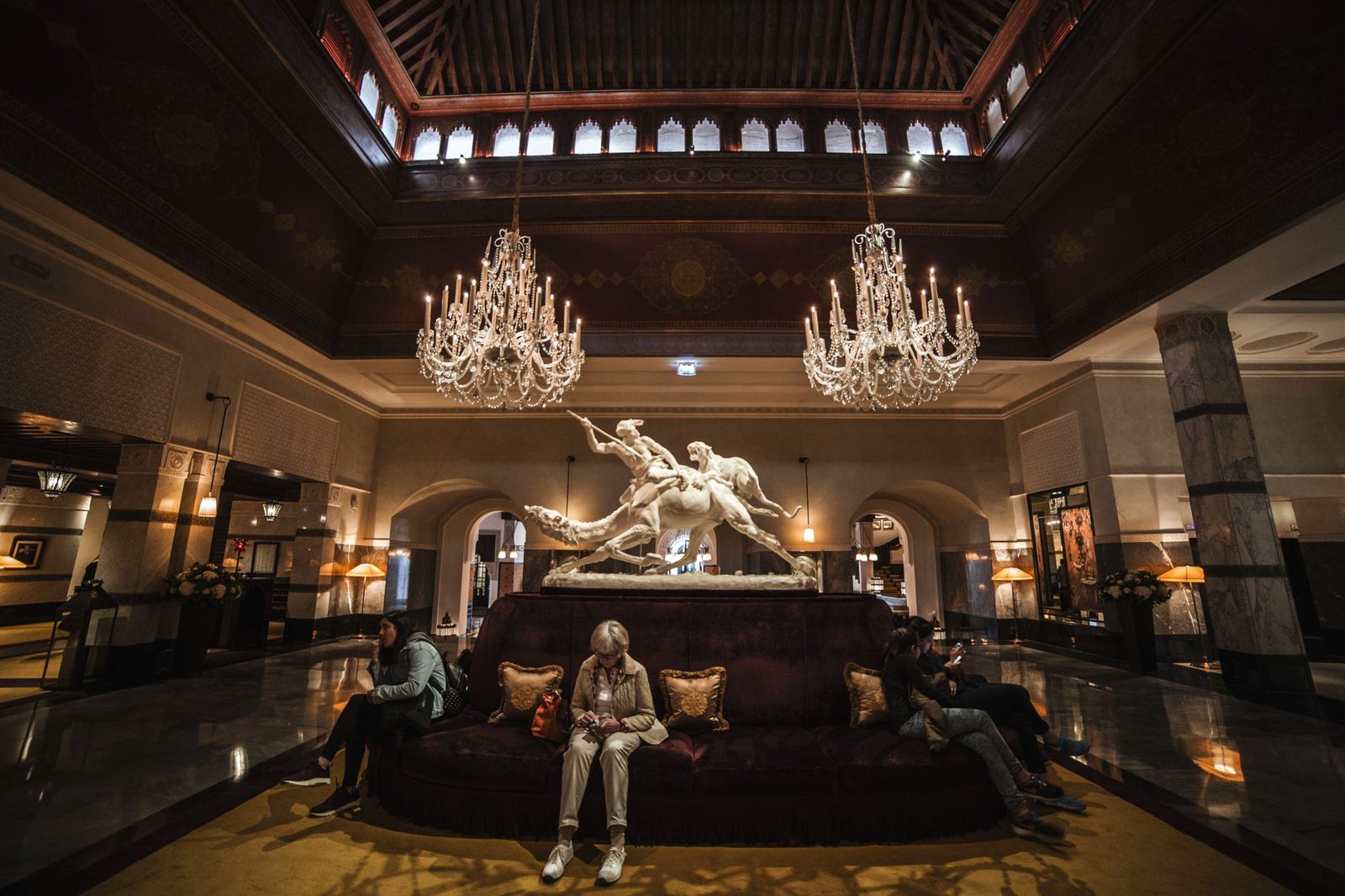
A few minutes south, Matild Palace, A Luxury Collection Hotel (part of Marriott Bonvoy) sits at the end of the main shopping street near Elizabeth Bridge. Its public spaces are smaller than the Four Seasons or the Ritz-Carlton, but the intricate, ornate detailing throughout is genuinely unique, and the rooftop and café have become destinations in their own right. The Ritz-Carlton Budapest, near Deák Ferenc tér, rounds out the big-brand luxury trio with a grand domed lobby and a more contemporary feel.
The boutique standouts
For character over sheer scale, the Aria Hotel Budapest runs the most original concept in the city. It’s music-themed, with four wings devoted to jazz, classical, opera and contemporary music, each room dedicated to a specific artist or composer. Its rooftop High Note SkyBar, looking straight at St Stephen’s Basilica, is consistently rated among the best outdoor drinks in town — worth a visit even if you don’t stay.
For couples, Hotel Clark is hard to beat: an adults-only boutique at the Buda end of the Chain Bridge with crisp modern design, knockout Danube and bridge views, and a rooftop bar of its own. It’s intimate, grown-up and romantic without tipping into stuffy.
Dependable mid-range
The middle of the market is where Budapest quietly shines. The InterContinental Budapest is a riverfront stalwart with excellent value for its location and views, and the city is thick with smart four-stars and design hotels — including some genuinely fun ones, like a quirky property themed around bicycles and lemons, complete with pedal-equipped bar stools. Expect roughly €90–180 a night for a good central double in this bracket outside peak dates, often less if you book ahead. The Kempinski, a touch above mid-range, starts around €200 and discounts longer stays.
Smart budget picks
Budapest is a brilliant city to visit cheaply. The Charles Hotel is a long-time favourite for budget travellers wanting comfort and a bit of character, with apartment-style rooms around the €65 mark. Booked direct in the off-season, a decent central double can run €65–80, and dorm beds at well-run hostels like Shantee House start around €15. March is the cheapest month overall, so budget travellers with flexible dates should look there first.
| Hotel | Category | Area | Known for |
|---|---|---|---|
| Four Seasons Gresham Palace | Luxury | Pest, Chain Bridge | Art Nouveau palace, the splurge |
| Matild Palace | Luxury | Pest, Elizabeth Bridge | Ornate detail, rooftop |
| Ritz-Carlton | Luxury | Deák Ferenc tér | Domed lobby, contemporary |
| Aria Hotel | Boutique | Near the Basilica | Music theme, SkyBar |
| Hotel Clark | Boutique | Buda, Chain Bridge | Adults-only, couples |
| InterContinental | Mid-range | Pest riverfront | Value, Danube views |
| Charles Hotel | Budget | Buda (Gellért area) | Apartment-style, cheap |
What you’ll actually pay
To set expectations across the categories, here’s the rough lay of the land outside the absolute peak weeks:
- Luxury palace hotels — from around €350–600+ a night, climbing steeply over summer and Christmas.
- Boutique four-/five-stars — roughly €150–300, depending on view and season.
- Mid-range doubles — €90–180 for something central and comfortable.
- Budget hotels and aparthotels — €60–90 for a private double booked ahead.
- Hostel dorms — from about €15 a bed.
Across every tier, Budapest tends to deliver more room and more grandeur per euro than its Western European peers, which is a large part of the city’s appeal.
Which area to book in
Hotel choice and neighbourhood choice go hand in hand. The central Fifth and Sixth districts put you within walking distance of the major sights and most of the luxury and boutique names. The Seventh (the Jewish Quarter) is the place for nightlife but runs loud at night. For views and romance, cross to Buda. Quieter, better-value bases include the leafy Thirteenth on the Pest side and the Batthyány tér area in Buda, both with quick transport links. My full Budapest neighborhoods guide breaks down each district in detail — read it alongside this one before you book.
Spa hotels and the thermal angle
Budapest is a spa city, and several hotels lean into it. A handful of properties have their own thermal or wellness facilities, and others sit within walking distance of the great public baths. If a soak is central to your trip, factor the baths into your location: staying near Széchenyi in the City Park or on the Buda side near the thermal complexes can save you a daily commute across the river to the water.
What’s included, and what to expect inside
A few things distinguish Budapest hotels from what you might be used to. Breakfast is often a highlight rather than an afterthought — even mid-range properties tend to lay on a generous spread of cold cuts, cheeses, pastries and the inevitable paprika-spiced eggs, and the palace hotels turn it into an event. Air conditioning is now standard in the central and upper tiers but can be patchy in older budget buildings, which matters in a July heatwave, so check the listing if you’re visiting in high summer. Many historic hotels occupy converted apartment blocks, which means characterful high-ceilinged rooms but also the occasional small lift and quirky layout. None of this is a drawback so much as part of the charm — just worth knowing before you arrive.
Families, groups and longer stays
Hotels aren’t always the best fit for everyone. Travelling as a family or a group, or settling in for a week or more, you’ll often get far better value — and a kitchen — from an apartment or aparthotel, of which Budapest has a deep supply across the central districts. Several budget hotels, the Charles among them, offer apartment-style rooms that split the difference: hotel service with a kitchenette and a bit more space. If you do want a traditional hotel for a family, the international four- and five-stars handle connecting rooms and cots far more smoothly than the boutiques, whose tiny room counts and design-led layouts can be awkward with children in tow.
Booking tips that save money
A few habits consistently pay off here. Book direct with the hotel where you can — chains like Kempinski reward longer stays with meaningful discounts, and palace hotels often throw in breakfast or spa credit for direct bookings. Travel in the shoulder seasons (spring and autumn) for the best balance of weather and price, and avoid Grand Prix weekend unless you’re here for the race, when rates spike city-wide. Finally, always check the exact street, not just the district — a brilliant rate next to a late-night ruin bar may cost you sleep.
The rest of your accommodation options
Hotels are only part of the picture. If you’re travelling on a tight budget or in a group, the city’s hostels are excellent and social, while a Budapest Airbnb can be great value for families and longer stays. At the top end, my dedicated luxury hotels in Budapest guide goes deeper on the palace properties, and the where to stay in Budapest pillar ties every option together.
Frequently asked questions
What is the best hotel in Budapest?
For pure luxury, the Four Seasons Hotel Gresham Palace is widely considered the best hotel in Budapest — a restored Art Nouveau palace by the Chain Bridge. Matild Palace and the Ritz-Carlton are the other top-tier choices, while Aria Hotel leads the boutiques and Hotel Clark is the standout for couples.
How much do hotels cost in Budapest?
Outside peak weeks, expect roughly €60–90 for budget doubles, €90–180 for good mid-range rooms, €150–300 for boutiques, and €350+ for the palace hotels. March is typically the cheapest month, while summer, Christmas and Grand Prix weekend are the priciest.
Where should I stay in Budapest for the first time?
First-timers do best in the central Fifth or Sixth districts, within walking distance of the Parliament, Basilica and Danube. The Jewish Quarter suits night owls, and Buda suits those after views and quiet.
Are Budapest hotels good value?
Yes — across every category, Budapest generally offers more space and grandeur per euro than comparable Western European cities. Even the palace hotels often cost less than mid-range options in Paris or London.
Should I book hotels in Budapest in advance?
For the best hotels Budapest offers, yes, especially over summer, the Christmas markets and Grand Prix weekend when rooms sell out and rates spike. Booking direct and travelling in spring or autumn gets you the best combination of price and availability.
The right hotel depends less on the star rating than on what the trip is for. Couples should look at our couples’ spa guide first, since several of the hotels above have thermal water on site and package it badly unless you ask. Travelling as a family, start instead with family activities in Budapest and work backwards to a district that suits.
Last updated June 2026. Photos: Chích Chòe Design (Pexels); Tomas Anunziata (Pexels); Jay Moon (Pexels); Max Vakhtbovych (Pexels).