One Day in Budapest: Best 24-Hour Itinerary (2026)
A local-tested plan for one day in Budapest: Castle Hill at dawn, Parliament and the Basilica, a Szechenyi Baths soak, and the floodlit Danube by night.
In this guide
- Your one day in Budapest at a glance
- Morning: start high on Castle Hill
- Late morning: cross to Pest and the Parliament
- Midday: lunch without losing momentum
- Afternoon: the Basilica, the boulevard and a bath
- Early evening: Heroes’ Square and City Park
- Night: dinner, then the city after dark
- Getting around in a single day
- If you have an extra hour
- What to skip on a single day
- Frequently asked questions
This article contains advertising. Our booking links are routed through a partner that adds commission tracking automatically, so if you book through one we earn a commission from the provider, at no extra cost to you. It never affects what we recommend. Affiliate disclosure
I have walked friends through Budapest in a single day more times than I can count, and the trick is never about cramming in every sight. It is about picking the right ones and pacing them so the city unfolds rather than blurs past the window of a hop-on bus. With one day in Budapest you can stand above the rooftops on Castle Hill in the morning, sink into a steaming thermal bath by mid-afternoon, and still be clinking glasses in a ruin bar near midnight.
What makes this possible is geography. Almost everything worth seeing hugs the Danube: Buda’s castle district rises on one bank, Pest’s grand boulevards spread across the other, and a handful of walkable bridges stitch the two halves together. You will not need a car, you will barely need a taxi, and one transport pass covers everything else. Below is the route I actually use, built for energy levels rather than a checklist.
Your one day in Budapest at a glance
Before the hour-by-hour detail, here is the shape of the day. I have deliberately left breathing room — the single biggest mistake first-timers make is scheduling Budapest like a military operation and then resenting every queue.
| Time | Where | Roughly how long |
|---|---|---|
| 8:00 | Castle Hill, Fisherman’s Bastion & Matthias Church | 1.5 hrs |
| 9:30 | Buda Castle grounds & funicular down | 1 hr |
| 10:30 | Walk the Chain Bridge to Pest | 30 min |
| 11:00 | Parliament exterior & changing of the guard | 1 hr |
| 12:30 | Lunch near the centre | 1 hr |
| 14:00 | St Stephen’s Basilica & Andrássy Avenue | 1.5 hrs |
| 16:00 | Széchenyi Baths soak | 2 hrs |
| 18:30 | Heroes’ Square & City Park stroll | 45 min |
| 20:00 | Dinner, then a ruin bar or Danube night walk | open-ended |
Morning: start high on Castle Hill
Begin in Buda, on the hill, before the tour groups arrive. The number 16 bus from Deák Ferenc tér climbs straight up, or you can walk the cobbled lanes from Clark Ádám tér in about fifteen minutes. Aim to be at Fisherman’s Bastion by eight. The white neo-Romanesque turrets look like something from a fairy tale, and at that hour you will have the panorama over the river and Parliament almost to yourself.
The lower terraces of the Bastion are free to wander. Only the upper turrets charge a small fee during the day — around 1,500 HUF — and even that is waived in the early morning and the evening, which is one more reason to come at opening. Next door, Matthias Church is worth the entry for its dizzying tiled roof and painted interior; budget twenty minutes and a ticket of roughly 2,500 HUF.
From there it is a short stroll along the ridge to Buda Castle. You do not need to go inside the palace to enjoy it on a one-day visit — the courtyards, the Matthias Fountain and the Danube-facing terraces are the real draw, and they cost nothing. When you are ready to descend, the little funicular down to the Chain Bridge is a fun two-minute ride (about 2,500 HUF one way), though walking down is free and just as scenic.

Late morning: cross to Pest and the Parliament
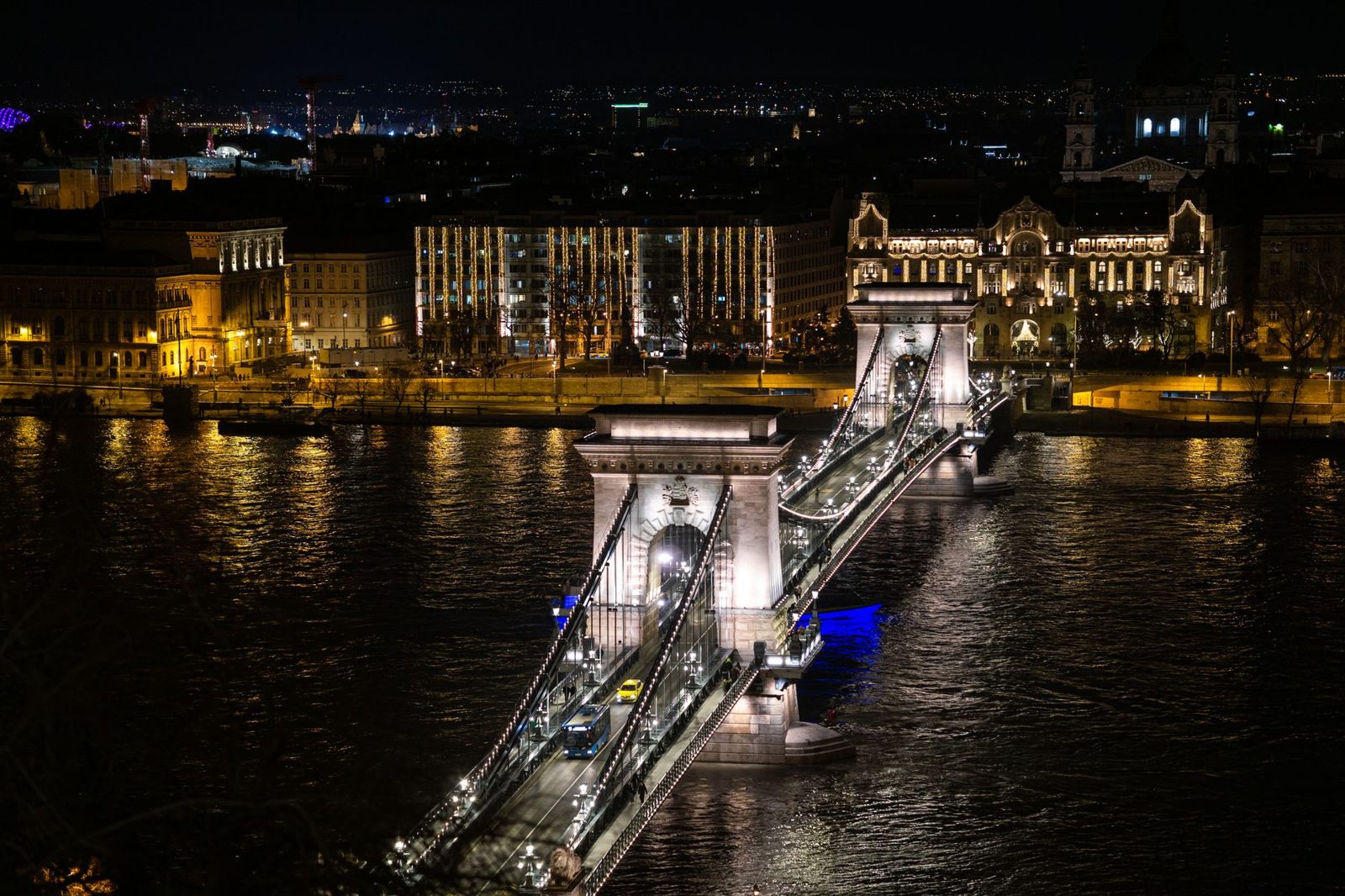
Walk across the Széchenyi Chain Bridge, Budapest’s oldest and most photographed river crossing. Reopened after a full restoration, its stone lions and iron arches frame the castle behind you and the city ahead. Halfway across is the obligatory photo; take it, then keep going into Pest.
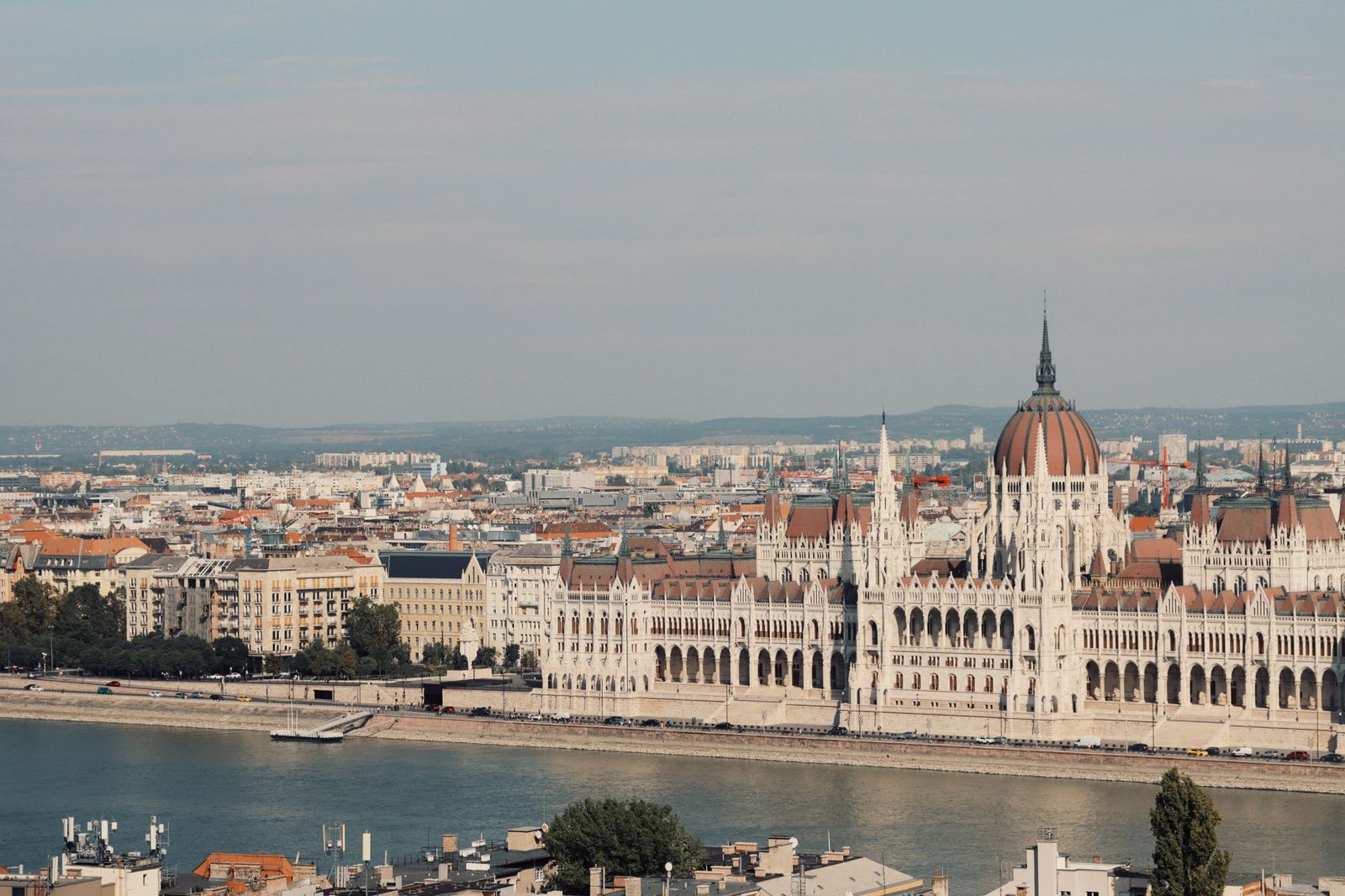
Follow the embankment north for about fifteen minutes to the Hungarian Parliament, a Gothic Revival showpiece that is arguably the most beautiful legislative building in Europe. Touring the interior requires a timed ticket (around 10,000 HUF for non-EU visitors, less for EU citizens) and they sell out, so on a packed single day I usually admire it from outside. Time your arrival for the top of the hour to catch the ceremonial changing of the guard on the square — it is free and genuinely smart.
If sombre history moves you, the Shoes on the Danube memorial is a five-minute walk south along the water: sixty pairs of iron shoes commemorating Jews shot into the river in 1944. It takes only a few minutes but stays with you.
Midday: lunch without losing momentum
You have earned a proper meal. For something quick and local, grab a seat at one of the bistros around Szabadság tér, or head to the Great Market Hall if you want both lunch and a browse — the upstairs stalls sell lángos, the deep-fried dough slathered with sour cream and cheese that is Hungary’s guilty pleasure. If you would rather sit down to a real plate of goulash or chicken paprikash, the streets around Vörösmarty tér are full of options. For a fuller rundown of where locals actually eat, see my guide to the best restaurants in Budapest.
| Lunch style | Try | Rough cost |
|---|---|---|
| Street snack | Lángos at the Great Market Hall | 1,800–2,500 HUF |
| Classic Hungarian | Goulash or paprikash near Vörösmarty tér | 3,500–5,500 HUF |
| Quick & trendy | Bistro bowls around Szabadság tér | 3,000–4,500 HUF |
Afternoon: the Basilica, the boulevard and a bath
After lunch, walk to St Stephen’s Basilica. The main nave asks only for a small donation (around 200 HUF), and for roughly 600–1,000 HUF you can ride the lift partway and climb to the cupola for a 360-degree view that rivals Castle Hill. Inside, the mummified right hand of Hungary’s first king sits in a side chapel — odd, but unmissable.
From the Basilica, Andrássy Avenue runs dead straight toward Heroes’ Square, lined with grand townhouses, the Opera House and high-end shops. You can walk its length in about thirty-five minutes, or hop on the M1 — the little yellow metro line that is itself a UNESCO-listed piece of history, opened in 1896. Either way, it delivers you to the edge of City Park and the entrance to the city’s most famous spa.
By mid-afternoon your feet will be ready for the Széchenyi thermal baths. The neo-Baroque palace of pools is the most spectacular way to recover from a day of walking, and there is nothing quite like floating in a steaming outdoor pool while the building glows around you. A weekday ticket with a locker runs about 13,200 HUF in 2026, dropping to roughly 10,500 HUF if you arrive before nine — though on this itinerary you will be coming in the afternoon, so just buy at the gate or online to skip a queue. Bring a swimsuit and towel, or rent them on site.

Early evening: Heroes’ Square and City Park
Step out of the baths into City Park as the light softens. Heroes’ Square, with its sweeping colonnade of Magyar chieftains and statesmen, is right at the park’s entrance and costs nothing to admire. Behind it, Vajdahunyad Castle looks medieval but is a romantic 19th-century fantasy built for a millennium exhibition — the perfect place for a slow, golden-hour wander before dinner.
If you still have a sliver of energy and daylight, this is also a lovely time to simply sit by the boating lake or grab an ice cream. You have done the heavy lifting; the evening is for savouring.
Night: dinner, then the city after dark
For your final evening, head back toward the centre or the Jewish Quarter. District VII comes alive after sunset, its courtyards packed with restaurants and the famous ruin bars built inside crumbling pre-war buildings. Have dinner first — modern Hungarian, Middle Eastern street food and excellent pizza all share these streets — then drift into one of the bars. Szimpla Kert, the original, is touristy but genuinely fun; my full take is in the guide to Budapest’s ruin bars.
Prefer something calmer? A late walk along the Pest embankment, with Parliament and the castle floodlit and mirrored in the river, is the single most beautiful thing you can do in Budapest for free. A short Danube cruise (many run until late) gives you the same view from the water. Either way, end the day with the city lit up — it is the image you will carry home.
Getting around in a single day
Budapest’s transport is cheap, clean and easy. A single ride costs 500 HUF, but if you plan to use the metro, trams and buses more than four times — and on this itinerary you will — buy a 24-hour travelcard for 2,750 HUF and forget about it. Validate it once and ride freely. The BudapestGO app sells digital tickets if you would rather not hunt for a machine. For the full breakdown of lines, passes and airport links, see my guide to Budapest public transport.
- Buy the 24-hour travelcard the moment you arrive — it pays for itself by your third ride.
- Trams 2 and 19 trace the river and double as sightseeing for the price of a ticket.
- The M1 yellow line under Andrássy is a museum piece you can actually ride.
- Walk the bridges — they are the best free views in the city.
- Avoid unmarked taxis; use the Bolt app if you need a car.
If you have an extra hour
Days rarely go exactly to plan, and you may find a spare hour somewhere. Good ways to spend it include a climb up Gellért Hill to the Citadella for the widest panorama in the city, a coffee in one of Budapest’s gilded historic cafés such as the New York Café, or a wander through the Central Market Hall if you skipped it at lunch. None of these will overload a one-day visit, and each adds a different texture to the day.
What to skip on a single day
Honesty helps here. With only one day in Budapest, I would not attempt a museum-heavy agenda, a day trip to the Danube Bend, or both Buda and Margaret Island. Trying to see everything is how people end up seeing nothing properly. If you find yourself wanting more — and most people do — Budapest rewards a longer stay; my weekend in Budapest itinerary and the fuller 3-day Budapest itinerary pick up exactly where this one leaves off. You will also find every plan, from a flying visit to a full week, mapped out in the master Budapest itinerary guide.
Frequently asked questions
Is one day enough to see Budapest?
One day is enough to fall for Budapest and tick off its signature sights — Castle Hill, the Parliament, a thermal bath and the floodlit river at night. It is not enough to go deep on museums, day trips or neighbourhood wandering. Think of a single day as a brilliant highlights reel that leaves you plotting a return.
What is the best way to spend 24 hours in Budapest?
Start high on Buda’s Castle Hill in the cool morning light, cross the Chain Bridge to Pest for the Parliament and the Basilica, soak at the Széchenyi Baths in the afternoon, and finish with dinner and a ruin bar or a night walk along the Danube. Following the river keeps walking and transfers to a minimum.
How much money do I need for one day in Budapest?
A comfortable mid-range day runs roughly 25,000–40,000 HUF per person (about €65–105), covering a transport pass, a couple of paid attractions, a thermal bath ticket, two meals and drinks. You can do it for far less by leaning on the city’s many free viewpoints and skipping the bath, or far more with fine dining and a river cruise.
Should I see Buda or Pest if I only have one day?
See both — that is the joy of Budapest, and the bridges make it easy. Spend the morning in hilly, historic Buda and the rest of the day in flat, lively Pest. Crossing the Danube on foot is one of the highlights, not a chore to avoid.
Is Budapest walkable in a day?
Largely, yes. The core sights line the river within a compact area, and the walk between most of them is part of the pleasure. Pair that with a 24-hour transport pass for the longer hops to City Park and the baths, and you will rarely wait more than a few minutes for a tram or metro.
Last updated June 2026. Photos: Efrem Efre (Pexels); Vish Pix (Pexels); Domenico Adornato (Pexels); János Csatlós (Pexels).