Széchenyi Baths Budapest: Best Complete Guide for 2026
Everything you need for a visit to Széchenyi Baths in 2026: 2026 prices, opening hours, how the locker system works, the best time to dodge crowds, and how it compares to Budapest's other thermal baths.
In this guide
- A quick history, because it matters
- What it costs in 2026
- Opening hours
- Your first twenty minutes: how the entry system works
- What is actually inside
- The three outdoor pools (start here)
- The indoor thermal maze
- A pool-by-pool cheat sheet
- The chess players, and other things to look out for
- Massages, aqua-fitness and extras
- When to go to dodge the crowds
- Make a day of it: City Park around the baths
- Getting there
- Is Széchenyi worth it? My honest take
- How Széchenyi compares to Budapest’s other baths
- The Sparty: Széchenyi after dark
- Five common mistakes (and how to avoid them)
- What to bring
- Where to eat near Széchenyi
- Passes, accessibility and practical bits
- Frequently asked questions
This article contains advertising. Our booking links are routed through a partner that adds commission tracking automatically, so if you book through one we earn a commission from the provider, at no extra cost to you. It never affects what we recommend. Affiliate disclosure
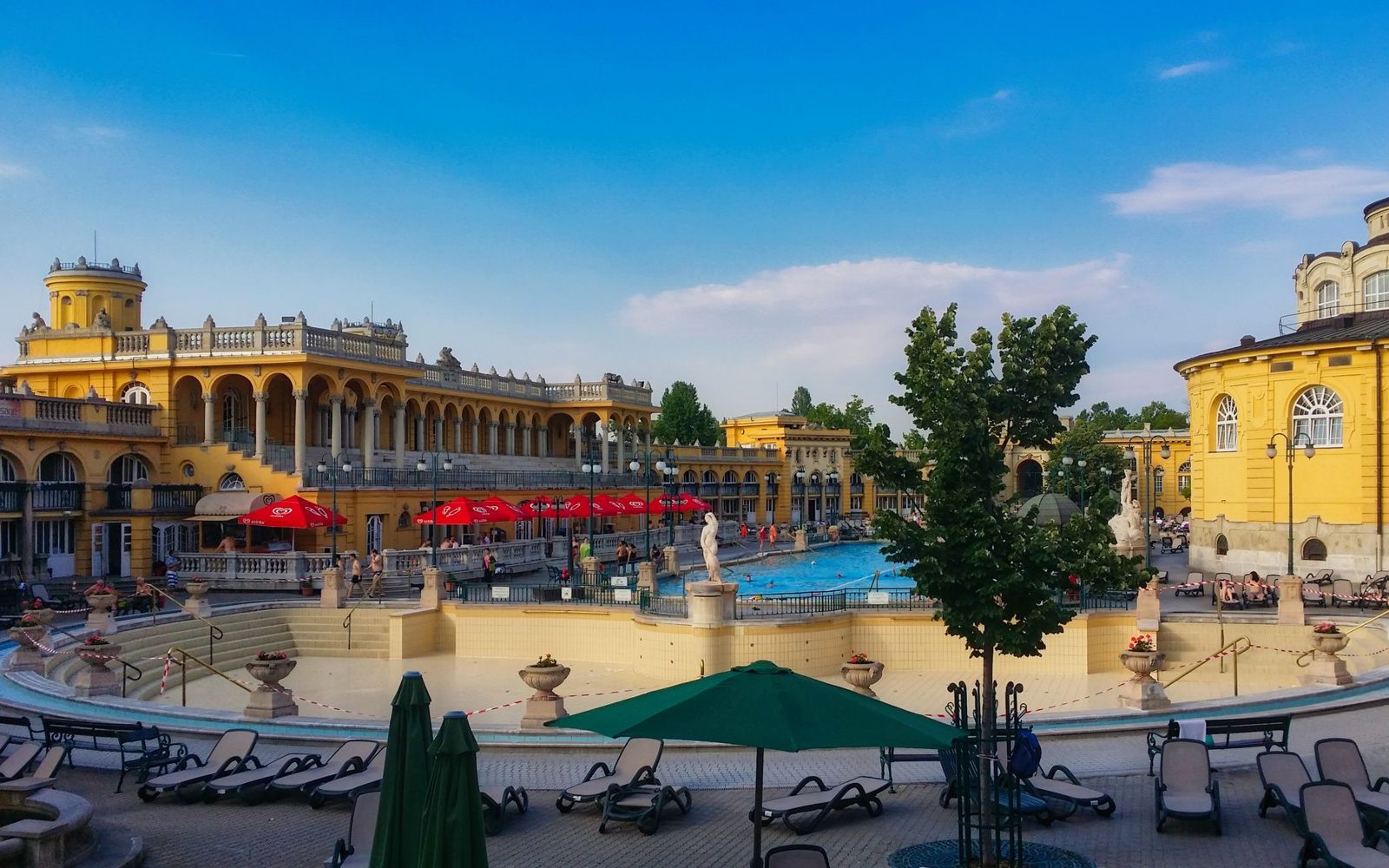
If you only have time for one thermal bath in Budapest, make it Széchenyi Baths. This is the big yellow neo-baroque palace in City Park, the one with the steaming outdoor pools and the old men playing chess waist-deep in 38°C water that you have seen in every photo of the city. It is the largest medicinal bath in Europe, it has been running since 1913, and in 2026 a full day inside costs roughly €36 to €47 depending on how you book. It is touristy, it is busy, and it is still completely worth it.
I have been back to Széchenyi in three different seasons now, and my opinion has not changed: this is the most joyful place in Budapest. What follows is everything I have learned about getting in cheaply, timing your visit so you are not swimming in a crowd, and actually enjoying the eighteen pools instead of wandering around confused for the first hour. For the wider picture of how the city’s spas fit together, our Budapest thermal baths guide covers the whole scene.
A quick history, because it matters
Széchenyi was built on a hot spring drilled by a geologist named Vilmos Zsigmondy, whose well still feeds the baths today with water that comes up from 1,250 metres underground at around 77°C before it is cooled to swimming temperature. The complex opened in 1913 and was expanded in 1927, which is why it feels less like a spa and more like a small palace that someone happened to fill with warm water. The mineral water is rich in sulphate, calcium, magnesium and fluoride, and Hungarians genuinely come here on doctors’ referrals for joint and circulation complaints. You do not need to care about any of that to enjoy it, but it explains why a soak here feels different from a hotel pool, this is working medicinal water, not a heated swimming pool with delusions of grandeur.
What it costs in 2026
Pricing at Széchenyi changes with the day of the week and, increasingly, with how far in advance you book. As a rough guide for 2026:
| Ticket type | Price (2026) | Notes |
|---|---|---|
| Online fast-track (with locker) | ~€44–47 | Skip the cashier queue; timed entry |
| Online ticket + Pálinka Museum combo | from ~€36 | Cheapest online option I have found |
| Walk-in cabin (private changing) | ~€38–42 | Buy at the door; expect a line |
| Children under 14 | Allowed | Unlike Rudas, families are welcome here |
Two things I wish someone had told me. First, the difference between a “locker” ticket and a “cabin” ticket is just your changing space, a locker is a normal gym locker, a cabin is a private cubicle, and for a couple of euros more the cabin is worth it on a busy day. Second, the bewildering combo tickets (the ones bundled with a pálinka tasting) are often the cheapest way in, because the baths use them to push online sales. Buying online also means you skip the queue at the cashier, which on a Saturday can swallow forty minutes of your life. If you are watching your forints, our Budapest budget guide puts a bath visit in context against the rest of your daily spending.
Opening hours
Széchenyi opens at 7am Monday to Friday and 8am at weekends, and the indoor pools, saunas and steam rooms run until 8pm, with last entry around 7pm. The outdoor pools, the famous ones, stay open later, often until 10pm in summer. You must be out of the inner pools about twenty minutes before closing, so do not roll in at 7:45pm expecting a leisurely steam.
Your first twenty minutes: how the entry system works
The single thing that trips up first-timers is not the water, it is the entry system, so here is exactly how it goes. You collect a waterproof wristband at the turnstile, this is your ticket, your locker key and your tab all in one. Touch it to the reader at the gate to get in. Inside the changing area, find any free locker (or your assigned cabin if you paid for one), put your things in, close it, and press the wristband to the small black pad on the locker door to lock it. Crucially, note your locker number, because the wristband does not display it and the changing maze all looks identical, dripping and lost, on your way back. To open it again, touch the wristband to the same pad. When you leave, you drop the wristband in a slot at the exit turnstile. Lose it and there is a hefty replacement fee, so I keep mine snug on my wrist the whole time.
What is actually inside
Here is the part that overwhelms first-timers. Széchenyi has eighteen pools, fifteen indoor and three outdoor, plus ten saunas and steam cabins. You do not need to use all of them, and you definitely should not try in one visit. This is how I would spend a half-day.
The three outdoor pools (start here)
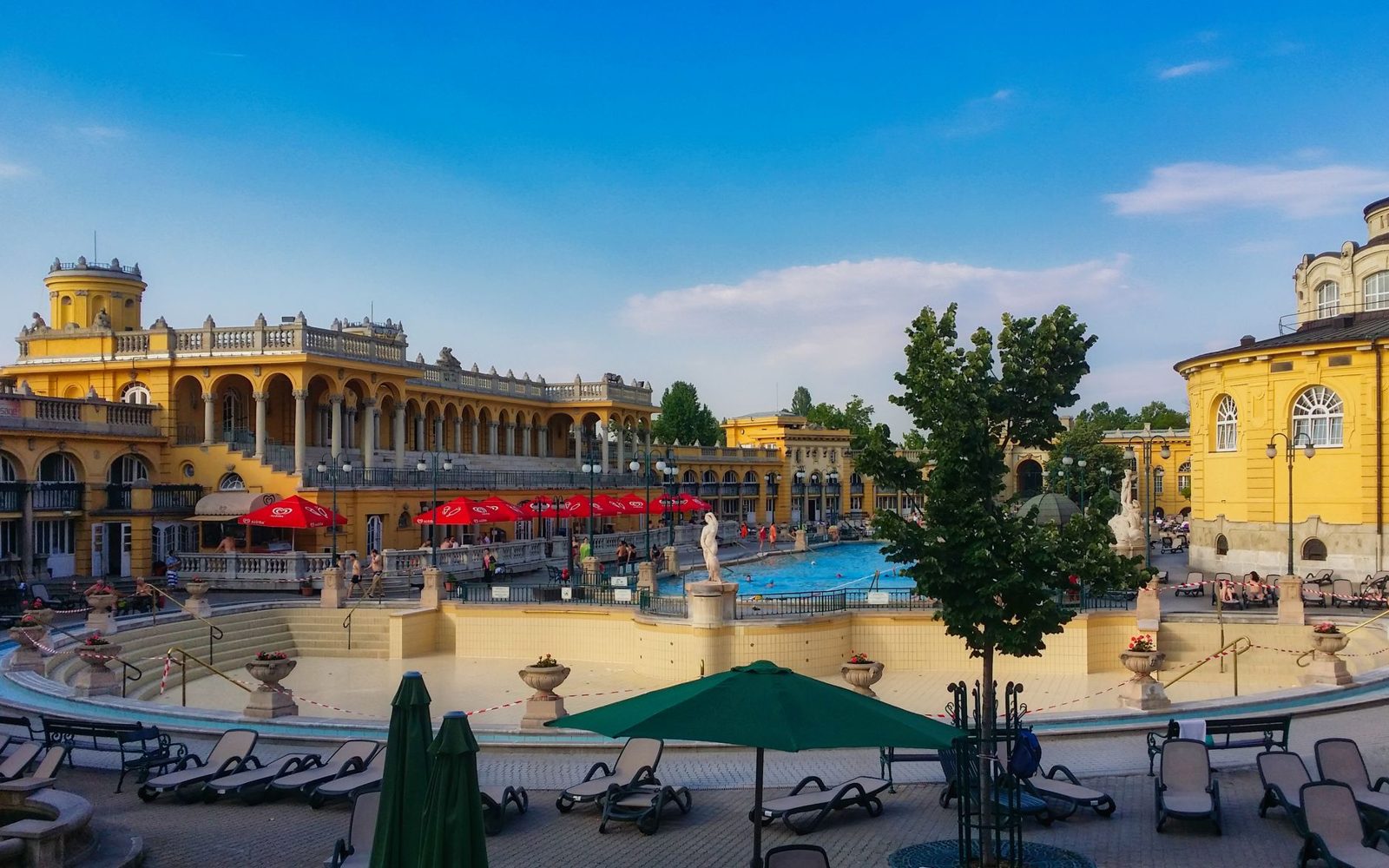
The three grand pools in the courtyard are the reason you came. One is a proper lap pool kept cooler at around 26°C, one is a recreational pool at a gentle 28°C with a whirlpool current that spins you in a lazy circle, and the third, the one everyone wants, is the hot thermal pool at around 38°C where the chess boards float and the steam rises off the surface on a cold morning. On a winter day, getting into that hot pool while snow falls on your head is one of the great Budapest experiences. Do that first thing, before the crowds.
The indoor thermal maze
Inside, a horseshoe of smaller thermal pools runs from a bracing 18°C plunge up to a punishing 40°C. The idea is to cycle, hot pool, cold plunge, rest, repeat, which is what the locals do and what your circulation will thank you for. Tucked among them are the saunas and steam rooms. Bring your own flip-flops because the floors are wet and shared.
A pool-by-pool cheat sheet
You will not remember which pool is which once you are in, so here is the shorthand I use:
- Outdoor adventure pool (~28°C), the social one, with the circular current, neck-jet showers and a central whirlpool. Good for first-timers.
- Outdoor thermal pool (~38°C), the hot, calm one with the chess players. The money shot.
- Outdoor lap pool (~26°C), for actual swimming; bring a cap.
- Indoor thermal pools (18°C–40°C), a graded series for the hot-cold cycle. The 38°C and 40°C ones are sit-and-soak; the 18°C plunge is for bravery.
- Saunas and steam rooms, dotted through the indoor wing; quieter in the mornings.
The chess players, and other things to look out for
The floating chess boards are real and the players are serious, do not lean over their game uninvited. Beyond that, look up: the courtyard façade is a wedding cake of yellow stucco and statues that looks even better lit up at dusk. If you visit in the evening, the contrast of warm water, cold air and floodlit architecture is genuinely magical, and it is one of the best photography spots in Budapest.

Massages, aqua-fitness and extras
Beyond the pools, Széchenyi sells a long menu of add-ons: aroma massages, classic Swedish massages, a “royal” package, and seasonal aqua-fitness classes in the outdoor pools. They are not cheap (a 20-minute massage runs from around €25–30 and rises steeply for longer treatments) and the on-site versions are functional rather than luxurious, do not expect a five-star spa touch. If a massage is the point of your visit, book it online in advance, because walk-in slots vanish by mid-morning at weekends. Personally I skip them here and save the massage budget for a dedicated spa, but the aqua-aerobics in the outdoor pool is good fun if the timing lines up.
When to go to dodge the crowds
Széchenyi is busiest from late morning to mid-afternoon, and worst on weekends. My honest advice: arrive at opening, 7am on a weekday if you can manage it, and you will have the hot outdoor pool nearly to yourself for an hour with the morning steam at its most photogenic. The other sweet spot is a weekday evening after about 6pm, when the day-trippers have left and the lit-up pools take on a different, calmer atmosphere. Avoid Saturday midday unless crowds do not bother you. If you are mapping out your days, our Budapest itineraries build a bath visit into the schedule, and the best time to visit Budapest guide explains the seasonal trade-offs.
Make a day of it: City Park around the baths
One of Széchenyi’s underrated advantages is its location. It sits in City Park (Városliget), so you can build a whole easy day around it. A two-minute walk from the entrance is the fairytale Vajdahunyad Castle, a romantic mash-up of Hungarian architectural styles around a lake that becomes an ice rink in winter. Walk the other way and you reach Heroes’ Square and the Museum of Fine Arts. Families have the city zoo and Holnemvolt Park right next door. I like to do the baths first thing, then dry off and wander the park, it makes the entry fee feel like much better value. See our guides to Budapest’s best landmarks and, if you are travelling with little ones, Budapest with kids.
Getting there
Széchenyi sits in City Park and has its own metro stop, Széchenyi fürdő on the M1 yellow line, the historic little underground that is a sight in itself. From the city centre it is about ten minutes. The yellow M1 is the oldest metro on continental Europe, so the journey is part of the fun. Once you surface, the baths are the enormous yellow building you cannot miss. For tickets and how the transport system works, see our Budapest public transport guide.
Is Széchenyi worth it? My honest take
Yes, with one caveat. If your idea of a spa is silence and serenity, Széchenyi is not that, it is grand, social and often loud, more public lido than wellness retreat. But if you want the full, slightly chaotic, deeply Budapest experience of soaking outdoors in mineral water under a baroque palace, nothing else in the city comes close. For peace and quiet, you want a different bath entirely, which brings us to the alternatives.
How Széchenyi compares to Budapest’s other baths
Széchenyi is the crowd-pleaser, but it is not the only option, and the right bath depends on what you are after. If you want Ottoman atmosphere and a rooftop tub with a Danube view, head across the river to Rudas Baths. If you want to soak somewhere calm where actual locals go for their joints, Lukács Baths is the quiet, affordable choice. Sadly, the Art Nouveau Gellért Baths are closed for a long renovation, and the historic Király Baths remain shut too, so check their status before planning around them. For a side-by-side breakdown, our Budapest bath comparison lays out which is best for whom, and before you go, skim the bath etiquette guide so the locker system does not catch you out.
The Sparty: Széchenyi after dark
On Saturday nights from February to December, Széchenyi transforms into the “Sparty”, a late-night spa party with DJs, light shows and laser projections across the pools, running 9:30pm to 2am. Tickets start around €65. It is a completely different animal from the daytime baths, more nightclub-in-a-pool than relaxing soak, and it is aimed squarely at the stag-and-hen crowd. If that is your scene it is a riot; if it is not, avoid Saturday nights. We cover it properly in the Budapest spa party guide, and it slots neatly into a bigger night out, see our Budapest nightlife guide.

Five common mistakes (and how to avoid them)
- Arriving at midday on a weekend. It is the single worst time. Go early or go in the evening.
- Buying at the door. The online combo tickets are usually cheaper and let you skip the cashier line.
- Forgetting flip-flops. The floors are wet and shared; bare feet are grim. Pack pool slippers.
- Not noting your locker number. The wristband locks the locker but does not tell you which one is yours.
- Trying to use all eighteen pools. You will exhaust yourself. Pick a few, soak properly, and let the rest go.
What to bring
Pack a swimsuit (Széchenyi is co-ed and swimsuits are required everywhere), a towel or be ready to rent one, flip-flops or pool slippers, and a swim cap if you plan to use the lap pool. A waterproof phone pouch is handy for photos in the pools. Lockers are operated by your wristband, which also acts as your entry token, so do not lose it. There are cafés and a bar on site, but you are not allowed to bring your own food into the pool areas.
Where to eat near Széchenyi
The on-site bistro and pool bar are convenient but forgettable, fine for a lángos or a beer between soaks, not somewhere you would go out of your way for. For something better, walk five minutes to Robinson by the park lake for a proper sit-down meal, or save your appetite and head back into town afterwards. City Park itself has seasonal food trucks in summer. If you want the full picture, our guides to Budapest food and the city’s grand coffee houses are the better way to plan your eating, a slice of cake at the New York Café after a morning soak is a very Budapest kind of day.
Passes, accessibility and practical bits
A few odds and ends that come up a lot. The Budapest Card does not include free Széchenyi entry, but some versions bundle a discount, so check the current terms against the standalone online price before you buy, it is not always the cheaper route. The complex is partly accessible, with ramps and lifts to the main outdoor area and assisted-access facilities, though the older indoor wings have steps and narrow passages; contact the baths ahead if step-free access matters for your visit. There is paid parking nearby, but with the M1 metro dropping you at the door I would not bother driving. Finally, the baths can be reserved for the full day on a single ticket, so you are free to leave for lunch and come back, just keep your wristband on.
Frequently asked questions
Is Széchenyi Baths worth it?
Yes. It is the most iconic and complete bath experience in Budapest, with eighteen pools and the famous outdoor thermal pools. It is busy and touristy, but for a first visit it is the one to choose.
How much time should I spend at Széchenyi?
Plan for at least two to three hours. The pools, saunas and steam rooms reward a slow visit, and rushing it defeats the purpose. Half a day is ideal.
Can you take photos inside Széchenyi Baths?
Yes, in the outdoor pool areas, and it is one of the most photogenic spots in the city. Be discreet and respectful of other bathers, and keep your phone in a waterproof pouch near the water.
Do I need to bring a towel?
Bring your own to save money; towels can be rented on site but the deposit and fee add up. Flip-flops and a swim cap (for the lap pool) are also worth packing.
Is Széchenyi nude or do I wear a swimsuit?
Swimsuits are required throughout, Széchenyi is fully co-ed and there is no nude bathing. (The nude, gendered sessions belong to the older Ottoman baths like Rudas.)
Are children allowed at Széchenyi?
Yes. Unlike Rudas Baths, Széchenyi welcomes families, though the thermal water is hot, so keep an eye on little ones and stick to the cooler pools with them.
Can you drink the thermal water?
No, the pool water is for soaking, not drinking. Stay hydrated with your own water bottle instead, the hot pools dehydrate you faster than you would think.
Is Széchenyi open in winter?
Yes, and winter is arguably the best time to visit, soaking in the 38°C outdoor pool while it snows is unforgettable. The baths are open year-round.
Last updated June 2026. Written from repeat visits across multiple seasons. Photos: Domenico Adornato (Pexels); Domenico Adornato (Pexels); Tamás Endre Farkas (Pexels); It’s MJ! (Pexels).