Budapest Public Transport: Best Complete Guide (2026)
A local's 2026 guide to getting around Budapest by metro, tram and bus: current ticket prices, the BudapestGO app, validation rules and the lines worth riding.

In this guide
- What a ticket costs in 2026
- The BudapestGO app, and why paper is fading
- Validation and the fine you want to avoid
- The metro: four lines, four characters
- Trams worth riding for their own sake
- Buses, trolleybuses and the night network
- The HÉV, the boats and the airport link
- Is the Budapest Card worth it?
- Practical tips I wish I had known sooner
- A few journeys to get you started
- Frequently asked questions
This article contains advertising. Our booking links are routed through a partner that adds commission tracking automatically, so if you book through one we earn a commission from the provider, at no extra cost to you. It never affects what we recommend. Affiliate disclosure
The first piece of advice I give anyone flying into Budapest is to stop thinking about taxis. This is a city built for trams and metros, and once the network clicks into place you can cross from the Buda hills to the eastern edge of Pest for less than the price of a coffee. I have spent enough mornings rattling under Andrássy Avenue on the second-oldest underground line in the world, and enough evenings watching the Parliament slide past the window of a riverside tram, to promise you that the system looks far more intimidating than it actually is.
Everything you ride is run by a single authority, BKK (Budapesti Közlekedési Központ), and that is the detail that makes the whole thing simple. One validated ticket covers four metro lines, roughly forty tram routes, a dense web of buses and trolleybuses, the HÉV suburban railway and even scheduled boats on the Danube. There is no separate ticket for the metro versus the tram. You buy one fare, validate it, and you are good for that journey or that time window across the entire city. Below I will walk through what a ticket costs in 2026, the app that has quietly replaced the old paper system, and the lines that are genuinely worth your time.
What a ticket costs in 2026
Fares rose on 1 June 2025 and have held steady into 2026, so the numbers below are current. A single ticket is 500 HUF, which works out to roughly €1.25, and it covers one uninterrupted journey on one vehicle. The catch is that “one vehicle” is literal: a single ticket does not allow transfers, except when you change between metro lines without leaving the paid area. If you board and pay the driver in cash, the same ticket jumps to 700 HUF, so it always pays to buy before you travel.
For anything involving a change, the time-based tickets are better value. A 30-minute ticket (600 HUF) and a 90-minute ticket (850 HUF) both let you transfer freely between as many vehicles as you like inside the window, which suits the way most visitors actually move around the centre. If you are only making a handful of trips, a block of ten single tickets at 4,500 HUF shaves a little off the per-ride cost.
| Ticket or pass | Price (2026) | Good for |
|---|---|---|
| Single ticket | 500 HUF | One ride, one vehicle, no transfers |
| Single bought on board | 700 HUF | Same, paid to the driver |
| 30-minute ticket | 600 HUF | Unlimited transfers within 30 min |
| 90-minute ticket | 850 HUF | Unlimited transfers within 90 min |
| Block of 10 single tickets | 4,500 HUF | Occasional riders |
| 24-hour travelcard | 2,750 HUF | Unlimited travel, one day |
| 72-hour travelcard | 5,750 HUF | Unlimited travel, three days |
For most people on a city break, the travelcard is the obvious move. At 2,750 HUF for 24 hours or 5,750 HUF for 72 hours, you stop counting rides and just hop on and off, which is exactly how you want to experience a city this walkable-but-spread-out. Six rides on single tickets already cost more than a day card, and you will almost certainly do more than six. The pass also removes the small mental tax of validating individual tickets every time you change lines.
The BudapestGO app, and why paper is fading
The single biggest change to getting around Budapest in recent years is the BudapestGO app, BKK’s official platform. It is free, available in English on both the App Store and Google Play, and it does almost everything: route planning with live departures, service alerts, and the purchase of single tickets, time-based tickets and 24- or 72-hour travelcards straight from your phone. You register once, add a bank card, and from then on buying a fare takes about ten seconds.
One quirk trips up first-timers. A mobile ticket is not active the moment you buy it. You have to tap “activate” in the app just before you board, then scan the QR code at the reader, which sits on the platform for the metro and beside the doors on buses and trams. Buy in advance, activate at the last second. The app also sells the airport bus fare, which I will come back to, and shows you exactly which line and stop to use, so it doubles as a route planner you would otherwise pay for.
Validation and the fine you want to avoid
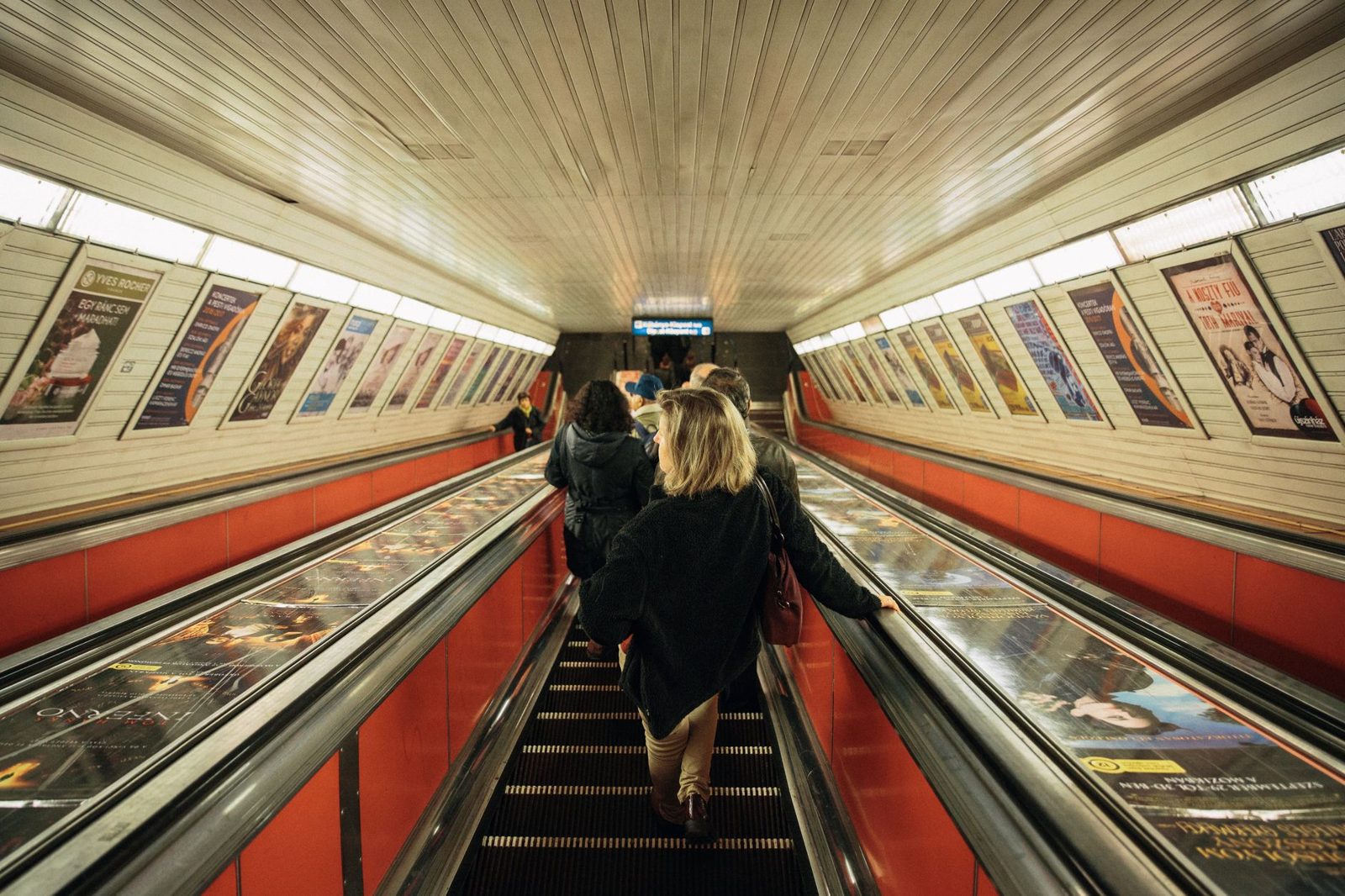
Budapest runs an honour system backed by spot checks, and tourists are checked more often than they expect. If you are using a paper single ticket, you must validate it in the orange or red boxes at metro entrances and on board buses and trams the moment you start your journey. A travelcard does not need validating each ride, but you should carry it (and any ID it is tied to) at all times. Inspectors usually work in pairs, often in plain clothes, revealing a burgundy armband only once they have boxed you in at a metro exit. An unvalidated or missing ticket means an on-the-spot penalty of 12,000 HUF, rising to 25,000 HUF if you pay later. It is not worth the gamble for the sake of a 500 HUF fare.
The metro: four lines, four characters
Budapest’s metro is compact and easy to read, with four colour-coded lines that meet at Deák Ferenc tér in the very centre. The M1 (yellow) is the headline act: opened in 1896, it is continental Europe’s oldest underground line and a UNESCO World Heritage site, running just below Andrássy Avenue from Vörösmarty tér out to City Park, with handsome tiled stations at the Opera and Heroes’ Square. Riding it feels like stepping into a beautifully kept time capsule.
The M2 (red) burrows deep under the Danube to connect Buda’s Déli station with eastern Pest, passing Kossuth tér for the Parliament and Keleti, one of the main rail terminals. The M3 (blue) is the long north-south workhorse, recently renovated end to end, and its southern terminus at Kőbánya-Kispest is where the 200E airport bus drops you. The M4 (green) is the newcomer, opened in 2014, linking Kelenföld in Buda with Keleti and notable for its striking, light-filled modern stations. Trains run roughly every two to five minutes in the day, so you rarely wait.
Trams worth riding for their own sake
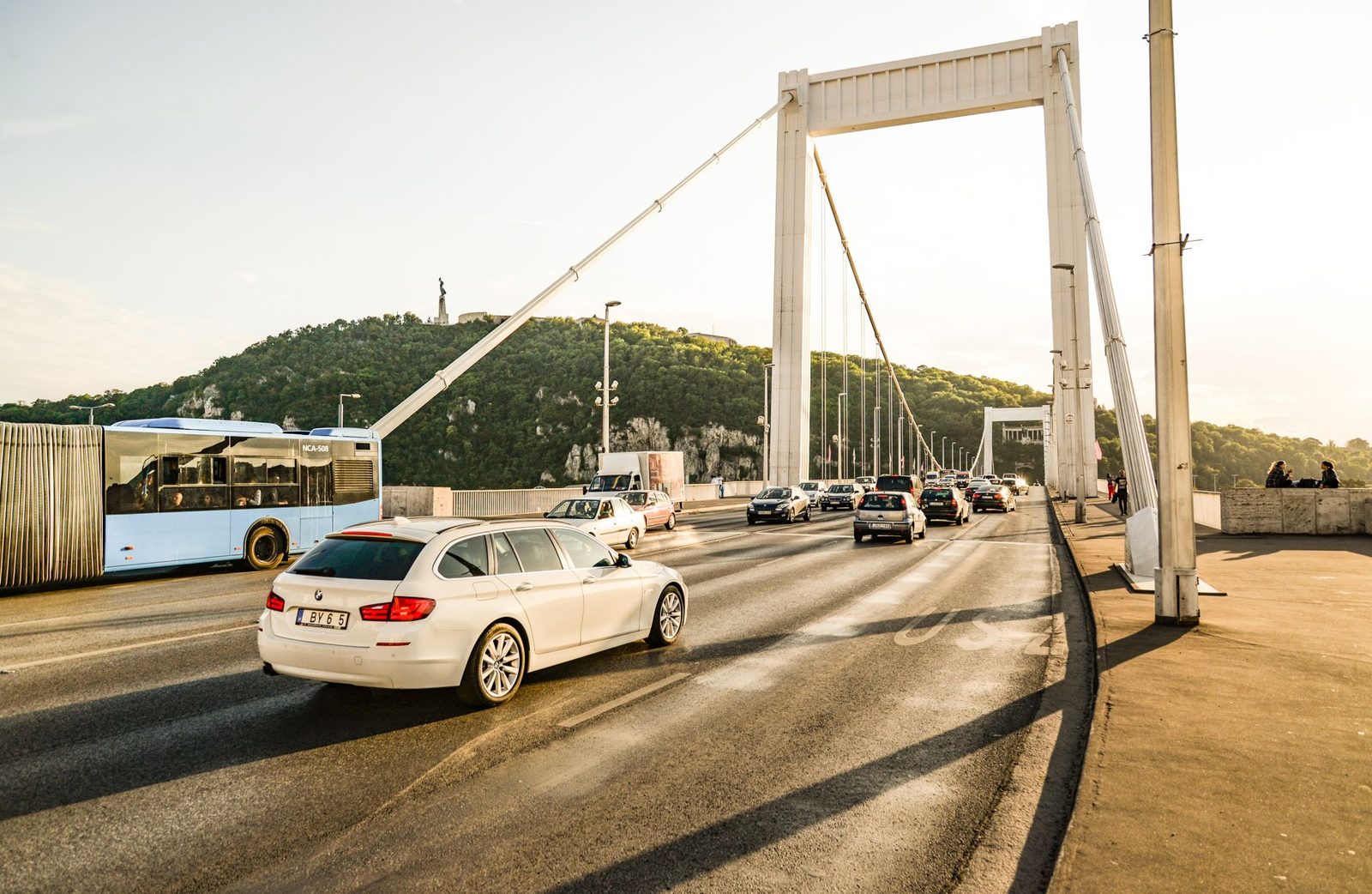
If the metro is the practical option, the trams are where Budapest shows off. Tram 2 hugs the Pest embankment and has been ranked among the most scenic tram rides in the world; for the cost of a single ticket you glide past the Parliament, the Chain Bridge and Buda Castle across the water. I send every first-time visitor on it. Trams 4 and 6 trace the Grand Boulevard, the semicircular ring road through Pest, and run around the clock; they are among the busiest tram lines anywhere and use some of the longest passenger trams in the world. Between them, lines 47 and 49 connect the centre to Buda across Liberty Bridge, handy for the thermal baths on the Buda side.
Buses, trolleybuses and the night network
Buses and trolleybuses fill in everywhere the rails do not reach, including the climb up to Buda Castle and the Gellért Hill viewpoints. The system does not stop when the metro does. After the underground shuts around 11:30pm, a network of night buses (the 900-series) takes over, and trams 4 and 6 keep running all night along the boulevard, which is a quiet blessing after a long evening in the ruin bars of the Jewish Quarter. Night services run less frequently, so check the next departure in BudapestGO rather than standing at a dark stop guessing.

The HÉV, the boats and the airport link
Two extra modes are worth knowing. The HÉV is a suburban railway of green trains that reaches beyond the city limits; the H5 line from Batthyány tér is the easy, cheap way out to the artists’ town of Szentendre, though you pay a small supplement once you cross the city boundary. In the warmer months BKK also runs scheduled river boats (the D-lines) that you can ride on a standard transit ticket or travelcard, turning your commute into a mini Danube cruise.
From the airport, the picture is simple. The 100E Airport Express runs around the clock between the terminal and Deák Ferenc tér in about 45 minutes, but it needs its own dedicated ticket (2,500 HUF) that is not covered by a normal single or a travelcard. The budget alternative is bus 200E to Kőbánya-Kispest, then the M3 metro into town, all on a standard 500 HUF ticket. I cover the trade-offs in detail in the complete guide to Budapest airport transfers.
Is the Budapest Card worth it?
The Budapest Card bundles unlimited public transport with free or discounted entry to a long list of attractions, and it comes in 24-, 48-, 72-, 96- and 120-hour versions (the 72-hour card is 29,990 HUF). Whether it pays off depends entirely on your sightseeing pace. If you plan to use the baths, several museums and a walking tour or two, the included entries and discounts can outrun the cost; if you are mostly wandering, eating and riding trams, a plain travelcard plus pay-as-you-go entries is cheaper. Do the arithmetic against your actual plans, and weigh it alongside the wider question of how much a trip to Budapest costs.
Practical tips I wish I had known sooner
- Buy on your phone. The BudapestGO app is faster than any machine and saves you the 200 HUF on-board surcharge.
- Activate, then board. A mobile ticket sitting unactivated in the app does not count as valid.
- Keep your travelcard handy. Inspectors appear most often at central metro exits like Deák Ferenc tér.
- Mind the doors. On many trams and older buses you press a button to open the doors at a stop; they will not all open automatically.
- Avoid weekday rush. The M3 and trams 4/6 get genuinely packed between 7:30 and 9am.
- Validate paper tickets immediately. Doing it “in a minute” is exactly when the inspectors appear.
- Watch your bag in crowds. Pickpocketing on packed trams is the one real risk; more on staying street-smart in our guide to whether Budapest is safe.
A few journeys to get you started
To stitch the network together in your head, picture a typical first day. From a hotel near Deák Ferenc tér you take the M1 four stops to Heroes’ Square, walk back down Andrássy past the Opera, then catch tram 2 along the river to the Great Market Hall. In the evening you ride trams 47 or 49 across Liberty Bridge to the Gellért side, and roll home on the all-night tram 4 or 6. None of that requires more than a 24-hour travelcard, and you will have seen half the city’s landmarks through a tram window in the process. For a full day-by-day plan, see our one day in Budapest itinerary, and to slot transport into the bigger picture, start from the Budapest trip planning guide.
This page covers the ticketing system — what to buy, how to validate it and what happens if you do not. If you want the wider picture of how the city actually moves, including taxis, the night network, the bike share, the Buda funiculars and the walk-versus-ride calculation, our guide to getting around Budapest is the hub this sits under.
Frequently asked questions
Do I need to buy tickets in advance or can I tap a card like in London?
Budapest does not yet have open contactless tap-to-ride on most vehicles. You buy a ticket or travelcard first, either in the BudapestGO app or from a machine, and then validate it. Paying the driver in cash is possible on buses but costs more.
How much is a day of Budapest public transport for a tourist?
A 24-hour travelcard at 2,750 HUF (about €7) gives you unlimited rides for the day, which beats single tickets the moment you take more than five trips. It is the simplest choice for sightseeing.
Does one ticket cover the metro, trams and buses?
Yes. BKK runs the whole network on one fare system, so a single ticket or travelcard works across metro, tram, bus, trolleybus, the HÉV within the city limits and the BKK river boats.
Is the public transport in Budapest safe at night?
It is generally very safe. Night buses and the all-night 4/6 trams are well used and reliable; the main thing to watch is your belongings on crowded vehicles rather than any personal danger.
Can I use the airport bus 100E with a normal travelcard?
No. The 100E Airport Express requires its own dedicated ticket of 2,500 HUF. If you want to travel on a standard fare, take the 200E bus to Kőbánya-Kispest and change to the M3 metro instead.
Last updated June 2026. Photos: Efrem Efre (Pexels); Bence Szemerey (Pexels); Andrea Imre (Pexels); ClickerHappy (Pexels).