Budapest in March: The Awkward Month That Can Surprise You
A planner for Budapest in March: changeable weather and how to handle it, 15 March and the free museums, the early Easter and clock change in 2027, what's open, costs and an honest verdict.
In this guide
- March at a glance
- Why March is awkward, and why that’s fine
- The weather, honestly
- March 2027, week by week
- 1–7 March: the tail of winter
- 8–14 March: first signs of spring
- 15 March: National Day
- 16–25 March: spring takes hold
- 26–29 March: Easter and the clock change
- 30–31 March: the start of the season
- 15 March: the 1848 revolution and how to spend the day
- What you’ll see
- Free museums on the day
- What’s open
- Easter in March 2027
- What’s open, what’s closed and what’s starting
- How to spend a March day
- Eating and drinking in March
- What March costs
- Day trips for March
- What to pack for March
- Is Budapest worth visiting in March?
- Practical tips
- Frequently asked questions
- Photo credits
This article contains advertising. Our booking links are routed through a partner that adds commission tracking automatically, so if you book through one we earn a commission from the provider, at no extra cost to you. It never affects what we recommend. Affiliate disclosure
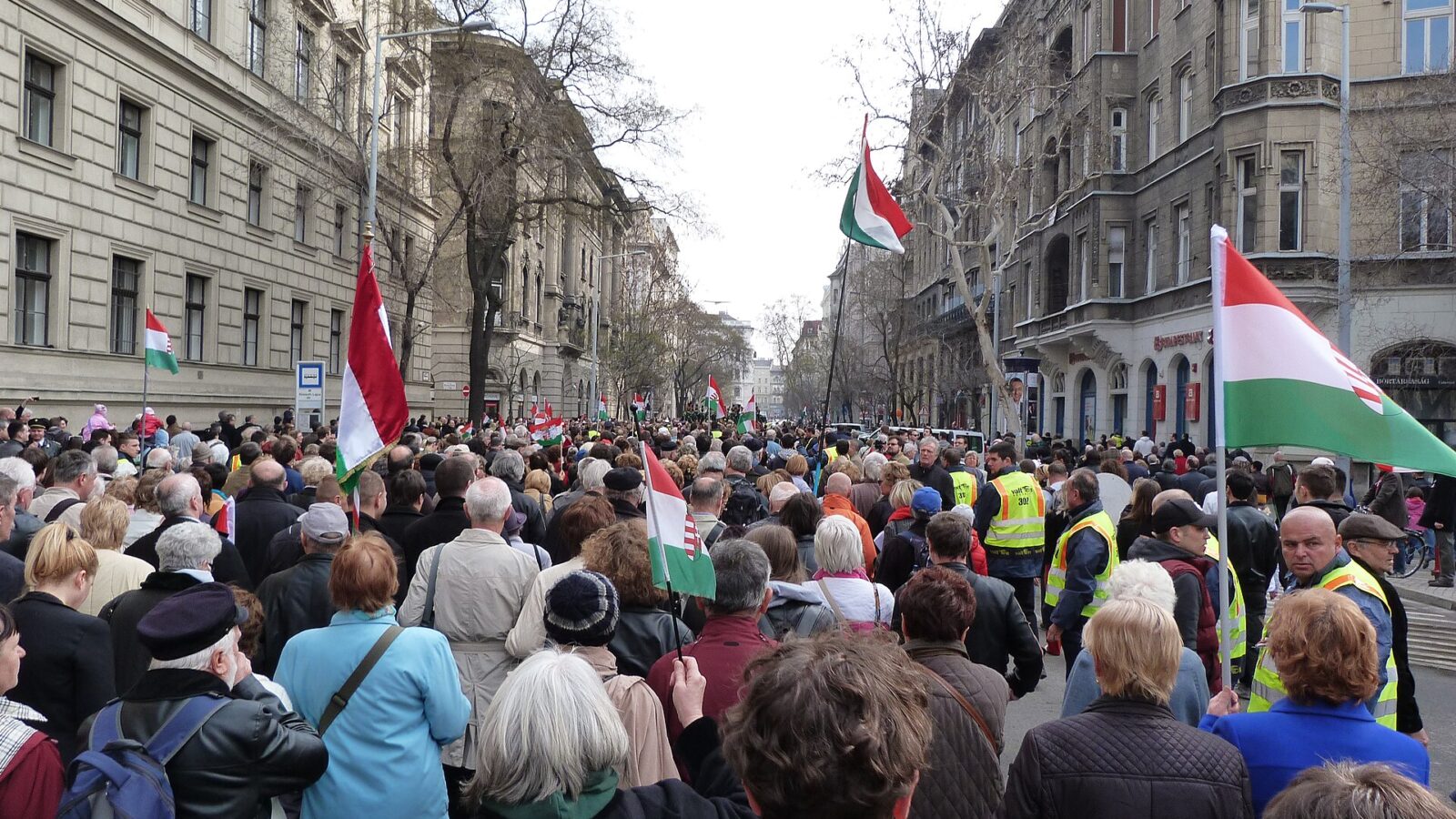
On the morning of 15 March, almost everyone on a Budapest tram is wearing a small rosette of red, white and green ribbon pinned over their heart. The flags are out on every public building, a crowd is gathering on the steps of the National Museum, and the café terraces, which were bare a fortnight ago, have tables out for the brave. It might be 4 °C and drizzling. It might be 18 °C and glorious. Budapest in March is an awkward month, neither winter nor spring and often both in the same week, but it’s also one of the year’s most underrated: cheap, quiet, increasingly sunny, with a national holiday worth seeing and, in 2027, Easter and the change to long summer evenings arriving on the same weekend at the end of the month.
This guide covers what makes March awkward and how to make the most of it, the weather, a week-by-week calendar for March 2027, 15 March and how to spend it, the early Easter, the clock change, what’s open and closed, what to eat, what it costs and an honest verdict. Prices were checked in September and October 2026; treat them as the right order of magnitude. For the whole year side by side, see Budapest month by month.
March at a glance
| What | March in Budapest |
|---|---|
| Average high / low | 11 °C / 0 °C, with huge swings either side |
| Rain | About 30 mm on around 6 days, one of the driest months of the year |
| Sunshine | About 5 hours a day, double January’s |
| Daylight | 11 hours at the start, 12¾ by the end; after the clocks change, sunset jumps to after 7pm |
| Crowds | Low for most of the month; busier on 15 March and over Easter |
| Hotel prices | Low, except around the Easter weekend |
| Key dates in 2027 | National Day, Monday 15 March · Good Friday 26 March · Easter Sunday and clocks forward, 28 March · Easter Monday 29 March |
| Best for | Value, quiet sightseeing, museums, the baths, the first terraces of the year |
Why March is awkward, and why that’s fine
March has an image problem. It’s too late for the winter pleasures that make a January trip special, the Christmas markets and the ice rink both close around the start of the month, and too early for the things that make spring lovely: the parks are still mostly brown in the first half of the month, the river cruises are on their winter timetables, the musical fountain on Margaret Island is off, and the open-air lidos are shut. The weather can’t make up its mind. Pack for spring and you’ll freeze; pack for winter and you’ll be carrying your coat by lunchtime.
And yet March has a lot going for it, if you know where to look. Hotel prices are still close to their winter lows. The crowds are thin, which means the Parliament, the Basilica and the Castle District are as quiet as they get outside January, and with far more daylight. Five hours of sunshine a day on average is twice what January manages. The baths, museums, coffee houses and concert halls are all in full season. There’s a genuinely interesting national holiday. And in a year like 2027, when Easter falls in March, the month ends with a festive long weekend and the first long evenings of the year. The trick is to plan for the weather you get, not the weather you hoped for.
The weather, honestly
The averages are a high of 11 °C and a low of 0 °C, about 30 mm of rain on six days, and five hours of sunshine. In practice, March in Budapest is a month of extremes. The first week often feels like February, with frost at night, grey skies and the occasional flurry of snow. By the last week, sunny afternoons can reach the high teens, and you’ll see people in T-shirts on the Danube promenade. And in between, the weather can flip in a day.
The good news is that it’s one of the driest months of the year, and that when the sun comes out, there’s real warmth in it. The bad news is the wind: March can be blustery, and the bridges and embankments feel colder than the thermometer suggests. Layers, a windproof jacket and a willingness to change plans are the answer.
The days lengthen quickly, and then the clocks go forward on the last Sunday of the month, which in 2027 is 28 March, Easter Sunday:
| Date (2027) | Sunrise | Sunset | Daylight |
|---|---|---|---|
| 1 March | 06:26 | 17:27 | 11 h 01 |
| 15 March | 05:59 | 17:48 | 11 h 49 |
| 27 March (last day of winter time) | 05:35 | 18:05 | 12 h 30 |
| 28 March (clocks go forward) | 06:33 | 19:06 | 12 h 33 |
| 31 March | 06:27 | 19:10 | 12 h 44 |
Overnight, sunset moves from about five past six to about five past seven, and the city suddenly has evenings again.
March 2027, week by week
1–7 March: the tail of winter
The first week is usually the coldest and greyest of the month, and the quietest. The City Park Ice Rink, open since late November, usually closes for the season in late February or early March, depending on the weather; if you want to skate, check it’s still open. This is the cheapest week of the month for hotels, and a good one for the baths, museums and coffee houses. 8 March is International Women’s Day, still widely marked in Hungary with flowers, so expect the florists’ stalls to be busy.
8–14 March: first signs of spring
The second week often brings the first truly mild days. The first café tables appear on the pavements, the willows along the river turn yellow-green, and the first early flowers come out in the parks. The flags and cockades start appearing ahead of the national holiday, and on the weekend of the 13th and 14th the city fills with visitors from the rest of Hungary.
15 March: National Day
In 2027, 15 March falls on a Monday, so the holiday makes a long weekend. It’s the anniversary of the 1848 revolution, and the most joyful of Hungary’s three national days. The next section explains what happens and how to spend it.
16–25 March: spring takes hold
The second half of March is usually milder, with more sunny days and the parks visibly greening. In 2026 a spring fair on Vörösmarty tér, with craft stalls, folk music and dancing and food, ran from 20 March to 6 April, and something similar is likely around Easter in 2027. The Easter decorations go up across the city. Hotel prices start to rise towards the Easter weekend.
26–29 March: Easter and the clock change
In 2027 Easter comes early, and it brings the busiest weekend of the month. Good Friday (26 March) and Easter Monday (29 March) are public holidays, so it’s a four-day weekend, with shops closed on Friday and Monday and holiday timetables on public transport. On Easter Sunday the clocks go forward, so the long weekend ends with the first light evenings of the year. More on Easter below.
30–31 March: the start of the season
The month ends with sunset after seven, the river cruises gearing up for the season, and the tourist season beginning in earnest. In years when Easter falls later, these are the cheap, quiet days before the April rush.
15 March: the 1848 revolution and how to spend the day
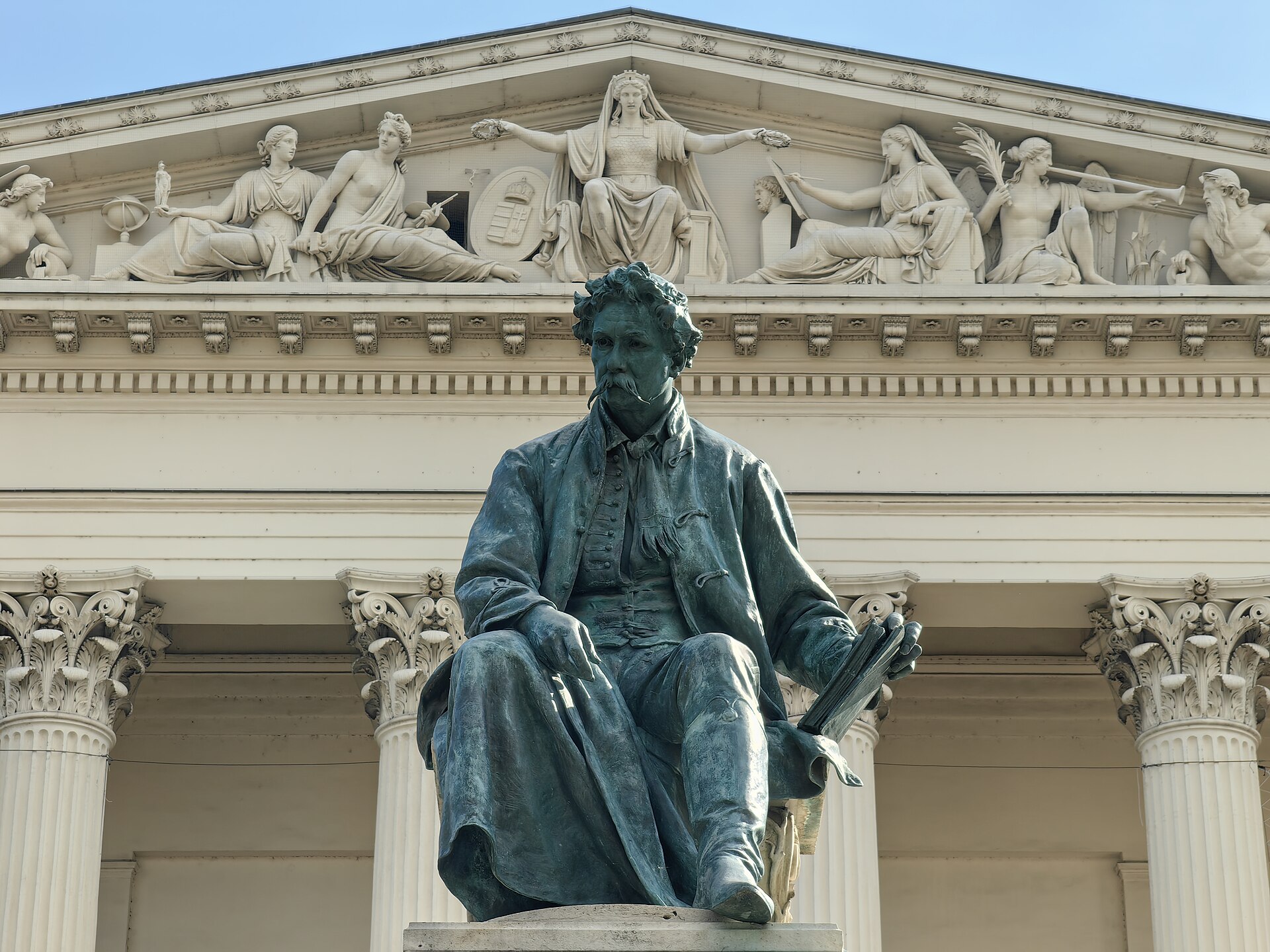
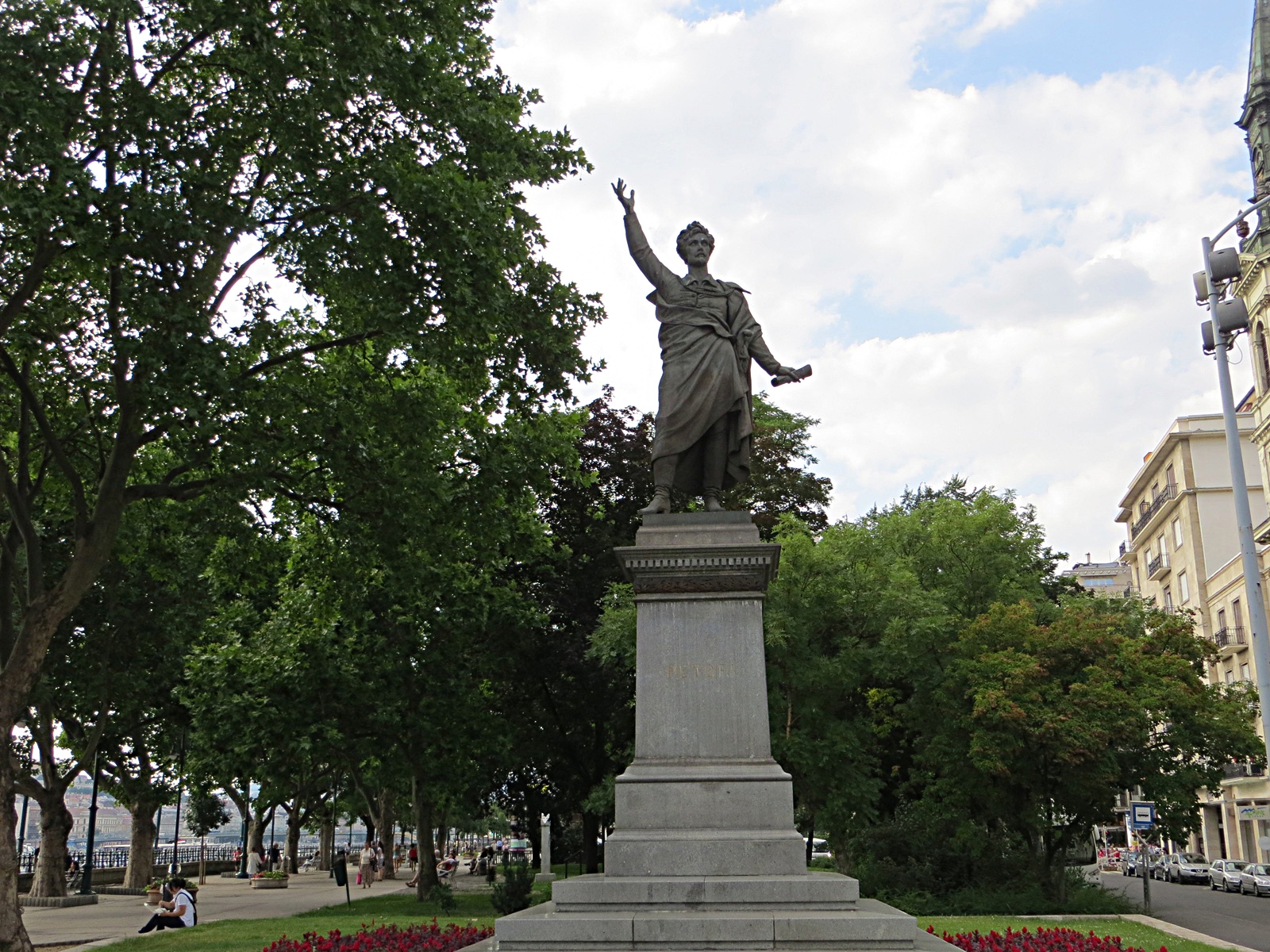
On 15 March 1848, a group of young radicals in Pest, among them the poet Sándor Petőfi, set off a revolution against Habsburg rule. They printed their Twelve Points, a list of demands for freedom of the press, a national government and an end to serfdom, and Petőfi’s Nemzeti dal, the National Song, without the censor’s approval, and by the end of the day the crowds had won. Petőfi gave a speech at the Hungarian National Museum that day. The revolution became a war of independence that was crushed in 1849, and Petőfi was killed in battle at the age of 26, but 15 March remains the day Hungarians celebrate their liberty.
What you’ll see
- Cockades. The kokárda, a small rosette of red, white and green ribbon, is worn on the left side of the chest by almost everyone in the days around the 15th. Street sellers and newsagents sell them for very little, and wearing one is a nice gesture.
- Flags everywhere. On public buildings, trams and many private houses.
- Ceremonies at the National Museum. The main commemorations take place in the museum garden and on its steps, with speeches, music and a recital of the National Song, and there are state ceremonies in front of the Parliament on Kossuth Lajos tér, with a military flag-raising in the morning.
- Hussars and costume. Re-enactors in 1848 uniforms, sometimes on horseback, often appear around the ceremonies.
- Rallies. As on 23 October, political parties often hold large gatherings, and some central streets and squares are closed.
Free museums on the day
One of the best reasons to be in Budapest on 15 March is that many of the national museums open their permanent collections for free. Lists from recent years have included the Hungarian National Museum, the Hungarian National Gallery, the Museum of Fine Arts, the Ludwig Museum and the Aquincum museum, as well as the Holy Crown in the Parliament. In 2026, the National Gallery and the Museum of Fine Arts were free for everyone on all three national holidays. The list for each year is published shortly before, so check it, and expect queues at the most popular venues. The museums guide will help you choose.
What’s open
Most shops close for the day, as on any Hungarian public holiday, but restaurants, cafés and most sights stay open. The upper terraces of the Fisherman’s Bastion are free all day. Public transport runs on a holiday timetable, with diversions around the ceremonies. For the background, the history and culture guide puts 1848 in context.
Easter in March 2027
Easter moves every year, and in 2027 it comes early: Good Friday is 26 March, Easter Sunday 28 March and Easter Monday 29 March. (In 2026 it fell on 5 April, and in 2028 it’s 16 April.) For visitors, Easter brings a few things worth knowing:
- Holidays. Good Friday and Easter Monday are public holidays, and most shops close on both. Restaurants and most sights stay open.
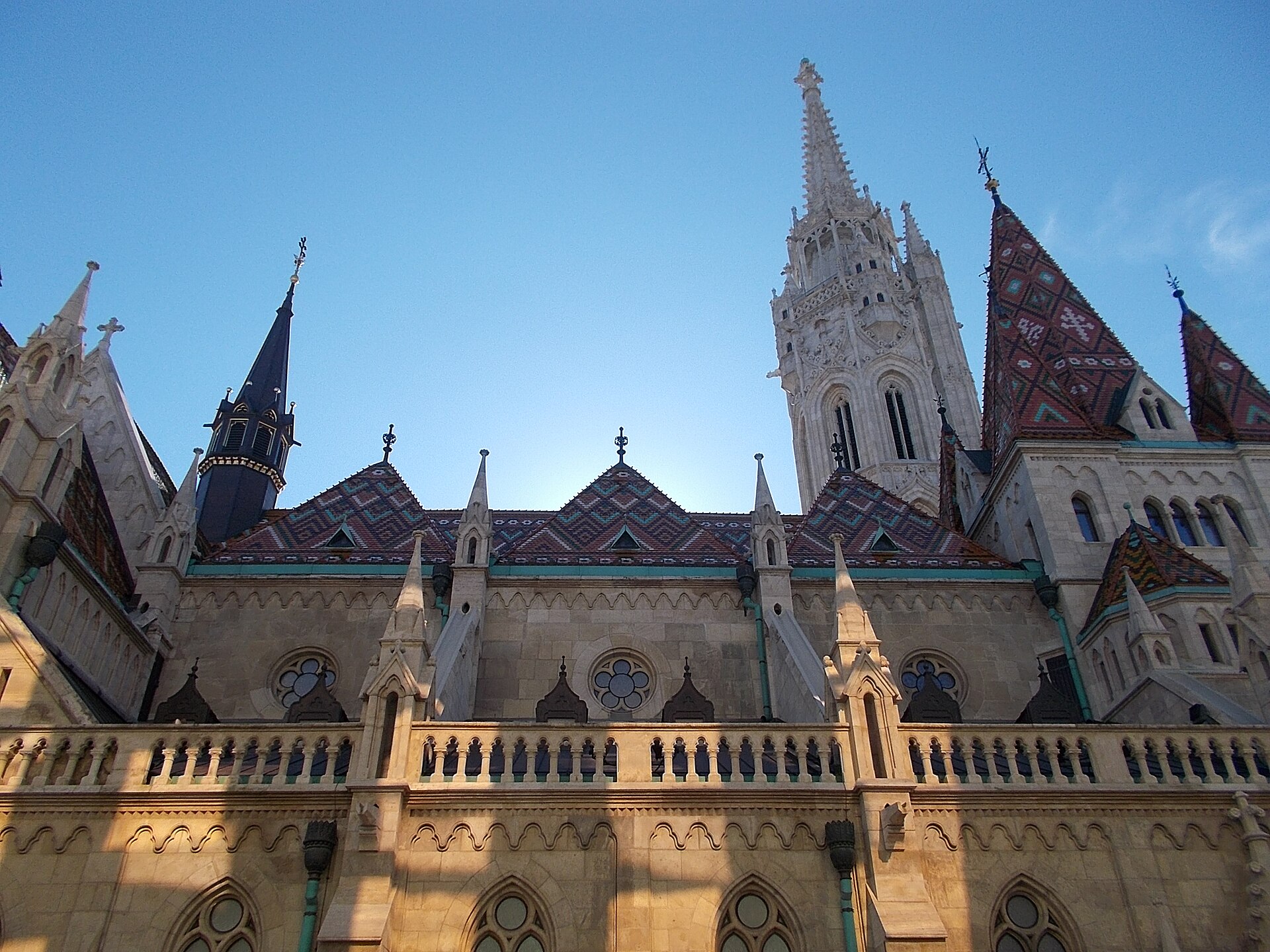
- Services. The big Easter services are at St Stephen’s Basilica, the Matthias Church and churches across the city, and visitors are welcome.
- Food. Ham, boiled eggs, grated horseradish and sweet kalács bread, which turn up on restaurant menus over the weekend.
- Sprinkling. On Easter Monday, men and boys “sprinkle” women and girls with perfume, after reciting a short poem, and are given painted eggs or a drink in return. In villages and at folk festivals it’s done with buckets of water.
- Hollókő. The UNESCO-listed village in the hills north-east of Budapest holds a folk Easter festival with costumes, music and sprinkling the old way. The Hollókő day trip guide explains how to get there.
Easter is also the busiest weekend of March, so book accommodation early and expect prices to rise. Budapest in April has more on the traditions and the Easter dates for the years ahead.
What’s open, what’s closed and what’s starting
- Thermal baths: all open, apart from the Gellért Baths, which are closed for a renovation that won’t finish before 2028. A sunny, chilly March day is perfect for the outdoor pools at the Széchenyi Baths or the rooftop pool at the Rudas Baths.
- Museums: all open, mostly closed on Mondays, with free entry at many on 15 March.
- Ice rink: usually closes in late February or early March.
- Fisherman’s Bastion: the upper terraces cost 1,700 Ft (€4.25), card only, from 9am to 7pm; they’re free outside those hours and on 15 March.
- Gellért Hill: the Citadella park is free; it switches to its summer hours, open until midnight, from April.
- River cruises: running, but on reduced winter and spring timetables until the season starts.
- Margaret Island: open for walks and runs, but the musical fountain doesn’t start until May and the outdoor lidos until late spring. The Palatinus is open daily.
How to spend a March day
Because March weather is so changeable, the best plan is one with a sunny version and a grey version.
- If it’s sunny: go to the Castle District in the morning, when the light is clear and the crowds are thin; walk across the Chain Bridge and along the Danube promenade; take the funicular or the 16 bus back up for the sunset; and finish with a soak in an outdoor thermal pool as the air cools.
- If it’s grey: start at a museum when it opens, have a long lunch, spend the afternoon at the baths, and the evening at a concert or a ruin bar.
- Either way: a coffee and a slice of cake in a grand coffee house is the right answer at least once a day.
Eating and drinking in March
- Lent food. Lent runs through most of March, and some restaurants offer meatless dishes and fish, especially on Fridays.
- The last of the winter dishes. Goulash, bean soup and stuffed cabbage are still very much on the menu while the evenings are cold.
- Wild garlic. At the end of the month the first wild garlic, medvehagyma, arrives in the markets and on menus.
- Easter food. Ham, eggs, horseradish and kalács over the Easter weekend.
The Great Market Hall is a good place to see what’s in season, and the guide to traditional Hungarian food has more.
What March costs
- Hotels: low for most of the month, close to the winter levels, and rising around 15 March and especially Easter. The first two weeks of March are the best value. The where to stay guide covers the neighbourhoods.
- Getting around: 500 Ft (€1.25) for a single ticket, 2,750 Ft (€6.90) for a 24-hour travelcard and 5,750 Ft (€14.40) for 72 hours. The 100E airport bus is 2,500 Ft (€6.25) and isn’t covered by travelcards. The public transport guide explains the options.
- Museums: free at many national museums on 15 March.
- Baths: weekday tickets are cheaper than weekend ones at the big baths.
- Eating out: many restaurants now add a service charge (szervízdíj), often 12.5%; when it’s on the bill, you don’t need to tip on top.
Day trips for March
- Hollókő, for the Easter festival in 2027. The Hollókő guide.
- Vienna. A different city’s museums and coffee houses, less than three hours away by train. The Budapest to Vienna train guide.
- Eger. A castle, a thermal bath and wine cellars that are the same temperature all year round. The Eger day trip guide.
- Szentendre. Quiet before the season, with museums and galleries for grey days. The Szentendre guide.
What to pack for March
- Layers: T-shirts, a warm jumper and a windproof jacket, so you can dress for both the frosty mornings and the mild afternoons.
- A warmer coat, a hat and gloves for the first half of the month.
- A compact umbrella.
- Comfortable, waterproof walking shoes.
- Sunglasses: the March sun is surprisingly bright.
- Swimwear and flip-flops for the baths.
The packing guide goes into more detail.
Is Budapest worth visiting in March?
Yes, if you go with the right expectations. March is cheap and quiet, with double January’s sunshine, the baths, museums and concerts in full season, a fascinating national holiday with free museums, and in 2027 an early Easter and the start of long evenings. It’s a good month for a first visit on a budget, and for anyone who’d rather see the city without the crowds.
What it can’t promise is good weather. The first half of the month is often cold and grey, the parks don’t really turn green until the second half, and the outdoor season hasn’t started. If you want blossom and warmth, wait for April or, better still, May. If you want the lowest prices of all, January is cheaper still. Our pick within March 2027 is the week of 15 March, which gives you the national holiday and the free museums, still-low prices and the first spring days, before the Easter weekend fills the city.
Practical tips
- Pack for winter and spring at once, and check the forecast the night before.
- Book early for the Easter weekend, which is the busiest of the month.
- Buy a cockade from a street seller on 15 March, and wear it on your left side.
- Check the free-museum list before 15 March, and go early to beat the queues.
- Remember that shops close on 15 March, Good Friday and Easter Monday.
- Note the clock change on 28 March, which is Easter Sunday in 2027.
- Keep a rainy-day plan: a museum, a bath or a coffee house.
Arriving before March? The last weeks of winter have their own appeal, with outdoor thermal pools steaming in the frost and the carnival season ending on Shrove Tuesday. Budapest in February has the calendar, the costs and an honest verdict.
Frequently asked questions
Is March a good time to visit Budapest?
For value and quiet, yes. Hotel prices are low, the crowds are thin, the sunshine doubles compared with January, and 15 March is a fascinating day to be in the city. The weather is changeable, though, and the outdoor season hasn’t started.
What is the weather like in Budapest in March?
Changeable. The average high is 11 °C and the low 0 °C, but the first week can be frosty and the last week can reach the high teens. It’s one of the driest months, with rain on about six days.
What happens in Budapest on 15 March?
It’s National Day, marking the 1848 revolution. The city is full of flags and red, white and green cockades, there are ceremonies at the National Museum and the Parliament, and many national museums are free. Most shops close.
Is Easter in March in 2027?
Yes. Easter Sunday is 28 March 2027, with Good Friday on 26 March and Easter Monday on 29 March, both public holidays. In 2028 it falls on 16 April.
When do the clocks change in Budapest in March?
On the last Sunday of March, which in 2027 is 28 March, Easter Sunday. Sunset moves from about 18:05 to about 19:06.
Is Budapest cheap in March?
Yes, for most of the month. Hotel prices are close to their winter lows, especially in the first two weeks, rising around 15 March and over Easter.
Are museums free in Budapest on 15 March?
Many national museums open their permanent collections for free on the day. The list varies from year to year, so check before you go.
What should I wear in Budapest in March?
Layers: a T-shirt, a warm jumper and a windproof jacket, plus a hat and gloves early in the month, an umbrella, and comfortable waterproof shoes.
Photo credits
Crowds with flags on 15 March: Kossuth tér – Nemzeti Múzeum – 2014.03.15 (1) by Derzsi Elekes Andor, CC BY-SA 3.0, via Wikimedia Commons.
The Hungarian National Museum and the Arany statue: Budapest, Nemzeti Múzeum, 44 by Christo, CC0, via Wikimedia Commons.
The Petőfi statue on Petőfi tér: Petőfi tér – panoramio by Mister No, CC BY 3.0, via Wikimedia Commons.
The Matthias Church: Illuminated Matthias Church, 2016 Budapest by Globetrotter19, CC BY-SA 3.0, via Wikimedia Commons.