Budapest in January: The Cheapest Month, and How to Enjoy It
A planner for Budapest in January: the cold and the short days, where the savings are and what you give up, the baths, museums and ice rink, the Day of Hungarian Culture on 22 January, costs and tips.
In this guide
- January at a glance
- The weather, honestly
- Why January is the cheapest month, and what you give up
- How to enjoy a cold day in Budapest
- The baths
- The museums
- The coffee houses
- The ice rink
- Music
- Bars and cellars
- And on a bright, cold day
- January 2027, week by week
- 1 January: New Year’s Day
- 2–6 January: the end of the holidays
- 7–24 January: deep winter, best value
- 25–31 January: the light returns
- 22 January: the Day of Hungarian Culture
- Farsang: balls, masks and doughnuts
- What’s open and what’s changing
- Eating and drinking in January
- What January costs
- Day trips for January
- What to pack for January
- Is Budapest worth visiting in January?
- Practical tips
- Frequently asked questions
- Photo credits
This article contains advertising. Our booking links are routed through a partner that adds commission tracking automatically, so if you book through one we earn a commission from the provider, at no extra cost to you. It never affects what we recommend. Affiliate disclosure
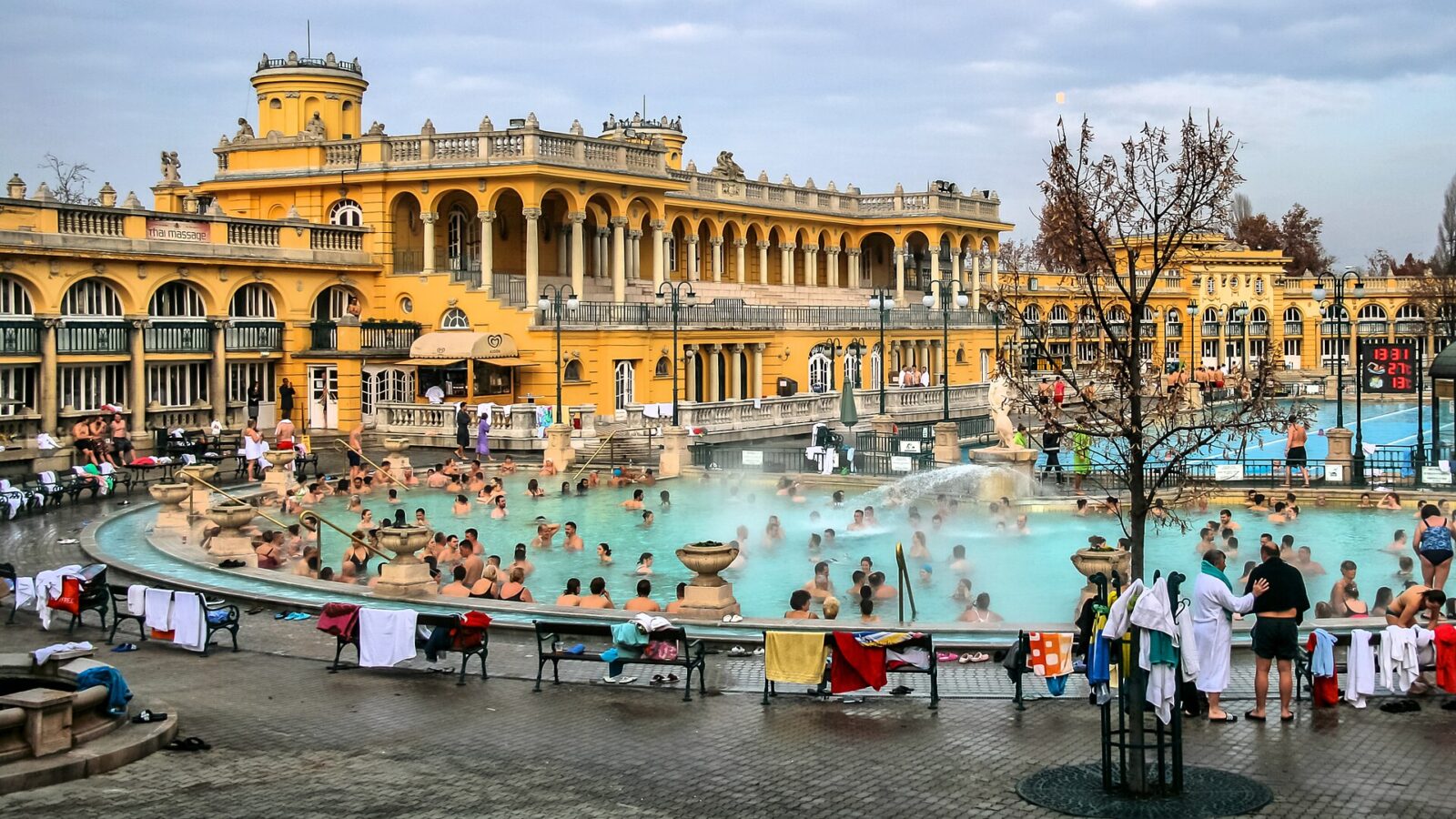
On a January morning at the Széchenyi Baths the air is so cold that the steam rising off the outdoor pool hangs over the water like fog, and the heads of the bathers poke out of it as if they were sitting in a cloud. A man in a woolly hat is playing chess on a board at the pool’s edge, two pensioners are discussing their grandchildren, and every few minutes someone climbs out, gasps at the cold, and hurries for the door. Budapest in January is the city at its coldest, greyest and quietest, and also at its cheapest: once New Year is over, hotel prices fall to their lowest of the year, the queues disappear, and the things Budapest does best in winter, the baths, the coffee houses, the museums and the music, are all there to enjoy without the crowds.
This guide is about getting the most out of that bargain. It covers the weather and the short days, where the savings really are and what you give up for them, how to spend a cold day well, a week-by-week calendar for January 2027, the free-museum day on the 22nd, the ball season, what to eat, what it all costs and an honest verdict. Prices were checked in September and October 2026, and the ice rink prices are from the 2025/26 season; treat them as the right order of magnitude. For the whole year side by side, see Budapest month by month.
January at a glance
| What | January in Budapest |
|---|---|
| Average high / low | 3 °C / −2.5 °C (1991–2020 averages), the coldest month of the year |
| Rain and snow | About 31 mm on around 6 days (1991–2020 averages); snow is possible |
| Sunshine | About 2½ hours a day |
| Daylight | 8½ hours at the start, 9½ by the end; sunset moves from 16:04 to 16:44 |
| Crowds | The quietest month of the year after the first week |
| Hotel prices | The lowest of the year once New Year is over |
| Key dates in 2027 | New Year’s Day (Friday 1 January, public holiday) · Epiphany 6 January · Day of Hungarian Culture 22 January |
| Best for | Thermal baths, museums, coffee houses, concerts, value |
The weather, honestly
January is cold. The average high is 3 °C and the average low −2.5 °C (1991–2020 averages), so frost is normal most nights and some days never get above freezing. The wind off the Danube makes the bridges and embankments feel colder than the thermometer says. Snow falls in most winters, and a snowy day in the Castle District is a beautiful thing, but it rarely lies in the city for long, and grey, still, dry days are more typical than white ones.
The weather feature that defines a Budapest January, though, is the inversion. When the air is still, cold air gets trapped in the basin the city sits in, and fog or low cloud can sit over the Danube for days at a time while the Buda Hills above are in sunshine. On those days, it’s worth taking the Cogwheel Railway or a bus up into the hills just to get above it. Inversions also trap pollution, and the city occasionally declares a smog alert in the coldest, stillest weeks. In a properly hard winter, the Danube itself can carry ice floes, a rare and spectacular sight from the bridges.
The days are short but already getting longer. These are the sunrise and sunset times for 2027:
| Date | Sunrise | Sunset | Daylight |
|---|---|---|---|
| 1 January | 07:30 | 16:04 | 8 h 34 |
| 15 January | 07:25 | 16:21 | 8 h 56 |
| 31 January | 07:10 | 16:44 | 9 h 34 |
That’s about eight and a half hours of usable light at the start of the month, rising to nine and a half by the end. Plan the outdoor sightseeing for the middle of the day, and the baths, museums and coffee houses for the long, dark late afternoons and evenings.
Why January is the cheapest month, and what you give up
After the first week of January, demand falls off a cliff. The Christmas markets are gone, the New Year’s Eve crowd has gone home, the weather keeps the casual city-breakers away, and hotels respond with their lowest prices of the year. Flights are often cheap too, and you’ll find tables at restaurants that are impossible to book in summer. Most of the city’s great indoor pleasures, the baths, the museums, the coffee houses, the opera and the concert halls, are running at full strength. You’ll have the Castle District almost to yourself on a weekday morning.
The trade-offs are real, and it’s worth being honest about them:
- It’s cold and often grey. If you hate the cold, no bargain will make up for it.
- The days are short. Sunset is around four o’clock at the start of the month.
- Some places close. A few small restaurants and bars take a winter break in the first week or two of January, so check before you go anywhere specific.
- Outdoor attractions lose their appeal. The river cruises run, but this isn’t their month; the Margaret Island fountain is switched off; the views from Gellért Hill are often lost in fog.
- The first week isn’t cheap. Prices only fall after New Year and the days around Epiphany, so come once the holiday period is over for the real bargains.
How to enjoy a cold day in Budapest
The secret of January is to stop treating it as an outdoor city and use what it does best in winter.
The baths
Sitting in a steaming outdoor pool while the air is below freezing is the definitive Budapest winter experience, and January is the month for it. The outdoor pools at the Széchenyi Baths are open all year, and the colder the day, the better they feel. The rooftop pool at the Rudas Baths has views over the river, and the Lukács Baths are where locals go. Weekday mornings are quietest. The Gellért Baths are closed for a renovation that won’t finish before 2028. The thermal baths guide compares the rest.
The museums
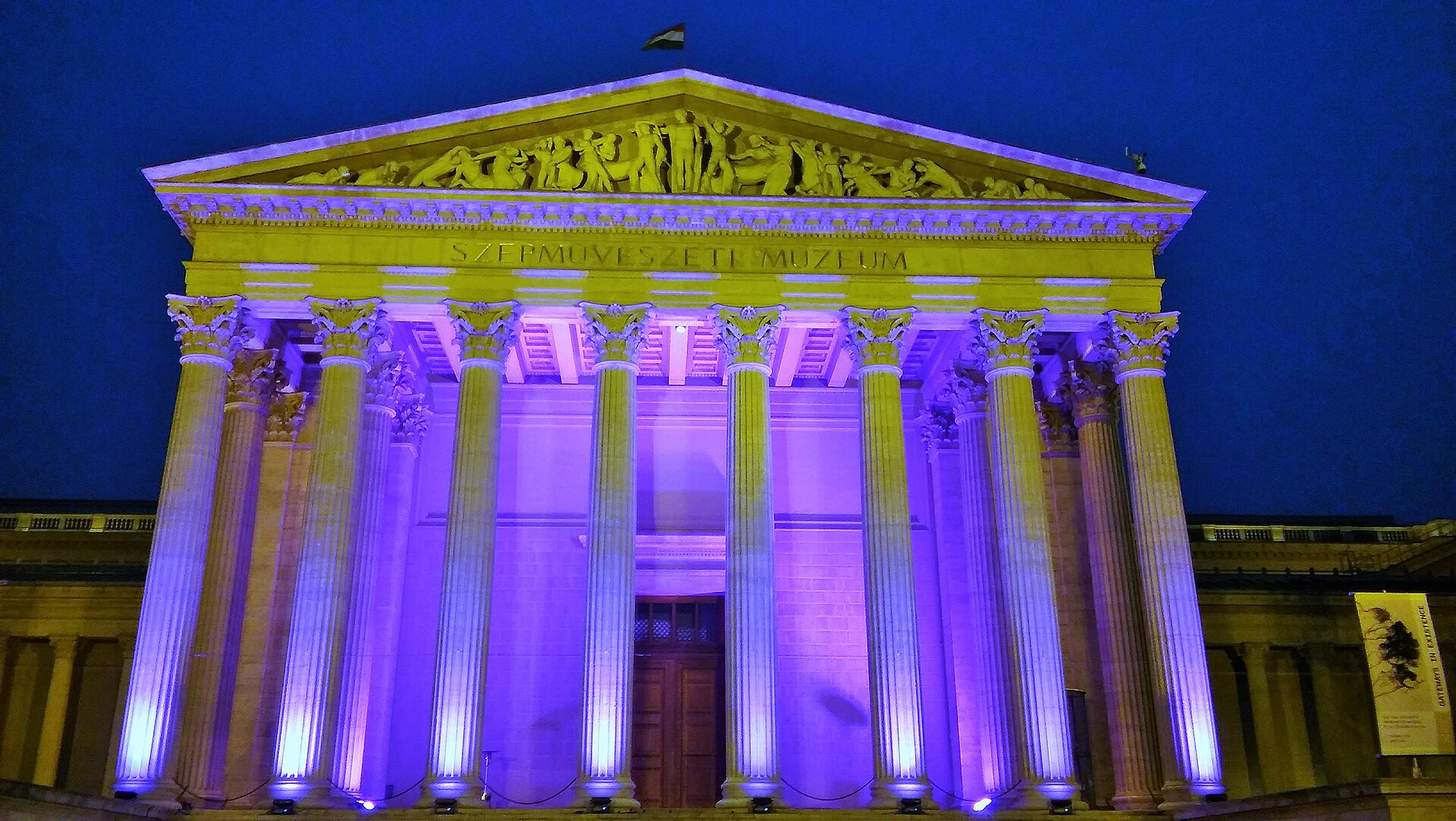
January is museum weather, and the queues are the shortest of the year. Many museums close on Mondays. Start with the big ones, the Museum of Fine Arts on Heroes’ Square, the Hungarian National Gallery in Buda Castle and the Hungarian National Museum, then go deeper. And if your trip includes 22 January, the Day of Hungarian Culture, check the museums’ announcements for any free-admission offer; more on that below. The museums guide picks the best.
The coffee houses
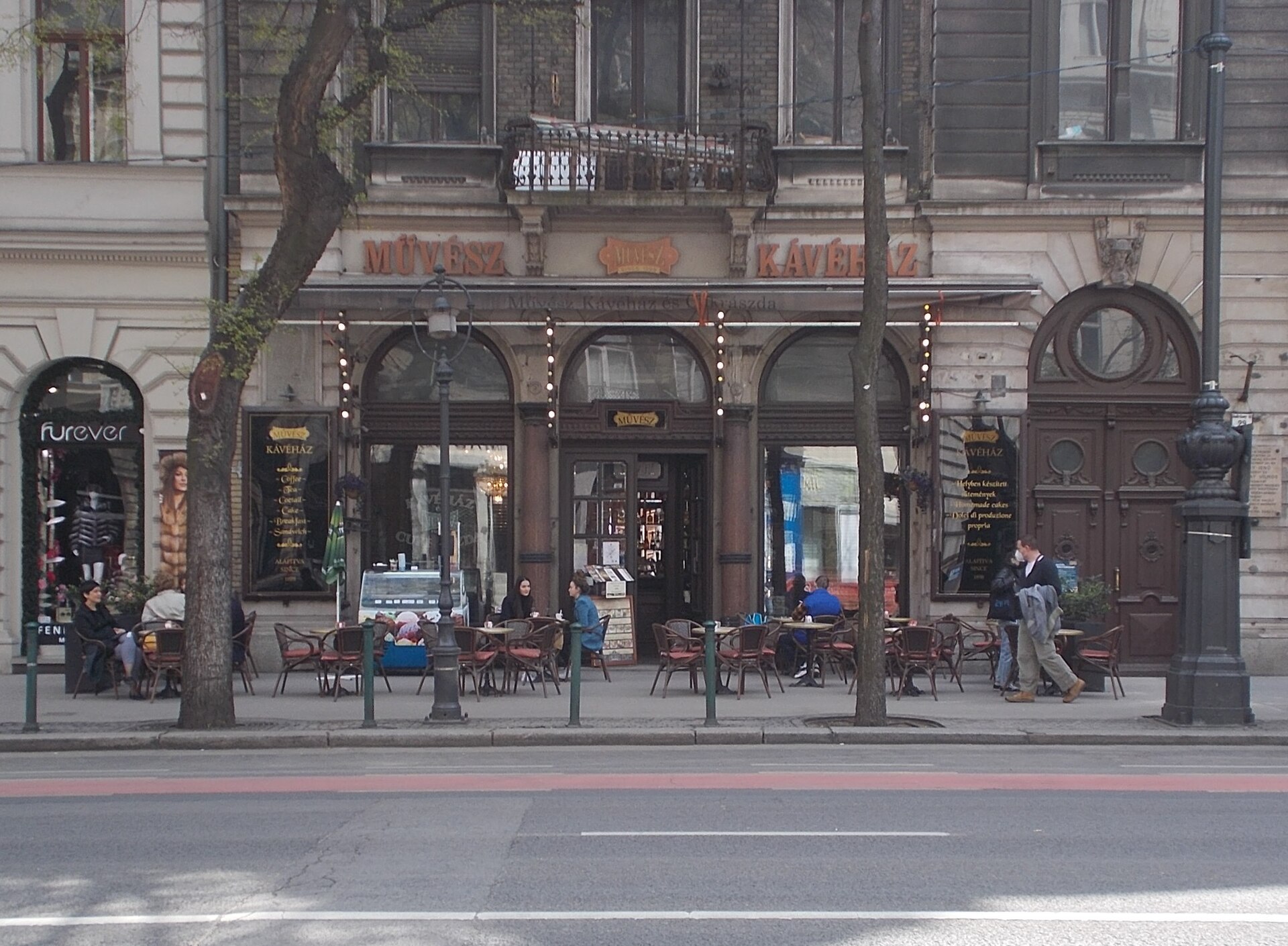
Budapest’s grand cafés were made for days like these: high ceilings, chandeliers, newspapers, a slice of Dobos or Esterházy cake and an hour out of the cold. In January you’ll get a table without queuing even at the famous ones. The coffee house guide has the best.
The ice rink
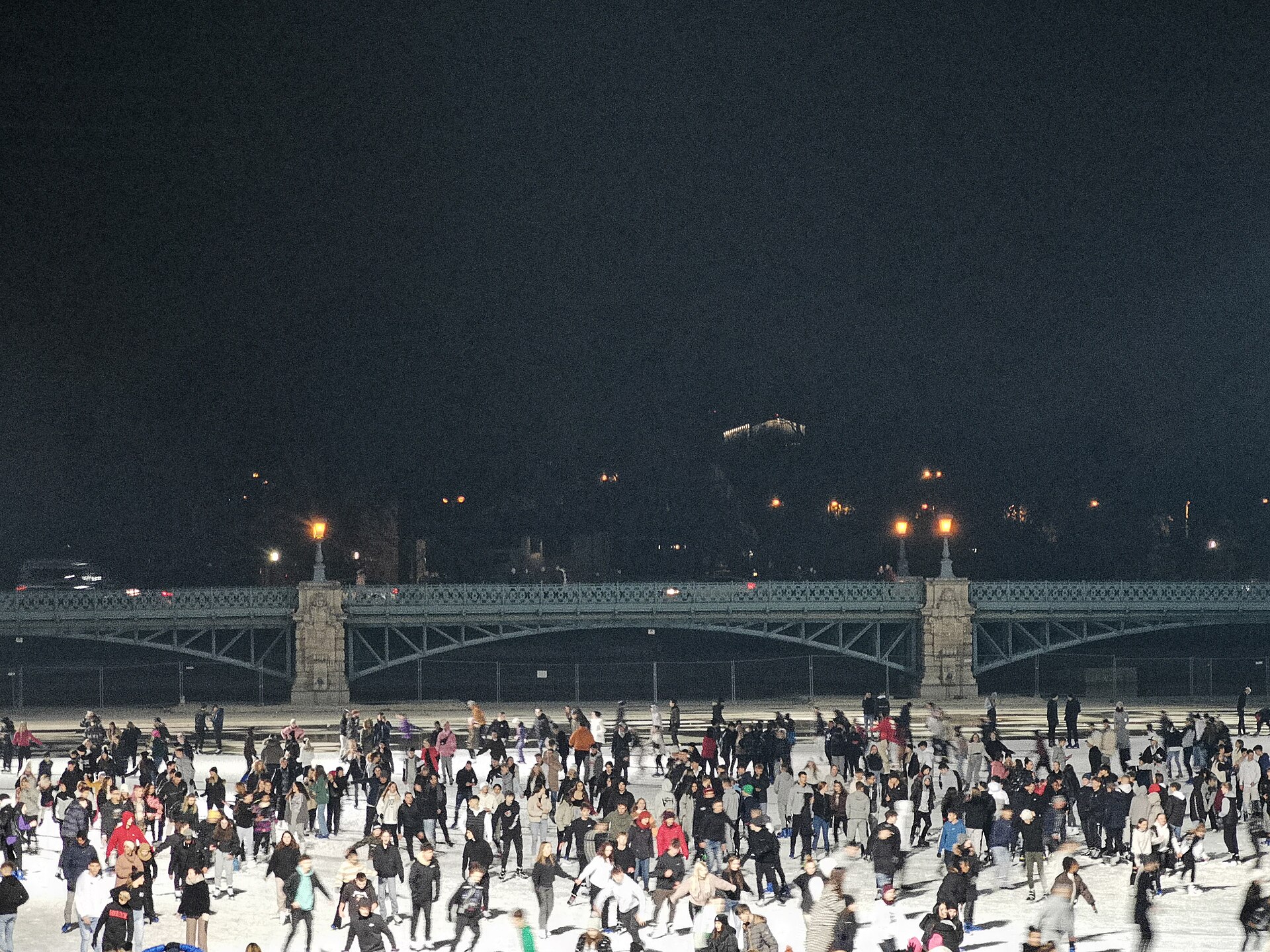
The City Park Ice Rink, the Városligeti Műjégpálya, is laid out on the lake between Heroes’ Square and Vajdahunyad Castle, and it’s one of the largest and most beautiful open-air rinks in Europe, especially after dark when the castle is floodlit. In the 2025/26 season an adult ticket cost 3,500 Ft (€8.75) at off-peak times and 4,500 Ft (€11.25) on Friday afternoons and at weekends, skate hire was 3,500 Ft, and weekday sessions ran from 9am to 1pm and from 5pm to 9pm. The season runs until the late winter, depending on the weather.
Music
The opera and concert season is in full swing. The Hungarian State Opera House, the Liszt Academy and the Müpa arts centre all have full programmes, and tickets are easier to come by than at any other time of year. A concert is the perfect way to fill a long January evening.
Bars and cellars
The ruin bars move indoors in winter, and Szimpla Kert, the original, is as busy as ever in its warren of rooms. For something quieter, a wine bar is the place to work your way through Hungary’s red wines, which come into their own in the cold.
And on a bright, cold day
When the sun does come out, go outside while it lasts. The Castle District on a clear, frosty morning, with the city spread out below in sharp winter light, is one of the best views in Europe, and there’s hardly anyone else there. Wear shoes with grip: icy cobbles are treacherous.
January 2027, week by week
1 January: New Year’s Day
New Year’s Day falls on a Friday in 2027 and is a public holiday, and the city is quiet, tired and nursing a collective hangover. Most shops are closed and public transport runs on a holiday timetable. The Széchenyi Baths open, with holiday hours scheduled from 8am to 8pm, which makes a New Year’s Day soak a popular cure; check the baths’ website nearer the time. The Basilica’s Christmas market stays open until 1 January 2027. For the upper terraces of the Fisherman’s Bastion, check the operator’s site at budavar.hu for when entry is free and when charging applies.
2–6 January: the end of the holidays
The first few days are still part of the holiday season, with visitors around and prices yet to fall. The light trams, ordinary trams covered in thousands of lights, run over the festive season, and they’re worth catching at dusk along the river; BKK’s festive services page has the dates. On 6 January, Epiphany, the Christmas trees come down and the carnival season, farsang, officially begins.
7–24 January: deep winter, best value
This is the heart of the bargain: the lowest hotel prices of the year, quiet sights, and the baths and museums to yourself on weekdays. It’s also the coldest part of the winter, so plan around the weather rather than against it. On Friday 22 January, the Day of Hungarian Culture, check the museums’ announcements for any free-admission offer.
25–31 January: the light returns
By the end of the month the sun sets at about twenty to five, the ball season is in full swing, and prices are still low. The winter sales are on in the shops. It’s a good week for a long weekend before the February half-term holidays elsewhere in Europe push prices up a little.
22 January: the Day of Hungarian Culture
On 22 January 1823, the poet Ferenc Kölcsey finished writing the Himnusz, the poem that, set to music by Ferenc Erkel, became Hungary’s national anthem. The anniversary is celebrated as the Day of Hungarian Culture, with concerts, readings and events across the country. In 2026 the Museum of Ethnography opened its permanent exhibitions for free on the day. Each museum announces its own offer, so check before you go, and expect any free museums to be busier than on an ordinary January day.
Farsang: balls, masks and doughnuts
From Epiphany until Lent, Hungary celebrates farsang, the carnival season. In Budapest it’s the ball season: dozens of balls, from grand white-tie affairs to university, professional and charity balls, fill the hotels and ballrooms through January and February. Some sell tickets to the public, and if you’ve ever wanted to waltz in a Budapest ballroom, this is when to do it. The most visible sign of the season, though, is the farsangi fánk, a light, round carnival doughnut with a pale ring around its middle, served dusted with sugar and with apricot jam on the side, which turns up in every bakery and pastry shop. The carnival ends in February with the Busójárás in Mohács, in the far south of the country, where men in terrifying wooden masks chase away the winter.
What’s open and what’s changing
- Christmas markets: gone, apart from the Basilica’s, which usually lasts until about 1 January.
- Light trams: the festive services run into early January in some seasons; BKK’s festive services page has the dates.
- Fisherman’s Bastion: free until 1 January; from 2 January the upper terraces cost 1,700 Ft (€4.25), card only, from 9am to 7pm, and are free outside those hours. The lower terraces are free at any time.
- Thermal baths: all open, apart from the Gellért.
- Museums: open as normal; many close on Mondays.
- Opera and concerts: in full season.
- Restaurants: mostly open, but a few small places close for a winter break early in the month.
- Margaret Island fountain and outdoor lidos: closed until spring, although the Palatinus on Margaret Island is open daily.
Eating and drinking in January
January is when Hungarian cooking makes the most sense. This is the food it was built for:
- Stuffed cabbage. Töltött káposzta, cabbage leaves stuffed with pork and rice and slow-cooked in sauerkraut with paprika and sour cream, is the great winter dish.
- Goulash and its cousins. Gulyás soup, pörkölt stew with nokedli dumplings, and halászlé, the fiery fish soup.
- Sausages. Winter is the traditional pig-killing season in the countryside, and the smoked sausages and cured meats in the market halls are at their best. Look out for mangalica, the woolly Hungarian pig.
- Farsangi fánk. The carnival doughnut, with apricot jam.
- Something warming. Mulled wine at the ice rink, a shot of pálinka, or a big Hungarian red such as Egri Bikavér.
The guide to traditional Hungarian food explains the dishes, and the Great Market Hall is warm, lively and full of sausages.
What January costs
- Hotels: prices fall once the holiday period is over, especially midweek. The first week, around New Year and Epiphany, is still priced as holiday season. The where to stay guide covers the neighbourhoods.
- Getting around: 500 Ft (€1.25) for a single ticket, 2,750 Ft (€6.90) for a 24-hour travelcard and 5,750 Ft (€14.40) for 72 hours. The 100E airport bus is 2,500 Ft (€6.25) and isn’t covered by travelcards. The public transport guide explains the options.
- Ice skating: 3,500 Ft (€8.75) off-peak and 4,500 Ft (€11.25) at peak times for an adult in 2025/26, plus 3,500 Ft for skate hire.
- Baths: weekday tickets are cheaper than weekend ones at the big baths.
- Museums: check the museums’ announcements for free-admission offers on 22 January.
- The Budapest Card: January, with its museum days and heavy use of public transport, is when the card has its best chance of paying for itself, but do the sums first. It doesn’t give free entry to the Széchenyi, only a discount, and it pays back only if you visit several of the included museums. The Budapest Card guide works through the numbers.
- Eating out: many restaurants now add a service charge (szervízdíj), often 12.5%; when it’s on the bill, you don’t need to tip on top.
Day trips for January
- Vienna. Less than three hours by train, with more museums and coffee houses to hide in. The Budapest to Vienna train guide.
- Bratislava. Slovakia’s compact capital is an easy day trip by train. The Bratislava guide.
- Eger. A thermal bath, a castle and wine cellars that stay at the same temperature all year. The Eger day trip guide.
- Szentendre. Quiet and atmospheric in winter, with museums and galleries to fill a day. The Szentendre guide.
What to pack for January
- A properly warm, windproof winter coat.
- Thermal layers if you feel the cold, and a warm jumper.
- A hat, gloves and a scarf. Not optional.
- Waterproof boots or shoes with good grip for icy cobbles and slush.
- Layers you can take off, because museums, cafés and trams are well heated.
- Swimwear, flip-flops and a small bag for the baths. Bring a warm hat for the walk from the changing rooms to the outdoor pool.
The packing guide goes into more detail.
Is Budapest worth visiting in January?
Yes, if you go with the right expectations. January is cold, grey and dark early, and if you want sunshine, river cruises and evenings on terraces, it’s the wrong month. But if what you want is the baths, the museums, the coffee houses, the music and a city without queues, at the lowest prices of the year, it’s hard to beat. It’s also the month when Budapest feels most like itself: a city getting on with winter, rather than a city entertaining visitors.
The comparison most people make is with December, which has almost the same weather and a completely different feel: markets, lights and crowds in December, quiet and value in January. Come in December for atmosphere and in January for value. Our pick within January is the middle two weeks, from about the 7th to the 24th, when prices are lowest and the 22nd brings the free museums; Budapest in winter covers the season as a whole.
Practical tips
- Arrive once the New Year and Epiphany holidays are over for the best prices.
- Plan outdoor sightseeing for the middle of the day, and the baths and museums for late afternoon.
- Check that small restaurants are open; a few close for a winter break.
- Remember that most museums close on Mondays.
- Look up the free-museum list for 22 January if your dates include it.
- Wear shoes with grip; frozen cobbles are dangerous.
- If the city is fogbound, head up into the Buda Hills to find the sun.
If you can push your trip back a few weeks, February keeps most of January’s low prices and quiet museums but adds nearly an extra hour and a half of daylight by the end of the month, plus the last days of carnival. Our Budapest in February guide covers the month in the same detail.
Frequently asked questions
Is January a good time to visit Budapest?
Yes, for value and for the city’s winter pleasures. It’s the cheapest month of the year after the first week, the sights are quiet, and the baths, museums, coffee houses and concerts are at their best. It’s also cold, grey and dark early.
How cold is Budapest in January?
It’s the coldest month, with an average high of about 3 °C and a low of about −2.5 °C (1991–2020 averages). Frost is normal, and the wind by the river makes it feel colder.
Does it snow in Budapest in January?
Often, in most winters, but snow rarely lies in the city for long. Grey, cold and dry days are more typical, and fog can sit over the river for days.
Is January the cheapest time to visit Budapest?
Yes. Hotel prices fall after New Year and Epiphany. The first week of January is still priced as holiday season.
Are the Christmas markets open in January?
Mostly not. The Vörösmarty tér market usually closes on 31 December, and the Basilica market around 1 January. The light trams run into early January.
Can you use the thermal baths in winter?
Yes, and January is the best time. The outdoor pools at the Széchenyi and the rooftop pool at the Rudas are open all year, and a hot pool in freezing air is the classic Budapest winter experience.
Are museums free in Budapest on 22 January?
Some may be. The Museum of Ethnography opened its permanent exhibitions for free on the Day of Hungarian Culture in 2026, and each museum announces its own offer, so check before you go.
What should I wear in Budapest in January?
A warm, windproof coat, thermal layers, a hat, gloves and a scarf, and waterproof boots with good grip. Pack swimwear for the baths.
Photo credits
Winter steam over the Széchenyi Baths: Budapest Széchenyi gyógyfürdő (31224389942) by Jorge Franganillo from Barcelona, Spain, CC BY 2.0, via Wikimedia Commons.
The Művész coffee house on Andrássy út: Andrássy Straße 29, Café, 2021 Terézváros by Globetrotter19, CC BY-SA 3.0, via Wikimedia Commons.
The Museum of Fine Arts at night: A Szépművészeti Múzeum esti díszkivilágításban3 by 12akd, CC0, via Wikimedia Commons.
City Park Ice Rink: Budapest, Városligeti Műjégpálya, 1 by Christo, CC0, via Wikimedia Commons.