The Budapest Card 2026: Is It Actually Worth It?
The break-even maths on the Budapest Card, four worked traveller profiles, and the reason it loses money for most first-time visitors: the baths are not included.

In this guide
- What it costs
- What you actually get
- Included, free
- Discounted, not free
- Not included at all
- The arithmetic, done properly
- Traveller A: the classic three-day first visit
- Traveller B: the museum-minded three days
- Traveller C: two days, sights and food
- Traveller D: five days, mixed
- The rule of thumb
- Why everyone asks about the baths
- The 72-hour extras, and whether they change anything
- What is the Budapest Card Plus?
- The alternative, which is what most people should do
- The free cruise, and what it is not
- The museums it covers, and which are actually good
- The sunk-cost trap
- Three ways to pay for a three-day trip
- If you do buy it, get your money’s worth
- Buying and using it
- Who should buy it
- Frequently asked questions
- Photo credits
This article contains advertising. Our booking links are routed through a partner that adds commission tracking automatically, so if you book through one we earn a commission from the provider, at no extra cost to you. It never affects what we recommend. Affiliate disclosure
A woman at the desk in the arrivals hall asked the question everyone asks — “does it get me into the baths?” — and got the answer everyone gets, which is a slightly pained “you get a discount”. She bought the 72-hour card anyway, on the assumption that a €60 pass covering seventeen museums must be good value for a city break in which she planned to visit precisely one museum. That is the central problem with the budapest card: it is a perfectly honest product that is sold to a great many people it does not suit, because the thing they most want to spend money on in Budapest is the one thing it does not cover.
This page does the arithmetic instead of the marketing. What it costs, what is genuinely included, the three or four traveller profiles where it pays back, and the much larger group who should buy a transport pass and pay at the door. Prices were checked in September 2026 and are given in euros because that is how the card is sold; see the note below, because the terms appear to be in flux.
What it costs
| Card | Approx. price | Per day |
|---|---|---|
| 24 hours | ≈ €33 | €33 |
| 48 hours | ≈ €46 | €23 |
| 72 hours | ≈ €60 | €20 |
| 96 hours | ≈ €74 | €18.50 |
| 120 hours | ≈ €87 | €17.40 |
| 72-hour Plus | ≈ €129 | €43 |
The per-day column is where the shape of the thing shows. The 24-hour card is poor value on its face; the longer cards get progressively cheaper per day, and the pricing is clearly designed to push you up the range. That is not sinister — most city passes work this way — but it does mean the honest comparison is never “is €33 a lot of money”, it is “would I have spent more than €33 today anyway”.
An important caveat on these numbers. The official Budapest Card site refused connections on the day this page was written, and the Budapest tourist board’s own page was showing a notice headed “Budapest Card changes” with no readable detail behind it. The figures above are consistent across several resellers and are the right order of magnitude, but treat the exact prices and, more importantly, the exact inclusions as provisional. Check the current terms before you buy — and check them on the official site, not on an affiliate one.
What you actually get
Included, free
- Unlimited public transport — metro, tram, bus, trolleybus, HÉV within the city boundary. This is the workhorse of the card.
- Free entry to 17 or more museums. The list moves, but the reliable names are the Hungarian National Museum, the Budapest History Museum in Buda Castle, the Aquincum Museum, the Museum of Ethnography and the Museum of Military History.
- One free Danube sightseeing cruise. A daytime or early-evening sightseeing run, not a dinner cruise.
- A free walking tour and an app with audio-guided thematic routes.
- On 72-hour and longer cards, current listings add a free airport transfer on arrival, entry to Matthias Church, one ride on the Castle Hill funicular, a lángos and a kürtőskalács. These are the extras most likely to have changed, so verify them.
Discounted, not free
- Széchenyi Baths — around 20% off. Not free. Not close to free.
- Gellért Baths — closed for renovation until around 2028 (details), so there is no discount to count.
- Dohány Street Synagogue — around 10% off a 13,000 HUF ticket, so roughly €3.
- Selected restaurants, bars, spa treatments, bike hire and shops, generally in the 10–20% range.
Not included at all
- The Hungarian Parliament tour. The single most popular ticketed sight in the city, and the card does not touch it.
- The House of Terror.
- Hospital in the Rock.
- The airport bus 100E on the shorter cards, and no travelcard covers it either.
Look at that third list again. Parliament, the House of Terror and Hospital in the Rock, plus the synagogue at a token discount, are among the things most first-time visitors actually pay to see, and the card covers none of them. What it covers is the second tier of museums — good ones, several of them excellent, but not the ones on the average three-day list. Our Budapest attractions guide shows the whole field, and the museums round-up covers what the card’s list is actually worth.
The arithmetic, done properly
Forget the marketing figure of “up to €100 of value”. Here is what four real trips cost with and without the card.
Traveller A: the classic three-day first visit
Széchenyi Baths, a Parliament tour, Fisherman’s Bastion, St Stephen’s Basilica, the Great Market Hall, ruin bars, a lot of walking, one Danube cruise.
| Without the card | With the 72h card | |
|---|---|---|
| Transport, 72h travelcard | €14.40 | Included |
| Széchenyi Baths | ≈ €32 | ≈ €26 after 20% |
| Parliament tour (non-EU) | ≈ €33 | ≈ €33 — not covered |
| Basilica, combined ticket | ≈ €17 | ≈ €17 — not covered |
| Danube cruise | ≈ €18 | Included |
| Card | — | €60 |
| Total | ≈ €114 | ≈ €136 |
The card loses by about €22. And this is the single most common Budapest itinerary there is.
Traveller B: the museum-minded three days
Hungarian National Museum, Museum of Fine Arts, Museum of Ethnography, Budapest History Museum, Aquincum, heavy transport use, the cruise, one bath.
Five museum entries at roughly €8–12 each is €50 or so, plus €14.40 of transport and €18 of cruise: about €82 before the bath. Against a €60 card that also gives 20% off the bath, the card wins comfortably — by €25 or more.
Traveller C: two days, sights and food
Walking, the free viewpoints, the market hall, dinners, one bath, no museums. Transport for two days is a 48-hour equivalent at around €10. The card is €46. The card loses by roughly €30 and there is no version of the arithmetic that rescues it.
Traveller D: five days, mixed
Here the longer cards get interesting. At €87 for 120 hours the per-day rate is €17.40, and across five days most people accumulate enough museum entries, transport and incidental discounts to get close. It is roughly a wash — which means it comes down to whether you value not thinking about tickets for five days, and plenty of people reasonably do.
The rule of thumb
After all that, the test is simple. The Budapest Card pays back if you will visit three or more of its museums, or if you are staying four days or longer and using transport constantly. Below that, it does not.
Put differently: the card is a museum pass with a travelcard attached. If museums are not the point of your trip, you are buying a €14 travelcard for €60.

Why everyone asks about the baths
Because the baths are the most expensive single thing most people do here — €30 to €35 for Széchenyi with a cabin — and because “thermal baths” appears on the card’s marketing alongside “museums” in a way that reads, at a glance, as inclusion.
It is a 20% discount. On a €32 ticket that is about €6.40. It is not nothing, and if you were buying the card anyway you should certainly use it. But it does not move the arithmetic, and building your budget on the assumption that the baths are covered is the single most expensive misreading a Budapest visitor can make. Our thermal baths guide and the Széchenyi guide have the actual door prices and the cheaper ways in — of which booking online in advance on a weekday is by far the most effective.
The 72-hour extras, and whether they change anything
The extras attached to the longer cards are the most interesting recent development, and the hardest to verify. On current listings, 72 hours and up adds an airport transfer on arrival, Matthias Church, a funicular ride, a lángos and a kürtőskalács.
Priced out, that is roughly: airport transfer €6–7, Matthias Church €7.30, funicular €12.50, snacks €4. Call it €30 of face value — which, if it holds, materially changes Traveller A’s arithmetic and brings the 72-hour card close to break-even on the standard itinerary.
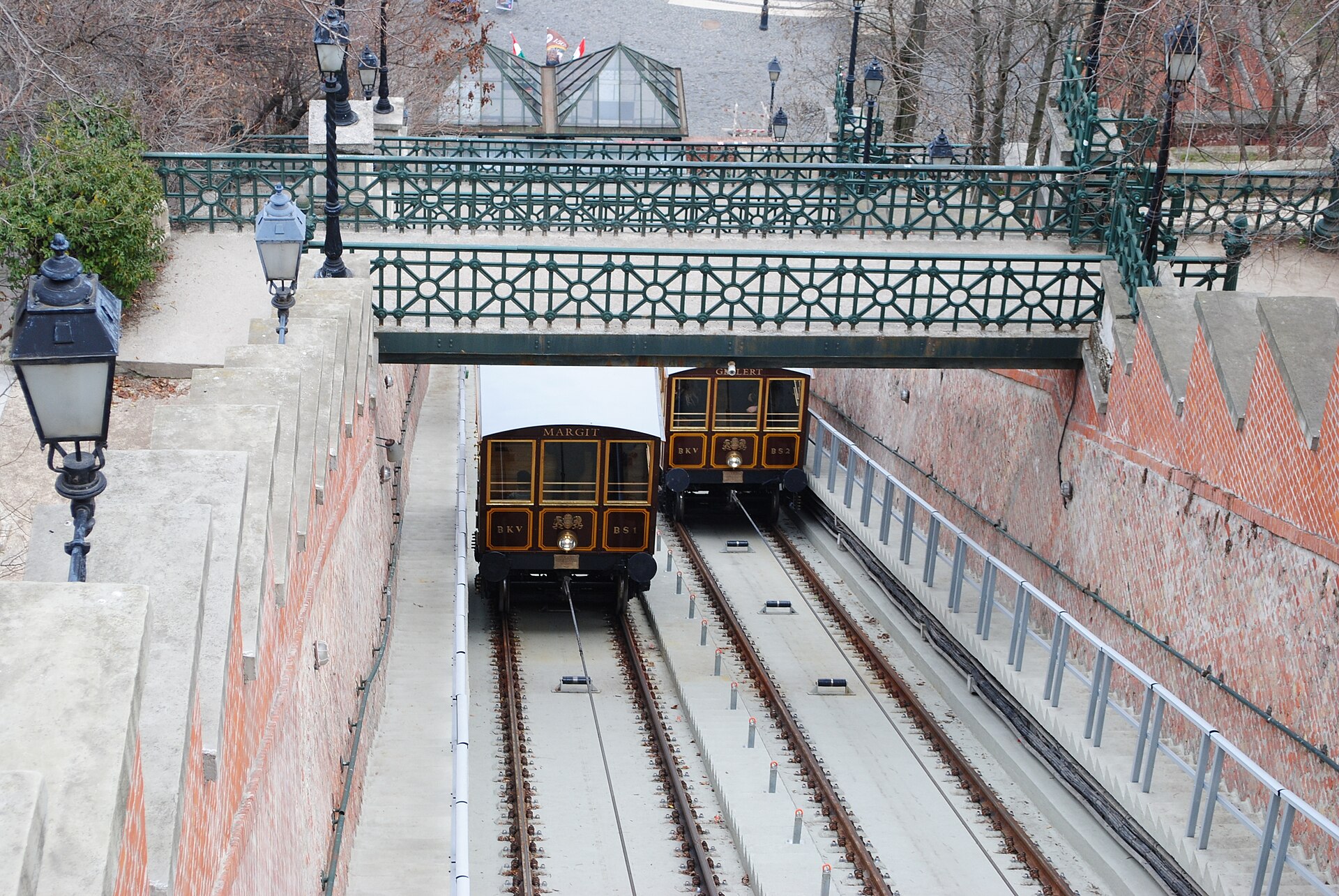
Two caveats, and they matter. First, we could not confirm any of it on the official site, and the tourist board was flagging changes. Second, three of those five items are things we would tell you not to buy anyway — the funicular in particular is on our list of things to skip. A €12.50 saving on something you would not have paid for is a €0 saving. Count only the items you would genuinely have bought.
What is the Budapest Card Plus?
Around €129 for 72 hours, roughly double the standard card. It adds spa entries, more attractions and more tours to the base package. It only makes sense for a very specific traveller: someone doing a museum-heavy trip and multiple thermal baths and several paid tours inside three days. That is an unusually strenuous holiday, and if it describes you, work through the current inclusion list item by item rather than trusting the headline. For most people the Plus is a comfortable no.

The alternative, which is what most people should do
Buy a 72-hour BKK travelcard for 5,750 Ft — about €14.40 — and pay at the door for whatever you actually visit. That single substitution saves the average visitor €40 or more against a 72-hour Budapest Card, and it removes the mild pressure to visit museums you do not want to see in order to justify a purchase.
Everything else you can optimise individually: book the baths online in advance for a lower price and no queue, book the Parliament tour early because it sells out, take the cheap sightseeing cruise rather than the dinner cruise, and use the free half of the city, which in Budapest is unusually large. Our getting around Budapest guide has the travelcard options priced up, and free things to do in Budapest covers what costs nothing.
The free cruise, and what it is not
One Danube sightseeing cruise is included, and it is the second-most-valuable single item in the package after transport — roughly €18 of face value on a card that costs €60.
Set expectations correctly. It is a standard sightseeing run of an hour or so, on a boat with an open upper deck and a covered lower one, usually with a recorded commentary and sometimes a welcome drink. It is not a dinner cruise, and it is not a private charter. Departures are from the Pest piers around Vigado ter, and in high season the boats fill, so turn up fifteen minutes early rather than exactly on time.
Take it after dark if you possibly can. The daytime run shows you buildings you have already walked past; the evening run shows you the Parliament, the Chain Bridge, Buda Castle and Gellert Hill all floodlit from the water, which is the version of Budapest that people remember. In midsummer that means a late departure, because the light does not go until half past nine. In November the last light is at four and every evening sailing qualifies.
If you are not buying a card, the same cruise sold on its own is one of the better-value things in the city — considerably better value than the dinner cruise, which charges restaurant prices for buffet food on a moving platform. Our Danube boat tours guide compares the operators, and the dinner cruise page is candid about which ones justify the money.
The museums it covers, and which are actually good
The card’s value stands or falls on this list, so it deserves more than a bullet point. The names move slightly year to year; these are the constants.
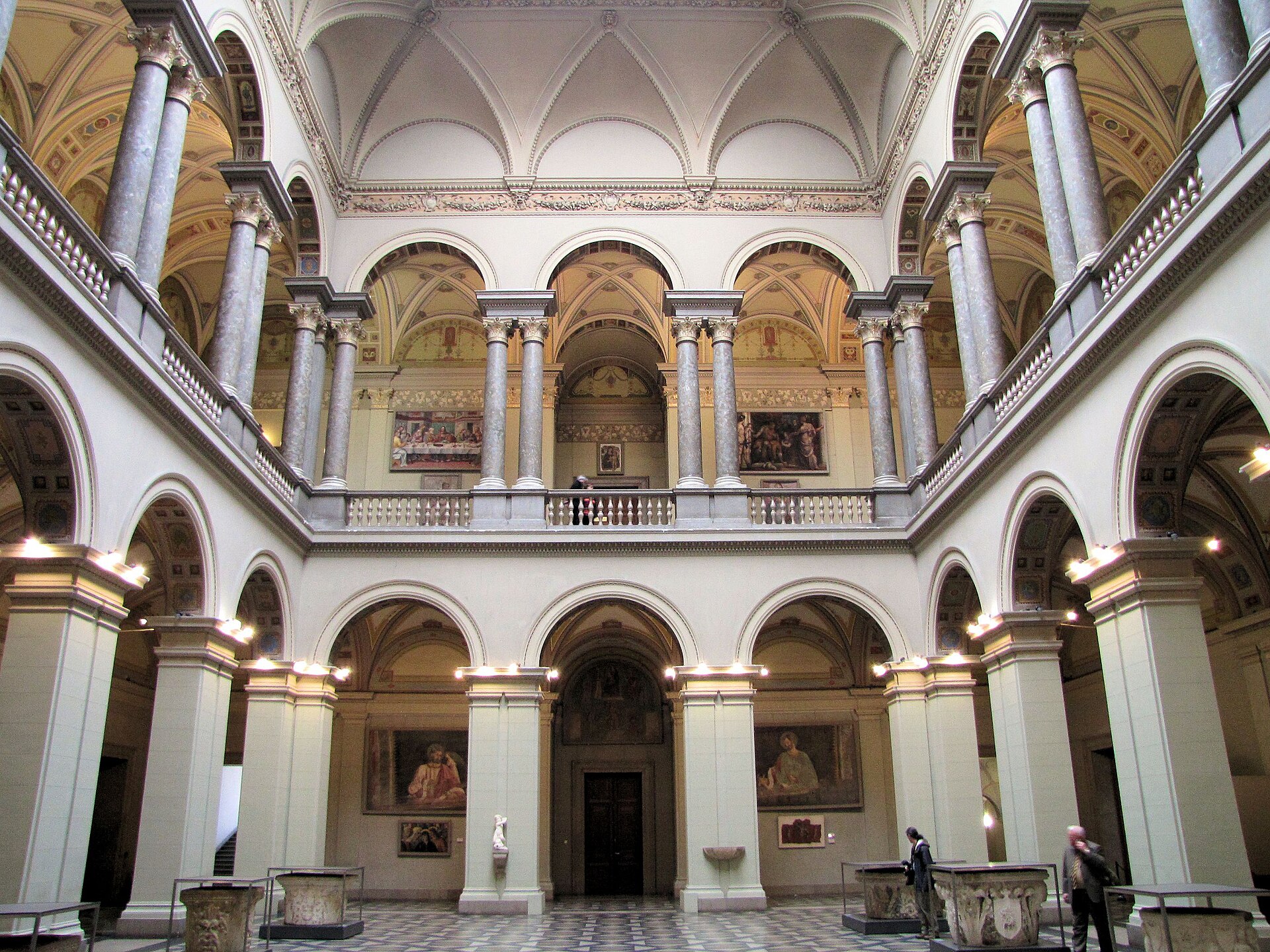
Museum of Fine Arts (Szépművészeti Múzeum). The heavyweight. Old Masters across the European schools, with an unusually strong Spanish holding — seven El Grecos and a good Goya group — plus Egyptian and classical antiquities and the vaulted Renaissance Hall, which is worth walking into on its own. Reopened after a long restoration and now among the best galleries in central Europe. If you go to one, go to this one. Note that temporary blockbuster exhibitions are usually charged separately even with a card.
Hungarian National Museum. The national story from prehistory to the twentieth century, in a huge neoclassical building on Múzeum körút whose steps are where Sándor Petőfi is said to have recited the National Song in March 1848. The permanent display is dense and old-fashioned, and it is genuinely the best place in the city to understand why Hungary feels the way it does about its own history.
Museum of Ethnography. Moved into a spectacular new building in City Park with a sweeping green roof you can walk up. The collection is Hungarian and global folk material — costume, tools, ritual objects — and the building is the reason to go even if ethnography leaves you cold.
Budapest History Museum. In the Buda Castle complex, and the place that makes sense of the hill: medieval palace remains in the basement, the city’s story above. Combines naturally with a Castle Hill morning, and our Buda Castle guide covers the layout.
Aquincum Museum. The Roman town north of the centre, with a substantial excavated site, a reconstructed villa and a Roman water organ. It is a genuine day-trip-sized thing to do and it is a HÉV ride out — which is free with the card, and one of the neater bits of value in the package.
Museum of Military History. On Castle Hill, and better than it sounds, particularly on the 1848 revolution and the two world wars.
Add the Kiscelli Museum, the Vasarely Museum and several smaller houses and you have a list that a museum-inclined traveller can genuinely fill three days with. A traveller who is not that person will visit two of them at most, and that is the whole calculation in one sentence.
The sunk-cost trap
City passes have a psychological effect that is worth naming. Once you have paid €60, there is a quiet pressure to extract value — to visit the fourth museum you are not interested in, to take the free cruise on the one evening you would rather have spent eating, to ride the funicular because it is included. That is not value; it is a holiday reorganised around a purchase.
The people who get the most out of the card are the ones who would have done those things anyway. The people who regret it are the ones who bought it first and built the itinerary afterwards. Decide what you want to do in Budapest, then price it both ways. Our itinerary planner is a reasonable place to start that list.
Three ways to pay for a three-day trip
| Travelcard + door prices | 72h Budapest Card | 72h Plus | |
|---|---|---|---|
| Upfront cost | ≈ €14.40 | ≈ €60 | ≈ €129 |
| Transport | Unlimited | Unlimited | Unlimited |
| Museums | Pay each time | 17+ free | 17+ free, plus more |
| Thermal baths | Full price, cheaper online | ≈ 20% off | Some entries included |
| Parliament | Pay separately | Pay separately | Pay separately |
| Danube cruise | ≈ €18 | One included | One included |
| Best for | Most visitors | Museum-minded visitors | Very few people |
Read that table left to right and the pattern is clear: the further right you go, the more you are pre-paying for museum access. If museums are your trip, move right. If they are not, stay left.
If you do buy it, get your money’s worth
- Activate it in the morning, not on landing. Hours, not days — a card started at 09:00 gives you three full days; one started at 20:00 gives you two and a bit.
- Front-load the museums. Most close on Mondays, and most close at six. Plan the museum-heavy day first in case something goes wrong.
- Take the HÉV to Aquincum. It is included, it is a genuine excursion, and it is the inclusion visitors most often forget exists.
- Use the cruise on a clear evening, not on the first grey afternoon.
- Check whether the exhibition you want is a temporary one. Blockbusters are frequently charged on top even with a card.
- Do not ride the funicular just because it is free. Walk up and use the saved twenty minutes on Castle Hill instead — our Fisherman’s Bastion guide has the morning sequence.
Buying and using it
- Where. Online in advance, at the Budapest Info points including the one at the airport, and at some hotels. Buy from the official channel — there are a lot of affiliate sites and their terms are not always current.
- Activation. The card runs from first use, not from the date printed on it, and it counts in hours rather than calendar days. A 48-hour card activated at 14:00 on Friday expires at 14:00 on Sunday. This is in your favour if you plan around it and against you if you activate it on the way in from the airport and then go to sleep.
- Format. Digital in the app, or a physical card. Museums scan it; on transport you show it if an inspector asks.
- Children. Under-18s travel free on Budapest public transport when accompanied, so a card for a child is rarely worth it — check the museum admission policy for children first, as several are free anyway.
Who should buy it
Yes, buy it if:
- You are a museum person and will do three or more from the list.
- You are staying four or five days and want to stop thinking about tickets.
- You are here in January or February, when the outdoor half of the city is less appealing and museums are the plan.
- You are travelling with someone whose plans keep changing and you want the flexibility to walk into things on impulse.
No, do not buy it if:
- Your priorities are the baths, the Parliament and the synagogue — none of them covered.
- You are here for two days or fewer.
- You are a walker who will use transport three or four times a day at most.
- You are here for the food and the nightlife, which the card barely touches. See our food guide and nightlife guide for where that money is better spent.
If you are still unsure, the deciding question is not “is it good value” but “how many museums am I honestly going to walk into”. Answer that truthfully and the rest follows. We keep a running view of Budapest costs on the budget page.
The card has its best chance of paying for itself in January, when the days are short, the trams and buses do most of the work, and the museums are where you’ll spend your afternoons. Our Budapest in January guide covers the rest of the month, including the day several national museums are free anyway.
Frequently asked questions
Is the Budapest Card worth it?
Only if you will visit three or more of its museums, or if you are staying four days or more and using public transport heavily. For the standard three-day trip built around the thermal baths, the Parliament and the views, it loses to a plain travelcard by around €20 to €40 — because the baths are only discounted and the Parliament is not covered at all.
Does the Budapest Card include the thermal baths?
No. Széchenyi gives around 20% off with the card; Gellért is closed for renovation until around 2028. On a €32 ticket that is about €6.40 saved. This is the most common and most expensive misunderstanding about the card.
Does the Budapest Card include the Parliament?
No. The Hungarian Parliament tour is booked and paid for separately, and it is the sight most likely to sell out, so book it early regardless of what else you buy.
How much is the Budapest Card?
Roughly €33 for 24 hours, €46 for 48, €60 for 72, €74 for 96 and €87 for 120. The Plus version is around €129 for 72 hours. Verify current prices on the official site before buying — the terms appeared to be changing when this page was written.
Does the Budapest Card include public transport?
Yes — unlimited metro, tram, bus, trolleybus and HÉV inside the city boundary, which is the most reliably useful thing in the package. The equivalent bought alone is a 72-hour BKK travelcard at 5,750 Ft, about €14.40.
Does the Budapest Card cover the airport transfer?
Current listings say a free airport transfer on arrival comes with the 72-hour card and longer, but we could not confirm this on the official site. Do not build your arrival plan around it without checking. The 100E airport bus otherwise needs its own 2,500 Ft ticket, which no ordinary travelcard covers either.
When does the Budapest Card start?
From first use, and it runs in hours rather than calendar days. A 72-hour card first used at 16:00 on Monday runs until 16:00 on Thursday. Activate it when you actually start sightseeing, not when you land.
Is the Budapest Card Plus worth the extra?
Rarely. At around €129 it roughly doubles the standard price and suits only a traveller doing several museums, several baths and several paid tours inside three days. Work through the current inclusion list line by line before committing.
What is the best alternative to the Budapest Card?
A 72-hour BKK travelcard at about €14.40, plus paying at the door for what you actually visit — booking the baths online in advance for a lower price and the Parliament tour early because it sells out. For most visitors that is €40 or more cheaper and no less convenient.
Photo credits
Museum of Fine Arts: Reneszánsz Csarnok Szépművészeti Múzeum by KovacsDaniel, CC BY-SA 3.0, via Wikimedia Commons.
Castle Hill funicular: 2022-03 Budapest – Castle Hill Funicular (1) by Marek Mróz, CC BY-SA 4.0, via Wikimedia Commons.