Gellért Baths Budapest: Best Renovation Update Guide (2026)
The Gellért Baths Budapest closed in October 2025 for a multi-year, €51m restoration. Here's what's happening, when it may reopen, and exactly where to soak instead while it's shut.
In this guide
- Why the closure is such a big deal
- A short history of the Gellért Baths
- Centuries of bathing on this spot
- What the renovation involves
- What made Gellért special: what is being restored
- Will it reopen? And when?
- Can you still see the building?
- Where to go instead: the best open alternatives
- For Art Nouveau grandeur → Széchenyi Baths
- For Ottoman atmosphere → Rudas Baths
- For peace and quiet → Lukács or Veli Bej
- A quiet, serene Ottoman option: Veli Bej
- For a side-by-side decision
- Open alternatives at a glance (2026)
- How to fit a bath into your trip
- Frequently asked questions
This article contains advertising. Our booking links are routed through a partner that adds commission tracking automatically, so if you book through one we earn a commission from the provider, at no extra cost to you. It never affects what we recommend. Affiliate disclosure
Important 2026 update: the Gellért Baths Budapest are closed. The grand Art Nouveau spa shut its doors on 1 October 2025 for a complete, multi-year renovation, and it is not expected to reopen until 2028 at the earliest, with the outdoor pool area possibly later still, around 2029. So if you have come here to plan a soak under those famous stained-glass skylights, I am sorry to be the bearer of bad news. The good news: Budapest has plenty of magnificent baths that are very much open, and I will point you to the best ones below.
This guide explains what is happening to the Gellért Baths Budapest, why the building matters so much, what the renovation will bring, and exactly where to go instead while it is shut. For the full lay of the land, our Budapest thermal baths guide covers every option in the city.
Why the closure is such a big deal
Of all Budapest’s baths, Gellért is the one people fall in love with from a single photograph. Where Széchenyi is grand and Rudas is atmospheric, Gellért is simply beautiful, a 1918 Art Nouveau (Secessionist) masterpiece of Zsolnay porcelain tiles, mosaic floors, carved columns and a vaulted indoor pool lit by an arched glass roof. It looks less like a swimming pool and more like a cathedral that happens to be full of warm water. For decades it was the bath that landed on postcards and in films, and losing it, even temporarily, leaves a real gap in the city’s spa scene.
A short history of the Gellért Baths
The baths opened in 1918 as part of the Hotel Gellért, built over thermal springs at the foot of Gellért Hill that had been used since the Middle Ages, the Knights of St John ran a hospital here in the 12th century, and the Ottomans built baths on the site too. The early 20th-century complex was a marvel of its age: it featured one of the world’s first artificial wave pools (1927) and a bubbling effervescent pool, and its mineral water, rich in calcium, magnesium, hydrogen carbonate and sulphate, drew patients and pleasure-seekers alike. It survived heavy damage in the Second World War, was repaired, and soldiered on through the communist decades as a slightly faded grande dame, which only added to its charm.
Centuries of bathing on this spot
Gellért is young by Budapest standards, but the springs beneath it are not. The hillside was prized for its warm, slightly muddy waters long before the Art Nouveau palace arrived, the medieval name for the area referenced the “muddy” (sáros) baths fed by these springs. The Knights of St John are said to have run a hospital here in the 12th century, drawn by the curative water, and under Ottoman rule baths operated on the site as they did across Buda. So when the 1918 complex was built, it was the latest chapter in a story of bathing here that already stretched back the better part of a millennium, another reason the restoration is being handled with such care.
What the renovation involves
The current works are not a quick refresh, they are a top-to-bottom, roughly €51 million transformation. The plan is to restore the historic Zsolnay-tiled interiors to their original glory while adding a modern wellness area and a panoramic sauna, modernising the mechanical guts of the building, and bringing the whole complex up to contemporary spa standards. The intention, by all accounts, is to do it properly rather than cheaply, which is reassuring for the building but frustrating for anyone hoping to visit soon. Restoration of historic interiors is painstaking work, and timelines on projects like this have a habit of slipping, the indoor spaces are targeted for completion around 2028, with the outdoor pools potentially not reopening until 2029.
What made Gellért special: what is being restored
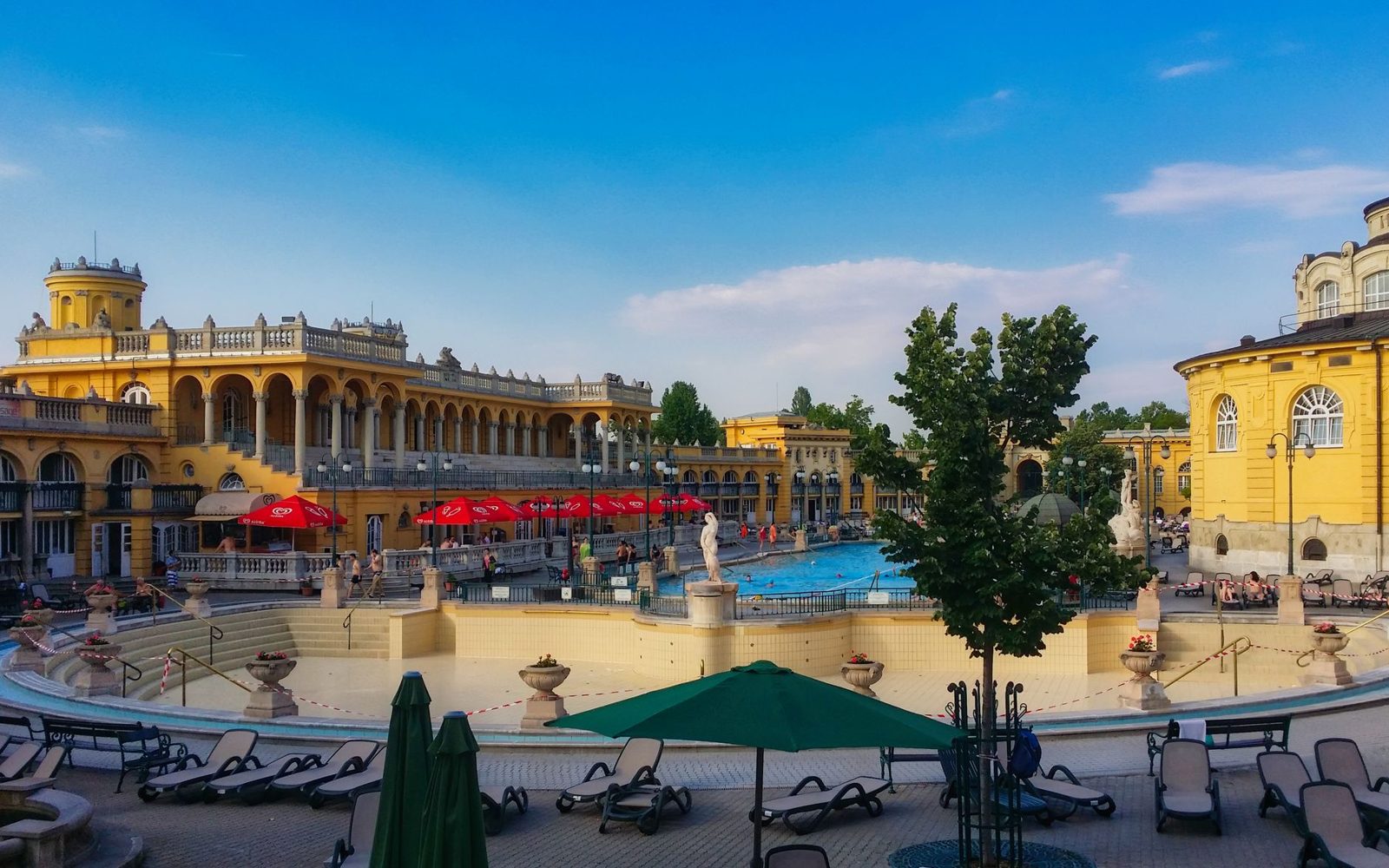
To understand why the renovation matters, it helps to know what is behind those doors. This is what made Gellért unforgettable, and what should return when it reopens:
- The main indoor pool, a soaring hall ringed by marble columns and balconies under a great arched glass roof, swimming here felt like doing laps inside a museum.
- The thermal sitting pools, smaller, hotter pools (around 36–40°C) tiled floor-to-ceiling in turquoise and green Zsolnay porcelain, with carved lion-head spouts.
- The outdoor wave pool, opened in 1927 and one of the earliest of its kind anywhere, it still drew delighted crowds nearly a century later.
- The effervescent (bubbling) pool and the sun terraces, the warm-weather heart of the complex.
- The Secessionist detailing, mosaics, stained glass, wrought-iron, and sculptural flourishes throughout. This is the painstaking part of the restoration and the reason it takes years rather than months.
So when you read that Gellért is “closed for renovation”, picture all of that being carefully taken apart, cleaned, repaired and put back, it is a genuinely once-in-a-generation project.
Will it reopen? And when?
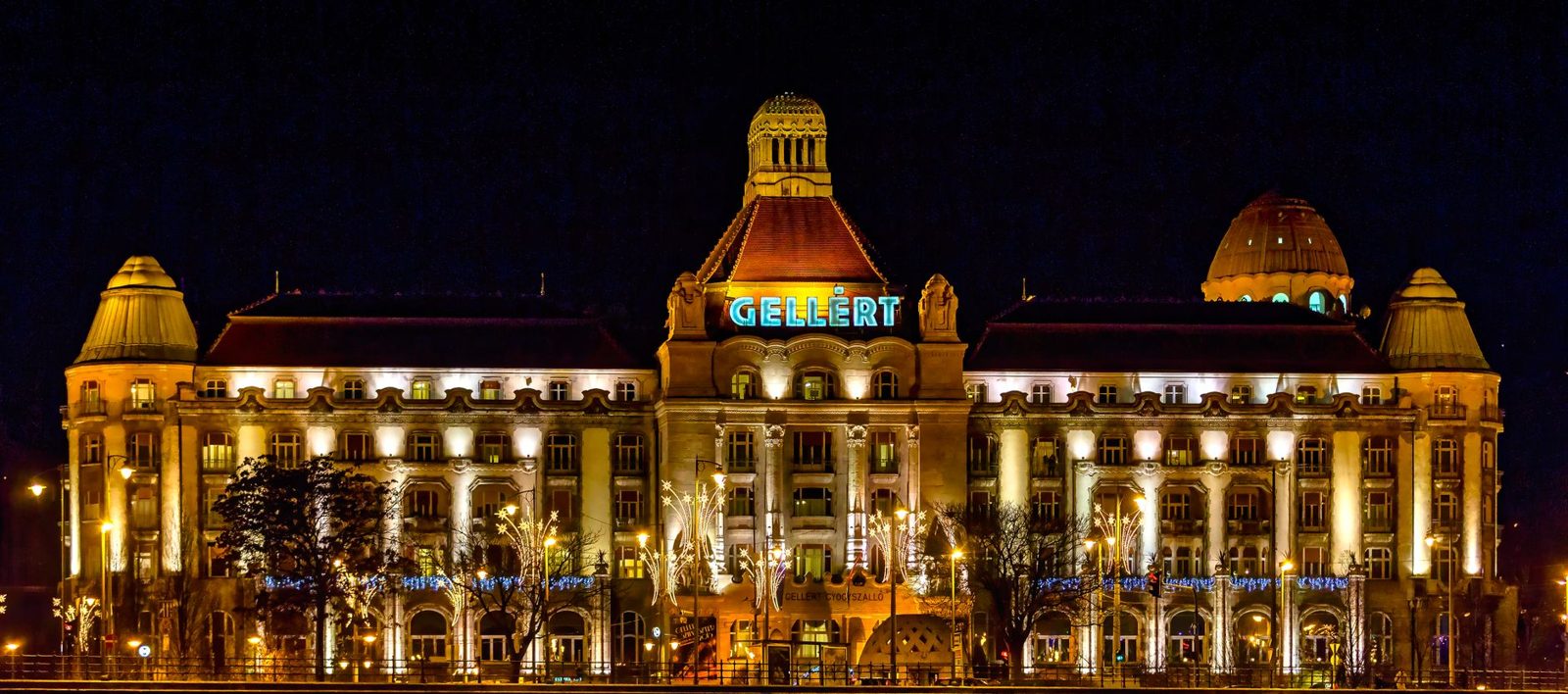
Yes, it will reopen, this is a restoration, not a demolition, and Gellért is far too important to Budapest to be lost. But “when” is genuinely uncertain. The working targets are 2028 for the interior and 2029 for the outdoor wave-pool area, and I would treat even those as optimistic. My honest advice for 2026 and 2027 trips: do not build your plans around Gellért. Admire the building from the outside, it is worth a look from the Liberty Bridge end of the river, and book your actual soak somewhere that is open. If you are visiting in 2028 or later, check the official status before you travel, because a reopened Gellért will instantly be one of the most spectacular spa experiences in Europe.
Can you still see the building?
You can admire the exterior of the Hotel Gellért and the bath complex from the street, it sits in a commanding spot at the Buda end of Liberty Bridge (Szabadság híd), one of the prettiest of the Danube bridges. The hotel itself has also been undergoing changes, so do not expect to wander into the lobby. Honestly, the façade is lovely but the magic was always inside, so a quick photo from the bridge is about all the closed Gellért offers right now. Pair it with a walk up Gellért Hill to the Citadella for one of the best views in the city.
Where to go instead: the best open alternatives
Here is the part that actually helps your trip. Depending on what drew you to Gellért, here is where I would send you:
For Art Nouveau grandeur → Széchenyi Baths
If it was the sheer architectural spectacle you wanted, the enormous neo-baroque Széchenyi Baths in City Park is the obvious substitute. It is not Art Nouveau, but it is every bit as grand, with eighteen pools including the famous steaming outdoor ones. It is the city’s flagship bath and the easiest to recommend to a first-timer.
For Ottoman atmosphere → Rudas Baths
Gellért shares its slice of Buda riverbank with Rudas Baths, just up the road. Rudas is a different vibe entirely, a genuine 16th-century Ottoman bath with an octagonal pool under a 450-year-old dome, plus a modern rooftop hot tub looking over the Danube. It is my personal favourite in the city, and it is a five-minute walk from Gellért.
For peace and quiet → Lukács or Veli Bej
If you wanted Gellért for a calm, grown-up soak rather than a party, head to Lukács Baths, the locals’ favourite, quiet and affordable, or to the small, serene Veli Bej bath, a restored Ottoman gem that deliberately limits numbers. Both are a world away from the tourist crush.
A quiet, serene Ottoman option: Veli Bej
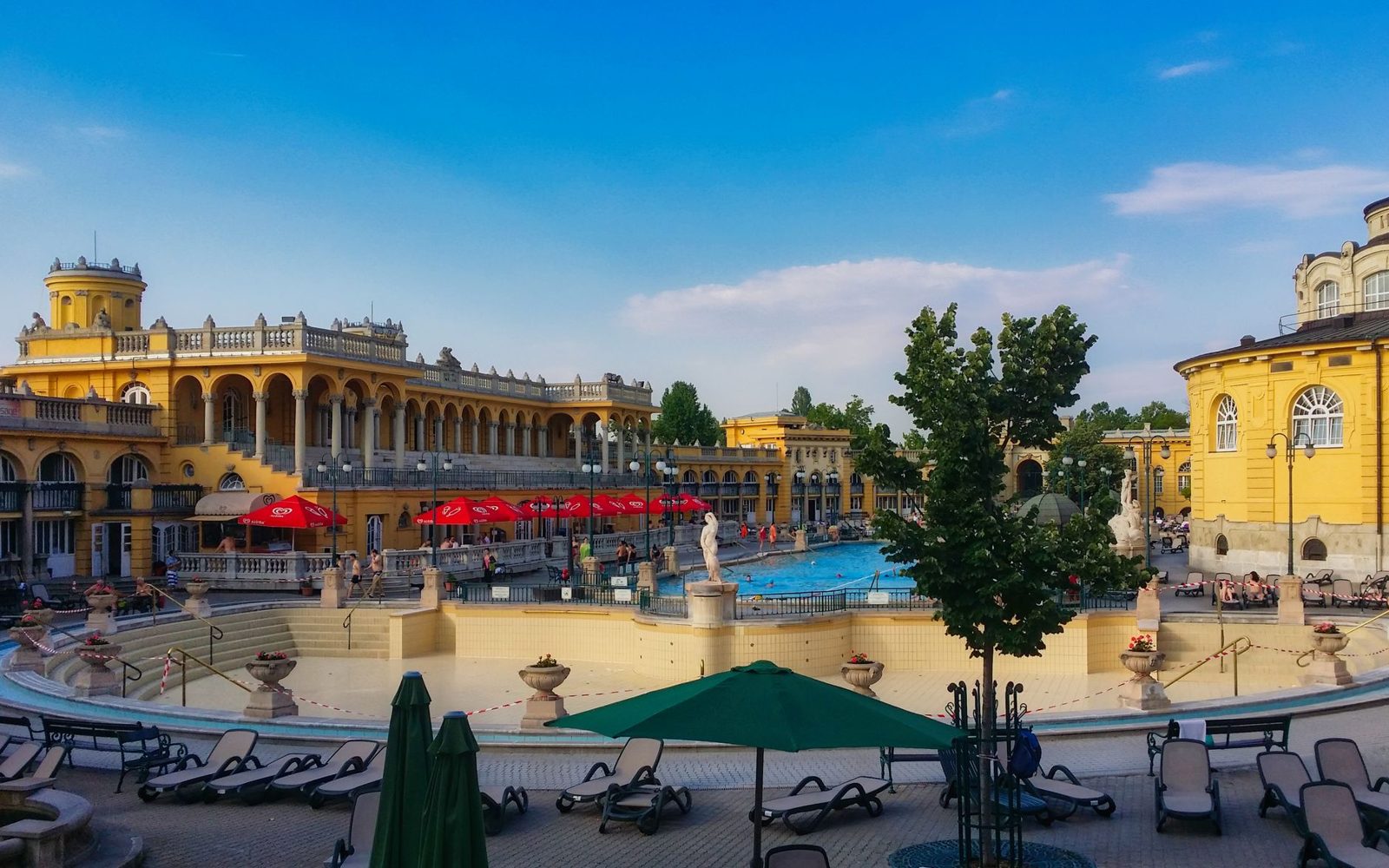
One alternative that deserves its own mention is Veli Bej, a 16th-century Ottoman bath run today by a hospitaller order and beautifully restored. It deliberately caps visitor numbers, so it stays calm even when the big baths are heaving, and a few hours costs only around 5,700–7,200 HUF, a fraction of Széchenyi. With five thermal pools from 26°C to 38°C under a restored dome, it is the closest thing to Gellért’s serene, architectural soak that you will find open in 2026. Book ahead, because the capacity limit means it can fill up.
For a side-by-side decision
Not sure which to pick? Our Budapest bath comparison lines them all up by price, atmosphere, crowd levels and location, and the bath etiquette guide walks you through what to bring and how the locker systems work, useful if this is your first Hungarian bath.
Open alternatives at a glance (2026)
While Gellért is closed, here is a quick decision table for the baths that are open and worth your time:
| Bath | From (2026) | Atmosphere | Best for |
|---|---|---|---|
| Széchenyi | ~€36–47 | Grand, busy, social | First-timers, the big outdoor pools |
| Rudas | ~12,000 HUF | Ottoman, historic, rooftop view | Atmosphere and the Danube panorama |
| Lukács | ~€25 / 7,000 HUF | Calm, local, therapeutic | Quiet soaking, value |
| Veli Bej | ~5,700–7,200 HUF | Serene, intimate, capped numbers | Gellért-style architectural calm |
How to fit a bath into your trip
Whichever bath you choose, a soak slots beautifully into a Budapest itinerary, it is the perfect afternoon after a morning of sightseeing, or a restorative end to a long travel day. Our Budapest itineraries build bath time into the schedule, and if you are coming in the colder months, the winter guide explains why a steaming outdoor pool in the snow is one of the city’s great pleasures. For getting around to whichever bath you choose, see our public transport guide.
Frequently asked questions
Are the Gellért Baths Budapest open in 2026?
No. The Gellért Baths closed on 1 October 2025 for a major renovation and are not expected to reopen until around 2028 (interior) or 2029 (outdoor pools). Do not plan a visit for 2026 or 2027.
Why did the Gellért Baths close?
For a complete, roughly €51 million restoration of the historic Art Nouveau interiors, plus the addition of a modern wellness area and panoramic sauna. The building needed deep structural and mechanical modernisation.
When will the Gellért Baths reopen?
The working targets are around 2028 for the indoor spaces and 2029 for the outdoor area, but restoration timelines often slip. Always check the official status before planning a visit around it.
What is the best alternative to the Gellért Baths?
For grandeur, Széchenyi Baths; for Ottoman atmosphere, Rudas Baths (a five-minute walk away); for a quiet local soak, Lukács Baths or the small Veli Bej. All are open and excellent.
Can I visit the Hotel Gellért?
You can see the exterior from Liberty Bridge, but the bath complex is closed and the hotel has been undergoing its own changes. Treat it as a photo stop rather than a destination for now.
Was the Gellért Baths worth visiting before it closed?
Absolutely, it was one of the most beautiful bath interiors in the world. That is exactly why the city is investing so heavily in restoring it properly, and why it is worth returning for once it reopens.
Last updated June 2026. We monitor the reopening timeline and update this guide as official dates are confirmed. Photos: Robert Stokoe (Pexels); Domenico Adornato (Pexels); Domenico Adornato (Pexels).