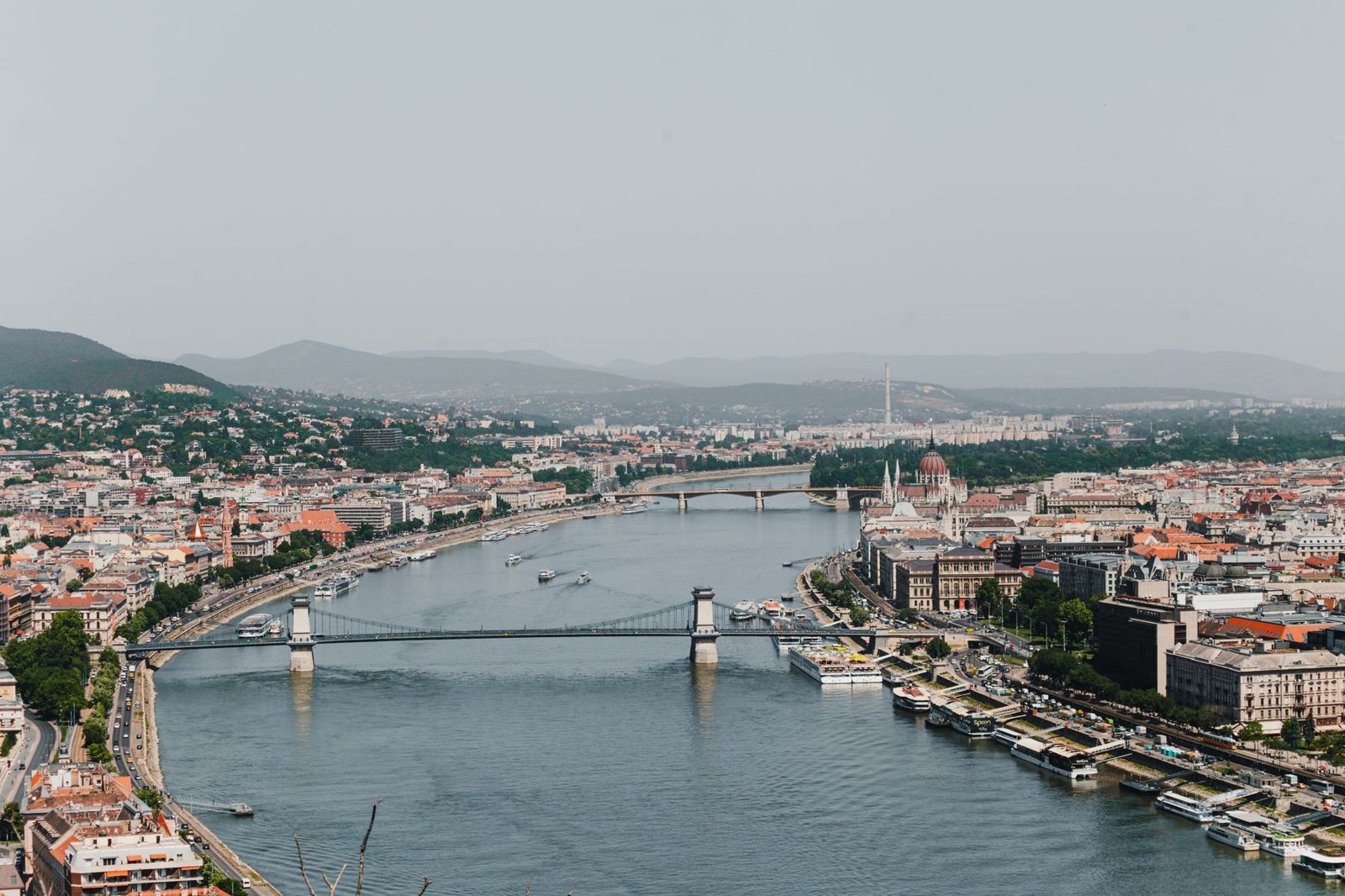
Ask me for the cheapest, most underrated thing to do in Budapest and I will tell you to walk across a bridge at dusk. The Budapest bridges are not just ways to get from Buda to Pest; they are the city’s grandstand. Stand on the Chain Bridge as the floodlights flick on, or on the green span of Liberty Bridge with Gellért Hill rising ahead, and you get the whole postcard for free. Each of the central bridges has its own character, its own story, and — this being Budapest — its own dramatic tale of being blown up and rebuilt.
There are several crossings strung along the Danube within the city, but only a handful are worth your time as a visitor. Here is what makes each one special, a little of the history that gives them weight, and how to string them into one of the best walks in the city.
The Chain Bridge: the original and the icon
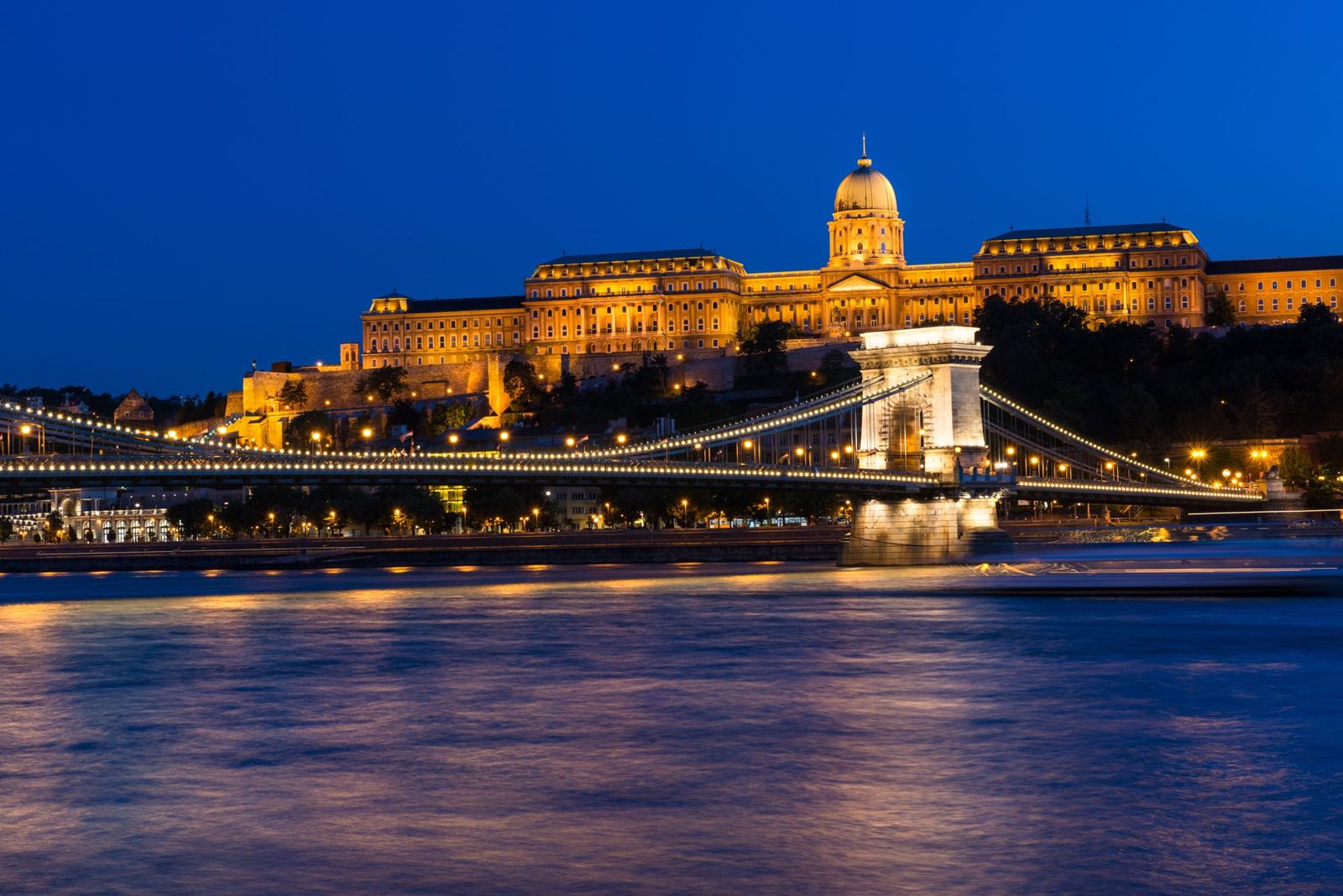
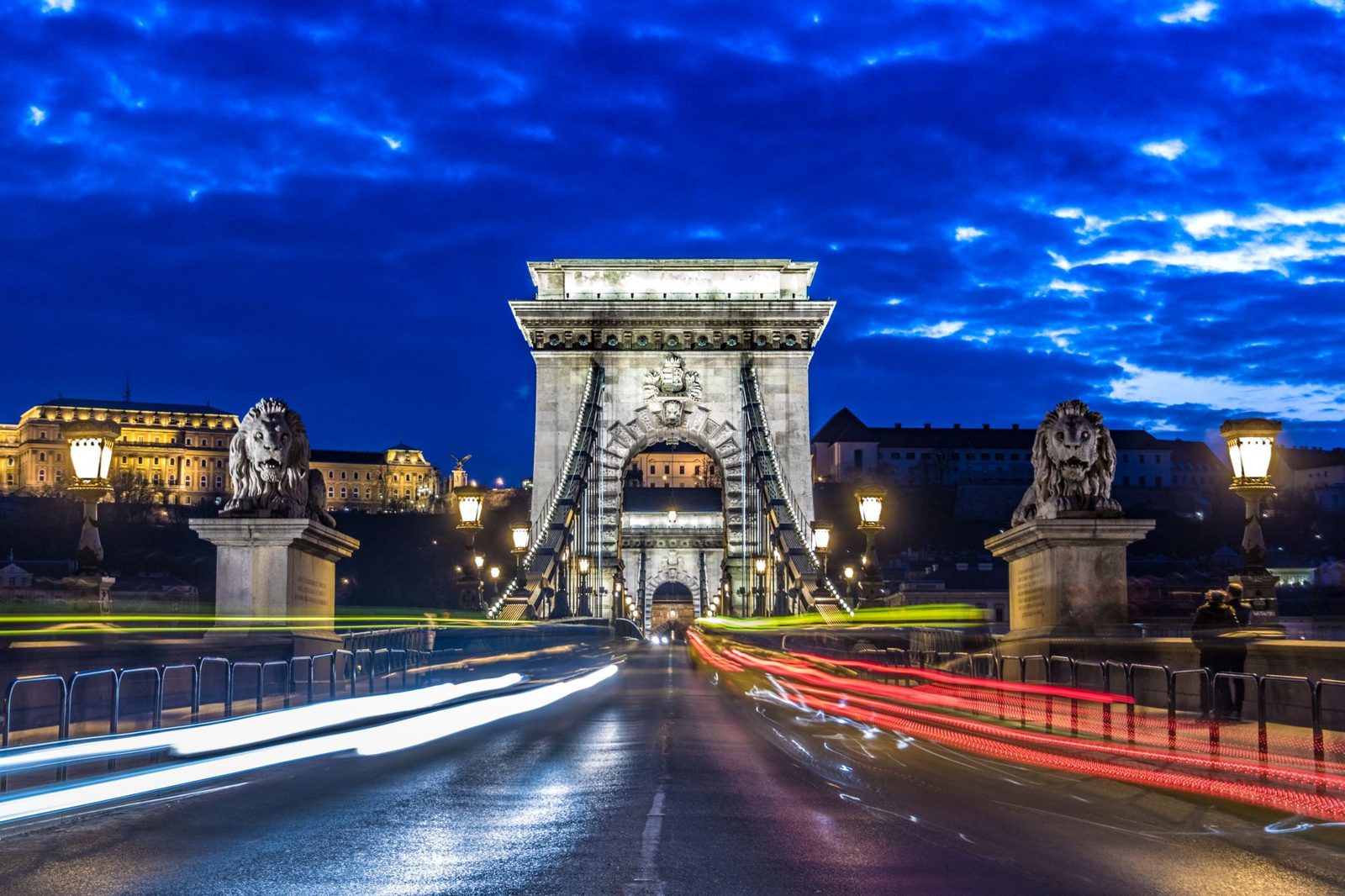
If Budapest has a single symbol, it is the Széchenyi Lánchíd. Opened in 1849, it was the first permanent bridge to link Buda and Pest, an engineering marvel of its day designed by the Englishman William Tierney Clark and built under the supervision of the Scottish engineer Adam Clark, whose name now marks the square at the Buda end. The four great stone lions that guard the approaches have watched over the river since 1852.
The bridge reopened in August 2023 after a long restoration, and the big change is wonderful for visitors: it is now permanently closed to private cars. Only buses, taxis, cyclists and pedestrians cross, which means you can stroll to the very middle with room to breathe and frame Buda Castle behind the suspension chains. Walk it at night, when the whole structure is outlined in lights that pour gold onto the water, and you will understand why it ends up on every fridge magnet in the city.
Liberty Bridge: the green one with the falcons
My personal favourite is the Szabadság híd, the shortest and most ornate of the central bridges. Painted a striking pale green and dripping with Art Nouveau ironwork, it opened in 1896 for the country’s millennial celebrations and was originally named for Emperor Franz Joseph. Look up at the tops of the masts and you will spot the turul, the mythical falcon of Hungarian legend, perched with wings half-spread.
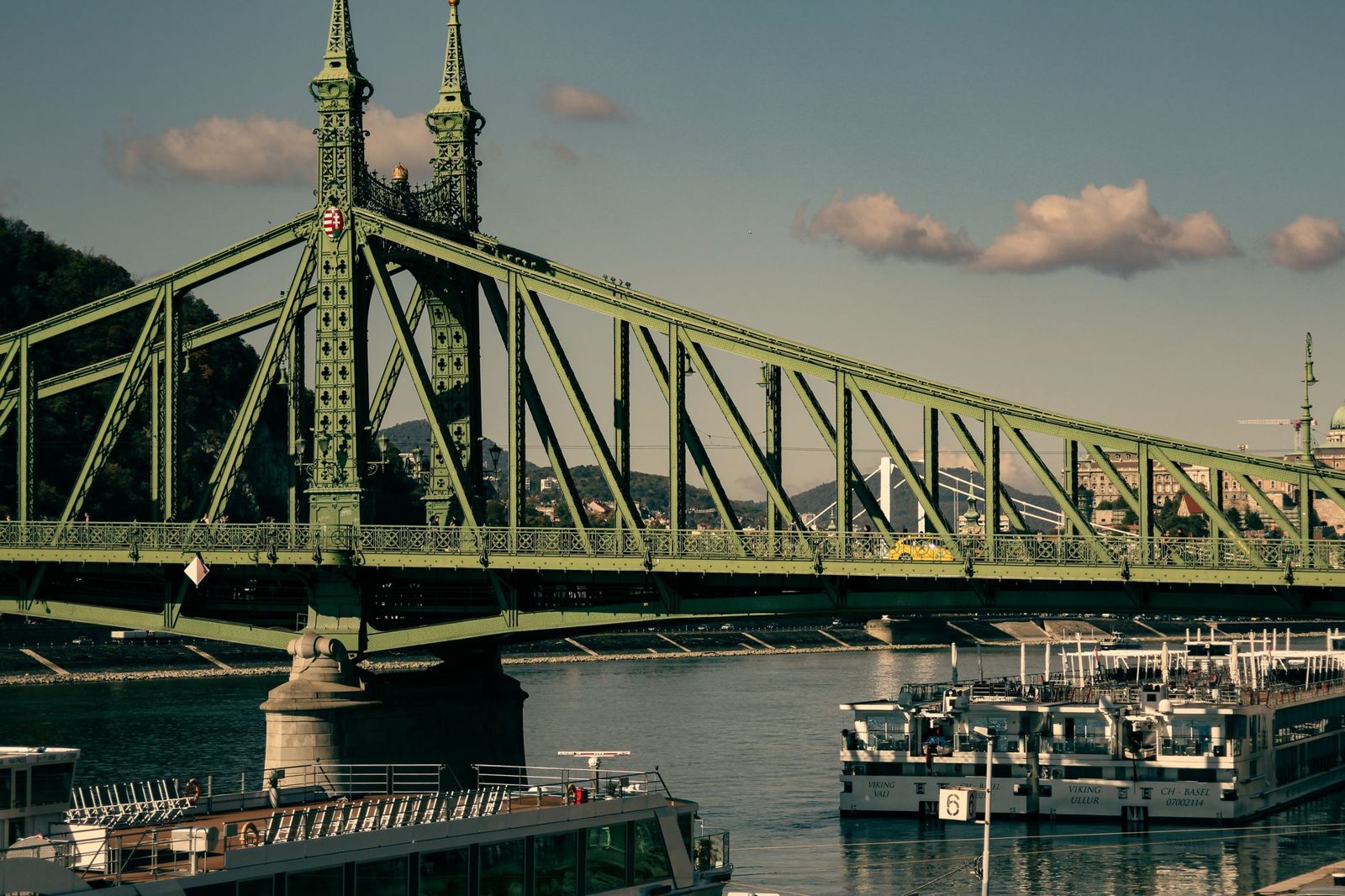
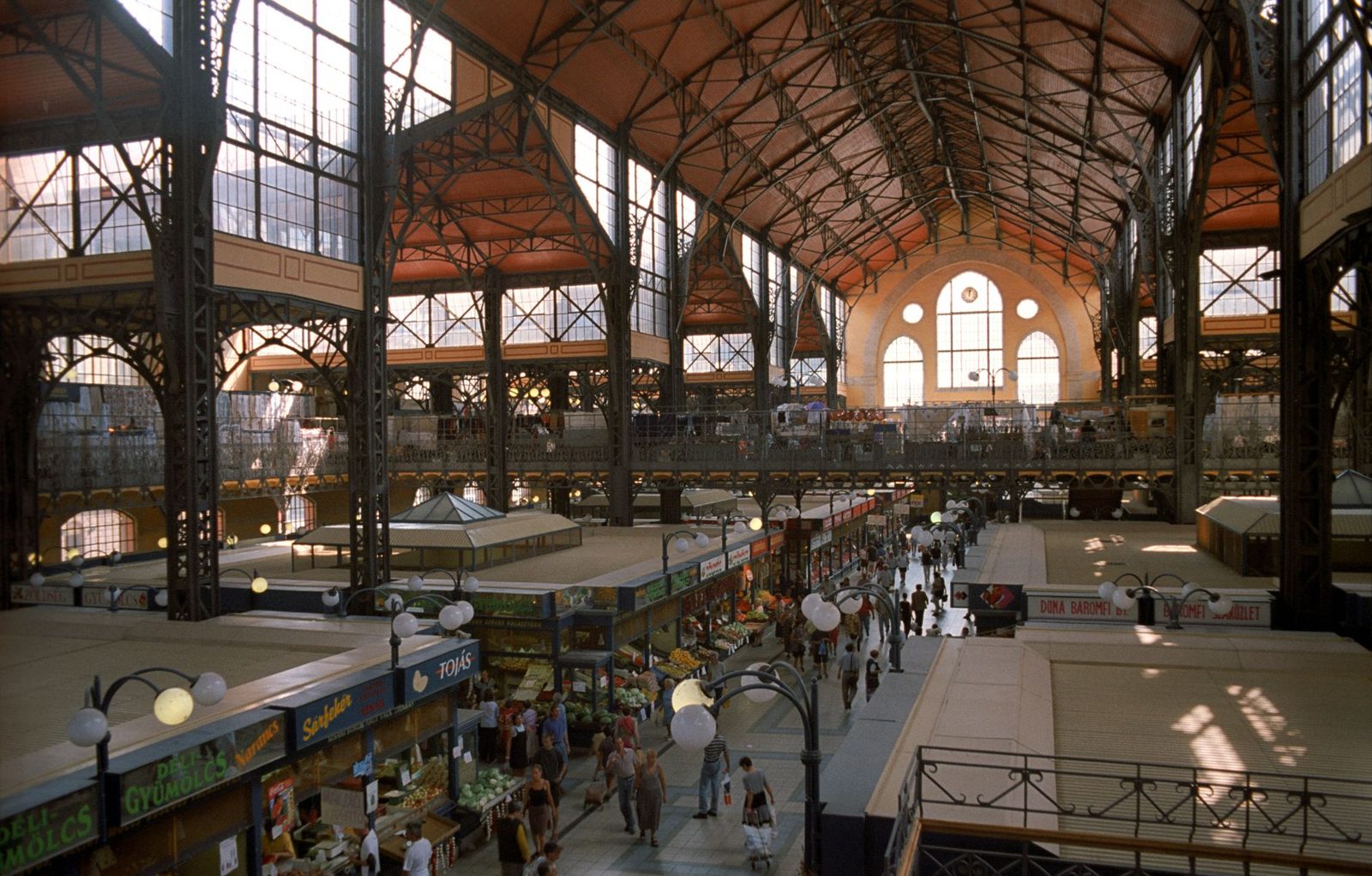
Liberty Bridge connects the Great Market Hall on the Pest side to the Gellért Hotel and baths on the Buda side, so it is an easy add-on to either. In recent summers the city has periodically closed it to traffic on warm weekends, and locals promptly claim it — sprawling on the tram tracks with picnics, beers and guitars while the sun goes down over the river. If you catch one of those evenings, join them.
Elizabeth Bridge: sleek and modern
The Erzsébet híd is the odd one out: a clean, white, modern cable-stayed bridge with none of the 19th-century filigree of its neighbours. The original elegant chain bridge here was destroyed in the Second World War and never rebuilt; what stands today dates from 1964. Named for the beloved Empress Elisabeth — “Sisi” — it lands at the foot of Gellért Hill, making it the natural start of the climb up to the Citadella and the Liberty Statue. Its lack of ornament actually makes it photograph beautifully at night, a sweep of white light against the dark hill.
Margaret Bridge: the one with the bend
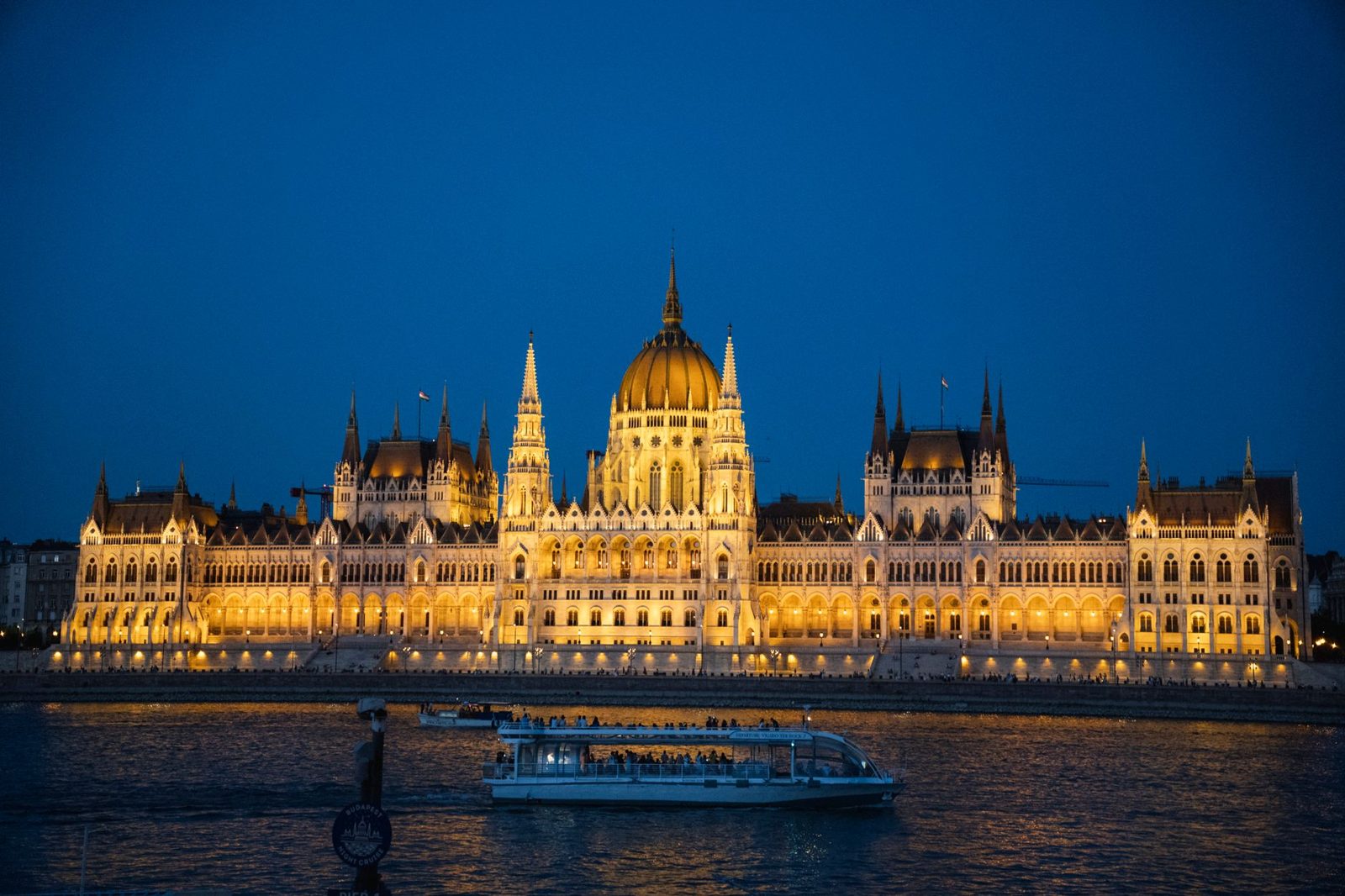
Heading north, the Margit híd is unusual for the kink in its middle — it changes angle partway across, the result of its 1876 French design following the line of the river. Crucially for visitors, a short spur drops down from the centre onto Margaret Island, the leafy, car-free park in the middle of the Danube. The famous yellow trams 4 and 6 rumble across it, and the view back toward Parliament from its pavements is one of the best and least crowded in the city.
The outer bridges
Three more bridges bracket the city to the north and south. They are less scenic but useful to know if your hotel or a day trip takes you out that way.
- Árpád Bridge — the longest in the city, to the north, carrying traffic and trams onto the northern tip of Margaret Island.
- Petőfi Bridge — a workmanlike span to the south, linking the Pest nightlife district around Boráros tér to Buda.
- Rákóczi Bridge — the southernmost and most modern of the road bridges, opened in 1995 and lit a striking blue at night.
A history written in destruction
One sobering fact ties all of these together: in January 1945, retreating German forces dynamited every single bridge across the Danube in Budapest. For months after the war, the two halves of the city were linked only by pontoons. Everything you walk across today was either rebuilt from the ruins or, in the case of the Chain Bridge, painstakingly reconstructed from the surviving towers. Knowing that adds a quiet weight to the stroll — these graceful spans are also monuments to a city that put itself back together.
The bridges at a glance
Here is a quick comparison of the central crossings, north to south, so you can pick which to walk based on where you are and what you want to see.
| Bridge | Opened | Style | Connects | Highlight |
|---|---|---|---|---|
| Margaret Bridge | 1876 | 19th-c. iron | Onto Margaret Island | The bend; island access |
| Chain Bridge | 1849 | Suspension | Széchenyi tér – Castle | Lions, night lights, car-free |
| Elizabeth Bridge | 1964 | Cable-stayed | Centre – Gellért Hill | Sleek white, hill views |
| Liberty Bridge | 1896 | Art Nouveau | Market Hall – Gellért | Turul birds, summer picnics |
| Petőfi Bridge | 1937 | Steel girder | Boráros tér – Buda | Local, southern crossing |
| Rákóczi Bridge | 1995 | Modern | South Pest – Buda | Blue night lighting |
The perfect bridge walk
My favourite route ties three bridges into a leisurely afternoon. Start at the Great Market Hall and cross Liberty Bridge to the Buda side, then climb (or take the path partway up) Gellért Hill for the panorama. Come back down, walk north along the Buda embankment past the Castle, and recross to Pest on the Chain Bridge as the light fades. If you still have energy, the riverside tram 2 on the Pest side delivers you back south past the Parliament with the bridges lined up out of the window. It is two or three gentle hours and costs nothing but a transit ticket.
Best bridges for photos
For photography, two stand out. The Chain Bridge is unbeatable at night, especially shot from the Pest embankment or from a boat with the Castle behind it. Liberty Bridge glows green at sunset and frames Gellért Hill beautifully from the Fővám tér end. For the classic skyline, though, walk out onto Margaret Bridge, where you get the Parliament’s full river facade with far fewer people in your frame. The river itself offers angles you cannot get on foot; my guides to the city’s best photography spots and to Danube boat tours cover those vantage points in detail.
Fitting the bridges into your trip
The beauty of the bridges is that they cost nothing and connect almost everything else you want to see, which is why they feature in my roundup of free things to do in Budapest. Use them to link the Castle district with downtown Pest, or the baths with the market, and you will see the city the way it is meant to be seen — at walking pace, over the water. For the full picture, the complete things to do in Budapest guide and my list of the top Budapest landmarks will round out your days.
The two Clarks, the tunnel and the zero kilometre stone
There is a neat piece of trivia hiding at the Buda end of the Chain Bridge. The bridge was designed by William Tierney Clark and built by Adam Clark — no relation, despite the shared surname. Adam Clark liked Budapest so much he stayed, married a Hungarian woman, and went on to bore the tunnel straight through Castle Hill that lines up perfectly with the bridge, so traffic could carry on without climbing the slope. Locals joke that the tunnel is where the bridge is “parked” in the rain. Just beside it sits the Zero Kilometre Stone, the point from which all distances in Hungary are measured — a quiet little monument worth a photo.
When to go, and a note on the wind
The bridges are open and free around the clock, but timing still matters. Blue hour, the half hour after sunset, is the magic window when the floodlights are on and the sky still glows — arrive a little early to claim your spot on the Chain Bridge railing. Mornings are quietest and best for crowd-free photos. Do bring a layer even in summer: the wind funnels along the river and the middle of a span can be surprisingly brisk after dark. The pavements are wide and well maintained, and the central bridges feel safe late into the evening, with plenty of fellow strollers and night buses running below.
Frequently asked questions
How many bridges does Budapest have?
There are several road and rail bridges spanning the Danube within the city. The ones visitors care about are the central crossings — Margaret, Chain, Elizabeth and Liberty bridges — plus the more utilitarian Árpád, Petőfi and Rákóczi bridges to the north and south.
Can you walk across the Chain Bridge?
Yes, and it is now better than ever. Since its 2023 renovation the Chain Bridge has been closed to private cars, so pedestrians have wide, quiet sidewalks 24 hours a day, completely free. It is one of the best walks in the city, especially after dark.
Which is the most beautiful bridge in Budapest?
The Chain Bridge is the most iconic, but many locals favour the ornate green Liberty Bridge for its Art Nouveau ironwork and turul statues. For photography, the Chain Bridge at night and Liberty Bridge at sunset are the two to prioritise.
Are the bridges lit up at night?
Yes. The Chain Bridge, Liberty Bridge and Elizabeth Bridge are all beautifully illuminated after dark, and even the modern Rákóczi Bridge glows blue. Blue hour — the half hour after sunset — is the best time to see and photograph them.
How do I get to Margaret Island?
Margaret Island is reached by a spur off the middle of Margaret Bridge to the north, served by trams 4 and 6, or from the Árpád Bridge at its northern end. The island is car-free, leafy and lovely for a stroll between bridge walks.
Last updated June 2026. Photos: Andrés García (Pexels); Incze Sándor Zoltán (Pexels); Ch Jawad (Pexels); Gáspár Ferenc (Pexels).