Budapest Churches: 12 Most Beautiful Basilicas to Visit (2026)
St Stephen's Basilica, Matthias Church, the Cave Church and the quiet gems most visitors miss — entry fees, what makes each special, and how to visit respectfully.

In this guide
- St Stephen’s Basilica: the city’s grandest
- Matthias Church: the fairy-tale roof
- The Inner City Parish Church: Pest’s oldest secret
- The Cave Church on Gellért Hill
- St Anne’s Church and the baroque beauties
- The quieter denominations
- A word on the Great Synagogue
- The churches at a glance
- Church etiquette: how not to offend
- The best church views
- Fitting the churches into your trip
- The story in the stones
- Getting there and when to go
- Frequently asked questions
This article contains advertising. Our booking links are routed through a partner that adds commission tracking automatically, so if you book through one we earn a commission from the provider, at no extra cost to you. It never affects what we recommend. Affiliate disclosure
You do not have to be religious to be moved by the churches of Budapest. I am not, particularly, and yet I have stood under the dome of St Stephen’s Basilica with my neck craned back and genuinely forgotten to breathe for a moment. The Budapest churches tell the whole story of the city in stone — Roman foundations, an Ottoman mosque hidden inside a Gothic shell, Habsburg coronations, baroque flourishes and a neoclassical giant that doubles as the city’s best concert hall. Visiting a few of them is one of the most rewarding and, frankly, cheapest things you can do here.
This is not an exhaustive list of every chapel in town. It is the handful I send people to, with what they cost in 2026, what makes each one special, and how to behave so you do not accidentally wander into a service in shorts. Start with the two superstars, then work down to the quieter gems that most visitors never find.
St Stephen’s Basilica: the city’s grandest
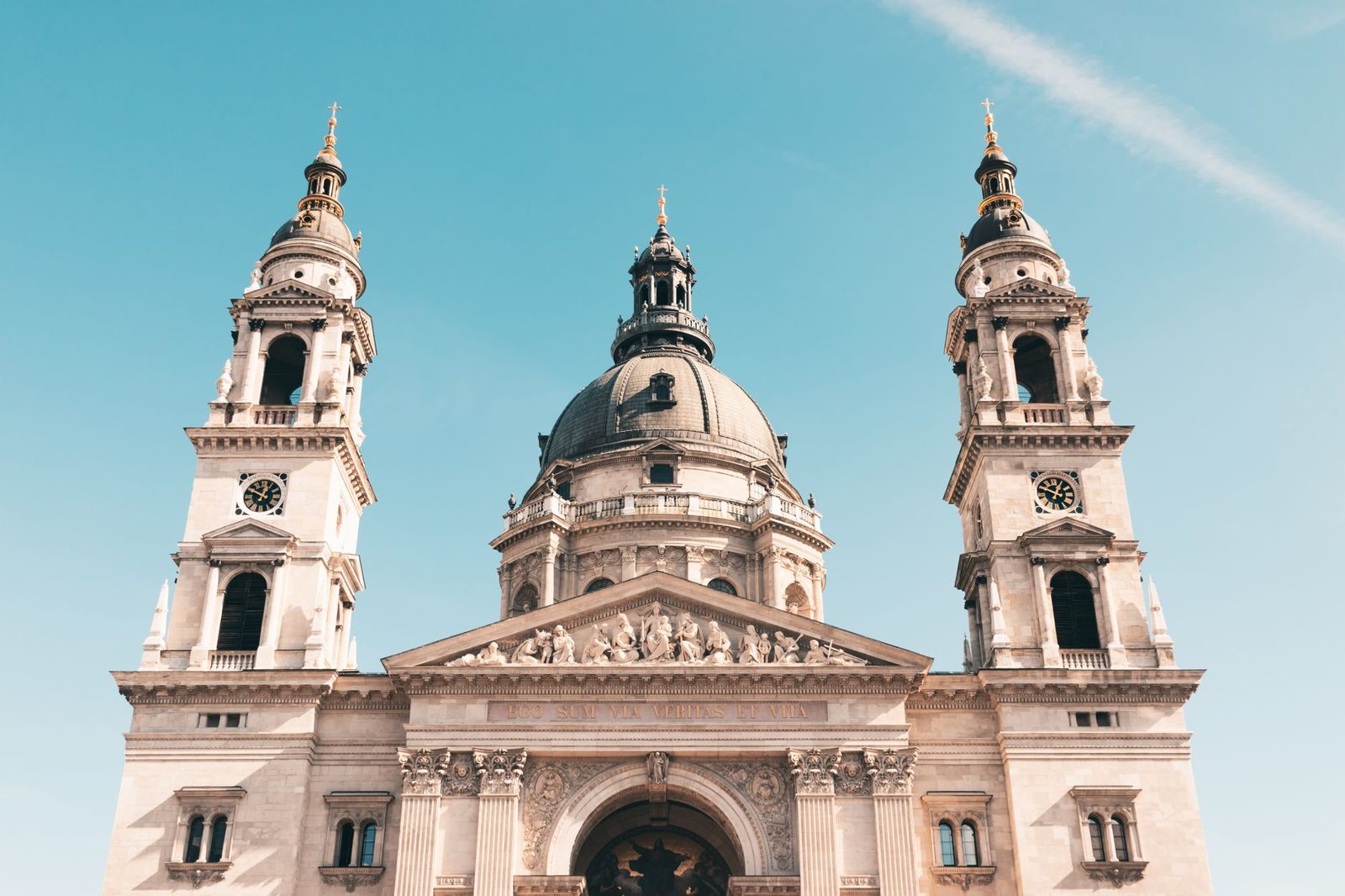
The Szent István-bazilika is the largest church in Budapest and, at 96 metres, ties the Parliament as the tallest building in the city — by old tradition, nothing is built higher. Completed in 1905 after decades of work (the original dome famously collapsed mid-construction), it is a neoclassical heavyweight named for Hungary’s first king. Inside, the showstopper is the Holy Right: the mummified right hand of St Stephen himself, displayed in a reliquary chapel and illuminated for a coin in the slot.
Entry to the nave is around €11 or a suggested donation; a combined ticket covering the dome and treasury runs about €21. The real draw for many is the panorama terrace at 65 metres, reached by a lift or a few hundred steps, giving a 360-degree sweep over the rooftops of Pest. It is open Monday to Saturday from 9am, with later Sunday hours around the morning Mass. Time your visit for one of the regular organ concerts and you will hear the building as it was meant to be heard.
Matthias Church: the fairy-tale roof
Up on Castle Hill, beside the Fisherman’s Bastion, the Mátyás-templom is the prettiest church in the city and the one that ends up on every postcard. Its astonishing roof of glazed Zsolnay tiles glitters in geometric patterns, the result of a flamboyant 19th-century restoration by Frigyes Schulek over much older Gothic bones. This is the coronation church, where the last Habsburg kings were crowned, and the interior is unlike any other in Hungary — every wall and column painted in rich medieval-revival patterns rather than left as bare stone.
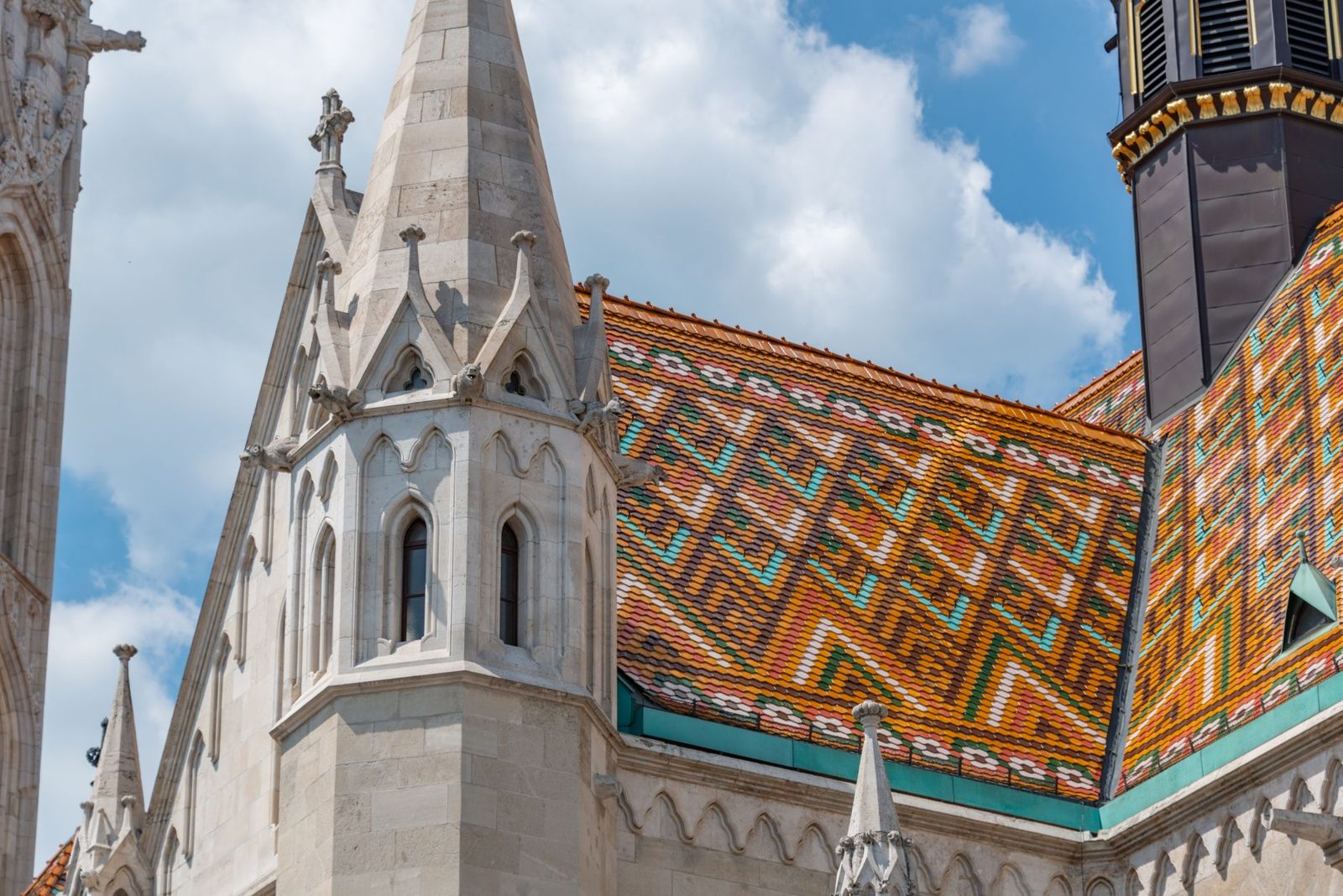
Tickets cost around €19, and there is a separate climb up the 197 steps of the tower if you want a closer look at those tiles and a view over the Buda rooftops. It is open daily, though it closes to tourists during services, so check the board at the door. Pair it with the Fisherman’s Bastion next door and you have the single best hour on the Buda side.
The Inner City Parish Church: Pest’s oldest secret
Hiding in plain sight by the Elizabeth Bridge is the Belvárosi plébániatemplom, the oldest building in Pest. It sits on the foundations of a Roman fort, and inside is one of my favourite quiet surprises in the whole city: a mihrab, the niche pointing toward Mecca, left over from the decades when the Ottomans used the church as a mosque. Few tourists step inside, which makes the layers of history — Roman, Gothic, Turkish, baroque — feel like a private discovery. Entry is usually free or a small donation.
The Cave Church on Gellért Hill
Carved into the rock face of Gellért Hill, opposite the famous baths, the Sziklatemplom is genuinely unusual: a working church inside a natural cave system. Run by the Pauline order, it was sealed shut during the communist era — the entrance was literally walled up — and only reopened after 1989. A modest ticket includes an audio guide that tells the dramatic story. It is small, atmospheric and takes twenty minutes, an easy add-on before or after a climb up the hill or a soak at the nearby Rudas Baths (the Gellért Baths opposite are closed for renovation until around 2028).

St Anne’s Church and the baroque beauties
For baroque drama, the twin-towered St Anne’s Church on Batthyány tér is the city’s finest, and its position directly across the river from Parliament makes for a wonderful photo. Nearby, the University Church in the inner city hides a sumptuous baroque interior behind a modest facade, with carved wooden pews and a dark, gilded altar. These are working parish churches rather than ticketed attractions, so they cost nothing to enter — just step in quietly and look up.
The quieter denominations
Budapest’s faith is not only Catholic, and some of the most characterful buildings belong to other congregations. A short list of the ones worth seeking out:
- The Lutheran Church on Deák tér — a clean, neoclassical hall right in the centre, with a small museum of Hungarian Lutheran history attached.
- The Calvinist Church on Szilágyi Dezső tér — its own colourful Zsolnay-tiled roof rises on the Buda bank, often mistaken for a small Matthias Church.
- The Serbian Orthodox Church near Váci utca — a peaceful walled courtyard and an iconostasis glowing with gold, a complete change of mood from the Gothic and baroque.
- St Elizabeth’s Church on Rózsák tere — a soaring neo-Gothic spire in District VII that locals adore and tourists almost never reach.
A word on the Great Synagogue
It is not a church, but no guide to Budapest’s houses of worship is complete without the Dohány Street Synagogue, the largest in Europe and one of the largest in the world. Its Moorish-Revival towers, the moving Holocaust memorial garden and the Jewish Museum make it an essential visit, though tickets are considerably pricier than the churches. It sits at the heart of the old Jewish Quarter; my guide to the Budapest Jewish Quarter covers it and the surrounding district in full.
The churches at a glance
Here is how the main options compare, so you can pick by mood, budget and which side of the river you are on. Prices are approximate 2026 figures and shift with the forint.
| Church | Style | Entry | Don’t miss |
|---|---|---|---|
| St Stephen’s Basilica | Neoclassical | ~€11 (€21 w/ dome) | The Holy Right, dome panorama |
| Matthias Church | Neo-Gothic | ~€19 | Zsolnay roof, painted interior |
| Inner City Parish Church | Gothic / Roman | Free / donation | The Ottoman mihrab |
| Cave Church | Rock chapel | ~€3 | The cave interior, its history |
| St Anne’s Church | Baroque | Free | Twin towers facing Parliament |
| Serbian Orthodox Church | Orthodox | Free / donation | Golden iconostasis |
Church etiquette: how not to offend
These are active places of worship, and a little care goes a long way. Cover your shoulders and knees — carry a light scarf if you are in summer clothes, as the Basilica in particular can turn people away at the door. Keep your voice low, silence your phone, and do not wander into the chancel during a Mass; if a service is on, slip into a back pew or come back later. Photography is generally fine without flash, but watch for signs banning it near the altar or the Holy Right, and never photograph people praying. A coin in the donation box is good manners even where entry is free.
The best church views
Two of these churches double as viewpoints, and both are worth the climb. St Stephen’s panorama terrace gives the better all-round city view, looking straight down Zrínyi utca and across the Pest skyline, with a lift for those who would rather not take the stairs. The Matthias Church tower is narrower and steeper, but it puts you eye-to-eye with that incredible tiled roof and over the Buda rooftops. If photography is your priority, my guide to the city’s best photography spots explains exactly when the light is right at each.
Fitting the churches into your trip
The two big churches sit on opposite sides of the river and pair naturally with their neighbourhoods: St Stephen’s with a wander through downtown Pest, Matthias Church with the whole Castle Hill complex. You could see both in a single busy day, but I would slow down and give each its own half-day. For the bigger picture, the complete things to do in Budapest guide shows how the churches slot in among the baths, bridges and museums, while the roundup of the city’s top Budapest landmarks and my list of hidden gems will fill out the rest of your itinerary.
The story in the stones
Part of what makes these buildings so compelling is that they are layered like the city itself. The Inner City Parish Church stands on a Roman fort and still carries the niche the Ottomans cut into it. Matthias Church was a mosque for a century and a half under Turkish rule before being reclaimed and re-Gothicised. St Stephen’s is a monument to 19th-century national pride, raised as Hungary asserted itself within the Habsburg empire, while the Cave Church’s walled-up entrance is a scar from the communist decades. Read in sequence, the churches give you two thousand years of Budapest’s history without a single museum ticket — each one a chapter in stone, paint and tile.
Getting there and when to go
The central churches are easy to reach on foot or by public transport. St Stephen’s Basilica is a few minutes from the M3 metro at Arany János utca, while Matthias Church is best reached by the number 16 bus up to Castle Hill, the Buda funicular, or a steady walk from the Chain Bridge. Mornings are calmest; the Basilica fills with tour groups by late morning and the Castle district by midday. Avoid arriving during Sunday Mass if you only want to sightsee, and remember that the dome terrace and tower keep slightly different hours from the naves below, often staying open a little later in summer. A single transit ticket or a day travelcard covers all the hops you will need between them.
The basilica is the one most visitors get wrong at the ticket desk, because it sells three separate tickets and the terrace one does not include the nave. Our full St Stephen’s Basilica guide decodes the options, covers the Sunday opening gap, and makes the case for the evening organ concert over the daytime visit.
Matthias Church is the one on this list that most rewards going inside rather than photographing from the terrace — the painted interior owes as much to 145 years as an Ottoman mosque as to any Gothic tradition. Our Matthias Church guide has the 2026 prices, the Saturday noon close and the tower climb decoded.
The city’s most remarkable religious interior is not a church at all. Our Dohany Street Synagogue guide covers Europe’s largest synagogue — the Moorish Revival design, the organ that Liszt played, and the Neolog tradition that explains why the inside is laid out like a basilica.
Frequently asked questions
What is the most famous church in Budapest?
St Stephen’s Basilica is the most famous and the largest, known for the mummified hand of St Stephen and its panoramic dome terrace. Matthias Church on Castle Hill is a close second, prized for its colourful tiled roof and royal coronation history.
Do you have to pay to enter Budapest’s churches?
The two headline churches charge admission — about €11 for St Stephen’s Basilica and €19 for Matthias Church — while many parish churches like St Anne’s and the Inner City Parish Church are free or ask only for a donation. The Cave Church charges a small fee that includes an audio guide.
Is there a dress code for churches in Budapest?
Yes. Shoulders and knees should be covered, especially at St Stephen’s Basilica, which actively enforces it. Carry a scarf or light layer in summer so you are not turned away at the door.
Can I climb to the top of St Stephen’s Basilica?
Yes. The panorama terrace at 65 metres is reached by a lift or a stair climb and offers one of the best central views in the city. It is included in the dome ticket, separate from the basic nave admission.
When are the organ concerts at St Stephen’s Basilica?
The Basilica hosts regular organ and orchestral concerts, most often in the evenings and at weekends. Schedules vary by season, so check the current programme and book ahead, as popular dates sell out.
Last updated June 2026. Photos: KITSUN YUEN (Pexels); Diego F. Parra (Pexels); Alexander Popovkin (Pexels); Ozan Tabakoğlu (Pexels).