Budapest Landmarks: The 15 Most Iconic Sights to Visit (2026)
A practical guide to Budapest landmarks: the must-see sights ranked, grouped by area for an efficient walk, with honest tips on which interiors are worth paying for.
In this guide
- The Hungarian Parliament
- Buda Castle and the Castle District
- Fisherman’s Bastion
- St. Stephen’s Basilica
- The Chain Bridge
- Heroes’ Square and City Park
- Budapest landmarks at a glance
- Andrássy Avenue and the Opera House
- Gellért Hill and the Citadella
- The Great Market Hall
- Margaret Island and Vajdahunyad Castle
- The poignant ones: Shoes on the Danube and the Synagogue
- Budapest’s landmarks by night
- A few more worth your time
- Which landmarks are worth going inside?
- Seasonal tips for landmark-hopping
- How to see them efficiently
- See the big five in one day
- Is the Budapest Card worth it for landmarks?
- Tickets, passes and saving money
- Frequently asked questions
This article contains advertising. Our booking links are routed through a partner that adds commission tracking automatically, so if you book through one we earn a commission from the provider, at no extra cost to you. It never affects what we recommend. Affiliate disclosure
Budapest is one of those cities where the landmarks do the heavy lifting, you can have a wonderful first day just walking from one to the next along the Danube. If you are short on time and want to know which Budapest landmarks actually deserve your hours, this is my honest, been-there ranking, with the smartest order to see them so you are not crisscrossing the river all day. The headline acts: the Parliament, Buda Castle, Fisherman’s Bastion, St. Stephen’s Basilica and the Chain Bridge. Get those right and everything else is a bonus.
This guide covers the essential sights, how they cluster geographically, and how to string them into an efficient walk. For a full day-by-day plan, pair it with our Budapest itineraries, and for the bigger picture of the city’s sights see things to do in Budapest.
The Hungarian Parliament
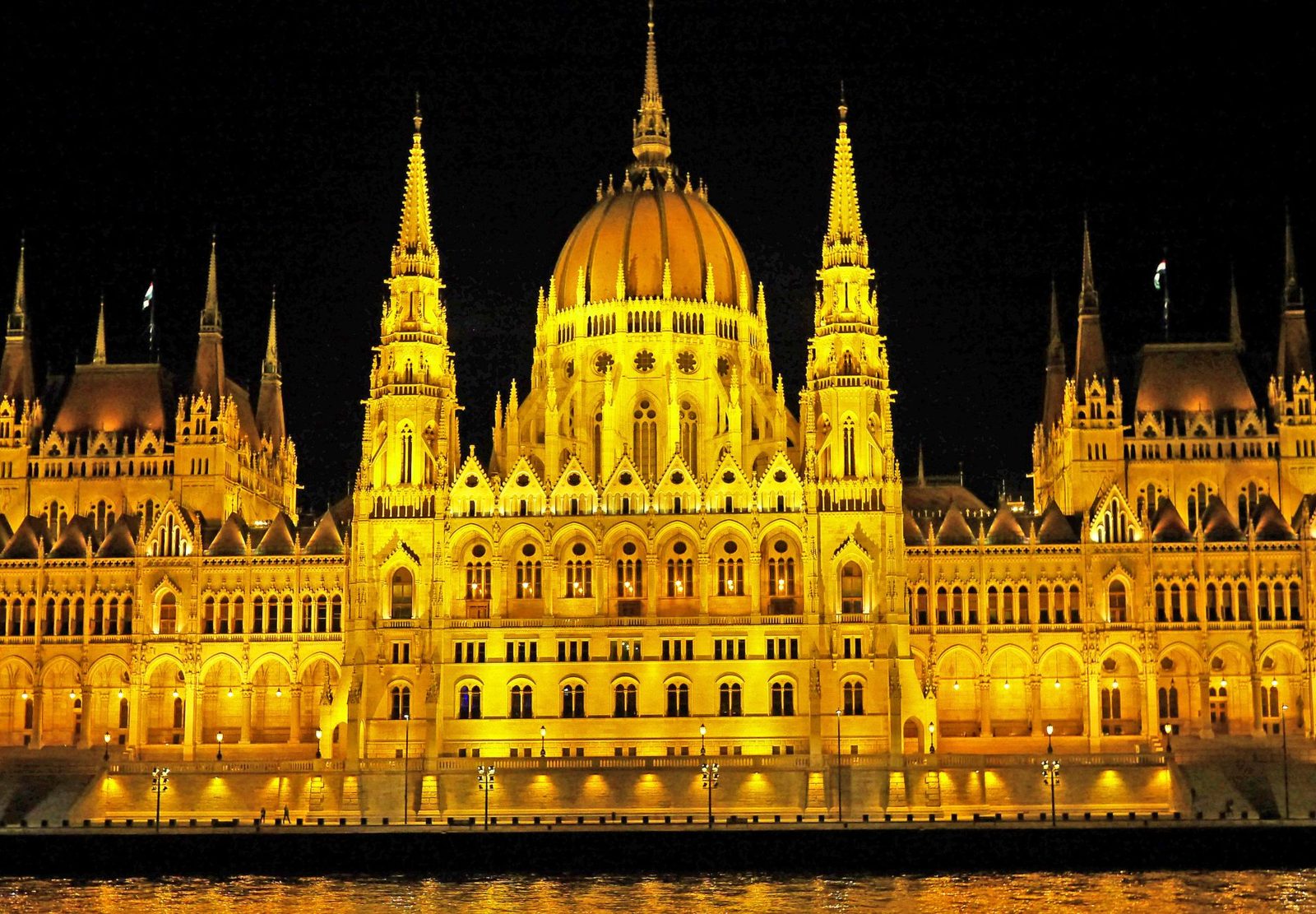
The single most photographed building in the country, and rightly so. This neo-Gothic colossus on the Pest riverbank, all spires and arches, is the third-largest parliament building in the world and looks its absolute best lit up at night or viewed from the Buda side across the water. You can go inside on a guided tour (book ahead, it sells out, and bring ID), which takes you up the grand staircase to see the Hungarian Crown Jewels under the central dome. Even if you do not go in, walk the embankment in front of it and circle around to Kossuth tér. For the full story, see our Hungarian Parliament guide.
Buda Castle and the Castle District
Across the river and up the hill, the Castle District (Várnegyed) is a UNESCO-listed cobbled quarter that rewards a slow wander. The vast Buda Castle palace now houses the Hungarian National Gallery and the Budapest History Museum, but honestly the best of it is free: the views over Pest, the quiet back streets, and the medieval lanes away from the main drag. Get up there on the little funicular from Clark Ádám tér, or walk, and give yourself a couple of hours. Our Buda Castle guide has the details.
Fisherman’s Bastion
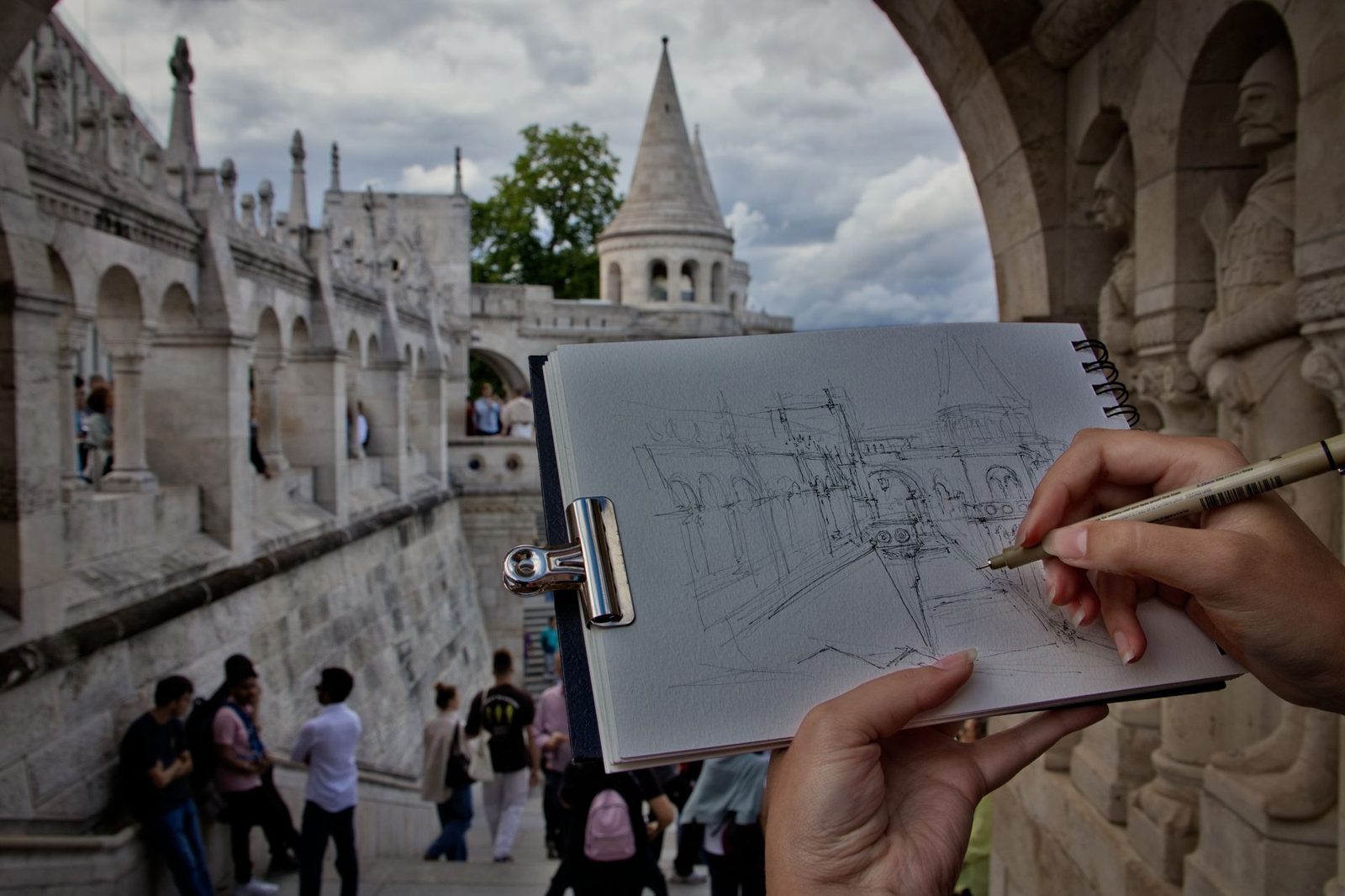
The fairytale one. Those white, cone-topped turrets and arcaded terraces look medieval but were actually built around 1900 as a viewing platform, and what a platform: the panorama over the Parliament and the Danube from here is the postcard shot of Budapest. The upper towers charge a small fee, but the lower terraces, with virtually the same view, are free. Come at sunrise if you can; by mid-morning it is shoulder-to-shoulder. Right beside it sits the colourful-roofed Matthias Church, worth a look inside.
St. Stephen’s Basilica
The grandest church in the city, named for Hungary’s first king, whose mummified right hand is kept inside as a relic (yes, really). The interior is sumptuous, but the highlight is climbing or taking the lift up to the dome’s observation terrace for a 360-degree view over the rooftops, the best central vantage point in Pest. The square out front has become a lovely spot for a coffee, and at Christmas it hosts one of the city’s prettiest markets. More in our churches and basilicas guide.
The Chain Bridge
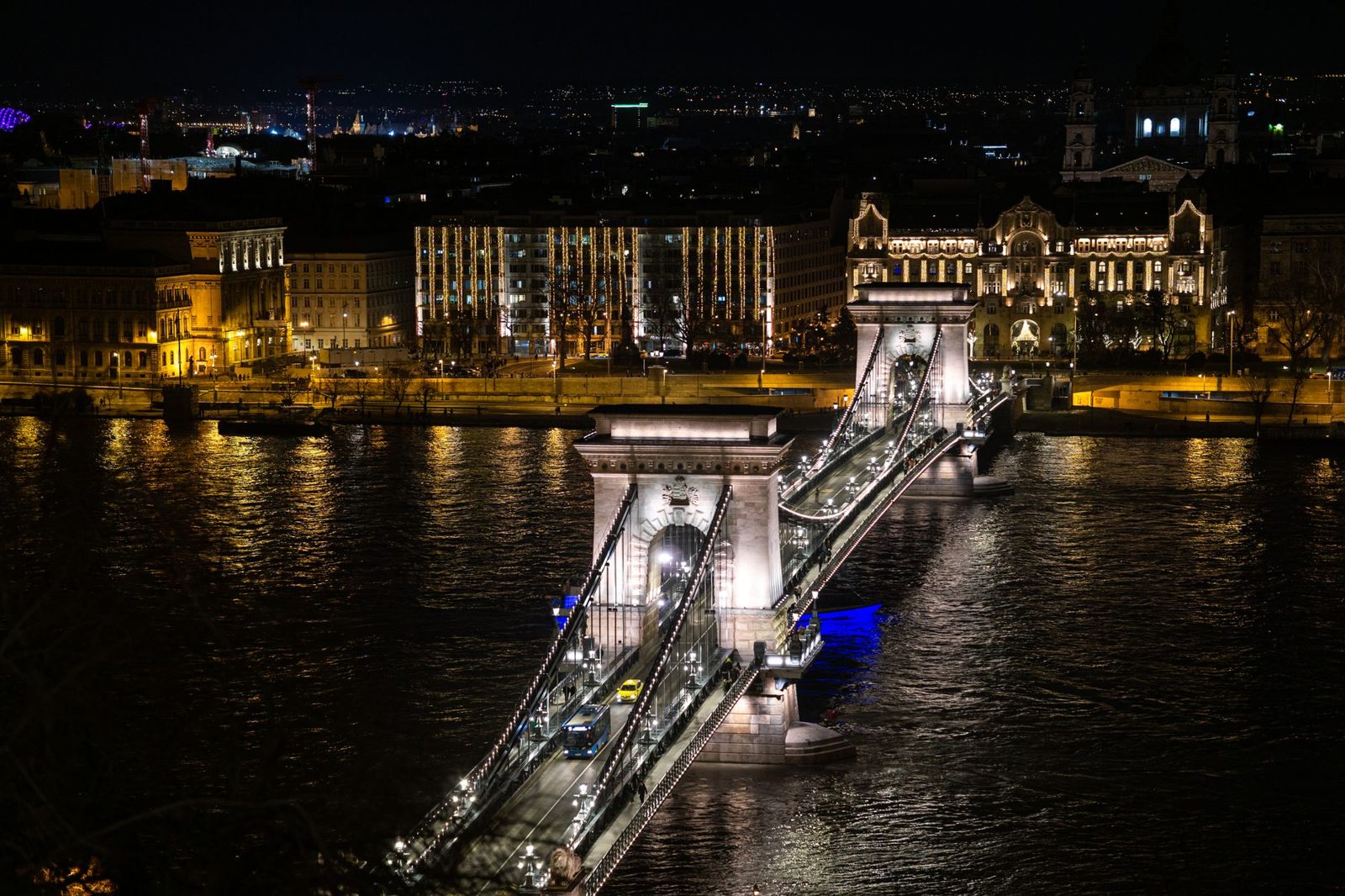
The Széchenyi Chain Bridge was the first permanent bridge to link Buda and Pest, opened in 1849, and it remains the city’s symbolic heart, guarded by its famous stone lions. Walking across it, especially at dusk when it lights up, is a Budapest rite of passage. It is the centrepiece of our guide to the Danube bridges, all of which have their own character.
Heroes’ Square and City Park
At the end of grand Andrássy Avenue, Heroes’ Square (Hősök tere) is a vast ceremonial plaza flanked by the Museum of Fine Arts, with City Park, the Széchenyi Baths and the fairytale Vajdahunyad Castle just behind. It is a natural pairing with a soak at the Széchenyi Baths. Take the historic M1 yellow metro line up Andrássy to get there.
Budapest landmarks at a glance
| Landmark | Side | Cost | Don’t miss |
|---|---|---|---|
| Parliament | Pest | Paid tour / free outside | The Crown Jewels; the river facade at night |
| Buda Castle district | Buda | Free streets / paid museums | The views and back lanes |
| Fisherman’s Bastion | Buda | Free lower / small fee upper | Sunrise Parliament view |
| St. Stephen’s Basilica | Pest | Donation / dome fee | The dome panorama |
| Chain Bridge | Both | Free | Crossing at dusk |
| Heroes’ Square | Pest | Free | Pair with the baths |
| Gellért Hill / Citadella | Buda | Free | The best city panorama |
Andrássy Avenue and the Opera House
Budapest’s grand boulevard, Andrássy Avenue, is a UNESCO World Heritage site in its own right, a leafy, kilometre-and-a-half parade of neo-Renaissance mansions, embassies and cafés running from the city centre out to Heroes’ Square. Halfway along stands the Hungarian State Opera House, one of Europe’s most beautiful, well worth a guided tour or, better, a ticket to a performance at famously affordable prices. Beneath the avenue runs the little M1 metro, the oldest underground line on the continent, so you can ride history while you sightsee.
Gellért Hill and the Citadella
For the best view in the whole city, climb Gellért Hill to the Liberty Statue and the Citadella. It is a 20–30 minute walk up shaded paths from the river, and the reward is the entire sweep of Budapest, both banks, all the bridges, the Parliament, laid out below. It is the top spot in our photography guide, particularly at sunset.
The Great Market Hall
The cavernous Great Market Hall (Nagyvásárcsarnok) at the Pest end of Liberty Bridge is a landmark as much as a market, a soaring iron-and-glass cathedral of food. Downstairs it is paprika, salami, produce and pickles; upstairs, food stalls selling lángos and Hungarian classics. It is touristy but genuinely grand, and a fine spot to buy edible souvenirs. More in our markets guide and Central Market Hall guide.
Margaret Island and Vajdahunyad Castle
Two more landmarks reward a detour. Margaret Island, the long, car-free green island in the middle of the Danube, is the city’s playground, running tracks, gardens, a musical fountain and the Lukács and Palatinus baths nearby. And in City Park, the storybook Vajdahunyad Castle, a deliberate mash-up of Hungarian architectural styles around a lake that freezes into an ice rink each winter, is a free and delightful stop beside the Széchenyi Baths.
The poignant ones: Shoes on the Danube and the Synagogue
Two landmarks carry the weight of the 20th century. The Shoes on the Danube Bank, a simple line of iron shoes on the embankment near the Parliament, memorialises Jews shot into the river in WWII, and is quietly devastating. Nearby in District VII, the Dohány Street Synagogue is the largest in Europe and the heart of the historic Jewish Quarter. Both feature in our Jewish Quarter guide.
Budapest’s landmarks by night
One thing every visitor should do once: see the landmarks after dark. Budapest illuminates its monuments beautifully, and the Parliament, Buda Castle, the Chain Bridge and Fisherman’s Bastion all take on a golden glow. The classic way to see them is from the water, a short evening river cruise floats you past the lot, lit up and reflecting on the Danube. It is touristy and completely worth it; details in our Danube boat tours guide and a romantic upgrade in our dinner cruise guide.
A few more worth your time
If you have a third or fourth day, several more landmarks repay the effort. Vörösmarty tér, the elegant square at the top of the pedestrian shopping street Váci utca, is home to the historic Gerbeaud café and the main Christmas market. The Buda Castle Funicular, a 19th-century cliff railway, is a fun (if pricey) way up to the Castle. The Liberty Statue atop Gellért Hill is visible from across the city and worth the climb up close. And the Hospital in the Rock, a WWII and Cold War bunker hospital carved into Castle Hill, is one of the city’s most memorable museums, see our Hospital in the Rock guide. For the wider sweep of the city’s heritage, our history and culture guide ties it together.
Which landmarks are worth going inside?
Plenty of Budapest’s landmarks are best admired from outside, but a handful genuinely reward the price of admission. The Parliament interior tour is the standout, the gilded central hall, the grand staircase and the Crown Jewels are extraordinary, but book days ahead because slots sell out. The St. Stephen’s Basilica dome is the best-value climb in the city for that central panorama. The Opera House tour (or, better, a cheap performance ticket) shows off one of Europe’s loveliest auditoriums. Inside Buda Castle, the Hungarian National Gallery suits art lovers, while the Hospital in the Rock is gripping for everyone. By contrast, you can happily skip paying to enter Fisherman’s Bastion’s upper towers, the free lower terraces give nearly the same view. Knowing which interiors are worth it saves both money and queuing time.
Seasonal tips for landmark-hopping
The landmarks don’t change, but the experience of visiting them does with the seasons. In summer, start early to beat both the heat and the crowds at Fisherman’s Bastion and the Castle, and save indoor sights for the hottest afternoon hours. Spring and autumn are ideal, mild, golden and quieter. Winter brings short days but magical light, illuminated monuments by 4pm, Christmas markets at the Basilica and Vörösmarty tér, and far fewer tourists in the queues; our winter guide and summer guide go deeper. Whatever the season, the golden hour before sunset is when Budapest’s landmarks look their absolute best, plan your river views for then.
How to see them efficiently
Geography is your friend here. Group the Pest-side riverfront sights, Parliament, Shoes on the Danube, Chain Bridge, St. Stephen’s, into one walk, then cross the Chain Bridge and do the Buda side, Castle District, Fisherman’s Bastion, Matthias Church, in another. Heroes’ Square and the baths form a third (northeast) cluster, and Gellért Hill a fourth (south Buda). Most of the core sights are walkable or a short tram/metro hop apart; our public transport guide covers the easy connections, and the best time to visit guide helps you dodge the crowds.
See the big five in one day
If you only have a single day, here is the route I would walk to hit the five essentials without backtracking. Start early at the Parliament (book the first tour slot, or just admire the exterior and the Kossuth tér square). Walk south along the river past the Shoes on the Danube memorial to the Chain Bridge and cross it to the Buda side. Ride the funicular or walk up to the Castle District, wander to Matthias Church and Fisherman’s Bastion for the midday views, and have lunch up top. Descend, cross back to Pest, and finish at St. Stephen’s Basilica, climbing the dome for the late-afternoon light. That is a full but very doable day on foot, and it threads together the city’s greatest hits. For multi-day versions, see our one day in Budapest and 3-day itinerary.
Is the Budapest Card worth it for landmarks?
It depends on your plans. The Budapest Card bundles unlimited public transport with free or discounted entry to various museums and attractions, plus perks like a free walking tour and discounts at some baths. If you intend to pack in several paid museums and use transport heavily, it can pay for itself; if your trip is mostly free landmarks, river walks and a couple of paid interiors, you may do better buying those tickets individually. Do the simple maths against your shortlist before committing, and remember that many of Budapest’s finest landmarks, the bridges, the Castle streets, Gellért Hill, Heroes’ Square, cost nothing at all.
Tickets, passes and saving money
Many of the best experiences, walking across the bridges, the Fisherman’s Bastion lower terraces, the Castle District streets, Heroes’ Square, Gellért Hill, are completely free. Where you do pay (Parliament tour, Basilica dome, museums), book the Parliament ahead and consider whether a Budapest Card pays off for your plans. See our free things to do guide for how much of the city costs nothing.
Landmarks are one thing; tickets are another. The companion Budapest attractions guide covers what it actually costs to get inside each of these — which of them are free, which charge by citizenship, and where the paid version adds almost nothing to the free one.
Fisherman’s Bastion is the one on this list that most rewards knowing the small print: the lower terraces never close and cost nothing, and only the seven upper turrets are ticketed, inside a seasonal window. Our full Fisherman’s Bastion guide has the hours, the prices and the honest verdict on whether to pay.
The Chain Bridge is the landmark on this list that most people misjudge, because the guidebook line about walking it through heavy traffic has been out of date since 2023. Our Chain Bridge guide has what changed, what the renovation cost, and which direction to walk it in.
Frequently asked questions
What are the must-see landmarks in Budapest?
The Hungarian Parliament, Buda Castle, Fisherman’s Bastion, St. Stephen’s Basilica and the Chain Bridge are the five essentials. Add Heroes’ Square, Gellért Hill and the Dohány Street Synagogue if you have more time.
How many days do you need to see Budapest’s landmarks?
You can hit the highlights in two full days by grouping them geographically. Three to four days lets you go inside the Parliament and museums and add the thermal baths and a day trip.
Are Budapest’s landmarks free to visit?
Many are, including the bridges, the Castle District streets, Heroes’ Square, Gellért Hill and the lower terraces of Fisherman’s Bastion. Interiors like the Parliament tour and the Basilica dome charge admission.
What is the most famous landmark in Budapest?
The Hungarian Parliament Building is the most iconic, the vast neo-Gothic palace on the Pest riverbank. Buda Castle and Fisherman’s Bastion are close behind in recognisability.