Budapest Photography Spots: 20 Best Instagram Locations (2026)
Where and when to shoot Budapest's best views — Fisherman's Bastion at sunrise, the Parliament at blue hour, Gellért Hill, the bridges and the city's quieter photo corners.
In this guide
- Fisherman’s Bastion: the postcard, and how to shoot it free
- The Hungarian Parliament from the Buda side
- The Chain Bridge and its lions
- St Stephen’s Basilica and the Zrínyi utca alignment
- Gellért Hill and the Citadella view
- Buda Castle and Várkert Bazár
- The lesser-known frames worth your time
- Széchenyi Baths from above
- When to shoot: light through the year
- Blue hour is your best friend
- Practical tips from someone who has made the mistakes
- Getting between the spots
- Rooftop bars for the easy cityscape
- Margaret Island and the northern bridges
- What I actually carry
- Frequently asked questions
This article contains advertising. Our booking links are routed through a partner that adds commission tracking automatically, so if you book through one we earn a commission from the provider, at no extra cost to you. It never affects what we recommend. Affiliate disclosure
I have lost count of the number of mornings I have set an alarm for 4:45 in Budapest, stumbled across a cold cobbled street with a tripod over my shoulder, and waited for the sun to throw its first light onto the Danube. After half a dozen trips and well over a thousand frames, I have a short mental list of Budapest photography spots that never fail me, and a slightly longer list of places where I wasted good light learning the hard way. This guide is the version of that list I wish someone had handed me on my first visit.
What makes this city so photogenic is the geography. The river splits Buda’s hills from flat, grand Pest, so almost everywhere you stand, there is a view across water toward something monumental. Add the way the locals light their landmarks at night — the Parliament practically glows — and you have a place that rewards patience and an early alarm more than expensive gear.
Fisherman’s Bastion: the postcard, and how to shoot it free
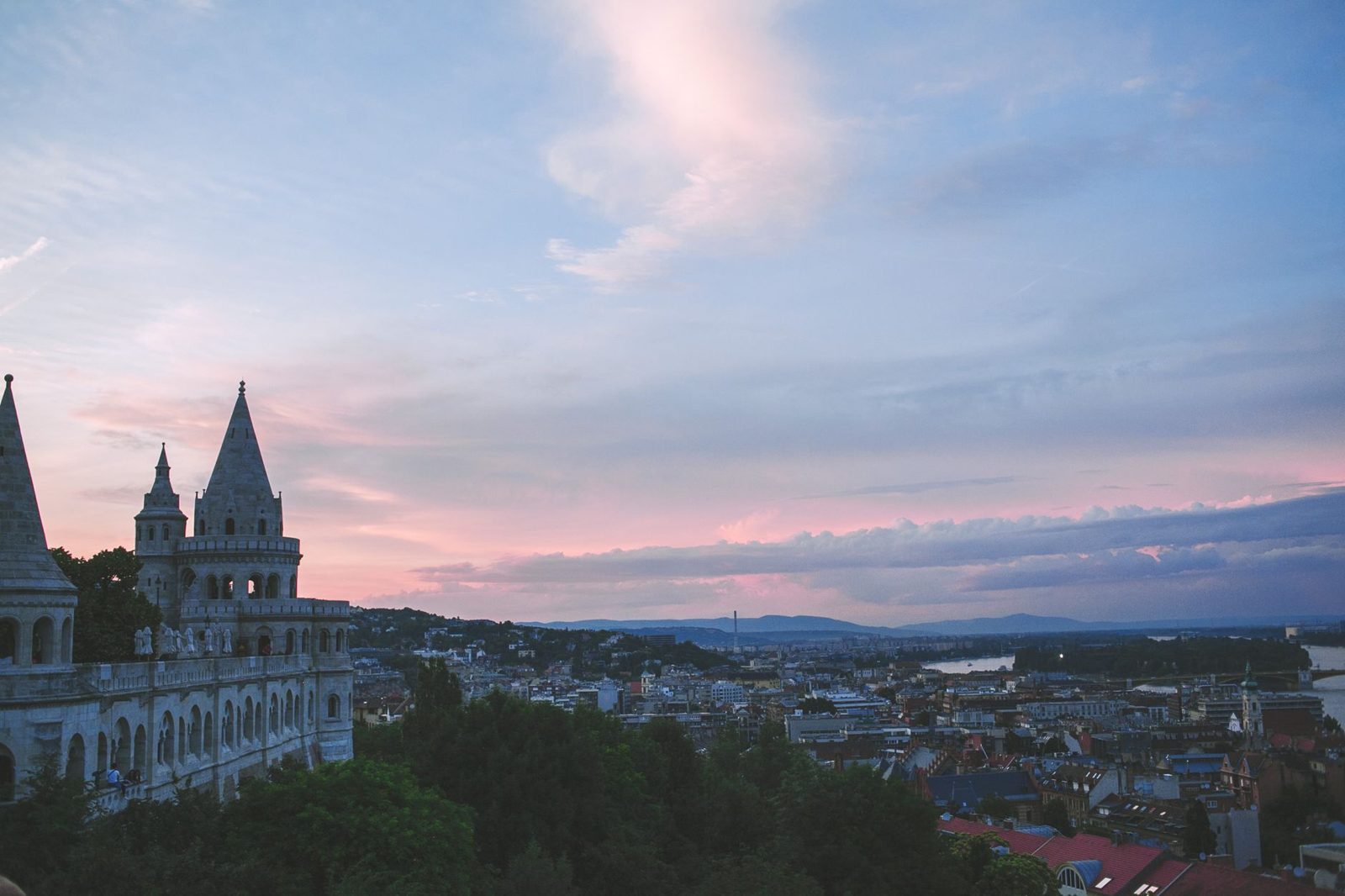
If you only photograph one thing on Castle Hill, make it the Halászbástya. Those white neo-Romanesque turrets framing the Parliament across the river are the image most people picture when they think of the city. The catch is the crowds and, on the very top terraces, a ticket. In 2026 the upper towers cost 1,700 HUF (around four euros), with half-price for students and EU seniors, and free entry for children under six.
Here is the trick I tell everyone: the lower balconies and the connecting staircases are free, and they give you almost the same sweeping arches. Better still, the whole monument becomes free to enter in the evenings — after 7pm from October to May, and after 9pm in high summer. Arrive for sunrise, though, and you will often have the place nearly to yourself with soft light hitting the turrets. That combination of empty frames and warm light is rare in any major city.
The Hungarian Parliament from the Buda side
The Parliament building is best photographed from across the water, not up close. My favourite vantage point is the embankment near Batthyány tér on the Buda bank, where the metro and the HÉV suburban train meet. From there the entire neo-Gothic facade sits mirrored in the river at dusk, and the blue-hour window — roughly twenty minutes after the floodlights switch on but before the sky goes black — is pure magic. Bring a tripod; handheld will not cut it once the light drops.
For something different, the viewing terrace at the top of the Buda hills gives you the Parliament as one element in a wider cityscape. But the river-level reflection shot is the one that earns the likes.
The Chain Bridge and its lions
The Széchenyi Chain Bridge reopened in August 2023 after a long renovation, and it is now permanently closed to private cars — only buses, taxis, cyclists and pedestrians cross it. For photographers this is a gift. You can walk to the middle of the bridge with far less traffic stress, shoot the stone lions at either end, and frame Buda Castle rising behind the suspension chains. At night the bridge is strung with lights that reflect off the water in long golden ribbons.

St Stephen’s Basilica and the Zrínyi utca alignment
Most people photograph the Basilica head-on from Szent István tér, and that is a fine, symmetrical shot. The image that stops scrollers, though, is taken from Zrínyi utca, the pedestrian street running straight at the dome. Stand at the far end, frame the street furniture and diners along the sides, and let the great dome anchor the top of your composition. Early morning means no crowds and clean light down the canyon of buildings.
For an aerial-style cityscape, climb to the Basilica’s panorama terrace at 65 metres — the highest accessible viewpoint in the centre. There is a lift if you would rather skip the 364 steps, and a 360-degree walkway that is wonderful at sunset.
Gellért Hill and the Citadella view
The single best overall view of the city is from Gellért Hill, the rocky outcrop crowned by the Liberty Statue. From the terraces below the Citadella you see the whole sweep of the Danube, every bridge lined up like beads on a string. It is a steep fifteen-to-twenty-minute climb from the Buda end of Elizabeth Bridge, and worth every breath. The Citadella fortress itself has been under long-running renovation, so check what is fenced off before you go, but the viewpoints on the hillside remain open and free.

Buda Castle and Várkert Bazár
The Royal Palace looks grand from the Pest embankment, but my favourite angle is from the restored Várkert Bazár gardens at the foot of the hill. The neo-Renaissance terraces, fountains and staircases make a gorgeous foreground, and the funicular cars climbing behind them add a sense of motion. Go in late afternoon when the western sun warms the pale stone.

The lesser-known frames worth your time
Beyond the headline sights, a handful of spots reward photographers who wander. These are the ones I send friends to when they want images that do not look like everyone else’s feed.
- Vajdahunyad Castle in City Park — a fairy-tale mash-up of architectural styles, stunning reflected in the boating lake (an ice rink in winter).
- Metro Line 1 (M1) — the continent’s oldest electric underground, with tiled retro stations like Vörösmarty tér that feel frozen in 1896.
- New York Café — arguably the most ornate café interior in Europe; go at opening to beat the queue and shoot the gilded ceilings.
- Szimpla Kert — the original ruin bar, a riot of mismatched junk and graffiti that photographs beautifully in the quiet of early afternoon.
- Heroes’ Square at dawn — vast, empty, and dramatic before the tour buses arrive.
- The Shoes on the Danube Bank — a sombre, moving memorial best shot with restraint and respect.
- Street art around District VII — the Jewish Quarter’s firewalls are covered in huge, colourful murals.
Széchenyi Baths from above
The mustard-yellow neo-baroque palace of the Széchenyi thermal baths is one of the most recognisable images of the city, especially the steaming outdoor pools in winter with bathers playing chess in the water. You cannot bring a drone over it, but the surrounding City Park gives you elevated angles, and a wide lens at the pool edge (waterproofing your kit) captures the scale. If you want the bath experience itself, my full guide to Széchenyi Baths covers tickets and the best times to go.
When to shoot: light through the year
Budapest’s light changes dramatically by season, and timing your shoot matters as much as choosing the location. The table below sums up how I plan a typical day of shooting around the best conditions for each marquee spot.
| Location | Best time | Free to shoot? | Nearest transport |
|---|---|---|---|
| Fisherman’s Bastion | Sunrise / after-hours evening | Lower terraces yes; towers 1,700 HUF | Bus 16 to Szentháromság tér |
| Parliament (from Buda) | Blue hour (post-sunset) | Yes | M2 Batthyány tér |
| Chain Bridge | Night | Yes | M1 Vörösmarty tér |
| St Stephen’s Basilica dome | Sunset | Terrace ~2,200 HUF | M3 Arany János utca |
| Gellért Hill | Golden hour, late afternoon | Yes | Tram 19/41 to Szent Gellért tér |
| Vajdahunyad Castle | Morning, calm water | Yes | M1 Széchenyi fürdő |
Summer gives you long, soft evenings but harsh midday sun and big crowds. Winter is my secret weapon: a dusting of snow on the bridges, steaming thermal pools, and Christmas markets glowing on Vörösmarty tér. Spring and autumn split the difference, with golden foliage in City Park and far fewer tour groups.
Blue hour is your best friend
If you take one thing from this guide, let it be this: the twenty minutes after sunset, when the artificial lights are on but the sky still holds deep blue, is when Budapest looks its absolute best. The floodlit monuments balance perfectly against the sky, the river turns to liquid gold and sapphire, and you avoid the flat black backdrop that ruins so many night shots. Scout your composition in daylight, set up early, and wait.
Practical tips from someone who has made the mistakes
A tripod is non-negotiable for the night and blue-hour work that makes this city sing, but be aware that some interiors and the upper Bastion terraces can be funny about full-size tripods in peak hours — a compact travel tripod draws less attention. Public transport runs late and the night buses are reliable, so you can chase blue hour at the Parliament and still get back across the river easily.
Watch your gear in the busiest tourist crush around the Castle and Váci utca, keep a lens cloth handy for the river spray off the embankments, and always treat memorials and places of worship with the quiet respect they deserve. For more offbeat locations away from the crowds, my roundup of Budapest’s hidden gems pairs nicely with a camera, and if you are building a wider sightseeing plan, start from the complete things-to-do-in-Budapest guide.
Getting between the spots
You can walk most of the central photography spots in a single long day, but the climbs to Castle Hill and Gellért Hill add up. The riverside trams — lines 2 on the Pest side and 19/41 on the Buda side — are themselves scenic, gliding right along the Danube past most of the landmarks. A 24-hour travelcard at 2,750 HUF pays for itself quickly if you are zigzagging across the bridges. Speaking of which, the spans themselves are subjects worth a morning; see my guide to Budapest’s bridges for the best crossings to shoot.
Rooftop bars for the easy cityscape
Not every great shot demands a pre-dawn climb. Budapest has a growing crop of rooftop bars that hand you an elevated skyline with a drink in your other hand. The 360 Bar above Andrássy Avenue gives a clean sweep over the Basilica dome and the Pest rooftops, while the High Note SkyBar at the Aria Hotel sits almost level with the Basilica’s twin towers — the closest thing to a free aerial of the church you will find. Go for the last hour of daylight, order something, and shoot the city sliding into blue hour from a railing rather than a tripod leg.
Margaret Island and the northern bridges
Most visitors never point a lens north of the Parliament, which is exactly why I like it up there. Margaret Bridge bends in the middle to meet Margaret Island, and from its pavements you get a cleaner, less photographed angle on the Parliament’s river facade. The island itself — car-free, leafy, with a musical fountain — is lovely in soft morning light, and the walk back south along the Pest embankment delivers the whole skyline in sequence. It is a calm, crowd-free way to end a shooting session that most camera-toting tourists miss entirely.
What I actually carry
You do not need a bag full of glass to shoot Budapest well. After years of lugging too much, my kit has shrunk to a body, two lenses and the few things that genuinely change my keeper rate. A phone with a good night mode will get you surprisingly far on the bridges, so do not feel locked out if you are travelling light.
- A wide zoom (think 16–35mm equivalent) for the bastion arches, river panoramas and tight street alignments.
- A short telephoto to compress the bridges and pull the Parliament closer from across the water.
- A compact travel tripod — small enough not to attract attention, sturdy enough for blue-hour exposures.
- A polariser and a lens cloth for cutting river glare and wiping off Danube spray.
- Spare batteries — cold winter mornings drain them fast, and you do not want to die mid-blue-hour.
The Bastion earns its place at the top of this list, but only at the right hour — and the ticket situation there is more forgiving than most people realise. Our Fisherman’s Bastion guide has the seasonal charging window, the four positions worth standing in, and why sunrise beats sunset on this particular terrace.
The Zrínyi utca sightline is the famous shot, but the panorama terrace at the top of the dome is the one that gives you Pest from the inside out rather than from a Buda hill. Our St Stephen’s Basilica guide has the terrace hours, the lift-versus-stairs question and the hour to aim for.
Now that the bridge is car-free you can stand on it, which makes the four positions worth knowing rather more useful than they used to be. Our Chain Bridge guide sets them out, along with the blue-hour timing that beats full darkness.
Frequently asked questions
What is the most photographed spot in Budapest?
Fisherman’s Bastion, with the Parliament framed through its white turrets, is the single most photographed view. For the reverse — the Parliament itself — the Buda embankment near Batthyány tér is the classic vantage point.
Do I need a permit to use a tripod?
For general outdoor photography on the streets, bridges and public terraces, no permit is required for personal use. Some museum interiors, churches and the upper Bastion towers restrict tripods or flash, and any commercial shoot needs permission. For personal travel photos you are free to shoot almost everywhere outdoors.
When is the best time of day for photos in Budapest?
Blue hour — the twenty minutes after sunset — is unbeatable for the floodlit riverfront. Sunrise is best for crowd-free shots of Fisherman’s Bastion and Heroes’ Square. Avoid harsh midday sun for the pale stone landmarks.
Are drones allowed in Budapest?
Drone use in the city centre is heavily restricted and effectively banned over most landmarks and crowds without special authorisation. Do not plan on flying one over the river or the Castle district; rely on elevated viewpoints like Gellért Hill instead.
Can I photograph inside the thermal baths?
Photography rules vary by bath and are tightened to protect other guests’ privacy. Discreet phone shots of the architecture are usually tolerated when the pools are quiet, but always ask staff and never photograph other bathers.
Two more leads for photographers. Our Budapest sunset guide times the golden hour across twelve viewpoints, and if facades are your thing, the Art Nouveau walking route strings together the city’s most photogenic tilework.
Last updated June 2026. Photos: Maria Orlova (Pexels); János Csatlós (Pexels); musicFactory lehmannsound (Pexels); K (Pexels).