Bratislava from Budapest: Best Two Capitals in One Day (2026)
How to do a Bratislava day trip from Budapest in 2026: trains and buses, the Old Town, castle, St Martin's Cathedral and the Blue Church.
In this guide
- Why bother leaving Budapest for Bratislava?
- Getting from Budapest to Bratislava
- The Old Town
- Bratislava Castle
- St Martin’s Cathedral: the Hungarian coronation church
- The Blue Church
- The UFO Bridge and observation deck
- Devín Castle, if you have time
- Money, language and border practicalities
- A suggested one-day plan
- Practical tips
- Frequently asked questions
This article contains advertising. Our booking links are routed through a partner that adds commission tracking automatically, so if you book through one we earn a commission from the provider, at no extra cost to you. It never affects what we recommend. Affiliate disclosure
Here’s something that surprises a lot of visitors: you can have breakfast in Budapest and lunch in another country’s capital without it feeling like a trek. Bratislava sits barely 160 kilometres up the Danube, and the two cities are bound together by more history than most people realise. For three centuries the Slovak capital — Pozsony, as Hungarians still call it — was the capital of the Kingdom of Hungary, and eleven Hungarian kings and queens were crowned in its cathedral. A Bratislava day trip from Budapest is partly a trip into your host country’s own past.
It’s also just a lovely, walkable little city: a compact pastel Old Town under a square white castle, a riverside studded with quirky statues, and one of Central Europe’s most photogenic churches. You won’t need more than a day to see the heart of it. Here’s how to do the trip in 2026.
Why bother leaving Budapest for Bratislava?
Fair question — Budapest has plenty to keep you busy. But Bratislava offers a genuinely different flavour: smaller, quieter, more Austro-Slovak than Hungarian, and easy to cover on foot in an afternoon. The Old Town is a toy-box of baroque palaces and cobbled lanes; the castle gives you a sweeping Danube panorama; and because Slovakia uses the euro while Hungary keeps the forint, even the money in your pocket reminds you you’ve crossed a border. For travellers doing a Central European loop, it also sits exactly halfway to Vienna, which opens up some neat combinations.
Getting from Budapest to Bratislava
The train is the obvious choice. Direct EuroCity services run roughly every two hours and take about two and a half to two and three-quarter hours, gliding up the Danube the whole way. They leave from Budapest Keleti, with the first useful departure around 5:25am and the last direct return in the early evening — check the exact timetable, because the last train back is the thing that defines your day. Booked ahead through MÁV or ÖBB, fares can be astonishingly cheap, often in the €10–15 range each way; walk-up prices are higher.
Buses are the budget alternative. RegioJet and Flixbus coaches leave from Népliget bus station and undercut the train on price, sometimes dramatically, for a similar two-and-a-half to three-hour ride. There’s also a seasonal hydrofoil that runs the Danube between the two cities, but it’s slow and weather-dependent — romantic in theory, impractical for a day trip. For most people, the train wins on comfort and speed.
| Option | Journey time | Rough one-way cost | Departs |
|---|---|---|---|
| EuroCity train | ~2h25–2h45 | €10–15 (advance) | Budapest Keleti |
| RegioJet / Flixbus | ~2.5–3 hours | €8–14 | Népliget |
| Danube hydrofoil (seasonal) | 4+ hours | €€ | Riverside pier |
Whichever you choose, book the early outbound and confirm your return time first. As with all the region’s escapes, a little timetable discipline turns a stressful dash into a relaxed day; our overview of day trips from Budapest has more on planning the logistics.
The Old Town
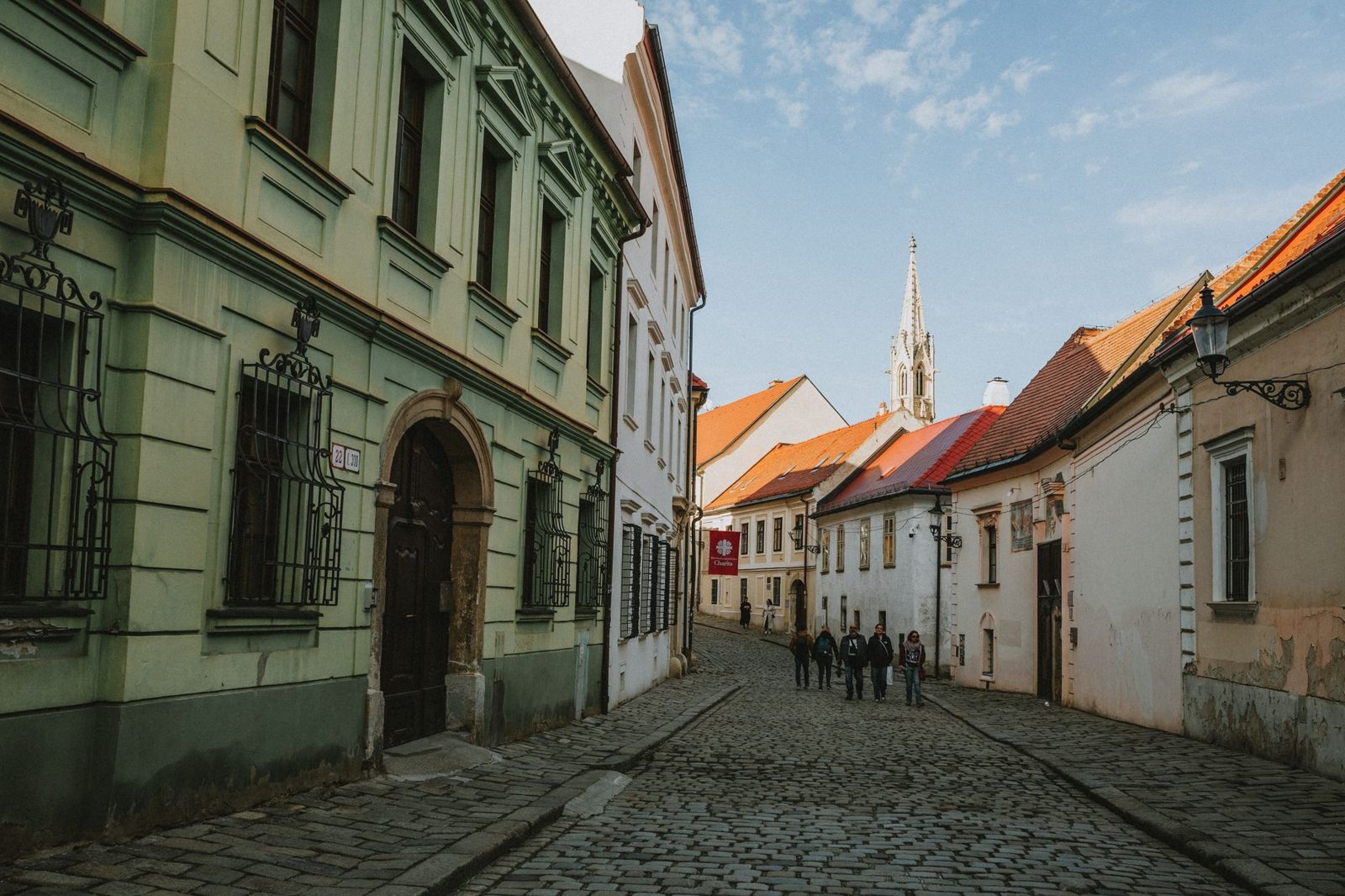
Everything you’ll want to see clusters in or just around the Old Town (Staré Mesto), and from the main station it’s a short tram ride or a 20-minute downhill walk to reach it. The heart is the Main Square (Hlavné námestie), ringed by pastel facades, the old town hall and pavement cafés, with the Roland Fountain in the middle. Radiating off it are lanes of palaces, churches and shopfronts you can happily get lost in for an hour.
Look for Michael’s Gate (Michalská brána), the last surviving medieval city gate, its green tower closing off a pedestrian street that’s the prettiest stretch in town. And keep an eye on the pavement: Bratislava is famous for its cheeky bronze statues, the most photographed being Čumil, “the watcher,” a workman peeking out of a manhole, plus a top-hatted dandy and a leaning Napoleonic soldier.
Bratislava Castle
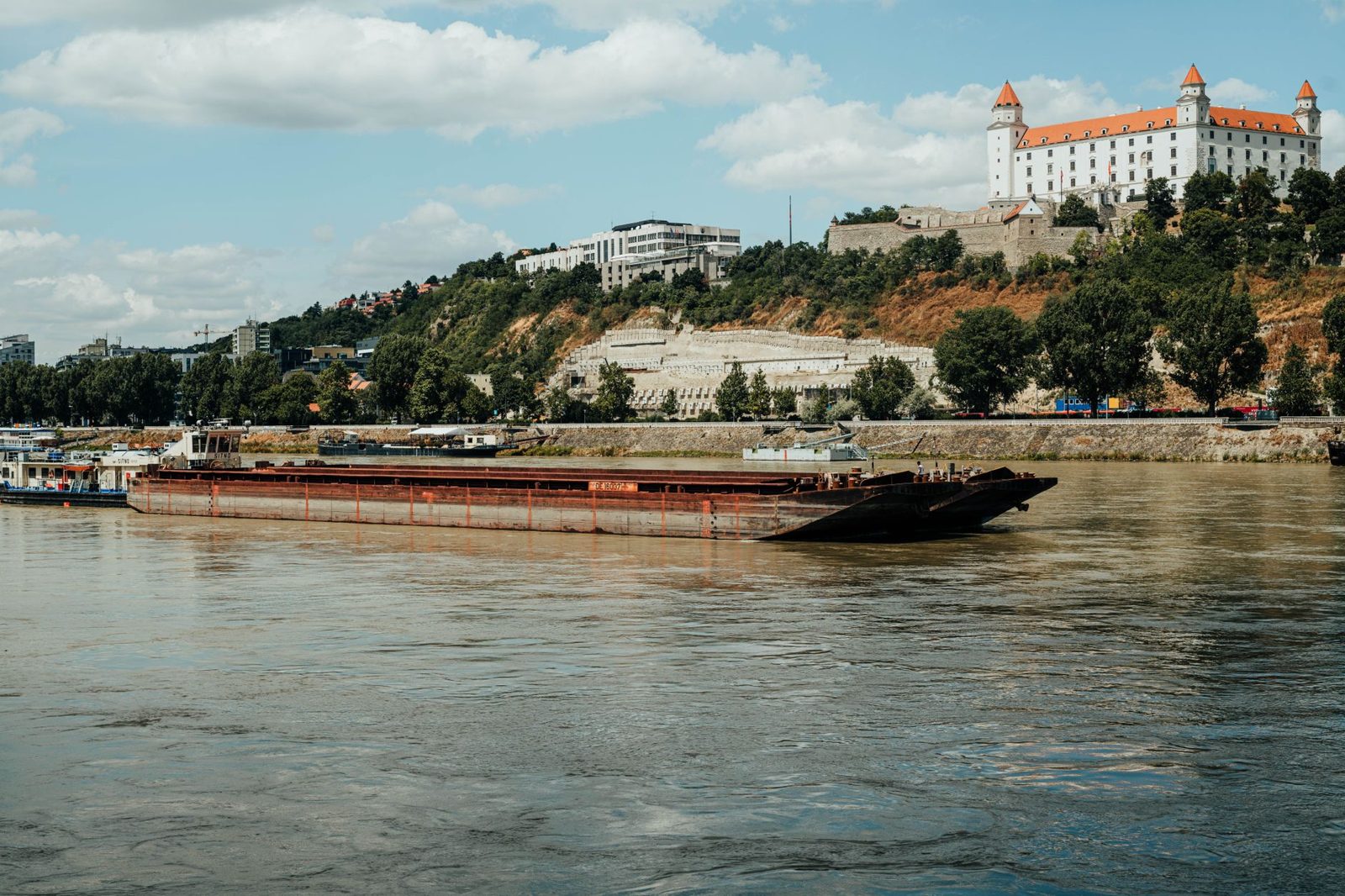
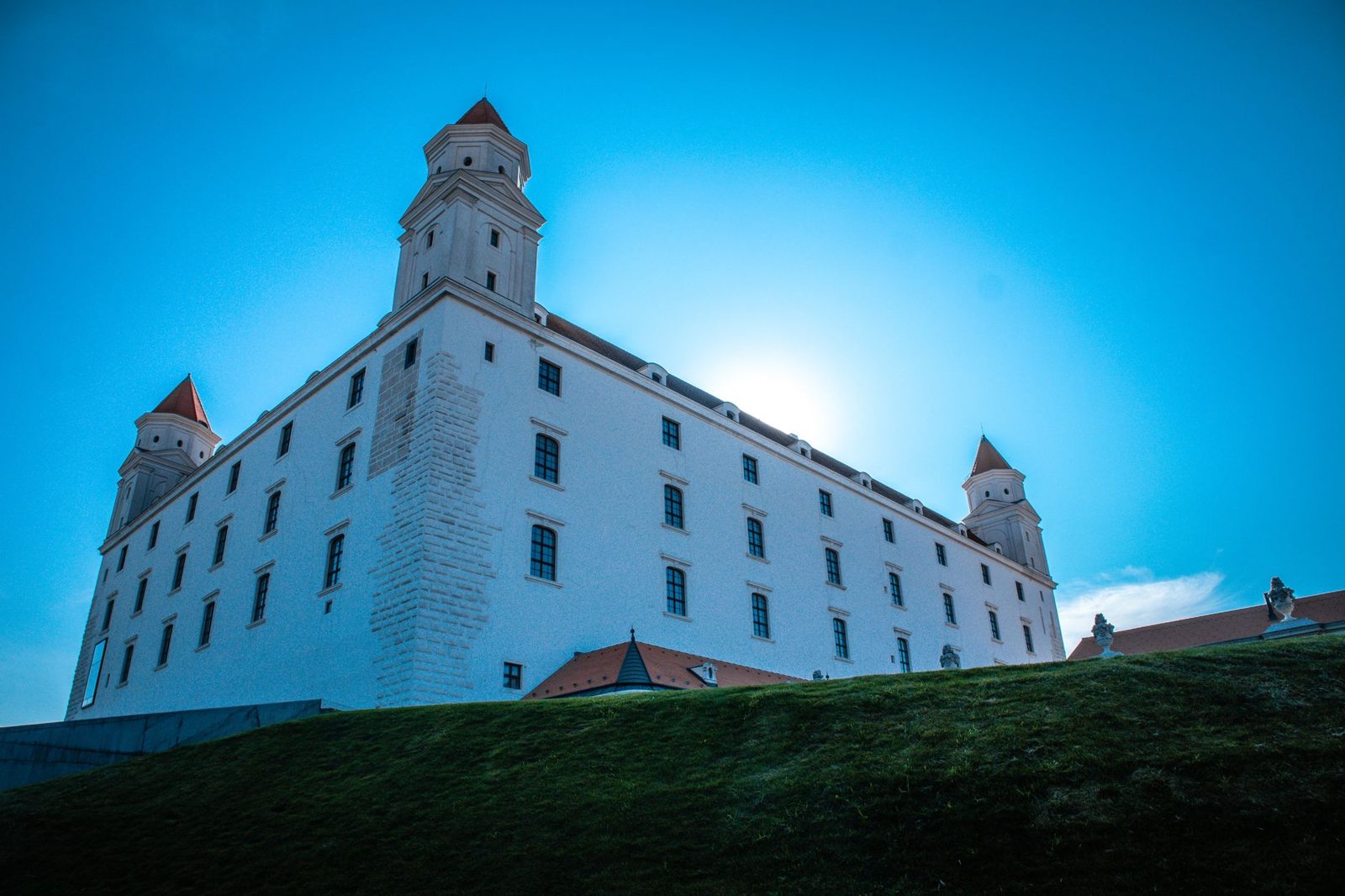
The big white box on the hill is Bratislava Castle, and the climb up is repaid with the best view in the city: the Danube curling below, the saucer-shaped UFO Bridge to one side, and the sea of communist-era housing blocks of Petržalka beyond. The current castle is a reconstruction of the baroque palace that burned in 1811, and inside it houses the Slovak National Museum’s history collections. Even if you skip the interior, the restored baroque gardens and the terraces are free to wander and worth the walk.
St Martin’s Cathedral: the Hungarian coronation church
For anyone visiting from Budapest, St Martin’s Cathedral is the most resonant building in the city. When the Ottomans occupied central Hungary, Pozsony became the kingdom’s capital, and from 1563 to 1830 this Gothic church served as the coronation cathedral of the Kings of Hungary — eleven monarchs and several queens, including Maria Theresa, were crowned beneath its vaults. A gilded replica of the Hungarian crown still tops the steeple. It’s a quiet, moving place to stand if you’ve spent the previous days in the Hungarian capital. To put the wider story in context, our guide to Budapest’s history and culture traces the same threads back home.
The Blue Church
A ten-minute walk east of the Old Town stands the building that launches a thousand Instagram posts: the Church of St Elizabeth, universally known as the Blue Church. Powder-blue inside and out, with mosaic trim and rounded Art Nouveau curves, it looks like it was iced rather than built. Here’s the Budapest connection again — it was designed by Ödön Lechner, the same Hungarian architect behind Budapest’s Museum of Applied Arts, so its swooping “Hungarian Secession” style will feel familiar. It’s small and often only open around services, so admire the exterior and peek in if the doors are open.
The UFO Bridge and observation deck
Spanning the Danube is the SNP Bridge, better known as the UFO Bridge for the flying-saucer-shaped pod perched atop its single pylon. Up top there’s a restaurant and an open-air observation deck reached by a lift inside the leg of the bridge; the panorama back over the castle and Old Town is superb, and at sunset it’s magic. There’s an entry fee for the deck (waived if you’re dining), so weigh it against the free view from the castle.
Devín Castle, if you have time
If you arrive early and move briskly, you can add Devín Castle, a dramatic cliff-top ruin about ten kilometres west where the Morava river meets the Danube. Dating in parts to the 9th century, it’s one of Slovakia’s most important archaeological sites and a stirring spot, perched right on what was once the Iron Curtain frontier. Reach it by city bus 29 or, in season, by boat along the river. Realistically it’s a stretch on a single day trip from Budapest, so save it for a longer stay or a Bratislava overnight.
Money, language and border practicalities
Slovakia is in both the EU and the Schengen and Eurozone, so there are no border checks on the train and you’ll pay in euros, not forints — handy to remember when you’re budgeting. Bring a card; contactless is universal. Slovak is the language, but English and German get you a long way in the centre, and many older locals speak some Hungarian. Because you’re swapping currencies for the day, it’s worth reading up on the money situation in Budapest so you’re not caught out converting leftover forints.
A suggested one-day plan
Take the early train and you’ll be in Bratislava mid-morning. Walk into the Old Town, do a slow loop of the Main Square, Michael’s Gate and the lanes, hunting down the bronze statues as you go. Climb to the castle before lunch for the view and the gardens, then come back down to eat in the Old Town. In the afternoon, walk out to the Blue Church and, if you fancy the panorama, ride up the UFO Bridge. That leaves you a relaxed coffee before the late-afternoon or early-evening train home. It’s an easy, satisfying day that never feels rushed.
Practical tips
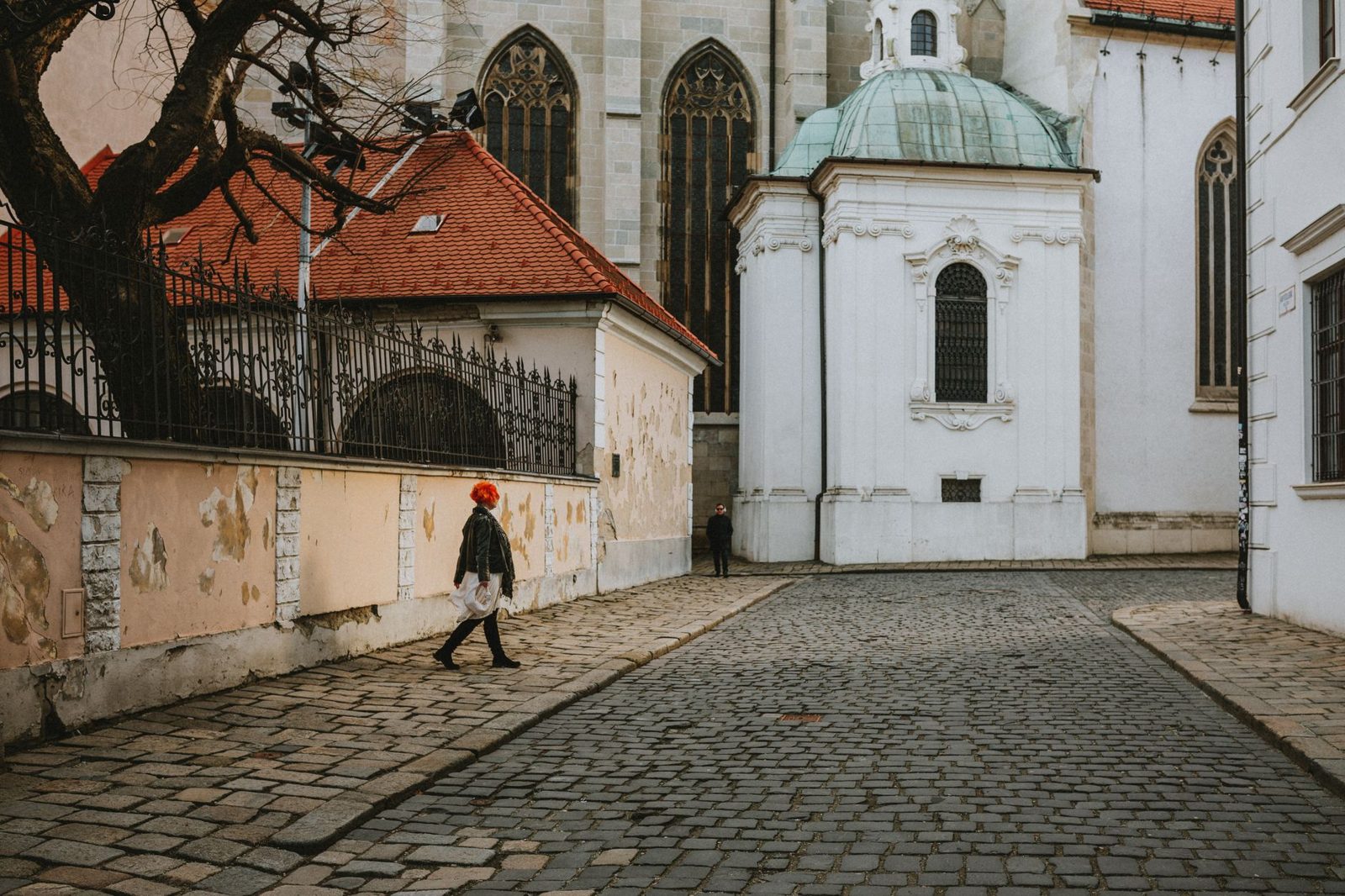
Wear comfortable shoes — the castle hill and the Old Town cobbles add up. Most sights are cheap or free by Budapest standards, but the castle interior and UFO deck both charge, so decide in advance what you actually want to pay for. Bratislava is very safe and easy to navigate on foot, so you won’t need public transport much beyond the walk in from the station. And if you’re weighing Bratislava against the alternatives, it pairs naturally with a Vienna day trip on a longer itinerary, while closer to home the wine town of Eger and the riverside artists’ colony of Szentendre make gentler half-day outings.
Frequently asked questions
Is Bratislava worth a day trip from Budapest?
Yes. It’s a compact, walkable capital with a pretty Old Town, a hilltop castle with great Danube views and strong historical ties to Hungary — its cathedral was where Hungarian kings were crowned. A single day comfortably covers the centre, the castle and the Blue Church without feeling rushed.
How long is the train from Budapest to Bratislava?
Direct EuroCity trains take about two and a half to two and three-quarter hours and run roughly every two hours from Budapest Keleti. Booked in advance, fares are often only €10–15 each way. Buses from Népliget take a little longer but can be even cheaper.
Do I need euros or forints in Bratislava?
Euros. Slovakia is in the Eurozone, so you’ll pay in euros, not Hungarian forints. Cards and contactless work everywhere, so you don’t need much cash, but don’t expect to spend leftover forints there.
Do I need my passport to go from Budapest to Bratislava?
Both countries are in the Schengen Area, so there are normally no routine border checks on the train. You should still carry your passport or national ID card, as it can be requested and you’ll want it for hotels and any spot checks.
Can you visit both Bratislava and Vienna in one trip?
Easily, on a longer itinerary — Bratislava and Vienna are only about an hour apart by train or boat. As a single day trip from Budapest, though, pick one; trying to do both in a day from the Hungarian capital leaves you spending most of it in transit.
Last updated June 2026. Photos: Helena Jankovičová Kováčová (Pexels); Helena Jankovičová Kováčová (Pexels); Pham Ngoc Anh (Pexels); Helena Jankovičová Kováčová (Pexels).