Vienna from Budapest: Best Day Trip — Is It Worth It? (2026)
How to do a Vienna day trip from Budapest in 2026: the Railjet train, the imperial centre, Schonbrunn and Belvedere palaces, and a sample plan.
In this guide
- Is Vienna really doable in a day?
- Getting from Budapest to Vienna
- Pick your Vienna: imperial centre or grand palaces
- The historic centre
- Schönbrunn Palace
- The Belvedere and Klimt’s “The Kiss”
- Vienna’s coffee houses
- The Habsburg link: why this trip resonates from Budapest
- Money, tickets and transport
- A suggested one-day plan
- Practical tips
- Frequently asked questions
This article contains advertising. Our booking links are routed through a partner that adds commission tracking automatically, so if you book through one we earn a commission from the provider, at no extra cost to you. It never affects what we recommend. Affiliate disclosure
Budapest and Vienna are imperial twins. For half a century they were the joint capitals of Austria-Hungary, ruled by the same emperor, linked by the same Danube and a shared obsession with grand boulevards, coffee houses and Habsburg pomp. Spend a few days in Budapest and you’ll keep bumping into the Vienna connection — so it feels almost natural to hop on a train and go see the other half of the story. A Vienna day trip from Budapest is one of the easiest international excursions in Europe.
The catch is that Vienna is big and densely packed with world-class sights, far more than you can absorb in a day. The trick, exactly as with Budapest itself, is to choose a lane — imperial centre or grand palaces — and not try to gulp the whole city down at once. Here’s how I’d plan it for 2026, with current train details and ticket prices.
Is Vienna really doable in a day?
Yes — with discipline. The train gets you there in under two and a half hours, which leaves a solid six or seven hours on the ground. That’s enough to do the historic core properly, or to pair one great palace with a stroll through the centre. What it isn’t enough for is “all of Vienna.” If you find yourself listing Schönbrunn and the Belvedere and the Hofburg and the Naschmarkt and the Prater, stop — that’s a three-day list. Pick the version of Vienna you most want and save the rest for a return visit.
Getting from Budapest to Vienna
The Railjet is the star here. ÖBB’s sleek high-speed trains run the route six to eight times a day, taking roughly two hours twenty to two hours forty between Budapest Keleti and Vienna’s Hauptbahnhof. Book ahead on the ÖBB or MÁV site and the cheapest “Sparschiene” advance fares can be remarkably low — often under €20 each way — while walk-up tickets cost more. There are also some departures from Kelenföld, so check which station your specific train uses.
If you want to save a little more, RegioJet and Flixbus run coaches on the route too, though they’re slower and the time saving of the train is usually worth the few extra euros. As ever, the single most important thing is to lock in your return: confirm the last convenient train back to Budapest before you commit to your day, then build everything around it.
| Option | Journey time | Rough one-way cost | Frequency |
|---|---|---|---|
| Railjet (ÖBB) | ~2h20–2h40 | From ~€15–20 advance | 6–8 daily |
| RegioJet train | ~2.5–3 hours | From ~€10 | Several daily |
| Flixbus / coach | ~3 hours | €10–20 | Several daily |
For how this stacks up against the region’s other escapes — including its near neighbour across the border — see our overview of day trips from Budapest.
Pick your Vienna: imperial centre or grand palaces
Here’s the decision that shapes your day. Option one is the historic centre: St Stephen’s Cathedral, the sprawling Hofburg palace complex, the Ringstrasse boulevard and the coffee houses, all walkable from each other. Option two is the palaces: Schönbrunn out west and the Belvedere just south of the centre, both requiring a tram or metro hop and timed tickets. You can squeeze the centre plus one palace into a day if you move efficiently and book ahead, but doing both palaces and the centre is a recipe for a frazzled, queue-bound afternoon.
The historic centre
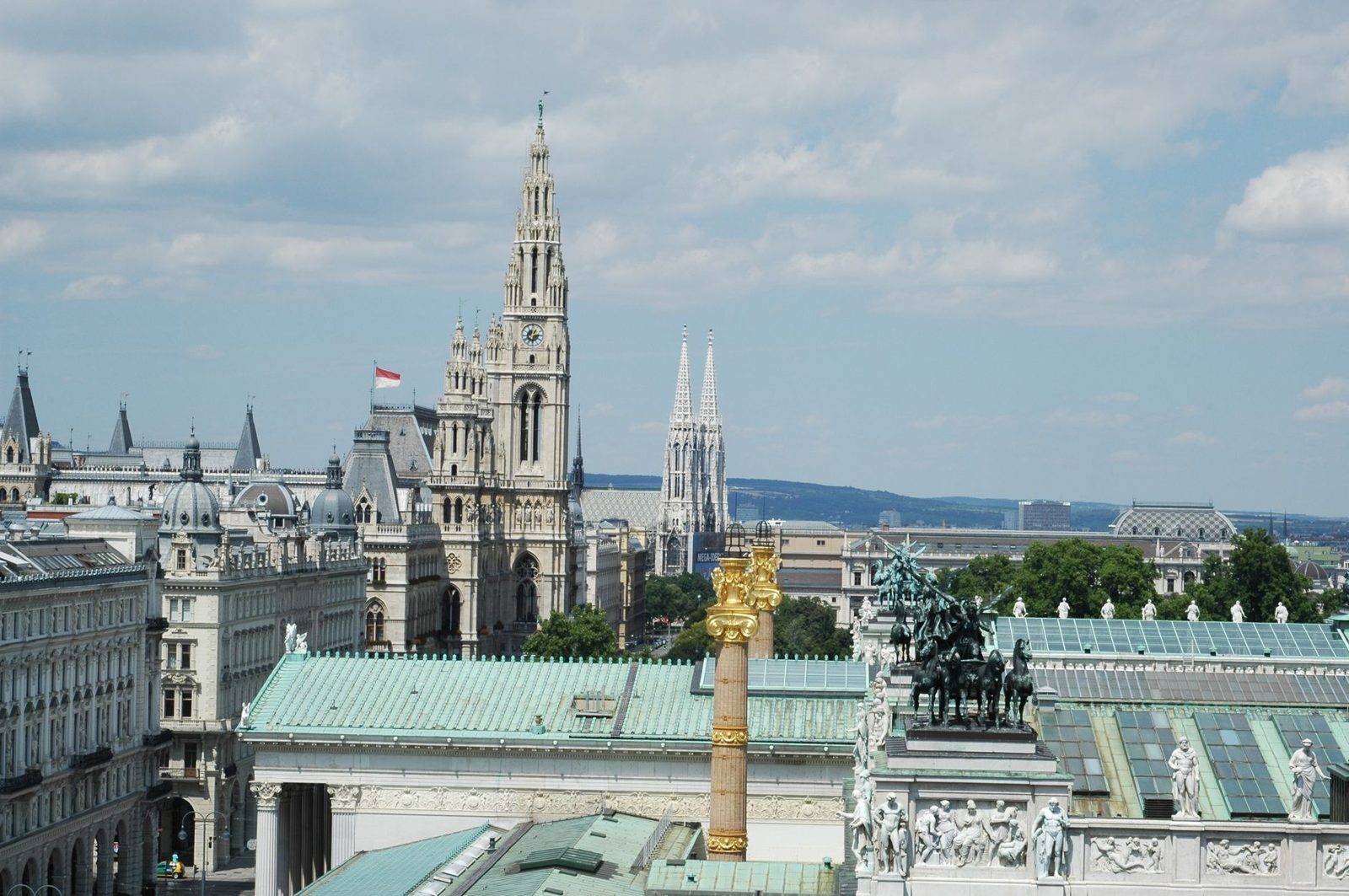
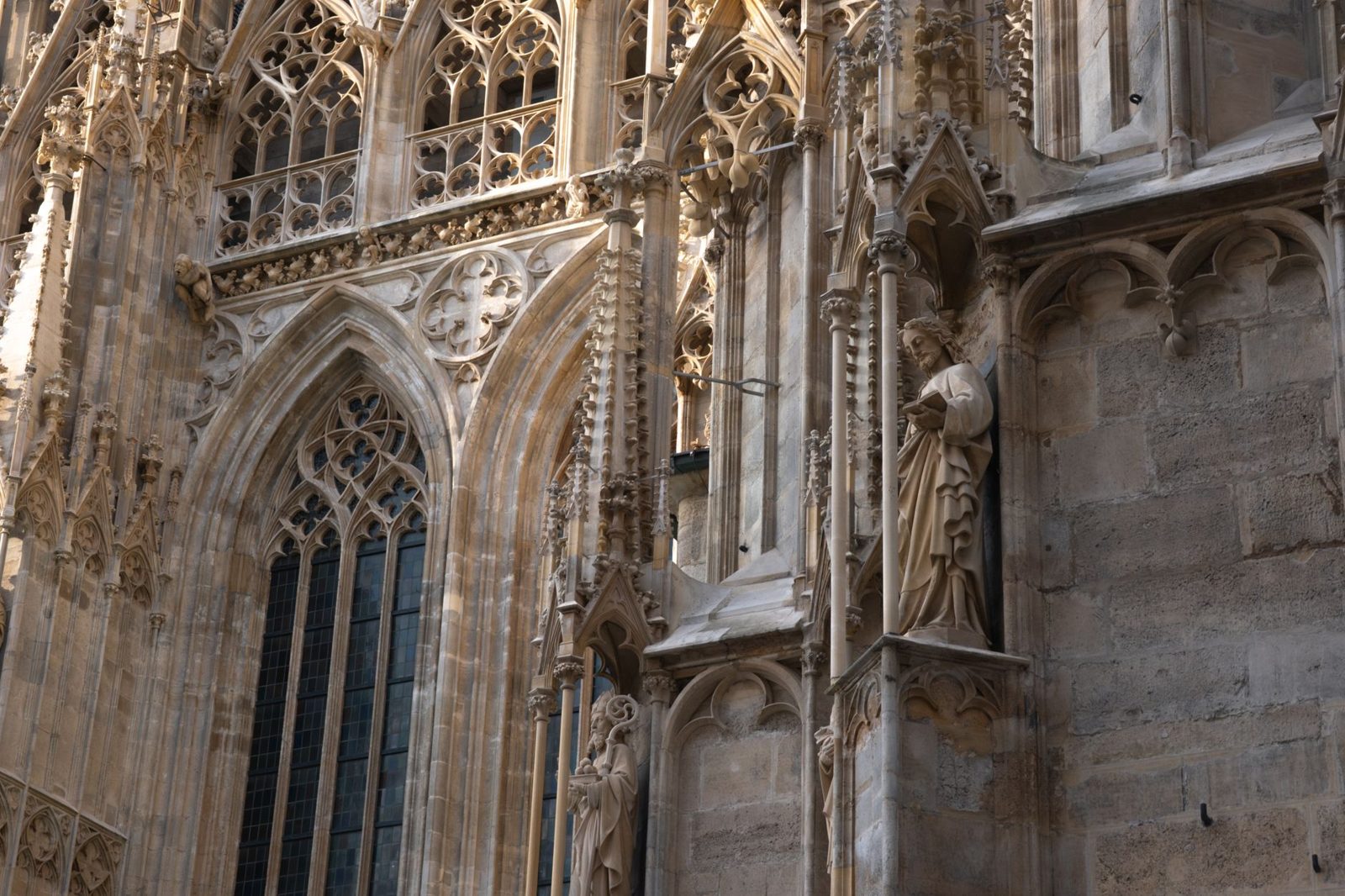
If it’s your first time, I’d lean towards the centre. Vienna’s old heart is compact and almost absurdly grand. The spire of St Stephen’s Cathedral (Stephansdom) marks the middle of it; the nave is free to enter, and for around €6 you can climb the south tower for a view over the tiled roof. From there it’s a short walk to the Hofburg, the winter palace of the Habsburgs, where the Imperial Apartments and the Sisi Museum (about €15) tell the story of Empress Elisabeth — a figure adored in Hungary. Loop the Ringstrasse to gawp at the Opera, the parliament, the twin museums and the city hall, and you’ve seen the imperial city at its most theatrical.
Schönbrunn Palace
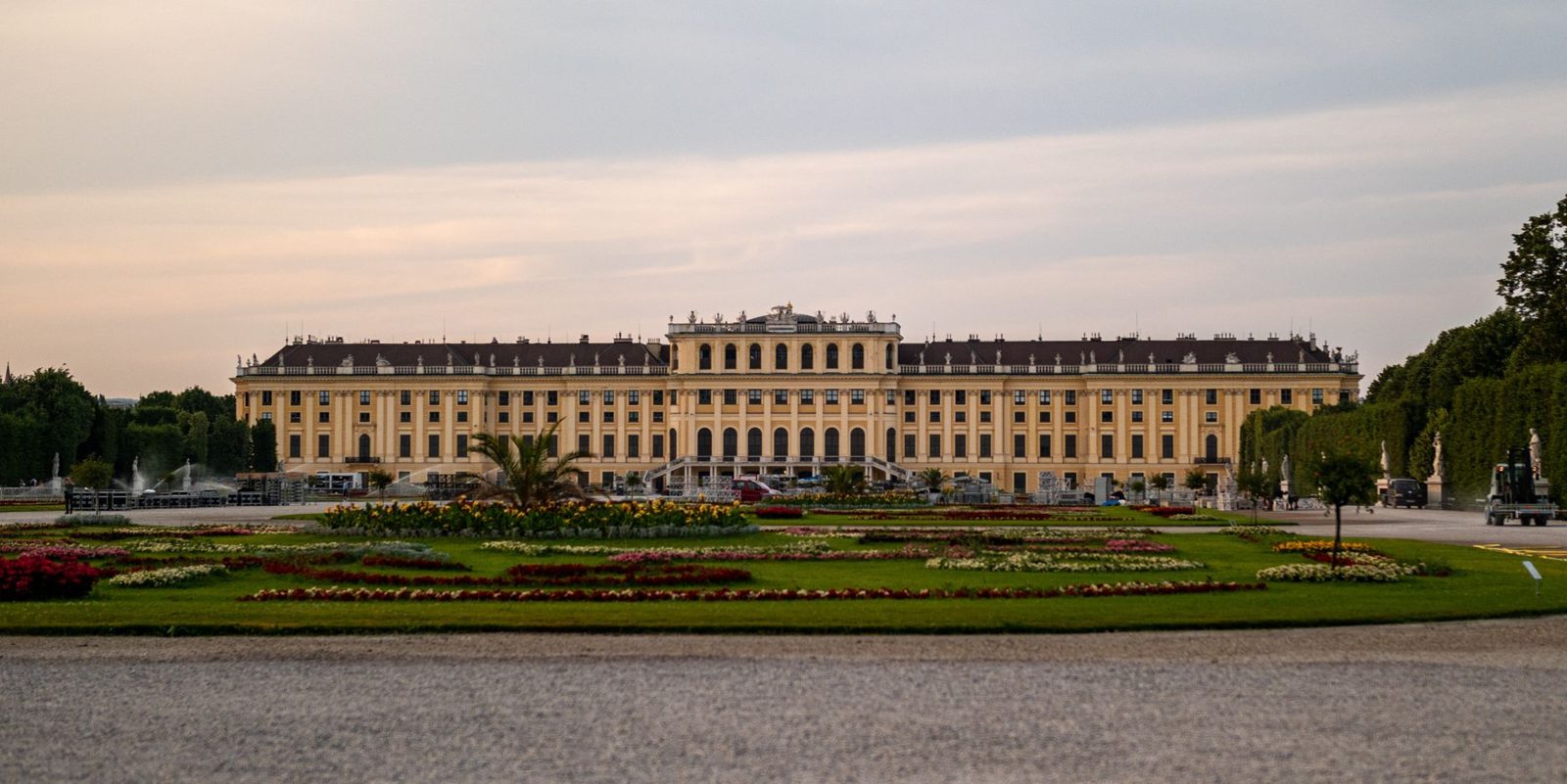
If you’d rather do one knockout palace, make it Schönbrunn, the Habsburgs’ summer residence on the city’s western edge — a Versailles-scale baroque pile with 1,400 rooms, formal gardens, a Gloriette folly on the hill and the oldest zoo in the world in its grounds. The Grand Tour of the interior runs around €20.50 (less with a Vienna City Card), and in 2026 timed online tickets are effectively mandatory because of the crowds, so book before you travel. The gardens themselves are free, so even a quick visit rewards you with that famous facade and a climb to the Gloriette for the view back over the city.
The Belvedere and Klimt’s “The Kiss”
The other palace worth your time is the Belvedere, an elegant baroque ensemble much closer to the centre. The Upper Belvedere (about €17) houses Austria’s greatest art collection, and the headline act is Gustav Klimt’s shimmering, gold-leafed “The Kiss” — one of those paintings that genuinely stops you in your tracks. If art is your thing and Schönbrunn feels too far, the Belvedere is the smarter palace choice for a tight day.
Vienna’s coffee houses
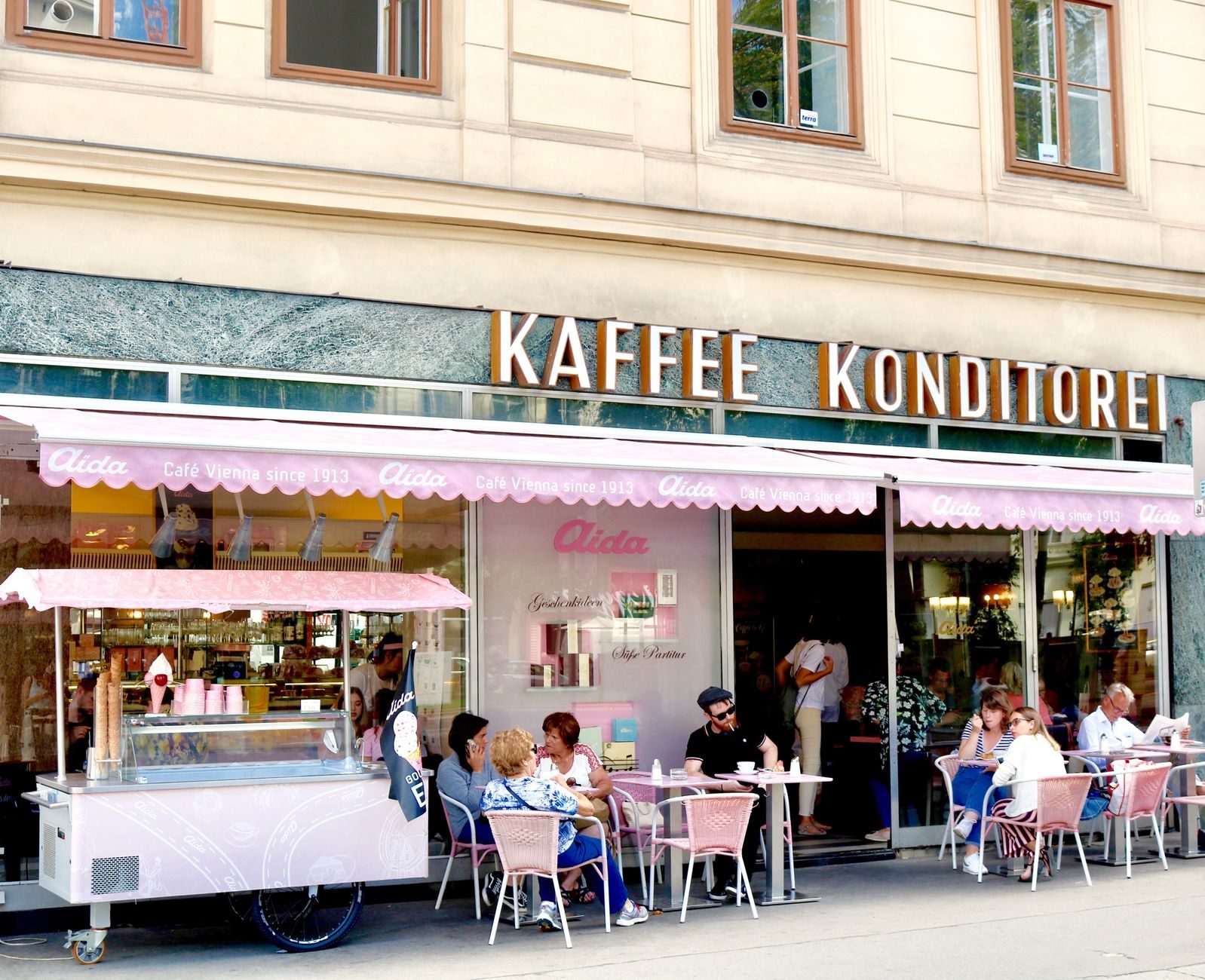
You cannot do Vienna justice without sitting in a coffee house, and frankly it’s the perfect antidote to a morning of sightseeing. The grand cafés — Central, Sacher, Demel, Landtmann — serve their coffee with a glass of water and a slab of cake, and the ritual is half the point. Order a melange (Vienna’s answer to the cappuccino) and a slice of Sachertorte, the dense chocolate-apricot cake invented at the Hotel Sacher, and linger. It’s a tradition Budapest shares — our guide to when to visit Budapest notes that café season here is wonderful too — but Vienna’s is the original imperial version.
The Habsburg link: why this trip resonates from Budapest
Part of what makes Vienna so rewarding as a side trip from Budapest is seeing the two halves of the old empire side by side. The 1867 Compromise created the dual monarchy of Austria-Hungary, with Franz Joseph crowned King of Hungary in Budapest and Emperor in Vienna. Empress Elisabeth — “Sisi” — adored Hungary and championed it at court, which is why she’s commemorated affectionately in both cities. If that history grabs you, our deep dive into Budapest’s history and culture covers the Hungarian side of the same story, and the contrast brings both cities into sharper focus.
Money, tickets and transport
Austria uses the euro, so as with a hop over to Slovakia you’ll be switching currencies for the day; cards and contactless are universal, so you barely need cash. If you’re doing two or three paid sights plus public transport, the Vienna City Card (from about €17 for 24 hours) can pay for itself with its transport pass and attraction discounts. Vienna’s U-Bahn, trams and buses are excellent and easy. Crucially, book your palace tickets online and timed in advance — turning up at Schönbrunn without one in peak season can mean a long wait or no entry at all. Since you’ll have leftover forints, it’s worth understanding the currency situation in Budapest before you go.
A suggested one-day plan
Take the early Railjet and you’ll be in central Vienna by mid-morning. Walk to St Stephen’s, climb the tower if you fancy it, then wander to the Hofburg for the Imperial Apartments and Sisi Museum. Break for a long café lunch with a slice of Sachertorte. In the afternoon, choose one big hitter — a timed Grand Tour of Schönbrunn (with a Gloriette view), or Klimt at the Belvedere — then loop back through the Ringstrasse to the station for the evening train home. You’ll be back in Budapest for a late dinner, having seen the imperial city’s greatest hits without melting down in a queue.
Practical tips
Wear good shoes; Vienna is a walking city and the distances between palaces are real. Build in buffer time at the station — Keleti can be busy — and have your tickets on your phone. If you’re travelling in summer, Schönbrunn and the Belvedere gardens are gorgeous but the interiors get hot and crowded, so aim for an early or late palace slot. And don’t over-program: Vienna rewards a slower pace, so it’s better to see three things well than seven things in a blur. To compare this with its neighbour, a Bratislava day trip is shorter and cheaper, while for a purely Hungarian outing the shores of Lake Balaton make a relaxed alternative.
If Prague is also on your route, the Budapest to Prague guide compares train, bus, flight and driving — and makes the case for routing through Vienna rather than skipping straight there.
If you’re moving on to Vienna rather than coming back the same evening, the Budapest to Vienna by train guide goes through the ticket side in detail: which operator is cheapest on a given day, why the RegioJets leave from Déli rather than Keleti, and when a seat reservation is worth the few euros.
Frequently asked questions
Is Vienna worth a day trip from Budapest?
Very much so. The two cities were joint capitals of Austria-Hungary, so a day in Vienna adds real context to your Budapest trip. With under two and a half hours’ travel each way, you can comfortably see the historic centre or pair it with one major palace — just don’t try to see everything in a single day.
How long is the train from Budapest to Vienna?
The ÖBB Railjet takes roughly two hours twenty to two hours forty between Budapest Keleti and Vienna Hauptbahnhof, with six to eight departures a day. Advance “Sparschiene” fares can be under €20 each way; buses are cheaper but slower.
What should I prioritise with only one day in Vienna?
Decide between the imperial centre (St Stephen’s Cathedral, the Hofburg and Sisi Museum, the Ringstrasse) and the palaces (Schönbrunn or the Belvedere). A realistic plan is the centre in the morning plus one timed palace in the afternoon, with a coffee-house break in between.
Do I need to book Vienna palace tickets in advance?
Yes, especially for Schönbrunn, where timed online tickets are effectively required in peak season due to crowd limits. Book the Belvedere ahead too. St Stephen’s nave is free and needs no booking, though the tower climb has a small fee.
Do they use euros in Vienna?
Yes — Austria is in the Eurozone, so you’ll pay in euros rather than Hungarian forints. Cards and contactless are accepted everywhere, so you won’t need much cash, and you can’t spend leftover forints there.
Last updated June 2026. Photos: Alfred Franz (Pexels); Talha Kılıç (Pexels); Bogdan Giurca (Pexels); Kate Weirick (Pexels).