Budapest to Prague: Train, Bus, Flight or Drive
Train, bus, flight or a rental car — all four genuinely work for Budapest to Prague. Journey times, prices, and a straight recommendation depending on what you're optimising for.
In this guide
This article contains advertising. Our booking links are routed through a partner that adds commission tracking automatically, so if you book through one we earn a commission from the provider, at no extra cost to you. It never affects what we recommend. Affiliate disclosure
Both cities sit inside the Schengen Area, so getting from Budapest to Prague means no passport check, no border stop, and no currency to plan around until you actually arrive — Czechia uses the koruna, not the euro, so budget an ATM withdrawal on arrival either way, and don’t expect leftover forints to be spendable once you’re across. Beyond that, the choice is a genuinely open one between four options that all work: a scenic but longish train, a cheaper and often faster bus, a short flight that rarely beats the door-to-door time of the ground options, and a solid day’s drive if a rental car is already part of your trip.
This guide compares all four on time, price and comfort, and gives a straight recommendation depending on what you’re optimising for. Prices and journey times were checked in September 2026 and move with demand and season, so treat the figures as the right order of magnitude and confirm exact fares before booking.
At a glance
| Method | Duration | Typical price | Best for |
|---|---|---|---|
| Train | ~7–8 hours | €14–30+ (RegioJet, České dráhy) | Comfort, scenery, no security queue |
| Bus | ~7–8 hours (some faster services) | €20–50, often cheapest booked early | Budget travel, most frequent departures |
| Flight | ~1 hour in the air | Varies widely; check current direct routes | Time-pressed trips, but rarely faster door-to-door |
| Drive | ~5h15m–6 hours | Fuel + tolls (both countries require a highway vignette) | Flexibility, side stops en route |
By train
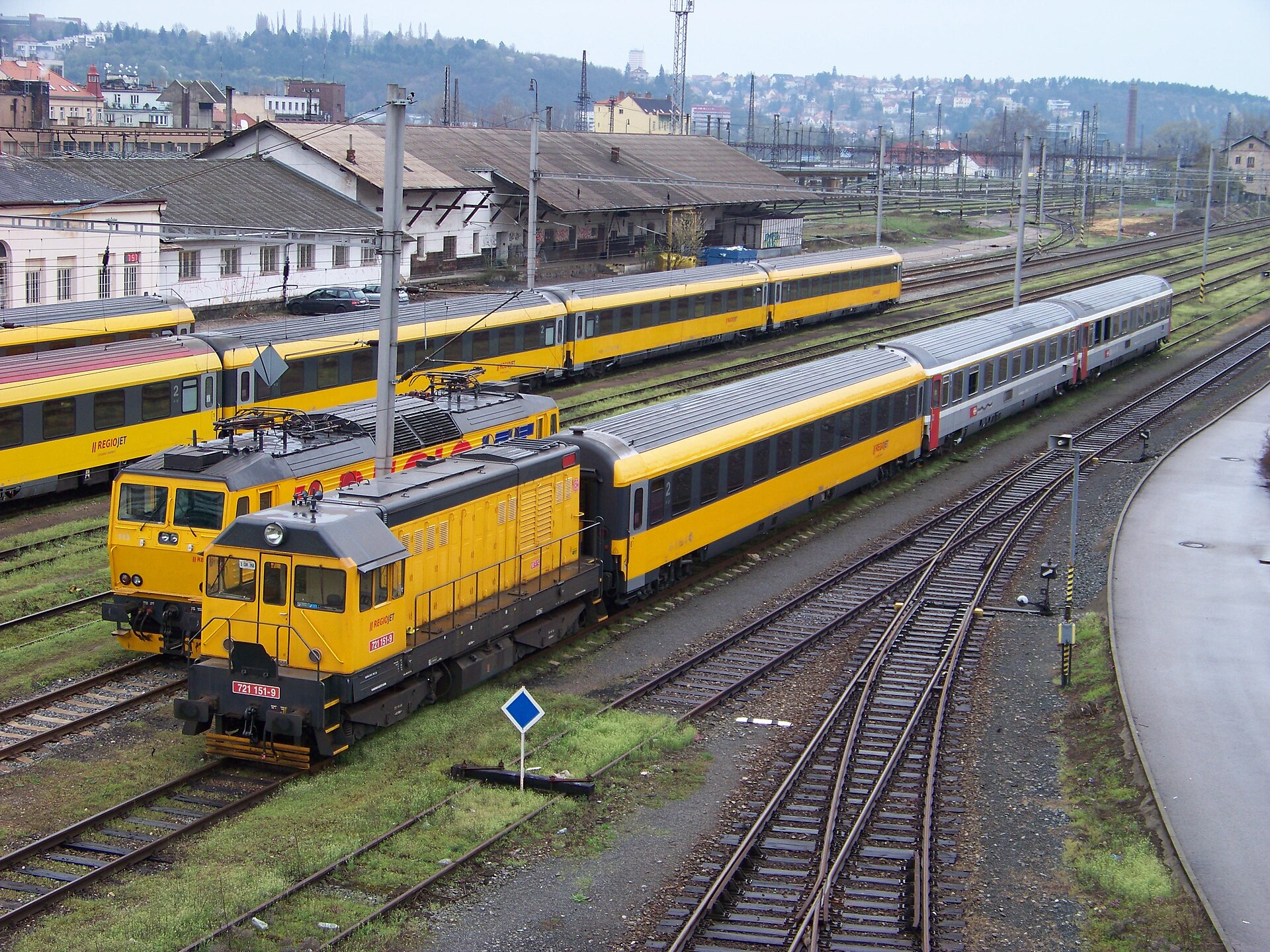
The direct train is the most relaxed option and the one that turns the journey itself into part of the trip rather than dead time to get through. RegioJet and České dráhy (Czech Railways) both run the route, typically taking around 7 to 8 hours depending on the specific service and how many stops it makes, with RegioJet’s faster departures shaving that down closer to 7 hours. Fares start from roughly €14–20 for an advance-purchase second-class seat and climb from there for first class or a closer-to-departure booking, with RegioJet in particular known for tiered pricing that rewards booking a few weeks ahead.
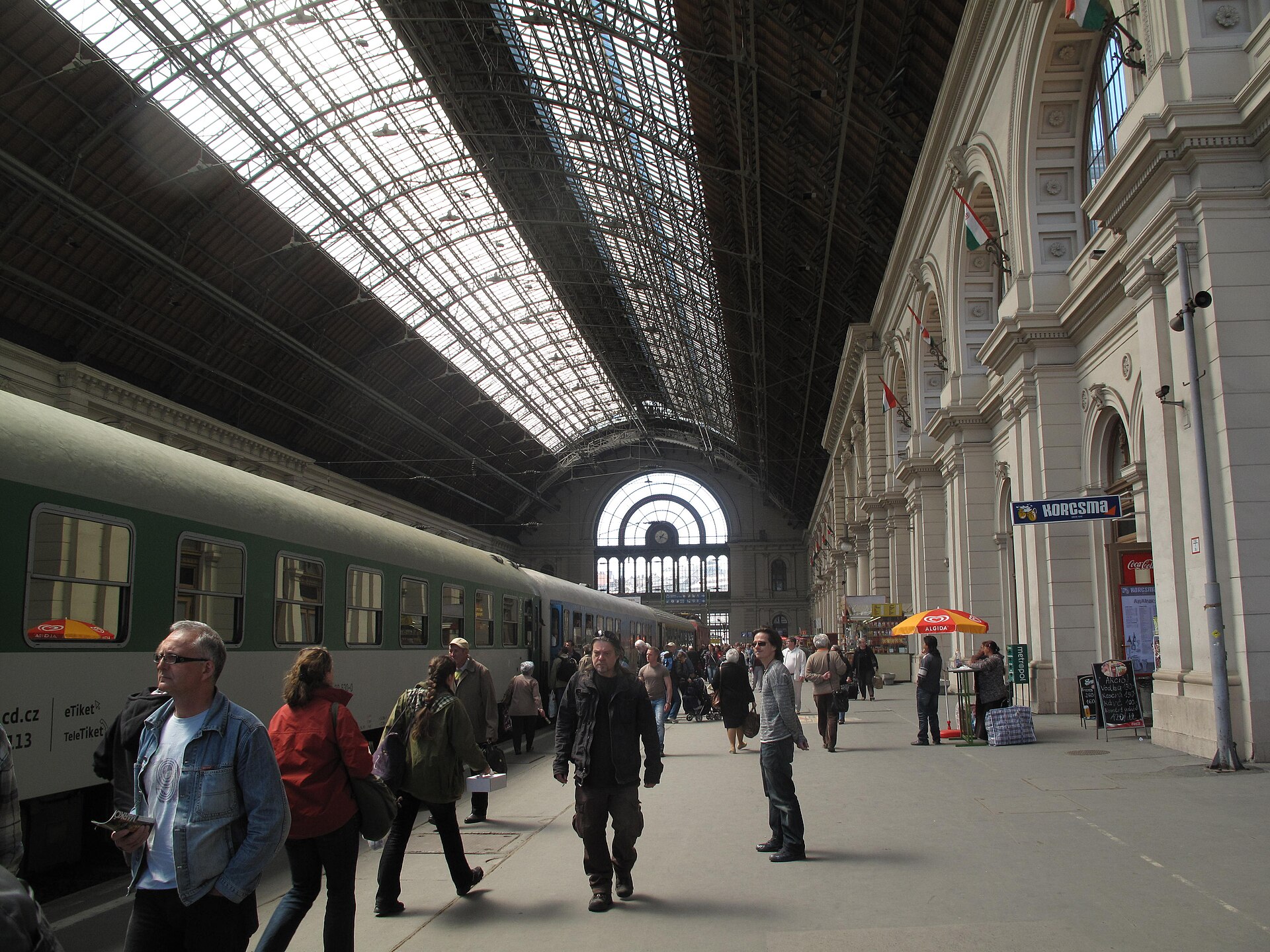
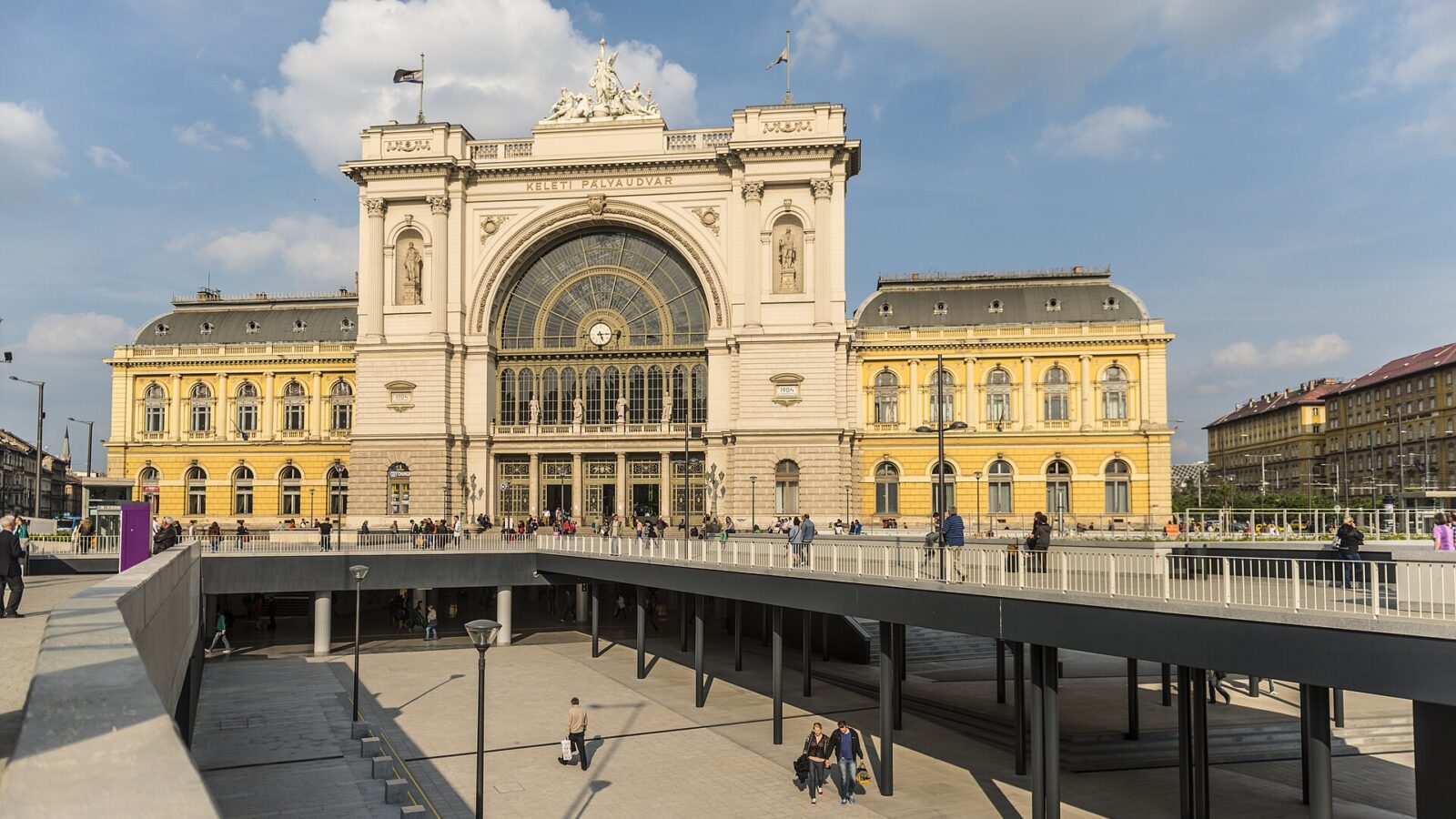
Trains depart from Budapest’s Keleti station, reachable directly by the M2 and M4 metro lines covered in the getting around Budapest guide, and arrive into Prague’s main station, Praha hlavní nádraží, both centrally located and well connected to onward local transport. RegioJet trains in particular have a reputation among regular riders for comfortable seating, onboard food and drink service, and free wifi, closer to a long-distance coach experience on rails than a bare-bones regional service. There’s no security screening for domestic or intra-Schengen rail travel in this part of Europe, so the whole pre-departure process amounts to finding your platform and boarding — no arriving two hours early, no bag scan, no boarding pass gate.
Booking and seat classes
Both operators sell tickets through their own websites and apps — RegioJet’s booking platform is well-regarded and available in English, and České dráhy runs its own international booking portal — as well as through third-party aggregators like Omio, Trainline and Wanderu, which are convenient for comparing both operators side by side but sometimes add a booking fee versus going direct. Seat classes typically run standard second class, a quieter or more spacious “business” tier, and on some RegioJet services a small number of premium seats with extra legroom and enhanced catering — worth the upgrade on a near-8-hour journey if the price difference is modest, since it’s a genuinely long single sitting either way.
Luggage allowances on the train are generous by comparison with the bus or a budget flight — there’s no strict weight limit enforced the way an airline would, and both operators expect passengers to store bags in overhead racks or the space between seats without a separate hold check. This makes the train the most forgiving option if you’re travelling with an awkward amount of luggage, sports equipment, or gifts picked up in Budapest that you’d rather not have weighed at a gate.
By bus
FlixBus is the dominant operator on this corridor, running a high number of daily departures — often well over a dozen — which makes the bus the most flexible option if your travel dates or times aren’t fixed. Typical journey time runs a similar 7 to 8 hours to the train, occasionally faster on a direct, low-stop service, though scheduled times vary more than the train’s since road journeys are more exposed to traffic. Pricing swings widely with demand: booked well ahead and off-peak, fares can undercut the train noticeably; booked close to departure or during a busy period, prices climb toward — and sometimes past — train fares, so there’s less of an automatic price advantage than bus travel’s budget reputation suggests, and it’s worth weighing against the daily budgets in the Budapest budget guide if cost is the deciding factor for your whole trip rather than just this one leg.
Buses depart from Budapest’s Népliget bus station, on the M3 metro line, and typically arrive at Prague’s Florenc bus station, also centrally located near a metro stop. Comfort varies more by specific coach than the train does — expect reclining seats, onboard wifi and a toilet on most FlixBus services, with a rest stop roughly midway through the journey.
The bus’s biggest practical advantage over the train is frequency: with departures spread across the day rather than a handful of fixed timetable slots, it’s easier to find a bus that fits an odd arrival or departure time, or to book same-day if plans change. Checked luggage is typically limited to one or two bags per passenger stored in the coach’s hold, plus a smaller item you keep with you — not a hard problem for most travellers, but worth checking your specific fare’s allowance if you’re carrying more than the standard amount, since budget fares on FlixBus sometimes restrict hold luggage to keep the ticket price down.
By plane
The flight itself is short, around an hour in the air given the roughly 455 km distance between the two cities, but door-to-door timing rarely beats the train once you add airport transfers on both ends, the recommended arrival buffer before a flight, and time collecting luggage after landing. Direct flight availability on this specific route has fluctuated over the years — airlines add and drop short intra-Central-European hops depending on demand — so check current schedules on either airport’s website or a flight search tool rather than assuming a direct option exists on your travel dates; a connection through a hub adds enough time to make the train the clearly faster choice in that case.
Where flying does make sense: genuinely tight schedules where saving even two or three hours of total travel time matters, or itineraries where flights are already booked as part of a wider multi-city trip and the marginal cost of adding this leg is low. For a simple, standalone Budapest-to-Prague hop, it’s the option to reach for last, not first.
By car
Driving is the fastest door-to-door option on paper, at roughly 5 hours 15 minutes to 6 hours covering around 530 km, mostly on motorways, with no border checkpoint to slow you down since both Hungary and Czechia sit inside Schengen. The catch is administrative rather than physical: both countries require a paid highway vignette to use their motorway networks, sold separately for each country (Hungary’s is called a matrica, bought online or at petrol stations; Czechia’s is an e-vignette bought online or via a mobile app), and driving without one risks a substantial on-the-spot fine if checked. Buy both before you set off, not at the border, since there’s no vignette checkpoint to catch you at the crossing itself.
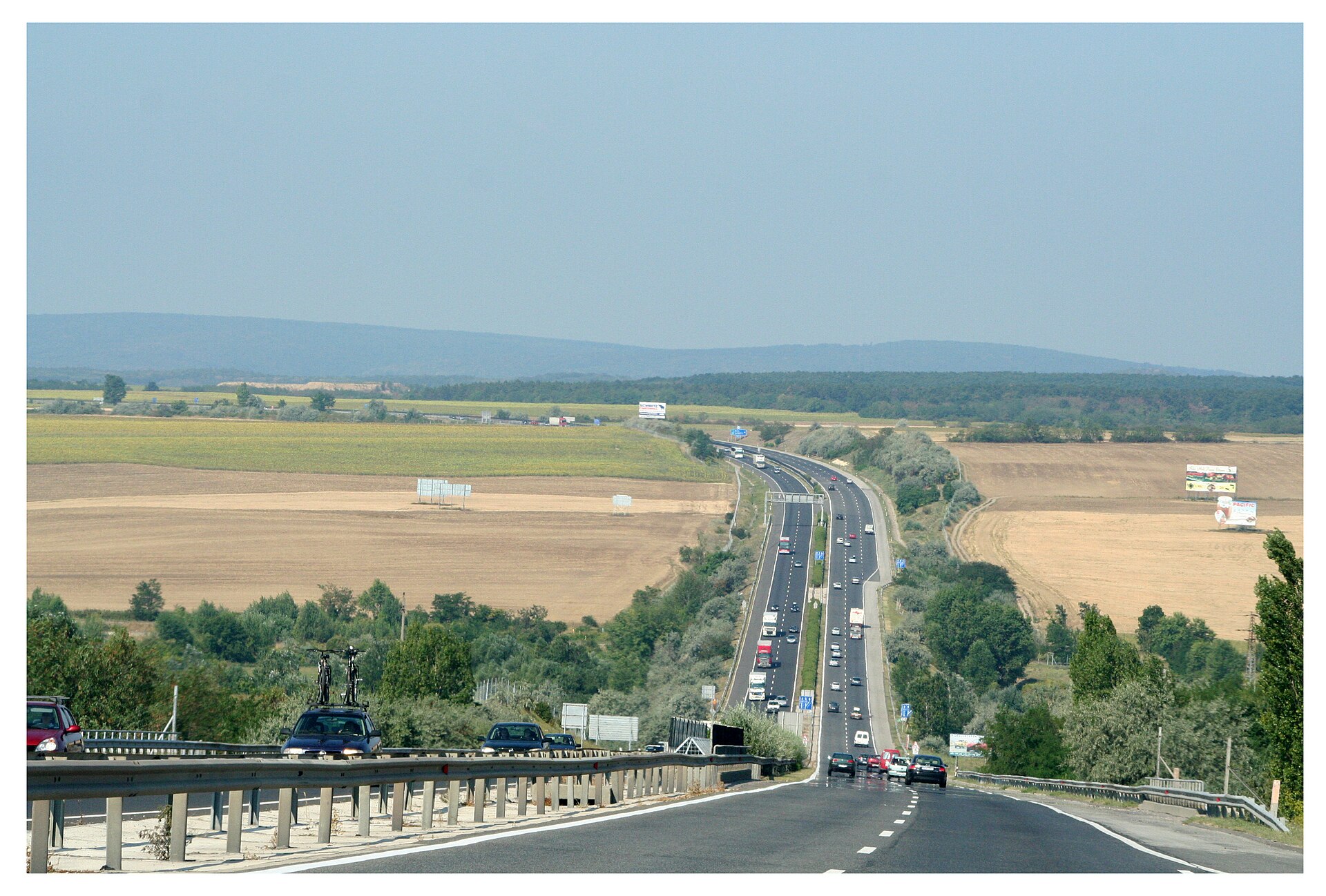
Driving makes the most sense if you already have a rental car for other legs of your trip, want the flexibility to stop along the way — the route passes reasonably close to Bratislava, worth a detour if you haven’t seen it — or are travelling as a group where splitting fuel and tolls undercuts individual train or bus tickets. For a solo traveller or couple with no other reason to rent a car, the savings rarely justify the hassle of navigating an unfamiliar motorway network and paying for two countries’ worth of tolls.
Stopping in Bratislava
The most direct driving route between Budapest and Prague passes close enough to Bratislava, Slovakia’s capital, that a detour costs relatively little extra time — worth strong consideration given how often Bratislava gets skipped entirely on a Budapest–Prague itinerary despite sitting almost exactly on the way. Slovakia is also inside Schengen, so the same no-border-check logic applies to a Bratislava stop as to the rest of the route; the only extra admin is Slovakia’s own separate highway vignette if your route uses its motorways, sold the same way as the Hungarian and Czech versions. A few hours in Bratislava’s compact old town turns a long drive into a genuine two-stop trip rather than a single grinding haul, and it’s an option the train and bus don’t offer nearly as conveniently, since neither typically allows a free stopover on a single ticket.
Road conditions and season
The route runs mostly on well-maintained motorway for its length, so this isn’t a white-knuckle drive by any measure, but winter conditions are worth planning around if you’re travelling between roughly November and March — expect the possibility of snow, particularly on the Slovak stretch where the road climbs slightly compared with the flatter Hungarian plain, and check winter tyre requirements for whichever country your rental agreement covers, since rules differ by country and aren’t always automatically included in a standard rental. Summer driving carries none of that concern, though weekend and holiday traffic near all three capitals can add unpredictable time at either end of the route.
Fitting Prague into a wider Central European trip
Budapest, Vienna and Prague form a well-worn travel triangle, and if Prague is on your itinerary, there’s a reasonable chance Vienna is too, or could be added without much extra effort. Budapest to Vienna is a considerably shorter hop — around 2 hours 25 minutes on the fastest direct trains, with roughly 24 departures a day, and well covered in the Vienna day-trip guide if a shorter side trip rather than a full relocation appeals — which makes a Budapest–Vienna–Prague routing (or the reverse) a genuinely efficient way to see all three capitals without much backtracking, versus a direct Budapest–Prague trip that skips Vienna and its own strong case for a stop. If your trip has the days to spare, breaking the Prague journey with a night or two in Vienna is easy to arrange on either the train or a rental car, and rarely adds meaningful cost given how well-served the Budapest–Vienna leg is. All three cities sit close enough together, and are well enough connected by train, that a single two-to-three-week Central European trip covering Budapest, Vienna and Prague is a realistic plan for most travellers rather than an ambitious one.
For travellers building a longer multi-city Central European route, it’s worth mapping the whole itinerary before booking any single leg — sequencing Budapest, Vienna, Bratislava and Prague in geographic order (rather than, say, a Budapest–Prague–Vienna zigzag) saves meaningful transit time across the trip as a whole, even if any single leg looks similar in isolation.
Which should you actually book?
For most travellers, the train is the right default: comparable travel time to the bus, meaningfully more comfortable, no security queue to build into your schedule, and stations at both ends that are easy to reach and easy to navigate. Choose the bus instead if price is the deciding factor and you’re booking well ahead of a specific date, or if train tickets for your preferred time are sold out. Fly only if you’re short on time and a genuine direct route exists on your dates. Drive only if a car is already part of your plans for other reasons.
A few situations tilt the calculation. Travelling with young children, the train’s freedom to walk around, use a proper toilet without waiting for a rest stop, and spread out across more space makes it the clear choice over the bus, even at a similar price. Travelling solo on a tight budget, the bus is worth the extra planning effort to catch an off-peak, early-booked fare, since the savings versus the train can be meaningful if you’re flexible on timing. Travelling for business with a hard meeting time in Prague, weigh the flight seriously despite the caveats above — the certainty of a fixed, short flight time can be worth more than the marginal hours saved by ground transport, particularly if your itinerary already has you passing through an airport anyway.
One more factor worth naming honestly: delays. Long-distance buses are more exposed to road traffic and border-adjacent congestion (even without formal checks, traffic can still bunch up near crossings) than trains are to rail delays on this specific route, so if you have a hard connection or event to make in Prague, the train’s relative predictability is worth something beyond its raw comfort advantage. Whichever you choose, book the specific date and time rather than a flexible ticket if you can — advance fares on both the train and bus are meaningfully cheaper than walk-up prices.
Practical tips
Book the train or bus as early as you reasonably can — both RegioJet and FlixBus use dynamic, advance-purchase pricing where the cheapest seats sell first, so a ticket bought a month out can cost noticeably less than the same seat bought the week before travel. Bring a printed or downloaded ticket rather than relying on station wifi to pull one up, since connectivity inside older station buildings can be patchy. If you’re changing currency, note that Hungary uses the forint and Czechia the koruna — neither uses the euro — so a single pre-trip currency exchange won’t cover both legs of a longer Central European itinerary; plan to get korunas either before departure or on arrival in Prague rather than trying to spend forints there — the currency guide covers getting forints for the Budapest leg of the trip if you haven’t sorted that out yet.
Food and drink on board vary by operator and are worth planning around if you have dietary needs — RegioJet’s onboard catering trolley and café carriage cover the basics but shouldn’t be relied on for anything specific, so pack a proper meal or snacks if you’re particular about what you eat on an 8-hour journey. Power sockets are standard on both RegioJet trains and most FlixBus coaches, but bring a charged power bank as a backup regardless, since a full carriage or coach can mean not every seat has easy access to a working socket. Toilets are standard on the train throughout the journey and on the bus, though the bus’s is a smaller onboard facility supplemented by the roughly midway rest stop, worth timing your last proper coffee around if that matters to you.
Finally, keep your ticket accessible (printed or on your phone, with battery to spare) through the whole journey rather than just at boarding — conductors on both operators do walk-through checks partway through longer routes, and a dead phone with your only copy of the ticket is a genuinely avoidable inconvenience on a journey this long, and one that’s easy enough to rule out entirely with a five-minute print-out at your hotel before you leave.
Not sure which terminus you actually need before heading over? The Budapest train stations guide breaks down what Keleti, Nyugati and Déli each specialise in — worth a quick check before you commit to a departure point.
Vienna makes an easy first leg if you’d rather break the journey than sit on one train for most of a day. The guide to the Budapest to Vienna train has the operators, fares and boarding tips for that stretch, and onward trains to Prague leave Vienna regularly.
If Krakow rather than Prague is next on your list, the direct way from Budapest is a night train, not a day one. Our guide to getting from Budapest to Krakow covers the Metropol-Carpatia sleeper and the coach, car and day-train alternatives.
Frequently asked questions
How long does it take to get from Budapest to Prague?
By train or bus, typically 7 to 8 hours. By car, around 5 hours 15 minutes to 6 hours. By plane, about an hour in the air, though door-to-door time with airport transfers rarely beats the train once security and transfer time are added.
Is the train or bus cheaper from Budapest to Prague?
It depends on how far ahead you book. Both operators use dynamic pricing, and the bus doesn’t reliably undercut the train — booked early, either can be the cheaper option. Booking close to your travel date tends to favour whichever has more remaining capacity, which varies week to week.
Do you need a passport to cross from Hungary to Czechia?
You need a valid passport or EU ID card with you, but there’s no passport control at the border itself — both countries are inside the Schengen Area, so the crossing is unmarked and the train or bus doesn’t stop for checks.
Is it worth flying from Budapest to Prague?
Rarely, for a standalone trip. The flight itself is short, but airport transfers, security and check-in time on both ends typically erase any time saved compared with the direct train, which also drops you in each city centre rather than at an airport outside town.
Do I need a vignette to drive from Budapest to Prague?
Yes — Hungary and Czechia both require a paid highway vignette to use their motorways, sold separately for each country and available online or at petrol stations. Buy both before setting off, since there’s no checkpoint at the border to catch you if you haven’t. If your route also touches Slovakia, as the most direct driving path often does, budget for a third vignette there too.
Should I combine Prague with Vienna on the same trip?
It’s worth strong consideration if your schedule allows it. Budapest to Vienna is a much shorter train journey (around 2 hours 25 minutes on the fastest services) than the direct Budapest–Prague route, and routing Budapest–Vienna–Prague rather than skipping straight to Prague lets you see all three capitals with less overall backtracking.
Can I stop in Bratislava on the way?
If you’re driving, yes — the most direct route passes close enough to Bratislava that a detour into the old town adds relatively little extra time, and it’s a stop most direct train and bus tickets don’t accommodate as conveniently. Slovakia is also inside Schengen, so the same no-border-check logic applies.
Photo credits
The facade of Keleti station in Budapest, departure point for Prague-bound trains by © Ralf Roletschek – Fahrradtechnik und Fotografie, GFDL 1.2, via Wikimedia Commons.
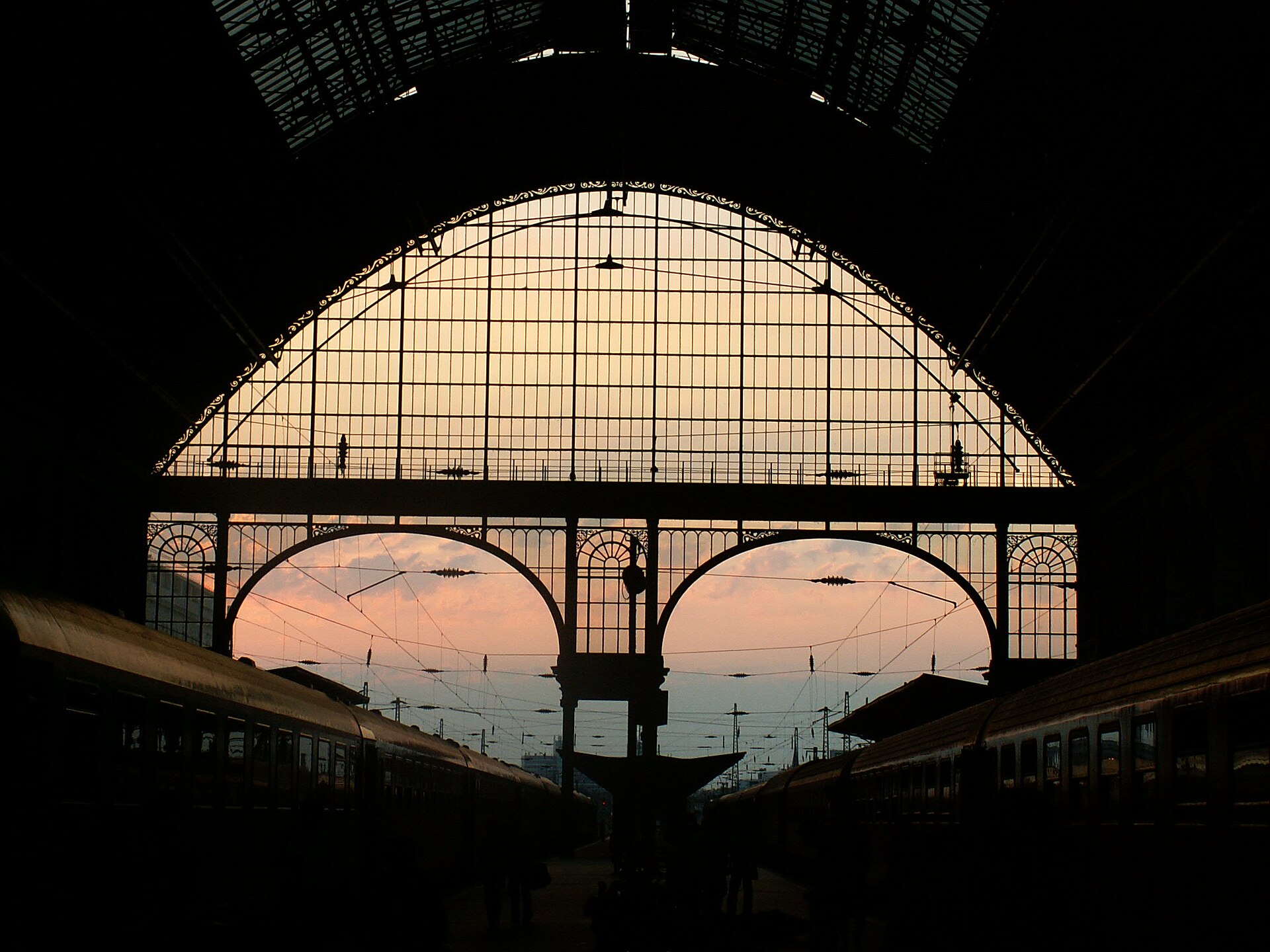
The glass roof of Keleti station in Budapest at sunset by Jaimrsilva, CC BY-SA 4.0, via Wikimedia Commons.
A Czech Railways carriage on the platform at Keleti station by Dezidor, CC BY 3.0, via Wikimedia Commons.
RegioJet trains in Czechia by ŠJů, CC BY-SA 3.0, via Wikimedia Commons.
A Hungarian motorway heading toward the western border by ariannesmidt, CC BY-SA 3.0, via Wikimedia Commons.