Budapest to Croatia: Zagreb, Split and the Coast
The Adria night train to Split, the seasonal train to Rijeka, and the train, coach and car options for Zagreb. Dates, berths and fares for getting from Budapest to the Croatian coast.
In this guide
- At a glance
- The Adria: Budapest to Split by night train
- When it runs
- The route and the timetable
- Couchette or sleeper?
- Booking
- Boarding at Kelenföld or at Lake Balaton
- On board
- Arriving in Split
- When the Adria isn’t running
- Budapest to Zagreb
- By train
- By coach
- By car
- Why stop in Zagreb
- Rijeka, Istria and the Kvarner Gulf
- Dubrovnik and the far south
- Driving to Croatia
- A road trip from Budapest to the coast
- Flying
- Money, borders and phones
- Which should you choose?
- Practical tips
- Frequently asked questions
- Photo credits
This article contains advertising. Our booking links are routed through a partner that adds commission tracking automatically, so if you book through one we earn a commission from the provider, at no extra cost to you. It never affects what we recommend. Affiliate disclosure
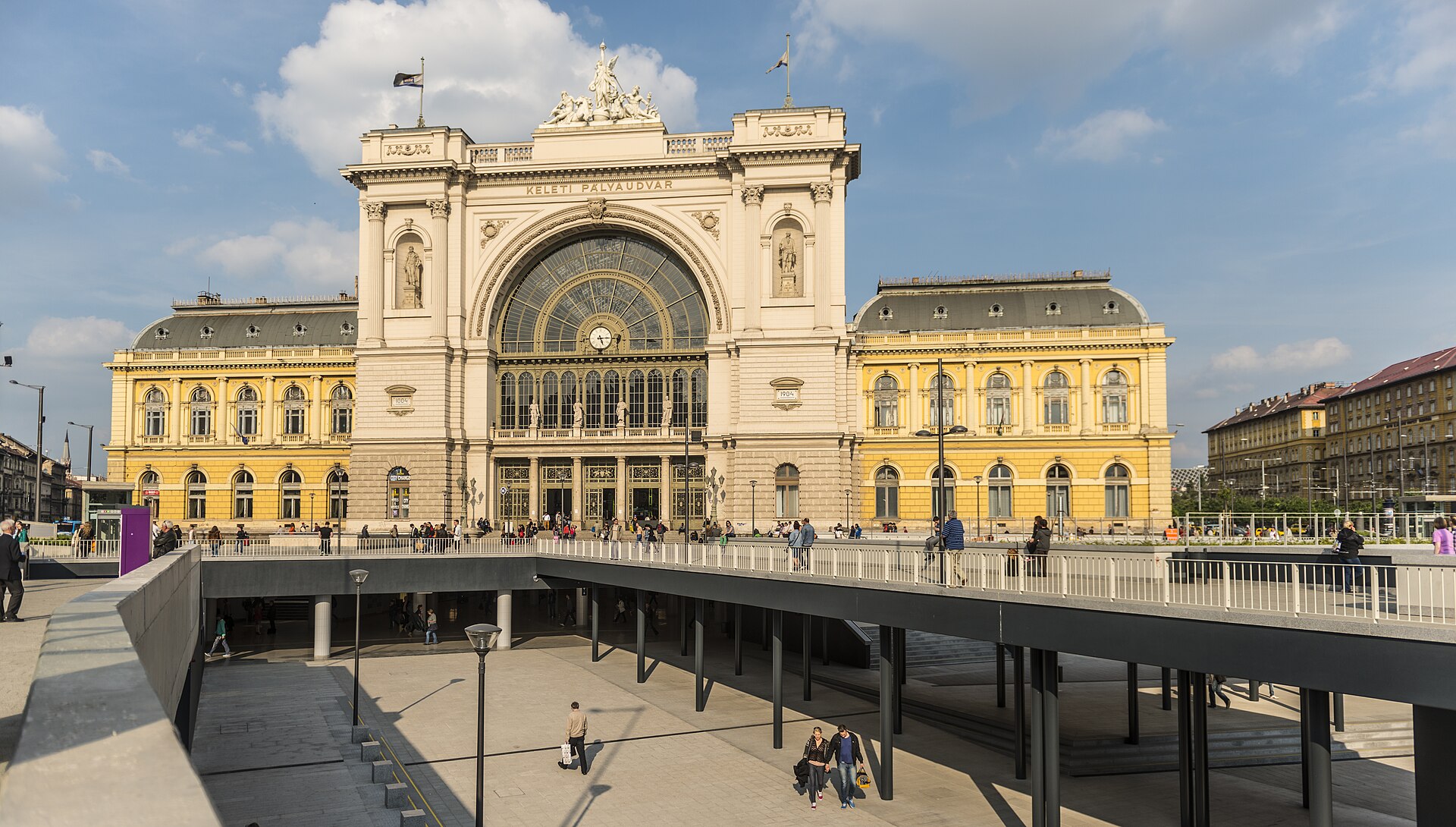
On summer evenings a long night train pulls out of Budapest-Keleti at 18:40, calls at Siófok on Lake Balaton at 20:28 as the light goes gold over the water, and rolls into Split at 9:37 the next morning, a short walk from the harbour. That train, the Adria, is the most romantic way to get from Budapest to Croatia, and in high summer it’s one of the most practical too: a couchette berth costs less than most Split hotel rooms in August, and you wake up within sight of the Adriatic.
This page covers the Adria in detail, then the other ways to reach Croatia from Budapest: Zagreb by train, coach or car; Rijeka and Istria on the seasonal night train; Dubrovnik, which is really a flight; and the practical bits about driving, money and borders. The night-train dates and fares below are from MÁV’s 2026 season, checked in September 2026. Treat them as the right order of magnitude, and check the next season’s dates before you plan, since they change a little each year.
At a glance
| Where | Best way from Budapest | Time | Cost guide |
|---|---|---|---|
| Split, in summer | The Adria night train | About 15 hours, overnight | Couchette from €46, sleeper from €88 |
| Split, the rest of the year | Drive, or fly if there’s a flight | Seven to eight hours by car | Fuel, vignette and Croatian tolls |
| Zagreb | Train or coach, or drive | About four hours by car | Rail fares advertised from about €19 |
| Rijeka and Istria, in summer | The seasonal night train via Ljubljana | Overnight | From about €25 to Rijeka |
| Dubrovnik | Fly | A day or more overland | Depends on the flight |
The Adria: Budapest to Split by night train
The Adria is a seasonal InterCity night train run by MÁV, Hungary’s national railway, with couchettes and sleeping cars and nothing else: there are no ordinary seats, and every place has to be reserved. It runs down past Lake Balaton, crosses into Croatia at Gyékényes late in the evening, spends the night crossing the country, and reaches the Dalmatian coast in the morning.
When it runs
In 2026 the Adria ran from 3 July to 2 October southbound and from 4 July to 4 October northbound. The pattern is worth knowing, because it isn’t daily:
- July and August: from Budapest on odd-numbered dates (the 1st, 3rd, 5th and so on, but not the 31st), and from Split on even-numbered dates.
- September and early October: from Budapest on Tuesdays and Fridays, and from Split on Wednesdays and Sundays.
MÁV publishes each season’s dates ahead of the summer. Expect a similar pattern in future years, but don’t book a hotel in Split for a date the train doesn’t run.
The route and the timetable
These are the 2026 times southbound, and they give a good sense of the journey:
| Station | Time |
|---|---|
| Budapest-Keleti | 18:40 |
| Budapest-Kelenföld | 19:01 |
| Székesfehérvár | 19:42 |
| Siófok (Lake Balaton) | 20:28 |
| Fonyód (Lake Balaton) | 21:00 |
| Balatonszentgyörgy | 21:17 |
| Nagykanizsa | 22:01 |
| Gyékényes (Hungarian border) | 22:47 |
| Knin | 07:12 |
| Perković | 08:09 |
| Kaštel Stari | 09:09 |
| Split | 09:37 |
The first two hours are the loveliest part of the evening: the train runs along the southern shore of Lake Balaton in the last of the light, past the beaches and holiday villages of Siófok and Fonyód. You’ll be asleep for Croatia’s interior. By Knin, early in the morning, the landscape has turned to Dalmatian karst, bare limestone hills and scrub, and the final hour drops down towards the sea along the Kaštela coast, with the islands appearing on the horizon. Have your coffee ready for it.
Northbound, the train leaves Split at 17:40 and reaches Budapest-Keleti at 9:35 the next morning, which gives you a last full day on the coast and a morning arrival in Budapest.
Couchette or sleeper?
The couchettes are compartments with four or six fold-down berths, with bedding provided, and they can be shared with strangers or booked as a private compartment. The sleeping cars have compartments for one, two or three people, with proper made-up beds and a washbasin in each. Everything is air-conditioned, which matters a great deal in a Dalmatian July. MÁV’s 2026 starting prices, per person, one way:
| Accommodation | From |
|---|---|
| Couchette, berth in a shared six-berth compartment | €46 |
| Couchette, berth in a shared four-berth compartment | €77 |
| Couchette, private compartment (whole compartment) | €240 |
| Sleeper, bed in a shared three-bed compartment | €88 |
| Sleeper, bed in a shared two-bed compartment | €149 |
| Sleeper, private compartment | €190 |
The cheapest fares are non-refundable, and children aged 6 to 14 pay between €36 and €67 depending on the accommodation. Which to choose? A six-berth couchette is fine for young travellers who sleep anywhere, but six adults with summer luggage in a couchette compartment is a squeeze. A four-berth couchette booked as a family or a group of friends is the sweet spot on value. If you want a proper bed and a washbasin, the sleeper is worth the extra, especially for the return leg, when you arrive in Budapest with a day ahead of you.
To put numbers on it: a family of two adults and two children aged 6 to 14, sharing a four-berth couchette, pays from €154 for the adults plus the children’s fares, somewhere around €230–290 one way for the four of them, and wakes up in Split without paying for a hotel that night. A couple taking a two-bed sleeper pays from about €300 between them, which in August isn’t far off what a good Split hotel room costs for a single night.
Booking
Reservations are compulsory. Book on MÁV’s website, jegy.mav.hu, at MÁV’s international ticket offices, or through partner travel agencies. The train is popular, and on July and August weekends the cheapest couchettes go early, so book as soon as you know your dates. If you’re travelling as a family, book the whole compartment so you’re not sharing with strangers.
Boarding at Kelenföld or at Lake Balaton
You don’t have to start at Keleti. The train calls at Kelenföld on the Buda side 21 minutes later, which is handier if you’re staying in Buda or anywhere on the M4 metro; the guide to Budapest’s train stations explains how Keleti and Kelenföld compare. Better still, make a day of it: take a morning train to Lake Balaton, spend the day on the beach at Siófok or Fonyód, and board the Adria there in the evening. The Lake Balaton guide covers the resorts and how to get there.
On board
- Food: bring your own supper and breakfast. Buy it in Budapest or at Balaton before you board.
- Washing: there are no showers, so the sleepers’ washbasins are as good as it gets. Plan a swim before breakfast in Split.
- Bikes: only as hand luggage, dismantled and wrapped, within the normal luggage allowance. There’s no bike space.
- Dogs: not allowed, apart from assistance dogs.
- Documents: Hungary and Croatia are both in the Schengen Area, so there’s no routine passport control, but carry a passport or national ID card.
Arriving in Split
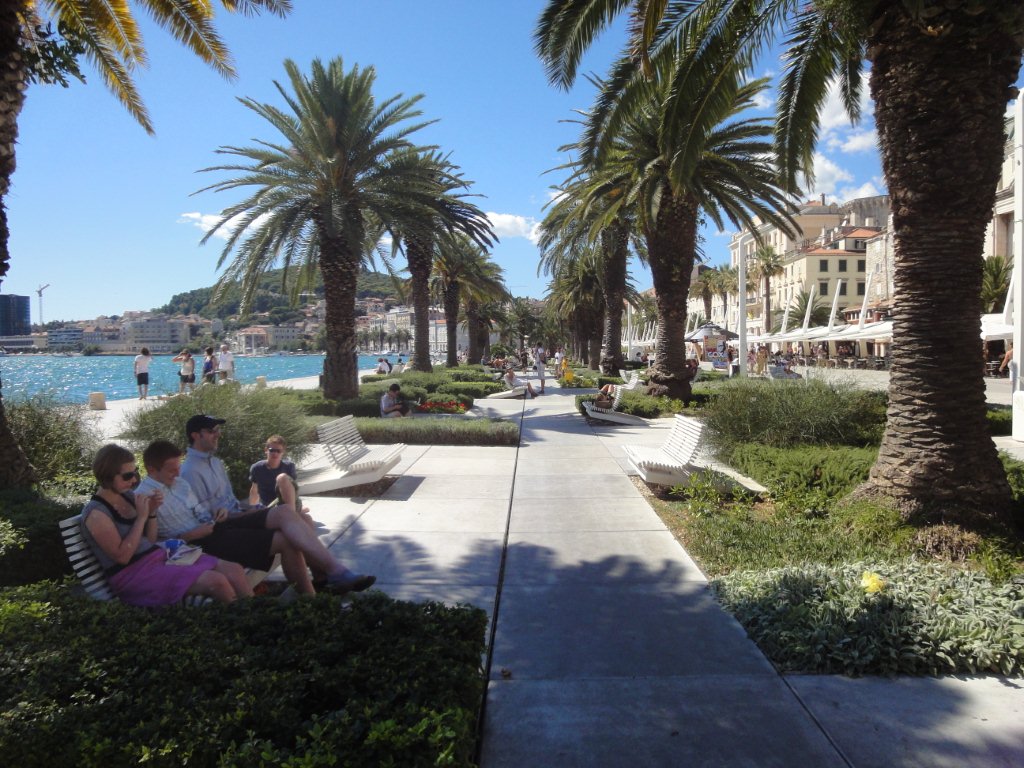
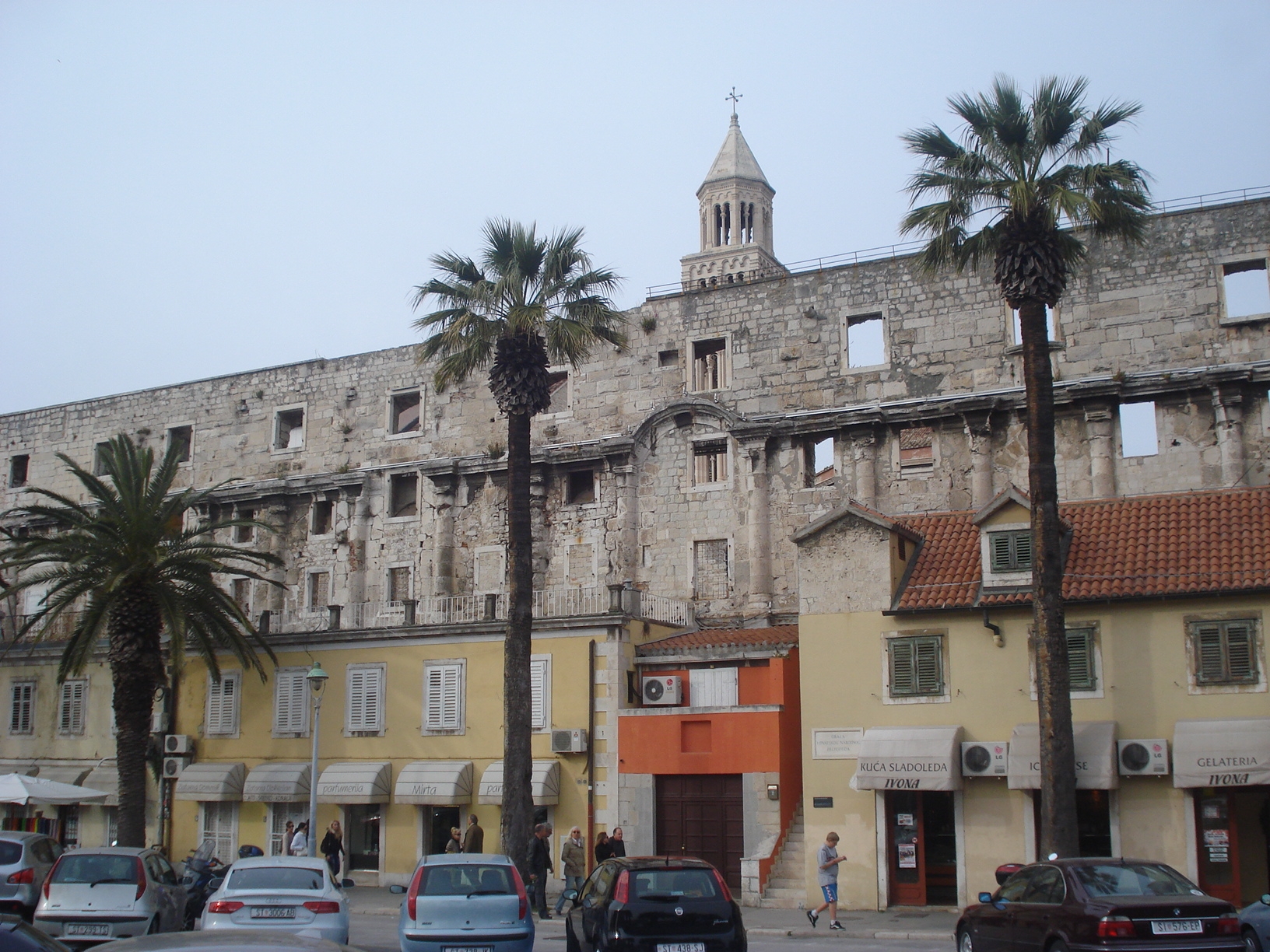
Split’s main station sits right on the harbour, next to the ferry port and the main bus station, and a few minutes’ walk from the walls of Diocletian’s Palace, the vast Roman emperor’s residence whose streets are the old town. If you’re heading straight on to the islands, the ferries to Hvar, Brač and Vis leave from the same waterfront, so it’s quite possible to step off the night train and onto a boat before lunch.
When the Adria isn’t running
Outside its summer season, getting from Budapest to Split is a much longer business. By rail you’d travel to Zagreb first and change there for the Croatian line down to the coast, which makes a full day with at least one change, and more if the Zagreb connection is disrupted. Coaches do the trip too, but it’s the best part of a day in a seat. For most people out of season, the choice comes down to driving, which takes seven to eight hours, or a flight if one happens to be running. If you have time, the best option is to break the journey: a night in Zagreb turns two long days into two good ones.
Budapest to Zagreb
Zagreb is the nearest Croatian city to Budapest, about 350 kilometres away, and the easiest to reach all year round.
By train
Budapest and Zagreb have long been linked by a direct daytime train running via Lake Balaton, Nagykanizsa and the border at Gyékényes, the same route the Adria takes, in around six to seven hours. In recent years, engineering works on the Croatian side have meant changes of train or replacement buses on some dates, so check the current timetable on jegy.mav.hu or the Croatian Railways site (HŽPP) before you plan around it. Booking sites have been advertising Budapest–Zagreb rail fares from about €19.
By coach
Coaches, Flixbus’s among them, run between Budapest and Zagreb several times a day, typically taking five to six hours depending on the route and the stops. It’s usually the most frequent option and often the cheapest, and a sensible fallback when the trains are disrupted.
By car
The drive is about 350 kilometres and takes around four hours: the M7 motorway along Lake Balaton to the border at Letenye, then the Croatian A4 into Zagreb. You’ll need a Hungarian e-vignette for the M7, and the Croatian motorway is tolled.
Why stop in Zagreb
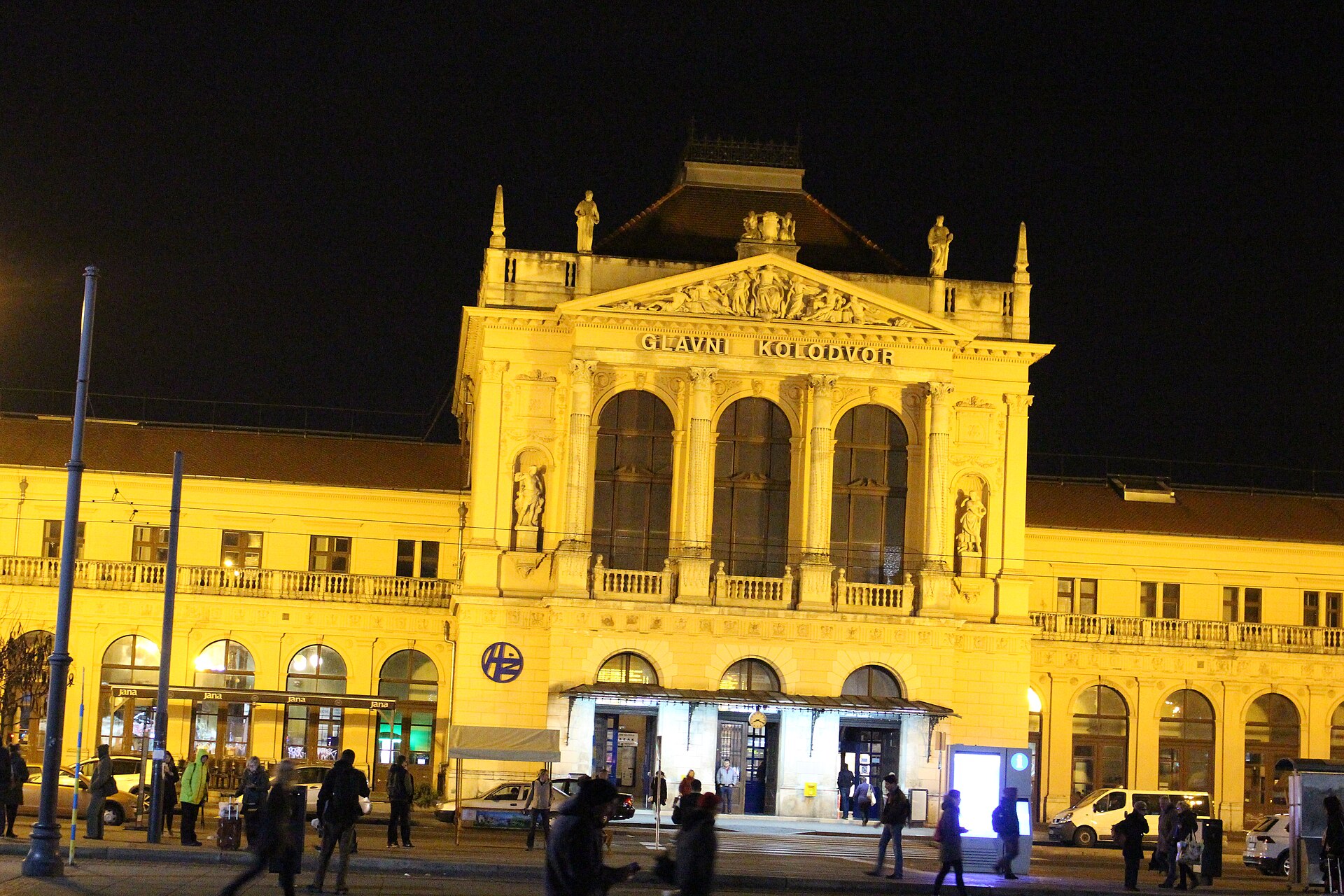
Plenty of people pass straight through Zagreb on the way to the coast, and they miss one of central Europe’s more relaxed capitals: the steep old Upper Town with St Mark’s Church and its tiled roof, Dolac market under its red umbrellas, a café culture to rival Budapest’s, and the unexpectedly moving Museum of Broken Relationships. In December its Advent market is one of the most popular in Europe, and makes an interesting comparison with Budapest’s Christmas markets. From Zagreb, trains and coaches continue to the coast, though the drive or a flight is quicker for Split and Dubrovnik.
Rijeka, Istria and the Kvarner Gulf
For the northern coast there’s a second seasonal night train. In summer 2026 it ran from 27 June to 30 August, leaving Budapest in the evening and travelling via Ljubljana, where it divides: one part continues to Koper on the Slovenian coast, the other to Rijeka in Croatia. It carries seats, couchettes and sleeping cars, and fares started from about €20 to Koper and €25 to Rijeka. From Rijeka, buses and ferries fan out to the Kvarner islands, Krk, Cres and Rab among them, to the resort of Opatija, and to the Istrian towns of Rovinj and Pula.
By car, Rijeka is about 500 kilometres from Budapest via Zagreb, roughly five and a half hours in normal traffic, and Istria a little further.
Dubrovnik and the far south
Dubrovnik is a long way from Budapest, the best part of a thousand kilometres by road, and there’s no train south of Split. If Dubrovnik is your goal, fly. If you’re driving the coast anyway, the Pelješac Bridge, opened in 2022, now carries the road past the short stretch of Bosnian coast at Neum, so you no longer cross an external border to reach the city from the north. Allow a good four hours from Split.
Driving to Croatia
Croatia is one of the easier countries to drive to from Budapest. There’s no border check since Croatia joined the Schengen Area in 2023, the motorways are excellent, and hire cars from Budapest can generally be taken across, though one-way drop-offs on the coast are expensive. The Budapest car rental guide covers the paperwork, the vignettes and the one-way fees.
- Tolls: you need a Hungarian e-vignette for the M7, and Croatian motorways charge tolls by distance, paid at the toll plazas or electronically. Check the current system before you go, since Croatia has been moving towards electronic tolling.
- Traffic: summer Saturdays, when holiday apartments change over, bring the heaviest traffic of the year on the Croatian motorways to the coast, and the M7 along Balaton is busy on summer Friday evenings. Travel midweek if you can.
- Times: allow about four hours to Zagreb, five and a half to Rijeka and seven to eight to Split, plus stops.
A road trip from Budapest to the coast
If you’re driving anyway, the journey south is a trip in itself. A route that works well over three or four days:
- Budapest to Lake Balaton. Take the M7 and leave it for the lake: the Tihany peninsula on the northern shore, with its abbey above the water, or Keszthely at the western end. A night by the lake breaks the drive nicely, and the Lake Balaton guide helps you choose where.
- Balaton to Zagreb. Rejoin the M7 to the border at Letenye, then the A4 into Zagreb. An afternoon and evening in the Upper Town is time well spent.
- Zagreb to Plitvice. South of Zagreb, the Plitvice Lakes National Park, a chain of turquoise lakes linked by waterfalls, is the obvious stop, and it’s barely a detour. In summer, buy your entry ticket online in advance and arrive early; it’s one of the busiest parks in Europe.
- Plitvice to Split. Join the A1 motorway south through the karst hills to Split and the Dalmatian coast.
Done that way, the drive stops being a chore and becomes a highlight, and it’s the one approach that shows you how Hungary’s Great Plain gives way to the mountains and then the sea.
Flying
Budget airlines have operated seasonal flights from Budapest to the Croatian coast, and when one runs to Split or Dubrovnik it’s by far the quickest way there. Check what’s flying on your dates, and remember the journey to the airport at each end. For Zagreb, the train, coach or car is simpler than a flight. The Budapest Airport guide covers the Budapest end.
Money, borders and phones
- Currency: Croatia has used the euro since 1 January 2023. Your forints won’t be any use there; the money guide has advice on spending them before you leave.
- Borders: Croatia joined the Schengen Area on the same date, so there are no routine passport checks between Hungary and Croatia. Carry a passport or ID card anyway.
- Phones: Croatia is in the EU, so EU roaming rules apply and an EU SIM works as it does at home. From outside the EU, see the SIM card guide.
Which should you choose?
- Split in July, August or September: take the Adria, in a four-berth couchette or a sleeper. It’s the most enjoyable way to arrive, and it saves a hotel night.
- Zagreb: the train if it’s running directly on your dates, otherwise the coach. Drive only if you’re carrying on to the coast.
- Rijeka, Istria or the Kvarner islands in summer: the seasonal night train via Ljubljana.
- Dubrovnik: fly.
- A coast road trip: drive, avoid summer Saturdays, and budget for the tolls.
- Split out of season: drive, or fly if a flight happens to be running. The overland alternatives without the Adria are long days of changes.
If you’re combining Croatia with other countries, the Balkans are the natural next step; the Budapest to Belgrade guide covers the rail link to Serbia, and the getting around Budapest hub has the rest of the city’s transport.
Practical tips
- Check which dates the Adria runs before you book anything else. In high summer it runs only every other day from Budapest.
- Book the night train as early as you can for July and August weekends.
- Board at Kelenföld if you’re staying in Buda, or at Siófok or Fonyód after a day at Lake Balaton.
- Bring supper, breakfast, water and a light layer: the air conditioning is effective.
- Carry a passport or ID card, even without border checks.
- Driving? Avoid summer Saturdays on the Croatian motorways, and check the toll system before you set off.
- Have some euros or a card ready for the coast: forints don’t work in Croatia.
Frequently asked questions
Is there a train from Budapest to Croatia?
Yes. In summer, the Adria night train runs from Budapest to Split, and a seasonal night train runs via Ljubljana to Rijeka. Budapest and Zagreb have a daytime rail link, though engineering works sometimes mean changes, so check the current timetable.
How long is the night train from Budapest to Split?
About 15 hours. In 2026 it left Budapest-Keleti at 18:40 and arrived in Split at 9:37 the next morning; the return left Split at 17:40 and reached Budapest at 9:35.
How much is the Budapest to Split night train?
In 2026, from €46 for a berth in a six-berth couchette, €77 in a four-berth couchette and €88 for a bed in a three-bed sleeper, per person, one way. Private compartments cost more, and reservations are compulsory.
When does the Budapest–Split night train run?
In summer only. In 2026 it ran from early July to early October: in July and August from Budapest on odd-numbered dates, and in September and early October on Tuesdays and Fridays.
How far is Zagreb from Budapest?
About 350 kilometres, or around four hours by car via the M7 along Lake Balaton. By coach it’s typically five to six hours, and by train around six to seven when the direct service is running.
Do I need a passport to go from Hungary to Croatia?
There are no routine border checks, since both countries are in the Schengen Area, but you must carry a passport or national ID card.
What currency does Croatia use?
The euro, since 1 January 2023. Hungarian forints aren’t accepted.
Photo credits
The Riva in Split: Splitska Riva by MZarkovic, public domain, via Wikimedia Commons.
Diocletian’s Palace: Dioklecijanova palača, Split – jug by Silverije, CC BY-SA 3.0, via Wikimedia Commons.
Zagreb main station: Glavni kolodvor – Zagreb by Marko Jukić -Majkl, CC BY-SA 4.0, via Wikimedia Commons.
Keleti station: 14-05-06-budapest-RalfR-11 by © Ralf Roletschek – Fahrradtechnik und Fotografie, GFDL 1.2, via Wikimedia Commons.