Szentendre Day Trip from Budapest: Best Artist Village Guide (2026)
Everything for a Szentendre day trip from Budapest: how to get there by HÉV train, the old town, churches, museums, the Skanzen, and how to avoid the crowds.
In this guide
- How to get to Szentendre
- Getting your bearings
- Fő tér and the old town
- The churches
- Museums and galleries
- The Hungarian Open-Air Museum (Skanzen)
- Szentendre’s art scene
- A walk along the Danube
- Shopping and local crafts
- Where to eat
- Half-day or full day?
- When to go and avoiding crowds
- Practical tips
- Combine it with the rest of your trip
- Frequently asked questions
This article contains advertising. Our booking links are routed through a partner that adds commission tracking automatically, so if you book through one we earn a commission from the provider, at no extra cost to you. It never affects what we recommend. Affiliate disclosure
A Szentendre day trip is the easiest and most charming escape from Budapest, a pastel-coloured baroque town of cobbled lanes, art galleries and riverside cafés just 40 minutes away on the suburban train. It has been an artists’ colony for over a century, and its walkable old town, Serbian Orthodox churches and quirky little museums make it perfect for a relaxed half-day (or a full one if you add the open-air village museum). If you want one stress-free trip out of the city, this is the one I send people on first.
This guide covers exactly how to get there, what to see, where to eat, and how to dodge the worst of the crowds. It is the closest of the Danube Bend towns; for the wider region see our Danube Bend day trip guide and the full day trips from Budapest overview.
How to get to Szentendre
The simplest way is the H5 HÉV suburban train from Batthyány tér on the Buda side (reachable on the M2 metro). The ride takes about 40 minutes and trains run frequently. If you already have a Budapest transit pass, you only need a cheap supplementary ticket for the stretch beyond the city boundary (around 310 HUF in 2026); otherwise buy a full fare. Szentendre’s HÉV station is a short, signposted walk from the old town. In the warmer months you can also take a scenic, slower Danube ferry from Budapest, lovely one-way if you have the time.
Getting your bearings
Szentendre is small and made for wandering. From the station, follow the crowd a few minutes into the historic centre, which fans out from the main square, Fő tér. The whole old town is compact and walkable, so you can happily get lost in the lanes and always find your way back to the river or the square. There is no need for transport once you arrive.
Fő tér and the old town
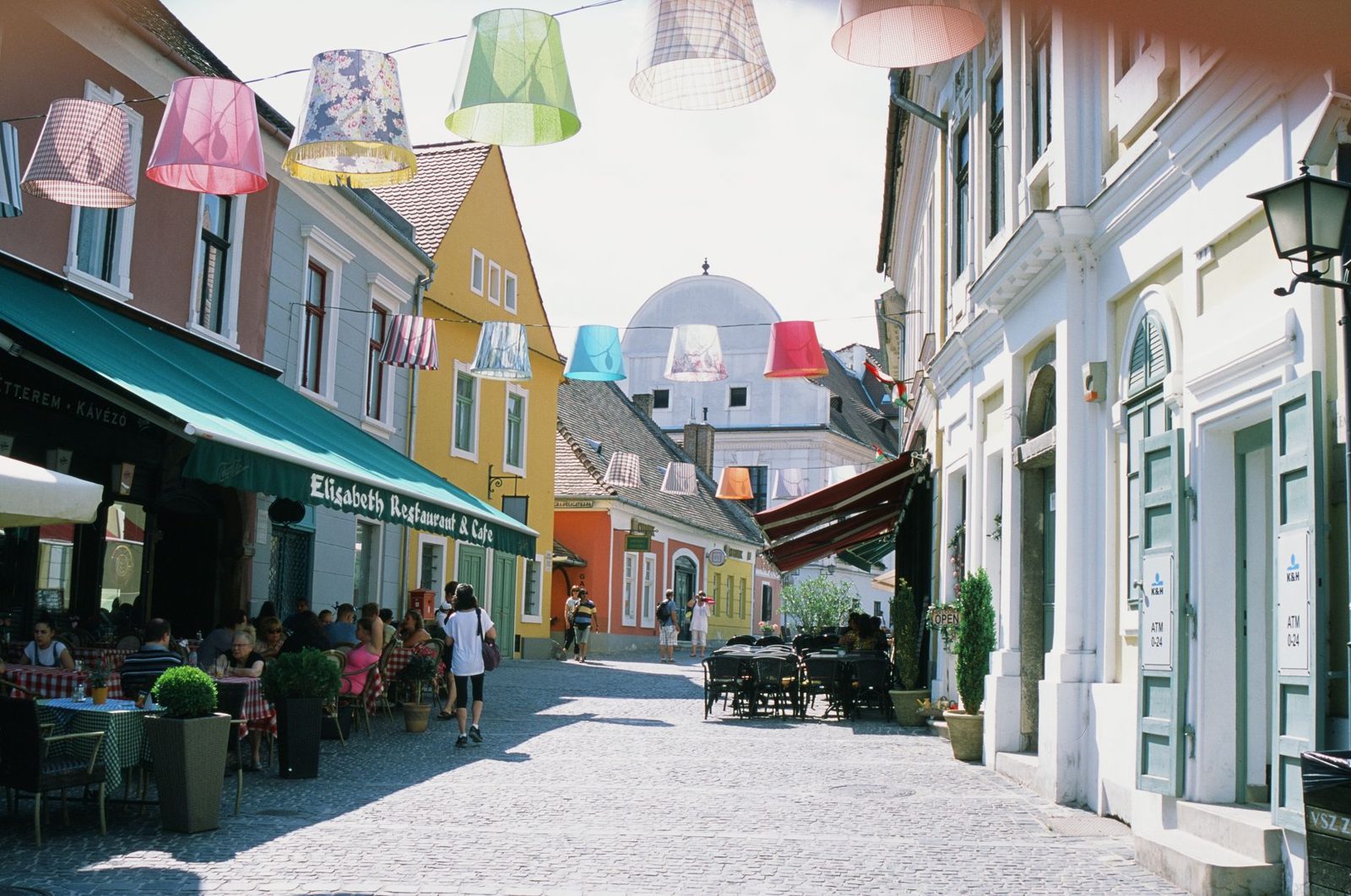
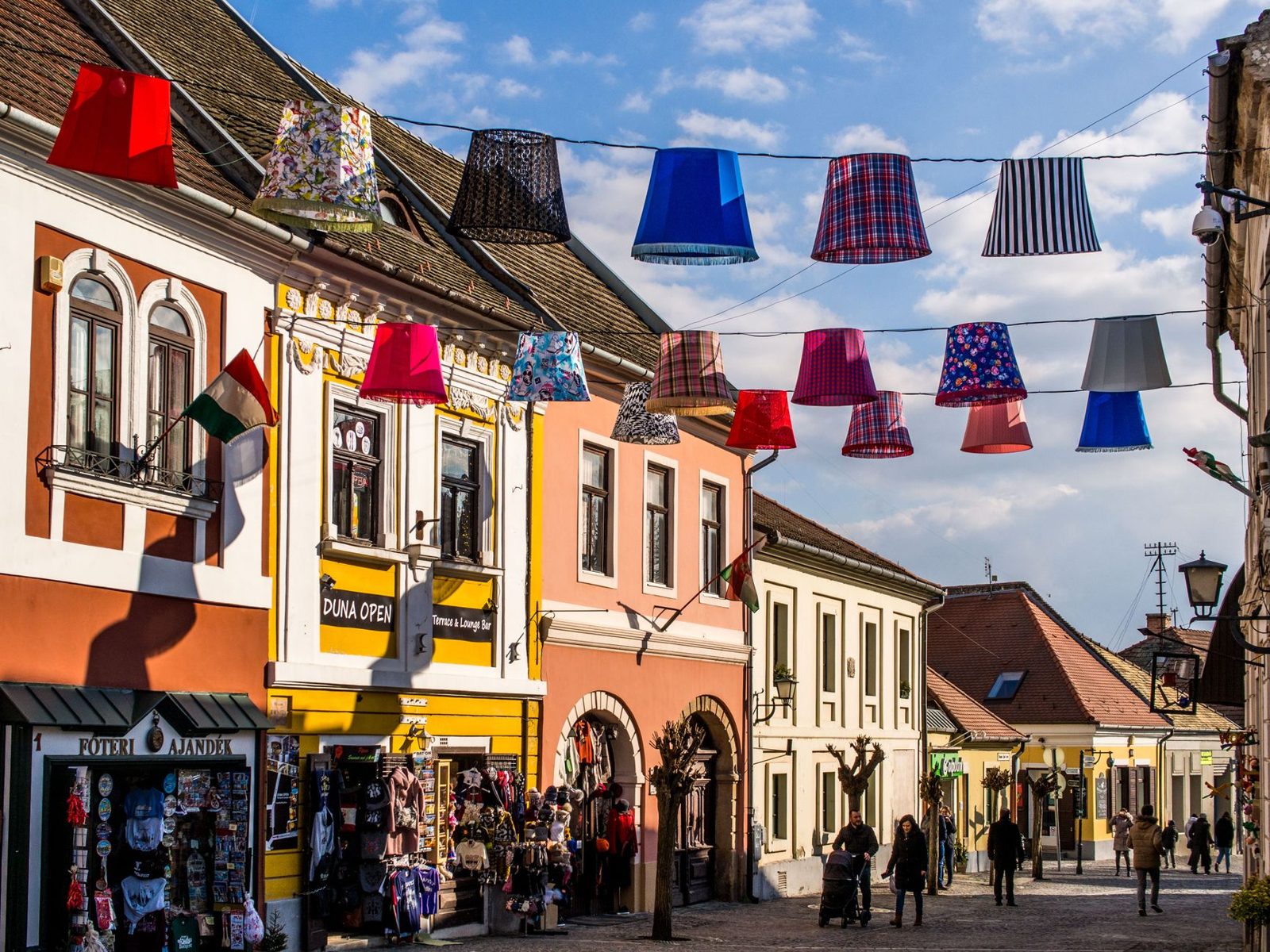
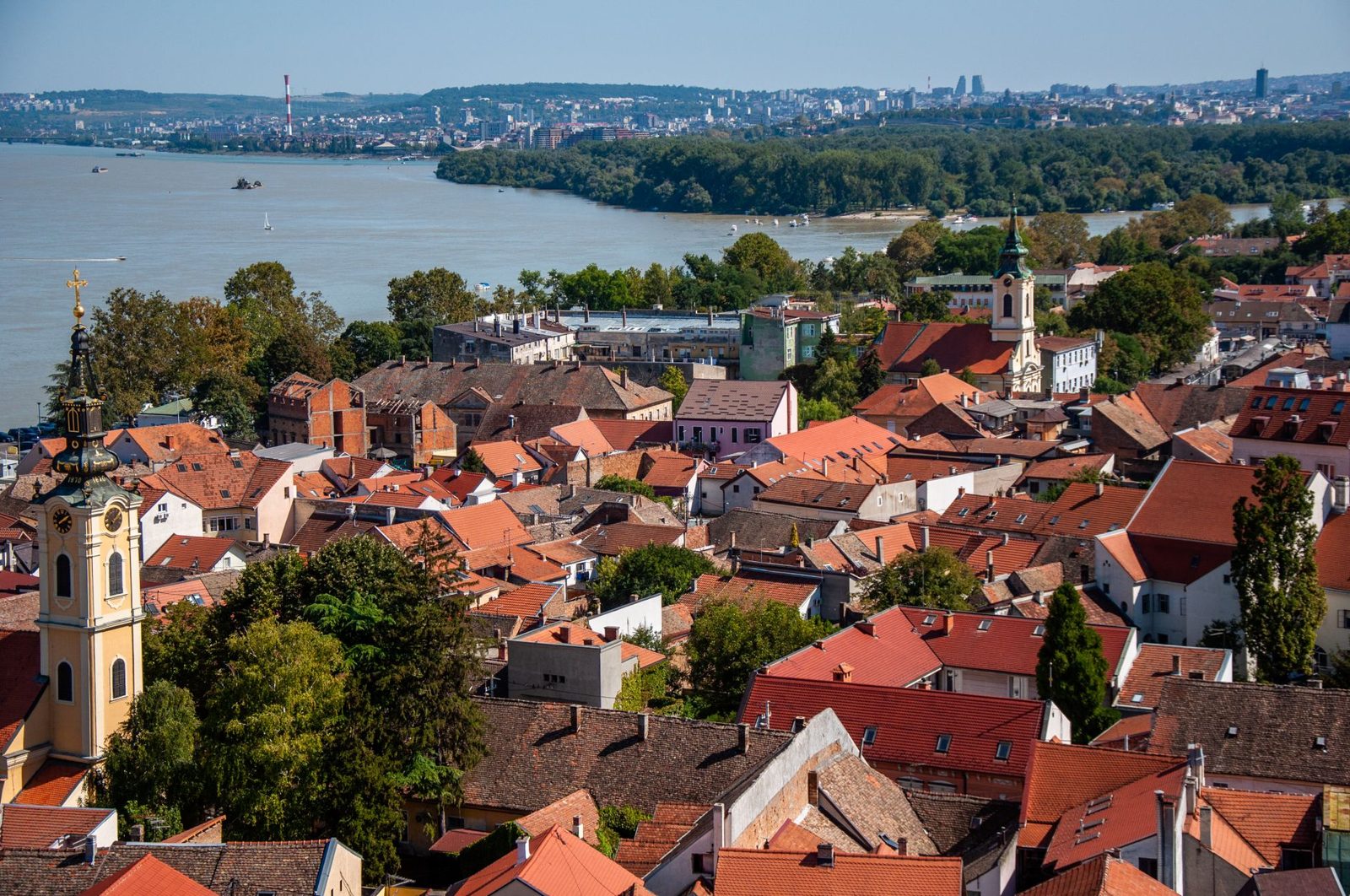
The heart of Szentendre is Fő tér, a pretty triangular square ringed by baroque merchants’ houses in faded pastels, with an iron memorial cross at its centre. From here, narrow cobbled streets climb and wind in every direction, lined with galleries, craft shops, cafés and tiny churches. It is genuinely photogenic at every turn, and the gentle climb up to Templom tér (Church Square) rewards you with a lovely view over the rooftops to the Danube.
The churches
Szentendre’s Serbian heritage, the result of Orthodox Serbs settling here centuries ago, gives the town an unusual concentration of churches. The Blagovestenska Church on Fő tér and the hilltop Belgrade (Serbian Orthodox) Cathedral with its small ecclesiastical art collection are the standouts. The Catholic parish church up on Templom tér is worth the short climb mainly for the view. None take long, but they add to the town’s distinctive character.
Museums and galleries
For such a small place, Szentendre packs in museums. The Margit Kovács Ceramics Museum, devoted to one of Hungary’s best-loved ceramic artists, is the most rewarding. The Szentendre Marzipan Museum is a fun, kitschy stop (and a good one with kids), with elaborate marzipan sculptures. And just outside town is the big draw for a full-day visit: the Hungarian Open-Air Museum (Skanzen), a sprawling reconstruction of traditional Hungarian village life across regions and centuries, reachable by local bus from the centre.
The Hungarian Open-Air Museum (Skanzen)
If you turn your trip into a full day, the Hungarian Open-Air Museum, known as the Skanzen, is the reason to do it. A few kilometres outside the centre (reachable by local bus), it is a vast, beautifully laid-out reconstruction of traditional Hungarian rural life, with original farmhouses, churches, watermills and workshops relocated from villages across the country and arranged by region. Costumed staff demonstrate old crafts, there is a narrow-gauge railway around the grounds, and seasonal festivals bring it to life. It is genuinely engaging for adults and children alike, and gives you a side of Hungary that the grand city of Budapest never shows. Allow two to three hours, and check its seasonal opening before you go.
Szentendre’s art scene
Szentendre’s identity as an artists’ town is not just marketing, painters and sculptors have lived and worked here since the early 20th century, and that legacy fills the town with galleries and studios. Beyond the Margit Kovács ceramics collection, look for the contemporary art at the ArtMill (MűvészetMalom) and the various small private galleries tucked into the lanes, where you can often meet the artists and buy directly. Even if you are not buying, browsing the art is one of the most pleasant ways to spend an hour here, and it sets Szentendre apart from the other Danube Bend towns.
A walk along the Danube
Do not spend all your time in the lanes, walk down to the riverfront promenade for a different perspective. The Danube slides quietly past, there are benches and cafés with water views, and in the warmer months the seasonal ferries and pleasure boats come and go. It is a peaceful counterpoint to the busy old town, and a lovely spot to sit with an ice cream or a coffee and watch the river before catching your train back to the city.
Shopping and local crafts
Szentendre is a good place to pick up souvenirs that are a cut above the Budapest tourist tat, ceramics, folk crafts, handmade paper, and local wine and pálinka. The marzipan shops (Szamos has a famous presence here) are irresistible for edible gifts. Browsing the galleries and craft shops is half the pleasure of the day.
Where to eat
The town has plenty of cafés and restaurants, many with terraces overlooking the square or the river. Try Hungarian classics like goulash and freshwater fish soup, grab a lángos from a stall, and do not leave without something sweet, marzipan, of course, or a chimney cake (kürtőskalács). Riverside spots are pricier and more touristy but the setting is lovely; a few streets back you will find better value.
Half-day or full day?
Szentendre’s old town is comfortably a half-day: a few hours to wander, see a church or two, browse the shops, and have lunch. To make it a full day, add the Skanzen open-air museum (allow two to three hours there), or combine Szentendre with Visegrád further up the Danube Bend. Many visitors pair a relaxed Szentendre morning with an afternoon back in Budapest.
When to go and avoiding crowds
Szentendre is popular and can get busy, especially summer weekends and when river cruises disgorge groups midday. Go early or on a weekday for a calmer experience, and you will have the lanes more to yourself. Spring and autumn are ideal for the weather and lighter crowds; in winter it is quiet and atmospheric but some shops keep shorter hours. See our best time to visit guide.
Practical tips
Wear comfortable shoes for the cobbles, bring some cash for small shops and stalls (cards are common but not universal), and keep your return HÉV ticket handy. If you are visiting the Skanzen, check its opening season and the bus times before you go. Szentendre works for all ages, and its compact, flat-ish centre makes it one of the more family-friendly day trips from the capital.
Combine it with the rest of your trip
Because it is so quick to reach, Szentendre slots easily into a longer Budapest stay, even a spare afternoon. It pairs naturally with the wider Danube Bend, and fits neatly into our 5-day itinerary. For other escapes, compare Eger and Lake Balaton.
Frequently asked questions
How do you get from Budapest to Szentendre?
Take the H5 HÉV suburban train from Batthyány tér (about 40 minutes, frequent service). With a Budapest pass you just need a cheap supplementary ticket. A seasonal Danube ferry is a scenic alternative.
Is Szentendre worth visiting?
Yes, it is the easiest and one of the prettiest day trips from Budapest, a charming baroque artists’ town of cobbled lanes, galleries and riverside cafés, ideal for a relaxed half-day.
How long do you need in Szentendre?
Half a day is enough for the old town, churches and lunch. Add the Hungarian Open-Air Museum (Skanzen) to fill a full day, or combine it with Visegrád on the Danube Bend.