Danube Bend Day Trip: Best Szentendre, Visegrád & Esztergom (2026)
Plan the perfect Danube Bend day trip from Budapest: Szentendre, Visegrád and Esztergom, how to reach each by train, boat or tour, and how to build your day.
In this guide
- What is the Danube Bend?
- The three towns at a glance
- Szentendre: the artists’ town
- Visegrád: castle and citadel
- Visegrad beyond the citadel
- A short history of the bend
- Tips for taking the river boat
- Esztergom: Hungary’s spiritual heart
- How to get there by train
- How to get there by boat
- Guided tour vs doing it yourself
- A perfect Danube Bend day
- When to go
- What to eat
- Combine it with the rest of your trip
- Frequently asked questions
This article contains advertising. Our booking links are routed through a partner that adds commission tracking automatically, so if you book through one we earn a commission from the provider, at no extra cost to you. It never affects what we recommend. Affiliate disclosure
The single best Danube Bend day trip from Budapest takes you an hour upriver to where the Danube swings sharply south and threads between forested hills, past three of Hungary’s most beautiful historic towns: artsy Szentendre, castle-topped Visegrád, and Esztergom with its colossal basilica. It is the classic escape from the capital, close enough to do in a day, scenic enough to feel a world away, and you can travel by train, by boat, or on an organised tour. This guide covers all three towns, how to reach each, and how to build the perfect day.
If you only have time for one of the towns, make it Szentendre (the easiest) or Esztergom (the grandest). For the full menu of escapes, see our day trips from Budapest guide.
What is the Danube Bend?
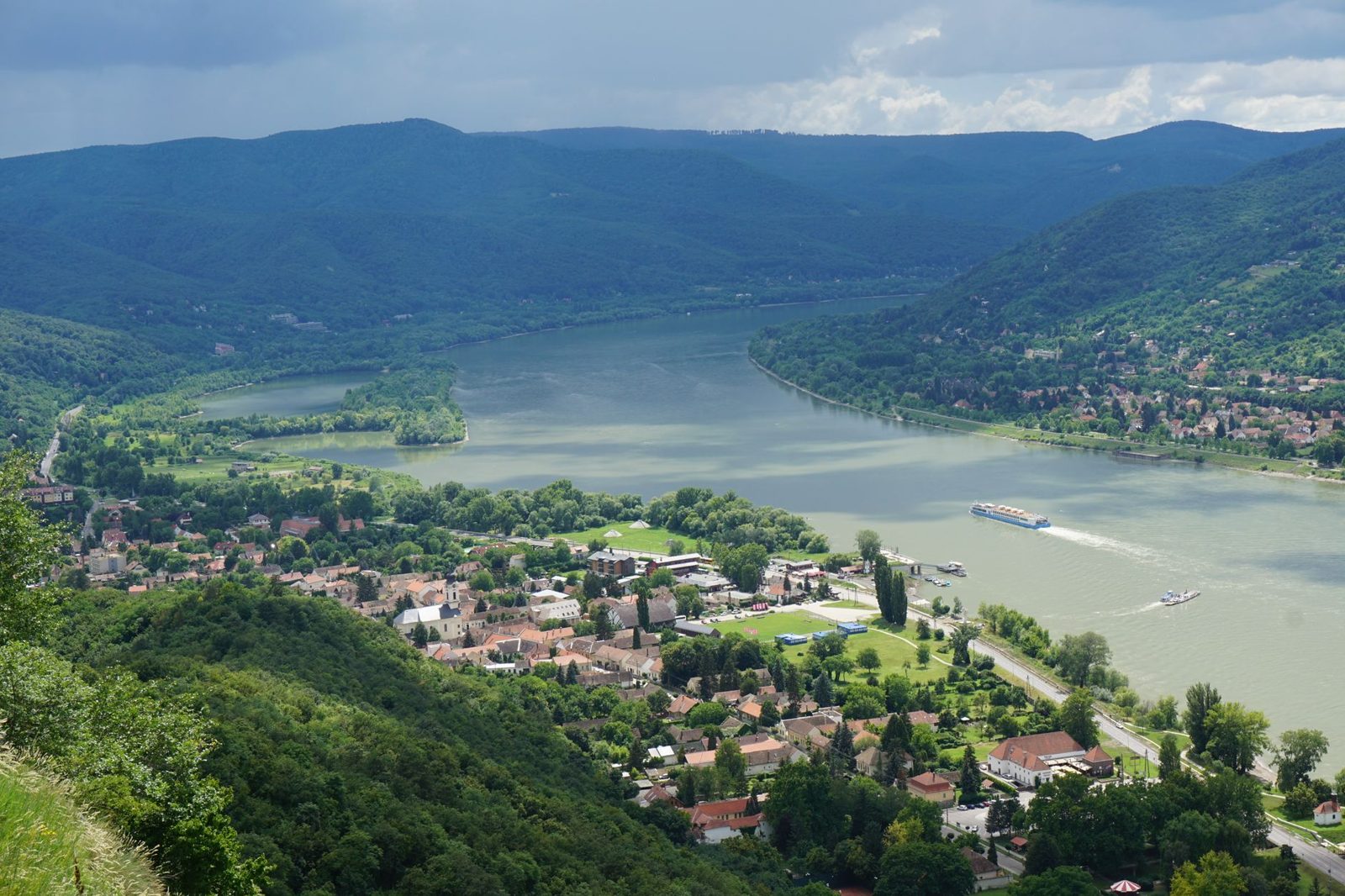
The Danube Bend (Dunakanyar) is the dramatic curve where the great river, having flowed east across Slovakia and Hungary, turns abruptly south toward Budapest. The bend is flanked by the Börzsöny and Visegrád hills, making it one of the prettiest stretches of the Danube anywhere, and it has been strategically and spiritually important for a thousand years, which is why you find a royal palace, a hilltop citadel, and the seat of Hungarian Catholicism all within a few river miles of each other.
The three towns at a glance
Each town has a distinct character. Szentendre is the small, walkable, baroque artists’ town, all cobbles, galleries and marzipan, the easiest half-day. Visegrád is about the dramatic hilltop citadel and the ruins of a Renaissance royal palace, with the best views over the bend. Esztergom is dominated by the largest church in Hungary, the vast Esztergom Basilica, and was the country’s first capital. You can combine two in a day with care, or savour one slowly.
Szentendre: the artists’ town
Closest to Budapest and the simplest to reach, Szentendre is a tangle of cobbled lanes, pastel baroque houses, Serbian Orthodox churches and small museums, long a haven for painters and ceramicists. It is touristy but genuinely charming, and perfect for a relaxed wander with coffee and cake. Because it is so easy to reach on its own, many people do Szentendre as a standalone half-day; we have a dedicated Szentendre day trip guide for that.
Visegrád: castle and citadel
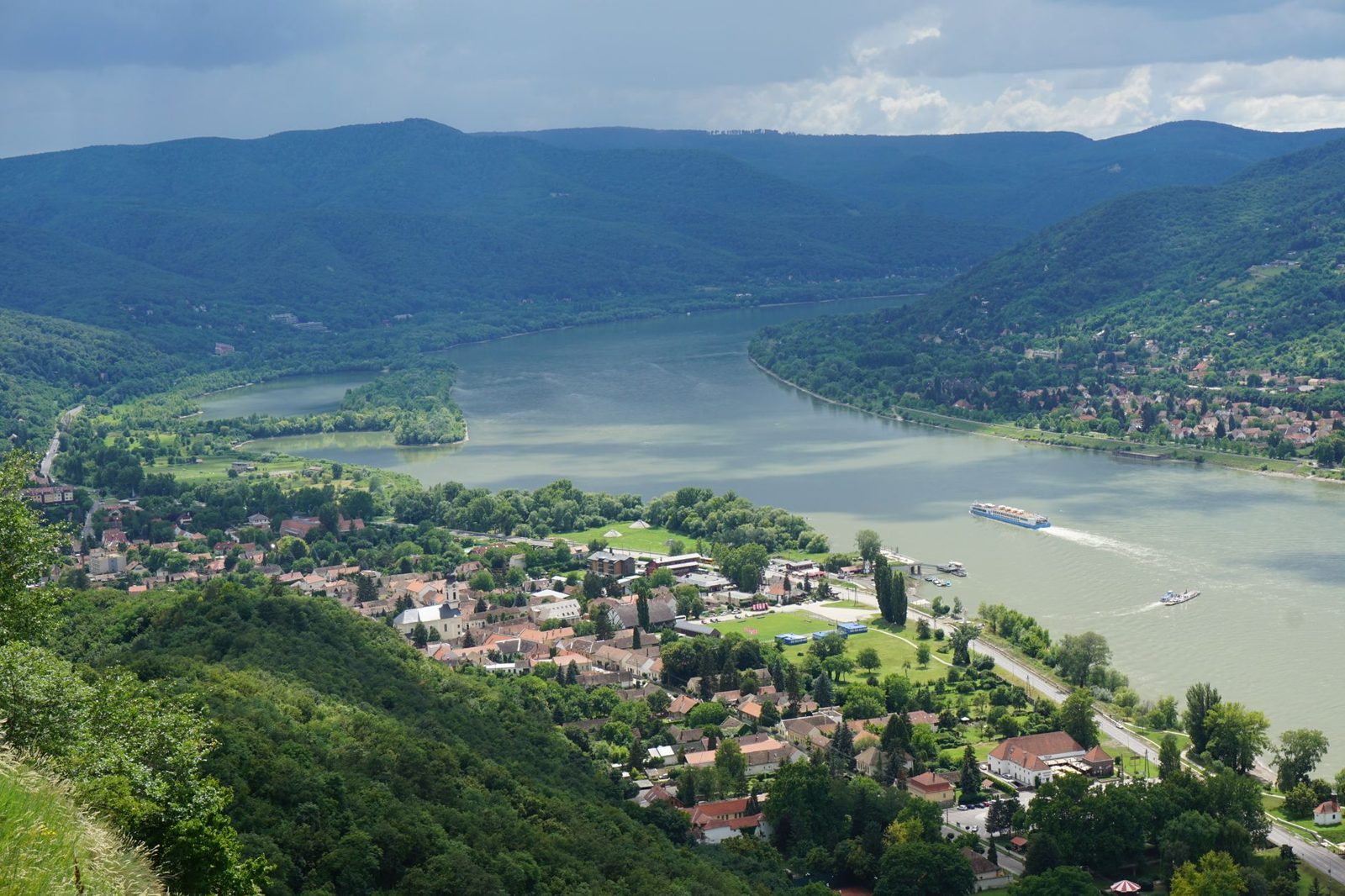
Perched on a hill above the sharpest point of the bend, Visegrád’s medieval Citadel delivers the definitive Danube Bend panorama, the river curving away below you between the hills. Down in the town are the substantial ruins of the Renaissance Royal Palace, once a seat of Hungarian kings. Visegrád takes a little more effort to reach (there is no direct train, see below), but the views from the Citadel are the image people remember from the whole region.
Visegrad beyond the citadel
There is more to Visegrad than the view. The Royal Palace at the base of the hill, once one of the grandest courts in medieval Europe under King Matthias Corvinus, has been partly reconstructed and hosts a small museum and, in summer, lively medieval games and jousting events that are a hit with families. Up near the Citadel, a summer bobsled run (toboggan) sends you careening down the hillside on a rail, an unexpectedly fun way to descend. The Citadel itself, reached by a steep walk or a short taxi or bus ride, is a genuine medieval fortress, and the panorama from its walls over the river bending away between the hills is the single most photographed view in the region. Budget a couple of hours to do Visegrad justice rather than treating it as a quick stop.
A short history of the bend
This stretch of river has been pivotal for a millennium. The Romans fortified the Danube frontier here; medieval Hungarian kings built their palace at Visegrad and crowned the region with hilltop fortresses; and Esztergom served as the royal and ecclesiastical capital, the birthplace of Hungary’s first king, Saint Stephen. Walking these towns, you are tracing the spine of early Hungarian history, which is part of what makes the Danube Bend more than just a scenic outing. It connects directly to the wider story told in our history and culture guide.
Tips for taking the river boat
If you do the boat, a few practicalities help. Services are seasonal (roughly spring to autumn) and slower than the train, so check timetables and allow a relaxed pace, this is a journey to savour, not a quick transfer. The most satisfying approach for many is to travel one way by boat (for the scenery) and the other by train (for speed), so you are not committed to the full slow round trip. Bring a light layer for the breeze on deck, and book ahead in peak summer when the popular sailings fill up.
Esztergom: Hungary’s spiritual heart
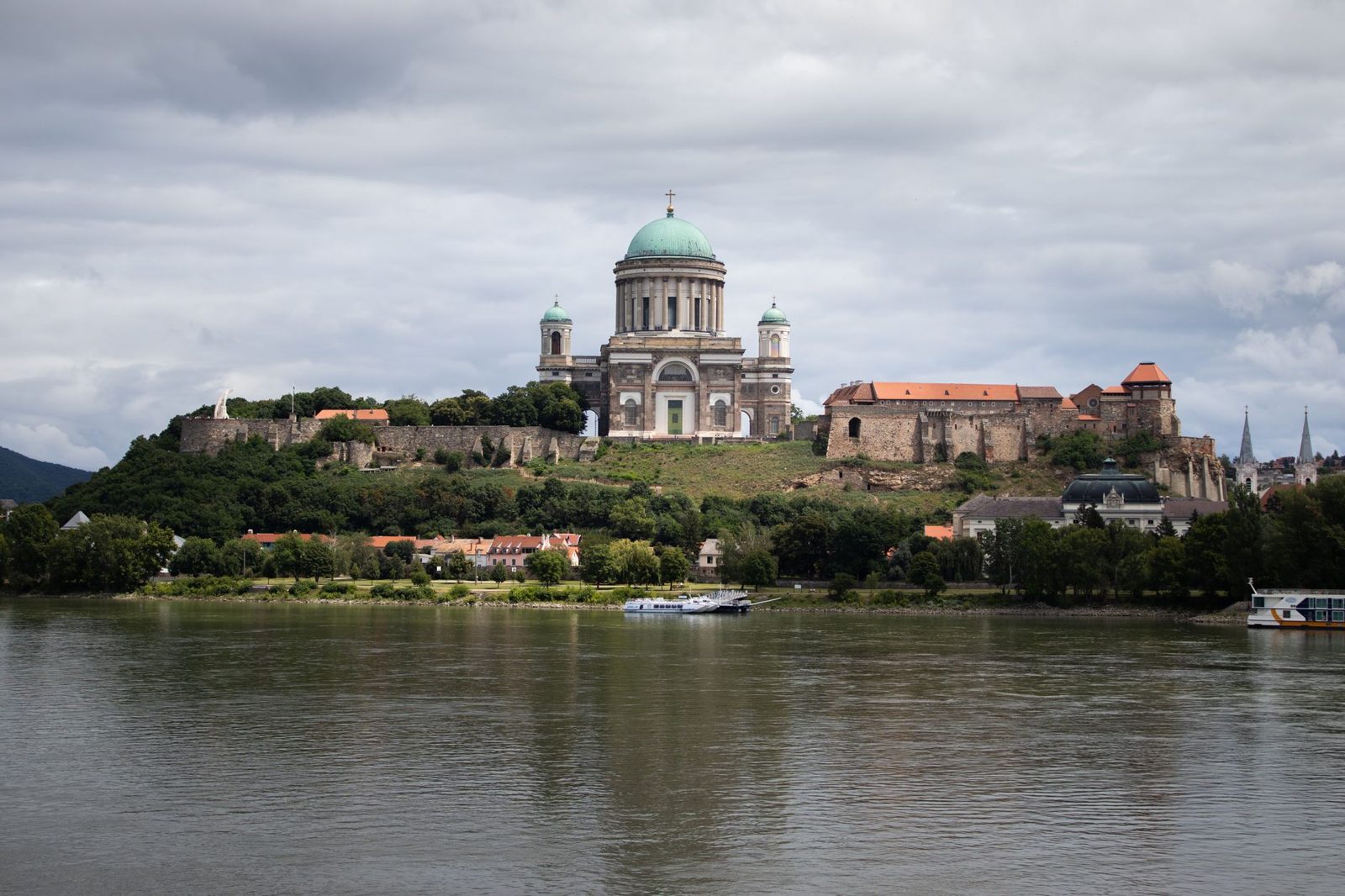
The largest and grandest of the three, Esztergom was Hungary’s capital in the early Middle Ages and remains the seat of the Catholic Church in the country. Its monumental Basilica, the biggest in Hungary, sits high above the river with a dome you can climb for sweeping views into Slovakia just across the water. The treasury and crypt are worth a look, and the old town below has a quieter, lived-in feel than touristy Szentendre.
How to get there by train
Public transport works well for two of the three towns. For Esztergom, frequent trains run from Budapest’s Nyugati station (about 1.5 hours). For Visegrád, there is no direct train; the trick is to take a train from Nyugati to Nagymaros-Visegrád station (under an hour), then walk a few minutes to the ferry that crosses the river to Visegrád, with departures roughly hourly. For Szentendre, take the H5 HÉV suburban train from Batthyány tér (about 40 minutes). See our public transport guide for tickets and passes.
How to get there by boat
The most scenic option, in season, is the river. Boats run up the Danube from Budapest to the bend towns roughly between spring and autumn (the boat to Esztergom takes around 2 hours 20 minutes; Szentendre about 2 hours). The boat is slower than the train but the journey is the point, gliding up the river past the hills. A popular strategy is to take the faster train out and the leisurely boat back, or vice versa. Check current seasonal timetables before you plan around it.
Guided tour vs doing it yourself
Organised full-day tours typically combine two or three towns with lunch and return transport, often including a Danube boat leg, and they remove all the logistics, ideal if you want to see Visegrád and Esztergom together without juggling trains and ferries. Doing it independently is cheaper and more flexible, and very easy for Szentendre or Esztergom alone. My rule of thumb: solo for one town, consider a tour if you want to bag all three in a day.
A perfect Danube Bend day
If you want the highlights in one day independently, here is a workable plan: take an early train to Esztergom, see the Basilica and old town in the morning, then, if you are ambitious and have a car or a tour, continue to Visegrád for the Citadel view in the afternoon. If relying on public transport, it is more relaxing to pick one town: Esztergom for grandeur, Visegrád for views, or Szentendre for charm. Trying to cram all three by train alone makes for a stressful day.
When to go
Late spring through early autumn is ideal, the hills are green, the river boats are running, and the views are at their best. Autumn brings beautiful colour to the Visegrád hills. Winter is quieter and many boats stop, but the Esztergom Basilica is impressive year-round. Avoid planning a boat-dependent trip in the off-season. Our best time to visit guide has the seasonal detail.
What to eat
Each town has riverside restaurants and cafés serving Hungarian classics, freshwater fish soup (halászlé), goulash, and plenty of lángos and chimney cake from street stalls, especially in Szentendre. Szentendre is also famous for marzipan. Pack light or plan a long lunch with a river view; it is part of the pleasure of the day.
Combine it with the rest of your trip
A Danube Bend day pairs well with a longer Budapest stay; slot it into a four- or five-day plan once you have seen the city itself. Our 5-day itinerary builds in a day trip, and if you are visiting nearby, Szentendre and Visegrád also feature in regional combinations with Slovakia. For other escapes, compare with Eger and Lake Balaton.
Frequently asked questions
Is the Danube Bend worth a day trip from Budapest?
Yes. It offers three historic towns, a royal palace, a hilltop citadel and Hungary’s largest basilica, all within an hour or so of the capital, set along the prettiest stretch of the Danube. It is the classic Budapest day trip.
How do I get to the Danube Bend from Budapest?
By train (Esztergom from Nyugati in ~1.5 hours; Nagymaros plus ferry for Visegrád; H5 HÉV to Szentendre in ~40 minutes), by seasonal river boat, or on an organised tour that combines the towns.
Can you visit all three Danube Bend towns in one day?
By organised tour or car, yes. By public transport alone it is rushed, better to pick one town, or combine two (such as Esztergom and Visegrád) with careful planning.
Which Danube Bend town is best?
Szentendre for charm and ease, Visegrád for the best views from its citadel, and Esztergom for its monumental basilica. If you can only do one, choose based on what appeals most.
If the Bend leaves you wanting more of rural Hungary, the next step north is Hollókő — a UNESCO-listed Palóc village of whitewashed houses that feels a century removed from Budapest.
Mobile data matters more on this trip than in the city — the Danube Bend timetables change seasonally and the printed ones at the pier are not always current. Sort a local SIM or eSIM before you go and check departures live.
Last updated June 2026. Photos: Irina Balashova (Pexels); Irina Balashova (Pexels); Michal Kuník (Pexels).