Budapest Food Guide: What to Eat & Where to Eat It
Budapest is one of Europe’s most underrated food capitals. While the city is famous for its thermal baths and grand architecture, its culinary scene is equally deserving of attention — a vibrant mix of centuries-old Hungarian tradition, creative modern gastronomy, and an increasingly diverse international food landscape. From hearty stews simmered with sweet Hungarian paprika to Michelin-starred tasting menus that reimagine Magyar flavors, from deep-fried lángos devoured at market stalls to artisanal pastries in century-old coffeehouses, Budapest rewards the hungry traveler at every turn.
This Budapest food guide covers everything you need to know about eating in the Hungarian capital: the essential traditional dishes you must try, where to find the best restaurants across every budget, the street food scene, iconic markets, the cafe and pastry culture, Hungarian wines and spirits, and practical tips to help you eat like a local rather than a tourist.
Whether you are a dedicated foodie planning your meals around Michelin recommendations or a budget traveler looking for the most satisfying bowl of goulash for under $5, this guide will help you navigate the Budapest food guide landscape with confidence.
Essential Hungarian Dishes You Must Try in Budapest
Hungarian cuisine is built on a foundation of bold flavors, generous portions, and a few key ingredients that appear again and again: paprika (both sweet and hot), sour cream (tejföl), onions, and pork fat. The food is hearty, deeply satisfying, and far more nuanced than its reputation might suggest. Here are the traditional dishes every visitor to Budapest should try:
Gulyás (Goulash) — Hungary’s National Dish
Forget everything you think you know about goulash. In Hungary, gulyás is not a thick stew — it is a soup. A rich, paprika-red broth loaded with tender chunks of beef, potatoes, carrots, and peppers, seasoned with caraway seeds and often served in a small metal cauldron (bogrács). The dish originated with Hungarian cattle herders on the Great Plain and has been the country’s culinary calling card for centuries. Every restaurant in Budapest serves its own version, but the best ones use high-quality beef shank or shin, cook it low and slow, and let the paprika do the talking. Expect to pay 2,500–4,500 HUF ($7–12) for a generous bowl at a traditional restaurant.
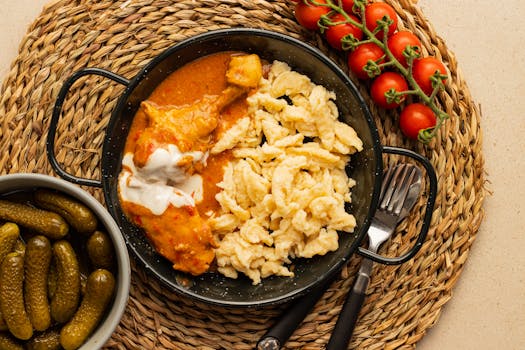
Chicken Paprikash (Paprikás Csirke)
If goulash is Hungary’s most famous dish internationally, chicken paprikash may be its most beloved at home. Tender chicken pieces are simmered in a velvety sauce of onions, sweet paprika, and generous amounts of sour cream (tejföl), creating a dish that is simultaneously rich, tangy, and deeply comforting. It is traditionally served over nokedli — small, irregular Hungarian egg dumplings similar to German spätzle. The combination of the creamy paprika sauce soaking into the soft dumplings is one of the great simple pleasures of Hungarian cooking.
Lángos — Hungary’s Beloved Street Food
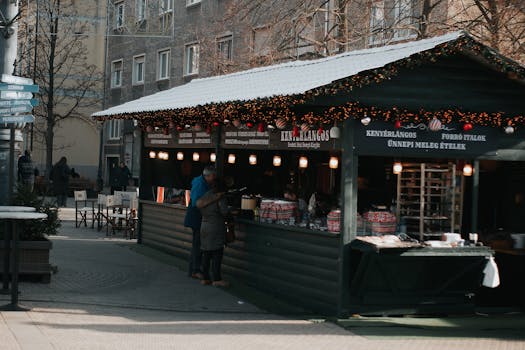
Lángos is the undisputed king of Hungarian street food: a disc of deep-fried dough that is crispy and golden on the outside, soft and pillowy inside, and absolutely irresistible. The classic topping is a generous spread of sour cream and grated cheese (tejfölös-sajtos), though you can also find versions with garlic butter, ham, or even Nutella. Lángos is sold at markets, street stalls, and dedicated lángos shops throughout Budapest. The best ones are made fresh to order — if the dough has been sitting around, move on. The Central Market Hall has several excellent lángos vendors on its upper floor. Expect to pay 1,200–2,500 HUF ($3–7) depending on toppings and location.
Kürtőskalács (Chimney Cake)
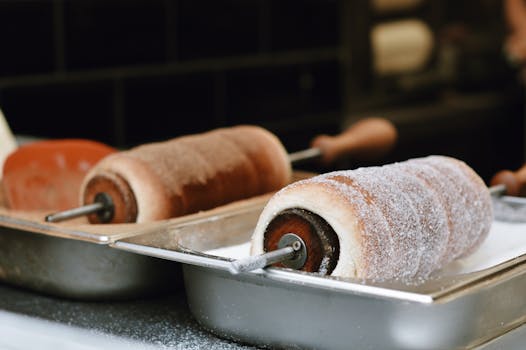
This cylindrical pastry gets its name from its chimney-like shape. Sweet yeast dough is wrapped around a wooden or metal spit, rolled in sugar, and slowly rotated over hot coals until the exterior caramelizes into a crispy, golden shell while the inside stays soft and warm. Traditional toppings include cinnamon, ground walnuts, or cocoa, though modern versions may feature everything from Nutella to ice cream stuffed inside. Kürtőskalács originated in Transylvania and has become one of Budapest’s most popular sweet street foods. You will find vendors throughout the city center, especially near Váci Street and in the Christmas markets.
More Must-Try Hungarian Dishes
Töltött Káposzta (Stuffed Cabbage): Cabbage leaves stuffed with a seasoned mixture of minced pork and rice, slow-cooked in a tomato-paprika sauce and finished with a generous dollop of sour cream. This is Hungarian comfort food at its finest and a staple of family celebrations.
Halászlé (Fisherman’s Soup): A fiery red soup made from freshwater fish (usually carp or catfish), onions, and an enormous quantity of paprika. Traditionally associated with the southern city of Szeged and with Christmas Eve dinners, halászlé is intensely flavored and not for the faint of heart — the heat from the hot paprika can be substantial.
Hortobágyi Palacsinta (Savory Stuffed Pancakes): Thin crêpes filled with a minced veal or chicken mixture in a paprika-cream sauce, then baked and served as a starter or main course. Named after the Hortobágy region of the Great Plain, this dish beautifully illustrates the Hungarian talent for turning simple ingredients into something elegant.
Lecsó: A thick vegetable stew of peppers, tomatoes, and onions, often enriched with sausage or eggs. Lecsó is Hungary’s answer to ratatouille — a celebration of summer vegetables that appears on almost every traditional restaurant menu.
Túrós Csusza: Egg noodles tossed with fresh túró (a Hungarian cottage cheese), sour cream, and crispy bacon pieces. Deceptively simple, deeply satisfying, and a perfect example of how Hungarian cuisine transforms humble ingredients into memorable dishes.
Dobos Torta: A five-layer sponge cake with chocolate buttercream, topped with a distinctive hard caramel glaze. Created by confectioner József C. Dobos in 1884, it remains one of Hungary’s most celebrated desserts and a fixture at every traditional Budapest coffeehouse.
Understanding Hungarian Paprika: The Soul of Budapest Food
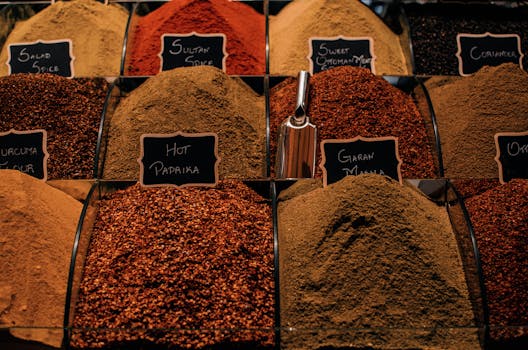
No Budapest food guide would be complete without discussing paprika, the spice that defines Hungarian cuisine. Hungarian paprika (Capsicum annuum) comes in eight official grades, from the mild, sweet édesnemes to the fiery erős. The most commonly used variety in cooking is édesnemes (noble sweet), which provides the characteristic deep red color and sweet, slightly fruity flavor that distinguishes Hungarian dishes from their Central European neighbors.
The best Hungarian paprika comes from two regions: Szeged in the south and Kalocsa in central Hungary. At the Central Market Hall, you can buy authentic paprika directly from producers — look for tins or bags labeled with the protected designation of origin. A tin of high-quality Hungarian paprika makes one of the best souvenirs you can bring home from Budapest, and it will transform your cooking for months to come.
Where to Eat in Budapest: Restaurant Guide by Budget
Fine Dining and Michelin-Starred Restaurants
Budapest’s fine dining scene has exploded in recent years, with several restaurants earning Michelin stars and international recognition. What makes Budapest special in this category is the value: a multi-course tasting menu at a starred restaurant here costs roughly what you would pay for a main course at an equivalent establishment in Paris or London.
Stand (District VI) holds two Michelin stars and is widely regarded as Budapest’s best restaurant. Chef Tamás Széll creates refined Hungarian dishes using seasonal, locally sourced ingredients in an approachable, relaxed atmosphere. The tasting menu (around 45,000–55,000 HUF / $120–145) is an extraordinary journey through modern Hungarian gastronomy.
Costes (District IX) was the first restaurant in Hungary to earn a Michelin star and remains a benchmark for creative European cuisine with Hungarian accents. Babel (District V) offers stunning Danube views alongside innovative cooking. Essência brings Portuguese-Hungarian fusion to the table. Each represents a different facet of Budapest’s increasingly sophisticated dining landscape.
Traditional Hungarian Restaurants (Mid-Range)
The heart of Budapest’s food scene lies in its traditional Hungarian restaurants, where you can eat exceptionally well for 5,000–12,000 HUF ($13–32) per person including drinks.
Kádár Étkezde (District VII) is a Budapest institution that reopened in autumn 2025 after a four-year hiatus. The checked tablecloths, communal tables, and honest home-style Hungarian cooking make it feel like eating at a Hungarian grandmother’s house — if your grandmother happened to be an exceptional cook. Arrive early for lunch, as popular dishes sell out.
Gettó Gulyás (District VII) in the Jewish Quarter serves some of the best traditional Hungarian food in the city at remarkably fair prices. The goulash, paprikash, and Hortobágyi palacsinta are all outstanding. Menza (District VI) on Liszt Ferenc tér offers retro-styled Hungarian comfort food in a beautiful setting. Két Szerecsen serves excellent Hungarian dishes with a modern twist on Nagymező utca.
Budget Dining: Étkezde and Affordable Eats
For the best value in Budapest, seek out an étkezde — a traditional Hungarian canteen or workers’ cafeteria. These no-frills establishments serve hearty, home-cooked Hungarian meals at prices that seem almost impossibly low: a full meal with soup, main course, and a drink often costs just 2,000–3,500 HUF ($5–9). The food is displayed behind glass counters, and you point at what you want. The atmosphere is utilitarian, the portions are enormous, and the cooking is the kind of honest, comforting fare that defines everyday Hungarian food culture.
Popular étkezde options include Kádár Étkezde, Frici Papa in the city center, and numerous unmarked neighborhood spots that cater primarily to local workers. Do not be intimidated by the lack of English menus or tourist-friendly décor — these places represent the authentic backbone of Budapest’s food scene.
Budapest Street Food and Food Markets
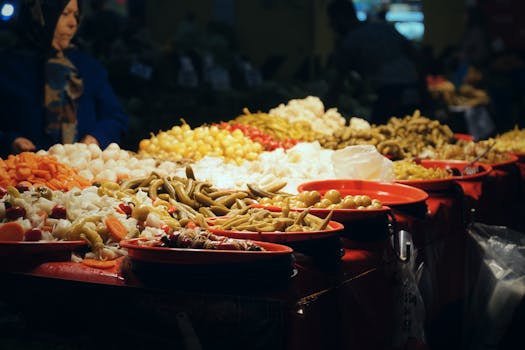
Budapest’s street food scene extends far beyond lángos and kürtőskalács. The city has embraced the global street food movement while maintaining a strong identity rooted in Hungarian flavors.
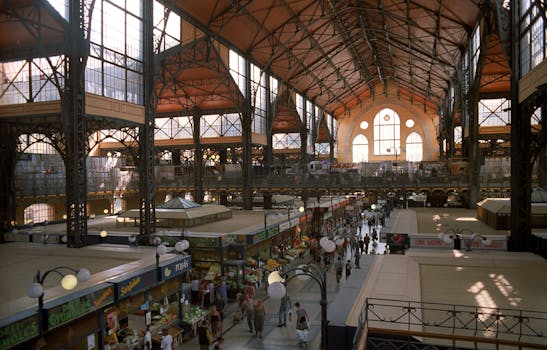
The Central Market Hall (Nagyvásárcsarnok) on Fővám tér is Budapest’s most famous food destination and an essential stop on any Budapest food guide itinerary. The ground floor is a working market selling fresh produce, meat, paprika, foie gras, and Hungarian specialty products. The upper floor has food stalls serving lángos, goulash, stuffed cabbage, and other quick Hungarian meals. Go early in the morning to see the market at its most authentic before the tourist crowds arrive. The market is closed on Sundays.
Hold Street Market (Hold utcai Vásárcsarnok) in District V recently underwent a beautiful renovation and has emerged as one of Budapest’s best food halls, with a mix of traditional market vendors and modern food stalls offering everything from Hungarian craft beer to artisanal sourdough.
Karavan Street Food next to Szimpla Kert in the Jewish Quarter is a collection of food trucks and stalls offering a diverse range of options: Hungarian-style burgers, Asian fusion, Mexican, vegan options, and more. It is an excellent choice for groups where everyone wants something different.
Budapest’s Legendary Cafe and Pastry Culture
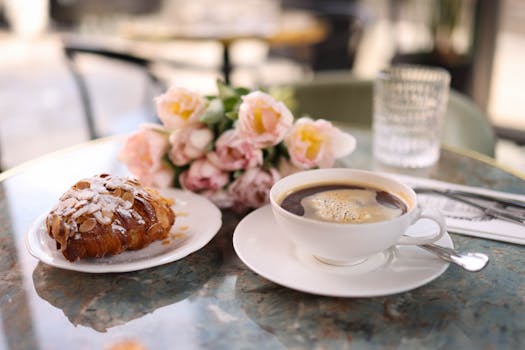
Budapest’s coffeehouse tradition dates back to the late 19th century, when the city’s grand cafes served as living rooms for writers, artists, politicians, and intellectuals. Several of these historic coffeehouses have been beautifully restored and continue to operate, offering visitors a chance to experience a uniquely Central European cultural institution while enjoying excellent coffee and traditional pastries.
New York Café (District VII), opened in 1894, is often called the most beautiful cafe in the world. Its ornate interior of gilded columns, frescoed ceilings, and crystal chandeliers is genuinely breathtaking. While prices are tourist-level and there is usually a queue, the experience of having coffee and cake in this palatial setting is worth it at least once.
Gerbeaud on Vörösmarty tér has been serving pastries since 1858 and remains the gold standard for traditional Hungarian confectionery. Café Central on Károlyi utca is a beautifully restored literary cafe with excellent pastries and a more relaxed atmosphere than the tourist-heavy options. Ruszwurm, a tiny confectionery in the Castle District dating to 1827, is Budapest’s oldest cafe.
Must-try pastries include the Dobos Torta (layered chocolate-caramel cake), Eszterházy Torta (walnut and buttercream layers), Rétes (Hungarian strudel filled with sour cherry, poppy seed, or túró), and Somlói Galuska (a trifle-like dessert of sponge cake, chocolate sauce, whipped cream, and rum).
Hungarian Wine, Pálinka, and the Budapest Drinks Scene
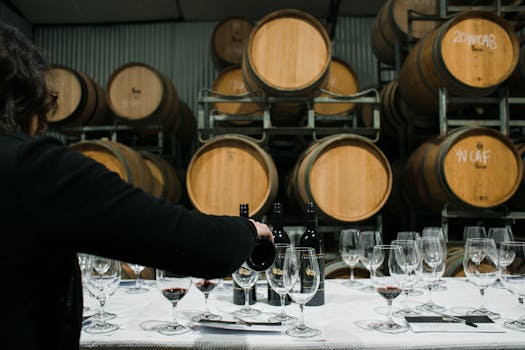
Hungary is one of Europe’s oldest and most underappreciated wine-producing countries, with 22 official wine regions and a history of winemaking that stretches back to Roman times. Budapest is the perfect place to explore Hungarian wines, with wine bars, tasting rooms, and restaurants throughout the city offering curated selections.
Key Hungarian Wine Regions and Styles: Tokaj in the northeast produces the legendary Tokaji Aszú, a sweet wine made from botrytized (noble rot) grapes that was once called “the wine of kings, the king of wines” by Louis XIV. Dry Tokaj Furmint has also gained international recognition. Eger is famous for Egri Bikavér (Bull’s Blood), a robust red blend, as well as excellent single-varietal wines. Villány in the south produces Hungary’s finest red wines, particularly from Cabernet Franc and Merlot.
Pálinka is Hungary’s traditional fruit brandy, distilled from a variety of fruits including plum (szilva), apricot (barack), cherry (cseresznye), and pear (körte). A proper Hungarian pálinka should be sipped slowly, not shot — it is a spirit to be savored. Try it at a pálinka bar like Élesztő Pálinka Bar or simply order one as a digestif after dinner. Hungarian law strictly regulates pálinka production, and the best examples are smooth, aromatic, and remarkably refined.
Unicum, a bitter herbal liqueur made from a secret recipe of over 40 herbs and spices, is Hungary’s national drink and has been produced by the Zwack family since 1790. It is typically served as a digestif and is an acquired taste — bitter, complex, and intensely herbal. The Zwack Unicum Museum near the Central Market Hall offers tastings and factory tours.
Eating and Drinking in Budapest’s Ruin Bars
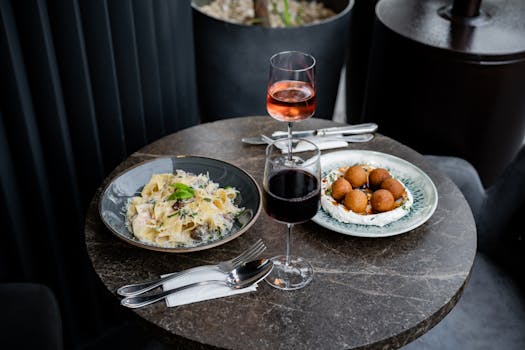
Budapest’s famous ruin bars (romkocsmák) — bars built in abandoned buildings and courtyards in the Jewish Quarter — are primarily known for their eclectic décor and vibrant nightlife, but several also serve excellent food. Szimpla Kert, the original and most famous ruin bar, hosts a farmers’ market every Sunday morning and has an on-site restaurant serving Hungarian and international dishes. Mazel Tov (technically a ruin restaurant rather than a bar) serves outstanding Middle Eastern and Mediterranean food in a stunning glass-roofed courtyard garden.
The Jewish Quarter food scene extends well beyond ruin bars. The neighborhood is home to some of Budapest’s best restaurants, from traditional Hungarian to modern international cuisine. It is also the center of Budapest’s Jewish culinary heritage — look for flódni (a layered pastry with apple, walnut, and poppy seed) and traditional Jewish-Hungarian dishes at specialist bakeries and restaurants in the area.
Practical Tips for Eating in Budapest
Tipping: A 10% tip is standard at sit-down restaurants in Budapest. Many restaurants add a service charge (usually 10–12%) automatically — check your bill before adding an additional tip. At casual eateries, étkezde, and takeaway spots, tipping is not expected but rounding up is appreciated.
Reservations: For fine dining and popular mid-range restaurants, reserve at least a few days in advance, especially for weekend dinners. Casual restaurants and étkezde are walk-in only.
Meal Times: Hungarians traditionally eat their main meal at lunch, and many traditional restaurants offer excellent-value lunch menus (napi menü) with a soup and main course for 2,000–3,500 HUF ($5–9). Dinner service typically starts around 6:00 PM, with peak dining between 7:00 and 9:00 PM.
Menu Language: Most restaurants in the tourist areas have English menus, but venture into local neighborhoods and you may encounter Hungarian-only menus. The Google Translate camera feature works well for deciphering Hungarian menus.
Food Allergies and Dietary Requirements: Budapest’s restaurant scene has become increasingly accommodating of dietary requirements. Vegetarian and vegan options are widely available in the city center, though traditional Hungarian restaurants may have limited choices. Gluten-free awareness is growing but not yet universal. If you have serious allergies, learning the Hungarian words for your allergens is advisable.
Water: Tap water in Budapest is safe to drink and of excellent quality. Restaurants will usually ask if you want mineral water (ásványvíz) — specify csapvíz (tap water) if you prefer free water, though not all restaurants offer it willingly.
Budapest Food Tours and Culinary Experiences
A guided food tour is one of the best ways to immerse yourself in Budapest’s food culture, especially if you are visiting for the first time. The best tours combine food tastings with cultural context, taking you to places you would never find on your own while explaining the history and traditions behind what you are eating.
Look for tours that visit the Central Market Hall, explore the Jewish Quarter food scene, include a stop at an étkezde, and offer tastings of wine and pálinka. The best operators use small groups (12 or fewer) and include generous portions of food. Expect to pay 15,000–30,000 HUF ($40–80) per person for a comprehensive half-day food tour. Tours operating through the Jewish Quarter that combine food with historical context are particularly worthwhile.
Seasonal Hungarian Foods to Look For
Spring (March – May): Fresh asparagus (spárga) appears on menus across the city, often in creamy soups or alongside Hungarian-style hollandaise. Wild garlic (medvehagyma) features in seasonal specials. Easter brings special dishes including ham, boiled eggs, and traditional Easter bread.
Summer (June – August): Cold fruit soups (meggyleves — sour cherry soup — is the most famous) appear as starters. Fresh lángos at outdoor markets is at its best. Summer salads, grilled meats, and lighter fare balance the traditionally hearty Hungarian kitchen.
Autumn (September – November): Game meats (venison, wild boar, pheasant) appear on menus. New-vintage wines are celebrated, particularly in November. Chestnut (gesztenye) features in both savory and sweet dishes.
Winter (December – February): Hearty stews and soups dominate. Christmas markets offer kürtőskalács, mulled wine (forralt bor), and roasted chestnuts. Christmas Eve traditionally features halászlé (fish soup) and bejgli (poppy seed or walnut rolls). Farsang (Carnival season) before Lent brings doughnuts (fánk) to every bakery.
Budapest Food Guide by Neighborhood
District V (Belváros-Lipótváros) — The City Center
The central district has the highest concentration of restaurants but also the most tourist traps. The key to eating well here is knowing where to look. Avoid restaurants on Váci Street that have touts standing outside or picture menus in multiple languages — these are almost always overpriced and mediocre. Instead, head to the side streets where you will find excellent options like Babel (Michelin-starred, overlooking the Danube), Borkonyhya (wine-focused modern Hungarian), and Hold Street Market for a diverse food hall experience. The area around the Basilica has several strong options including the excellent Stand restaurant.
District VI (Terézváros) — Andrássy Avenue and Beyond
The grand boulevard of Andrássy út and the surrounding streets offer some of Budapest’s best dining. Liszt Ferenc tér is a lively restaurant square with several good options including Menza (retro Hungarian) and Két Szerecsen (bistro-style). Nagymező utca, known as Budapest’s Broadway, has a growing cluster of quality restaurants. This district is also home to several excellent Asian restaurants, reflecting Budapest’s growing international food diversity.
District VII (Erzsébetváros) — The Jewish Quarter
The former Jewish Quarter has become Budapest’s most exciting food neighborhood. Beyond the ruin bars, you will find Kádár Étkezde (traditional Hungarian), Gettó Gulyás (excellent goulash), Mazel Tov (Middle Eastern in a stunning setting), Kőleves (eclectic garden restaurant), and numerous specialty coffee shops, bakeries, and international restaurants. The Sunday farmers’ market at Szimpla Kert is a must-visit for food lovers. The neighborhood is also the place to explore Budapest’s Jewish culinary heritage, with bakeries selling flódni and traditional Jewish-Hungarian pastries.
District VIII (Józsefváros) — The Palace Quarter
The rapidly gentrifying Palace Quarter (Palotanegyed) has become a hotspot for independent restaurants and cafes. This is where you will find some of Budapest’s most creative and affordable eating options, away from the tourist center. Look for local favorites on Krúdy Gyula utca and the streets around the National Museum. The neighborhood rewards exploration — some of Budapest’s best-value meals are in unmarked étkezde and small family-run restaurants here.
Buda Side — Districts I, II, XI, XII
The Buda side has fewer restaurants than Pest but several outstanding options. The Castle District (District I) is mostly tourist-oriented, though Ruszwurm confectionery and the recently refreshed Pest-Buda restaurant are worthwhile exceptions. District II around Frankel Leó út has excellent local restaurants popular with Buda residents. District XI near the Gellért area has a growing food scene. For a special experience, the restaurants in the Buda hills offer Hungarian cuisine with panoramic city views — Hemingway on the Danube shore and Náncsi Néni in Óbuda are local favorites.
Vegetarian and Vegan Eating in Budapest
Hungarian cuisine is traditionally meat-heavy, but Budapest has developed a surprisingly strong vegetarian and vegan scene in recent years. The city now has several dedicated plant-based restaurants, and most mainstream restaurants offer at least a few meat-free options.
Napfényes (District VII) is Budapest’s most established vegan restaurant, serving Hungarian-inspired dishes reimagined entirely plant-based — including a vegan goulash that is remarkably convincing. Edeni Vegan offers affordable vegan buffet-style dining. Hummusbar has multiple locations serving excellent Middle Eastern fare that happens to be largely vegetarian. Many of the city’s modern bistros and international restaurants are also increasingly creative with their vegetarian offerings.
Even at traditional Hungarian restaurants, vegetarians can usually find options: lecsó (pepper and tomato stew, ask for it without sausage), túrós csusza (cottage cheese noodles, often with bacon on the side that can be omitted), rántott sajt (fried cheese), and various soups. Communicating dietary requirements in Hungarian can be challenging — the phrase “nem eszem húst” (I don’t eat meat) is useful, though be aware that some Hungarians may not consider chicken or fish to be “meat” in the same way.
Budapest’s Third-Wave Coffee Scene
Beyond the grand historic coffeehouses, Budapest has developed an excellent specialty coffee scene that rivals cities like Melbourne and Copenhagen. The Hungarian capital now has dozens of third-wave coffee shops serving expertly roasted and carefully prepared single-origin coffees.
Espresso Embassy (District V) was one of the pioneers of Budapest’s specialty coffee movement. My Little Melbourne (multiple locations) brings Australian-style coffee culture to Budapest. Tamp & Pull on Czuczor utca is a favorite among coffee purists. Fekete in the Jewish Quarter combines excellent coffee with a trendy, creative atmosphere. Casino Társalgó, inside a beautifully restored historic building, offers specialty coffee in grand surroundings.
For visitors used to international coffee chains, Budapest’s specialty coffee shops offer dramatically better quality at comparable or lower prices. A high-quality flat white or pour-over typically costs 900–1,500 HUF ($2.50–4), roughly half what you would pay in Western European cities.
Food Souvenirs: What to Bring Home from Budapest
Some of the best souvenirs from Budapest come from its food markets and specialty shops. Here are the most portable and worthwhile food items to bring home:
Hungarian Paprika: The ultimate Budapest food souvenir. Buy from the Central Market Hall or specialty shops for the best quality. Both sweet (édes) and hot (erős) varieties are available. Tin packaging keeps it fresh longest.
Tokaji Wine: A bottle of Tokaji Aszú (sweet) or Tokaji Furmint (dry) is a sophisticated gift. Available at Bortársaság (wine shops) or at the market hall.
Pálinka: Hungarian fruit brandy in a decorative bottle makes an excellent gift. Buy from a licensed pálinka shop for guaranteed quality — the Central Market Hall has good options, but Pálinka House Budapest offers a wider and more curated selection.
Pick Salami: The famous Hungarian salami from Szeged is available vacuum-packed for travel. Available at the Central Market Hall and most supermarkets.
Bejgli: Traditional poppy seed or walnut rolls that travel well and make perfect gifts, especially during the Christmas season. Available at bakeries and the market hall.
Frequently Asked Questions About Eating in Budapest
How much should I budget for food in Budapest? On a tight budget, you can eat well for 8,000–12,000 HUF ($21–32) per day using étkezde, markets, and street food. A mid-range budget of 15,000–25,000 HUF ($40–66) per day allows for comfortable restaurant dining. Fine dining experiences start around 30,000–50,000 HUF ($80–130) per person for a tasting menu.
Is Hungarian food spicy? Despite the heavy use of paprika, most Hungarian food is flavorful rather than spicy-hot. The most commonly used paprika is the sweet variety (édesnemes). That said, some dishes — particularly halászlé and certain preparations of lecsó — use hot paprika and can pack real heat. If you are sensitive to spice, ask whether a dish uses “erős” (hot) paprika.
What are typical restaurant hours in Budapest? Most restaurants open for lunch from 11:30 AM to 2:30 PM and for dinner from 6:00 PM to 10:00 PM. The étkezde and canteens typically serve lunch only, from 11:00 AM until food runs out (often by 2:00 PM). Markets are generally open Monday to Saturday, with Saturday being a shorter day and Sunday closures being common.
Is it safe to eat street food in Budapest? Yes. Budapest maintains good food safety standards and street food vendors are regulated. The Central Market Hall, Hold Street Market, and established food stalls are all safe. Use common sense — if something looks like it has been sitting out too long, skip it.
Do I need to speak Hungarian to order food? In the tourist areas and at most restaurants, English menus and English-speaking staff are available. At traditional étkezde, local markets, and neighborhood restaurants outside the center, you may encounter Hungarian-only situations. Having Google Translate available on your phone is helpful, and learning a few basic food words in Hungarian goes a long way.
What is the best food market in Budapest? The Central Market Hall (Nagyvásárcsarnok) is the most famous and the best for first-time visitors. Hold Street Market is smaller but more curated and less touristy. For a truly local experience, Lehel Market (District XIII) and Rákóczi tér Market (District VIII) offer authentic market atmospheres without the tourist premium.
Hungarian Breakfast and Brunch in Budapest
Traditional Hungarian breakfast (reggeli) is a substantial affair: sliced bread with butter, cold cuts (szalámi, ham), cheese, bell peppers, tomatoes, and sometimes boiled eggs. However, Budapest has enthusiastically embraced the international brunch trend, and the city now has dozens of excellent brunch spots serving everything from classic eggs Benedict to Hungarian-inflected brunch plates with mangalica sausage and fresh túró.
Cirkusz (District V) is one of Budapest’s favorite brunch destinations, known for creative eggs dishes and excellent pastries. Zoska in the Jewish Quarter serves outstanding brunch with a focus on seasonal, local ingredients. Egg Benedek takes the brunch staple and gives it Hungarian twists. For a traditional Hungarian breakfast experience, the cafeterias at the Central Market Hall serve bread, cold cuts, and strong coffee from early morning.
The traditional Hungarian concept of tízórai (literally “at ten o’clock”) — a mid-morning snack — is worth adopting during your visit. Grab a pastry or pogácsa (a savory scone-like bread, often flavored with cheese or crackling) from any bakery around 10 AM to keep your energy up between breakfast and a late lunch.
The Budapest Craft Beer Revolution
Hungary has experienced a remarkable craft beer revolution over the past decade, and Budapest is now home to dozens of microbreweries and craft beer bars. The scene is centered in the Jewish Quarter but has spread across the city.
Élesztő (District VIII) is Budapest’s most famous craft beer venue, a sprawling ruin-bar-meets-taproom in a former glass factory with dozens of taps featuring Hungarian and international craft beers. FIRST Craft Beer has multiple locations and focuses exclusively on Hungarian craft producers. Csak a Jó Sör in the Jewish Quarter is a cozy taproom with a carefully curated selection and knowledgeable staff who can guide your choices.
Hungarian craft breweries to look for include Horizont (widely considered the country’s best), MONYO, Hedon, Mad Scientist (known for creative, boundary-pushing styles), and Fehér Nyúl (specializing in sour beers). A half-liter (korsó) of craft beer in a Budapest bar typically costs 1,200–2,200 HUF ($3–6), significantly less than craft beer prices in Western Europe. For comparison, a mainstream Hungarian lager like Dreher or Borsodi costs around 600–900 HUF for a half-liter at a regular pub.
Cooking Classes and Culinary Workshops in Budapest
For food enthusiasts who want to go beyond eating and actually learn to cook Hungarian dishes, Budapest offers several excellent cooking classes. These workshops are a fantastic way to take the flavors of Hungary home with you and make a memorable activity during your trip.
Most cooking classes include a visit to the Central Market Hall to shop for ingredients, followed by a hands-on session where you learn to prepare three to five traditional Hungarian dishes — typically including goulash, chicken paprikash, and a dessert like strudel. Classes generally last three to four hours and include the meal you have prepared, plus wine or pálinka tastings. Prices range from 15,000–35,000 HUF ($40–93) per person depending on the operator and menu. Popular operators include Chefparade Cooking School and Taste Hungary. Small group sizes (6–12 people) are ideal for a personalized experience.
Late-Night Eating in Budapest
Budapest is a city that stays up late, and hunger does not follow a schedule. Fortunately, the city has excellent late-night food options for those evenings when dinner extends into the small hours. The Jewish Quarter is the best area for late-night eating, with many restaurants and food stalls staying open until midnight or later on weekends. Karavan Street Food operates late into the evening. For something more substantial, several restaurants on the Buda side serve until 11 PM or midnight, including Hemingway and the atmospheric Marxim Pizza.
The 24-hour convenience stores (often labeled Non-Stop) throughout the city stock basic snacks, sandwiches, and drinks. For the classic post-midnight Hungarian snack, look for a late-night lángos stand — several operate near the major nightlife areas until the early morning hours, serving hot, freshly fried dough to grateful night owls. The tradition of eating a greasy, satisfying lángos after a night out is as Hungarian as it gets.
Hungarian fast food chain Bamba Marha offers excellent burgers using Hungarian beef and stays open late in several locations. The international fast food chains are also present on the major boulevards for those seeking familiar options, though with the quality and value of Budapest’s independent food scene, they are rarely the best choice.
Explore More of Budapest
Budapest’s food scene is just one facet of this extraordinary city. For more ways to experience the Hungarian capital, explore our guide to things to do in Budapest and our comprehensive Budapest thermal baths guide. Stay tuned for detailed guides to Budapest’s best restaurants, street food spots, and food markets.
Eat Your Way Through Budapest — The Full Series
Hungarian food deserves more than one page. Here’s the rest of our eating-and-drinking coverage, restaurant picks included.
- traditional Hungarian dishes — goulash, lángos, chimney cake and what to order beyond the clichés.
- the best restaurants in Budapest — our current picks across every budget.
- Budapest street food — where to grab lángos, kürtőskalács and a quick bite between sights.
- the historic coffee houses — the grand cafés worth the splurge and the third-wave newcomers.
- food tours — which guided tastings are worth your money.
- Hungarian wine — Tokaji, Egri Bikavér and where to taste them in the city.
- the craft beer scene — the taprooms and bottle shops driving Budapest’s beer boom.
- fine dining — the Michelin-starred tables and tasting menus.
- vegan and vegetarian Budapest — a surprisingly strong plant-based scene, mapped out.
The Rest of Your Budapest Trip
Eating well in Budapest is easier when the rest of the trip is sorted. These are the guides that surround this one.
- where to stay — the districts with the best restaurant density on your doorstep
- the Budapest travel guide — tipping, card versus cash, and the practical rules behind every meal here
- Budapest nightlife — where dinner turns into a ruin bar and then into a very long evening
- Budapest itineraries — day plans with the market lunches and dinner bookings already slotted in
- day trips from Budapest — Eger and the Danube Bend, where the wine and the food get regional
- Hungarian history and culture — the Habsburg, Ottoman and Jewish threads that made this food what it is
- festivals and events — the wine festival, the street-food weekends and the Christmas market stalls
- Budapest with kids — restaurants that will not flinch at a pushchair
- romantic Budapest — candlelit cellars, dinner cruises and the tables worth booking ahead
- shopping in Budapest — paprika, Tokaji and the edible souvenirs that survive the flight home