Budapest Street Food: Best Lángos & Chimney Cake Guide (2026)
Lángos, chimney cake, grilled kolbász and the best food-truck courts — a local's guide to Budapest street food, with 2026 prices and where to find the real thing.
In this guide
- Lángos: the dish everything else orbits
- Kürtőskalács, the chimney cake
- Sausages, hurka and the savoury old guard
- Sweets beyond the chimney cake
- Karaván: the food-truck courtyard
- Market halls: where locals graze
- A snack with a history
- Where I chase the best lángos
- What to drink with it
- The plant-based street scene
- What it costs in 2026
- My first-timer’s hit list
- Practical tips so you eat well
- Frequently asked questions
This article contains advertising. Our booking links are routed through a partner that adds commission tracking automatically, so if you book through one we earn a commission from the provider, at no extra cost to you. It never affects what we recommend. Affiliate disclosure
The smell hits you before you see the stall — hot oil, garlic, a whiff of woodsmoke from the chimney-cake spit turning a few feet away. I’ve eaten my way through a lot of cities, but few do casual, eat-on-your-feet food as joyfully as Budapest. This is a place where a Michelin chef and a market-hall granny can both serve you something that costs a couple of euros and stops you mid-sentence.
Budapest street food sits at a happy crossroads: deep-fried Hungarian classics on one side, a young, inventive food-truck scene on the other, and a handful of market halls where the two blur together. Below is how I actually eat my way around the city — the dishes to prioritise, the spots that are worth the queue, roughly what you’ll pay in 2026, and how to dodge the overpriced tourist versions clustered around the main drags.
Lángos: the dish everything else orbits
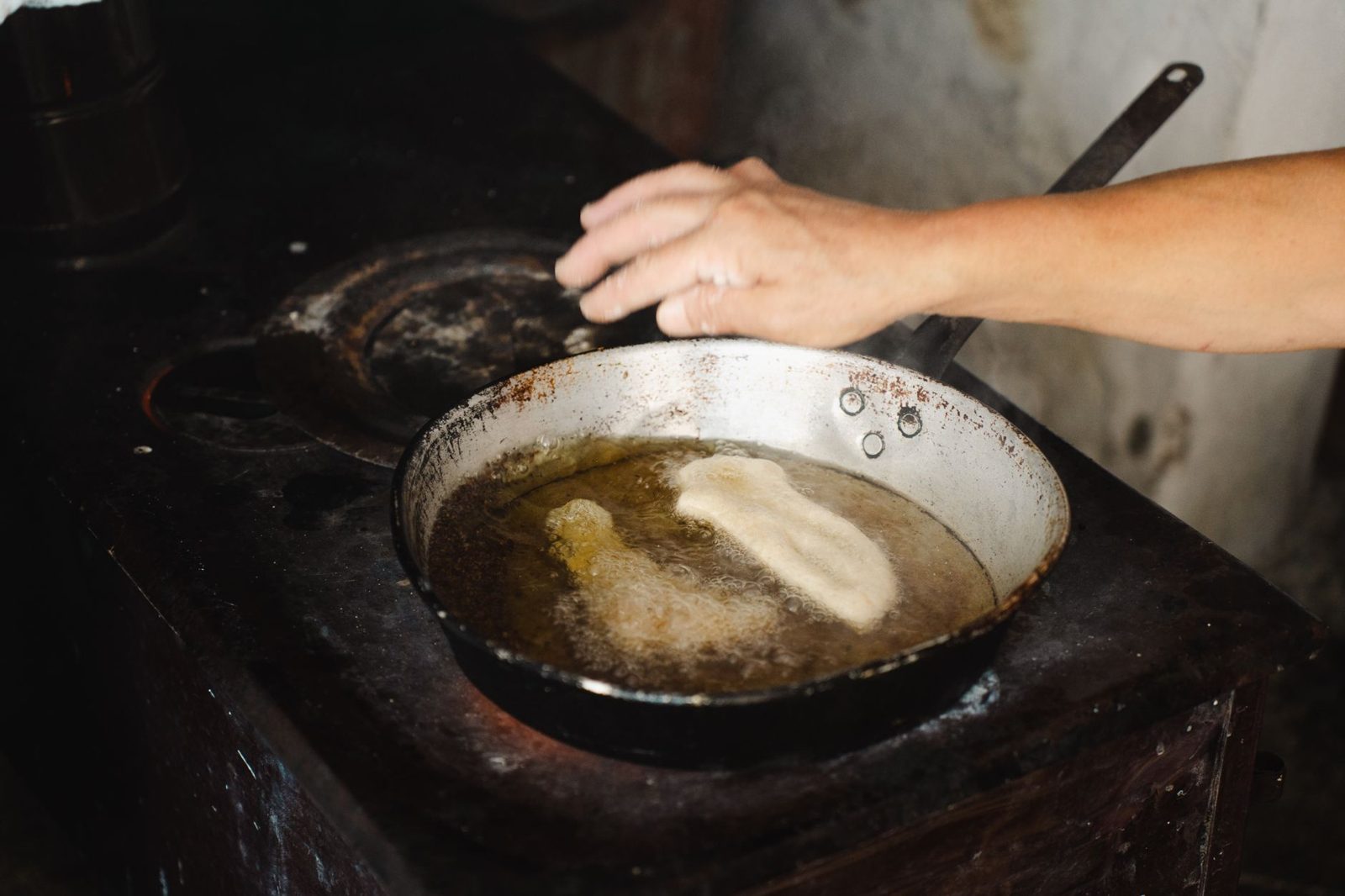
If you try one thing, make it lángos — a disc of deep-fried dough, crisp-edged and pillowy, rubbed with raw garlic and the traditional topping of tejföl (sour cream) and grated cheese. It is gloriously unhealthy, deeply satisfying, and the single most Hungarian thing you can eat standing up. The classic sajtos-tejfölös (cheese and sour cream) is the place to start, but the menu boards run wild from there.
Beyond the basics you’ll find lángos topped with garlic oil only (fokhagymás), with ham, with Nutella for the sweet-toothed, and at fancier stalls with pulled pork, goose liver or goat cheese. A plain one runs around 1,000–1,800 HUF; loaded versions climb from there. Eat it immediately — lángos waits for no one and turns leathery as it cools.
Kürtőskalács, the chimney cake
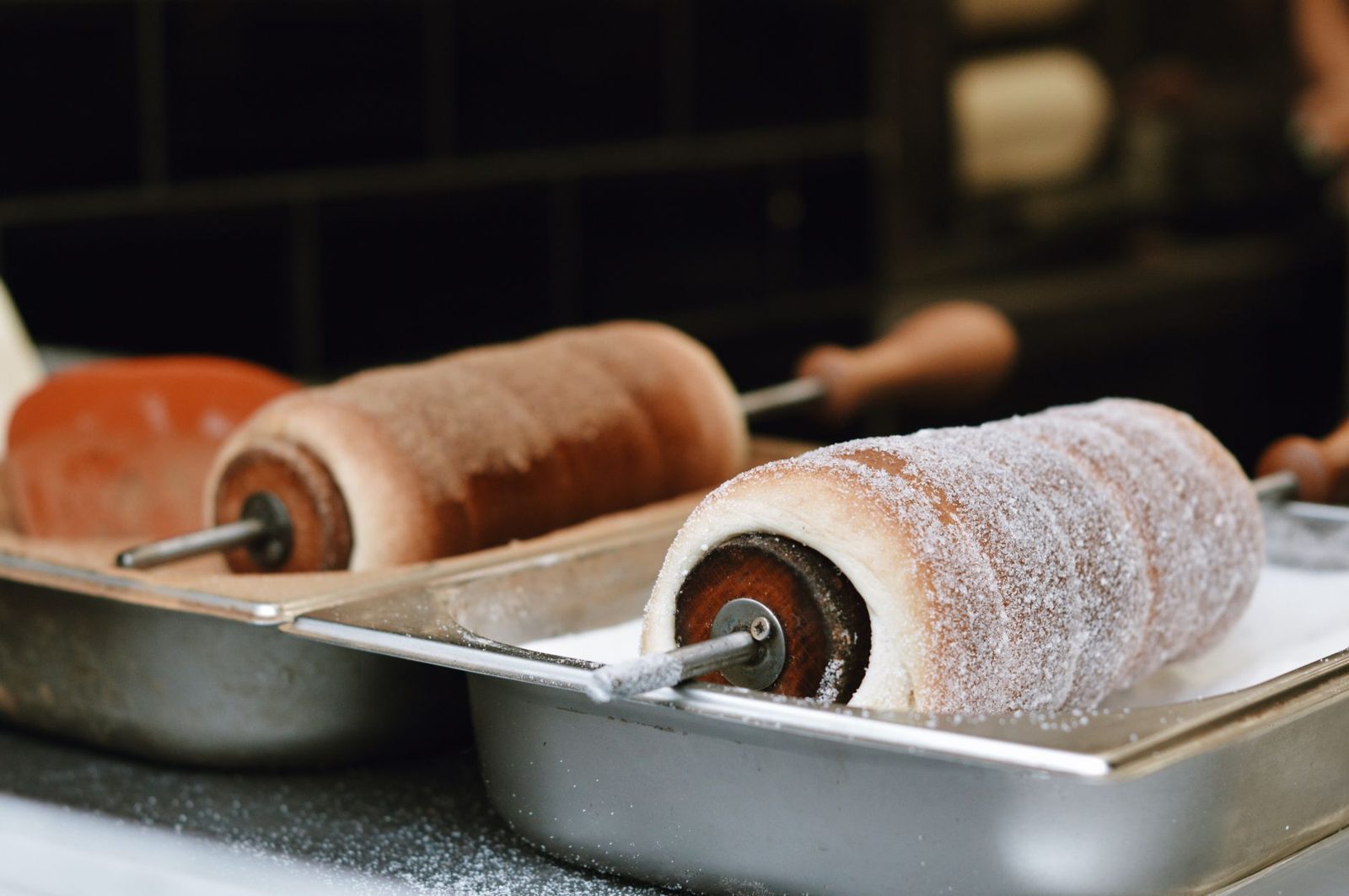
The other unmissable street sweet is kürtőskalács, the “chimney cake.” Sweet yeast dough is wound around a wooden spit, rolled in sugar, and turned over coals until the outside caramelises into a crackling shell while the inside stays soft and steamy. It’s dusted with cinnamon, walnut, coconut or cocoa, and the newer stalls will pack the hollow centre with soft-serve ice cream. Expect around 2,200 HUF plain, more with ice cream — touristy, yes, but genuinely good when made fresh to order rather than sitting pre-cooked under a heat lamp.
Sausages, hurka and the savoury old guard
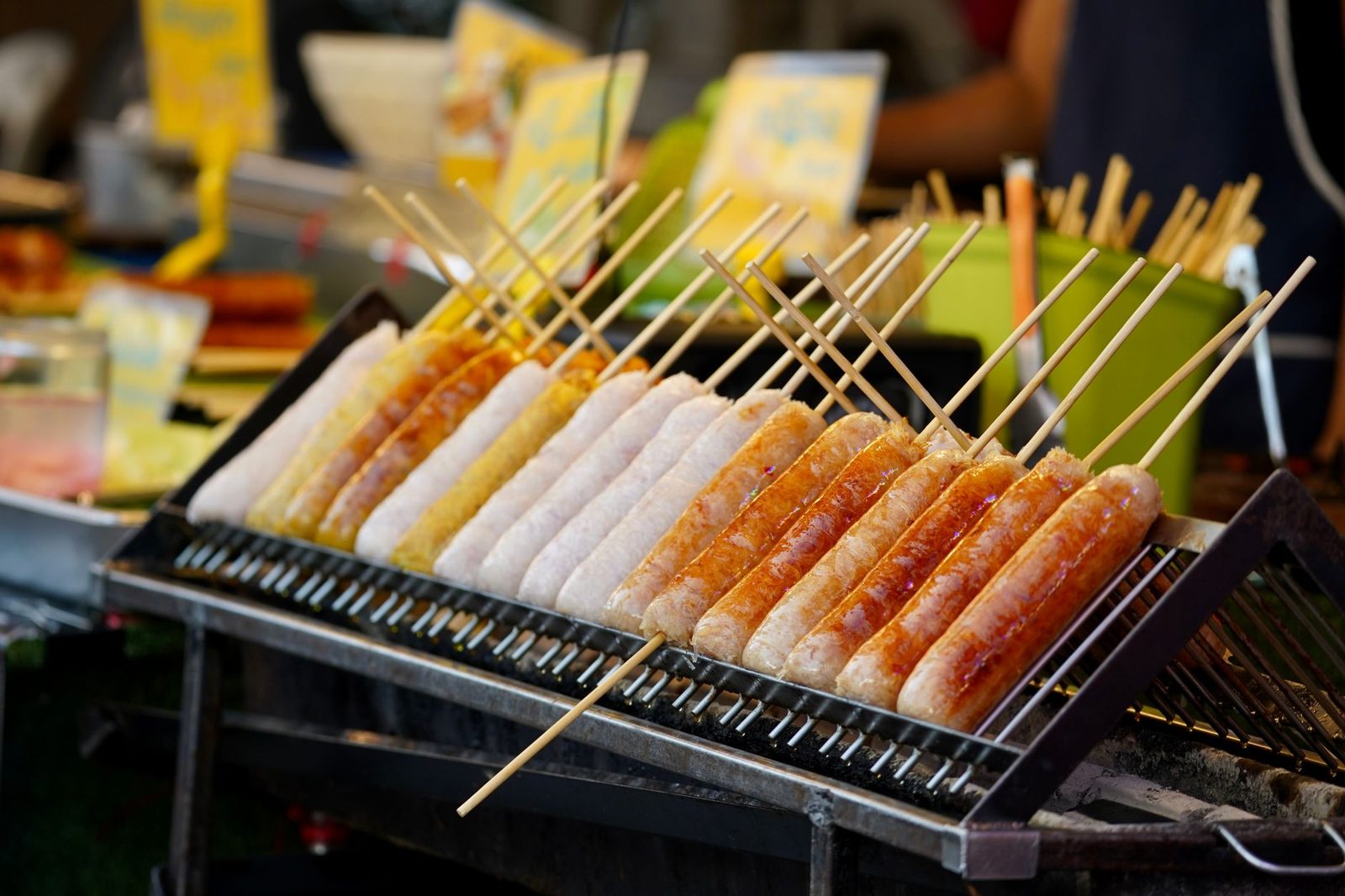
Hungarians take cured and grilled meat seriously. Kolbász — paprika-spiced sausage — turns up grilled on a paper plate with mustard, fresh bread and pickles, usually 1,500–3,000 HUF depending on size. Look out too for hurka, the soft rice-and-offal sausage that locals adore, and debreceni, a smoky pork sausage named for the city of Debrecen. At markets you’ll see them sliced straight from the grill; point, pay, and eat with a hunk of bread.
For something handheld and less carnivorous, pogácsa are savoury scones — cheese, crackling or potato — sold by weight at bakeries and perfect for a walking snack. They’re the unglamorous workhorse of Hungarian snacking and pair beautifully with a coffee from one of the historic Budapest coffee houses.
Sweets beyond the chimney cake
Rétes — flaky Hungarian strudel filled with sour cherry, túró (curd) or poppy seed — is sold by the slice at market stalls and dedicated rétes windows. In the colder months the streets fill with sült gesztenye (roasted chestnuts) sold from glowing carts, and gesztenyepüré, sweet chestnut purée pressed into vermicelli strands under a cloud of whipped cream. None of these are technically “street food” in the food-truck sense, but they’re exactly what you eat walking between sights on a winter afternoon.
Karaván: the food-truck courtyard
The beating heart of the modern scene is Karaván Street Food on Kazinczy utca, right beside the legendary Szimpla Kert ruin bar in the Jewish Quarter. It was the city’s first permanent food-truck court and still delivers: eight or so trucks and a few bars packed into a courtyard, slinging everything from the famous lángos burger to Hungarian goulash, vegan bowls, Mexican plates and proper craft beer. It’s lively, affordable and open late, which makes it the obvious refuelling stop on a night out among the ruin bars.
Market halls: where locals graze
The Great Market Hall (Nagyvásárcsarnok) is the headline act — head up to the first-floor balcony, where a row of stalls fries lángos and ladles gulyás for a fraction of restaurant prices. It’s busy and a little touristy, but the food is real and it’s a brilliant rainy-day plan. For the full rundown of every hall worth your time, including the quieter neighbourhood ones, see my guide to Budapest’s markets.
Away from the crowds, locals graze at Lehel Market (a striking, colourful building in District XIII with cheap büfé counters), Hunyadi tér market, and the upscale Hold utca Market near Parliament, where Michelin-pedigree stalls share a roof with old-school lunch counters. These are where you eat like a Budapester rather than a guidebook.
A snack with a history
Lángos didn’t start life as a street snack. Traditionally it was baked at the mouth of the bread oven from leftover dough — the word comes from láng, “flame” — and eaten warm by the family while the loaves finished. The deep-fried version most of us know is the 20th-century evolution, perfected at lakeside büfés around Lake Balaton before it conquered the city. Knowing that backstory makes the greasy paper plate feel a little more like edible heritage.
Where I chase the best lángos
Not all lángos is created equal, and the worst of it sits pre-fried and soggy in the busiest tourist spots. The ones I return to: Retró Lángos Büfé, a tiny central counter near Arany János utca that fries to order; the long-running stall on the upstairs balcony of the Great Market Hall; and the büfé windows tucked inside Lehel Market, where the queue is mostly locals on a lunch break. The tell is simple — if you can see the dough going into the oil rather than coming out of a warming tray, you’re in the right place.
What to drink with it
Street food deserves a street drink. In summer, nothing beats a fröccs — wine cut with sparkling water in endlessly debated ratios — sold cheap at market büfés and festival stalls. Craft beer has exploded across the city too, and the Karaván bars pour plenty of it; for the full picture see my Budapest craft beer guide. In winter the answer is forralt bor, mulled wine, clutched in both hands at a Christmas-market stall. A paper cup of either turns a quick snack into a proper pause.
The plant-based street scene
Budapest has become surprisingly easy for meat-free eating. Vegan Garden, a cluster of plant-based trucks in the Jewish Quarter, does dairy-free soft serve, chickpea burgers and vegan lángos, and most food-truck courts now run at least one vegan option. If you’re eating fully plant-based, my vegan and vegetarian Budapest guide maps the best of it.
What it costs in 2026
Street food remains one of Budapest’s great bargains, though prices crept up after recent inflation. Here’s a realistic snapshot to budget around:
| Item | Typical 2026 price | Euro (approx) |
|---|---|---|
| Classic lángos (cheese & sour cream) | 1,000–1,800 HUF | €2.50–4.50 |
| Loaded / meat lángos | 2,000–3,500 HUF | €5–9 |
| Kürtőskalács (chimney cake) | 2,200 HUF | €5.70 |
| Grilled kolbász with bread | 1,500–3,000 HUF | €4–7.50 |
| Bowl of gulyás at a market stall | 1,800–2,800 HUF | €4.50–7 |
| Pogácsa (savoury scone) | 300–600 HUF | under €1.50 |
My first-timer’s hit list
If you want to taste the breadth of Budapest street food in a day of grazing rather than one big meal, this is the order I’d go in:
- A classic cheese-and-sour-cream lángos from a market-hall stall
- Grilled kolbász with mustard and bread
- A vegan or pulled-pork lángos burger at Karaván
- Fresh-made kürtőskalács, no ice cream the first time
- A slice of sour-cherry rétes
- In winter: roasted chestnuts and a cup of forralt bor (mulled wine)
Practical tips so you eat well
A few hard-won pointers. Carry some cash — many stalls take cards now, but the smallest and best often don’t. Skip the lángos and chimney-cake kiosks ringed with photo menus on Váci utca and around the Basilica; walk five minutes to a market hall and pay half. Eat lángos the moment it’s handed over. And check opening days: market halls typically close Sundays and wind down early on Saturdays, while Karaván and the ruin-bar trucks run late into the night.
Street food also slots neatly around a bigger meal plan. For the sit-down side — the goulash, the paprikás, the grand cafés — start with my traditional Hungarian food guide, and the overarching Budapest food guide ties the whole eating scene together.
Frequently asked questions
What is the most famous Budapest street food?
Lángos — deep-fried dough topped with garlic, sour cream and cheese — is the definitive Budapest street food, followed closely by kürtőskalács, the spiral chimney cake cooked over coals. Between them they cover the savoury and sweet ends of the city’s grab-and-go scene.
Where is the best street food in Budapest?
For variety, Karaván Street Food on Kazinczy utca (next to Szimpla Kert). For traditional stalls, the first-floor balcony of the Great Market Hall. For eating like a local, the büfé counters at Lehel Market and the Hold utca Market. Each suits a different mood and time of day.
How much does street food cost in Budapest?
A classic lángos runs about 1,000–1,800 HUF (€2.50–4.50), a chimney cake around 2,200 HUF, and grilled sausage with bread 1,500–3,000 HUF. You can graze well for under €15 a day, which keeps street food among the city’s best-value experiences.
Is Budapest street food good for vegetarians and vegans?
Increasingly, yes. Plain lángos with cheese is vegetarian, and dedicated spots like Vegan Garden plus most food-truck courts offer plant-based burgers, bowls and dairy-free desserts. It’s far easier than it was even a few years ago.
Do I need cash for street food in Budapest?
It helps. Larger food-truck courts and market stalls usually take cards, but the smallest independent lángos and chimney-cake stands are often cash-only, and a few hundred forint coins are handy for pogácsa and chestnuts. Carry a little cash and you’ll never be caught out.
Last updated June 2026. Photos: Ruken Kobatan (Pexels); Sara Er (Pexels); Rachel Claire (Pexels); Жанна Алимкулова (Pexels).