Budapest to Belgrade and the Balkans by Rail
The direct Budapest–Belgrade trains still haven't started, but you can do it by rail today via Szeged and Subotica. Where the new line stands, the route that works now, the border, and where to go next in the Balkans.
In this guide
- At a glance
- Where the direct train stands
- The route that works now: three trains
- Budapest-Nyugati to Szeged
- Szeged to Subotica
- Subotica to Belgrade
- Tickets
- Worth a stop: Szeged and Subotica
- Szeged
- Subotica
- Arriving in Belgrade
- The border
- By coach
- By car
- By air
- Coming back: Belgrade to Budapest
- Which option suits you?
- Onward: the Balkans by rail
- Practical tips
- Frequently asked questions
- Photo credits
This article contains advertising. Our booking links are routed through a partner that adds commission tracking automatically, so if you book through one we earn a commission from the provider, at no extra cost to you. It never affects what we recommend. Affiliate disclosure
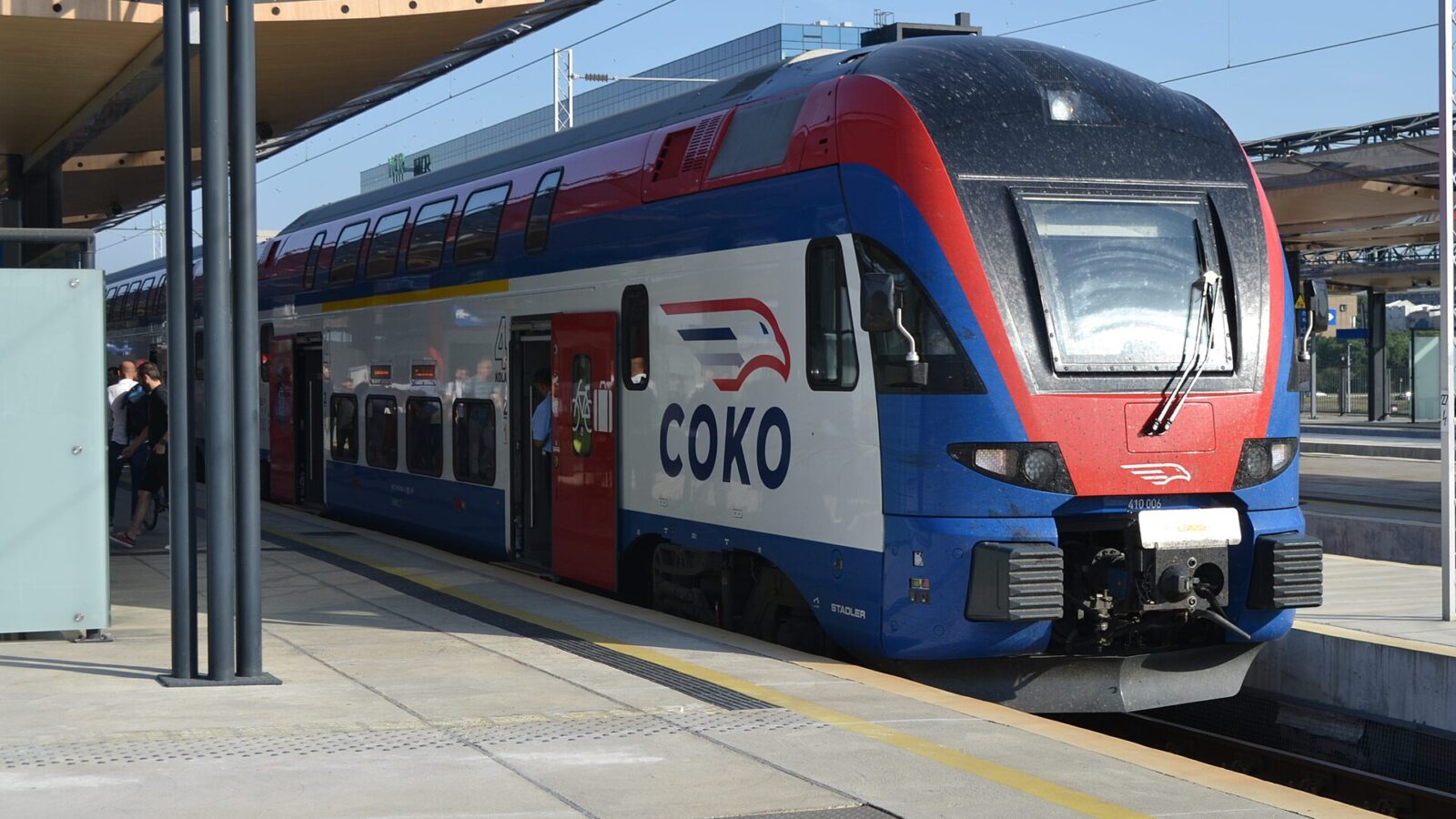
The railway between Hungary and Serbia has spent the last few years being rebuilt almost end to end, and in autumn 2026 it’s a line of two halves. On the Serbian side, sleek double-deck SOKO trains now run from the Hungarian border to Belgrade at up to 200 km/h. On the Hungarian side the new track is laid, but the signalling hasn’t yet been signed off, so the direct Budapest to Belgrade trains promised for March 2026 still haven’t started. You can make the trip by rail today. It just takes three trains, a passport check in a local carriage at the border, and most of a day.
This page covers the route that works now, via Szeged and Subotica; what changes when the direct trains return; the coach, car and air alternatives; the border; two towns worth breaking the journey in; and where to go next in the Balkans. Fares and timings were checked in September 2026. Treat them as the right order of magnitude, and check the status of the direct service before you book, because it could restart at short notice.
At a glance
| Option | Time | Cost | Notes |
|---|---|---|---|
| Rail now: Budapest – Szeged – Subotica – Belgrade | 7–8 hours, three trains | Through ticket from about €26 (limited) to €45.60 | Passport check on board between Szeged and Subotica |
| Direct SOKO train (not yet running) | 3 hours 17 minutes | To be announced | Every four hours from Keleti once it starts |
| Coach | Around six to seven hours, border permitting | Often the cheapest | Crosses at Röszke–Horgoš, where summer queues can be long |
| Car | About 380 km: four and a half hours plus the border | Fuel, Hungarian vignette, Serbian tolls | Check that the hire contract allows Serbia |
| Flight | About an hour in the air | Varies widely | Rarely worth it once you add the airports |
Where the direct train stands
Serbia built its half of the new line in stages. The high-speed section from Belgrade to Novi Sad opened first, and on 8 October 2025 the final stretch to Subotica on the Hungarian border opened too, cutting Belgrade–Subotica to about an hour and twenty minutes non-stop. Hungary rebuilt its own section south from Budapest to the border at Kelebia at the same time. The track is ready. What isn’t is the signalling: the new European-standard ETCS train-control system on the line hasn’t received the authorisation it needs to carry passengers.
The direct trains were due to start in March 2026. That slipped to the summer, and the latest expectation is early autumn 2026. When they do start, the plan is for modern Serbian SOKO trains to link Budapest-Keleti and Beograd Centar every four hours in 3 hours 17 minutes, joined by two EuroCity trains a day running through from Vienna, with restaurant cars. That will turn a day’s travel into a morning.
It’s worth knowing why the line matters beyond tourism. The rebuild is one of the flagship European projects of China’s Belt and Road Initiative, financed largely with Chinese loans and built partly by Chinese contractors, and it’s intended as one link in a freight corridor from the Greek port of Piraeus up through the Balkans into central Europe. That’s why the new line is built for speed and heavy freight, and also part of why it has been politically contentious in both countries. For passengers, the upshot is simple: when it’s finished, it will be the fastest rail link between central Europe and the Balkans in generations.
The honest advice: don’t build a tight itinerary around a promised start date. Rail projects in this part of Europe have a habit of slipping, and this one already has, twice. Check MÁV’s journey planner (jegy.mav.hu), Serbian Railways (Srbijavoz) or the regularly updated seat61 before you book. If the direct trains are running by the time you travel, most of what follows about the route via Szeged becomes a pleasant alternative rather than a necessity.
The route that works now: three trains
Until the direct service begins, the rail route runs south-east to Szeged, across the border on a local train to Subotica, and on to Belgrade on the new high-speed line. Four through connections a day are timed to work together, and the whole journey takes seven to eight hours.
Budapest-Nyugati to Szeged
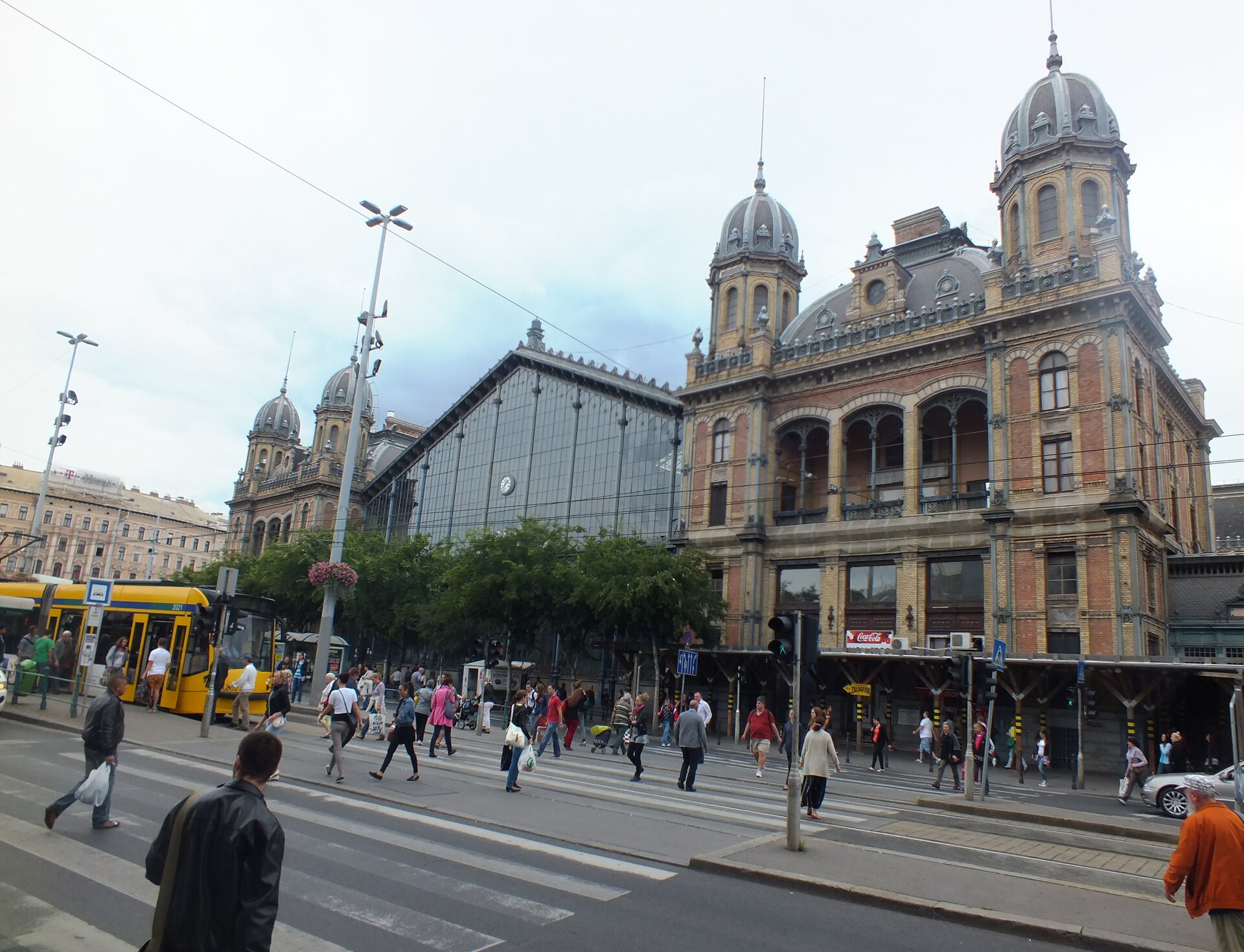
The first leg starts at Nyugati, the Western Station, not Keleti. Air-conditioned InterCity trains run to Szeged across the Great Plain via Cegléd and Kecskemét in about two and a half hours, with first and second class. Nyugati is on the M3 metro and the 4 and 6 trams; the guide to Budapest’s train stations explains how to find your way around it.
Szeged to Subotica
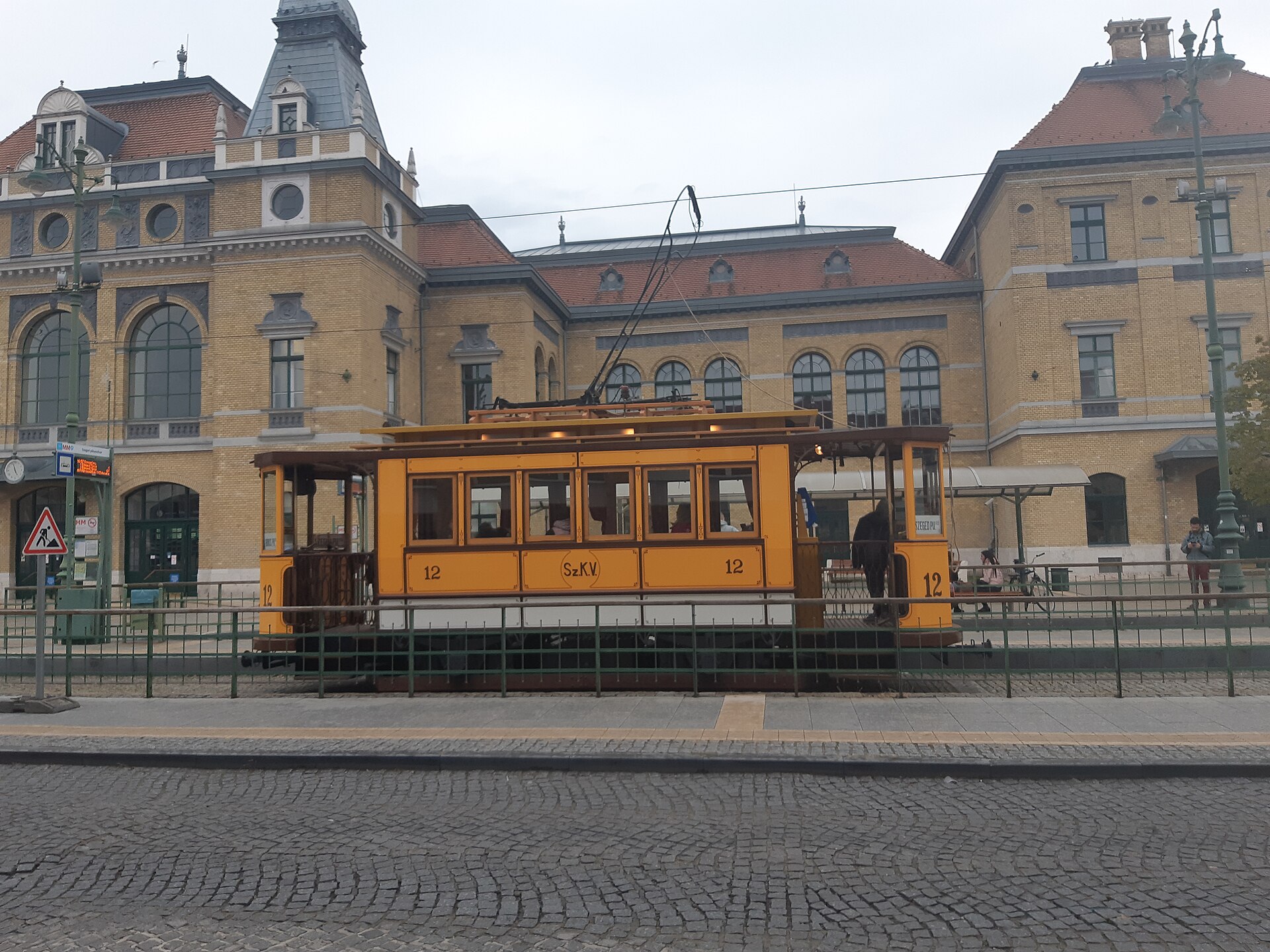
From Szeged a local cross-border train runs to Subotica four times a day. It takes about an hour and a quarter, has second class only, and costs a fixed €6. This is where the border happens: Hungarian exit checks and Serbian entry checks are done on board, so keep your passport to hand rather than in the bottom of a bag on the rack. The train is small, the scenery is flat farmland, and the whole thing feels agreeably old-fashioned after the InterCity.
Subotica to Belgrade
At Subotica you change onto the SOKO, Serbian Railways’ double-deck high-speed train, with first and second class, air conditioning and a smooth ride at up to 200 km/h. Four a day connect with the trains from Szeged, and fares are about €11 in second class and €15 in first. The trains call at Petrovaradin for Novi Sad: the city’s main station has been closed since the canopy collapse of November 2024, and a free shuttle bus links Petrovaradin with the city. They terminate at Beograd Centar, Belgrade’s main station.
Tickets
MÁV sells a through ticket for the whole journey on jegy.mav.hu, from about €26 when the limited cheap allocation is available up to €45.60 for the full second-class fare. You can also buy the legs separately: an ordinary Hungarian ticket to Szeged, the €6 cross-border fare, and the SOKO leg from Serbian Railways online or at the station. Interrail and Eurail passes are valid throughout, but the SOKO needs a seat reservation, which costs about €1.
The connections are timed, but three trains and a border leave room for things to go wrong. If you miss the last SOKO of the day in Subotica, don’t panic: it’s an attractive town with plenty of hotels, and a night there is no hardship at all (see below).
Worth a stop: Szeged and Subotica
If you’re not in a hurry, the slow route has a bonus the direct train won’t: it passes through two of the most rewarding towns in the region, each an easy overnight stop.
Szeged
Szeged calls itself the city of sunshine, and it gets more of it than anywhere else in Hungary. The Tisza flood of 1879 almost wiped it out, and the city that was rebuilt afterwards, with its ring roads and grand boulevards, is one of the handsomest in the country. The twin-spired Votive Church dominates Dóm tér, and the Reök Palace is a small Art Nouveau jewel. Szeged is also the home of halászlé, the fiery paprika fish soup, and of Pick salami; the guide to traditional Hungarian food explains both.
Subotica
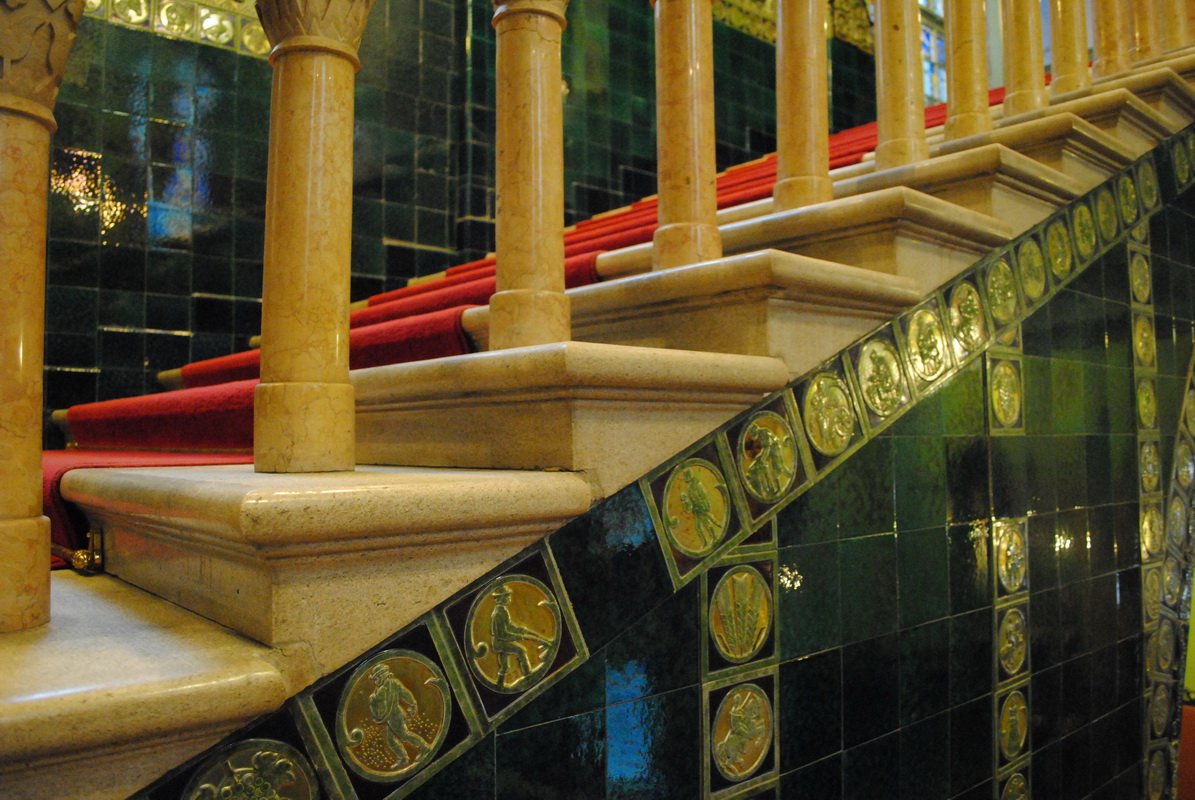
Subotica, Szabadka in Hungarian, is in Serbia but has a large Hungarian community, and it holds some of the finest Hungarian Art Nouveau anywhere. The City Hall, built between 1908 and 1910 by Marcell Komor and Dezső Jakab, is a fantasy of turrets, majolica and stained glass, and its interior is as good as its outside. The same architects designed the Synagogue, and the Raichle Palace near the station is wilder still. Lake Palić, a lakeside resort with Art Nouveau pavilions, is a short bus ride away. If Budapest’s Art Nouveau buildings are part of why you came, Subotica deserves a night of its own.
Arriving in Belgrade
Beograd Centar, also known as Prokop, replaced the old central station in 2018 and handles the SOKO trains. It’s a couple of kilometres south of the city centre, so allow for a short taxi or bus ride to the old town and Knez Mihailova, the main pedestrian street. The advice about taxis is the same as in Budapest: book by app or use the official rank, and don’t accept offers from people who approach you on the concourse. Our Budapest taxi guide explains the tricks to look out for, and most of them travel.
A few differences to prepare for:
- Money: Serbia uses the dinar. Cards are widely accepted in Belgrade, and ATMs are everywhere; take a bank-branded one and, when a terminal offers to charge you in your home currency, decline and pay in dinars.
- Phones: Serbia isn’t in the EU, so EU “roam like at home” rules don’t apply. Check your plan before you go, or buy a local SIM or an eSIM. The SIM card guide covers the Hungarian end.
- Registration: foreign visitors to Serbia must be registered with the police. Hotels do it automatically, but if you’re staying in a private apartment, check that your host has done it.
- Time: Belgrade is in the same time zone as Budapest.
The border
This is the one international trip from Budapest that crosses a real border. Serbia is outside both the European Union and the Schengen Area, so there are full passport checks on the way in and out, whether on the train, on a coach at Röszke–Horgoš, or at the airport. Bring a passport rather than a national ID card. Visitors from the EU, the UK, the US, Canada and Australia don’t generally need a visa for short stays, but check your own government’s travel advice before you go, since the rules depend on your nationality.
On the current rail route, the checks happen on board the Szeged–Subotica train and take a few minutes. On the road, they can take much longer: Röszke is the main crossing between Hungary and Serbia, and on summer weekends and around holidays the queues of cars and coaches can stretch for hours.
By coach
Coaches run from Népliget, Budapest’s international bus station on the M3, down the M5 motorway to Szeged and across the border at Röszke, then south on the Serbian motorway to Belgrade. In normal conditions the trip takes around six to seven hours, which until the direct trains start makes the coach at least as quick as the rail route, and often cheaper. The catch is the border: a long queue at Röszke can add hours, and there’s nothing to do about it but wait. The coach is the practical choice for a tight budget. For comfort and scenery, the train wins.
By car
It’s about 380 kilometres from Budapest to Belgrade, almost all of it on motorway: the M5 to the border at Röszke, then Serbia’s main motorway south past Novi Sad. Allow four and a half hours of driving plus whatever the border throws at you. You’ll need a Hungarian e-vignette for the M5, and Serbia charges tolls at booths on its motorways.
If you’re hiring a car in Budapest, check before you book that the contract allows you to take it to Serbia. Because Serbia is outside the EU, many rental companies restrict cross-border trips there or charge extra for them, and one-way drop-offs in Belgrade are expensive when they’re offered at all. The Budapest car rental guide covers the paperwork, the vignettes and the fees.
By air
Flights between Budapest and Belgrade take about an hour in the air when a direct service runs. Add the trip out to Budapest Airport, security, passport control at the other end and the ride in from Belgrade’s airport, and flying is rarely quicker than the coach, let alone the direct train once it starts. Fly only if a direct flight happens to fit your plans or you’re connecting onwards. The Budapest Airport guide covers the Budapest end.
Coming back: Belgrade to Budapest
The same three-train route works in reverse: the SOKO from Beograd Centar to Subotica, the local train to Szeged, and an InterCity back to Budapest-Nyugati. The connections are timed in this direction too, and the passport checks again happen on the Subotica–Szeged train, this time Serbian exit and Hungarian entry. Hungarian officers are checking for the Schengen Area as a whole, so the entry check can be more thorough than the exit, especially for non-EU passport holders. Allow for it, and don’t pack your passport away until you’re past Szeged.
Arriving at Nyugati, the M3 metro and the 4 and 6 trams are right outside; the metro guide covers the lines. If you’re arriving late with bags, a cab booked by app is the easiest way to your hotel. Buy a BKK ticket before you board the metro; a single is 500 Ft (€1.25).
Which option suits you?
- You love trains, or you’re on a rail pass: take the three-train route now, or the direct SOKO once it runs. The high-speed leg into Belgrade is a genuine pleasure.
- You’re into architecture: take the train and stop a night in Subotica. Its Art Nouveau is worth the detour on its own.
- You’re on a tight budget: the coach is usually cheapest. Book early and avoid Friday departures to dodge the worst border queues.
- You’re short of time: until the direct trains start, the coach is usually the quickest option door to door, unless the border is jammed. Once the SOKO runs in 3 hours 17 minutes, nothing else will come close.
- You’re touring the region by car: drive, but check the rental terms for Serbia before you book, not at the counter.
Onward: the Balkans by rail
Belgrade is the gateway to the Balkans, but the rail network beyond it is patchier than the new high-speed line might suggest.
- Novi Sad: around forty minutes from Belgrade on the high-speed line, and an easy day trip for the Petrovaradin fortress and the old town. Remember that the trains currently stop at Petrovaradin, with the shuttle bus into the city.
- The Belgrade–Bar railway: one of Europe’s great scenic railway journeys, climbing through the mountains of Serbia and Montenegro over hundreds of tunnels and bridges to the Adriatic at Bar. It still runs, including a summer daytime service that since 2024 has involved a simple change of train at Bijelo Polje on the Montenegrin border. Check the current timetable before planning around it.
- Everywhere else: international trains from Belgrade towards Zagreb, Sarajevo, Sofia, Skopje and Thessaloniki have been suspended, cut back or replaced by buses at various points in recent years, and the picture changes often. Check seat61’s page on trains from Belgrade and Srbijavoz before you plan, and expect coaches to fill most of the gaps.
If you’re heading west instead, Vienna has direct trains from Budapest and a far denser onward network; the Budapest to Vienna train guide covers that leg, and once the direct Belgrade service begins, the planned EuroCitys will link all three capitals on a single train.
Practical tips
- Check the status of the direct train first: MÁV, Srbijavoz and seat61 will all show it when it starts.
- For the current route, the Szeged trains leave from Nyugati, not Keleti. Once the direct trains run, they’ll use Keleti.
- Keep your passport handy on the Szeged–Subotica train; the border checks happen on board.
- Book the SOKO leg ahead in summer, and remember the €1 reservation if you’re on a rail pass.
- Consider a night in Subotica or Szeged. The slow route is at its best when you’re not racing it.
- Check your phone’s roaming before you cross, since EU rules stop at the border.
- If you drive or take the coach, avoid Friday afternoons and holiday weekends at Röszke if you possibly can.
For getting around Budapest before and after the trip, see the getting around Budapest hub.
Frequently asked questions
Is there a direct train from Budapest to Belgrade?
Not as of September 2026. Direct trains were due to start in March 2026 but have been delayed by the approval of the new signalling system, with early autumn 2026 the latest expectation. When they start, SOKO trains are planned to run from Budapest-Keleti to Beograd Centar every four hours in 3 hours 17 minutes.
How long does the train from Budapest to Belgrade take now?
Seven to eight hours, with changes at Szeged and Subotica. The last leg, from Subotica to Belgrade, is on the new high-speed line.
How much is the train from Budapest to Belgrade?
MÁV sells a through ticket from about €26, when the limited cheap allocation is available, up to €45.60 for the full second-class fare. Bought separately, the Szeged–Subotica leg is €6 and the SOKO from Subotica is about €11 in second class.
Which Budapest station do trains to Belgrade leave from?
For the current route via Szeged, Nyugati. The direct trains, once they start, are planned to run from Keleti.
Do I need a passport to travel from Budapest to Belgrade?
Yes. Serbia is outside the EU and the Schengen Area, so there are full passport checks at the border. Many nationalities don’t need a visa for short stays, but check your own government’s advice.
Can I use an Interrail pass from Budapest to Belgrade?
Yes, on all three legs. You’ll need a seat reservation of about €1 for the SOKO high-speed train.
Is the bus faster than the train from Budapest to Belgrade?
Until the direct trains start, often yes: around six to seven hours against seven to eight by rail. But a queue at the Röszke border crossing can wipe out the difference, and the train is far more comfortable.
Photo credits
SOKO high-speed train: Soko KISS 410 418 by Mediji Srbijavoz, CC BY-SA 4.0, via Wikimedia Commons.
Nyugati station: Budapest-Nyugati by Orrling, CC BY-SA 3.0, via Wikimedia Commons.
Szeged railway station: MWG Szeged pályaudvar 1 by Botulitisz, CC BY-SA 4.0, via Wikimedia Commons.
Subotica City Hall staircase: City Hall in Subotica, Zsolnay ceramics by Dobrislava, CC BY-SA 4.0, via Wikimedia Commons.