House of Terror Budapest: Best What to Expect Guide (2026)
A first-person 2026 guide to the House of Terror on Andrássy út 60 — the building's dark double history, what you'll see floor by floor, current tickets and hours, the controversy, and how to combine it with Budapest's other history sites.
In this guide
- Why this building matters
- Walking through the exhibition
- A word on the controversy
- The details that stay with you
- Tickets, hours and what it costs in 2026
- Getting there and combining it with your day
- How it fits with Budapest’s other dark-history sites
- Tips from my visit
- Is it worth it?
- Frequently asked questions
This article contains advertising. Our booking links are routed through a partner that adds commission tracking automatically, so if you book through one we earn a commission from the provider, at no extra cost to you. It never affects what we recommend. Affiliate disclosure
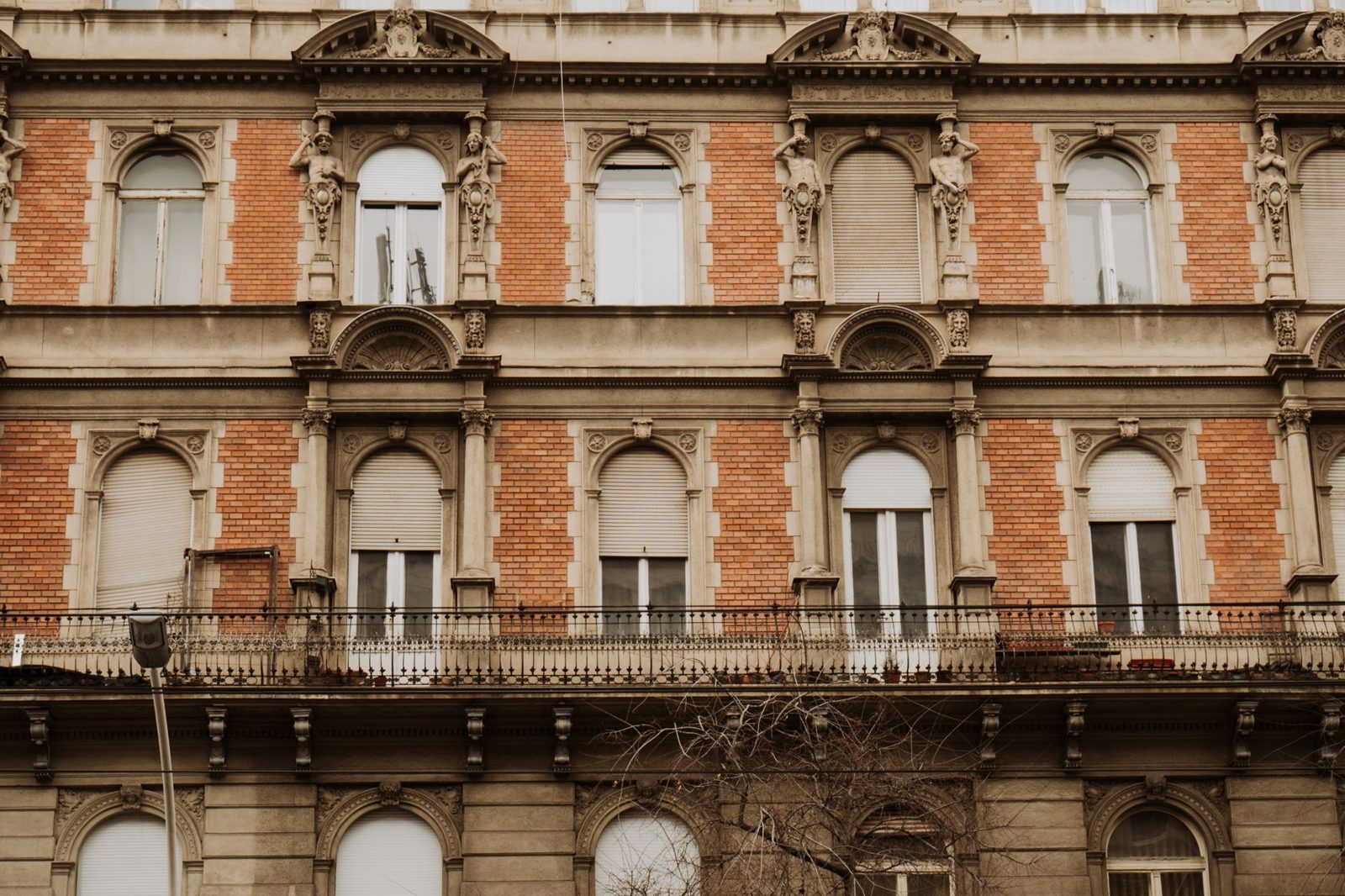
Andrássy út 60 looks like any other handsome apartment block on Budapest’s grandest avenue until you notice the black steel canopy bolted to its roofline, the word TERROR cut clean through the metal so that in the afternoon sun the letters drop as a shadow onto the pavement. I walked past it twice before I understood what I was seeing. The address is the whole point: this single building housed the headquarters of two different secret-police forces, first the Hungarian Nazis and then the communist state security, and the museum inside refuses to let you forget either.
If you only have time for one museum about Hungary’s twentieth century, this is the one I’d send you to — but go in knowing it is heavy, openly emotional, and not remotely neutral. The House of Terror is as much a memorial and a statement as it is a museum, and understanding that going in will make your visit far richer. Below is everything I wish I’d known before my first time through the doors.
Why this building matters
From 1944 the Arrow Cross Party, Hungary’s homegrown fascist movement, ran the country from this address and called it the House of Loyalty. In the few brutal months of their rule they deported and murdered tens of thousands of Hungarian Jews, many of them shot into the Danube a short walk away. When the war ended, the communist secret police — first the ÁVO, then the feared ÁVH — simply moved in and kept using the cellars for the same purpose. Different ideology, same address, same basement.
That continuity is the museum’s central argument: that Hungarians suffered under two consecutive totalitarian regimes, and that the building itself was a machine for fear. The permanent exhibition opened on 24 February 2002, and it was deliberately built to be experienced rather than read. You don’t drift past glass cases of artefacts here. You move through reconstructed spaces, walls of faces, and a soundtrack that follows you from room to room.
Walking through the exhibition
The emotional architecture of the place is carefully staged, and it builds. You enter into an atrium dominated by a Soviet T-54 tank, with a towering wall of small black-and-white photographs rising several storeys above it — the faces of victims. It is a genuinely arresting first impression, and it sets the register for everything that follows.
From there the route winds upward and then back down through themed rooms: the double occupation, the Gulag, the Arrow Cross terror, forced resettlements and show trials, the relentless propaganda of the 1950s, religious persecution, and the 1956 revolution that briefly cracked the system open before Soviet tanks rolled back in. Some rooms are theatrical — a wall of pork-fat bricks for the room on the planned economy, a maze of propaganda posters — and the effect is more visceral than scholarly.
The climax is the descent to the cellars, and it is staged with real cruelty of timing. You take a lift down, but the lift moves at a crawl, and as it sinks a video plays of a former employee describing, in flat detail, how prisoners were executed by hanging in the courtyard. By the time the doors open you are already braced. Down in the basement are the reconstructed cells: a windowless solitary box, a “wet cell” where prisoners stood in water, a torture room. This is where the building’s history stops being abstract.
Near the end comes the Hall of Tears and then the wall of perpetrators — portraits of the secret-police officers and informers, some of whom were still alive and unpunished when the museum opened. That choice, naming the torturers, remains one of the most discussed things about the place.
A word on the controversy
It would be dishonest to send you here without mentioning the debate. Historians and some visitors argue that the museum devotes far more space to communist crimes than to the Arrow Cross period, and that its framing is politically pointed rather than balanced. Only a small portion of the exhibition deals with the fascist era; the great weight falls on the post-war decades. You can take the exhibition on its own terms and still keep that criticism in mind — in fact, I’d argue noticing what a museum chooses to emphasise is part of understanding modern Hungary. Read it as a memorial with a viewpoint, not a textbook.
The details that stay with you
It’s the small, deliberate touches that linger. Outside, look up at that black canopy and you’ll see the granite memorial below the windows, set with photographs of people who died in the building. The façade is, in effect, the first exhibit, and it’s free to anyone walking past. The designers wanted the building itself to accuse, and it does.
Inside, the production design is relentless. A telephone rings in an empty office and no one answers. A bank of old television screens loops grainy propaganda. The lighting is low, the music — composed specifically for the museum — never lets up, and by the time you reach the cellars you’ve been worked on for an hour. Whether you find that powerful or manipulative is part of the conversation the place wants you to have, and I came down firmly on the side of powerful.
Tickets, hours and what it costs in 2026
The museum sits at Andrássy út 60 in the 6th district (Terézváros), and admission is refreshingly affordable for what you get. A standard adult ticket is 4,000 HUF, with concessions at 2,000 HUF for students and seniors. The audio guide costs an extra 2,000 HUF and I’d call it close to essential — the rooms carry very little explanatory text in English, by design, so without the guide a lot of the context simply isn’t there.
One quirk worth planning around: at the time of writing there is no online ticketing. You buy at the door, cash or card, which means on a busy summer afternoon you may queue. Arrive when it opens or in the last hour to avoid the crush.
| Practical detail | 2026 information |
|---|---|
| Address | Andrássy út 60, District VI (Terézváros) |
| Opening hours | Tuesday–Sunday 10:00–18:00 (closed Mondays); ticket desk closes 17:30 |
| Adult ticket | 4,000 HUF (around €10 / US$11) |
| Concession (student/senior) | 2,000 HUF |
| Audio guide | 2,000 HUF (recommended) |
| Tickets online? | No — buy at the door |
| Nearest metro | Vörösmarty utca (M1 yellow line), or Oktogon (M1) |
| Time needed | 1.5 to 2 hours |
Getting there and combining it with your day
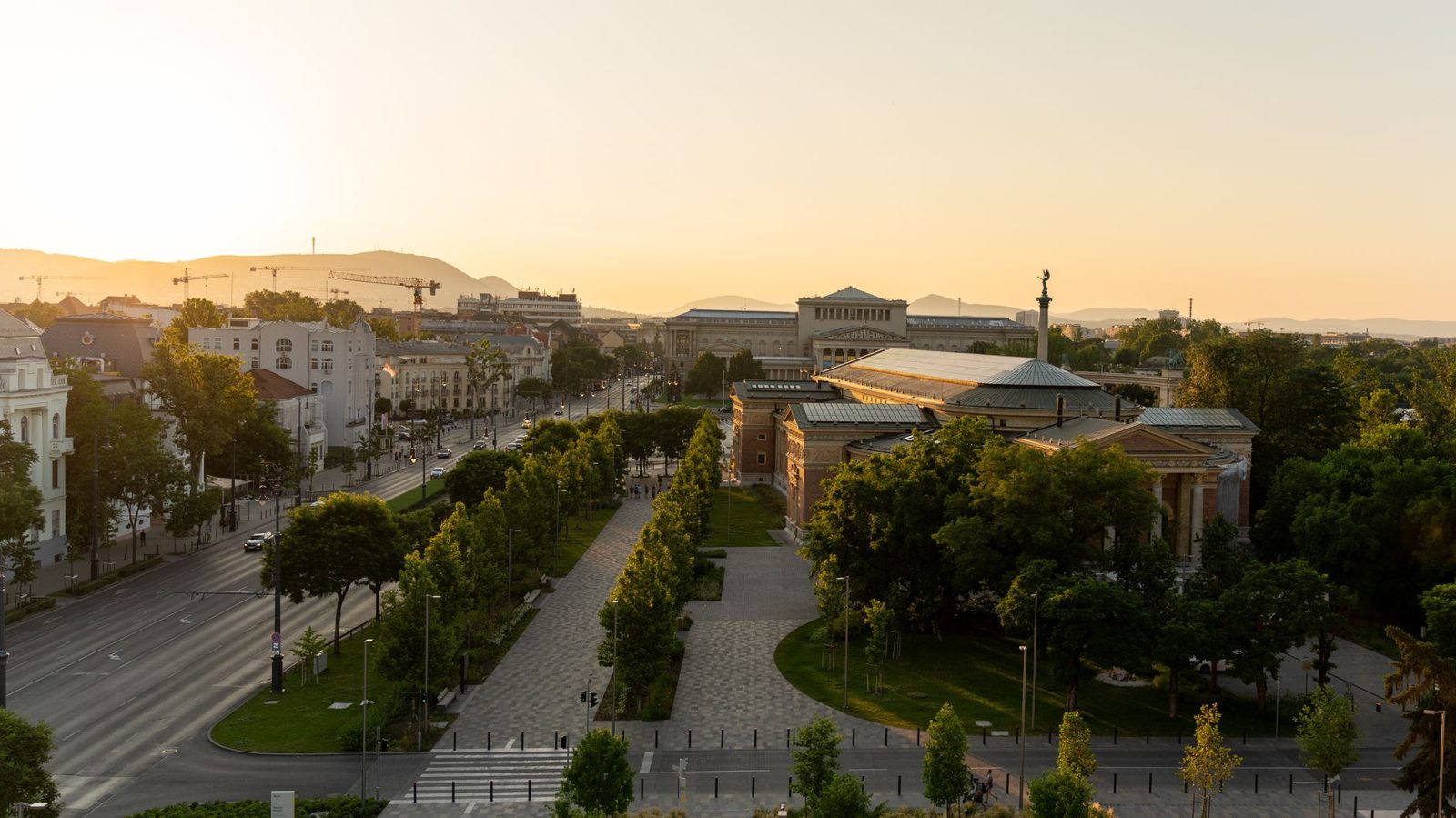
The easiest approach is the M1 — the little yellow line that runs the length of Andrássy and is itself a UNESCO-listed piece of history, the oldest electrified underground on the European continent. Get off at Vörösmarty utca and the museum is right there; Oktogon works too. If the weather is decent I’d actually walk at least part of Andrássy, because the avenue is the connective tissue of this whole part of the city.
House of Terror pairs naturally with the State Opera House and Heroes’ Square, both on the same axis, and it slots cleanly into a wider day exploring Budapest’s history and culture. If you’re building a tight schedule, see how it fits into a packed single day in Budapest, and if you’d rather have the context delivered live, several Budapest walking tours include this stretch of Andrássy with a guide who can fill in the gaps the museum deliberately leaves.
How it fits with Budapest’s other dark-history sites
The House of Terror is the headline act, but it’s part of a constellation. If the twentieth century is what draws you, you’ll want to pair it with a day looking at communist-era Budapest and its statue graveyard at Memento Park, where the toppled monuments of the regime now stand in a field on the city’s edge. The wartime persecution that began under the Arrow Cross is told movingly in the Jewish Quarter, a few minutes’ walk south. And for the Cold War from a different angle, the bunker-museum Hospital in the Rock under Buda Castle is unforgettable.
Tips from my visit
A few things that made my visit better, and a few I’d do differently:
- Take the audio guide. The exhibition is intentionally sparse on English labels, and the guide is what turns the rooms from atmospheric to comprehensible.
- Go early or late. With no online tickets, the queue builds midday in summer. The first hour after opening is calmest.
- Allow recovery time. The basement cells hit hard. I came out needing a coffee and a sit-down before doing anything else.
- Think twice about young children. The themes — torture, execution, mass murder — are not suitable for younger kids.
- Photography is restricted in much of the exhibition; respect the signs, and frankly it’s a place to look rather than shoot.
- Pick up the free printed room sheets at the entrance to each floor — they’re in English and add useful detail.
Is it worth it?
For me, yes, without hesitation — but with eyes open. The House of Terror is not a comfortable museum and it doesn’t try to be even-handed. What it does brilliantly is make the machinery of fear feel real: the same cellars, the same address, two regimes. Treat it as a powerful, partial memorial rather than the final word, follow it up with reading or a tour, and it becomes one of the most affecting couple of hours you can spend in the city.
For the material culture of the same period, Memento Park collects the actual statues removed from Budapest’s squares after 1989 — a more detached, curatorial counterpart to this museum’s direct confrontation with the era’s human cost.
Frequently asked questions
How long do you need at the House of Terror?
Most visitors spend between an hour and a half and two hours. With the audio guide and time to absorb the basement, lean towards the full two hours.
Can you buy House of Terror tickets online?
As of 2026 there’s no online ticketing — you buy at the door with cash or card. Because of that, arriving early or late helps you skip the midday queue.
Is the House of Terror suitable for children?
Not for younger ones. The exhibition deals graphically with torture, execution and mass murder. Older teenagers studying twentieth-century history will get a great deal from it, but it’s emotionally intense for everyone.
Is the museum biased?
Many historians feel it emphasises communist crimes over the fascist Arrow Cross period and carries a clear political viewpoint. That’s a fair criticism to hold in mind; it’s best understood as a memorial with a perspective rather than a neutral history lesson.
What’s the nearest metro station?
Vörösmarty utca on the M1 (yellow) line is right outside; Oktogon, also on the M1, is a short walk away.