Parking in Budapest: Zones, Apps and What It Costs
Budapest removed its parking machines and raised its zone rates on 1 July 2026. The four zones, the three-hour limit, how to pay by app with a foreign phone, and when parking is free.
In this guide
- At a glance
- How the zones work
- The three-hour limit
- Evenings and weekends
- Reading the signs
- How to pay now the machines have gone
- Hire cars, foreign plates and fines
- Garages and car parks
- Park and ride
- Disabled drivers
- Parking at the airport
- Places you can’t drive
- Should you bring a car at all?
- If you do drive in the centre
- Practical tips
- Frequently asked questions
- Photo credits
This article contains advertising. Our booking links are routed through a partner that adds commission tracking automatically, so if you book through one we earn a commission from the provider, at no extra cost to you. It never affects what we recommend. Affiliate disclosure
Until the end of June 2026, parking Budapest-style meant hunting for a green roadside machine, feeding it coins or a card, and leaving the ticket on the dashboard. On 1 July the city switched the machines off, put the hourly rates up by between a third and a half, and made paying a phone-only business. For a visitor with a hire car and a foreign SIM, that sounds like a recipe for a fine. It can be, but it’s straightforward once you’ve set things up before you arrive, and in the evenings and at weekends most of the city’s street parking costs nothing at all.
This page covers the four parking zones and what they cost, the hours they charge and the three-hour limit, how to pay now the machines have gone, what happens with hire cars and fines, garages and park-and-ride, the places you can’t drive at all, and an honest answer to whether you should bring a car into the city in the first place. Prices were checked in September 2026, against the city’s own announcement of the July changes; treat them as the right order of magnitude, since Budapest’s districts adjust the details.
At a glance
| Zone | Price per hour | Charging hours (weekdays only) | Maximum stay |
|---|---|---|---|
| A | 800 Ft (€2) | 08:00–22:00 | 3 hours |
| B | 600 Ft (€1.50) | 08:00–20:00 | 3 hours |
| C | 400 Ft (€1) | 08:00–18:00 | 3 hours |
| D | 300 Ft (€0.75) | 08:00–18:00 | No limit |
- Weekends: street parking is charged on weekdays only.
- Paying: by app, on the web, by SMS or by phone call. The machines have gone.
- Electric cars: cars with Hungary’s green number plates park free until 31 December 2026.
- For comparison: a 72-hour public transport travelcard costs 5,750 Ft (€14.40), a little over seven hours of parking in zone A.
How the zones work
Street parking in Budapest is run by the individual districts, but since July 2026 the city has set one set of rules for all of them: four zones, lettered A to D, with a fixed hourly rate for each. Zone A covers the busiest central streets, and the zones step down in price as you move out towards the suburbs. The sign at the start of each paid area shows the zone and its hours, and it now carries a QR code that leads to the payment information. Read the sign, not a map from last year: some districts start charging at slightly different times, and the sign is what counts.
The rates rose sharply in July. Zone A went from 600 to 800 Ft an hour, B from 450 to 600, C from 300 to 400 and D from 200 to 300. That’s still cheap by the standards of Vienna or Munich, but it adds up quickly if you’re parking in the centre every day.
The three-hour limit
In zones A, B and C you can park for a maximum of three hours at a time. It’s designed to stop commuters and visitors leaving cars in the centre all day, and it works: you can’t simply pay for a full day in zone A. If you need longer, move the car, use a garage, or park further out in zone D, where there’s no limit.
Evenings and weekends
Outside the charging hours, street parking is free. In zone A, that means from 22:00 until 08:00 the next weekday; in zones C and D, from 18:00. Charging applies only on weekdays, so from Friday evening until Monday morning you don’t pay at all. A few worked examples:
- Park in zone A at 7pm on a Tuesday and you pay until 10pm, three hours at 800 Ft, so 2,400 Ft (€6), then nothing overnight.
- Park in zone C at 4pm and you pay for two hours, 800 Ft (€2), and the rest of the evening is free.
- Arrive on Saturday morning and leave on Sunday night, and street parking costs you nothing.
Reading the signs
Parking signs in Budapest are in Hungarian only, and a word or two can be the difference between free parking and a penalty. The ones worth knowing:
| On the sign | What it means |
|---|---|
| Várakozási övezet | Parking zone: the start of a zone with its own rules |
| Díjköteles | Payment required |
| Munkanapokon | On working days (Monday to Friday, excluding public holidays) |
| Várakozni tilos | No parking (stopping briefly to drop someone off is allowed) |
| Megállni tilos | No stopping at all |
| Kivéve | Except: read what follows carefully |
| Engedéllyel | With a permit, usually for residents |
| Rakodás | Loading bay |
| Mozgáskorlátozott | Disabled bay, for blue-badge holders only |
| Behajtani tilos | No entry for vehicles |
The most common trap is a residents-only bay, marked with the word engedéllyel or with a residents’ symbol, in an otherwise ordinary paid street. Paying the zone rate doesn’t make it yours. If in doubt, photograph the sign and run it through a translation app before you walk away from the car.
How to pay now the machines have gone
Since 1 July 2026 there’s no way to pay for street parking with coins or a card at the roadside. You pay with your phone, in one of four ways, all feeding into the national mobile-payment system, and the city says there’s no convenience fee on top of the zone rate.
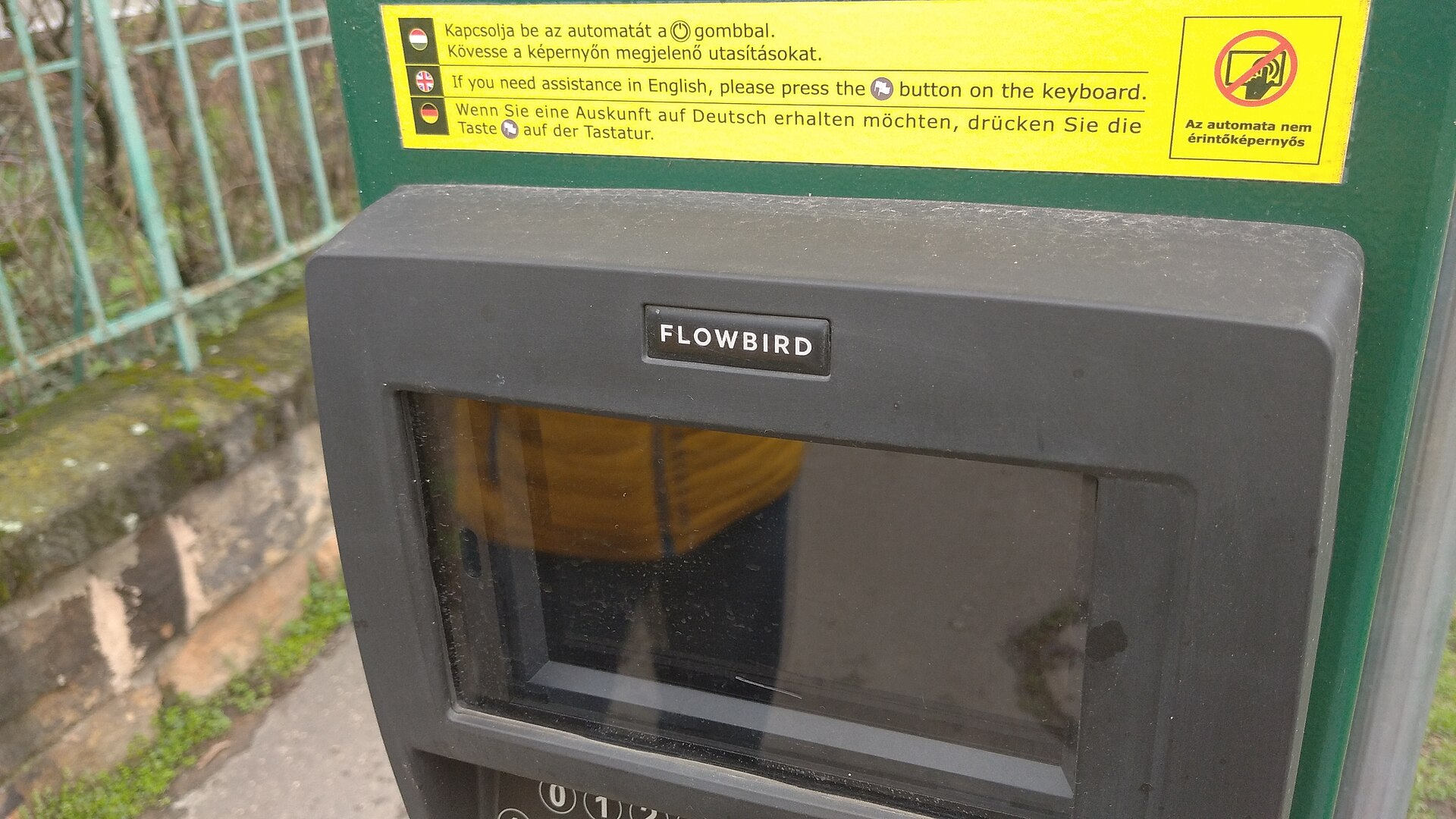
- A parking app. The practical choice for visitors. Parkl and Simple by OTP are the best-known apps that accept foreign phone numbers and bank cards. You register once, add your number plate and a card, and then start and stop parking sessions from the app.
- The web. webparkolas.hu lets you start a parking session online without downloading an app or creating an account in advance, which is useful if you only need to park once.
- SMS. Technically available, but in practice it works only with Hungarian mobile networks, and the message format has to be exact. Not one for visitors.
- A phone call. Also aimed at Hungarian numbers.
Whichever you use, the principle is the same. You enter the zone code from the sign and your number plate, and you start a session. There’s no ticket to display: enforcement officers check your plate against the payment database. When you drive off, stop the session, since you pay for the time it runs, and keep an eye on the three-hour limit in zones A to C.
The one piece of advice that saves the most grief: set the app up before you arrive. Register, add the car’s plate and your card, and do a trial run on the hotel wifi. Trying to register on a pavement in the rain, with a car on a yellow line and an unfamiliar Hungarian interface, is how people end up with a penalty notice.
Hire cars, foreign plates and fines
Paying works the same way for a hire car. Just enter its Hungarian plate in the app when you pick it up, and remember to remove it when you hand the car back. The apps also accept foreign registration numbers, so a car you’ve driven from home can be parked just the same.
If you don’t pay, or overstay, the district that runs the zone issues a penalty. The amount is set locally and published by each district, and it’s always far more than the parking would have cost. With a hire car, the rental company will pay the penalty and charge it to your card, usually with an administration fee on top, sometimes weeks after you’ve flown home. Don’t assume a foreign-registered car is invisible either: plates are recorded, and unpaid penalties can follow a car.
Two other things to watch. First, cars parked illegally, on pavements where it isn’t marked, across driveways, in bus lanes or at tram stops, can be towed, and getting a car back from the pound costs a great deal more than a parking penalty. Second, look out for temporary signs announcing street cleaning, filming or events; cars left in those spots get moved, however legally they were parked the day before.
Garages and car parks
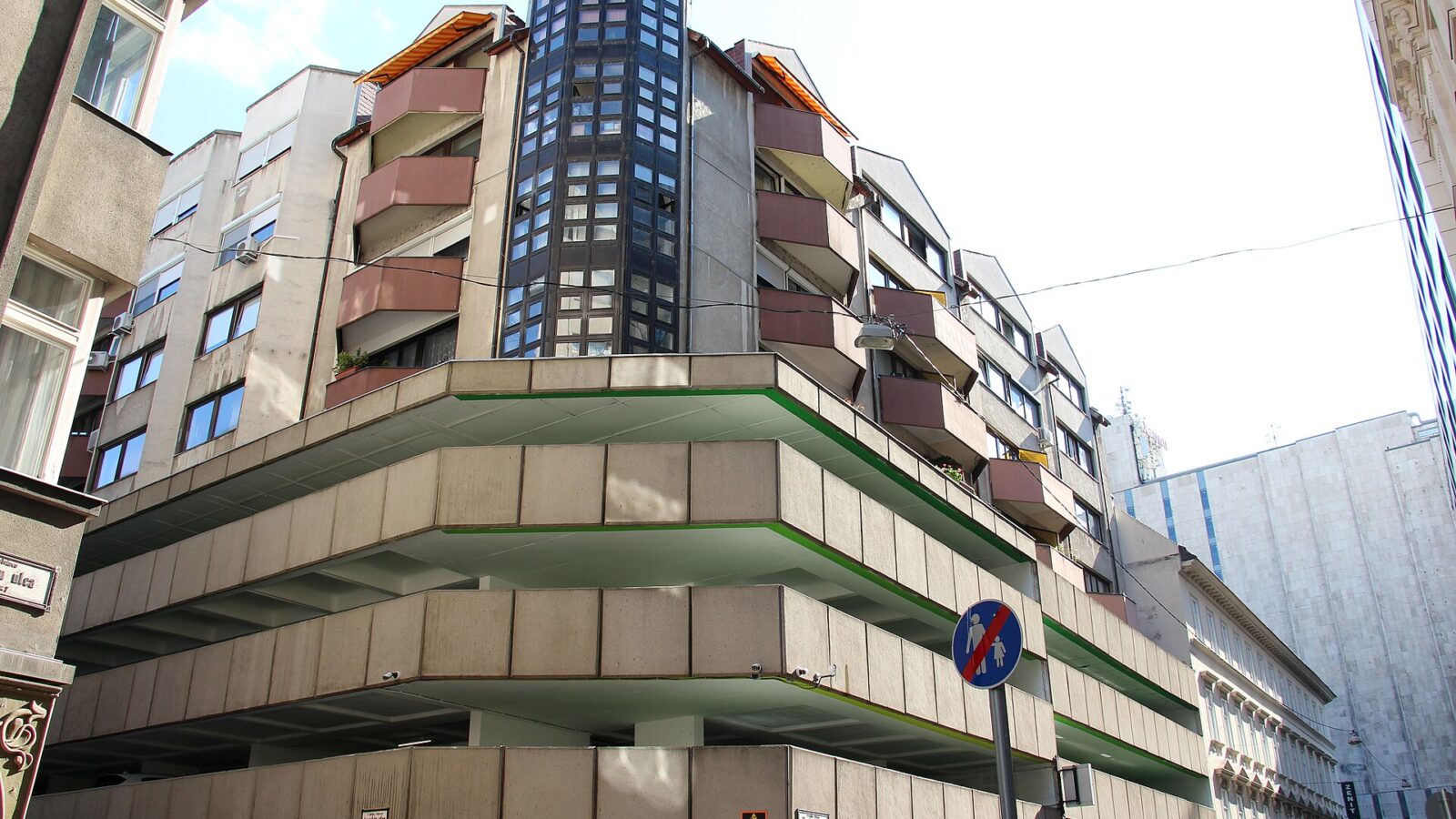
Multi-storey and underground garages are the answer if you need to leave the car in the centre for longer than three hours. They’re privately run, they set their own tariffs, which are usually higher per hour than the street but often capped for a full day, and they don’t have the three-hour limit. You pay at the exit in the usual way, so no app is needed. Check the tariff board at the entrance before you drive in, because the difference between garages a few streets apart can be large. The one pictured at the top of this page, the concrete multi-storey on Aranykéz utca just off Váci utca, with flats stacked on top of its parking decks, is a classic of the type: 1970s, unlovely and extremely handy for the inner city.
Most hotels in the centre either have their own garage or an arrangement with one nearby, and nearly all of them charge for it, usually per night. Ask when you book rather than at check-in, and factor it into the price: a central hotel with expensive parking can end up costing more than a slightly less central one with a free car park. The guide to where to stay in Budapest covers the neighbourhoods if you’re weighing up the trade-off.
Park and ride
If you’re driving in for the day, from Lake Balaton, Vienna or the Danube Bend, the smartest move is not to drive into the centre at all. Park-and-ride (P+R) car parks sit beside metro termini and suburban railway stations around the edge of the city, among them Kelenföld at the end of the M4, Örs vezér tere at the end of the M2, and stations on the suburban lines. Park there, buy a travelcard, and ride in. From Kelenföld the M4 reaches Kálvin tér in the centre in about a quarter of an hour.
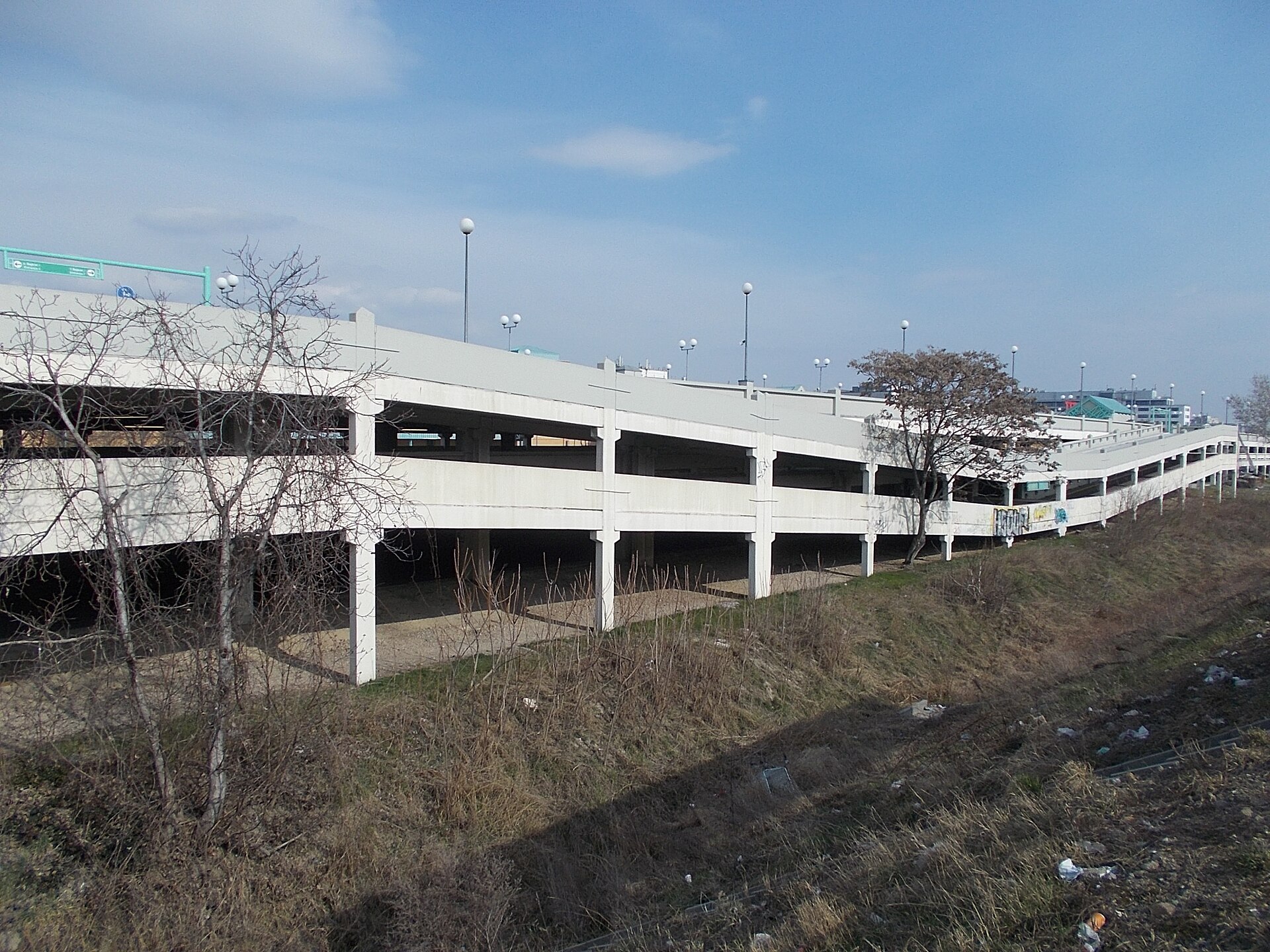
P+R prices and rules vary from site to site, with some free and others charging a modest daily fee, so check the signs when you arrive. The city says it’s reviewing its P+R network alongside plans for the suburban railways, so expect changes. The metro guide covers the lines from each terminus, and the public transport guide explains tickets and travelcards.
Disabled drivers
Hungary recognises the EU disabled parking card, and bays reserved for card holders are marked with the wheelchair symbol and the word mozgáskorlátozott. Display the card clearly behind the windscreen. Whether card holders also park free in the ordinary paid zones is set district by district, so check the sign or the district’s parking pages before you rely on it, rather than assuming the rules at home apply.
Parking at the airport
Budapest Airport runs its own car parks next to the terminal, bookable in advance on the airport’s website. Prices depend on how long you stay and how early you book, so for anything longer than a quick drop-off, compare the options online before you set off rather than following the first sign you see. For a short trip, the 100E airport bus or a taxi is often cheaper than a week’s parking; the Budapest Airport guide covers both.
Places you can’t drive
Budapest has been steadily closing its most famous places to private cars, which is good news for walkers and worth knowing before you set the satnav.
- The Chain Bridge. Since its restoration, private cars have been banned for good; the bridge carries buses, taxis, bikes and pedestrians only. The Chain Bridge guide has the story.
- The Castle District. Buda’s old town on Castle Hill is closed to ordinary visitors’ cars. Park below, and go up on the 16, 16A or 116 bus or the funicular from Clark Ádám tér. The Buda Castle guide covers the ways up.
- Margaret Island. Closed to private cars. Walk on from the Margaret Bridge or take the 26 bus; the Margaret Island guide has the details.
- The pedestrian streets of District V, including Váci utca, and a growing number of residential streets with access restrictions. Follow the signs, and don’t follow your satnav into a pedestrian zone.
Pedestrianised Budapest will only grow, and the city makes no secret of wanting fewer cars in the centre. Driving through it is legal almost everywhere else, but it’s rarely quicker than the tram.
Should you bring a car at all?
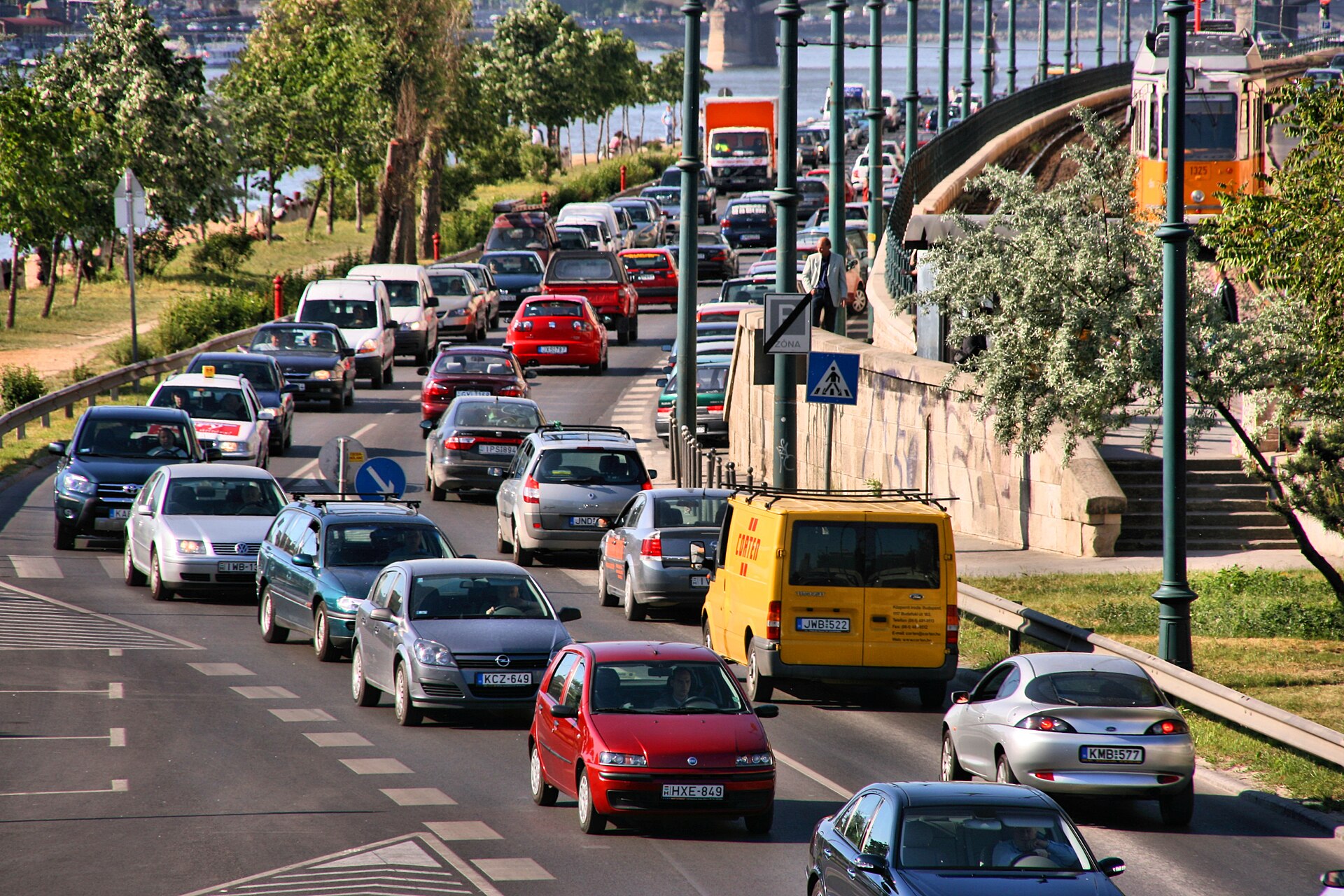
For a city break, honestly, no. Central Budapest is compact and walkable, the trams and metro are frequent and cheap, and a 72-hour travelcard costs about the same as seven hours’ parking in zone A. Add the three-hour limit, the one-way streets, the tram tracks and the rush-hour jams, and a car in the centre is more of a responsibility than a convenience. The getting around Budapest hub compares every option, and for the odd late-night journey, the taxi and Bolt guide explains the fixed fares.
The sums make the point. Three weekdays of sightseeing in the centre, with the car parked in zone A for eight hours a day, would cost 19,200 Ft (€48) in parking even if the three-hour limit didn’t make it impossible, before you count fuel or the hotel garage. A 72-hour travelcard covering every tram, bus and metro in the city costs 5,750 Ft (€14.40).
If you do drive in the centre
A few local rules catch out visiting drivers. Trams have priority, and at many stops passengers step straight off the tram into the road, so stop behind a tram that’s letting people off. Bus lanes, marked in the road, are camera-enforced, and so are many turning restrictions. Budapest’s one-way systems can send you on long loops, so let the satnav plan the route but read the signs as you go. And the drink-drive limit in Hungary is zero: not one glass. The tram guide explains how the network works from the passenger’s side, which helps when you’re sharing the road with it.
A car earns its keep outside the city. For a day on the Danube Bend or around Lake Balaton, with stops the trains don’t make, it’s the better option. The sensible pattern is to pick the car up on the day you leave the city, or leave it in the hotel garage while you’re sightseeing in town. The car rental guide covers renting, vignettes and the rules of the road.
Practical tips
- Download a parking app and register your plate and card before you arrive, then test it.
- Read the sign on every street: the zone, the hours and the QR code are all there, and they overrule any map.
- Set a phone alarm for the three-hour limit in zones A to C.
- Stop the parking session as soon as you drive off.
- Use a garage or park-and-ride for anything longer than three hours in the centre.
- Park free on weekday evenings and at weekends, but check for temporary signs about cleaning or events.
- Ask your hotel about parking charges when you book, not at the desk.
- Never park on tram tracks, at tram stops or in bus lanes. Towing is swift and expensive.
Frequently asked questions
How much is parking in Budapest?
Since 1 July 2026, street parking costs 800 Ft an hour in zone A, 600 Ft in zone B, 400 Ft in zone C and 300 Ft in zone D. Garages set their own prices, usually higher per hour but with day rates.
Is parking free in Budapest at weekends?
Yes. Street parking is charged on weekdays only, so it’s free from the end of the charging period on Friday until 08:00 on Monday. Weekday evenings are free too, after 22:00 in zone A, 20:00 in zone B and 18:00 in zones C and D.
How do I pay for parking in Budapest?
By phone only: through a parking app, on the web, by SMS or by a phone call. The roadside machines were removed on 1 July 2026. Visitors should use an app such as Parkl or Simple by OTP, or the webparkolas.hu website, since SMS parking works only with Hungarian mobile networks.
How long can I park on the street in Budapest?
Up to three hours at a time in zones A, B and C. Zone D has no limit. For longer stays in the centre, use a garage or a park-and-ride car park.
Is parking free for electric cars in Budapest?
For cars with Hungary’s green number plates, yes, until 31 December 2026. Charges apply from 1 January 2027.
What happens if I don’t pay for parking in Budapest?
The district that runs the zone issues a penalty, which is always far more than the parking would have cost. With a hire car, the rental company passes it on to your card, usually with an administration fee.
Where can I park all day in Budapest?
In a garage, in a park-and-ride car park at the edge of the city, or on the street in zone D, which has no time limit. Zones A to C allow a maximum of three hours.
Photo credits
Aranykéz utca garage: Budapest – Aranykéz Parkolóház by Fred Romero from Paris, France, CC BY 2.0, via Wikimedia Commons.
Parking machine: Flowbird D by Yogurt, CC0, via Wikimedia Commons.
Park-and-ride at Budatétény: P+R car park from railway station, 2021 Budatétény by Globetrotter19, CC BY-SA 3.0, via Wikimedia Commons.
Riverside traffic: Traffic congestion on a Budapest street beside the Danube by Marek Ślusarczyk (Tupungato), CC BY 3.0, via Wikimedia Commons.