Lake Balaton from Budapest: Best Day Trip & Weekend Guide (2026)
How to do a Lake Balaton day trip from Budapest in 2026: trains, north vs south shore, Tihany, Balatonfured, Siofok, beaches and wine.
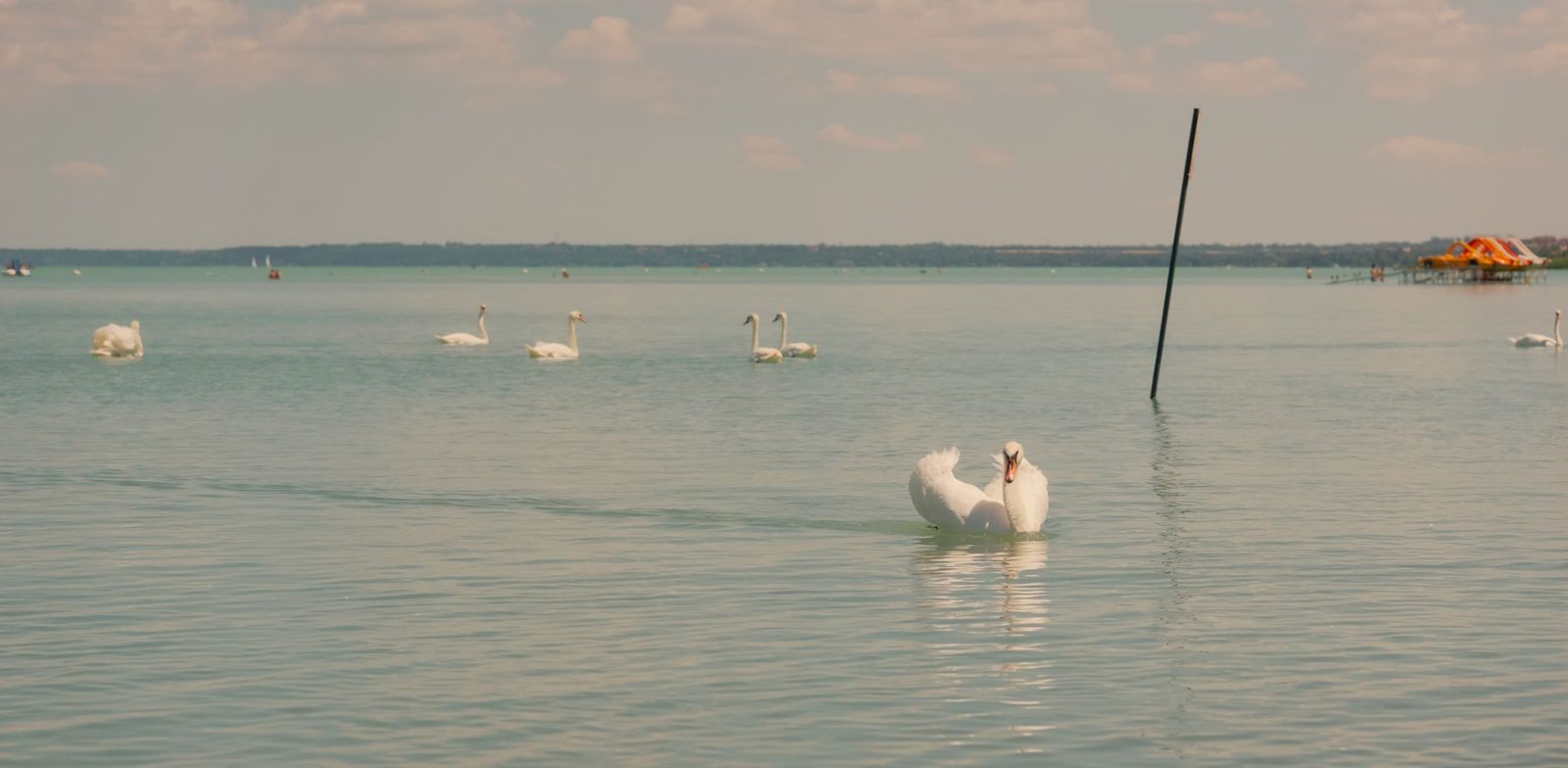
In this guide
- Getting to Lake Balaton from Budapest
- North shore or south shore? Choose before you book
- Tihany: the peninsula you shouldn’t skip
- Balatonfüred: reform-era elegance
- Siófok and the south shore
- Keszthely and the Festetics Palace
- Badacsony and the wine hills
- What to actually do at the lake
- A realistic one-day plan
- Practical tips for your day trip
- Frequently asked questions
This article contains advertising. Our booking links are routed through a partner that adds commission tracking automatically, so if you book through one we earn a commission from the provider, at no extra cost to you. It never affects what we recommend. Affiliate disclosure
The first time I took the train down to Lake Balaton from Budapest, I made the classic mistake of trying to “see the whole lake” in a day. You can’t. Balaton is the largest lake in Central Europe — roughly 77 kilometres end to end — and pretending otherwise just leaves you sweating on station platforms. The trick to a good Lake Balaton day trip is to pick one stretch of shoreline, commit to it, and let the rest wait for another visit.
That said, it is genuinely one of the easiest escapes from the capital. You can be standing on a promenade with a lángos in hand barely two hours after leaving Keleti or Déli, and the change of pace is total: sailboats instead of trams, reed beds instead of ruin bars. Here is how I’d plan it, with current 2026 travel details and the towns I keep going back to.
Getting to Lake Balaton from Budapest
Most people take the train, and for good reason — it drops you a short walk from the water in several towns and you skip the summer traffic that clogs the M7 motorway every Friday afternoon. MÁV, the Hungarian state railway, runs direct services from Budapest down both shores. Trains for the southern shore (Siófok, Fonyód) and many northern-shore services leave from Déli and Kelenföld stations; check your specific train, because departure stations shift seasonally.
As a rough guide, Siófok on the south shore is about 1.5 hours away, while Balatonfüred on the north shore takes closer to two hours. There are several departures a day, with the first useful trains rolling out around 6:30–7:30am — worth catching, because it buys you a full day at the lake rather than a rushed afternoon. Second-class fares run roughly 3,000–4,500 HUF (about €8–12) each way depending on distance.
Driving gives you more freedom to hop between villages, especially out west towards Keszthely where train connections thin out, but in July and August the motorway back to Budapest on a Sunday evening is a special kind of misery. If you’d rather not think about logistics at all, organised day tours from Budapest bundle transport with stops at Tihany and Balatonfüred, usually with a wine tasting thrown in.
| Option | Journey time | Rough cost (return) | Best for |
|---|---|---|---|
| Train to Siófok (south) | ~1.5 hours | €16–20 | Beaches, quick access |
| Train to Balatonfüred (north) | ~2 hours | €18–24 | Promenades, Tihany, wine |
| Car | 1.5–2 hours | Fuel + tolls | Reaching western towns, flexibility |
| Guided coach tour | Full day | €60–100 pp | Zero planning, included tastings |
North shore or south shore? Choose before you book
This is the single decision that shapes your whole day, and the two shores really are different lakes in spirit. The north shore is the scenic, slower one: volcanic hills, vineyards, the Tihany peninsula, genteel old spa towns and deeper water that drops away fairly quickly from the bank. The south shore is flat, sandy and shallow — you can wade out a hundred metres and still be waist-deep — which makes it the family and party shore, with Siófok as its loud, cheerful capital.
If it’s your first visit and you want the postcard version of Balaton, go north to Balatonfüred and Tihany. If you’re travelling with small children or you simply want to flop on a beach with minimal fuss, the south shore is the smarter call. You rarely have time for both in a single day, so resist the temptation.
Tihany: the peninsula you shouldn’t skip
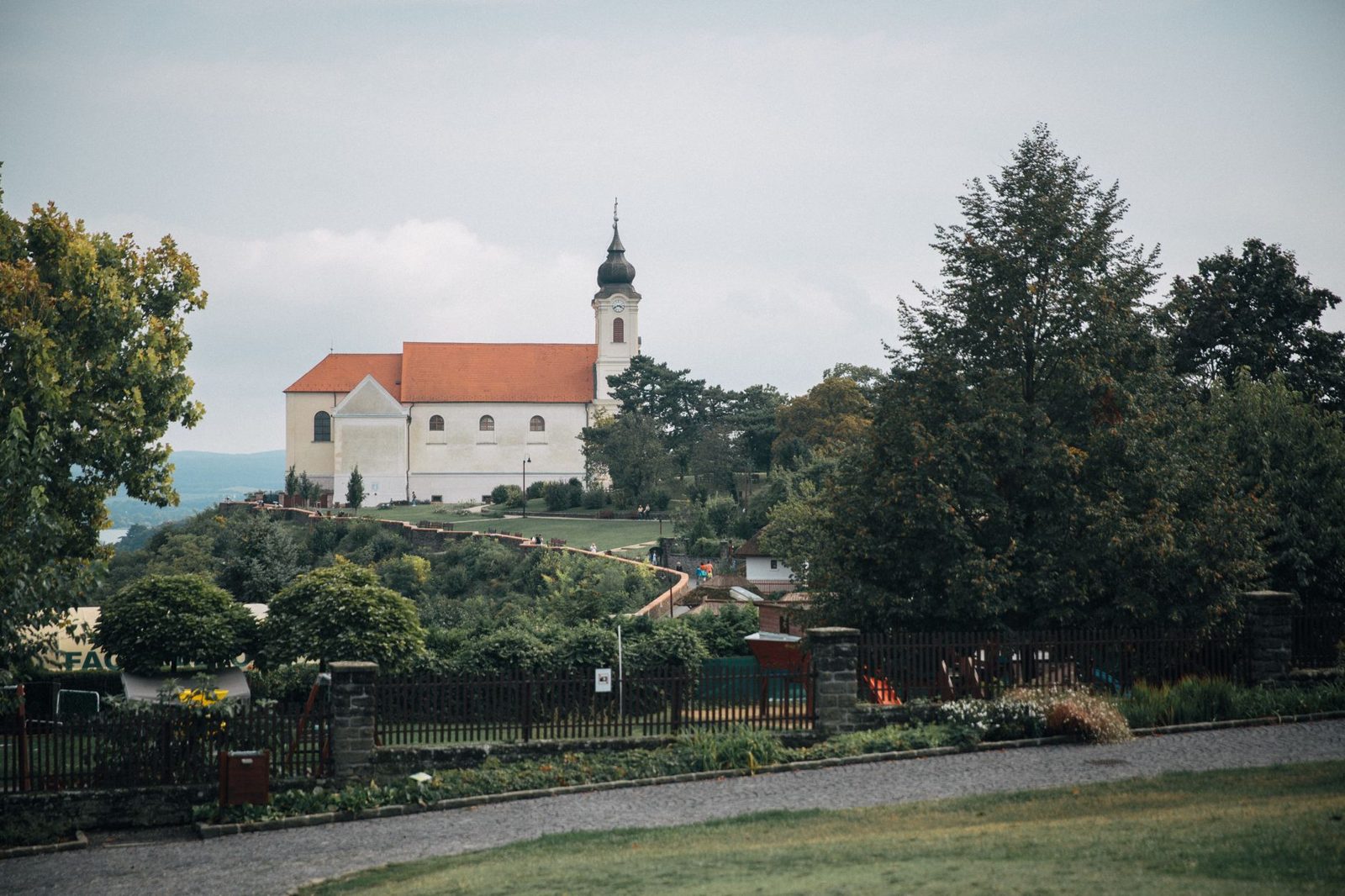
If I could only send you to one spot, it would be the Tihany peninsula, a stubby volcanic thumb poking into the lake on the north shore. The Benedictine Abbey crowning the village was founded in 1055, and its twin baroque towers are the image most people carry home from Balaton. The founding charter kept inside is one of the oldest documents to contain Hungarian words, which gives the place a real weight beyond the views.
The village around the abbey is unashamedly touristy — lavender soap, paprika, ice cream — and in high summer it heaves. But walk five minutes off the main lane and you’re on quiet trails through the inner peninsula, past the Inner Lake and old lavender plots. Tihany’s lavender peaks in late June and into July, and if your timing lines up the slopes turn purple and the whole place smells like a Provençal postcard. There’s even a lavender festival around midsummer.
Getting to Tihany without a car takes a little planning: from Balatonfüred you hop a local bus, or in season the BAHART ferries cross the lake’s narrowest point between Tihany and Szántód in about ten minutes. Those car-and-passenger ferries generally run April to October, so they’re perfect for a day trip but check the timetable before relying on them.
Balatonfüred: reform-era elegance
Balatonfüred is my favourite base on the north shore. It’s a proper spa town with a 19th-century pedigree — the carbonated springs here drew Hungary’s reform-era intellectuals, and the Tagore Promenade along the water is still lined with plane trees and grand old villas. You can happily spend a few hours doing nothing more strenuous than walking the lakefront, watching yachts come and go from the marina, and ordering a coffee at one of the terrace cafés.
It’s also walkable from the train station down to the water in about ten to fifteen minutes, which makes it ideal if you’re car-free. The town hosts the Anna Ball each summer, a debutante tradition dating to 1825, and the surrounding hills produce some respectable wine. For a day trip, Balatonfüred plus a ferry or bus hop to Tihany is close to the perfect itinerary.
Siófok and the south shore
Siófok is Balaton’s party town, and it knows it. The “capital” of the south shore has the biggest beaches, the longest list of bars and clubs, and in July and August a crowd of young Hungarians and visitors who come specifically to make noise. The water is shallow and warm — genuinely bath-like by late summer — which is why families with toddlers love the gentler bits away from the strip.
For a day-tripper, Siófok’s big advantage is speed: it’s the fastest part of the lake to reach by train, and the Gold Coast (Aranypart) and Silver Coast (Ezüstpart) beaches are an easy walk or short bus from the station. If your idea of a good day is sun, swimming and a cold beer rather than abbeys and museums, this is your shore.
Keszthely and the Festetics Palace
Out at the western tip sits Keszthely, home to one of Hungary’s finest baroque palaces. The Festetics family began the palace in the 1740s and successive generations expanded it into the sprawling complex you see today, complete with the Helikon Library and its tens of thousands of volumes, period furnishings and formal gardens. It’s a genuine highlight, but be honest with yourself about distance — Keszthely is the far end of the lake and a long haul as a day trip from Budapest, better paired with an overnight or reached by car.
Badacsony and the wine hills
The northwestern shore around Badacsony is volcanic wine country, with basalt hills rising straight off the water and cellars producing crisp whites — look for Olaszrizling and Kéknyelű. Hiking up through the vineyards to a viewpoint and then settling in at a hillside cellar (a borozó) for a tasting is one of the great Balaton afternoons. If wine is your thing, read up on Hungarian wine regions before you go so you know what to order. Like Keszthely, Badacsony is a stretch for a pure day trip but very doable by car.
What to actually do at the lake
Beyond town-hopping, Balaton rewards anyone who likes being on or in the water. A few of the things I’d prioritise on a day visit:
- Swim. The lake is clean and the shallow south shore is wonderfully warm by mid-summer. Most beaches are “strands” with a small entry fee, changing rooms and grass to lie on.
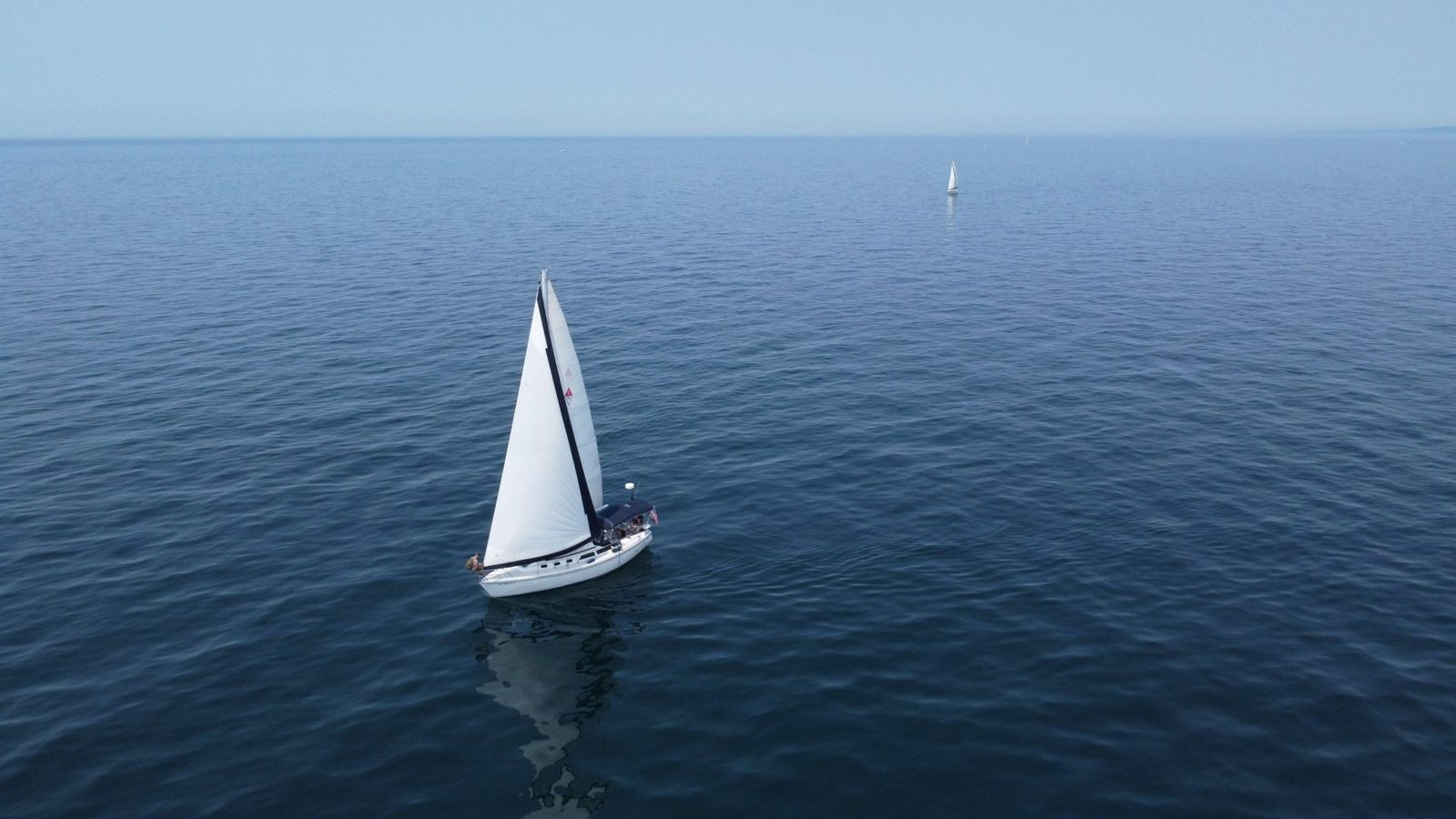
- Sail or take a pleasure cruise. Balaton is Hungary’s sailing heartland; even if you can’t crew a yacht, BAHART runs scenic boat trips between the bigger towns.
- Cycle the shore path. A well-marked cycle route rings much of the lake — renting a bike for a couple of hours along the Balatonfüred–Tihany stretch is glorious.
- Eat fish and lángos. Fried fogas (pike-perch) and deep-fried lángos slathered in sour cream and cheese are the obligatory lakeside meal.
- Climb a hill for the view. The volcanic cones of the north shore — Badacsony, Szent György — give you the whole silver sheet of the lake in one frame.
A realistic one-day plan
Here’s the day I’d actually do, car-free, on a first visit. Catch the 7-ish train from Budapest to Balatonfüred, arriving mid-morning. Walk the Tagore Promenade, grab a coffee, then take the bus or ferry across to Tihany for late morning. Wander the abbey, the village and a lavender trail, eat lunch with a lake view, and laze on the peninsula in the early afternoon. Head back to Balatonfüred for a swim or an ice cream, then catch a late-afternoon or early-evening train home. You’ll be back in Budapest in time for dinner, sunburnt and content.
If you want a beach-only day instead, swap all of that for a straight run to Siófok: train down, beach, lunch, beach, train back. Less to see, more to switch off.
Practical tips for your day trip
Buy train tickets through the MÁV app or at the station; for popular summer departures a seat reservation is worth it. Bring cash for small beachside stands and the strand entry fees, though cards are widely accepted in restaurants now. Pack swimwear, a towel and sunscreen even if you’re “just looking” — you’ll want to get in. And start early: the difference between a 7am and a 10am departure is the difference between a real day at the lake and a frustrating cameo.
If you’re still mapping out your wider trip, the Danube-side options like the Danube Bend and the artists’ town of Szentendre are quicker escapes, while Eger pairs a baroque old town with the Valley of the Beautiful Women wine cellars. Timing matters too — see the best time to visit Budapest to line your Balaton day up with good lake weather.

If train connections to the smaller lakeside towns feel too restrictive, renting a car is worth it for this trip specifically — Hungary’s motorways are easy to drive, and the main catch is remembering to buy a highway vignette before you set off.
Trains to the lake leave from Déli, on the Buda side rather than the more central stations — the Budapest train stations guide covers what to expect there and how it differs from Keleti and Nyugati.
Frequently asked questions
Is Lake Balaton worth a day trip from Budapest?
Yes, if you focus on one area. The north shore (Balatonfüred plus Tihany) makes a rewarding day combining a spa-town promenade, a thousand-year-old abbey and lake swimming. Trying to circle the whole lake in a day, though, is a waste — distances are larger than they look on the map.
How long does it take to get from Budapest to Lake Balaton?
By direct train, roughly 1.5 hours to Siófok on the south shore and about 2 hours to Balatonfüred on the north shore. By car it’s a similar 1.5–2 hours, though summer weekend traffic on the M7 can add a lot on the return leg.
When is the best time to visit Lake Balaton?
June to early September for swimming, with water warm enough to enjoy from late June. Late June and July add the bonus of Tihany’s lavender. May and September are quieter and pleasant for walking and wine, but the water is cooler and some seasonal services wind down by October.
Can you swim in Lake Balaton?
Absolutely — it’s one of the main reasons to go. The shallow, sandy south shore around Siófok is warm and family-friendly; the north shore deepens more quickly. Most swimming is at organised “strand” beaches with a small entry fee, changing facilities and lawns.
Which shore is better, north or south?
North for scenery, wine, Tihany and old spa towns; south for sandy, shallow, warm beaches and nightlife in Siófok. First-timers chasing the classic Balaton image should head north; beach-and-relax travellers and families often prefer the south.
Balaton also slots neatly into a longer stay. Our seven-day Budapest itinerary builds the lake in as an overnight rather than a rushed day return.
Last updated June 2026. Photos: László Mathesz (Pexels); Bence Szemerey (Pexels); David Solce (Pexels); Volker Meyer (Pexels).