Budapest to Vienna by Train: Times, Tickets and Which Seat
Hourly Railjets from Keleti, cheaper RegioJets from Déli and a Buda-side shortcut at Kelenföld. Fares, seat reservations and luggage for the Budapest–Vienna run, checked September 2026.
In this guide
- At a glance
- Three kinds of train on one line
- Railjet: the default
- EuroCity: the older sibling
- RegioJet: the cheap one, from a different station
- Night trains
- Where to board in Budapest: Keleti, Kelenföld or Déli
- Keleti: the grand start
- Kelenföld: the Buda-side shortcut
- Déli: RegioJet only
- If you miss the train
- Tickets: who sells them and what they cost
- ÖBB
- MÁV
- RegioJet
- Resellers and the ticket window
- Which seat to pick
- Class
- Tables, sockets and zones
- Which side?
- Do you need to reserve?
- On board: stops, the border and arriving in Vienna
- The border
- Money and phones
- Luggage, bikes, children and accessibility
- Getting to the station
- Train, bus, car or plane?
- Beyond Vienna
- Practical tips
- Frequently asked questions
- Photo credits
This article contains advertising. Our booking links are routed through a partner that adds commission tracking automatically, so if you book through one we earn a commission from the provider, at no extra cost to you. It never affects what we recommend. Affiliate disclosure
Two old imperial capitals, a couple of hundred kilometres of flat farmland between them, and a red-and-grey Railjet roughly every hour: the Budapest to Vienna train is about as easy as international rail gets in Europe. You board at Keleti, find your seat, and two hours and forty minutes later you step off at Wien Hauptbahnhof, usually without anyone having asked to see a passport. That ease is exactly why people get the details wrong. They book the cheapest fare without noticing it leaves from a different station, pay several times the online price at the ticket window, or spend the first hour standing in a vestibule because a party bound for Munich reserved every seat in the carriage.
This page is the practical half of the journey: the three kinds of train on the line, where to board in Budapest (it isn’t always Keleti), how the fares work and where to buy them, which seat to pick, and what to do about luggage, bikes and children. Fares and timings were checked in September 2026; treat them as the right order of magnitude rather than gospel, because both shift with demand and with the timetable change every December. If you’re going for the day and coming back the same evening, the Vienna day-trip guide covers what to see and how to pace it. Everything about tickets and platforms lives here.
At a glance
| Train | Operator | Boards in Budapest at | To Wien Hbf | Cheapest advance fare | Seat reservation |
|---|---|---|---|---|---|
| Railjet | ÖBB with MÁV | Keleti, then Kelenföld | About 2h40 | About €13 via MÁV, €19.90 via ÖBB | Optional, about €3 |
| EuroCity | MÁV | Keleti, then Kelenföld | About 2h40 | Same fare system as the Railjet | Optional, about €3 |
| RegioJet | RegioJet | Déli, then Kelenföld | About 2h40 | From €9 | Included in every ticket |
- Frequency: a direct Railjet or EuroCity roughly every hour from early morning into the evening, plus about four RegioJets a day.
- Walk-up fare: the fully flexible second-class ticket costs about €53, which is the price of leaving it to the day.
- First class: from about €30 booked ahead with ÖBB; Railjet Business adds roughly €20 on top of that.
- Getting to the station: a BKK single ticket is 500 Ft (€1.25) — M2 or M4 for Keleti, M4 for Kelenföld, M2 for Déli.
- Border: both countries are in Schengen, so there’s no routine passport control, but Austria runs spot checks and you should carry ID.
- Money: Austria uses the euro. Your forints stop being useful somewhere around Hegyeshalom.
Three kinds of train on one line
Everything on this route uses the same main line: west out of Budapest through Tatabánya and Győr to the border at Hegyeshalom, then across the Burgenland plain into Vienna. The track is the same and the journey time barely differs from one train to the next. What changes is the train itself, the station it uses in Budapest, and whose rules you’re living by once you’ve paid.
Railjet: the default
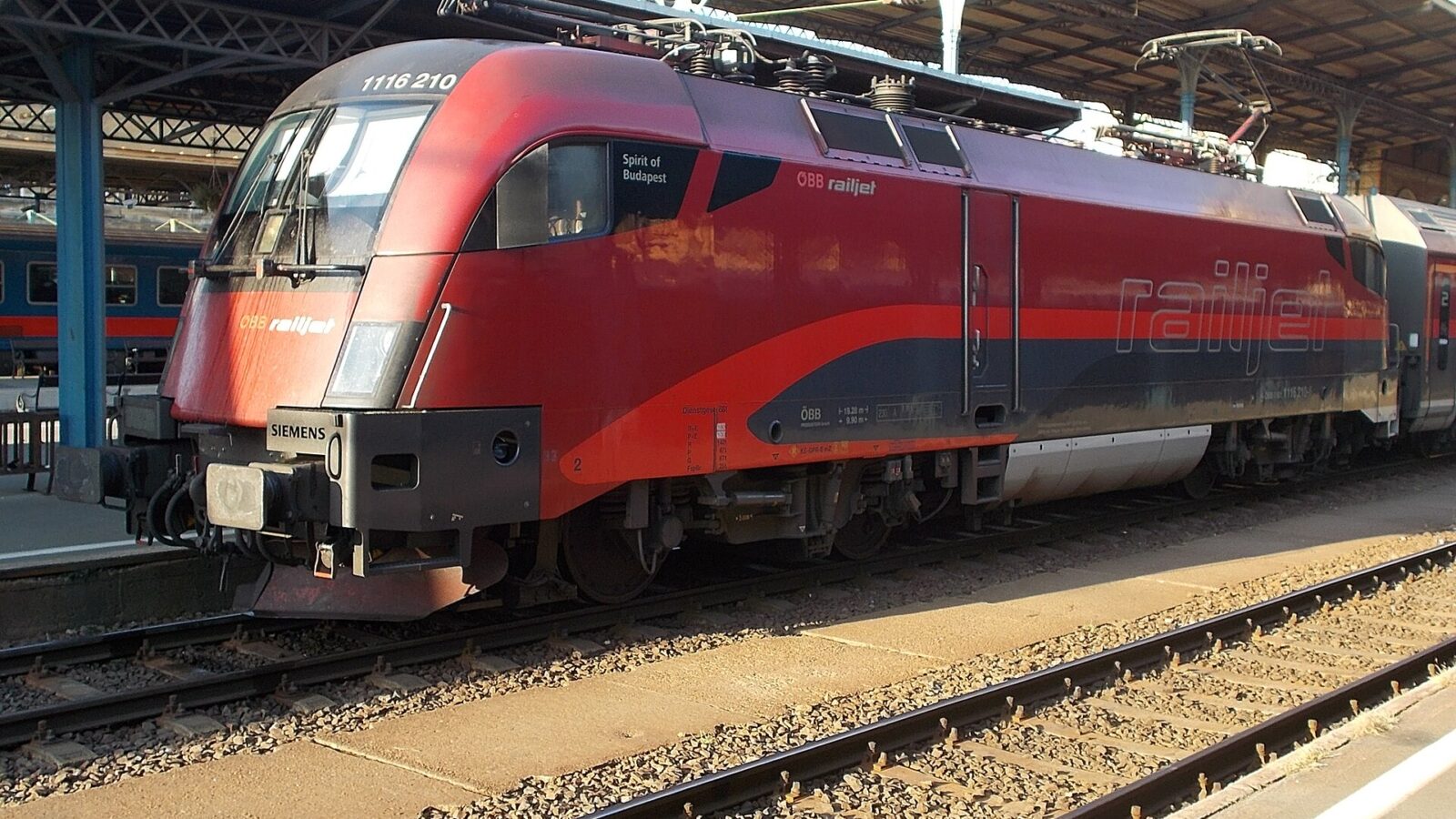
Most people who take the train to Vienna end up on a Railjet, the sleek red-and-grey trains that ÖBB, Austria’s national railway, runs on this route together with MÁV, Hungary’s. They start at Keleti, and many carry on well past Vienna to Salzburg, Munich or Zurich, which matters more than it sounds (see the section on reservations below). There are three classes — Economy, First and Business — plus free wifi, a power socket at every seat, a quiet zone, and on most sets a restaurant car between First and Economy that serves hot dishes, beer and a respectable coffee. On a trip this short the restaurant car is less about hunger than about spending forty minutes watching the Hungarian plain slide past from a proper table, which is an entirely legitimate use of it.
EuroCity: the older sibling
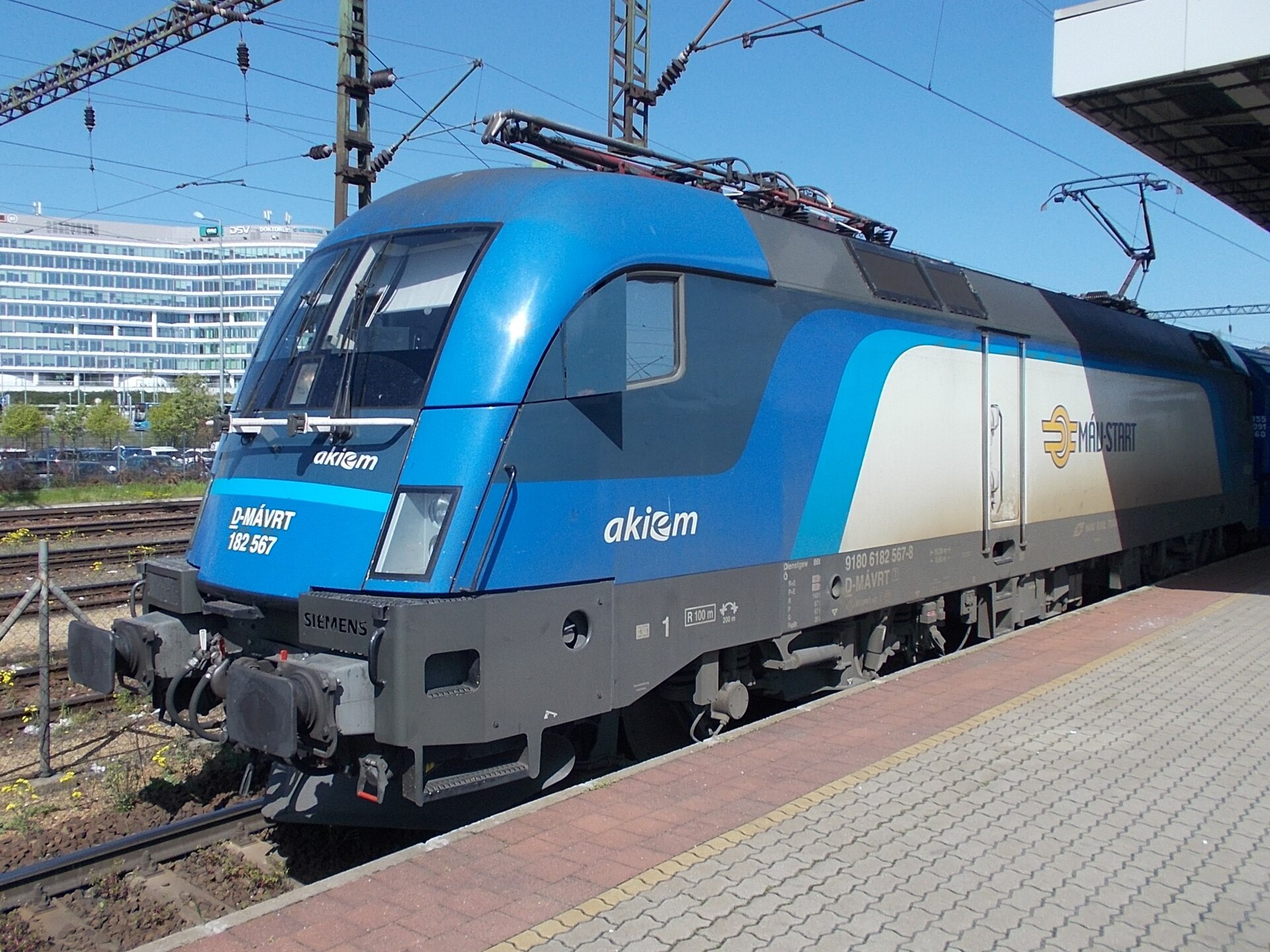
Slotted between the Railjets through much of the day are MÁV’s EuroCity trains: a locomotive, often a Siemens Taurus in MÁV-START blue, pulling a rake of air-conditioned carriages. Same journey time, same fare system, same optional reservation. The carriages are older than a Railjet’s and the catering varies from a proper dining car to nothing at all, so treat food on board as a bonus rather than a plan. There’s no reason to avoid them. If a EuroCity suits your timing better, or is cheaper on your date, book it and bring a sandwich.
RegioJet: the cheap one, from a different station
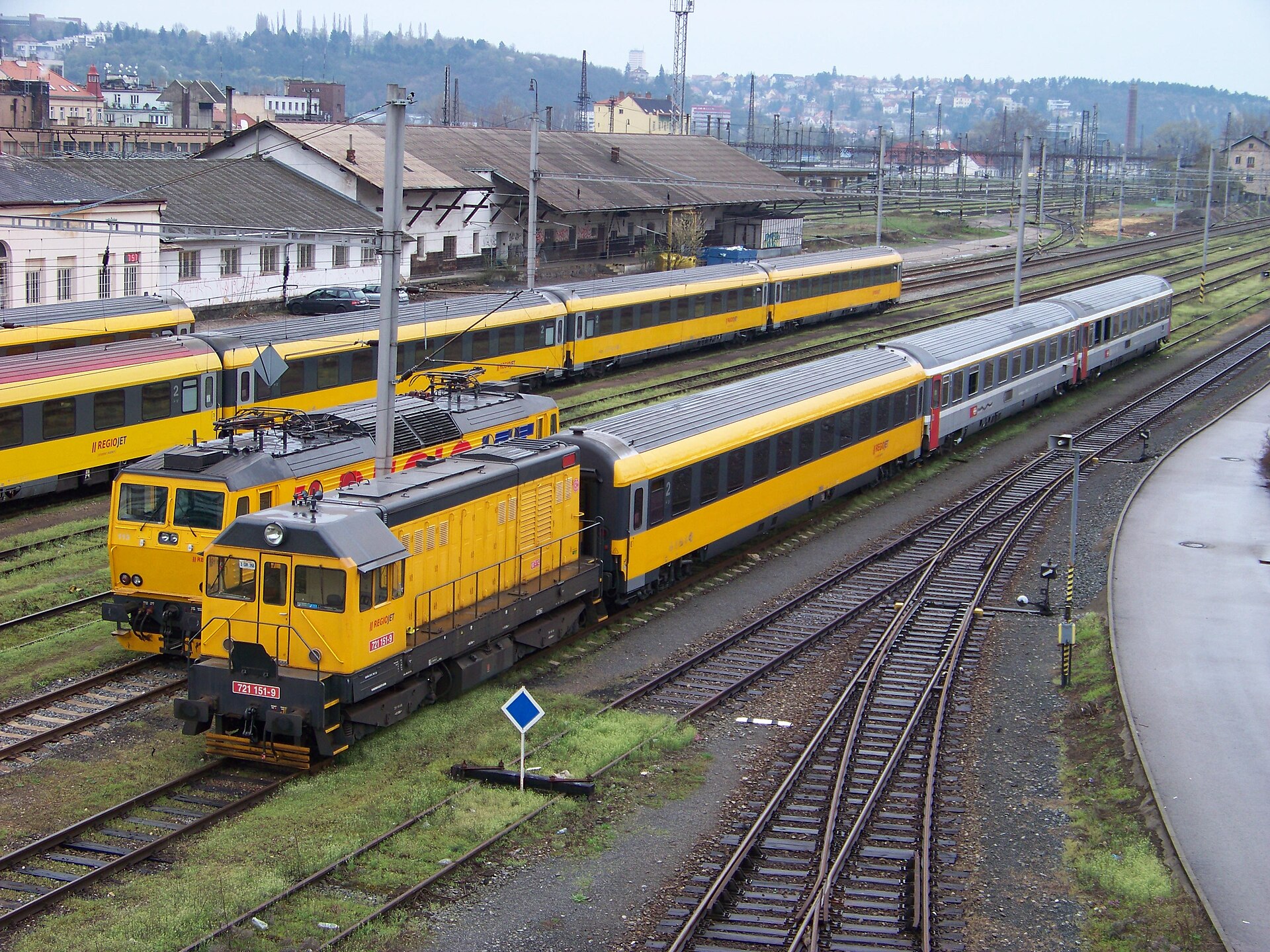
RegioJet, the Czech private operator whose yellow trains are a familiar sight between Prague and Vienna, runs a handful of trains a day between Wien Hauptbahnhof and Budapest — four at the time of writing. They’re the cheapest way across, from about €9 booked ahead. Every ticket comes with a seat you choose from a seat map, the wifi is free, and while there’s no restaurant car, stewards come through taking orders at your seat, at prices that make the Railjet’s dining car look extravagant. Tickets come in four classes (Low cost, Standard, Relax and Business), and Standard is the sensible middle for a trip of under three hours.
The catch is the station. RegioJet uses Budapest-Déli on the Buda side, not Keleti, and calls at Kelenföld on the way out. That single detail is the easiest way to end up at the wrong terminus with twenty minutes to spare, because “the Vienna train goes from Keleti” is what most people, and most guidebooks, will tell you. They’re right about the Railjets. They’re wrong about the cheapest seats.
Night trains
The EuroNight sleepers to Munich and Zurich also pass through Vienna, but they’re timed and priced for people sleeping their way to the Alps, and reservations on them are compulsory. They’re not a sensible way to cover a hop of under three hours.
Where to board in Budapest: Keleti, Kelenföld or Déli
Every direct train to Vienna stops at two Budapest stations before it leaves the city, and which one you should use depends mostly on where you slept the night before. The short version: staying in Pest, board at Keleti; staying in Buda or anywhere along the M4 towards Újbuda, board at Kelenföld; booked RegioJet, go to Déli (or, again, Kelenföld). For facilities, left luggage and how the three connect, see the guide to Budapest’s main train stations.
Keleti: the grand start
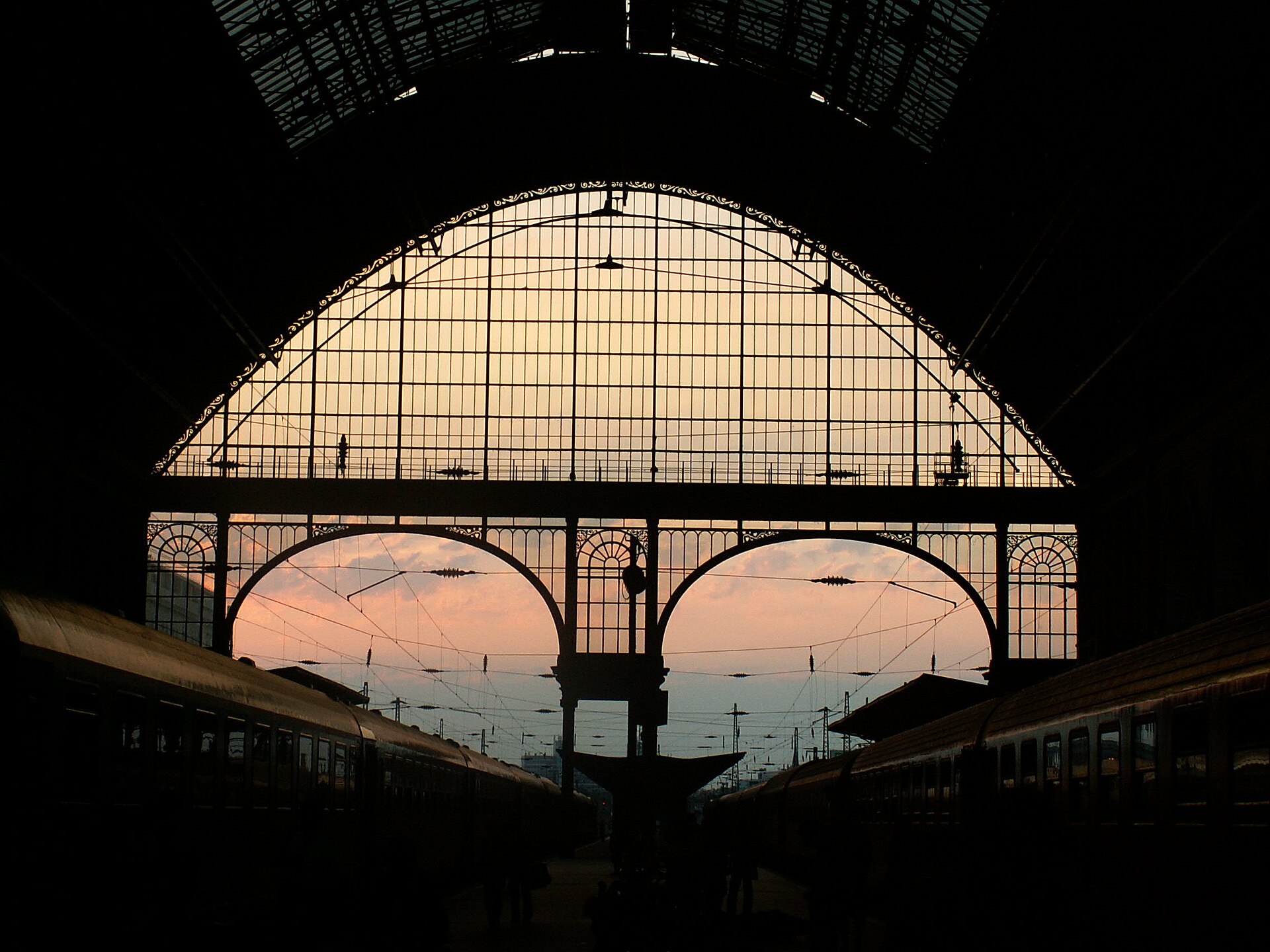
Keleti pályaudvar, the Eastern Station, is where the Railjets and EuroCitys begin their run. It’s the great 1884 iron-and-glass terminus on Baross tér, served by the M2 and M4 metro lines, and because the train starts here it’s usually waiting at the platform well before departure. That’s the real argument for Keleti, even if Kelenföld happens to be slightly nearer your hotel: you can board at leisure, find your seat, heave the suitcase onto the rack and settle in without a queue of people shuffling behind you. The departure boards list the platform under vágány. Give yourself twenty minutes, which is plenty.
Kelenföld: the Buda-side shortcut
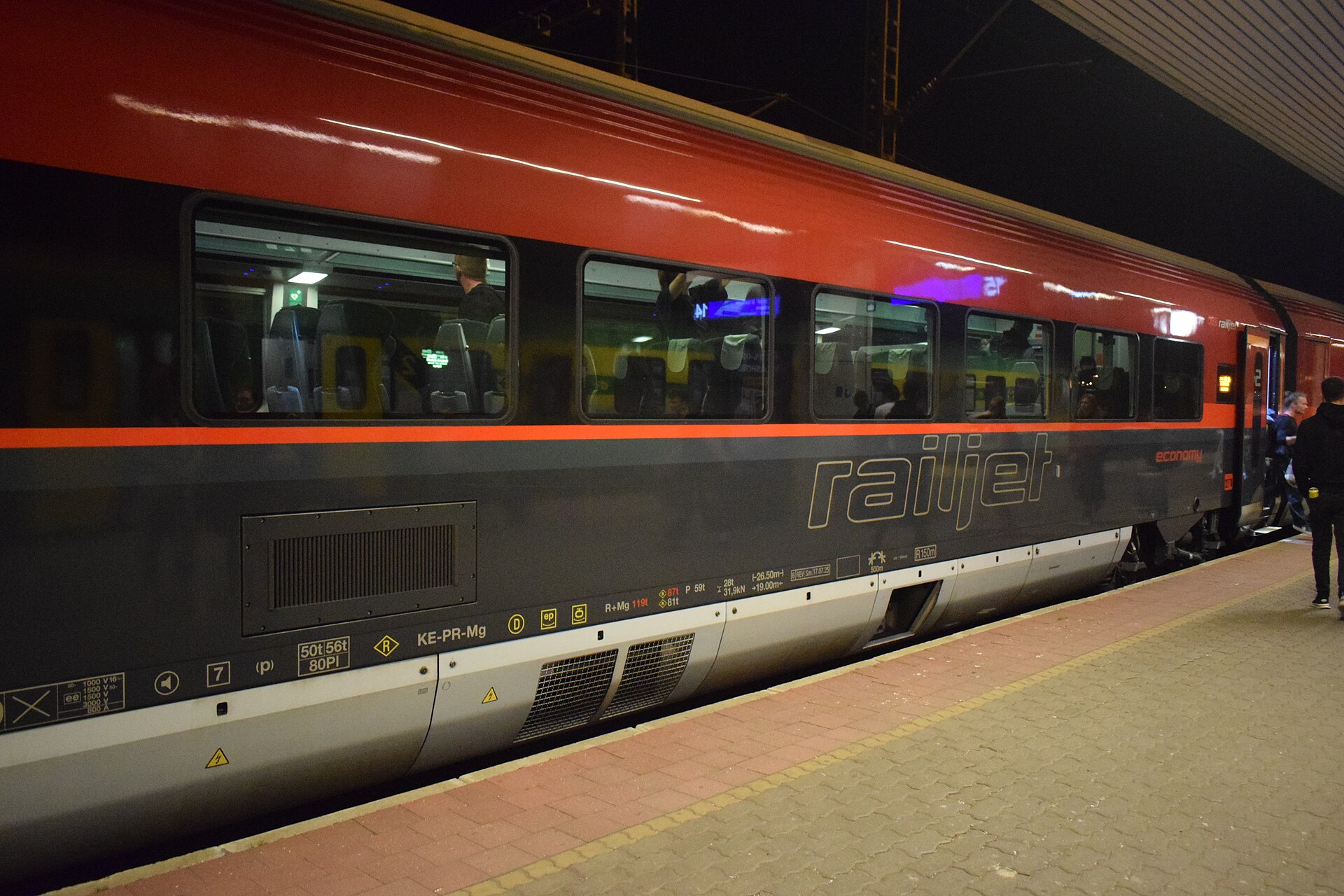
Budapest-Kelenföld, in District XI on the Buda side, is a through station rather than a terminus. Every Vienna train calls there, about a quarter of an hour after leaving Keleti or Déli, and it’s the western end of the M4 metro, so it’s easy to reach from Újbuda, the Gellért Hill side of the river and anywhere else along the green line. Boarding here skips the slow loop through south Pest and across the river, which is where those fifteen minutes go.
The trade-off is that the train only stops for a minute or two. Be on the right platform before it pulls in, have your bags in hand, and don’t expect to stroll the length of the train looking for your coach. Kelenföld is a busy commuter station, not somewhere you’ll want to linger, so aim to arrive ten minutes before departure rather than forty. And if you’re staying in Pest, don’t cross the river just to board here. Whatever you save on the train, you’ll spend on the metro getting there.
Déli: RegioJet only
Déli, the Southern Station, sits just west of Castle Hill at the end of the M2. For Vienna it matters only if you’ve booked RegioJet. It’s a smaller, plainer 1970s building than Keleti and easy enough to find your way around, but it’s on the opposite side of the river from most of the city’s hotels, so if you’re staying in District V, VI or VII, allow for the metro ride across.
If you miss the train
The M4 does link Keleti and Kelenföld, and it’s tempting to chase a departed Railjet across the river. Don’t. The metro takes about as long as the train, plus the walk at each end, so you’ll arrive breathless on the platform just in time to watch it leave. Advance fares are tied to a specific train, which means a missed one usually means buying again — the real argument for turning up twenty minutes early rather than two.
Tickets: who sells them and what they cost
Three companies sell seats on this stretch of track, and their prices don’t talk to each other. The same Railjet can be cheaper through MÁV than through ÖBB on one date and the other way round on the next, while RegioJet runs its own trains on its own pricing altogether. Five minutes checking each for your date is five minutes well spent.
| Fare | From (second class, one way) | Valid on | Flexibility |
|---|---|---|---|
| RegioJet Low cost | €9 | RegioJet trains only | The cheapest seats, with the tightest rules |
| RegioJet Standard | €11.90 | RegioJet trains only | Changes and cancellations online until 15 minutes before departure, for a fee that depends on the fare |
| MÁV advance | About €13 | The Railjet or EuroCity you booked | Tied to that train |
| ÖBB Sparschiene | €19.90 | The Railjet or EuroCity you booked | Tied to that train, no refunds |
| ÖBB first class, advance | About €30 | The train you booked | Tied to that train |
| Full flexible fare | About €53 | Any Railjet or EuroCity on the day | Fully flexible |
ÖBB
Austrian Railways sells its Sparschiene (“savings rail”) fares on oebb.at and in its app, from €19.90 if you book early enough. They’re tied to one train and non-refundable, and they’re personal: the ticket carries the passenger’s name, and the conductor can ask for ID to match it. A seat reservation costs about €3 on top and is worth adding on busy trains. ÖBB is also the simplest place to buy First or Business.
MÁV
Hungarian State Railways sells advance fares on the same Railjets and EuroCitys from about €13 through its own site and app, with sales opening roughly 90 days ahead. That often makes it the cheapest way onto a Railjet, and the ticket is just as tied to the train you pick. If a date looks expensive on ÖBB, check MÁV before you pay, and the other way round.
RegioJet
RegioJet sells only its own trains, through regiojet.com and its app, with the seat chosen at the time of booking. Low fares plus forgiving change rules make it the best value on the route, as long as the timings suit you and you’re happy to start from Déli.
Resellers and the ticket window
Trainline, Omio and similar sites sell the same ÖBB, MÁV and RegioJet fares with a booking fee added. That’s worth paying only for convenience, for instance if an operator’s site won’t take your card. At the other extreme you can simply turn up at the international ticket counter at Keleti and buy a seat on the next train. Vienna trains rarely sell out, so this works, but you’ll pay the full flexible fare, often several times what the same seat cost a fortnight earlier. The flexible fare earns its money only when you genuinely don’t know which train you’ll catch.
One more thing that saves money: advance fares are priced one way, so a “return” is simply two singles. Mix and match freely — RegioJet out, Railjet back — and take whichever is cheapest in each direction.
Which seat to pick
Choosing a seat for a trip of under three hours sounds like overthinking it, but it’s the difference between a working table and a view of the luggage rack. Here’s what actually makes a difference.
Class
Economy on a Railjet is laid out two-and-two, with a mix of airline-style rows and bays of four around a table, and it’s perfectly comfortable for this distance. First is two-and-one, so a solo traveller can take one of the single seats and get a window, an aisle and nobody’s elbow. Business, a small section at one end of the train next to First, adds bigger seats and at-seat service for roughly €20 over the First fare. On a long run to Zurich that might be worth it; for two hours forty it’s a treat rather than a necessity. On RegioJet, Standard is the sweet spot, and the Relax and Business upgrades are cheap enough to be worth a look if you want more legroom.
Tables, sockets and zones
Every Railjet seat has a power socket, so charging isn’t a reason to prefer one seat over another. Tables are. If you want to work, or you’re travelling as a four, ask for one of the table bays when you reserve. Railjets also have a family zone in Economy, set aside for people travelling with small children, which is either exactly what you want or exactly what you don’t. The quiet zone, where phone calls and loud conversation are off limits, is its opposite number. Say which you’d prefer when you book.
Which side?
Honestly, it barely matters. This isn’t a scenic railway. The line crosses the Kisalföld, the Little Hungarian Plain, and then the flat fields of Burgenland, and the most striking sight on the whole trip is the forest of wind turbines on the Austrian side of the border. Around Tatabánya, keep an eye on the ridge above the town for the huge bronze Turul, the mythical bird of Hungarian legend. The Danube is never far away to the north, but it stays out of sight. Pick the seat with the table or the empty neighbour, not the one with the view.
Do you need to reserve?
Reservations are optional on Railjets and EuroCitys, and at about €3 they’re cheap insurance on the trains that fill up: Friday afternoons, Sunday evenings, the weeks around Christmas, public holidays in either country and much of the summer. Remember that many Railjets from Budapest run on to Munich or Zurich, and the people making those longer trips tend to reserve. A carriage that looks empty at Keleti can turn out to be mostly spoken for.
Railjets show reservations on small displays above each seat. If the display names a stretch that starts later — “Wien Hbf – Salzburg Hbf”, say — the seat is yours until Vienna. If it names a stretch that starts in Budapest, it’s taken, even if nobody is sitting in it yet. On a quiet midweek train you can skip the reservation altogether and sit wherever is free. RegioJet includes a seat in every ticket, so there the question never comes up.
On board: stops, the border and arriving in Vienna
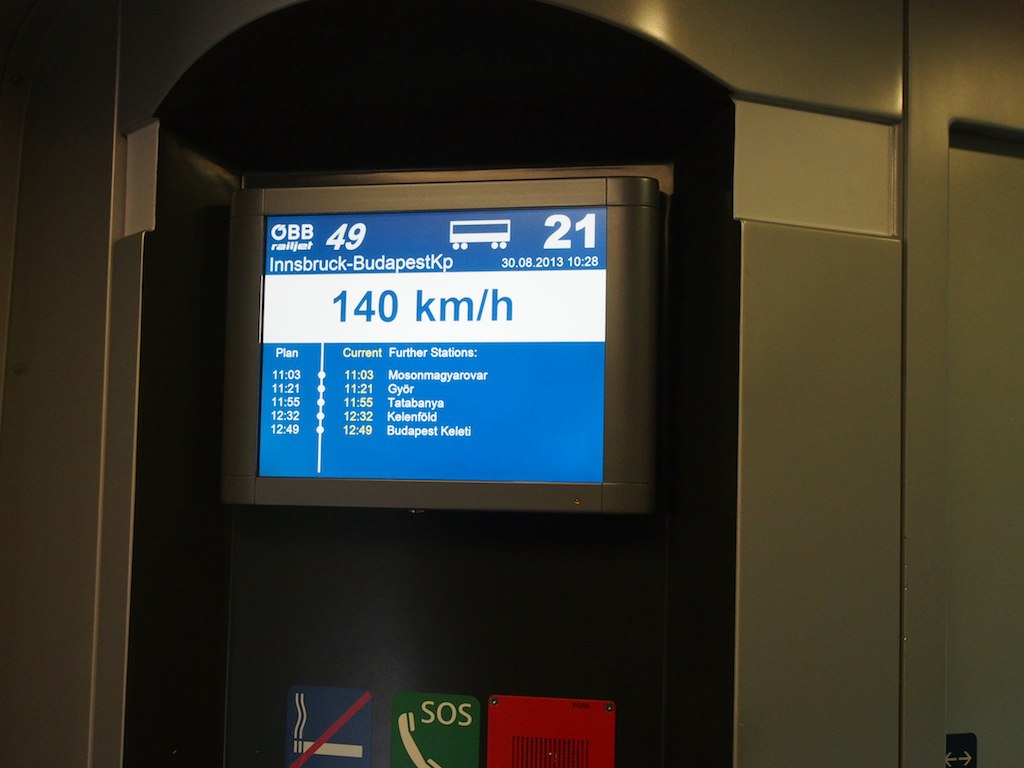
From Keleti, a Railjet calls at Kelenföld and then heads west for Tatabánya and Győr, with some trains also stopping at Mosonmagyaróvár or Hegyeshalom, the last town before the border. On the Austrian side most trains run straight into Wien Hauptbahnhof, Vienna’s modern through station south of the old centre; those continuing west stop at Wien Meidling a few minutes later. The Hauptbahnhof is where you want to get off for almost everywhere in the city. The U1 metro leaves from underneath the station and reaches Karlsplatz and Stephansplatz in a few minutes. Meidling is worth staying on for only if your hotel is in the city’s south-west.
The border
Hungary and Austria are both in the Schengen Area, so there’s no passport control as such. Austria has, however, run temporary controls at its Hungarian border on and off for years, and police sometimes walk through the train around Hegyeshalom and Nickelsdorf. Carry your passport or national ID card — you’re required to anywhere in Schengen anyway — and keep it somewhere you can reach without unpacking.
Money and phones
Vienna runs on euros. Pay for anything in the restaurant car by card, and don’t swap your leftover forints at the station, where the rates are poor; the guide to money in Budapest makes the case for spending them down before you leave. EU roaming rules mean a Hungarian SIM or any EU contract works in Austria at no extra cost. If you’re arriving from outside the EU, the SIM card guide covers what to buy on arrival.
Luggage, bikes, children and accessibility
- Luggage: there’s no check-in and no formal weight limit on the Railjets or EuroCitys. Small bags go on the rack above your seat; bigger cases on the racks at the end of each carriage or in the gap between back-to-back seats. Keep valuables with you, particularly if your case is out of sight by the doors.
- Bikes: Railjets carry bicycles, but only with a bike reservation made in advance, and the spaces are limited. A folding bike in a bag travels as ordinary luggage.
- Children: under-sixes travel free with a paying adult on ÖBB and MÁV fares, and older children pay reduced fares. The age bands and prices differ between operators, so enter everyone’s age when you book rather than assuming.
- Wheelchair users: Railjets have wheelchair spaces and an accessible toilet, and Keleti’s platforms are on the same level as the concourse, but there are steps up into the train itself. Book boarding assistance through ÖBB or MÁV a couple of days before you travel; this is a cross-border journey, so don’t leave it to the morning.
- Food: on RegioJet, order from the steward; on a Railjet, use the restaurant car; on a EuroCity, bring your own. All three Budapest stations have bakery counters and kiosks, and a bag of warm pogácsa, Hungary’s savoury scone, makes a very local breakfast on the move.
Getting to the station
From most central hotels the metro is the answer. A single ticket costs 500 Ft (€1.25) and needs validating before you head down the escalator; the M2 and M4 both stop at Keleti, the M4 ends at Kelenföld and the M2 ends at Déli. If you’ll need a tram or bus as well as the metro, the 30-minute ticket at 600 Ft (€1.50) lets you change. The Budapest metro guide has the line-by-line detail, and the public transport guide covers trams, buses and passes.
From the airport there’s no rail link to the terminal and nothing runs direct to Vienna. Take the 100E airport bus to Kálvin tér (2,500 Ft, about €6.25; ordinary tickets and travelcards aren’t valid on it), then the M4: Keleti is three stops east, Kelenföld six stops west. The Budapest Airport guide covers the terminal itself and the other ways into town. With heavy bags, a taxi or a Bolt to the station is money well spent, but book it through an app or your hotel rather than accepting an offer from someone hanging around arrivals or the station concourse. The getting around Budapest hub has the rest of the fares and options.
Train, bus, car or plane?
Bus. Flixbus and a couple of rivals run from Népliget coach station along the M1 and A4 motorways in about three hours. Booked early, the fares can undercut the train, but the journey is longer, the seats narrower, and Népliget is further out than Keleti. It’s worth it only if the bus is dramatically cheaper for your date.
Car. About 240 kilometres, two and a half to three hours in normal traffic, with a motorway vignette needed in both Hungary and Austria — and then Vienna’s parking charges to greet you. Driving makes sense only as part of a longer road trip. The car rental guide covers vignettes and the steep fees for dropping a hire car across the border.
Plane. The flights between the two cities exist for people connecting onto long-haul services in Vienna. Add the airport transfers at each end and the security queue, and flying is slower door to door than the train by a wide margin.
The verdict: take the train. It’s the quickest way from one city centre to the other, by far the most comfortable, and booked a couple of weeks ahead it costs about the same as lunch.
Beyond Vienna
Vienna is a far better rail hub than Budapest for anywhere to the west, and the Railjet you’re on may already be heading for Salzburg, Munich or Zurich. For Prague you can go direct from Budapest or break the trip in Vienna; the Budapest to Prague guide weighs up both. Bratislava is about an hour from Vienna and also has direct trains from Budapest, and the Bratislava day-trip guide has the details. If you’re building a longer trip around Budapest, the day trips from Budapest hub lists everything within a comfortable train ride.
Practical tips
- Book two to four weeks ahead for the best fares. The cheapest seats on Friday and Sunday trains go first.
- Check both ÖBB and MÁV for the same train before paying. The prices differ more often than you’d expect.
- Read the station on your ticket: Keleti for Railjets and EuroCitys, Déli for RegioJet, Kelenföld as the Buda-side option for both.
- Carry ID that matches the name on an ÖBB ticket, and a passport or ID card for Austrian spot checks.
- If MÁV’s site shows the word vágányzár on your date, that’s a track closure. Expect a replacement bus for part of the way and allow extra time.
- Download your ticket to your phone before you leave the hotel wifi. Conductors scan the code, and station signal can be patchy.
- Don’t buy a flexible return at the window “to be safe”. Two advance singles almost always cost less than one flexible ticket.
Looking the other way down the line, two daily EuroCity trains are planned to run right through from Vienna via Budapest to Belgrade once the new Hungarian–Serbian railway is cleared for passengers. The Budapest to Belgrade guide tracks where that project stands and how to make the trip in the meantime.
Frequently asked questions
How long is the train from Budapest to Vienna?
About 2 hours 40 minutes from Budapest-Keleti to Wien Hauptbahnhof on the direct Railjets and EuroCitys, and roughly a quarter of an hour less if you board at Kelenföld. RegioJet takes a similar time from Déli. Nothing is faster once you count the time it takes to get to and through an airport.
How much is the Budapest to Vienna train?
Booked ahead, a second-class seat costs from €9 on RegioJet, about €13 through MÁV and €19.90 through ÖBB. The fully flexible walk-up fare is about €53, and first class starts at around €30 in advance. Prices were checked in September 2026 and move with demand.
Which station in Budapest does the Vienna train leave from?
Railjets and EuroCitys start at Keleti and call at Kelenföld about fifteen minutes later. RegioJet starts at Déli and also calls at Kelenföld. Your ticket names the station, so check it before you set off.
Do I need to reserve a seat on the Railjet?
No. On Railjets and EuroCitys a reservation is optional and costs about €3. It’s worth having on Fridays, Sundays and holidays, and through the summer and the Christmas season. RegioJet tickets always include a seat.
Do I need my passport to go from Budapest to Vienna by train?
There’s no routine passport control between Hungary and Austria, but Austrian police do carry out spot checks near the border, and you’re required to carry ID anywhere in the Schengen Area. Bring a passport or a national identity card.
Is there a direct train from Budapest Airport to Vienna?
No. Take the 100E bus to Kálvin tér and the M4 to Keleti or Kelenföld, then the train. Allow at least an hour and a half from landing to reaching the platform, longer if you’re waiting for a checked bag.
Can I use an Interrail or Eurail pass?
Yes, on the Railjets and EuroCitys, where a seat reservation is optional. RegioJet is a private operator with its own rules on passes, so check with it before counting on one.
Is the train better than the bus to Vienna?
For most people, yes. It’s faster from centre to centre, far more comfortable, and not much dearer booked ahead. The bus wins only if you find a fare that’s dramatically cheaper for your date.
Photo credits
Railjet locomotive “Spirit of Budapest”: ‘Spirit of Budapest’ ÖBB 1116 Railjet, 2018 Budapest by Globetrotter19, CC BY-SA 3.0, via Wikimedia Commons.
EuroCity locomotive at Kelenföld: 9180 6182 567-8 D-MÁVRT, EC Liszt Ferenc, Bahnhof Budapest-Kelenföld, 2025 Újbuda by Globetrotter19, CC BY-SA 4.0, via Wikimedia Commons.
RegioJet trains: Praha-Smíchov, vlaky RegioJet (01) by ŠJů, CC BY-SA 3.0, via Wikimedia Commons.
Keleti station roof: Budapest – Keleti pályaudvar (East main railway station) by Jaimrsilva, CC BY-SA 4.0, via Wikimedia Commons.
Railjet at Kelenföld: A railjet train in Budapest Kelenfold by Ravi Dwivedi, CC BY-SA 4.0, via Wikimedia Commons.
Railjet onboard screen: Aboard the Innsbruck to Budapest RailJet (14118100296) by Clay Gilliland, CC BY-SA 2.0, via Wikimedia Commons.