Margaret Island: Budapest’s Green Escape, End to End
Two and a half kilometres of car-free park in the middle of the Danube, almost all of it free. A route from end to end, what Palatinus costs, and why an hour is not enough.
In this guide
- At a glance
- Getting there
- What is free, which is nearly all of it
- The musical fountain
- The Dominican convent ruins and St Margaret
- The water tower and the open-air theatre
- The gardens
- The animals
- The running track
- What costs money
- Palatinus Strand
- Bikes, pedal carts and boats
- A route from end to end
- How the island became a park
- The island by season
- Eating and drinking
- With children
- Practicalities
- Mistakes people make
- Frequently asked questions
- Photo credits
This article contains advertising. Our booking links are routed through a partner that adds commission tracking automatically, so if you book through one we earn a commission from the provider, at no extra cost to you. It never affects what we recommend. Affiliate disclosure
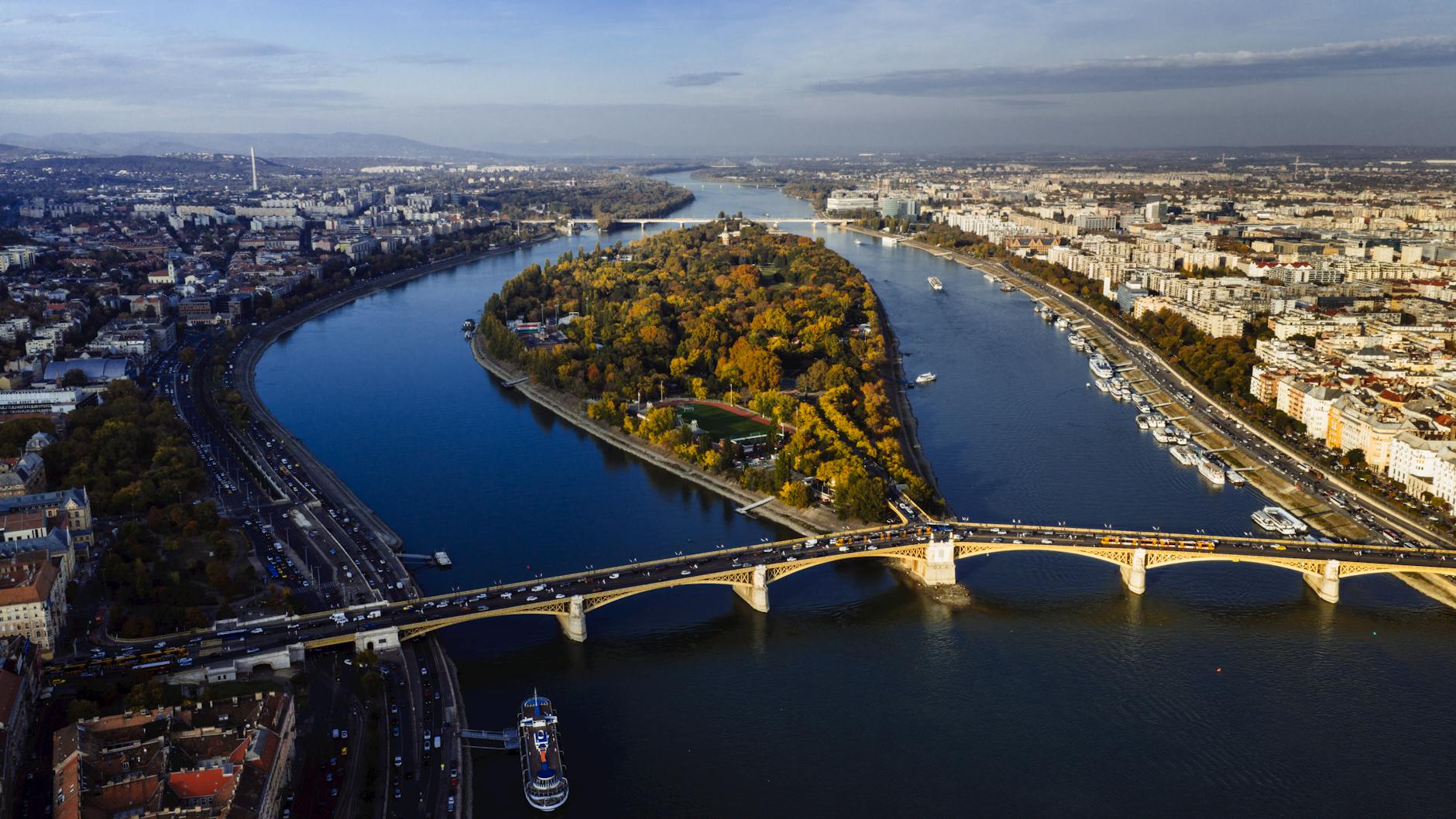
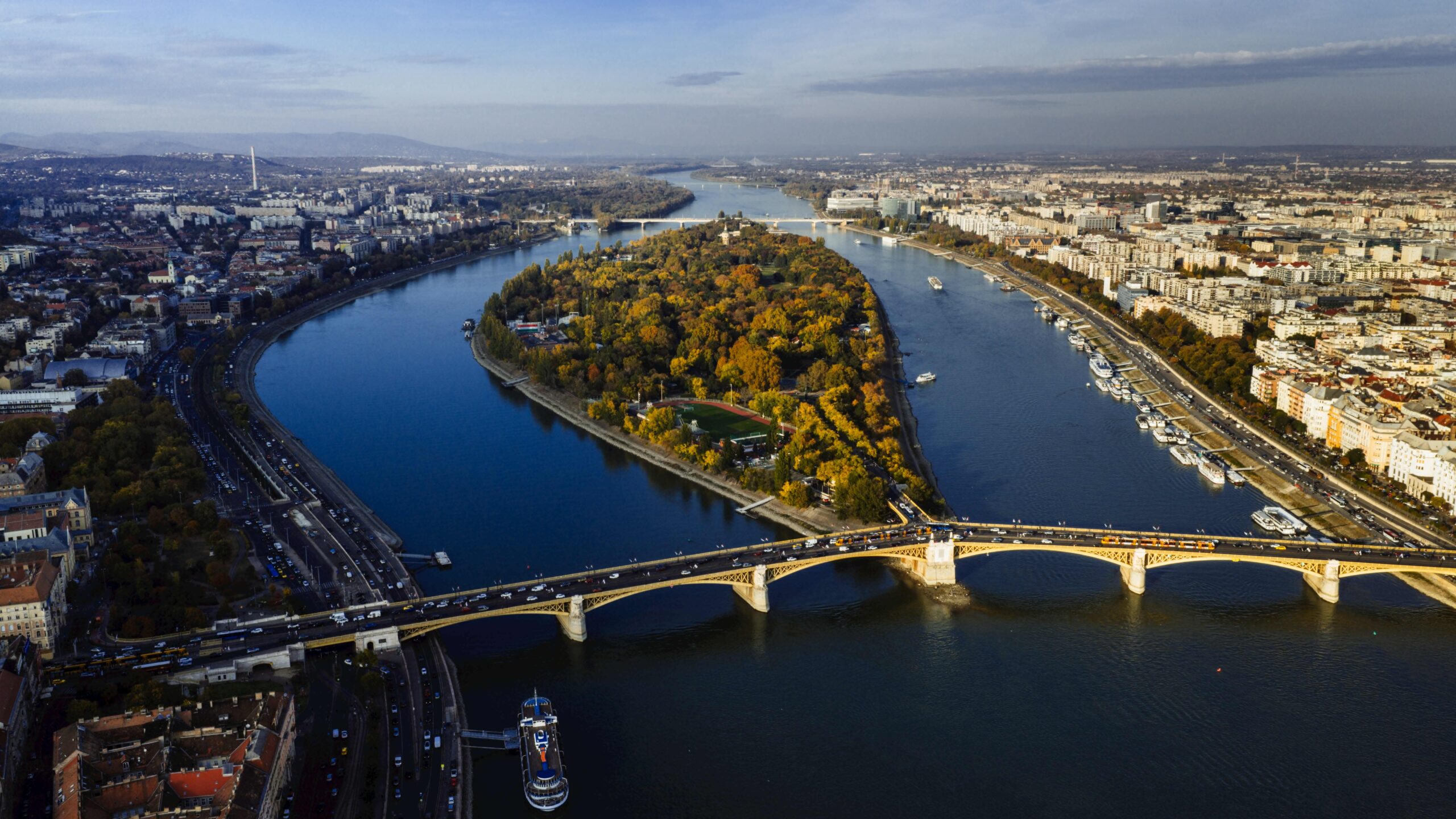
The five-kilometre running track that circles the island is rubberised, floodlit and busy at six in the morning, and if you want to understand what this place is for, stand beside it for ten minutes. Runners, a man walking three dogs, two women pushing prams side by side, a group of teenagers on rented pedal carts, an elderly couple on the bench doing nothing at all. Almost none of them are tourists. Margaret island budapest is not really a sight; it is two and a half kilometres of car-free park in the middle of the Danube that the city uses continuously, and the reason to go is to be somewhere Budapest is being itself.
This page covers how to get there, what is free (almost everything), what is not, the ruins and the water tower, the thermal pools at Palatinus, and how the island changes completely between July and February. Prices were checked in September 2026 and are given in forints with a euro figure in brackets; treat them as the right order of magnitude.
At a glance
| Detail | |
|---|---|
| Entry to the island | Free, no gates, open at all hours |
| Size | About 2.5 km long, 500 m at its widest |
| Cars | Not permitted, except a single bus route and service vehicles |
| Getting there | Tram 4 or 6 to the middle of Margaret Bridge; bus 26 runs the length of the island |
| Musical fountain | Free, seasonal, roughly May to October, shows on the hour |
| Palatinus Strand | 3,400 HUF weekday, 3,700 HUF weekend (≈ €8.50–9.30) |
| Palatinus hours | Daily 09:00–19:00, last admission 18:00 |
| Running track | About 5 km, rubberised, floodlit, free |
| Time to allow | Half a day, or a full one in summer |
| Best for | Slowing down, running, cycling, families, hot afternoons |
Getting there
The island sits in the Danube between Margaret Bridge to the south and Árpád Bridge to the north, and both bridges have a spur down onto it — you cannot drive on, but you can walk or ride.
- Trams 4 and 6 stop in the middle of Margaret Bridge, at a platform that exists purely to put you on the island. This is the obvious approach from anywhere on the Grand Boulevard, and the 6 runs 24 hours a day.
- Bus 26 runs the full length of the island from Nyugati station in Pest, over Margaret Bridge, up the island and out over Árpád Bridge. It is the only motor traffic allowed and it is included in any ordinary ticket — useful if you want to reach the northern end without walking two and a half kilometres to get there.
- On foot from the Pest end of Margaret Bridge is about ten minutes to the southern tip.
- By BKK boat in season, which stops at the island and is the pleasantest arrival by some distance.
Our getting around Budapest guide covers the tickets. Nothing on the island requires a separate transport fare.
What is free, which is nearly all of it
The musical fountain
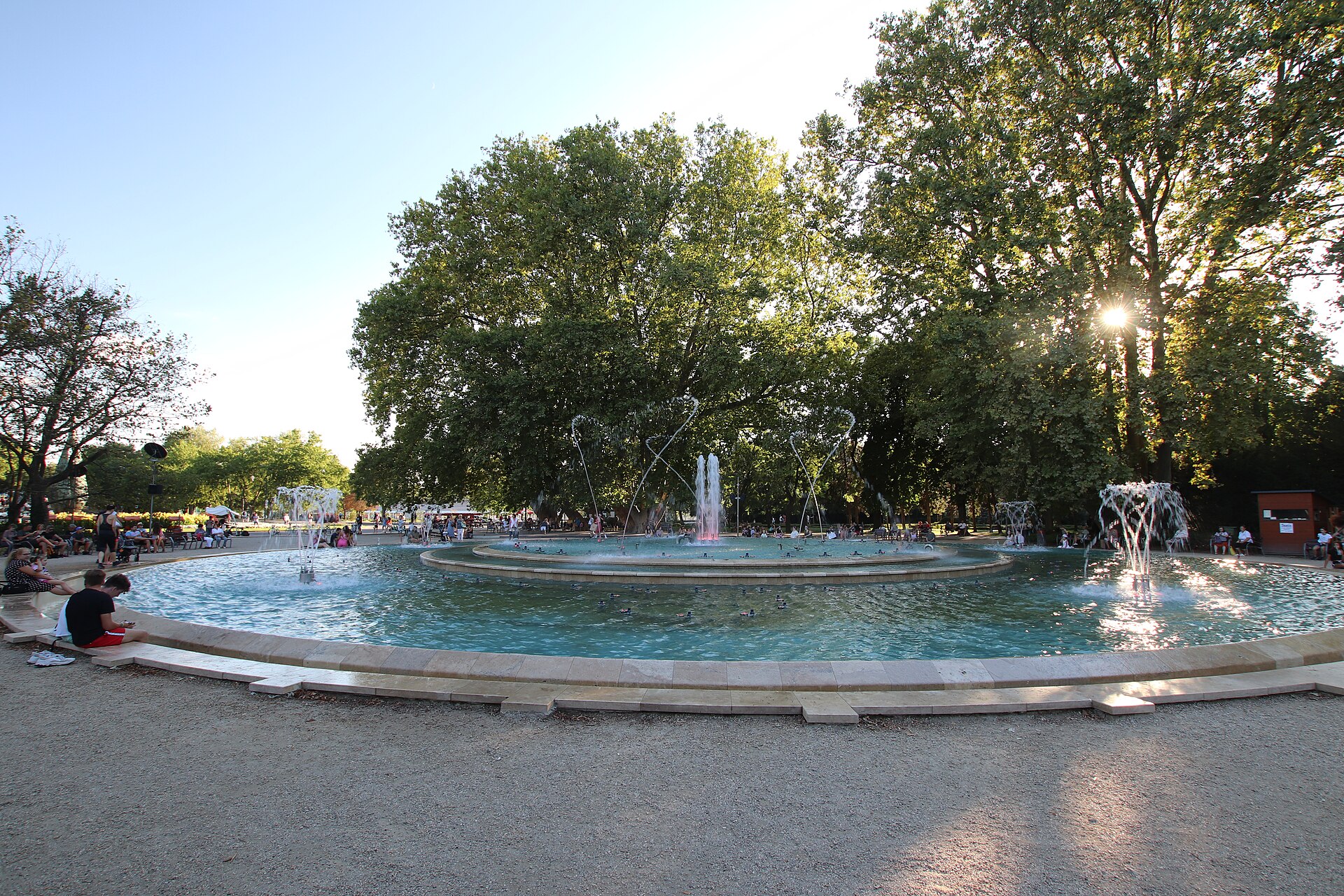
At the southern end, just past the entrance from Margaret Bridge, is a large circular fountain that plays choreographed water displays set to music — classical, film scores, Hungarian pop, depending on the programme — with jets running high above the basin. After dark in season it adds coloured lighting and projections onto a curtain of water.
It is free, it is seasonal (roughly 1 May to 31 October), and shows run on the hour through the day and into the evening. Sources disagree on the exact first and last shows, so check the board at the fountain rather than trusting a schedule you read in advance. It is genuinely charming and it is where a lot of Budapest families spend a summer evening.
The Dominican convent ruins and St Margaret
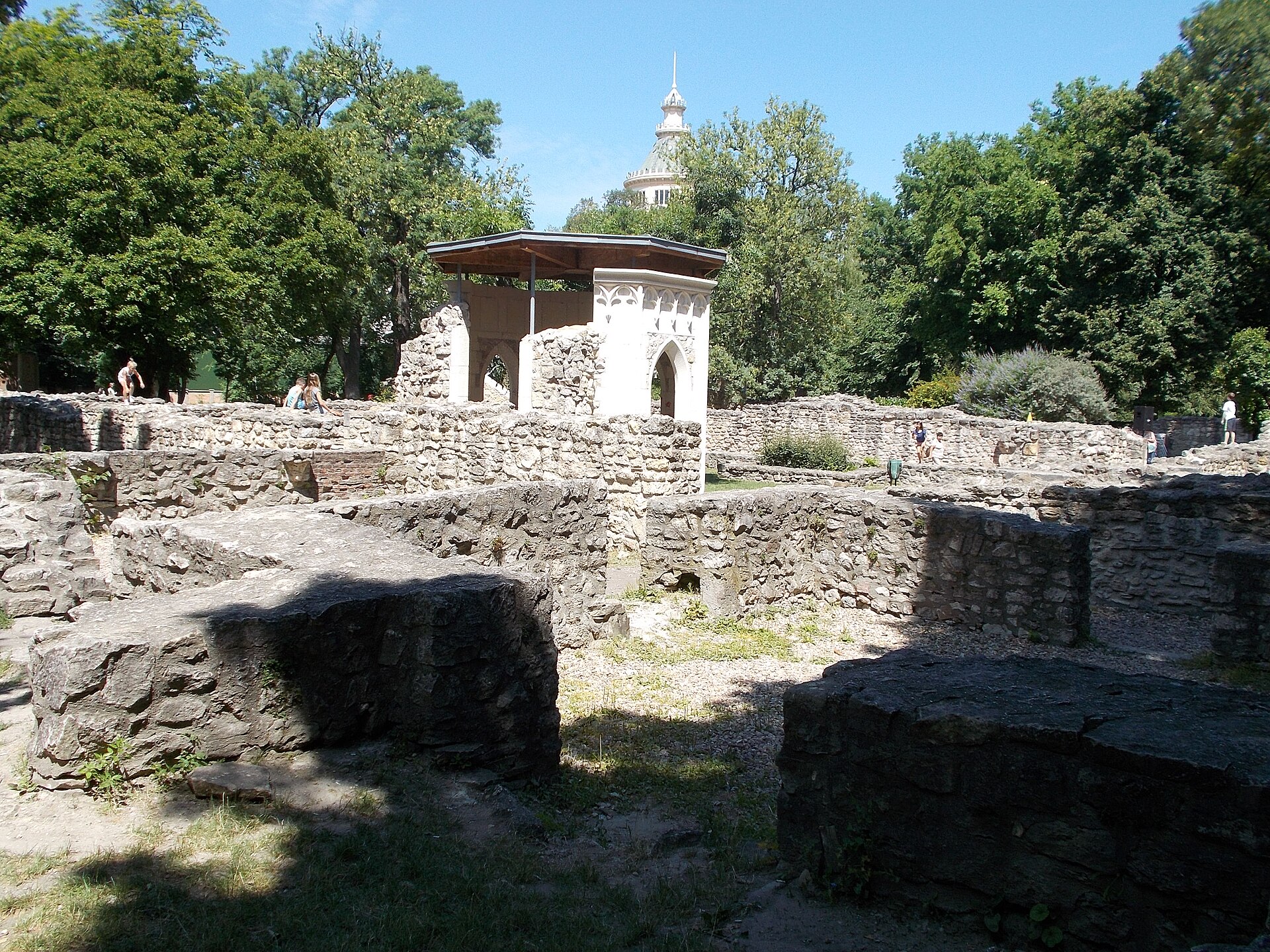
Halfway up the island are the low stone walls of a thirteenth-century Dominican convent, and the story behind them is the reason the island has its name.
Béla IV, the king who rebuilt Hungary after the Mongol invasion of 1241, vowed that if the kingdom survived he would dedicate his daughter to religious life. It did, and he did. Margaret was sent here as a child, took vows, and by all surviving accounts pursued an ascetic life of a severity that alarmed even her own order — refusing repeated attempts to marry her off for dynastic advantage, including to the king of Bohemia. She died in 1270, aged 28, and was canonised in 1943.
The ruins are open, free and unfenced. There is a marble slab marking the traditional site of her grave, usually with fresh flowers on it. Beside the walls stands a small reconstructed Gothic well-house. It takes fifteen minutes and it is the closest thing the island has to a historic monument.
The water tower and the open-air theatre
The octagonal white water tower, built in 1911 in an Art Nouveau-influenced style, is a UNESCO-listed piece of industrial architecture and the island’s most visible landmark. It has a lookout gallery near the top, reached on a staircase, and an exhibition space inside; opening is seasonal and limited, so check before counting on getting in. From outside it is free and it is the thing you navigate by.
Immediately beside it is the open-air theatre, a large summer venue used for opera, musicals and concerts from roughly June to August. If you are in Budapest in high summer it is worth checking what is on — our festivals and events guide tracks the programme.
The gardens
The Japanese garden at the northern end is small, has a pond with koi and a wooden bridge, and is fed by a thermal spring that keeps it ice-free in winter. The rose garden in the middle of the island is at its best in June. Both are free and both are quieter than everything else here.
The animals
A small free enclosure near the northern end holds fallow deer, peacocks, mandarin ducks and owls. It is not a zoo and does not pretend to be — it is a fenced patch of parkland with animals in it, free to look at, and small children like it a great deal. For the actual zoo, see our guide to Budapest Zoo in City Park.
The running track
The rubberised loop around the island runs about five kilometres, is lit at night, and has distance markers and a couple of water points. It is one of the better urban running circuits in Europe and it is used seriously. If you run, bring shoes; if you do not, keep to the left.
What costs money
Palatinus Strand
The island’s bathing complex, and the main paid attraction. It opened in 1919 as an open-air lido on the site of the island’s thermal springs and was rebuilt and expanded in the 2010s, so it now runs year-round rather than only in summer.
Entry is 3,400 HUF on weekdays and 3,700 HUF at weekends and on holidays — around €8.50 to €9.30, which makes it substantially cheaper than Széchenyi or Rudas. It is open daily 09:00–19:00 all year, with last admission at 18:00 and the ticket office closing an hour before the gates. The price includes a locker with an electronic wristband and use of the grass.
What you get is a mix: thermal pools, a large outdoor wave pool, swimming pools, slides in the summer season, and a great deal of lawn. It is a family lido with thermal water rather than a historic bathhouse, and expectations should be set accordingly — nobody comes here for the architecture. In July it is full of Budapest families and it is an excellent place to spend an afternoon. In February the outdoor thermal pools with steam coming off them and nobody else in are a completely different and rather good experience.
Our thermal baths guide puts it in context against the famous ones, and baths with kids explains why Palatinus is usually the right answer for families.
Bikes, pedal carts and boats
Hire stands near both bridge entrances rent bicycles, electric scooters and the four-wheeled pedal carts — bringóhintó — that seat two or four and are the definitive Margaret Island activity for anyone under twelve. Rates are by the half-hour and are not expensive. There is also boat and pedalo hire on the small lake at the northern end in summer.
You can also ride your own bike on, or a MOL Bubi share bike, which is cheaper if you already have the app. There are docking stations at both ends.
A route from end to end
The island is long and thin and almost everything is on or near the central spine, so a single walk south to north takes in the lot. About four kilometres including detours, three hours at a strolling pace, and you can shortcut any of it with bus 26.
- 0.0 km — the southern tip. Come down from the tram platform on Margaret Bridge. The Centenary Monument, a tall bronze-and-stone piece put up in 1973 for the hundredth anniversary of Buda, Pest and Óbuda merging into one city, stands at the entrance.
- 0.3 km — the musical fountain. Stone rim to sit on, shows on the hour in season. Kiosks and toilets here.
- 0.8 km — the Hajós Alfréd swimming complex, on the left. A serious competition pool, named after the Hungarian who won the first modern Olympic swimming titles in 1896 and later designed sports buildings — including this one. Not a tourist attraction, but a working piece of the country’s swimming obsession, and Hungary’s swimming obsession is not a small thing.
- 1.2 km — Palatinus Strand, on the left. The paid option, and the point at which a hot day becomes a good one.
- 1.5 km — the rose garden, in the middle. Best in June.
- 1.8 km — the Dominican convent ruins. Free, unfenced, fifteen minutes.
- 1.9 km — the water tower and open-air theatre. The tower’s lookout gallery is seasonal; the theatre runs through the summer.
- 2.1 km — the Premonstratensian chapel, a small reconstructed twelfth-century church with what is said to be the oldest bell in Hungary, found buried in a tree root here in 1914.
- 2.4 km — the Japanese garden and the animal enclosure, at the northern end, along with the thermal-fed pond that stays open in winter.
- 2.6 km — Árpád Bridge, where you can pick up bus 26 back, or walk off into Óbuda.
Doing it in the other direction — bus 26 to the north end and walk back south — is the better plan on a hot day, because you finish at the fountain with the tram waiting.

How the island became a park
It has had at least half a dozen names — the Island of Rabbits in the Middle Ages, when it was a royal hunting ground, then Our Lady’s Island after the convent, then Palatine’s Island. The current name only stuck in the nineteenth century.
After the Ottomans left, the island passed through various hands and was largely neglected until Archduke Joseph, Palatine of Hungary, took it over in the early nineteenth century and laid out gardens, planted the plane trees that still dominate it, and built a summer residence. Thermal wells were sunk in the 1860s, which is where the bathing tradition here starts.
It only became fully public property after 1908, and it was joined to the city by road for the first time when the spur from Margaret Bridge was built. Before that you came by boat. The island was badly damaged in the 1944–45 siege, replanted afterwards, and closed to private cars in the 1960s — which is the single decision that made it what it is now.
If the wider history interests you, our history and culture guide covers the city’s development, and Budapest in summer explains why the island matters so much in July.
The island by season
Few places in Budapest change this much across the year, and it is worth knowing which one you are getting.
| Season | What it is like |
|---|---|
| Summer | Full. Palatinus busy, fountain running, theatre season on, every patch of grass occupied by early afternoon. Best after six. |
| Autumn | The best compromise. Plane trees turning, the fountain still running into October, runners everywhere, space to sit. |
| Winter | Bleak, bare and nearly empty. The Japanese garden stays ice-free from the thermal spring. Palatinus in the cold is the reason to come. |
| Spring | Rose garden building towards June, fountain restarting in May, and the whole island noticeably greener than the city around it. |
Eating and drinking
Thin, and that is worth planning around. There are kiosks selling coffee, ice cream, lángos and beer near the southern entrance, around the fountain and near Palatinus, plus a handful of seasonal terrace bars and a couple of restaurants attached to the two hotels at the northern end. Quality is what you would expect of a captive park audience, and prices carry a modest premium.
The sensible move is to treat this as a picnic island. Buy at a supermarket on the Pest side or at the Great Market Hall before you cross, and eat properly back in the city afterwards — our restaurant guide has the options within a few minutes of Margaret Bridge.
With children
It is probably the single best half-day in Budapest with young children, and it is nearly free. Pedal carts, the animal enclosure, the fountain, several playgrounds, huge amounts of grass to run on, no traffic anywhere, and Palatinus with its wave pool and slides as the paid option if the weather is warm.
Two practical notes. There is very little shade in the middle of the island in high summer, so bring hats and water. And the distances are real — two and a half kilometres end to end means a small child will not walk it, which is what bus 26 and the pedal carts are for. Our Budapest with kids guide has the rest of the city’s options.
Practicalities
- No cars. Private vehicles are not allowed. Bus 26 and service traffic are the exceptions.
- No gates, no closing time. The island is a public park and you can walk on it at any hour, though the northern end is unlit in places and there is little reason to be there after dark.
- Toilets are limited and concentrated near the southern entrance, the fountain and Palatinus.
- Accessibility is good by Budapest standards: the paths are flat, wide and paved, bus 26 is low-floor, and there are no hills anywhere. Getting down from Margaret Bridge involves steps, but there is step-free access from the Pest embankment side.
- Cycling is allowed on the paths but not on the running track, and the island gets busy enough in summer that riding through the middle at three on a Sunday is slow going.
Mistakes people make
- Allowing an hour. The island is two and a half kilometres long. An hour gets you to the fountain and back.
- Walking the length and back on foot with small children. Take bus 26 one way.
- Expecting a sight. This is a park with some ruins in it. If you arrive wanting a monument you will be disappointed; if you arrive wanting an afternoon, you will not.
- Planning to eat there. Bring a picnic.
- Going in the middle of a July afternoon. No shade, and everyone else has had the same idea. Go early, or go at six.
- Skipping it because it is not on the list. It rarely makes a two-day itinerary, and on a longer stay it is the thing people say they would have done more of.
The easiest way on is the 4 or 6 tram, which stops in the middle of the Margaret Bridge right by the island’s southern entrance. Our guide to Budapest’s trams has the rest of the Grand Boulevard line, plus the all-night service if you’re heading back late.
The island is at its liveliest in June, when the lido is busy from the moment the schools break up, the open-air theatre season begins and the musical fountain plays its evening shows with lights after dark. The Budapest in June guide covers the rest of the month.
Frequently asked questions
Is Margaret Island free?
Yes. There are no gates and no admission charge, and it is open at any hour. The musical fountain, the convent ruins, the gardens, the animal enclosure and the running track are all free. Only Palatinus Strand and the hire stands cost money.
How do you get to Margaret Island?
Trams 4 and 6 stop in the middle of Margaret Bridge at a platform built for the island. Bus 26 runs the full length of the island from Nyugati station and is included in any ordinary transport ticket. You can also walk on from either bridge, or arrive by BKK boat in season.
How long do you need on Margaret Island?
Half a day is the right amount for a first visit — enough to walk up as far as the ruins and the water tower and back, with time at the fountain. A full day if you are using Palatinus or have children with you. An hour is not enough for anything except the southern tip.
How much is Palatinus Strand?
3,400 HUF on weekdays and 3,700 HUF at weekends and holidays, roughly €8.50 to €9.30, including a locker with an electronic wristband. It is open daily 09:00–19:00 all year, with last admission at 18:00.
When does the musical fountain run?
Seasonally, roughly from the beginning of May to the end of October, with shows on the hour through the day and into the evening, and lighting and projections after dark. Published schedules vary between sources, so check the board at the fountain on the day.
Why is it called Margaret Island?
After Margaret of Hungary, daughter of Béla IV, who was placed in the Dominican convent here as a child after her father vowed to dedicate her to religious life if Hungary survived the Mongol invasion. She died in 1270 at 28 and was canonised in 1943. The convent ruins and the traditional site of her grave are on the island and are free to visit.
Can you cycle on Margaret Island?
Yes, on the paths but not on the running track. Bikes, electric scooters and four-wheeled pedal carts can be hired near both entrances, and there are MOL Bubi share-bike docks at each end. It is flat and entirely car-free, which makes it one of the easiest places to cycle in the city.
Is Margaret Island worth visiting in winter?
If you have the time, yes — but for different reasons. The park is bare and largely empty, the Japanese garden stays ice-free because of the thermal spring feeding it, and the outdoor thermal pools at Palatinus with steam rising and hardly anyone in them are one of the better winter afternoons in Budapest. On a two-day winter trip, though, it would not make the cut.
Photo credits
The musical fountain: Budapest fontanna muzyczna 02 by Andrzej Otrębski, CC BY-SA 4.0, via Wikimedia Commons.
The convent ruins: Well house & Water tower, Dominican monastery on Margaret Island, 2015 Budapest by Globetrotter19, CC BY-SA 3.0, via Wikimedia Commons.