Getting Around Budapest: Metro, Trams, Taxis and What to Actually Buy

The 6 tram runs all night. Not “late” — all night, every ten minutes or so, right round the Grand Boulevard, and at four in the morning it carries a specific cross-section of the city: bakers going in, a few people going home from Kazinczy utca, someone asleep against the window. Most European capitals shut their rail network down at one and hand the night to taxis. Budapest does not, and that single fact changes how you plan a trip here. Working out how to get around budapest is mostly a matter of realising that the transport is better, cheaper and more comprehensive than the city’s reputation suggests, and then not overcomplicating it.
This page is the overview: every mode, what it is for, what it costs and when it is the wrong choice. Fares were checked against BKK’s own price list in September 2026 and are given in forints with a euro figure in brackets; treat them as the right order of magnitude, because Hungarian fares move. For the mechanics of buying, validating and not getting fined, our Budapest public transport guide is the detailed companion to this one and we will point you at it rather than repeat it.
What each way of getting around costs
| Mode | Cost | Best for | Verdict |
|---|---|---|---|
| Walking | Free | Anything inside the Grand Boulevard | The default |
| Single BKK ticket | 500 Ft (≈ €1.25) | One journey, one vehicle | Fine for one-offs |
| Block of 10 tickets | 4,500 Ft (≈ €11.30) | Couples on a short trip | Good value |
| 30-minute ticket | 600 Ft (≈ €1.50) | A journey with a change | Costs more, saves more |
| 24-hour travelcard | 2,750 Ft (≈ €6.90) | One busy day | Pays back at six rides |
| 72-hour travelcard | 5,750 Ft (≈ €14.40) | A long weekend | The one most visitors want |
| Monthly Budapest-pass | 8,950 Ft (≈ €22.40) | Stays over ten days | Absurdly cheap if it applies |
| Airport bus 100E | 2,500 Ft (≈ €6.30) | Airport to the centre | Separate ticket, always |
| Taxi, regulated tariff | 1,300 Ft base + ≈ 520 Ft/km | Late nights, luggage, rain | Only booked, never hailed |
| MOL Bubi bike share | Low daily fee plus per-minute | The riverside and Margaret Island | Good in the flat half |
| Castle funicular | ≈ 5,000 Ft one way (≈ €12.50) | Nothing much | Skip it |
The headline: a 72-hour travelcard at 5,750 Ft is under fifteen euros for three days of unlimited metro, tram, bus, trolleybus, HÉV inside the city boundary and some of the river boats. Against London, Paris or Copenhagen that is close to a rounding error, and it is the single best purchase most visitors make here.
The short answer
If you want to stop reading here: buy a 72-hour travelcard on arrival, walk everywhere inside the centre, and use the trams and the M1 for the rest. Take the 100E from the airport with its own separate ticket. Do not hire a car. Do not hail a taxi in the street. Do not buy the funicular ticket.
That covers about ninety per cent of visits. The rest of this page is the detail behind it, plus the situations where the short answer is wrong — arriving late at night, travelling with a wheelchair or a pushchair, staying out past the metro, or heading out of the city for the day.
The metro: four lines, four personalities
Budapest’s metro is small by capital-city standards — four lines that all meet at Deák Ferenc tér in the middle of Pest — but it is fast, it is frequent, and between them the lines cover almost everywhere a visitor wants to go.
M1, the yellow line
Opened in 1896 for the millennium celebrations, the oldest electrified underground line in continental Europe, and a UNESCO World Heritage site in its own right. The carriages are small and yellow, the stations are tiled and wood-panelled and sit only a few steps below street level, and the whole thing runs in a shallow trench directly under Andrássy Avenue. It is a working antique you can ride on an ordinary ticket. It links Vörösmarty tér, the Opera House, the Oktogon, the House of Terror and Heroes’ Square in a straight line, so it is the single most useful tourist line in the city. It is also, being 130 years old, almost entirely inaccessible — stairs at both ends of every platform.
M2, the red line
East-west, and the only line that crosses the river. It puts you at Batthyány tér on the Buda bank, which is the best view of the Parliament in the city and a short walk from the Castle Hill approaches, and at Széll Kálmán tér, the interchange for buses 16A and 116 up the hill. It also runs to Keleti, the main international railway station.
M3, the blue line
North-south along the Pest side, recently rebuilt end to end after decades of Soviet-era rolling stock. It links Nyugati station, Deák and the southern districts, and it is how you reach the 200E airport bus at Kőbánya-Kispest. Long, useful, not scenic.
M4, the green line
Opened in 2014 and by some distance the most architecturally interesting thing built in Budapest this century — enormous raw-concrete station caverns, each by a different architect, with skylights and sculptural columns. It is also the only fully step-free line, with lifts at every station. It connects Keleti to Gellért tér and the Buda side.
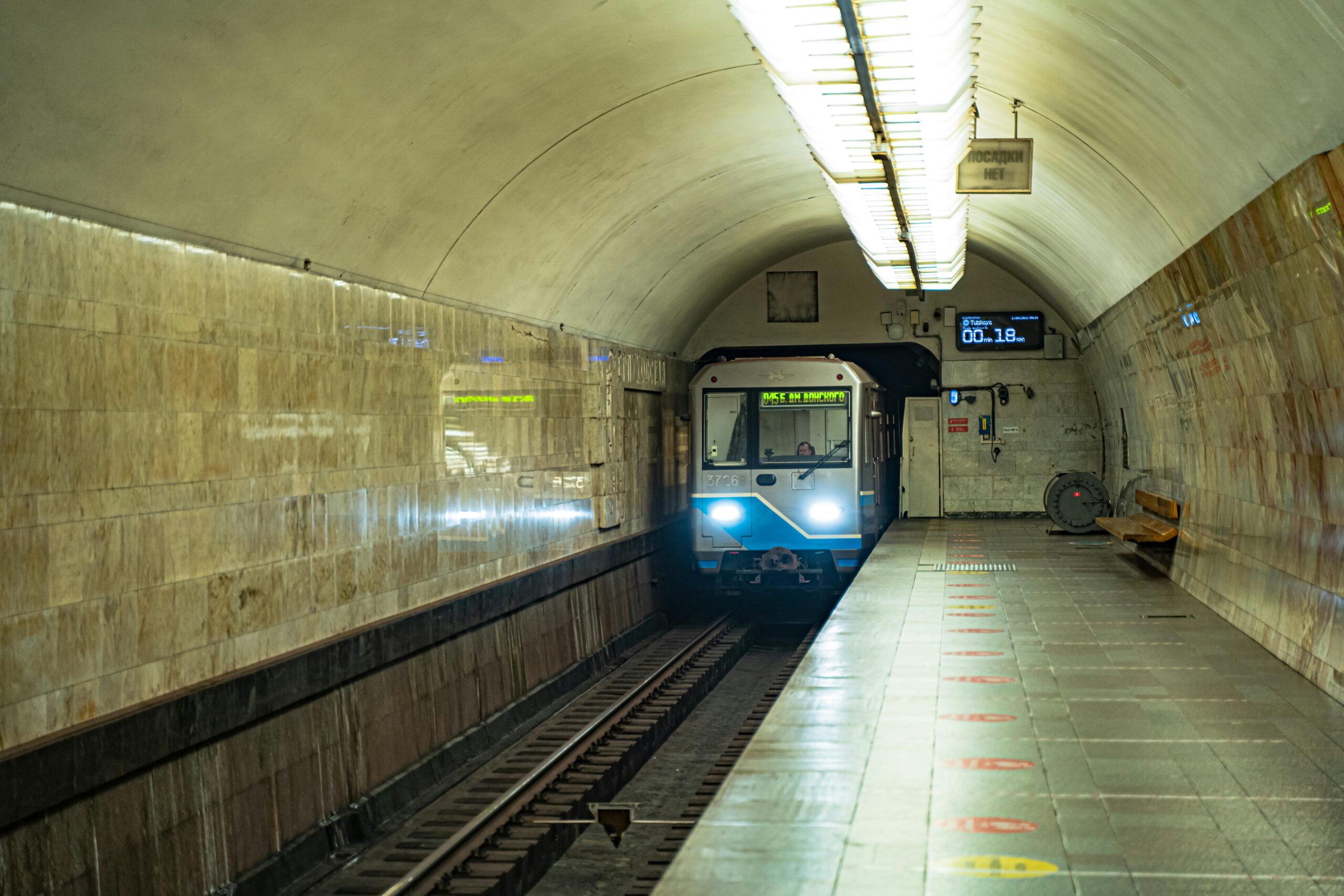
Metros run roughly 04:30 to 23:10. After that the night buses take over, and this catches people out constantly — the last metro is earlier than most European cities and earlier than the bars.
After dark: the night network
This is where Budapest quietly outperforms most of its neighbours, and where visitors most often get it wrong by assuming it works like home.
The metro stops around 23:10. What replaces it is a proper night network of around forty bus routes numbered in the 900s, running every fifteen to thirty minutes until the metro starts again at about 04:30, plus tram 6, which does not stop at all. The 900-series routes shadow the metro lines — the 907 and 908 follow the M2 corridor, the 914 and 950 run the M3 axis — so the mental model is simple: whatever line you would have taken, there is a bus doing roughly the same thing with a 9 in front of its number.
Three practical notes. Night buses take the same tickets and travelcards as everything else, at no premium. On many night services you board through the front door and show the driver your ticket or pass, which is not the daytime habit and confuses people. And the stops are the same physical stops as the daytime routes, so you are not hunting for a different corner.
The upshot for anyone spending an evening in the ruin bars of District VII: you do not need a taxi to get home. If you are staying anywhere on the Grand Boulevard, the 6 will take you there at any hour. Our nightlife guide is written on the assumption that you will use it.
Buda’s oddities: funicular, cogwheel and chairlift
Buda’s hills have collected an unusual set of vintage transport, most of which is part of the BKK network and therefore cheaper than it looks.
- The Budavári Sikló funicular, 1870, climbs from Clark Ádám tér to the castle in two minutes. It is not covered by travelcards, costs around 5,000 Ft one way, and in summer the queue is longer than the walk it replaces. Handsome, historic, poor value.
- The Cogwheel Railway (Fogaskerekű), tram line 60, grinds up into the Buda hills from Városmajor to Széchenyi-hegy. It is ordinary public transport on an ordinary ticket, it has been running since 1874, and almost no visitor uses it. Worth doing purely for the ride if you have a spare morning.
- The Children’s Railway (Gyermekvasút) continues from the top of the cogwheel through the Buda hills, staffed almost entirely by children aged ten to fourteen under adult supervision — a survival of the communist-era youth movements that has aged into something genuinely charming. Separate ticket, and a proper half-day out. See Budapest with kids.
- The Zugliget chairlift (Libegő) runs up to János Hill and the Elizabeth Lookout, the highest point in the city. Separate ticket, seasonal hours, and a much better view than the funicular for a similar sort of money.
None of these are essential. All of them are more interesting than the funicular, and the cogwheel is the only one that costs nothing extra.
Trams: the ones that matter
The tram network is the real backbone here, and three lines are worth knowing by number.
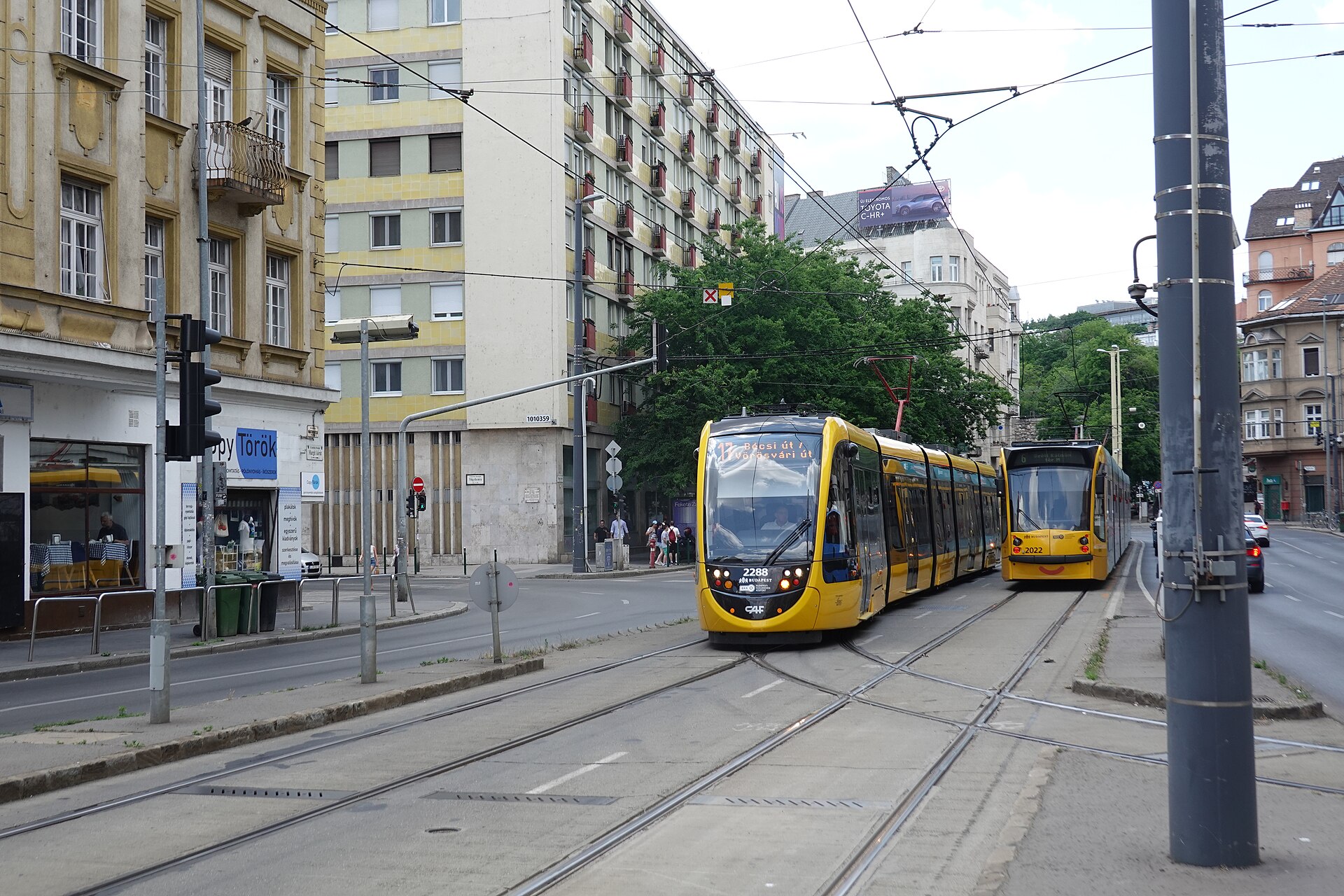
- Tram 2 runs along the Pest embankment from the Parliament past the Chain Bridge, the Vigadó, the Elisabeth Bridge and on to the Great Market Hall. It is routinely called one of the most scenic tram rides in Europe and that is not marketing — you are at window height with the whole Buda skyline for twenty minutes, for the price of a ticket. Do it at dusk. It is the cheapest sightseeing in the city and a serious rival to a paid cruise.
- Trams 4 and 6 run the Grand Boulevard, the great semicircle through Pest, crossing the river at Margaret Bridge and Petőfi Bridge. The 6 runs 24 hours a day. Between them they are the busiest tram service in the world by passenger numbers, and the articulated Combino sets are among the longest passenger trams anywhere. If you are staying anywhere on the boulevard, this is your line.
- Trams 47 and 49 run from Deák across Liberty Bridge to Gellért tér and out into south Buda — the fast way from the centre to the foot of Gellért Hill (the Gellért Baths there are closed for renovation until around 2028).
Trams are frequent enough that timetables barely matter in the daytime; five minutes is a long wait on the 4/6. The older Ganz trams are still running on the quieter routes and are noticeably less comfortable than the newer CAF and Combino stock, which is a fair trade for the character.
Buses, trolleybuses and the HÉV
Buses fill in what the rails do not reach, and for a visitor that mostly means Buda’s hills. Bus 16 runs from Deák Ferenc tér over the Chain Bridge and up to Castle Hill; 16A and 116 do the same from Széll Kálmán tér. Bus 27 climbs most of Gellért Hill from Móricz Zsigmond körtér, which turns a steep half-hour walk into a five-minute ride. Bus 105 runs the length of Andrássy if the M1’s stairs are a problem.
Trolleybuses — electric, on overhead wires, numbered in the 70s and 80s — cover parts of central Pest. They take the same tickets and the numbering starts at 70 for a reason: the first route opened on 21 December 1949, Stalin’s seventieth birthday.
The HÉV is the suburban rail network, and one line matters to visitors: the H5 from Batthyány tér north to Szentendre, the baroque riverside town that is the easiest day trip from the city. Your Budapest travelcard covers the HÉV as far as the city boundary; beyond that you buy a supplement on top, which is cheap but is a separate transaction people routinely forget. Our Szentendre guide covers the fare properly.
Tickets: what to actually buy
The decision is simpler than the price list makes it look.
- Two or three days in the city? The 72-hour travelcard at 5,750 Ft. It covers metro, tram, bus, trolleybus, HÉV within the boundary and the funicular’s public-transport rivals, and it removes every ticketing decision for the rest of your trip.
- One day? The 24-hour travelcard at 2,750 Ft breaks even at six journeys. Below that, buy singles.
- A week or more? The monthly Budapest-pass is 8,950 Ft — about twenty-two euros for unlimited travel — and beats a chain of 72-hour cards from around day ten.
- Barely using it? A block of ten single tickets at 4,500 Ft works out at 450 Ft a ride and can be shared between people.
Two traps. The 30-minute ticket costs more than a single (600 Ft against 500 Ft) because it allows transfers, whereas a plain single ticket is good for one vehicle only — change trams and you must validate a second one. And the 100E airport bus is excluded from every travelcard; it needs its own 2,500 Ft ticket, every time, no exceptions.
Buy through the BudapestGO app, at a machine, or at a staffed window. Validate paper tickets in the orange or red boxes when you board — on the metro at the platform entrance, on trams and buses inside the vehicle. Inspectors in armbands are real, they work the metro exits, and the on-the-spot fine is many times the fare. The full mechanics, including what an inspector is entitled to do and how the app’s QR validation works, are on our public transport page.
Does the Budapest Card change this?
The Budapest Card bundles unlimited BKK travel with museum entries and a cruise, and if you are buying it for the museums then the transport comes free with it and you can ignore travelcards entirely. If you are buying it for the transport, you are overpaying — a 72-hour travelcard is around fourteen euros and the 72-hour card is around sixty-five. The card only makes sense on its museum content. We do the arithmetic on the Budapest budget page.
Taxis and ride-hailing
Budapest taxi fares are set by city decree, so every licensed firm charges exactly the same: a 1,300 Ft base fare, around 520 Ft per kilometre and 130 Ft per minute of waiting, with an 800 Ft surcharge on airport journeys. Those rates went up on 1 August 2026, so older guides understate them badly. All licensed taxis are painted uniformly and carry a visible tariff table.
The rule that matters: never hail a taxi in the street. Overcharging by unlicensed and semi-licensed drivers around the tourist streets is a genuine, still-current problem, and the tariff being regulated does not help you if the meter has been interfered with. Book through the Bolt app, which is what most locals use and which shows the fare before you accept, or call Főtaxi or City Taxi, or use an official rank, or ask your hotel or restaurant to phone one. All four are easy and all four are safe.
A typical central journey — Deák to the Gellért, say — runs a few thousand forints. Airport to the centre is more like 13,500–16,000 Ft (€34–40), including the 800 Ft airport surcharge, and tipping is around ten per cent or rounding up. There is no Uber in Budapest; it withdrew in 2016 and Bolt filled the gap. Our safety guide covers the taxi scams in more detail, and the travel tips page has the numbers to call.
Getting in from the airport
Budapest Ferenc Liszt International (BUD) is 16 kilometres south-east of the centre. Terminal 1 has been closed since 2012 — ignore any guide that mentions it. Everything arrives at Terminal 2, which is split into 2A for Schengen flights and 2B for non-Schengen, joined by the five-storey Skycourt building that holds the shops and food. Both bus stops and both taxi ranks are on the arrivals level between the two.
- Bus 100E is the direct airport shuttle to Deák Ferenc tér in about forty minutes, with stops at Kálvin tér and Astoria. It needs its own 2,500 Ft ticket and takes no travelcards. This is the default for most people.
- Bus 200E plus the M3 metro is the cheap version: the 200E to Kőbánya-Kispest on an ordinary ticket, then the blue line into town. Slower, involves stairs and a change, and costs a fraction of the 100E. Fine with hand luggage, miserable with a suitcase at rush hour.
- Taxi from the official rank, at the regulated tariff plus the airport surcharge.
- Pre-booked transfer or a shuttle, which makes most sense for groups and for late arrivals.
Arrivals clearance is typically around twenty minutes off-peak. The airport wifi is free and unlimited, and the Hungarian operators sell prepaid tourist SIMs in the arrivals hall — see our SIM card guide if you want data before you leave the building. The full comparison of every route into town, with current prices and journey times, is on the airport transfer page.

Bikes, scooters and the river
MOL Bubi is the city bike-share: lime-green bikes, docking stations across central Pest and parts of Buda, hired through an app with a small unlock or daily fee and a per-minute rate after that. Pest is flat and increasingly well provided with bike lanes, and the riverside route plus Margaret Island is genuinely lovely. Buda is hilly and the traffic is less forgiving; do not plan to cycle up to the castle.

Electric scooters come and go as operators win and lose licences, and the rules on where you may ride and park them change with them. Check in the app rather than assuming.
The BKK public boat is the underrated one. It is part of the transport network rather than a tour, it runs between piers on both banks and Margaret Island, and on the right service it costs little more than a normal fare. The timetable is thin, it does not run late, and it is seasonal in practice — but on a warm afternoon it is a Danube cruise for the price of a bus ride. For the proper evening version with the floodlit Parliament, see our Danube boat tours guide.
Walking, which is the real answer
Central Budapest is smaller than it looks on a map. Some honest distances:
| From | To | On foot |
|---|---|---|
| St Stephen’s Basilica | Parliament | 10 min |
| Deák Ferenc tér | Great Market Hall | 20 min |
| Chain Bridge, Pest end | Fisherman’s Bastion | 20 min, uphill |
| Great Market Hall | Cave Church, Gellért Hill | 10 min over Liberty Bridge |
| Dohány Street Synagogue | Szimpla Kert | 6 min |
| Heroes’ Square | Széchenyi Baths | 5 min |
| Deák Ferenc tér | Heroes’ Square | 40 min along Andrássy |
The Pest side is flat, gridded and pleasant to cross on foot, and the embankment walk between the bridges is one of the best free things in the city. Buda is where you stop being stubborn and take the bus: the gradients are real, the cobbles on Castle Hill are unkind to wheels and ankles alike, and there is no prize for grinding up Gellért Hill twice in a day. Our walking tours guide has routes that are built around this, and the photography spots page is effectively a walking route in disguise.
Accessibility
The picture is mixed and the details matter. M4 is fully step-free with lifts at every station. M2 and M3 have lifts at many but not all stations. M1 is essentially inaccessible — stairs at every entrance, no lifts, and no realistic prospect of change to a protected 1896 structure.
Most buses and many trolleybuses are low-floor with a centre or rear ramp and a designated wheelchair space; the newer CAF and Combino trams are low-floor, the older Ganz ones are not. The BudapestGO app flags accessible departures. Mainstream taxi firms do not operate accessible vehicles; Paratrans runs a ramped van service and needs booking ahead.
Castle Hill is the hard one: cobbled, stepped and steep, though buses 16, 16A and 116 will get you to the top and the major museums have accessible entrances and lifts. Andrássy Avenue and the Pest embankment are flat and straightforward. Pushchairs face the same obstacles as wheelchairs and the same solutions — our Budapest with kids guide takes it from there.
Getting out of the city
Budapest has three main railway stations and they are not interchangeable. Check which one your train leaves from and do not assume — they are on opposite sides of the city.
The three stations, and which is which
Getting the wrong terminus is the classic Budapest travel mistake, because the names describe compass directions that no longer match the services.
- Keleti (“eastern”) is the main international station: Vienna, Munich, Prague, Belgrade, Bucharest. It is on the M2 and M4, it has left luggage, and it is the busiest and scruffiest of the three. Allow more time than you think for finding your platform — the departure boards change late and the platform numbering runs across two halls.
- Nyugati (“western”) is the beautiful one: an iron-and-glass train shed built by the Eiffel company in 1877, sitting right on the Grand Boulevard at an M3 station. It handles Szeged, Debrecen and much of the north and east, and its concourse has a café in what used to be the royal waiting room.
- Déli (“southern”) is on the Buda side at the end of the M2, and it is where Lake Balaton and the west depart from. It is the plainest of the three, a concrete slab from 1975, and it is the one visitors most often fail to allow enough travel time to reach.
All three take the same city travelcards to reach, all three have ticket offices with English-speaking staff, and MÁV’s own app and website sell domestic tickets online. Buy international tickets in advance where you can — the advance fares to Vienna in particular are a fraction of the walk-up price.
Volánbusz runs the long-distance coach network from Népliget on the M3 and from a few other terminals, and it reaches the towns the railway does not — Hollókő, much of the Danube Bend by road, and the smaller wine villages. It is slower than the train where both exist and it is the only option where they do not. Our Hollókő day trip guide covers that particular journey, which is a genuine coach-only case.
Vienna is the easy one: roughly two and a half hours on the fast trains, around twenty-four departures a day and advance fares from about ten euros — the Vienna day trip page has the timings. Bratislava is nearer still. Prague is about six and a half hours and is an overnight, not a day trip.
Domestically, Eger, Lake Balaton and the Danube Bend are all comfortable day trips by train or boat, and Szentendre is twenty-five minutes on the HÉV. Volánbusz covers the places the railway does not. The full set is on our day trips page.
Do not hire a car for a city stay. Parking in the central districts is metered, scarce and enforced, the one-way system is unforgiving, and everything you want to see is on a tram line. Hire one only for a rural loop — Tokaj, the Balaton uplands, Hollókő — and pick it up on the day you leave.
Which mode, in which situation
The abstract answer is “walk and buy a travelcard”. Here is what that turns into in practice.
| Situation | Use | Not |
|---|---|---|
| Landing at 09:00 with a suitcase | 100E to Deák, then walk or one tram | 200E and the M3 with stairs |
| Landing at 01:00 | Pre-booked transfer or an official-rank taxi | The 900E night bus unless you know the city |
| Basilica to Parliament | Walk, ten minutes | Anything with wheels |
| Centre to Castle Hill | Bus 16, or walk up from Clark Ádám tér | The funicular |
| Centre to Gellért Hill | Tram 47 or 49 to Gellért tér | Walking round the long way |
| Centre to Széchenyi Baths | M1 to Széchenyi fürdő, door to door | A taxi in traffic |
| Sightseeing on a budget | Tram 2 along the embankment at dusk | A paid sightseeing bus |
| Ruin bars, home at 03:00 | Tram 6, or a Bolt | A street-hailed taxi |
| Rain, two children, a pushchair | M4, or a low-floor tram | The M1 |
| Day trip to Szentendre | HÉV H5 from Batthyány tér plus supplement | Driving |
Rush hour, and when it actually bites
Roughly 07:30–09:00 and 16:00–18:00 on weekdays. The 4/6 gets genuinely full, the M3 is busy along its whole length, and the roads around the bridgeheads clog badly enough that a taxi becomes slower than a tram. It is not London-scale crush, and if your sightseeing starts at ten and ends at six you will barely notice it — but do not book an airport taxi for five o’clock on a Friday and expect the forty-minute journey time.
Reading a stop without Hungarian
You need about six words. Megálló is a stop. Vágány is a platform or track. Indul is departure and érkezik is arrival. Jegy is a ticket, bérlet is a pass, and átszállás is a transfer. Stop names on the vehicle displays run in order with the next stop highlighted, and every metro platform has a strip map above the doors. Announcements are in Hungarian, with English added on the airport buses and the busiest tourist routes. The BudapestGO app does the rest in English and its live departures are reliable.
One small habit worth copying: on trams and buses you press the button to open the door at a stop rather than waiting for the driver to do it. New arrivals stand patiently in front of a closed door with some regularity.
Mistakes people make
- Assuming the travelcard covers the 100E. It does not, in either direction, and inspectors work that bus specifically.
- Buying single tickets one at a time. Slow machines, queues, and worse value than a travelcard from about six journeys.
- Not validating. An unvalidated ticket is an invalid ticket, and “I did not know” is not a defence anyone has successfully used.
- Hailing a taxi outside a bar at 2am. The commonest way to be overcharged in this city. Use Bolt.
- Planning around the metro after 23:00. It stops. Learn one night bus, or stay near the 6.
- Paying for the funicular. Around €12.50 for two minutes, replacing a nine-minute walk or a bus you have already paid for.
- Zigzagging across the river all day. Do Buda in one block and Pest in another — our itinerary planner sequences it that way for a reason.
For the detail on cabs, including worked fares for the journeys visitors make most, how to spot a real taxi and the nights when you’ll wait an hour for one, see taxis, Bolt and not getting ripped off in Budapest.
For every tram line worth knowing, the stops to get off at, how validating works and the fines for skipping it, see Budapest trams: riding the 2, the 4/6 and the 47/49.
Frequently asked questions
What is the best way to get around Budapest?
Walking, for anything inside the centre, backed up by a 72-hour travelcard for the trams and metro. The city is compact, the Pest side is flat, and the transport network fills in the hills and the distances at a cost so low it is barely worth optimising. Taxis are for late nights, luggage and rain.
How much is public transport in Budapest?
A single ticket is 500 Ft (around €1.25), a 24-hour travelcard 2,750 Ft and a 72-hour travelcard 5,750 Ft — under fifteen euros for three days of unlimited travel. A block of ten singles is 4,500 Ft. The airport bus 100E is a separate 2,500 Ft ticket that no travelcard covers.
Is the Budapest metro easy to use?
Yes. Four lines, all meeting at Deák Ferenc tér, clear signage in Hungarian and English, and trains every few minutes. The one thing to watch is the closing time — services stop around 23:10, earlier than most European capitals — after which the night bus network takes over and the 6 tram runs all night.
Do I need a car in Budapest?
No, and it is actively a disadvantage. Central parking is metered, scarce and enforced, the one-way system is punishing, and every sight in this guide is on a tram or metro line. Hire a car only for a rural trip, and only for the days you actually need it.
Is Uber available in Budapest?
No. Uber left Hungary in 2016. Bolt is the equivalent and is what locals use; it shows the fare before you accept the ride. Főtaxi and City Taxi both take phone and app bookings, and all licensed firms charge the same city-regulated tariff.
How do I get from Budapest Airport to the city centre?
Bus 100E direct to Deák Ferenc tér in about forty minutes on its own 2,500 Ft ticket is the standard answer. Bus 200E to Kőbánya-Kispest plus the M3 metro is cheaper on an ordinary ticket but slower and involves stairs. A taxi from the official rank runs the regulated tariff plus an 800 Ft airport surcharge.
Does my travelcard work on the HÉV to Szentendre?
As far as the city boundary, yes. Beyond it you buy a supplementary ticket for the remaining distance, which is cheap but is a separate purchase — buy it before you board or from the conductor, not after an inspector finds you.
Is Budapest walkable?
Very, within each bank. Most of the Pest sightseeing area is a twenty-minute walk end to end and completely flat. Buda is hilly and the sights sit on top of the hills, so use bus 16 for Castle Hill and bus 27 for Gellért Hill rather than climbing both in one day.
Is public transport in Budapest safe at night?
Generally yes. The night bus network is extensive, the 6 tram runs around the clock, and violent crime on the system is rare. Pickpocketing on crowded trams and at busy interchanges is the realistic risk, as it is anywhere — keep your bag in front of you on the 4/6 and around Deák.
Photo credits
Budapest trams: Budapest tram 2026 06 by Smiley.toerist, CC BY-SA 4.0, via Wikimedia Commons.
MOL Bubi docking station: MOL BuBi E-Bike (Budapest) in 2023.01 by CAPTAIN RAJU, CC BY-SA 4.0, via Wikimedia Commons.