Budapest in August: Heat, Sziget and the Twentieth of August
A planner for Budapest in August: the real weather, a week-by-week calendar for 2027, how St Stephen's Day and Sziget work, how to plan a day around the heat, and what it costs.
In this guide
- August at a glance
- The weather, honestly
- Air conditioning: check, don’t assume
- August 2027, week by week
- 1–9 August: high summer, half the locals away
- 10–14 August: Sziget week
- 15–23 August: the St Stephen’s Day weekend
- 24–31 August: the city comes home
- St Stephen’s Day: how 20 August works
- The shape of the day
- Where to watch the fireworks
- Getting there and back
- What’s open on the 20th
- Who August suits, and who should pick another month
- How to spend a hot August day
- Early morning: the sights, before anyone else
- Late morning: go indoors, or underground
- Afternoon: water
- Evening: the river and the rooftops
- And if it all gets too much
- Day trips that work in August
- What August costs
- What to pack for August
- Is Budapest worth visiting in August?
- Practical tips
- Frequently asked questions
- Photo credits
This article contains advertising. Our booking links are routed through a partner that adds commission tracking automatically, so if you book through one we earn a commission from the provider, at no extra cost to you. It never affects what we recommend. Affiliate disclosure
At about nine o’clock on the evening of 20 August, hundreds of thousands of people packed along both banks of the Danube go quiet at once, and then the sky over the river starts to explode. Ten days earlier the same city is full of wristbanded festival-goers heading for an island in the north, and on an ordinary weekday in between you can walk down a residential street in Pest and wonder where everyone went. Budapest in August is all of that at once: the busiest and most expensive month of the year for visitors, one of the two hottest, and the month when a good share of the people who actually live here pack up and leave for Lake Balaton.
This is a planner for the month: what the weather really feels like (the official averages flatter it), a week-by-week calendar for August 2027, how St Stephen’s Day works if you’re a visitor rather than a Hungarian, what Sziget does to the rest of the city, how to arrange a day around the heat, and what things cost. Prices were checked in September and October 2026; treat them as the right order of magnitude rather than gospel. The festival itself has its own page, the Sziget guide, and the wider season is covered in Budapest in summer.
August at a glance
| What | August in Budapest |
|---|---|
| Average high / low | 28 °C / 15 °C, though the centre stays much warmer at night |
| Heatwaves | Spells in the mid-30s are now a normal part of the month |
| Rain | About 50 mm on around 6 days, mostly in short afternoon thunderstorms |
| Sunshine | About 9 hours a day |
| Daylight | 15 hours on the 1st, 13½ by the 31st; sunset moves from 20:20 to 19:29 |
| Crowds | Peak season, heaviest during Sziget week and over the 20 August weekend |
| Hotel prices | Among the highest of the year, especially mid-month; easing in the last week |
| Key dates in 2027 | Sziget 10–14 August · St Stephen’s Day Friday 20 August (public holiday) |
| Watch out for | Rooms without air conditioning, and local restaurants closed for the summer |
The weather, honestly
On paper, August looks pleasant: an average high of 28 °C, an average low of 15 °C, about nine hours of sunshine a day and rain on only six days of the month. Those are long-term averages, though, and two things make the real thing hotter than they suggest. The first is that recent summers have run well above them, with stretches of several days in the mid-30s now a regular feature rather than a freak. The second is that the overnight low is measured at the weather station out in the south-eastern suburbs, near the airport. In the centre, where tall stone apartment blocks soak up heat all day and give it back all night, a heatwave can keep the temperature above 20 °C until dawn.
When the heat really builds, Hungary’s chief medical officer declares a heat alert, the city puts up misting gates on busy squares, and the public drinking fountains come into their own. Budapest’s tap water is perfectly safe to drink, so carry a bottle and keep refilling it. The other weather feature to know about is the thunderstorm. A hot day can end quite suddenly in a late-afternoon storm, with gusts strong enough to send café umbrellas flying, a downpour and occasionally hail. It usually blows through within the hour and leaves the evening fresher. Keep an eye on the sky to the west, over the Buda Hills, and if it darkens while you’re on the river or up on a viewpoint, head for cover early.
One more August quirk: in a dry summer the Danube runs low. In recent years the river has dropped far enough to expose broad sandbanks under the bridges, and in the driest weeks some boat services have been cut back. The sightseeing cruises in the city generally keep going, but if a longer trip up to the Danube Bend by boat is part of your plan, check it’s running before you set off.
The days are long but shortening fast. Over the month, sunset comes nearly an hour earlier:
| Date (2027) | Sunrise | Sunset | Daylight |
|---|---|---|---|
| 1 August | 05:21 | 20:20 | 15 h 00 |
| 10 August (Sziget opens) | 05:32 | 20:07 | 14 h 35 |
| 20 August (St Stephen’s Day) | 05:45 | 19:50 | 14 h 04 |
| 31 August | 06:00 | 19:29 | 13 h 29 |
It’s light by half past five, which matters more than it sounds. The coolest, emptiest and most beautiful hours of an August day in Budapest are the first two after sunrise, and anyone prepared to set an alarm gets the Castle District and the Danube promenade almost to themselves. More on that below. Budapest month by month compares August’s numbers with the rest of the year.
Air conditioning: check, don’t assume
The most useful single piece of advice for an August trip has nothing to do with sightseeing: make sure wherever you’re sleeping has air conditioning, and check properly. Plenty of the handsome nineteenth-century apartment buildings in the centre have none, a lot of short-let flats rely on a fan, and a top-floor flat under the roof can still be over 30 °C at midnight in a heatwave. Look for air conditioning in the listed amenities and in the photos, not just the description, and if it’s a flat, ask whether the unit covers the bedroom or only the living room. Rooms facing the inner courtyard are quieter and usually cooler than those over the street. The where to stay guide runs through the neighbourhoods.
August 2027, week by week
1–9 August: high summer, half the locals away
The first week or so is peak summer in its purest form. It’s hot, the light is fierce, the ruin-bar gardens and rooftop bars are full every night, and the tourist centre around Váci utca, Vörösmarty tér and the Basilica is busy from mid-morning. Away from those streets, the city feels emptier than usual, because a lot of Budapesters are on holiday, at Lake Balaton, in the countryside or abroad. You’ll notice it in the neighbourhood restaurants, bakeries and wine bars that tape a note to the door announcing a nyári szünet, a summer break, usually of a week or two. If a particular place is the reason you’re crossing the city, check it’s open first.
The Hungarian Grand Prix has moved around the turn of the month in recent years: it was held on the first weekend of August in 2025 and the last weekend of July in 2026. Whenever it falls, hotel prices in the city jump for that weekend, so look at the Formula 1 calendar before you book. The Hungarian Grand Prix guide covers the race itself. In the evenings, the Budapest Summer Festival keeps the open-air theatre on Margaret Island busy with concerts, musicals and dance.
10–14 August: Sziget week
Sziget runs from Tuesday 10 to Saturday 14 August 2027 on Óbuda Island, the long, wooded island in the Danube in District III, a few kilometres north of the centre. It started in 1993 as a scrappy student event and is now one of Europe’s biggest music festivals, with more than 300 acts and a few hundred thousand visitors over the week, most of them young, a large share from abroad, and many staying for the whole thing.
Even if you have no intention of going, Sziget changes the city for the week. Hostels and cheaper hotels fill up early and charge accordingly, the H5 HÉV suburban line from Batthyány tér to the festival stop at Filatorigát is rammed, and the bars of District VII get a second, later rush of customers with wristbands who’ve come back into town. None of that is a reason to stay away, and the island is far enough from the centre that you won’t hear a thing from your hotel. It’s simply a reason to book early. If you are going, the five-day pass was on sale at €349 in October 2026, with a 21-and-under pass at €279, and prices rise in steps as the festival approaches. The Sziget guide covers tickets, camping and getting there.
15–23 August: the St Stephen’s Day weekend
The middle of the month builds up to 20 August, St Stephen’s Day, Hungary’s most important national holiday. In 2027 it falls on a Friday, giving a three-day weekend, and people come into Budapest from all over the country for it. The Festival of Folk Arts takes over the terraces and courtyards of Buda Castle for several days around the 20th, the Street of Hungarian Flavours sets up its food and wine stalls, there are free concerts and events at venues across the city, and the whole thing ends on the night of the 20th with the biggest fireworks display of the Hungarian year. The next section explains how the day works. Book this week’s accommodation as early as you possibly can, because the river-view rooms and the fireworks cruises go first.
24–31 August: the city comes home
The last week of August is quietly one of the nicest of the summer. The holiday crowds thin out after the long weekend, locals drift back from the lake, the restaurants that shut for a fortnight reopen, and the heat, though not gone, begins to ease. By the end of the month the sun sets before half past seven, and you may want a light layer for a late dinner outside. Hotel prices fall back from their mid-month peak, and the Budapest Wine Festival, held in Buda Castle in early to mid September (in 2026 it ran from 9 to 12 September), is only a week or two away; the Wine Festival guide has the details.
St Stephen’s Day: how 20 August works
Hungarians mostly just call it augusztus huszadika, the twentieth of August. Officially it’s the day of the foundation of the state, and it honours Stephen I, the first king of Hungary, crowned at the turn of the year 1000, who brought the country into Christian Europe. He was made a saint in 1083, when his remains were raised from the tomb on 20 August, and the date stuck. Under communism the holiday survived but was rebranded as Constitution Day and the festival of the new bread. Since 1991 it has been the country’s official national day, the most important of the three, alongside 15 March and 23 October. For a visitor it’s the best day of the year to watch Hungary celebrate itself, and one of the most crowded.
The shape of the day
- Morning: a formal flag-raising in front of the Parliament on Kossuth Lajos tér, with military honours, usually followed by the swearing-in of newly commissioned army officers. It’s public, solemn and fairly short.
- Late afternoon: an open-air Mass in front of St Stephen’s Basilica, followed by the procession of the Holy Right, the Szent Jobb: the mummified right hand of the king himself, carried around the square in its gilded reliquary. Whatever you think of relics, it’s an extraordinary thing to see, and the square is packed.
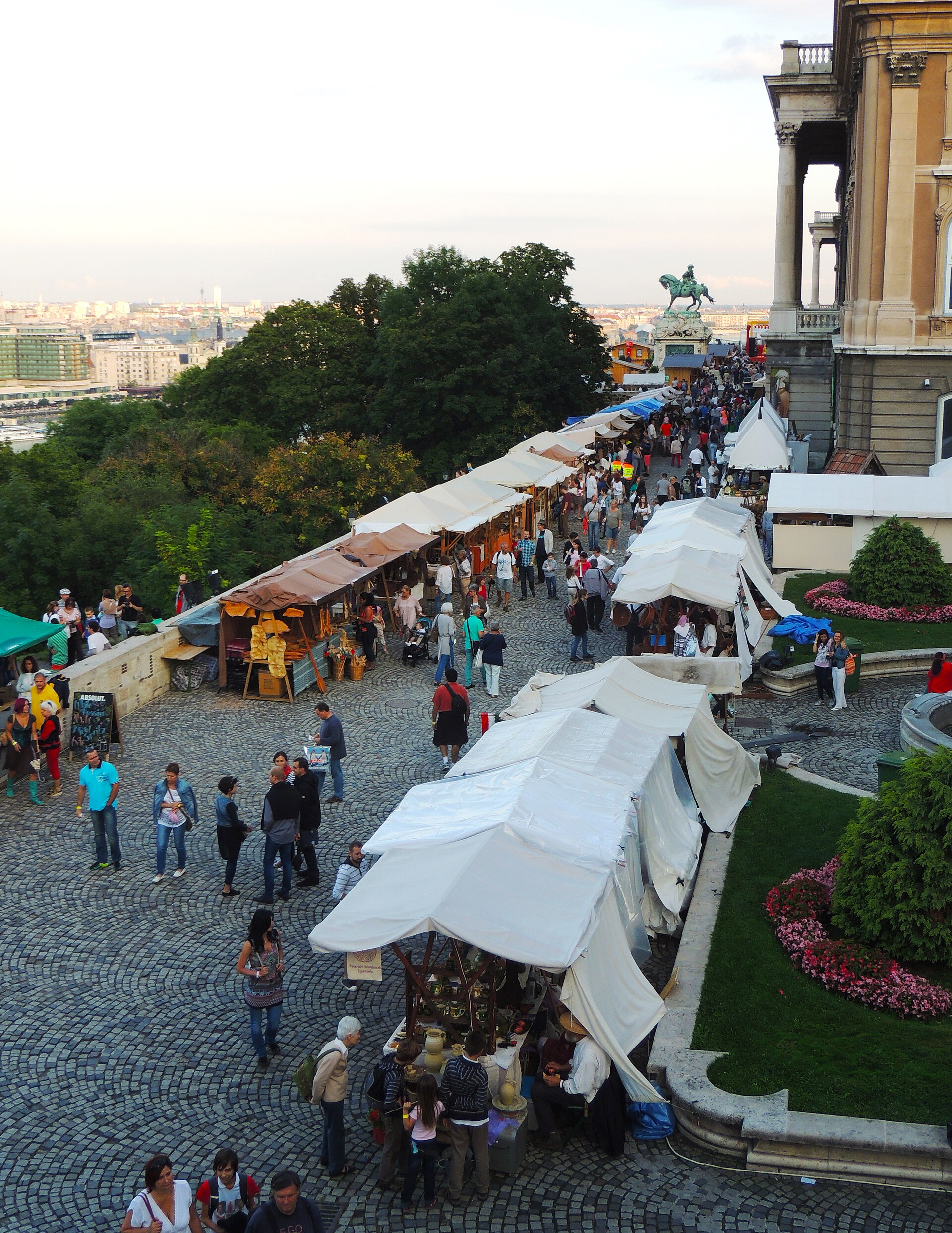
- All day: the Festival of Folk Arts in Buda Castle, the biggest craft festival in the Carpathian Basin, with potters, weavers, woodcarvers, blacksmiths and gingerbread makers working and selling on the palace terraces, plus folk music and dancing. It runs for several days around the 20th and is the best place in the city to buy a souvenir that someone actually made by hand.
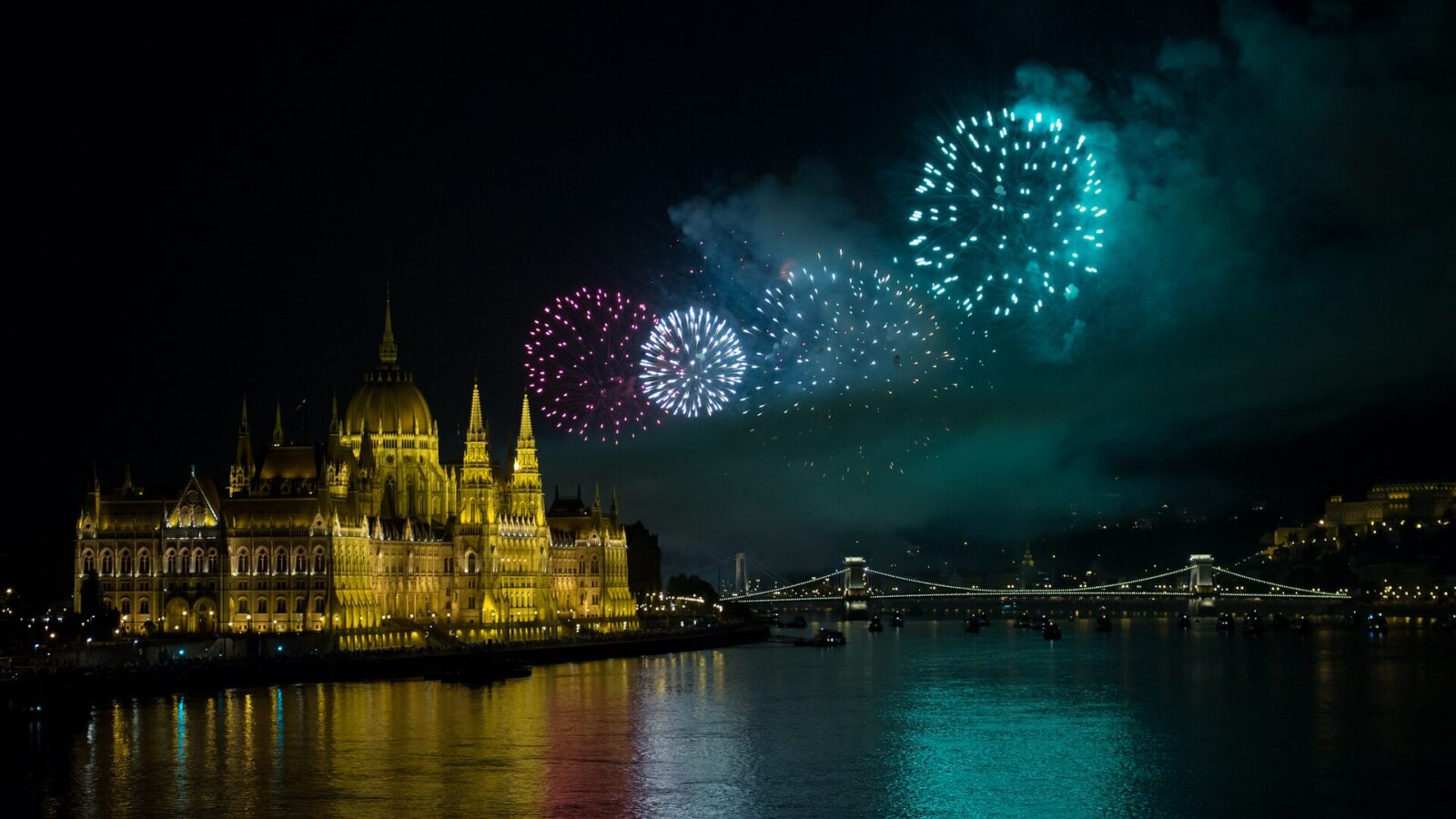
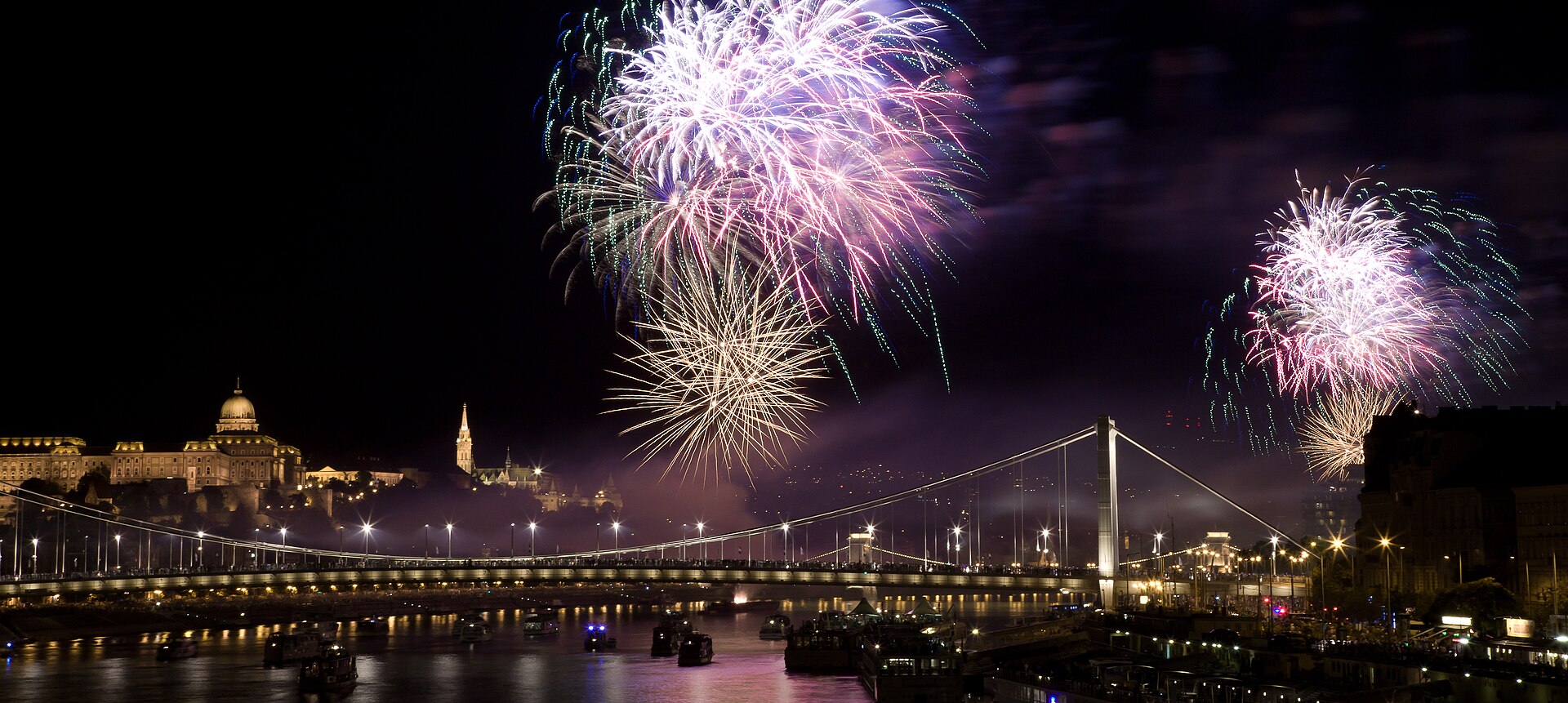
- Evening: the fireworks, traditionally at 9pm, fired from barges and bridges along the Danube in the heart of the city and lasting around half an hour.
Where to watch the fireworks
Anywhere along the central stretch of the river with a clear view of the water will do, and the further you are from the Chain Bridge, the easier it is to arrive and leave. The main options, honestly assessed:
- The Pest embankment. The promenade between the Elisabeth and Chain Bridges and the riverbank below the Parliament give the classic view back towards the castle. They fill from early evening, so arrive about two hours ahead for a spot at the front.
- The Buda side and the Castle District. Views across the water to the Parliament. The upper terraces of the Fisherman’s Bastion are free on national holidays, which means everyone else has had the same idea.
- Gellért Hill. The view from above, over the whole display and both banks. The Citadella park on the summit reopened in 2026 and is free. Expect a steep, sweaty climb and a crowd that got there first.
- A boat. Fireworks cruises are the most comfortable way to see it and the most expensive, and they sell out weeks ahead. The dinner cruise guide covers the operators.
- A terrace or a river-view room. Restaurants with a Danube view book out for the evening, often with a special menu, and hotel rooms facing the river are priced to match.
Getting there and back
The evening is the part that needs planning. The embankments and central bridges close to traffic, the trams along the river are diverted, and when the last rocket goes up, several hundred thousand people try to go home at the same moment. A few things help:
- Walk in and walk out if you can. The centre is compact, and walking is quicker than any queue.
- Use the metro rather than trams and buses, and if the nearest station is jammed, walk a stop or two away from the river before getting on.
- Don’t count on a taxi or a Bolt for the first hour after the show. There simply aren’t enough cars.
- Check BKK’s announcement for diversions and extra services, which comes out in the days before.
- Bring water and something to sit on, keep valuables zipped away in the crush, and agree a meeting point in case you get separated. Mobile data slows to a crawl in a crowd that size.
One last thing: the fireworks depend on the weather. In 2022 a forecast storm led the organisers to postpone the show by a week; the storm never arrived, and the row that followed cost the heads of the national weather service their jobs. If thunderstorms are forecast for the 20th, check the news on the day.
What’s open on the 20th
It’s a public holiday, so most shops close, as they do on any Hungarian holiday, though small convenience stores and petrol stations usually open. Restaurants, cafés and bars stay open and get busy, so book if you want a table in the evening. Most museums and sights open as normal; in 2026 the Hungarian National Gallery and the Museum of Fine Arts were free for everyone on all three national holidays, so check whether that’s repeated. The upper terraces of the Fisherman’s Bastion, normally ticketed until 9pm in summer, are free all day. In 2027 the holiday is a Friday, so expect the Saturday to feel like a weekend too.
Who August suits, and who should pick another month
August is the right month if:
- You’re coming for Sziget, for the St Stephen’s Day celebrations, or both.
- You like the heat, long evenings outdoors and a city that stays up late.
- You’re travelling with school-age children and the summer holidays are your only window. The lidos, the zoo and Margaret Island are at their best.
- You want to combine Budapest with a few days at Lake Balaton.
Pick another month if:
- You struggle in heat above 30 °C, or the only room you can find has no air conditioning.
- Money is tight. Mid-August is one of the most expensive times of the year, and the same hotel often costs less a few weeks either side.
- You want opera, classical concerts and the city’s indoor cultural life, most of which takes the summer off and comes back in September.
- You want to see everyday local life. In August, a fair amount of it is at Balaton.
How to spend a hot August day
The trick in August is to stop fighting the heat and plan around it, the way locals do. A day that works:
Early morning: the sights, before anyone else
Be out by seven. The lower terraces of the Fisherman’s Bastion are free and open around the clock, and at that hour you’ll share them with a few photographers and a street sweeper rather than several coach parties. Walk through the Castle District while the cobbles are still cool, then come down to the river. The Danube promenade, the Shoes on the Danube memorial and the square in front of the Parliament are at their calmest before nine, and the low sun from the east lights up the Buda side beautifully.
Late morning: go indoors, or underground
By eleven the heat is building, and it’s time to be inside. Big churches hold the cool of their thick stone walls well into the afternoon, and the city has dozens of museums to hide in. Cooler still, go underground. The Hospital in the Rock, a wartime hospital and Cold War bunker cut into the hill beneath Buda Castle, is seen on a guided tour. Out in the Buda Hills, the Pál-völgyi and Szemlő-hegyi caves both run guided visits and stay at a steady 10–12 °C whatever is happening outside. Pál-völgyi involves steep steps and ladders; Szemlő-hegyi is gentler. Take a layer, because after an hour you’ll want it.
Afternoon: water
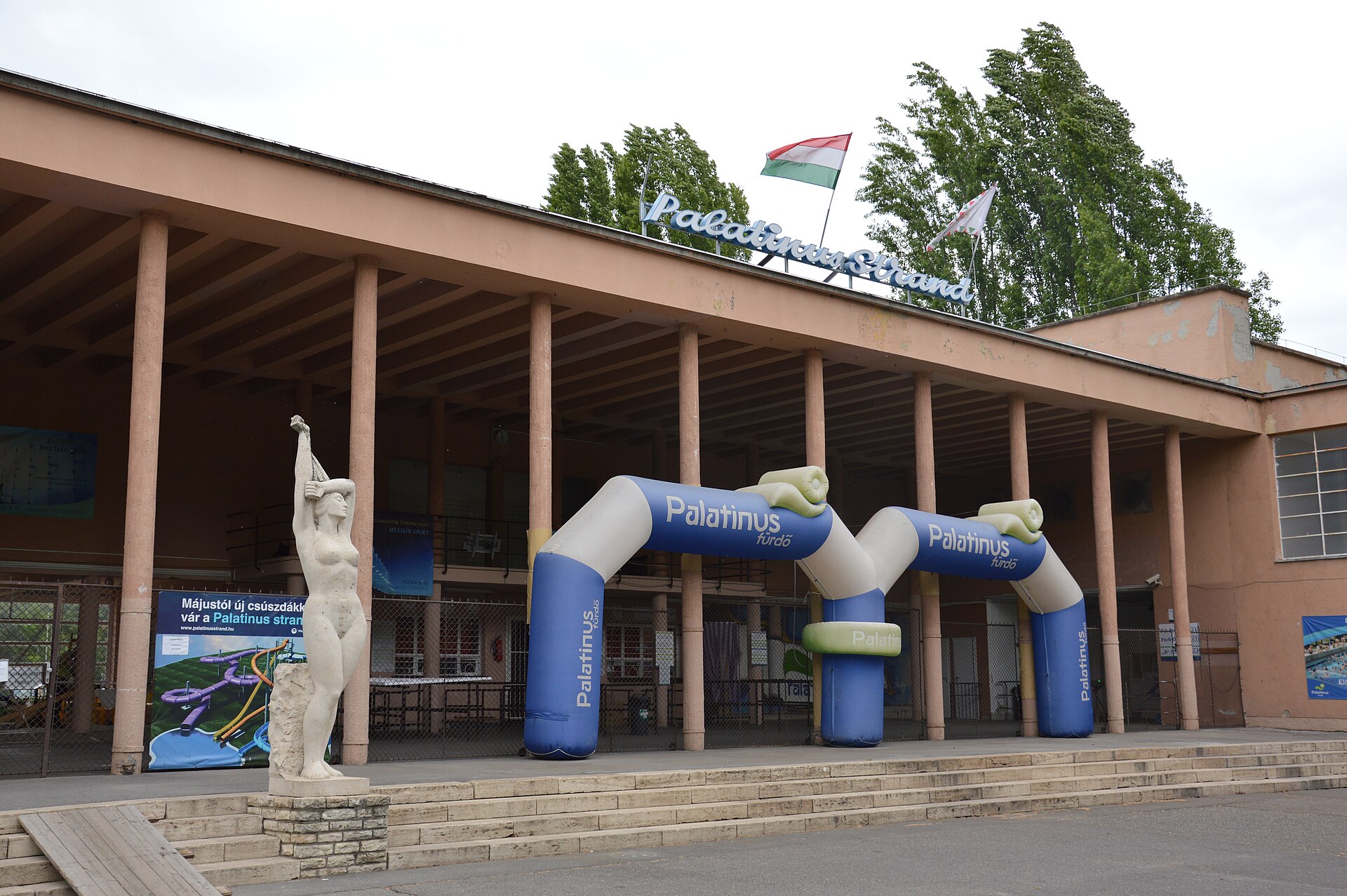
The thermal baths may sound like the wrong idea in a heatwave, and the hottest pools, at around 38 °C, are hard work at three in the afternoon. But the big baths have cooler outdoor pools too, and those are where to go. The Széchenyi Baths are open all year and their outdoor pools are as good in August as in January, while the Rudas Baths have a rooftop pool looking over the river. For a proper summer afternoon, though, do what Budapest families do and go to a strand, an open-air lido. The biggest and most central is the Palatinus on Margaret Island, with a wave pool, slides, thermal pools and shady lawns. Locals have their own favourites further out, like the Római and Csillaghegyi strands in Óbuda. A day ticket costs a few thousand forints, a bit more at weekends, and a weekday afternoon is far calmer than a Saturday.
Two things not to plan on. The Gellért Baths, the most famous of all, are closed for a renovation that won’t finish before 2028. And swimming in the Danube itself isn’t an option in the city: the current is strong and the river is busy with boats.
Evening: the river and the rooftops
Budapest comes back to life as the sun goes down. Walk up Gellért Hill for the sunset (the Citadella park at the top stays open until midnight from April to October) or take a drink up to a rooftop bar. After dark, the bridges and the Parliament are lit up and at their most photogenic, and an evening river cruise gives you the breeze as well as the view. Dinner can be late: restaurant terraces fill from about eight, and the garden courtyards of the ruin bars in District VII are only warming up at eleven.
And if it all gets too much
Go up or go out. The Buda Hills are a few degrees cooler than the centre and covered in woodland: ride the Children’s Railway, a narrow-gauge line run largely by schoolchildren, through the forest, or walk the shaded paths around Normafa. Or leave the city altogether for the day.
Day trips that work in August
- Lake Balaton. Central Europe’s largest lake is Hungary’s summer playground, and in August it’s at its warmest and its busiest. The nearest resorts on the south shore are well under two hours away by train. Book a seat reservation on weekend trains, and go midweek if you can. The Balaton guide has the routes.
- The Danube Bend. Szentendre is about 40 minutes away on the H5 HÉV, the same line that takes festival-goers to Sziget, and Visegrád and Esztergom lie further upriver. In summer, seasonal boats make the trip up the river, slowly and with a breeze. The Danube Bend day trip guide has the options.
- Eger. The baroque old town is hot in August, but the wine cellars cut into the hillside in the Valley of the Beautiful Women are cool, and an afternoon spent in them is no hardship. The Eger day trip guide explains how to do it.
What August costs
August prices follow the event calendar, and the hotel bill is the part that moves most.
- Hotels: at or near their highest of the year in the middle of the month, around Sziget and the St Stephen’s Day weekend, and on the Grand Prix weekend when it falls in August. The last week is cheaper. Book two to three months ahead for mid-August, and further ahead still for a river view on the 20th.
- Getting around: the ordinary fares apply all month: 500 Ft (€1.25) for a single ticket, 2,750 Ft (€6.90) for a 24-hour travelcard and 5,750 Ft (€14.40) for 72 hours. The 100E airport bus costs 2,500 Ft (€6.25) and isn’t covered by travelcards. Taxis charge a fixed city tariff, which since 1 August 2026 has been 1,300 Ft to start plus 520 Ft a kilometre. The public transport guide explains the tickets.
- Sights: the upper terraces of the Fisherman’s Bastion cost 1,700 Ft (€4.25), card only, between 9am and 9pm until the end of September, and nothing on the 20th. The Bastion of Liberty exhibition inside the Citadella is about 4,900 Ft (€12), while the park around it is free.
- Lidos and baths: a strand day ticket is a few thousand forints, with a weekend premium, and the thermal baths charge more at weekends too. Check the operator’s website for the current prices.
- Eating and drinking: terrace prices in the tourist centre are high by Hungarian standards. Many restaurants now add a service charge (szervízdíj), often 12.5%, to the bill, and when it’s there you don’t need to tip on top.
- Sziget: in October 2026 the five-day pass cost €349, the 21-and-under pass €279 and VIP €569, all before any of the line-up had been announced. Camping costs extra.
What to pack for August
- Light, loose clothes in linen or cotton, and more changes of shirt than seems reasonable.
- A sun hat, sunglasses and high-factor sunscreen. Much of the sightseeing is on exposed embankments, bridges and hilltops.
- A refillable water bottle.
- Comfortable sandals, plus closed shoes with some grip for the Castle District’s cobbles and the cave tours.
- Swimwear, flip-flops and a quick-dry towel for the baths and lidos.
- A compact umbrella or a light rain jacket for the afternoon storms.
- Something to cover your shoulders in churches.
- A light layer for the caves, over-air-conditioned trains and the cooler evenings at the end of the month.
The packing guide goes into more detail.
Is Budapest worth visiting in August?
Yes, with a caveat that matters. August has the two biggest dates in Budapest’s calendar, the longest stretch of open-air life, warm water to swim in and the river at its liveliest. If Sziget or the twentieth of August is your reason for coming, there’s no other month for it, and either is worth building a trip around.
The caveat is that you pay for it in heat, crowds and money. Mid-August is hot, busy and expensive, a good part of the city’s local life has gone to Balaton, and the indoor cultural calendar is on holiday. If you can choose freely, June has the same long days without the worst of the heat, and September has summer weather, the new wine and far fewer crowds. Within August, our pick is the last week, after the 20th: the crowds have gone home, the restaurants have reopened, the evenings are cooler and the wine festival is around the corner. The best time to visit guide weighs up the whole year.
Practical tips
- Book accommodation for Sziget week and the 20 August weekend as early as you can.
- Confirm that your room has air conditioning, and which rooms it covers.
- Do your outdoor sightseeing before 11am and after 6pm.
- Check that small, independent restaurants are open before crossing the city for them. Many close for a summer break.
- On the 20th, get to the river early, plan to walk home, and expect no taxis for an hour after the fireworks.
- Watch the sky in the late afternoon. Summer storms build fast.
- Book river cruises, Parliament tours and popular restaurants a few days ahead; walk-up availability is thin in August.
- Carry a card. Almost everything takes one, and the Fisherman’s Bastion takes nothing else.
Frequently asked questions
Is August a good time to visit Budapest?
It’s a good time if you want summer at full volume: Sziget, the 20 August celebrations, the lidos and long evenings outdoors. It’s also the busiest and most expensive month, one of the two hottest, and many locals are away. If you can be flexible, June or September is more comfortable; within August, the last week is the best value.
How hot is Budapest in August?
The average high is 28 °C, but heatwaves with several days in the mid-30s are now common, and the city centre stays warm at night. Expect hot afternoons and the occasional sharp thunderstorm.
When is Sziget in 2027?
From Tuesday 10 to Saturday 14 August 2027, on Óbuda Island in the north of the city. Five-day passes were on sale from €349 in October 2026. The Sziget guide has the details.
What happens in Budapest on 20 August?
St Stephen’s Day, Hungary’s main national holiday: a flag-raising at the Parliament in the morning, the procession of the Holy Right at St Stephen’s Basilica in the late afternoon, the Festival of Folk Arts in Buda Castle, and a huge fireworks display over the Danube in the evening, traditionally at 9pm.
Where is the best place to watch the 20 August fireworks?
The embankments on both sides of the river in the centre, Gellért Hill and the Castle District all have good views, and all fill up early, so arrive about two hours ahead. For comfort, book a cruise or a river-view terrace well in advance.
Are shops open in Budapest on 20 August?
Mostly not, since it’s a public holiday, though small convenience stores and petrol stations usually open. Restaurants, cafés, bars and most museums and sights stay open.
Is Budapest crowded in August?
The tourist centre is busy all month and very busy during Sziget week and over the 20 August weekend. The rest of the city can feel quieter than usual, because so many residents are on holiday.
Can you swim in the Danube in Budapest?
Not in the city: the current is strong and the river is busy with boats. Swim at a strand such as the Palatinus on Margaret Island, or in the outdoor pools of the thermal baths.
Photo credits
Fireworks beside the Parliament on 20 August: Hungary S Statement Celebration (168789387) by Janos Virag, CC0, via Wikimedia Commons.
Fireworks over the Elisabeth Bridge: חגיגות יום ייסודה של מדינת הונגריה by O1r1e1n1, CC BY-SA 4.0, via Wikimedia Commons.
Craft stalls in Buda Castle: Budapest Buda Castle August 2014 1 by Einstein2, CC BY-SA 4.0, via Wikimedia Commons.
Palatinus Strand: PalatinusStrand by Illustratedjc, CC BY-SA 4.0, via Wikimedia Commons.