The Buda Hills: Normafa, Hiking and the Cogwheel Railway
How to get up into the Buda Hills and what to do there: the cogwheel, the Children's Railway and the chairlift, Normafa and János-hegy, the caves, the walks, and what is closed at present.
In this guide
- The Buda Hills at a glance
- What the Buda Hills are
- Getting up into the hills
- The Cogwheel Railway
- Buses 21, 21A and 291
- The Children’s Railway
- The Zugliget chairlift
- The classic loop
- What it all costs
- Normafa
- János-hegy and the Erzsébet Lookout
- The caves
- Pál-völgyi Cave
- Szemlő-hegyi Cave
- Walking in the hills
- Hármashatár-hegy
- Eating, drinking and facilities
- Fitting the hills into a trip
- The hills through the year
- With children
- Practical tips
- Are the Buda Hills worth it?
- Frequently asked questions
- Photo credits
This article contains advertising. Our booking links are routed through a partner that adds commission tracking automatically, so if you book through one we earn a commission from the provider, at no extra cost to you. It never affects what we recommend. Affiliate disclosure
Soon after leaving Széll Kálmán tér, a major transport hub, the cogwheel railway pulls up a wooded slope, the traffic noise falls away, and the people getting off at the top are carrying walking poles and dog leads instead of shopping bags. That’s the trick of the Buda Hills: a forested range of hills, trails, caves and lookout points that starts almost at the edge of the city centre, which many visitors never know is there and many locals treat as their back garden.
This guide covers how to get up into the hills and what to do when you’re there: the cogwheel railway, the Children’s Railway and the chairlift; Normafa and János-hegy, the city’s highest point; the caves; the walking; and how it all changes with the seasons. Fares and opening times were checked in November 2026; treat them as the right order of magnitude, and note that a couple of the hills’ best-known sights are closed or in limbo at present, which we flag as we go. For how the hills fit into the city’s districts, see our guide to Budapest’s districts.
The Buda Hills at a glance
| What | The Buda Hills |
|---|---|
| Where | West of the centre on the Buda side, mostly in District XII (Hegyvidék) and District II |
| Highest point | János-hegy, 527 m |
| Getting there | Cogwheel Railway (line 60) from Városmajor; bus 21 or 21A from Széll Kálmán tér; bus 291 from Nyugati to the chairlift |
| Ways round | The Children’s Railway, the Zugliget chairlift, and dozens of waymarked footpaths |
| Caves | Pál-völgyi and Szemlő-hegyi, both on guided tours |
| Closed or uncertain at present | Erzsébet Lookout (closed for renovation); Normafa’s ski and sledging slopes (permit withdrawn in 2026) |
| Best for | Walks, views, families, a half day away from the city |
| Allow | Half a day for the classic loop; a full day with a cave or a longer hike |
What the Buda Hills are
The Buda Hills (Budai-hegység) are a range of low, wooded limestone and dolomite hills that rise west of the Danube and wrap around the Buda side of the city. They aren’t a single park but a patchwork of forest, meadows, old villas and quiet residential streets, with the forest taking over the higher you go. The best-known hills, János-hegy, Széchenyi-hegy, Normafa, Hárs-hegy and Hármashatár-hegy, are all within the city limits, and most can be reached on public transport in well under an hour from the centre.
The lower slopes have been one of Budapest’s most desirable places to live since the nineteenth century, when the wealthy built summer villas here to escape the heat and dust of the city. District XII’s name, Hegyvidék, means “hill country”, and it remains one of the greenest parts of Budapest. Higher up, the forests are criss-crossed by footpaths, and on a fine weekend they fill with walkers, runners, mountain bikers, families and dog-walkers. On a weekday, even in summer, you’ll have many of the trails nearly to yourself.
Getting up into the hills
Half the fun of the Buda Hills is the transport. Three unusual railways and a chairlift serve the hills, and a classic day out strings them together.
The Cogwheel Railway
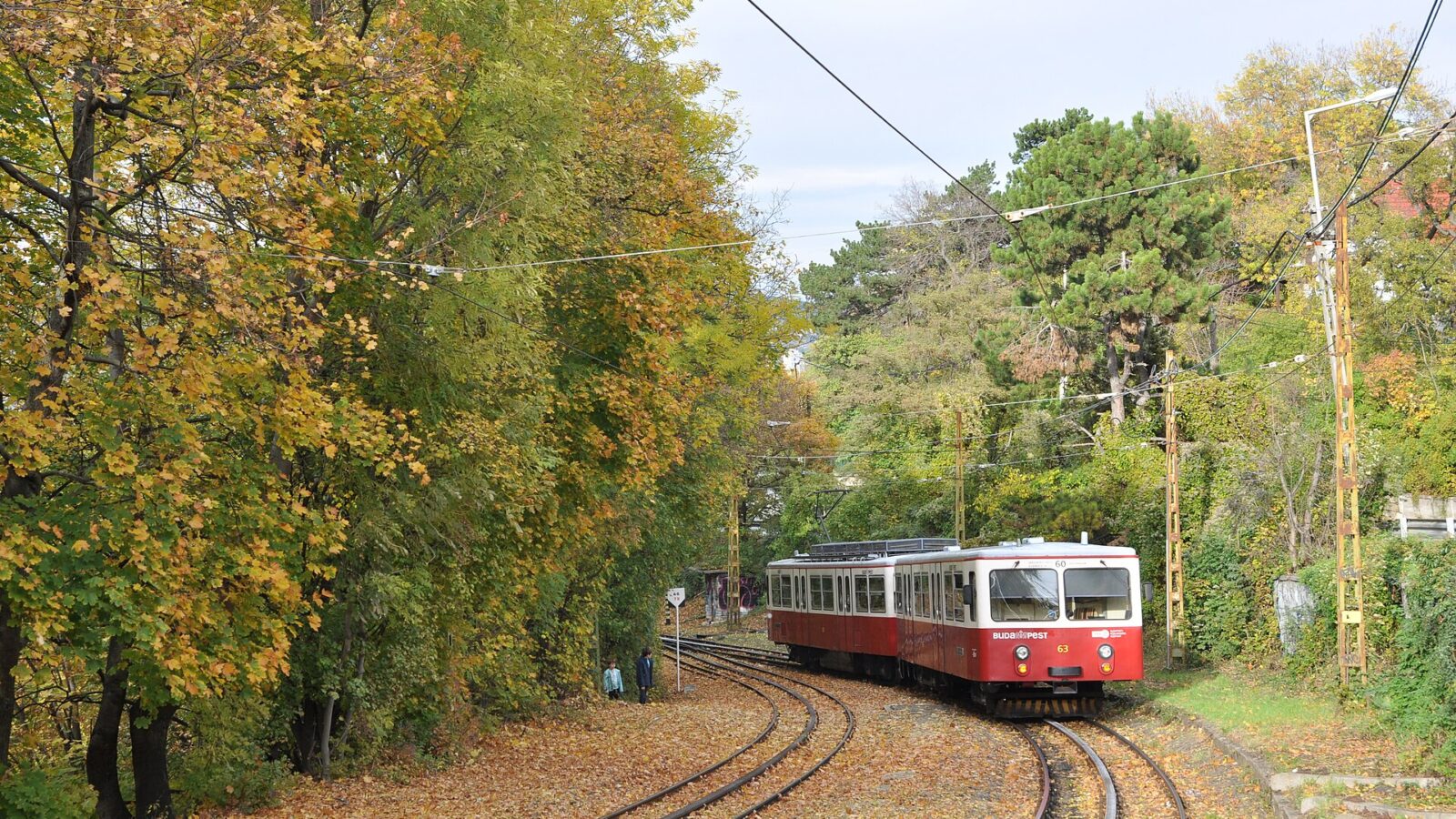
The Cogwheel Railway (Fogaskerekű vasút), line 60 on the BKK network, climbs 3.7 km from Városmajor, a short walk or tram ride from Széll Kálmán tér, up through the villa districts to Széchenyi-hegy. It opened in 1874, and it’s still the easiest way into the hills. At the top, the Children’s Railway station is a short walk away, and Normafa is a pleasant stroll further on.
Two caveats. The line usually closes for about a week each autumn for track maintenance, with replacement buses (it was closed 3–9 November in 2025), and it has had longer closures in the past. And BKK’s timetables change, so check BKK’s traffic news or the BudapestGO app before you set out, both for closures and for whether your ticket or travelcard is valid.
Buses 21, 21A and 291
If the cogwheel isn’t running, or you’re heading straight for Normafa, take bus 21 or 21A from Széll Kálmán tér, which climb to the Normafa terminus. Bus 291, from Nyugati station, runs to Zugliget, at the bottom of the chairlift. Both run on ordinary BKK tickets; our public transport guide explains which ticket to buy.
The Children’s Railway
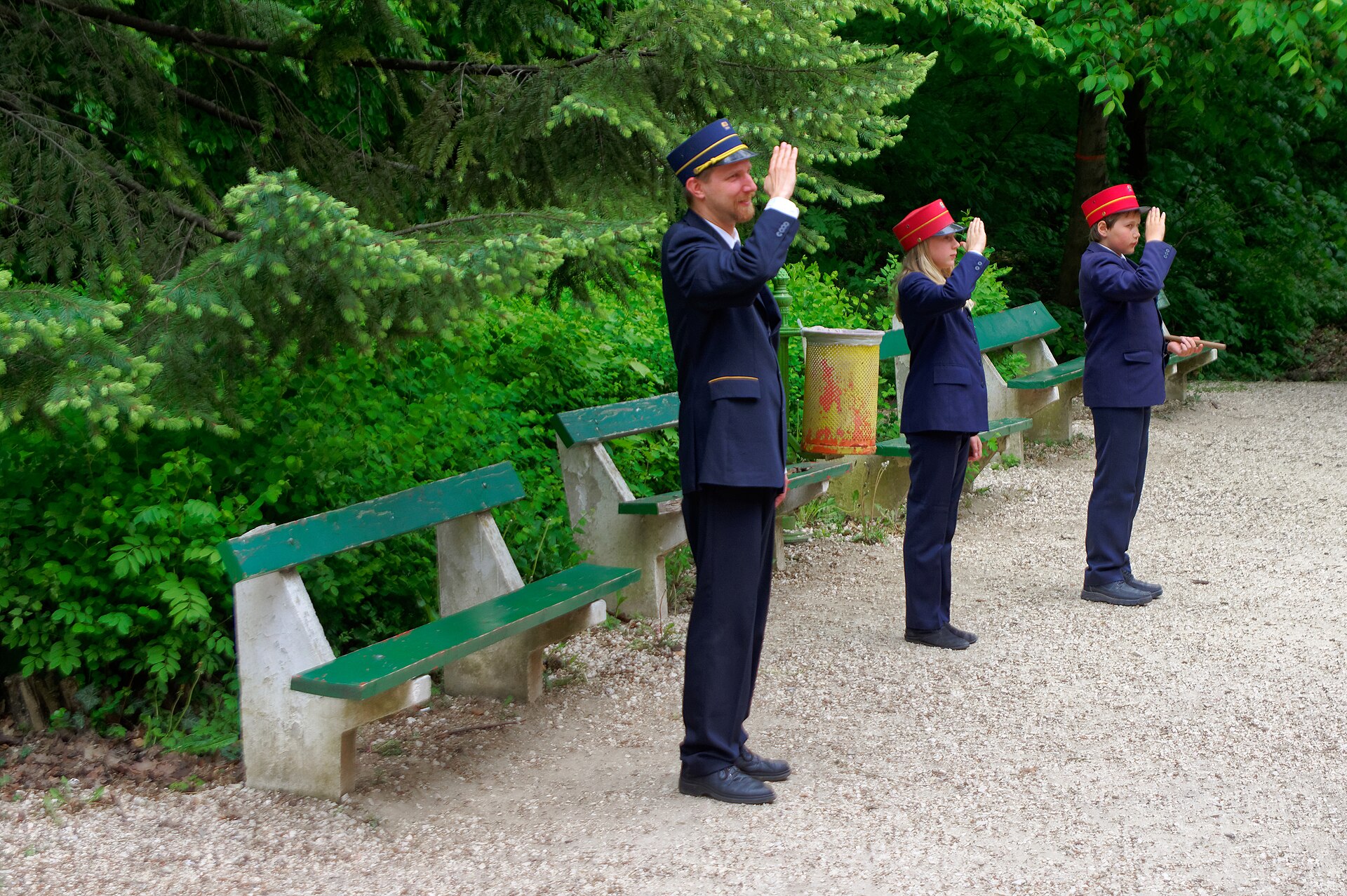
The Children’s Railway (Gyermekvasút) is one of Budapest’s great oddities: a narrow-gauge forest railway, 11.7 km long, from Széchenyi-hegy to Hűvösvölgy, on which the booking clerks and conductors are children aged ten to fourteen. The whole journey takes 40–50 minutes through the woods, with stops including Normafa and János-hegy. In 2026 an adult single cost 1,000 Ft (€2.50) and a child’s 500 Ft (€1.25), payable in cash in forints except at the two end stations, where cards are accepted. Note that from September to April it doesn’t run on Mondays. Check gyermekvasut.hu for the timetable and the days when steam trains run.
The Zugliget chairlift
The Zugligeti Libegő is an open chairlift that carries you over the treetops between Zugliget (Zugligeti út 97, at the end of bus 291) and Hármaskút-tető, a ridge between János-hegy and Normafa. Note that the top station isn’t on the summit of János-hegy itself; it’s a walk from there. In 2026 an adult ticket cost 3,000 Ft (€7.50) one way and 4,000 Ft (€10) return, with children aged 3–14 paying 1,000 Ft (€2.50) one way; buy them from the station machines or the BudapestGO app. In November and December it runs 10:00–15:30, stretching to 10:00–19:00 from May to August, and it closes for maintenance on alternate Mondays and on occasional other days, so check bkv.hu before you go. There’s a buffet at the top station. On a clear autumn day, riding down with the city spread out ahead of you is one of the best things you can do in Budapest.
The classic loop
- Take the Cogwheel Railway from Városmajor to Széchenyi-hegy.
- Walk to the Children’s Railway station and ride to János-hegy (or walk to Normafa first).
- Walk across to the chairlift’s top station at Hármaskút-tető.
- Ride the chairlift down to Zugliget.
- Take bus 291 back to Nyugati.
It takes half a day at an easy pace, longer if you stop for a walk or lunch. Check that the cogwheel, the Children’s Railway and the chairlift are all running on your day before you set off, especially on a Monday or in November.
What it all costs
None of the hills’ railways shares a ticket with the others, so it helps to know what you’ll pay before you set off. These are the operators’ 2026 fares, with euro conversions at 400 Ft to the euro.
| Ticket | 2026 price |
|---|---|
| Single BKK ticket (bus 21/21A, 291) | 500 Ft (€1.25) |
| 24-hour BKK travelcard | 2,750 Ft (€6.90) |
| Children’s Railway, adult single | 1,000 Ft (€2.50) |
| Children’s Railway, child (6–18) single | 500 Ft (€1.25) |
| Children’s Railway, family day ticket | 5,000 Ft (€12.50) |
| Zugliget chairlift, adult one way / return | 3,000 Ft (€7.50) / 4,000 Ft (€10) |
| Pál-völgyi or Szemlő-hegyi Cave, adult | 3,900 Ft (€9.75) |
| Both caves, combined adult ticket | 5,900 Ft (€14.75) |
A day doing the classic loop, with a travelcard, a Children’s Railway single and the chairlift down, comes to well under 10,000 Ft (€25) a head. The family day ticket on the Children’s Railway covers two adults and three children, or one adult and four, and pays for itself quickly. Children under six ride the Children’s Railway free, and under-threes ride the chairlift free. The Budapest Card gets you into Pál-völgyi Cave free once you register at the ticket office; our Budapest Card guide explains whether the card is worth it overall.
Normafa
Normafa is the hills’ great meeting place: a broad, sloping clearing on the edge of the forest with a wide view over the hills and, on clear days, the city beyond. It’s where Budapest goes for a Sunday walk, and the starting point for many of the best trails. In summer, families picnic on the grass; in autumn, it’s one of the best places in the city for the colours.
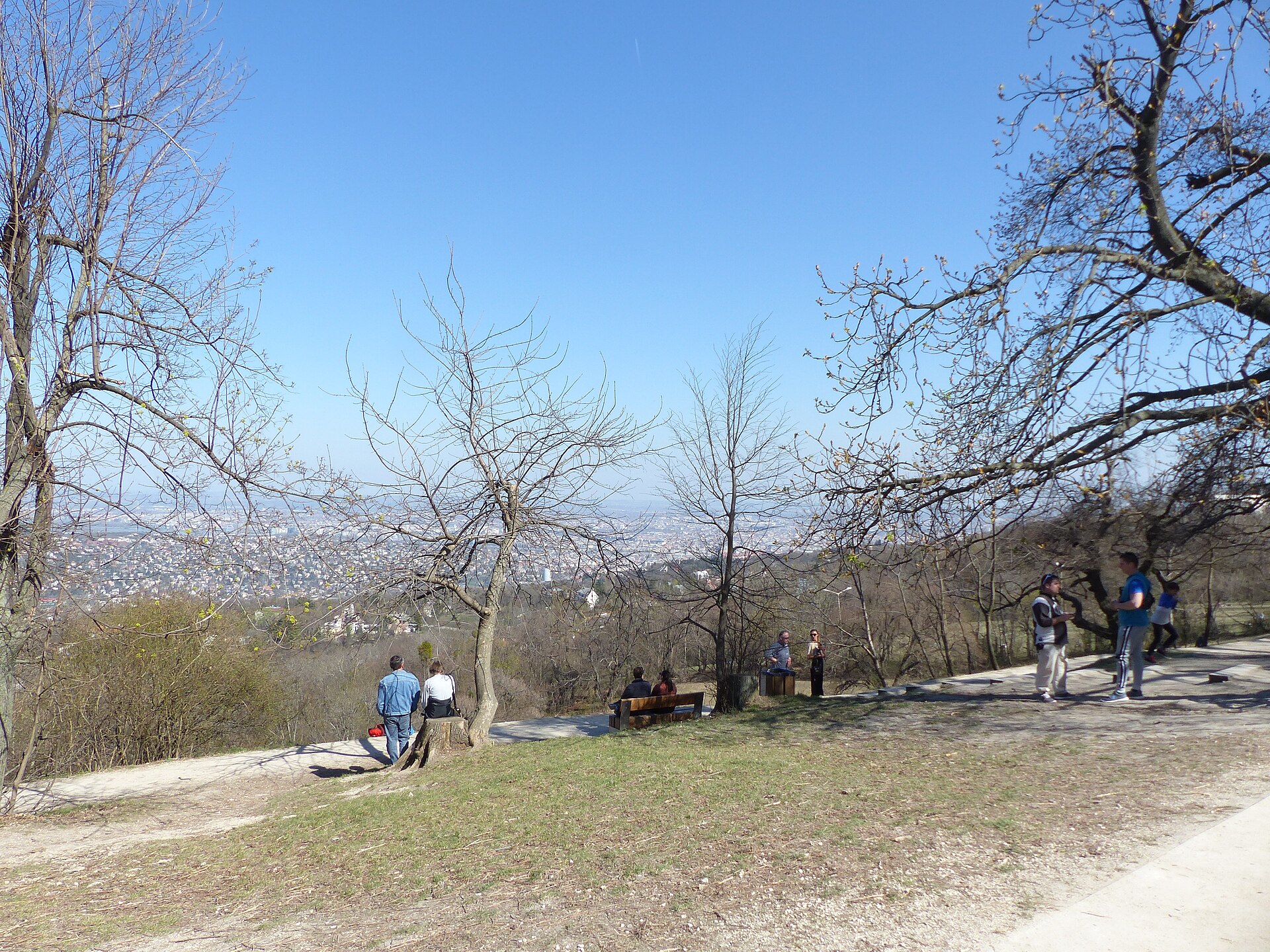
Normafa has long been Budapest’s place for winter sports, with a ski slope and sledging runs that fill up as soon as there’s snow. Their future is uncertain: in June 2026 the government office withdrew the nature-conservation permit for the winter-sports facilities pending a new review. Check the latest news before you bring a sledge.
There are food kiosks near the clearing, but their hours vary with the season and the weather, so bring water and a snack in case.
János-hegy and the Erzsébet Lookout
János-hegy, at 527 m, is the highest point in Budapest. On its summit stands the Erzsébet Lookout (Erzsébet-kilátó), a neo-Romanesque stone tower that opened on 8 September 1910, built to plans by the engineer Pál Kluzinger, which Frigyes Schulek, the architect of the Fisherman’s Bastion, reviewed and then redesigned for the upper levels. When it’s open it’s free to climb, with a spiral staircase of around a hundred steps and a view over the whole city and the hills.
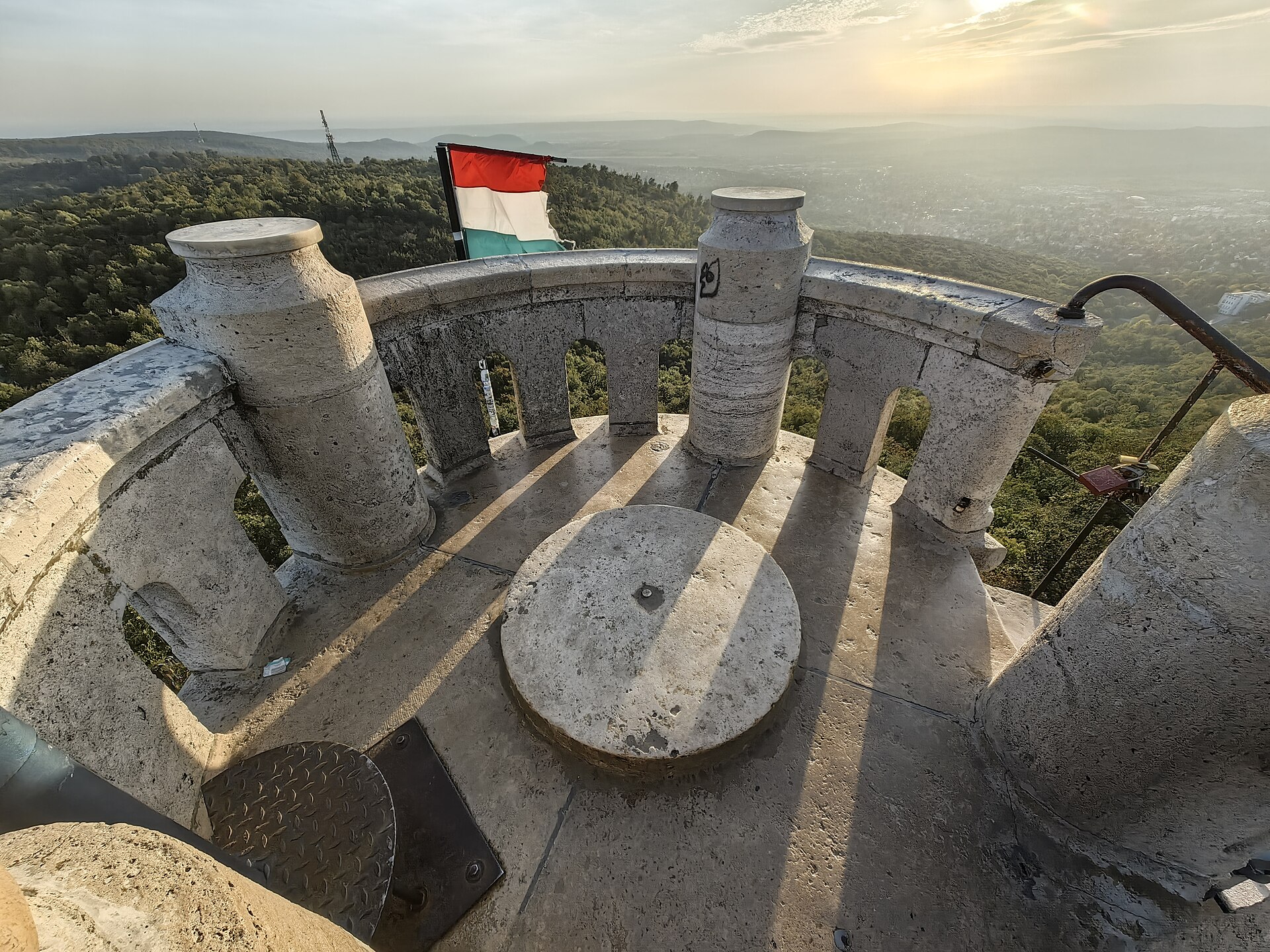
The bad news: the tower is closed for renovation for an extended period; gyermekvasut.hu has the latest. You can still walk up János-hegy, and the Children’s Railway and the chairlift run as normal, but you can’t climb the tower. Until it reopens, the lookout towers on Hárs-hegy, a short ride further along the Children’s Railway, are the alternative the railway itself recommends.
The caves
The Buda Hills sit on limestone riddled with caves, and two of them, both in District II and run by the Duna-Ipoly National Park, can be visited on guided tours. They make an excellent wet-weather plan, and they’re the same temperature all year round.
Pál-völgyi Cave
Pál-völgyi Cave, at Szépvölgyi út 162, was discovered in 1904, and the national park describes it as the longest cave in Hungary. The tour is about an hour and 500 m long, with more than 400 steps and a ladder, at a constant 11 °C, so bring a jumper and wear proper shoes. Tours run on the hour from 10:15 to 16:15, every day except Mondays, apart from public holidays (and closed 1 January and 24–26 and 31 December). They’re in Hungarian, with an audio-guide app in eight languages, and children under five or under 115 cm can’t go. In 2026 tickets cost 3,900 Ft (€9.75), or 5,900 Ft (€14.75) combined with Szemlő-hegyi Cave, and Budapest Card holders go free after registering at the ticket office. Take bus 65 from Kolosy tér.
Szemlő-hegyi Cave
Szemlő-hegyi Cave, at Pusztaszeri út 35, is gentler: known for its mineral formations, it’s accessible to wheelchairs and pushchairs, and sits at 12 °C. Tours run hourly from 10:00 to 16:00, every day except Tuesdays, apart from public holidays (and the same holiday closures), and cost 3,900 Ft (€9.75) in 2026. Take bus 29 from Szentlélek tér. Because the two caves close on different days, you can see one or the other on any day of the week; check dunaipoly.hu for the latest times and prices.
Walking in the hills
The real pleasure of the Buda Hills is simply walking in them. The forest is crossed by a dense network of footpaths, waymarked with painted coloured stripes and symbols on trees, and you can walk for an hour or a whole day. A few ideas:
- Normafa to János-hegy: the classic short walk through the forest to the city’s highest point, linking easily with the chairlift and the Children’s Railway.
- Along the Children’s Railway: walk a stretch between stations and ride the rest, which suits families with children whose legs give out.
- Hárs-hegy: quieter forest walks around the hill’s lookout towers, from the Children’s Railway’s Szépjuhászné or Hárs-hegy stops.
- Hűvösvölgy: the Children’s Railway’s lower terminus, with a meadow and walks into the surrounding woods, and trams back towards the centre.
For routes and distances, use the maps at termeszetjaro.hu or the Pilis Park Forest’s site (parkerdo.hu), which manages the forests. The trails are well used and easy to follow, but it’s worth having a map on your phone, since the paths branch often.
Hármashatár-hegy
To the north, Hármashatár-hegy (“Three Borders Hill”) has open views over the city from its summit. It’s a separate trip from the Normafa side; check the routes before you go.
Eating, drinking and facilities
The hills aren’t a place for a big lunch. There’s a buffet at the chairlift’s top station, kiosks near the Normafa clearing and a handful of cafés and restaurants in the villa districts around the cogwheel stations, but opening hours on the hilltops depend on the season and the weather, and many places shut early in winter. The chairlift’s lower station has catering only at weekends. Pack water and something to eat, especially on a weekday or out of season, and plan a proper meal back in the city. If you want to make a picnic of it, Normafa’s meadows are the obvious spot.
Toilets are few and far between once you’re on the trails, so use the facilities at the stations and cafés when you see them.
Fitting the hills into a trip
If you have three days or more in Budapest, the hills make an ideal half day between the big sights, and a welcome change of pace on day three, when the museums and the cobbles start to tell. A morning in the hills followed by an afternoon at a thermal bath is a very Budapest way to spend a day. Start early, since the chairlift closes by mid-afternoon in winter, and come back down to Széll Kálmán tér or Nyugati in time for lunch.
With only a day or two, the hills are harder to justify; the views from the Fisherman’s Bastion and Gellért Hill are closer and quicker. With a week, you can give the hills a full day, add a cave and a longer walk, and still have time for a trip out of the city. Our three-day and five-day itineraries show where a morning in the hills fits, and if the hills leave you wanting more countryside, the Danube Bend day trip is the natural next step.
The hills through the year
Spring brings wild flowers and fresh green to the forest, and the first warm weekends fill the trails. Summer is when the hills come into their own as an escape from the heat: it’s noticeably cooler up here than in the centre, and the forest shade is welcome. Bring insect repellent and check for ticks after walking in long grass. Autumn, from October to early November, is the best season of all, when the beech and oak woods turn gold and red and the air is clear enough to see for miles. Winter can be lovely when there’s snow, and the hills often keep it longer than the city, but the days are short, the chairlift closes by mid-afternoon, and the Children’s Railway doesn’t run on Mondays. Check that everything you plan to use is running.
For the city’s seasons more broadly, see our guides to Budapest in October and Budapest in winter.
With children
The Buda Hills are one of the best family days out in Budapest. Children love the Children’s Railway, where kids not much older than them punch the tickets, and the chairlift, and the forest walks are short enough for small legs. Szemlő-hegyi Cave suits younger children and pushchairs; Pál-völgyi suits older ones who can manage the steps and the ladder. Our guides to Budapest with kids and family activities in Budapest have more ideas.
Practical tips
- Check before you go. The cogwheel, the chairlift and the Children’s Railway all have maintenance closures, and the Erzsébet Lookout is closed for renovation. Five minutes online saves a wasted trip.
- Wear proper shoes. The trails are rocky and slippery after rain, and the caves need grip.
- Bring a layer. It’s cooler in the hills than in the city, and the caves are 11–12 °C all year.
- Carry some cash. The Children’s Railway takes cash in forints except at its end stations, and some kiosks are cash only.
- Bring water and a snack. Kiosks and buffets keep variable hours.
- Use a map app. Paths branch constantly, and it’s easy to end up on the wrong side of a hill.
Our packing guide covers what to bring for each season.
Are the Buda Hills worth it?
Yes, especially if you’re staying more than a couple of days, travelling with children, or simply need a break from museums and cobbles. The cogwheel, the Children’s Railway and the chairlift make for a memorable half day even if you don’t walk far, and the forest is a revelation to visitors who think of Budapest only as a city of baths and grand boulevards.
The hills have their frustrations at present: the Erzsébet Lookout is shut, Normafa’s slopes are in limbo, and the transport has its maintenance days. But the trails, the views from Normafa and the chairlift, the caves and the Children’s Railway are all there. If you only have a weekend, you might prefer the views from Gellért Hill or the Castle District, which are closer to hand; if you have longer, give the hills a morning. Our hidden gems guide and free things to do have more ideas off the main tourist trail.
Frequently asked questions
How do I get to the Buda Hills?
Take the Cogwheel Railway (line 60) from Városmajor near Széll Kálmán tér up to Széchenyi-hegy, or bus 21 or 21A from Széll Kálmán tér to Normafa. Bus 291 from Nyugati runs to the bottom of the Zugliget chairlift. Check BKK for closures before you go.
What is the highest point in Budapest?
János-hegy, at 527 m. The Erzsébet Lookout on its summit is closed for renovation.
Is the Erzsébet Lookout open?
No. It is closed for renovation for an extended period; gyermekvasut.hu has the latest. The lookouts on Hárs-hegy are the nearest alternative.
How much is the Zugliget chairlift?
In 2026 an adult ticket cost 3,000 Ft one way and 4,000 Ft return, and children aged 3–14 paid 1,000 Ft one way. It runs daily except on alternate Mondays and some maintenance days.
Does the Children’s Railway run in winter?
Yes, but from September to April it doesn’t run on Mondays. Check gyermekvasut.hu for the timetable.
Can you go sledging or skiing at Normafa?
Normafa has long been Budapest’s main sledging and ski spot, but in June 2026 the permit for its winter-sports facilities was withdrawn pending a review. Check the latest news before you go.
Which Buda Hills cave should I visit?
Pál-völgyi Cave suits older children and adults who can manage 400 steps and a ladder; Szemlő-hegyi is gentler and accessible to wheelchairs and pushchairs. They close on different days, Monday and Tuesday respectively.
Photo credits
The Cogwheel Railway in autumn (featured image): Budapest, fogaskerekű vasút, 2 by Christo, CC BY-SA 4.0, via Wikimedia Commons.
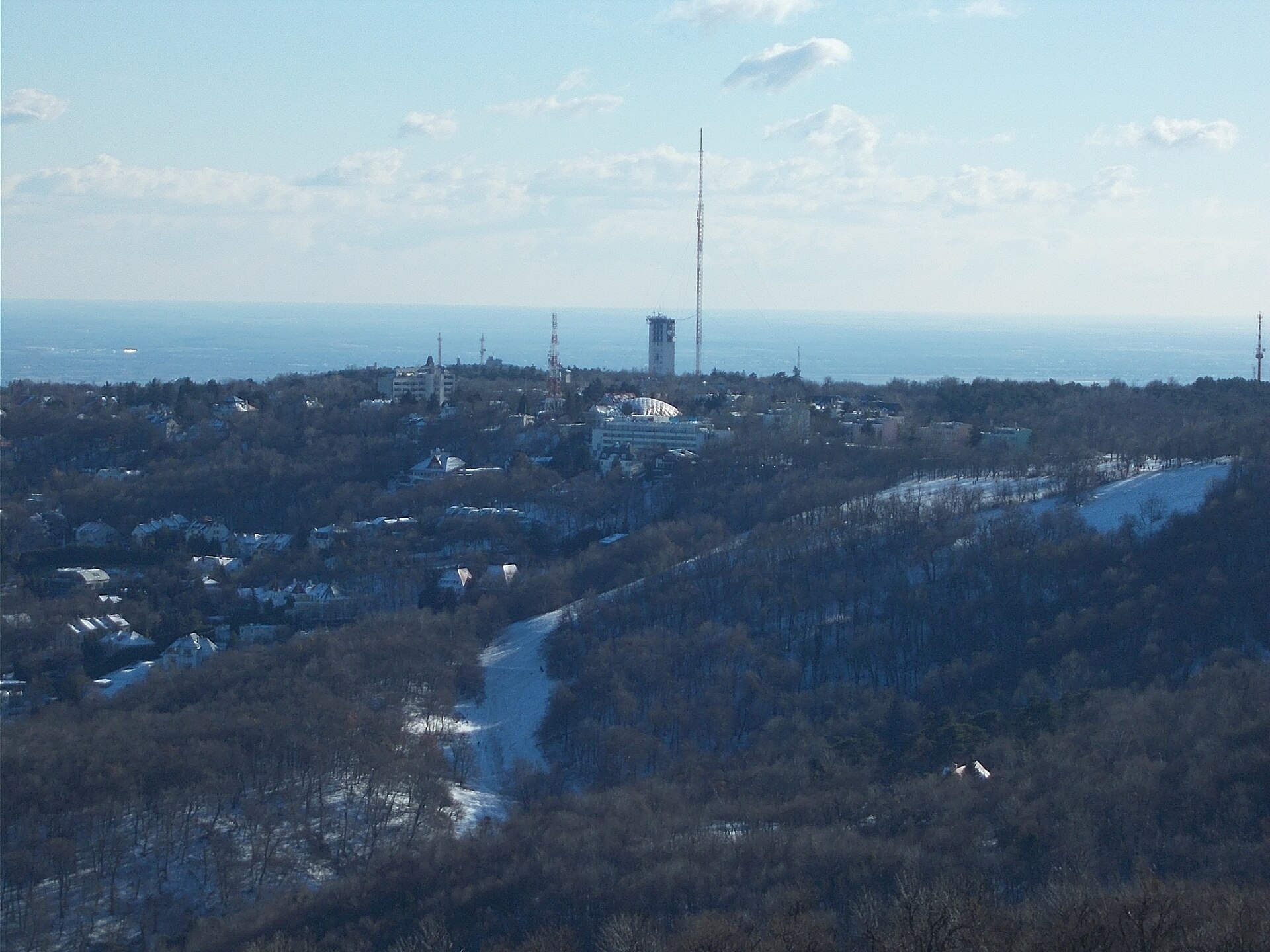
The view from the Erzsébet Lookout towards the TV tower: Ausblick vom Aussichtsturm, Richtung Fernsehturm, 2022 Jánoshegy by Globetrotter19, CC BY-SA 3.0, via Wikimedia Commons.
Young staff on the Children’s Railway: 20190503 Gyermekvasút Budapest 1341 2253 DxO by Jakub Hałun, CC BY-SA 4.0, via Wikimedia Commons.
Normafa: Normafa (10) by Elekes Andor, CC BY-SA 4.0, via Wikimedia Commons.
The top of the Erzsébet Lookout: Budapest, Erzsébet-kilátó, 16 by Random photos 1989, CC BY-SA 4.0, via Wikimedia Commons.