District V (Belváros-Lipótváros): Budapest’s Polished Centre
District V beyond the headline sights: the old Inner City and grand Leopold Town, Váci utca honestly assessed, Szabadság tér and Lechner's Postal Savings Bank, where to eat, and whether to stay here.
In this guide
- District V at a glance
- Two towns in one district
- Belváros: the Inner City
- Váci utca
- Vörösmarty tér
- The Danube promenade
- Ferenciek tere and the Inner City Parish Church
- Lipótváros: Leopold Town
- Kossuth Lajos tér and the Parliament
- The Shoes on the Danube
- Szabadság tér
- Hold utca and the Postal Savings Bank
- St Stephen’s Basilica and Szent István tér
- Gresham Palace and the Chain Bridge
- Eating and drinking in District V
- Getting around
- Living and working in District V
- Should you stay in District V?
- A walk through District V
- Is District V worth it?
- Frequently asked questions
- Photo credits
This article contains advertising. Our booking links are routed through a partner that adds commission tracking automatically, so if you book through one we earn a commission from the provider, at no extra cost to you. It never affects what we recommend. Affiliate disclosure
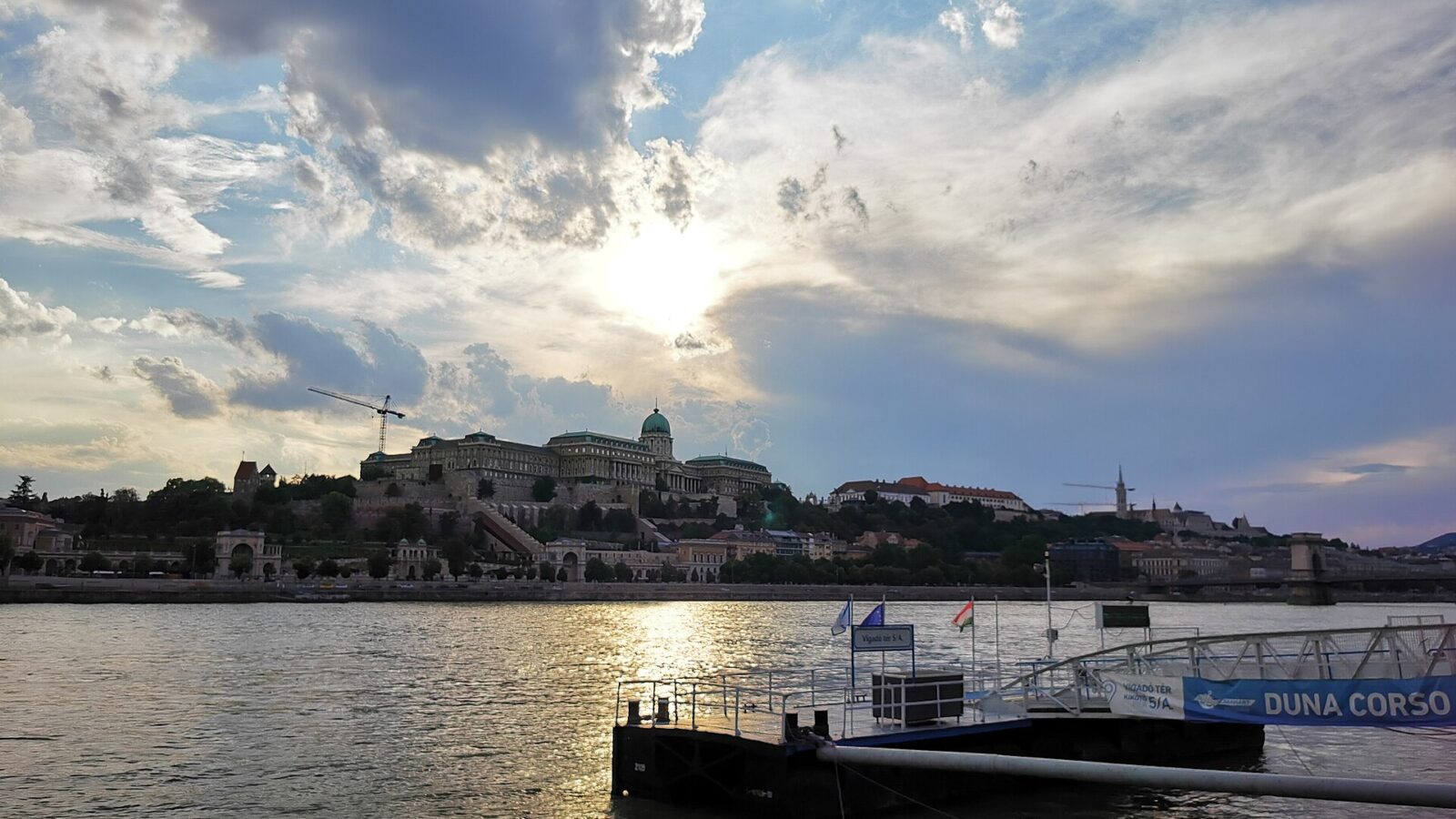
Stand on the Danube promenade by the Vigadó on a clear evening and the whole postcard is laid out across the river: the Royal Palace, the Fisherman’s Bastion, Matthias Church, and the Chain Bridge lit up between them. Turn round and you’re in one of the most expensive, most visited and most buttoned-up corners of the city, all banks, ministries, five-star hotels and window displays. That’s District 5 Budapest, Belváros-Lipótváros: the polished centre of Pest, where almost every visitor spends time and almost nobody spends very much time thinking about it as a place.
This guide does. It covers District V’s two halves, the old Inner City and the grand nineteenth-century Leopold Town; what each is like to walk around; the squares, streets and buildings worth seeking out between the famous sights; where to eat and drink without paying the tourist premium; and what it’s like to stay here. Opening hours and details were checked in October and November 2026; confirm them with the operators before you go. The big sights each have their own page, linked as we go, and our guide to Budapest’s districts puts District V alongside the others.
District V at a glance
| What | District V |
|---|---|
| Official name | Belváros-Lipótváros (Inner City–Leopold Town) |
| Area | 2.59 km² |
| Population | 26,284 (2016) |
| The two halves | Belváros, the old walled town of Pest, to the south; Lipótváros, the nineteenth-century business and government quarter, to the north |
| Main sights | The Parliament, St Stephen’s Basilica, the Shoes on the Danube, Vörösmarty tér, the Danube promenade, the Pest end of the Chain Bridge |
| Transport | M1, M2 and M3 at Deák Ferenc tér; M2 at Kossuth Lajos tér; tram 2 along the river |
| Best for | First-time visitors, sightseeing on foot, river views, grand architecture |
| Not for | Budget eating on the main streets, local neighbourhood life, nightlife |
Two towns in one district
District V is a union of two quite different places, and knowing which one you’re in helps make sense of it.
Belváros, the Inner City, is the oldest part of Pest: the medieval town that grew up on the east bank of the Danube opposite Buda, inside a town wall whose line the Small Boulevard (Kiskörút) still roughly follows. Its streets are narrower and less regular than the rest of Pest, and it has the district’s oldest church, its busiest shopping street and some of its busiest squares.
Lipótváros, Leopold Town, north of the old town, was laid out in the late eighteenth and nineteenth centuries as Pest boomed into a capital. Its streets are wide and straight, its buildings are huge, and it was built to impress: the Parliament, the Basilica, the banks, the former Stock Exchange and the ministries are all here. If Belváros is Pest’s old town, Lipótváros is its showpiece.
Together they make up one of the smallest districts in Budapest by area, and one of the least populated relative to its importance: about 26,000 people lived here in 2016, while many tens of thousands more come in every day to work, shop and sightsee.
Belváros: the Inner City
Váci utca
Váci utca is the pedestrian street that runs south from Vörösmarty tér, and the place every visitor walks along sooner or later. The northern half, between Vörösmarty tér and Ferenciek tere, is the tourist strip: international chain stores, souvenir shops, currency exchanges and restaurants with photo menus and staff touting for business on the pavement. It’s lively and handsome if you look above the shopfronts, but it isn’t where to eat or change money.
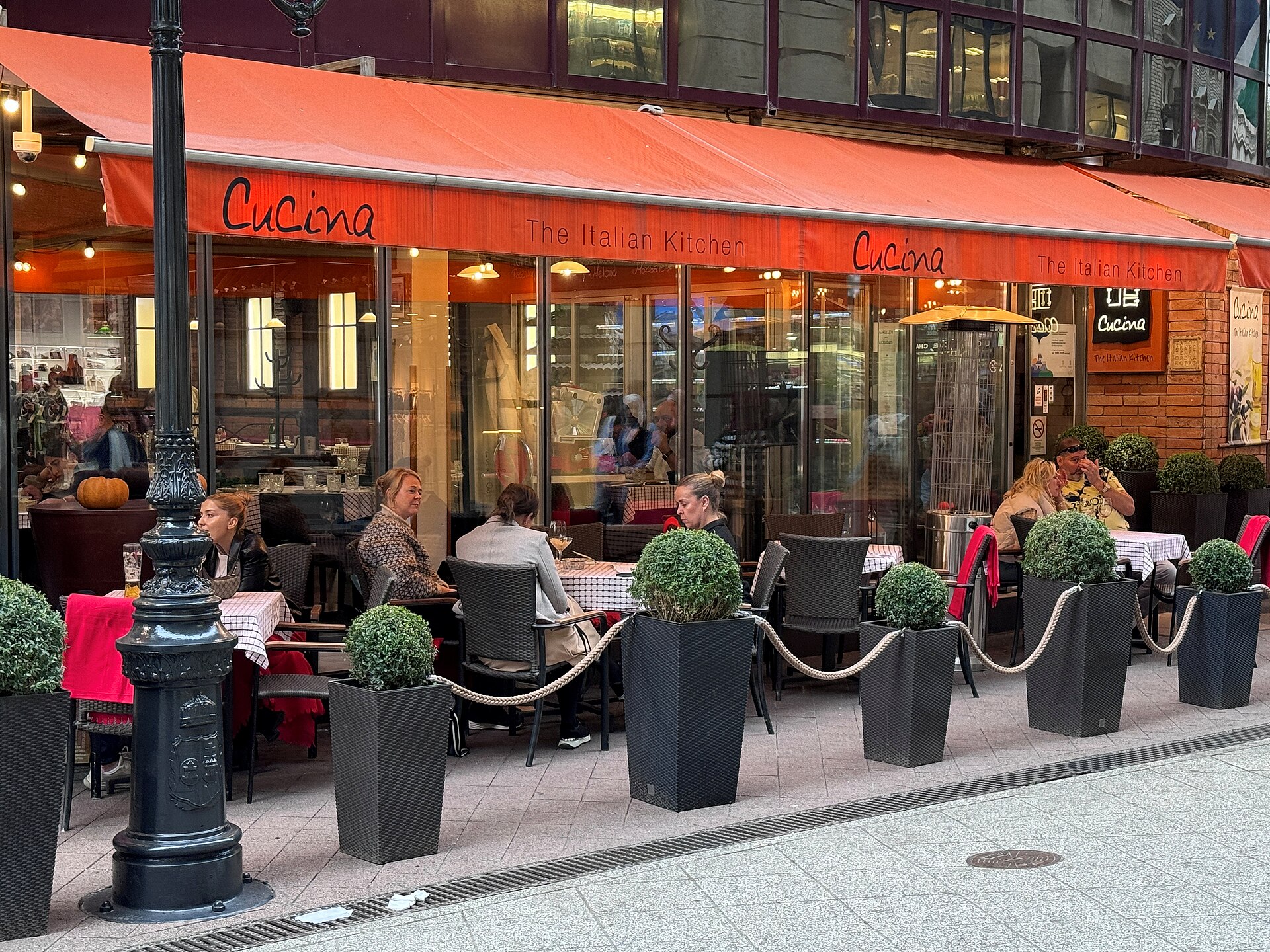
South of Ferenciek tere, the street changes character: quieter, with more cafés, smaller shops and fewer tourists, and it ends close to the Central Market Hall, which stands just over the district line in District IX at Fővám tér. Walking the whole street from Vörösmarty tér to the market hall is a good introduction to the Inner City. Our guides to shopping in Budapest and the Central Market Hall pick up from there.
Vörösmarty tér
Vörösmarty tér, at the northern end of Váci utca, is the Inner City’s main square, with a statue of the poet Mihály Vörösmarty in the middle and the famous Gerbeaud café on one side. Gerbeaud’s story goes back to 1858, when Henrik Kugler opened a confectioner’s on what is now József nádor tér; it moved to Vörösmarty tér in 1870. It’s touristy and expensive these days, but the interior and the cakes still draw a crowd. The square is also the terminus of the M1, the Millennium Underground, the oldest line of the metro.
From mid-November to the end of the year the square hosts one of the city’s two big Christmas markets. In 2026 it opened on 13 November, the same day as the Advent market in front of the Basilica, which runs until 1 January 2027. Our Christmas markets guide compares them.
The Danube promenade
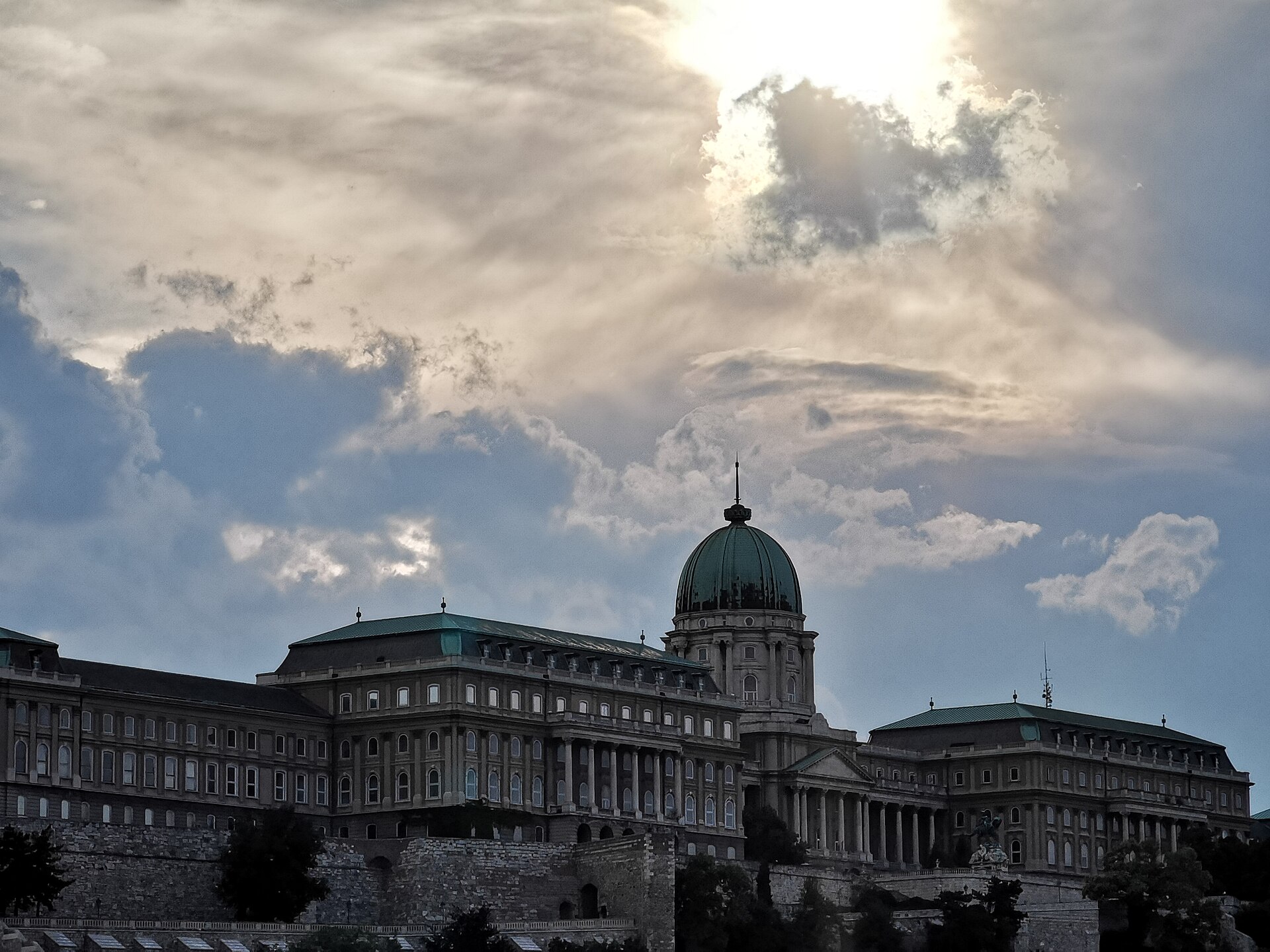
The Duna-korzó, the riverside promenade between the Elisabeth Bridge and the Chain Bridge, is District V at its most romantic. In the nineteenth century this was where Pest society came to see and be seen; today it’s lined with hotels and restaurant terraces, and the view across to Castle Hill is one of the best in the city. The Pesti Vigadó, the ornate concert hall that opened in 1865 at Vigadó tér 2, stands about halfway along, and Vigadó tér is also where seasonal excursion boats leave for Szentendre and the Danube Bend. Come at sunset, or after dark when the castle and the bridges are lit.
Tram 2 runs along the embankment below the promenade, between Jászai Mari tér in the north and Közvágóhíd in the south, and it’s one of the cheapest and best sightseeing rides in Budapest, passing the Parliament, the Chain Bridge and Castle Hill on an ordinary ticket. See our Budapest trams guide, and for the view from the water, Danube boat tours.
Ferenciek tere and the Inner City Parish Church
Ferenciek tere, where Váci utca meets the big road to the Elisabeth Bridge, is the Inner City’s traffic hub, with the Franciscan church and the twin Klotild Palaces framing the approach to the bridge. A few steps away, at the Pest end of the Elisabeth Bridge, the Inner City Parish Church stands above the remains of the Roman fort of Contra-Aquincum; check the parish’s own site for visiting times. The streets between here and the Small Boulevard are the quietest part of the Inner City, with university buildings, bookshops and small cafés.
Lipótváros: Leopold Town
Kossuth Lajos tér and the Parliament
The Hungarian Parliament dominates the north of the district and the riverfront. Designed by Imre Steindl, it was begun in 1885, opened in 1902 and completed in 1904; it’s 268 metres long, has 691 rooms, and its dome rises 96 metres. The Holy Crown of Hungary has been displayed in the central hall since 2000. The building can be visited only on a guided tour of about 45 minutes, with a guide or an audioguide. From November to March the visitor centre is open from 08:00 to 16:00 (08:00–18:00 from April to October), but visits are cancelled or restricted for official events, so check the visitor centre’s ticket page for prices and availability before you go. Our Hungarian Parliament guide has the full picture.
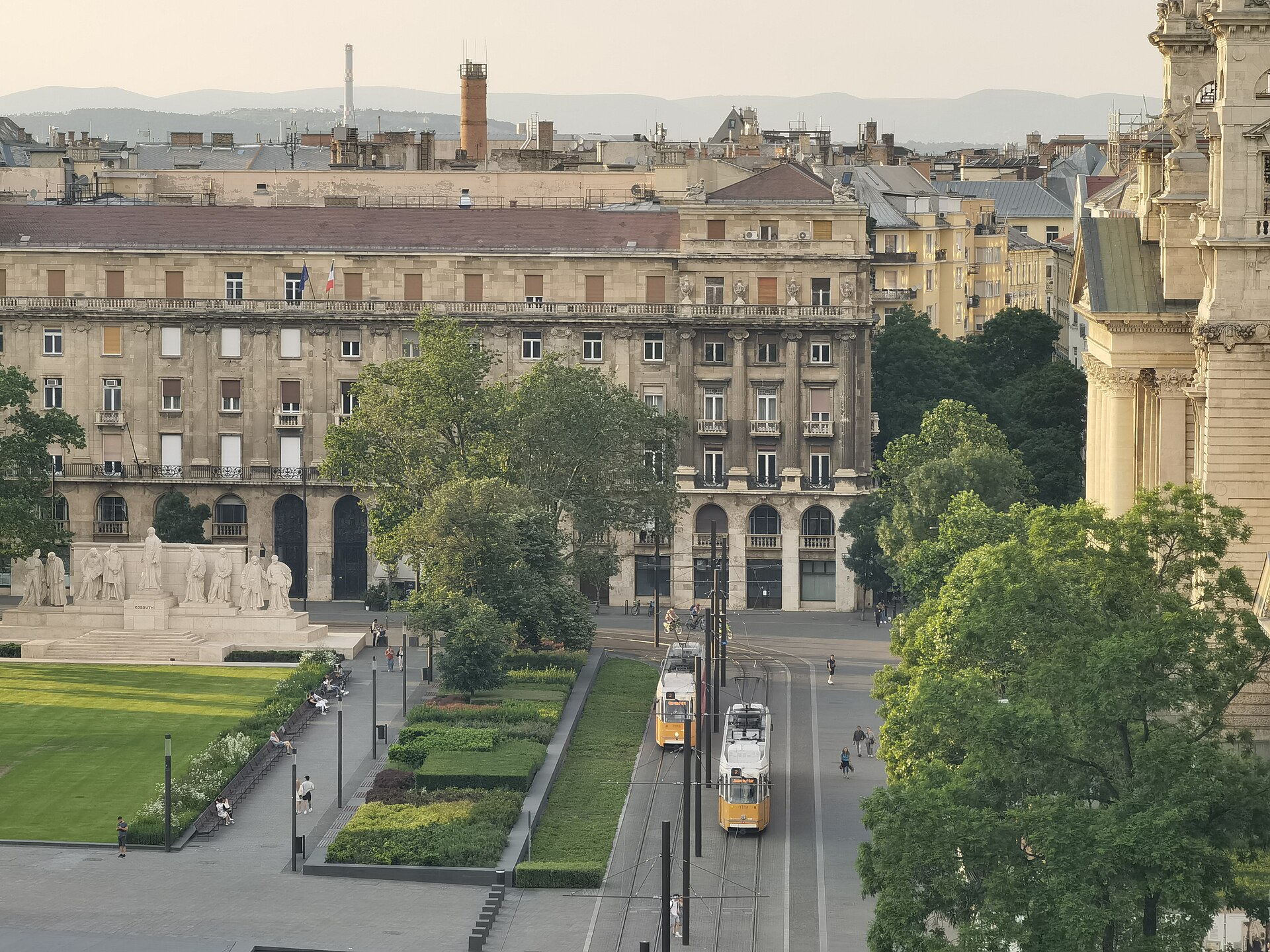
Kossuth Lajos tér, the big square in front of it, has been the stage for much of Hungary’s modern history. On 25 October 1956 civilian demonstrators were fired on here, and on 23 October 1989 the Hungarian Republic was proclaimed from the Parliament balcony facing the square. Today it’s a broad, rather austere space of lawns and monuments, with the M2 metro station underneath.
The Shoes on the Danube
South of the Parliament, on the embankment, sixty pairs of cast-iron shoes stand at the water’s edge. The Shoes on the Danube Bank commemorate the Jews and others shot into the river by Arrow Cross militiamen in 1944–45, who were made to take off their shoes first. It’s one of the most affecting memorials in the city, and it’s accessible at all times. See our guide to the Shoes on the Danube.
Szabadság tér
Szabadság tér (Liberty Square), a few blocks inland, is the grandest square in Lipótváros and one of the most politically loaded places in the city. It’s a large, leafy rectangle surrounded by banks and offices, with a playground, cafés and a fountain in the middle. At one end stands the Soviet war memorial, one of the few still standing in central Budapest; at the other, the much-debated memorial to the victims of the German occupation, with a counter-memorial of photographs, letters and objects left by protesters in front of it. Our communist Budapest guide explains the memorials’ history.
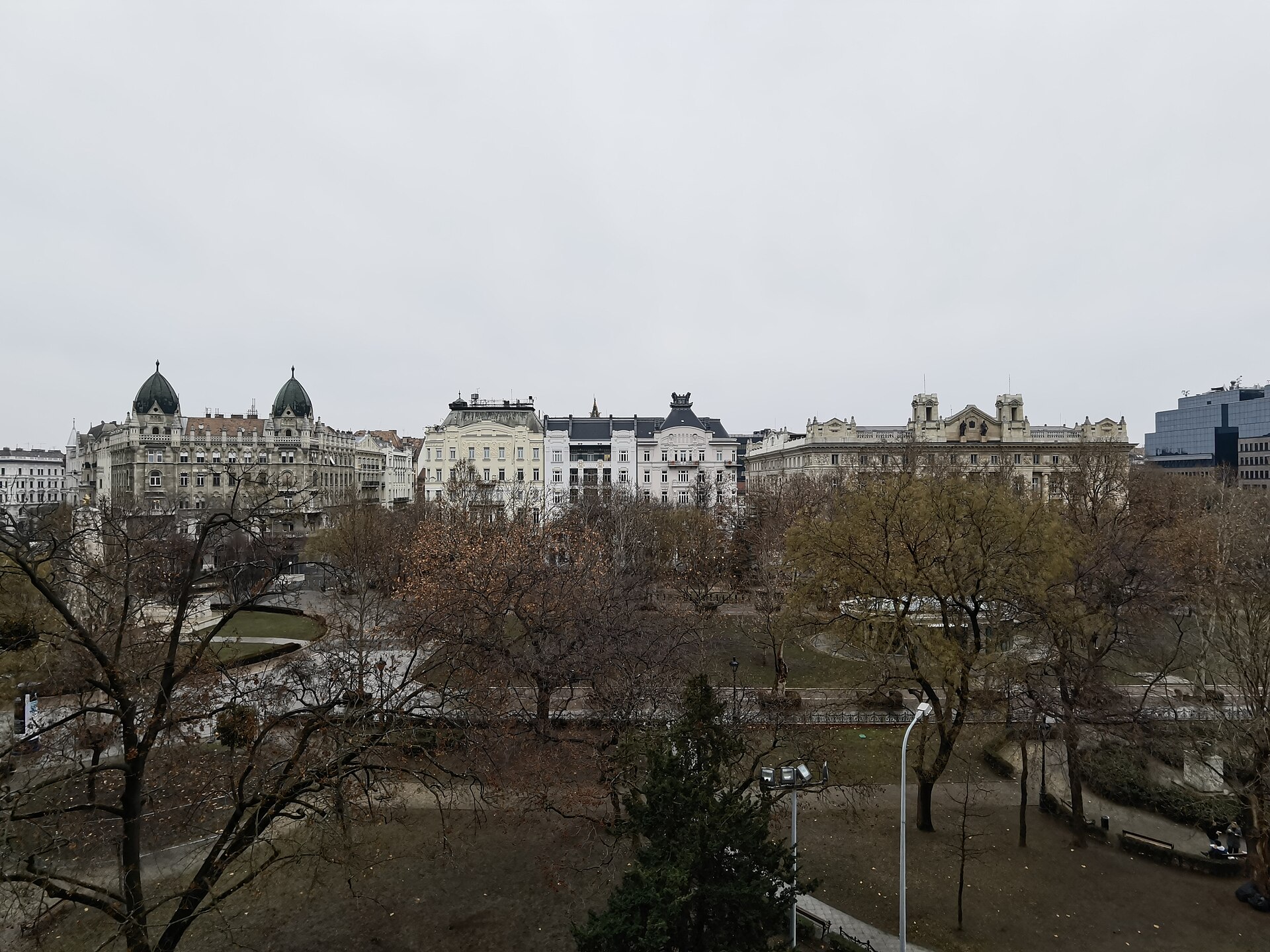
On the square’s western side stands the vast former Stock Exchange (Tőzsdepalota), designed by Ignác Alpár. It housed the exchange until the Second World War and was the headquarters of Hungarian Television from 1955 to 2009, but it has stood empty since then; in February 2026 its reconstruction was reported to be about to start, a job expected to take three to four years. The Hungarian National Bank, also by Alpár, faces it across the square.
In 2026 Szabadság tér hosted the Downtown Beer Festival, which ran from 1 to 6 September with free entry.
Hold utca and the Postal Savings Bank
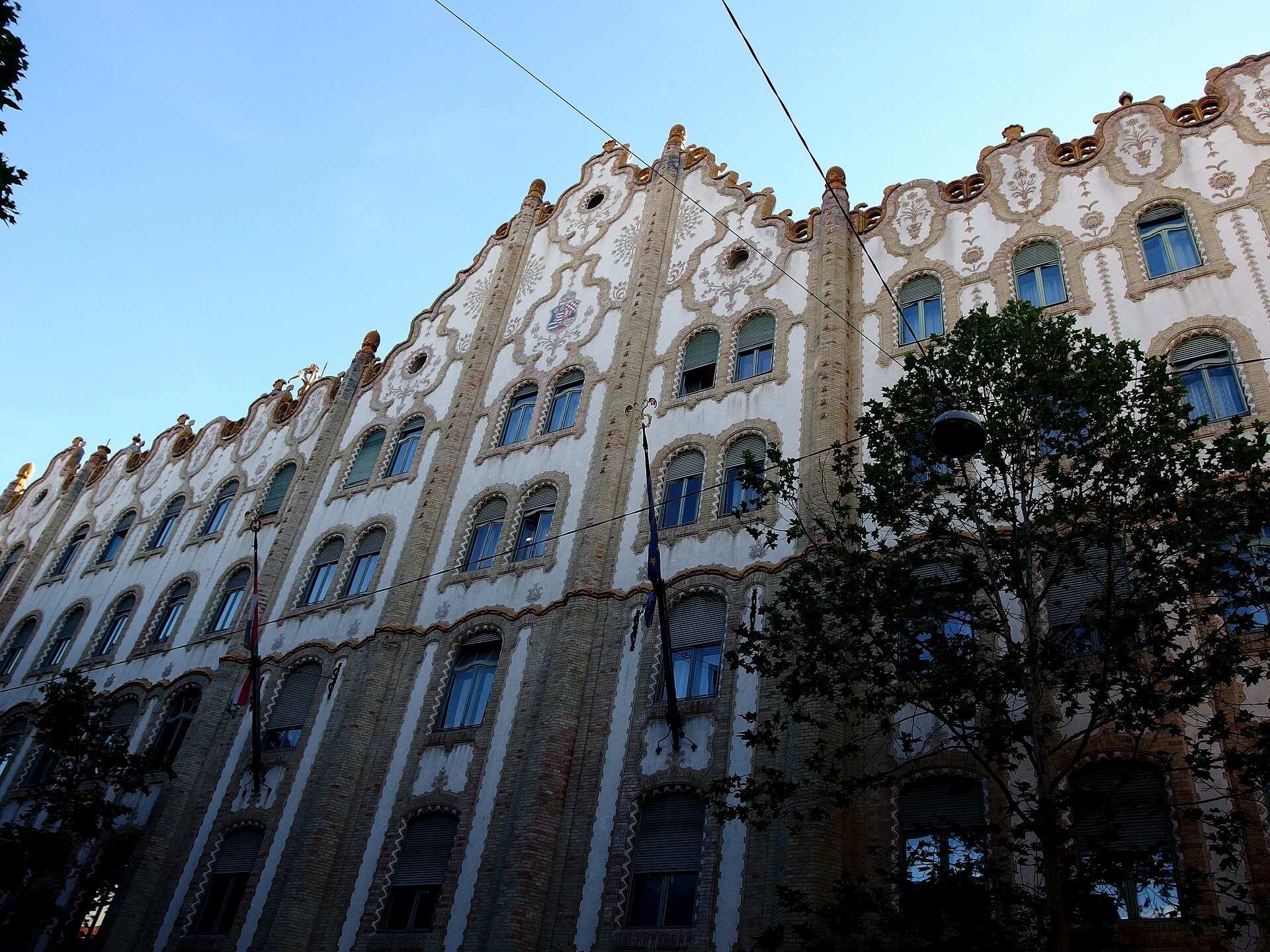
Just east of Szabadság tér, on Hold utca, stands one of the great buildings of Hungarian Art Nouveau: Ödön Lechner’s former Postal Savings Bank, with a roof of glazed Zsolnay tiles in patterns drawn from Hungarian folk art. It’s still in use as offices, so admire it from the street. A few doors along, at Hold utca 13, the former district market hall now houses the Light Art Museum, whose current exhibition runs from October 2026 to the end of February 2027, open daily from 10:00. It’s no longer a food market, whatever older guides say. Our Art Nouveau guide has more buildings like Lechner’s.
St Stephen’s Basilica and Szent István tér
St Stephen’s Basilica, at 96 metres, shares its height with the Parliament dome. Construction began in 1851 under József Hild, the dome collapsed in 1868, Miklós Ybl took over and the church was finally dedicated in 1905. All sightseeing visitors need a ticket, bought at the office beside the basilica or online. The church is open for sightseeing Monday to Saturday from 09:00 to 17:45 and on Sunday from 13:00 to 17:45, and the panorama terrace, 65 metres up, by lift or 304 steps, is open daily from 09:00 to 19:00. Check bazilikabudapest.hu for current prices. The square in front, Szent István tér, is lined with restaurant terraces, and in winter it holds the Advent market. Our St Stephen’s Basilica guide has the details.
Gresham Palace and the Chain Bridge
At the Pest end of the Chain Bridge, the Art Nouveau Gresham Palace is now the Four Seasons hotel, which describes itself as the only Forbes Five-Star hotel in Hungary. Its lobby bar is open to non-residents, and it’s worth a look for the interiors alone. The Chain Bridge itself, the first permanent bridge between Buda and Pest, opened to the public on 20 November 1849, guarded by its stone lions; our Chain Bridge guide has the story, and the bridges guide covers the rest.
Eating and drinking in District V
The district’s restaurants range from the best in the city to some of the worst value, and the difference is often a single street. A few rules of thumb:
- Avoid the obvious corners. Restaurants on the northern half of Váci utca, on Vörösmarty tér and on the busiest stretches of the promenade charge for the location. Look at the prices before you sit down, and be wary of anywhere with staff calling you in.
- Go a street back. The side streets of Lipótváros, around Október 6. utca, Zrínyi utca and Hold utca, and the quieter southern half of the Inner City have better-value restaurants, cafés and lunch places used by the people who work here.
- Lunch menus. On weekdays many restaurants aimed at office workers offer a set lunch menu, good-value eating in the district.
- For a splurge, this is the place. Several of the city’s top restaurants are in or near District V; our fine dining guide lists them.
For coffee, Gerbeaud on Vörösmarty tér is the famous name; for less fuss and lower prices, the coffee house guide has alternatives. For a drink with a view, several hotels along the river and around the Basilica have rooftop bars; see our rooftop bars guide. For a big night out, cross the Small Boulevard into District VII, a few minutes’ walk away.
Getting around
District V is the hub of Budapest’s public transport. Deák Ferenc tér, on the district’s eastern edge, is the only station where all three of the older metro lines meet: the M1 under Andrássy út, the M2 between Buda and the east, and the M3 north–south. The M2 also stops at Kossuth Lajos tér for the Parliament, and the M1 starts at Vörösmarty tér. Tram 2 runs along the river, and trams 47 and 49 run along the Small Boulevard on the district’s southern edge. But for the most part you’ll walk: you can cross the district from the Parliament to the Central Market Hall in about half an hour. Our guides to the metro and public transport explain the tickets.
Living and working in District V
For all its grandeur, District V can feel oddly empty of everyday life. The ministries, banks, law firms and embassies fill Lipótváros by day and empty it in the evening, and many apartments in the Inner City are offices, hotels or holiday lets. The residents who remain tend to be older, well-off and long-established, and they live surrounded by the city’s most expensive shops and restaurants. The result is a district that’s busy, polished and safe, but with less of the neighbourhood feel of Districts VI, VII or IX: few corner shops, few cheap bars and fewer people who actually live there than you’d expect.
That changes a little at the edges. The streets of Lipótváros north towards the Szent István körút are more residential, and Újlipótváros, across the boulevard in District XIII, is one of the city’s most pleasant places to live. For contrast, the Castle District across the river is another small, historic district that empties out in the evening, in its own way.
Should you stay in District V?
For a first visit, a short break or anyone who wants to walk everywhere, District V is hard to beat. The Parliament, the Basilica, the river and the bridges are all on your doorstep, the transport links are among the best in the city, and the streets are safe and well lit at night. It’s also where many of Budapest’s grand and luxury hotels are, including several in restored palaces.
The downsides are price and atmosphere. Rooms and meals cost more than elsewhere, and the district can feel more like a showroom than a neighbourhood. If you want a livelier base, District VI or VII is a few minutes’ walk away; if you want quieter and cheaper, look at District VIII or IX. Our guide to which district to book compares them, and luxury hotels in Budapest and where to stay have specific recommendations.
A walk through District V
- Start at the Central Market Hall at Fővám tér, just over the district line, and walk north along the quieter southern half of Váci utca.
- Continue through Ferenciek tere and along the busy northern half to Vörösmarty tér.
- Head down to the Duna-korzó and walk north along the river past the Vigadó to the Chain Bridge and Gresham Palace.
- Cut inland to Szent István tér and St Stephen’s Basilica.
- Walk on to Szabadság tér and Hold utca for the memorials, the old Stock Exchange and Lechner’s Postal Savings Bank.
- Finish at Kossuth Lajos tér and the Parliament, then walk down to the Shoes on the Danube on the embankment.
Allow two to three hours with stops, more if you go into the Basilica or the Parliament. Time it to reach the river at sunset; our sunset guide has the best spots.
Is District V worth it?
You can’t really visit Budapest without it: the Parliament, the Basilica, the Shoes on the Danube, the promenade and the view of Castle Hill are among the essential sights of the city. The trick is to see it well. Walk it, look up, go a street back from the main drags to eat, and come back at night for the river. Treat Váci utca’s northern half as something to walk through rather than linger on, and don’t change money or buy dinner on the busiest corners.
And once you’ve seen it, cross the boulevard. District V is Budapest’s front room, impressive, polished and slightly formal, and the city’s character really comes out in the districts around it.
Frequently asked questions
What is District 5 in Budapest?
District V, Belváros-Lipótváros, is the historic centre of Pest. It combines Belváros, the old Inner City, with Lipótváros, the nineteenth-century quarter that holds the Parliament, St Stephen’s Basilica, the banks and the ministries.
Is District 5 a good place to stay in Budapest?
It’s the most central and one of the safest places to stay, ideal for a first visit, but rooms and meals cost more than elsewhere and the area can feel less like a neighbourhood. District VI or VII is livelier, and District VIII or IX cheaper.
What are the main sights in District 5?
The Hungarian Parliament, St Stephen’s Basilica, the Shoes on the Danube, the Danube promenade, Vörösmarty tér, Szabadság tér, Lechner’s Postal Savings Bank and the Pest end of the Chain Bridge.
Is Váci utca worth visiting?
It’s worth walking, especially the quieter southern half towards the Central Market Hall, but the northern half is a tourist strip of chain stores and overpriced restaurants. Don’t eat or change money there.
Can you visit the Parliament in Budapest?
Yes, on a guided tour of about 45 minutes. From November to March the visitor centre is open from 08:00 to 16:00, but visits are cancelled for official events, so check the visitor centre’s ticket page for prices and availability.
Is the Central Market Hall in District 5?
No. It’s at Fővám tér, just over the line in District IX, at the southern end of Váci utca.
What is the difference between Belváros and Lipótváros?
Belváros is the old medieval town of Pest, with narrower, less regular streets; Lipótváros, to the north, was laid out in the eighteenth and nineteenth centuries and has the wide streets and grand public buildings.
Photo credits
The Duna-korzó and Buda Castle (featured image): Budapest, Duna Korzó, kilátás a Budai Várra, 2 by Christo, CC0, via Wikimedia Commons.
The Royal Palace from the Duna-korzó: Budapest, Duna Korzó, kilátás a Budai Várra by Christo, CC0, via Wikimedia Commons.
Terraces on Váci utca: Budapest, house 20 Váci utca (Restaurant Cucina) by Dguendel, CC BY 4.0, via Wikimedia Commons.
Kossuth Lajos tér from above: Budapest, Kossuth Lajos tér, 9 by Random photos 1989, CC BY-SA 4.0, via Wikimedia Commons.
Szabadság tér: Budapest, Szabadság tér, 2 by Random photos 1989, CC BY-SA 4.0, via Wikimedia Commons.
The Postal Savings Bank: 20130613 Budapest 106 by Mark Ahsmann, CC BY-SA 3.0, via Wikimedia Commons.