Budapest in December: Christmas Markets, Cold and Crowds
A planner for Budapest in December: the weather in numbers, a week-by-week calendar for 2026, what's open and shut over Christmas, what it costs, and the best week to go.
In this guide
- December at a glance
- The weather, honestly
- December 2026, week by week
- Late November: the markets open
- 1–6 December: the quiet start
- 7–13 December: the sweet spot
- 14–20 December: peak market season
- 21–27 December: Christmas
- 28–30 December: between the holidays
- 31 December: New Year’s Eve
- What’s open over Christmas and New Year
- What December costs
- Beyond the markets: what else to do in December
- How Hungarians celebrate Christmas
- What to pack for December
- Is Budapest worth visiting in December?
- Practical tips
- Frequently asked questions
- Photo credits
This article contains advertising. Our booking links are routed through a partner that adds commission tracking automatically, so if you book through one we earn a commission from the provider, at no extra cost to you. It never affects what we recommend. Affiliate disclosure
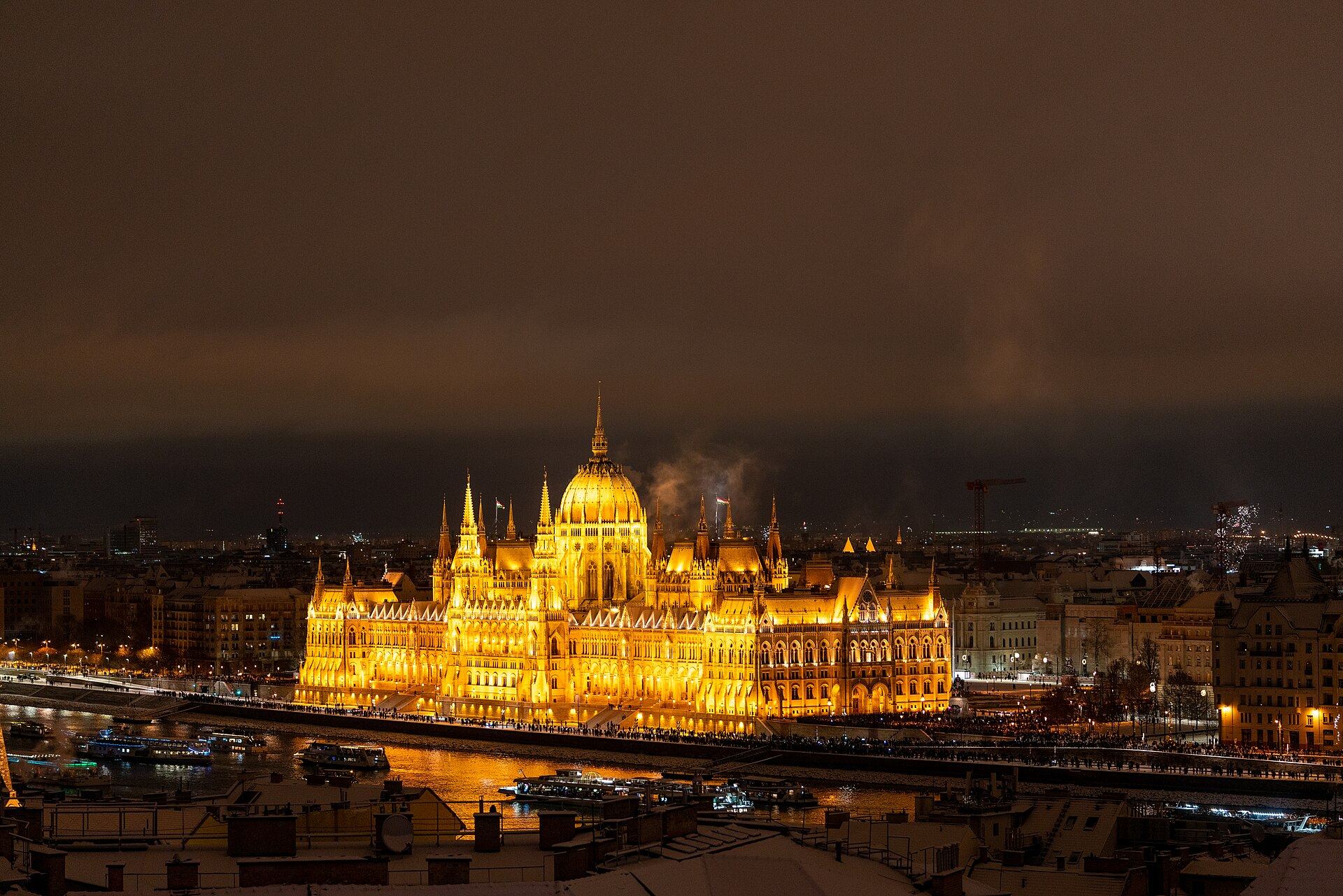
By four o’clock on a December afternoon the light has gone from the Danube, the Parliament is glowing gold across the water, and the smell of mulled wine and chimney cake is drifting across Vörösmarty tér. Budapest in December is short days, sharp cold and a city that makes up for both: markets and lights, steaming thermal pools, concerts in candlelit churches, and a New Year’s Eve that ranks among the wildest street parties in Europe. It also has one day, 24 December, when the whole city quietly shuts its doors and goes home, which catches out visitors every year.
This is a planner for the month: the weather in numbers, a week-by-week calendar for December 2026, what’s open and shut over Christmas, what things cost, what to pack, and an honest verdict. Prices and opening details were checked in September 2026; treat them as the right order of magnitude, and check the 2026 holiday timetables, which are usually published in mid-December. The markets themselves (which ones, when, what to eat and buy) have their own page: the Budapest Christmas markets guide.
December at a glance
| What | December in Budapest |
|---|---|
| Average high / low | 3 °C / −3 °C |
| Rain | About 40 mm, falling on around 7 days |
| Sunshine | About 2 hours a day, the least of the year |
| Daylight | About 8½ hours; sunset just before 4pm |
| Crowds | Busy at weekends and around the markets; quieter midweek; huge at New Year |
| Hotel prices | Rising through the month; the highest of the year over New Year |
| Key dates in 2026 | Advent Sundays 29 Nov, 6, 13, 20 Dec · St Nicholas 6 Dec · Christmas Eve 24 Dec · public holidays 25–26 Dec · New Year’s Eve 31 Dec |
| Transport quirks | Early shutdown on Christmas Eve; all-night metro on New Year’s Eve |
The weather, honestly
December is cold, dark and usually grey. The average high is 3 °C and the average low −3 °C, so expect frost most nights and afternoons that rarely feel warm, even in sunshine. The wind off the Danube makes the embankments and the bridges feel several degrees colder than the thermometer says, and at the top of Gellért Hill or on the Fisherman’s Bastion it can be bitter. Snow is possible, and a snowy week turns the Castle District into a Christmas card, but it’s never guaranteed and rarely lasts long in the city. Grey, dry, still days, with fog hanging over the river in the mornings, are more typical than white ones.
What really shapes a December trip, though, is the light. These are the sunrise and sunset times for 2026:
| Date | Sunrise | Sunset | Daylight |
|---|---|---|---|
| 1 December | 07:10 | 15:55 | 8 h 45 |
| 15 December | 07:24 | 15:53 | 8 h 28 |
| 21 December (the shortest day) | 07:28 | 15:55 | 8 h 26 |
| 31 December | 07:31 | 16:01 | 8 h 30 |
That gives you about eight usable hours, and the practical answer is to plan around them. Do the outdoor sights, the Castle District, the river and the views, between about ten and three, and save the museums, the baths, the markets and the coffee houses for after dark, when the city is lit up and at its most atmospheric anyway. Budapest month by month compares December’s numbers with the rest of the year.
December 2026, week by week
Late November: the markets open
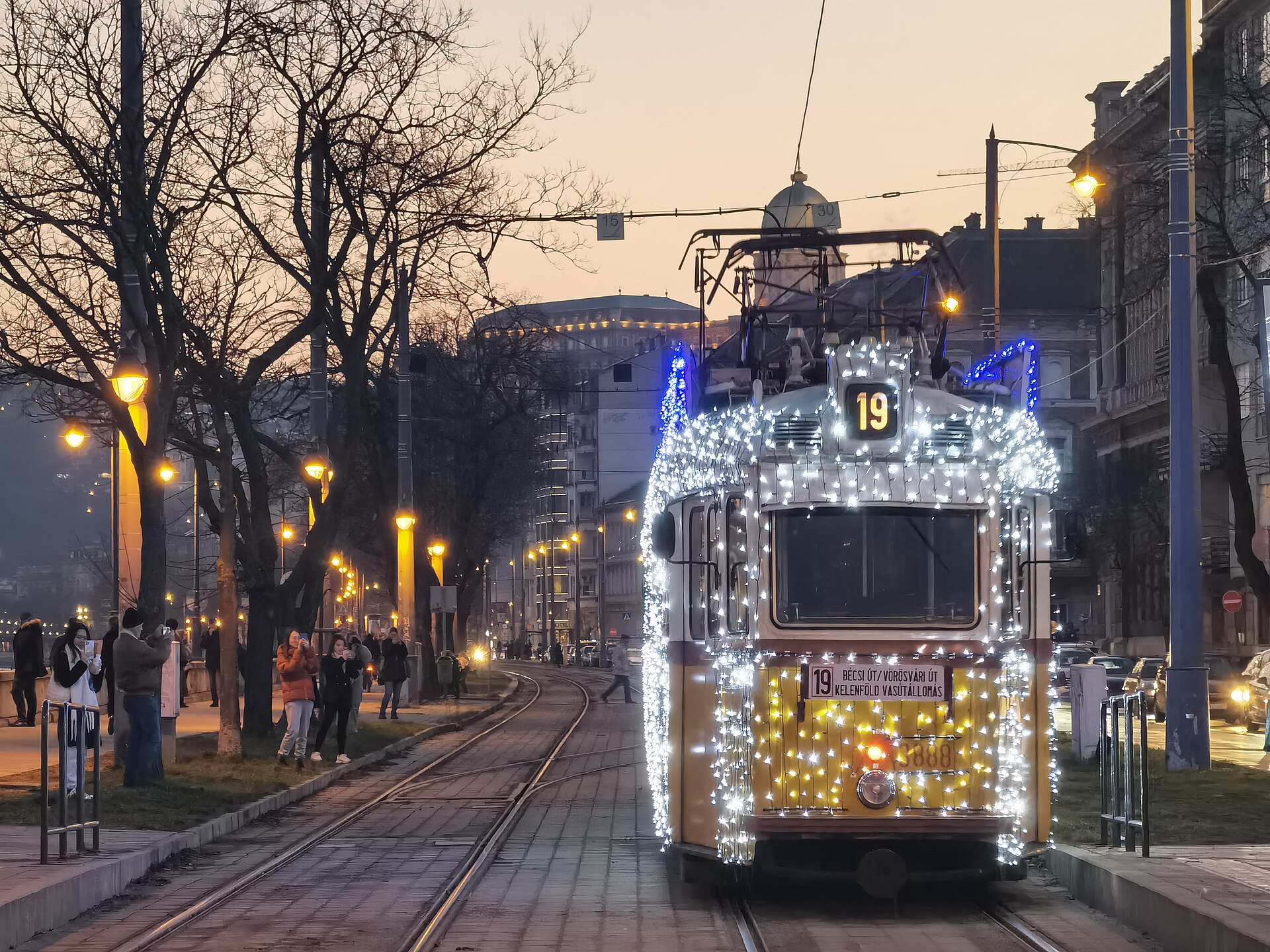
The Christmas season starts before December does. The main markets open in mid-November, the smaller neighbourhood ones follow in the last week of the month (the Advent market on Óbuda’s Fő tér, for example, begins on 27 November in 2026), and the lights go up across the centre. The first Sunday of Advent is 29 November, when the first candle is lit on the city’s giant Advent wreaths. From late November the light trams begin running too: ordinary trams wrapped in thousands of lights, in normal service, which you can ride for the price of a ticket; the tram guide explains how to find them.
1–6 December: the quiet start
The first week is one of the best times of the whole season. The markets are fully open, the lights are on, and the crowds are still manageable on weekdays. Hotel prices, midweek at least, haven’t yet climbed to their pre-Christmas levels. It ends with St Nicholas’ Day on Sunday 6 December, which is also the second Sunday of Advent. Mikulás, Hungary’s St Nicholas, arrives the night before: children polish their boots and leave them in the window on the evening of the 5th, and wake to find them filled with sweets, fruit and chocolate Mikulás figures, plus, for good measure, a golden twig switch, the virgács, as a reminder to behave. You’ll see Mikulás figures in every shop and café, and a few red-robed ones in person around the markets that weekend.
7–13 December: the sweet spot
The second week has the best balance of atmosphere and practicality: the markets in full swing, the city at its most festive, and hotel prices still some way below the Christmas peak, especially midweek. It’s the week for the concert season, too. Churches across the city, St Stephen’s Basilica and the Matthias Church among them, host Christmas and Advent concerts, and the Hungarian National Ballet’s Nutcracker at the Hungarian State Opera House is a December institution. Book both well ahead. The third Advent Sunday falls on 13 December.
14–20 December: peak market season
The third week is the busiest for the markets and for Christmas shopping. The weekend of 19–20 December, when schools break up and the fourth Advent candle is lit, is the most crowded of the month, and Váci utca and the market squares can be packed on Saturday evening. Hotel prices rise accordingly. If your dates are flexible, come earlier; if you’re here this week, visit the markets on weekday mornings or late in the evening, and use the weekend for the baths, which are at their busiest on Saturday afternoons too, so go early.
21–27 December: Christmas
Christmas in Hungary happens on the evening of 24 December, Szenteste (Holy Evening), and the city behaves accordingly. By early afternoon on the 24th the shops are shut, and by late afternoon most restaurants, bars and cafés have closed for the evening too, as everyone heads home to trim the tree and eat together. In 2025, BKK ran its last regular trams and buses on Christmas Eve between about 3 and 4pm and kept the metro going until about 6pm, before night services took over; the all-night 6 tram ran throughout. Expect a similar pattern in 2026, and check BKK’s holiday announcement, usually published in mid-December.
That makes the 24th a strange but rather lovely day to be a visitor. The city is quiet and candlelit, the churches hold Christmas Eve services, often with a midnight Mass at the Basilica and the Matthias Church, and the main Christmas markets usually stay open, a lifeline if you haven’t planned your evening meal. Book a hotel restaurant or a Christmas Eve dinner well ahead, or stock up before the shops close.
The 25th and 26th are both public holidays. In 2026 Christmas Day falls on a Friday, so the holiday runs straight into the weekend. Many restaurants are closed on the 25th, and some on the 26th too; big shops and supermarkets are shut, though some convenience stores and petrol stations stay open. The Széchenyi Baths open, with holiday hours: in the 2026 season they’re scheduled to open from 8am and close at 8pm on Christmas Day, but check the baths’ own website nearer the time. Museums vary widely, so check before you go. It’s a good couple of days for long walks, the baths, and whatever restaurant you had the foresight to book.
28–30 December: between the holidays
Hungarians call the days between Christmas and New Year két ünnep között, “between the two holidays”, and the city reopens in a relaxed, half-holiday mood. Shops and restaurants are back, the markets carry on, and visitors start arriving in numbers for New Year. It’s a good window for museums, the baths and a river cruise, and a bad one to go hunting for a New Year’s Eve hotel room: prices climb steeply as the 31st approaches.
31 December: New Year’s Eve
Szilveszter is one of Europe’s great street parties, and one of its least organised: there’s no official fireworks display, just thousands of people setting off their own along the Danube at midnight. Public transport runs through the night: in 2025 all the metro lines, the HÉV suburban trains, the main tram lines, including the 4, 6 and 47, and a number of buses and trolleybuses ran all night. Hotel prices are at their highest of the year, restaurants run expensive set menus, and the river cruises sell out. The New Year’s Eve guide covers the night in detail, from the best places to watch to the Hungarian traditions, and the dinner cruise guide covers the boats. New Year’s Day is a public holiday, and a quiet one.
What’s open over Christmas and New Year
The pattern is easy to remember once you know it: the 24th is the day the city stops, the 25th and 26th are holidays, and New Year’s Eve is a working day that ends in a party.
| Date | Shops | Restaurants | Public transport | Other |
|---|---|---|---|---|
| 24 Dec (Christmas Eve) | Close early afternoon | Most close by late afternoon; book ahead | Early shutdown: trams and buses until about 3–4pm, metro until about 6pm, then night services (2025 pattern) | Main markets usually open; midnight Mass in the big churches |
| 25 Dec (public holiday) | Mostly closed | Many closed; hotel restaurants open | Holiday timetable | Széchenyi Baths 8am–8pm in 2026; museums vary |
| 26 Dec (public holiday) | Mostly closed | More open than on the 25th | Holiday timetable | Museums vary |
| 27–30 Dec | Open | Open | Normal service | Markets still on |
| 31 Dec (New Year’s Eve) | Many close early | Open; set menus and parties, book ahead | All-night metro, HÉV and main trams (2025 pattern) | Street party along the Danube |
| 1 Jan (public holiday) | Mostly closed | Limited | Holiday timetable | Széchenyi Baths 8am–8pm in 2027 |
Two more things worth knowing. The upper terraces of the Fisherman’s Bastion, normally ticketed until 7pm in winter, are free from 24 to 31 December. And the famous Gellért Baths are closed for a multi-year renovation, so for a winter soak head to the Széchenyi Baths or the Rudas Baths instead.
What December costs
December prices follow the calendar more closely than in any other month. As a rule of thumb:
- Hotels: most affordable in the first two weeks, midweek. Weekends cost noticeably more from late November, and prices climb through the market weekends. Christmas itself can be calmer than the weeks either side, since fewer people travel over the 24th and 25th, but from about 28 December prices rise steeply, to the highest of the year on New Year’s Eve. For the New Year, book months ahead. The where to stay guide helps with the area.
- Getting around: the ordinary fares apply all month: 500 Ft (€1.25) for a single ticket, 5,750 Ft (€14.40) for a 72-hour travelcard, which covers the light trams too. On New Year’s Eve, avoid taxis around midnight; the taxi guide explains why.
- Food and drink: the markets are good value for a hot snack and a mug of mulled wine, and the markets guide has the current prices. Restaurant menus on 24 and 31 December are often special set menus, priced accordingly.
- Baths: weekend and holiday tickets cost more than weekday ones at most of the baths; check the operator’s site for December prices.
Beyond the markets: what else to do in December
- Soak in the cold. Sitting in a steaming outdoor pool at the Széchenyi Baths while the air is below freezing is the quintessential Budapest winter experience. Go early in the morning or on a weekday evening to avoid the crowds. The thermal baths guide compares the options.
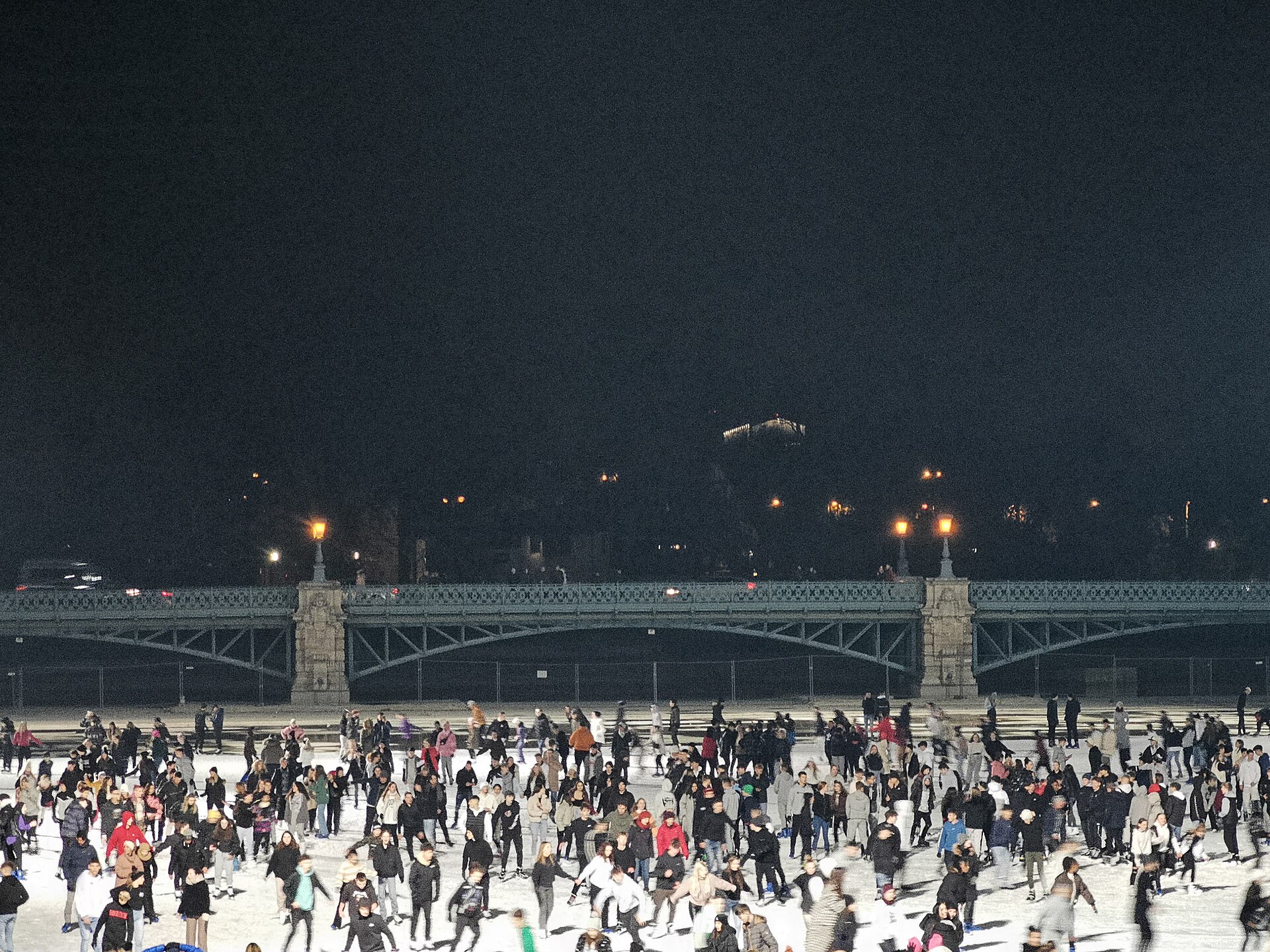
- Skate in City Park. The City Park Ice Rink, the Városligeti Műjégpálya, is one of the largest open-air rinks in Europe, laid out on the park lake between the Széchenyi Baths and Vajdahunyad Castle, and it’s at its most magical after dark. Skates are for hire; check the season’s opening date, which depends on the weather.
- Go to a concert. Christmas concerts in the Basilica, the Matthias Church and the Liszt Academy, and the Nutcracker at the Opera, fill the month.
- Ride the light trams. The lit-up old tram on line 2 along the river at dusk is one of the loveliest cheap things to do in the city.
- Warm up in a coffee house. December is made for the grand café: a slice of cake, a hot chocolate and an hour out of the cold.
- Take a river cruise. The riverbank lights are at their best on long December evenings, and the boats are heated; the cruise guide has the options.
- Hop over to Vienna. Vienna’s own Christmas markets are less than three hours away by train; the Budapest to Vienna train guide has the tickets and times.
How Hungarians celebrate Christmas
Knowing a little about how Hungarians spend Christmas explains why the city behaves the way it does in the last week of December. The big day is Christmas Eve. In many families the tree isn’t put up until the 24th, traditionally delivered by the baby Jesus, Jézuska, or by angels, and not by a Father Christmas, since Hungary’s gift-bringer, Mikulás, has already been on the 6th. The tree is hung with szaloncukor, fondant sweets in shiny foil wrappers, which you’ll see piled high in every supermarket in December.
The Christmas Eve meal traditionally centres on fish: halászlé, the fiery paprika fish soup, or fried carp, followed by bejgli, rolled pastries filled with poppy seed or walnut. Stuffed cabbage, töltött káposzta, appears over the holidays too. Plenty of restaurants put these on their menus through December, and they’re worth trying; the guide to traditional Hungarian food explains the dishes. A roll of bejgli from a good bakery, or a box of szaloncukor, makes a far better gift to take home than most of what’s on sale at the markets.
What to pack for December
- A properly warm, windproof coat, and thermal layers if you feel the cold: you’ll spend a lot of time standing still outdoors at the markets.
- A hat, gloves and a scarf. Not optional.
- Waterproof boots or shoes with a good grip: the cobbles of the Castle District are treacherous when icy.
- Layers you can take off: shops, museums, trams and restaurants are warmly heated.
- Swimwear and flip-flops for the baths, and a small bag to carry them in.
- A compact umbrella, just in case.
The packing guide goes into more detail.
Is Budapest worth visiting in December?
For atmosphere, absolutely. Few European cities do the season as well: the markets, the lights, the light trams, the baths steaming in the cold and a New Year’s Eve that’s unforgettable one way or another. Budapest in winter makes the case for the whole season.
But go in with your eyes open. The days are very short, it’s cold and often grey, the market weekends are crowded, the city largely shuts down on Christmas Eve and Christmas Day, and New Year’s Eve is chaotic, loud and expensive. If you’re after daylight sightseeing and low prices, January is cheaper and quieter, and if it’s Christmas atmosphere you want without the crush, come in the first or second week of December, midweek. That’s our pick for the best December trip: markets and lights at their best, crowds and prices not yet at theirs.
Practical tips
- Book New Year’s Eve accommodation, restaurants and cruises months in advance.
- Book Christmas Eve and Christmas Day meals in advance too, or plan to eat at a hotel or the markets.
- Stock up on supplies before the shops close on the afternoon of the 24th.
- Check BKK’s holiday transport plan, published each year in mid-December, before you plan the evening of the 24th.
- Visit the markets on weekday mornings or late evenings to avoid the worst crowds.
- Carry some forints for small purchases, even though most stalls take cards.
- Plan outdoor sightseeing for the middle of the day. It’s dark by four.
Frequently asked questions
Is December a good time to visit Budapest?
Yes, if you want Christmas atmosphere: the markets, lights and baths make it one of the most magical months of the year. It’s cold, dark and busy at weekends, though, and the city largely shuts on 24 and 25 December. The first two weeks, midweek, offer the best balance.
How cold is Budapest in December?
The average high is about 3 °C and the average low about −3 °C, so expect frosty nights and chilly days. The wind by the river makes it feel colder.
Does it snow in Budapest in December?
Sometimes, but not reliably, and snow rarely settles in the city for long. Cold, dry, grey days are more typical.
When do the Christmas markets open in 2026?
The main markets usually open in mid-November and run until around New Year, with smaller neighbourhood markets opening in late November. The Christmas markets guide has the 2026 details as they’re confirmed.
Is Budapest open on Christmas Day?
Partly. The 25th is a public holiday: most shops and many restaurants are closed, and museums vary, but the main Christmas markets usually stay open, hotel restaurants serve meals, and the Széchenyi Baths open from 8am to 8pm in 2026. The real shutdown is the evening of the 24th.
Does public transport run on Christmas Eve in Budapest?
Yes, but it stops early. In 2025, regular trams and buses ran until about 3–4pm and the metro until about 6pm, after which night services took over, with the 6 tram running all day. Check BKK’s announcement for 2026.
What should I wear in Budapest in December?
A warm, windproof coat, a hat, gloves and a scarf, with thermal layers if you feel the cold, and waterproof boots with a good grip for icy cobbles. Wear layers you can take off indoors, where everything is well heated, and pack swimwear for the baths.
What is the best week to visit Budapest in December?
The first or second week, ideally midweek. The markets and lights are in full swing, but the crowds and prices haven’t yet reached their Christmas and New Year peaks.
Photo credits
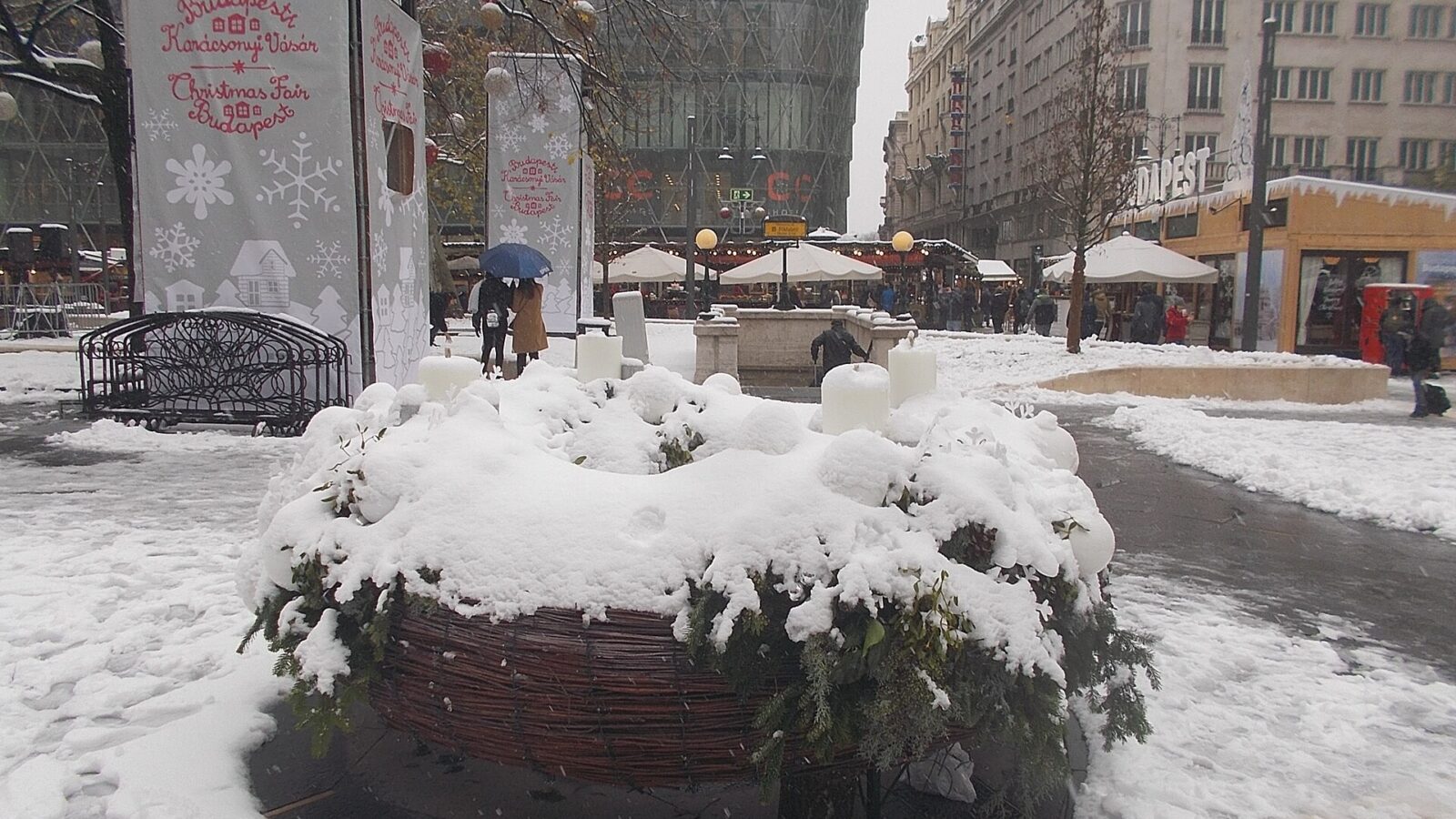
Advent wreath on Vörösmarty tér: Adventi koszorú és Vörösmarty tér M1 metro station, 2019 Lipótváros by Globetrotter19, CC BY-SA 3.0, via Wikimedia Commons.
City Park Ice Rink: Budapest, Városligeti Műjégpálya, 1 by Christo, CC0, via Wikimedia Commons.
The Parliament over snowy rooftops: Hungarian Parliament Building over snowy rooftops at night, Budapest (2026) by Paul Colin Hennig firstdorsal.eu, CC BY-SA 4.0, via Wikimedia Commons.
Light tram on the Buda embankment: Budapest, Batthyány tér, fényvillamos, 3 by Random photos 1989, CC0, via Wikimedia Commons.
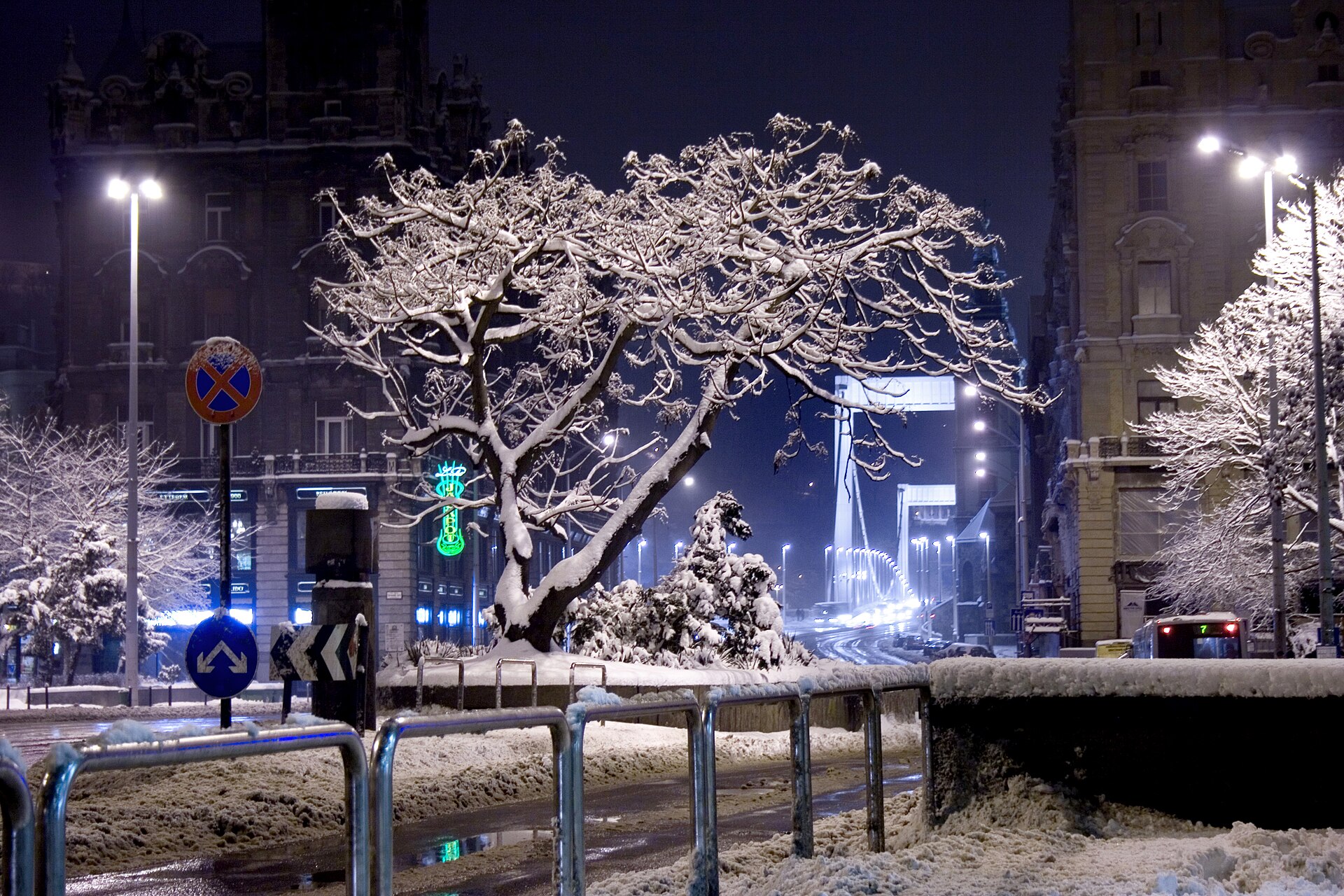
Ferenciek tere in the snow: Budapest, Franciscan Square, with Elizabeth bridge winter evening by Takkk, CC BY-SA 3.0, via Wikimedia Commons.