Budapest in November: Grey, Cheap and Quietly Good
A planner for Budapest in November: the fog and the short days, All Saints' Day in the cemeteries, St Martin's goose and new wine, the first Christmas markets, a week-by-week calendar for 2026, costs and tips.
In this guide
- November at a glance
- The weather, honestly
- Grey, cheap and quietly good: the case for November
- November 2026, week by week
- 1–2 November: All Saints’ and All Souls’
- 3–8 November: the quietest week
- 9–15 November: St Martin’s Day and the new wine
- 16–22 November: the Christmas season begins
- 23–30 November: lights, ice and Advent
- All Saints’ Day: visiting the cemeteries
- The Fiumei úti sírkert (Kerepesi Cemetery)
- Farkasréti Cemetery
- How to visit respectfully
- St Martin’s Day: goose and the new wine
- The start of the Christmas season
- What’s open, what’s closed and what’s starting
- How to spend a November day
- What November costs
- Day trips for November
- What to pack for November
- Is Budapest worth visiting in November?
- Practical tips
- Frequently asked questions
- Photo credits
This article contains advertising. Our booking links are routed through a partner that adds commission tracking automatically, so if you book through one we earn a commission from the provider, at no extra cost to you. It never affects what we recommend. Affiliate disclosure
In early November, the Fiumei úti sírkert, the great nineteenth-century cemetery behind Keleti station, is a quiet place to walk among the mausoleums of Kossuth, Deák and Batthyány, the paths smell of wet leaves, and the noise of the city seems a long way off. It’s one of the most moving sights in Budapest, and almost no visitors see it. Budapest in November is like that: grey, often foggy, short of daylight and cheap, a month that tourism forgets, and quietly one of the best for anyone who likes the city as a place rather than a backdrop. It has goose and new wine for St Martin’s Day, steaming baths in the cold and, from 13 November, the first Christmas markets.
This guide covers the weather, honestly, a week-by-week calendar for November 2026, how to visit the cemeteries on All Saints’ Day, St Martin’s Day and the new wine, the opening of the Christmas season, what’s open and closed, what to eat, what it costs and an honest verdict on whether to come. Prices were checked in September and October 2026; treat them as the right order of magnitude. For the whole year side by side, see Budapest month by month.
November at a glance
| What | November in Budapest |
|---|---|
| Average high / low | 9.4 °C / 3.1 °C (Pestszentlőrinc, 1991–2020 normals), falling through the month |
| Rain | About 45 mm on around 7 days |
| Sunshine | About 2 hours a day |
| Daylight | 10 hours on the 1st, under 9 by the 30th; sunset from 16:28 to 15:56 |
| Crowds | Low in the first half; busy at weekends once the Christmas markets open |
| Hotel prices | Among the lowest of the year until mid-month, then rising with the markets |
| Key dates in 2026 | All Saints’ Day, Sunday 1 November · 4 November, day of mourning · St Martin’s Day, Wednesday 11 November · Christmas markets from 13 November · first Sunday of Advent, 29 November |
| Best for | Value, baths, museums, concerts, goose and new wine, early Christmas markets |
The weather, honestly
November is when winter sets in. The average high is 9.4 °C and the low 3.1 °C (Budapest Pestszentlőrinc, 1991–2020 normals), but the month moves steadily from autumn to winter: the first week can still bring mild, still days with the last leaves on the trees, while by the end of the month frosty mornings are normal and the first snow flurries are possible. Rain falls on around seven days, often as a long, cold drizzle rather than a downpour.
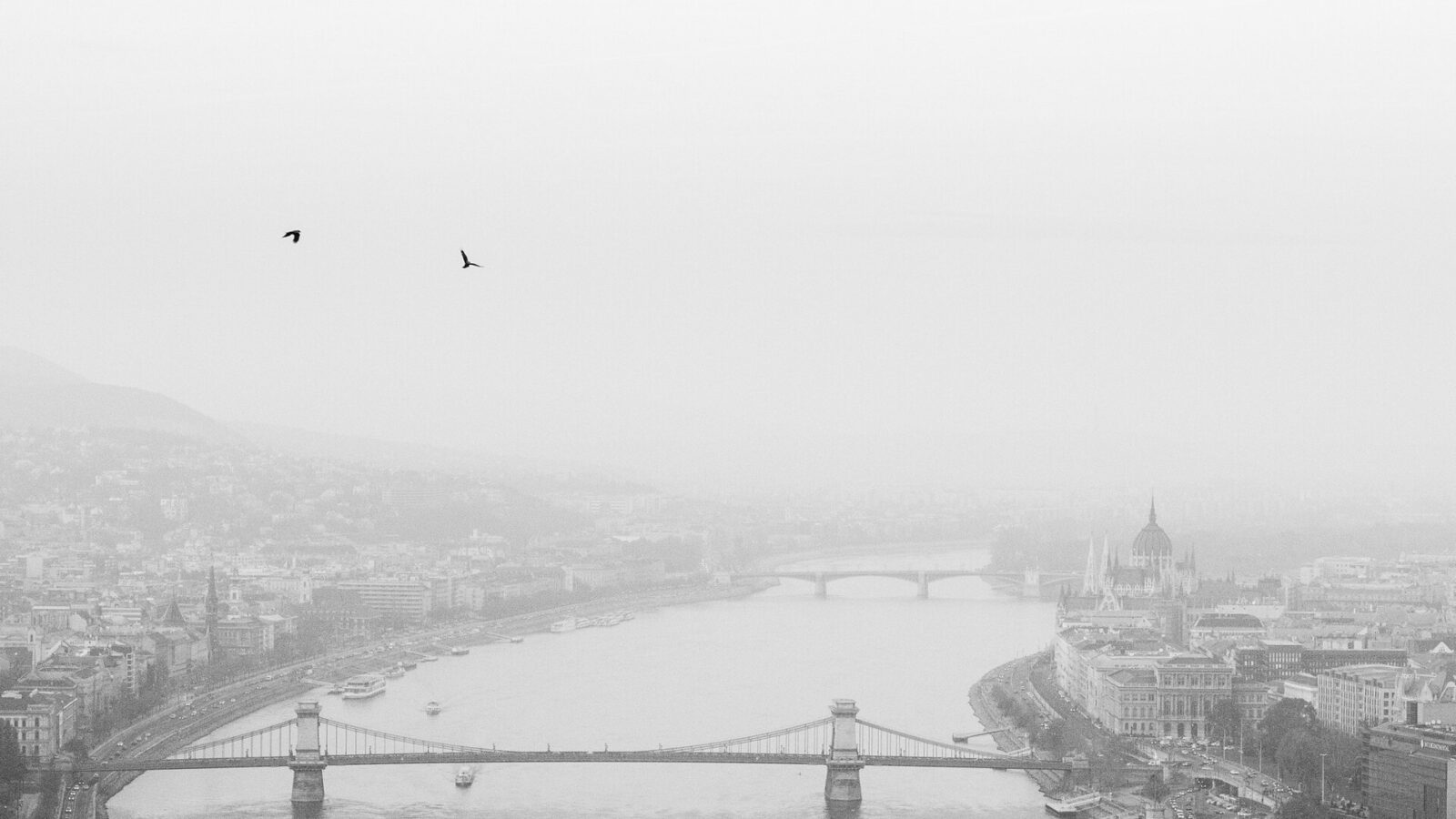
The defining feature, though, is the grey. November averages about three hours of sunshine a day, and the reason is fog. When the air is still, cold, damp air settles in the Danube basin and stays there, sometimes for days: the river disappears, the top of the Parliament dome vanishes into the murk, and the city takes on a muffled, monochrome beauty of its own. If you’re lucky enough to get a clear, frosty day, make the most of it. If the city is fogbound, it’s often sunny above the inversion, so take the Cogwheel Railway or a bus up into the Buda Hills and you may find yourself above the clouds.
The clocks went back at the end of October, so the evenings are dark early. These are the times for 2026:
| Date | Sunrise | Sunset | Daylight |
|---|---|---|---|
| 1 November | 06:26 | 16:28 | 10 h 02 |
| 11 November | 06:41 | 16:14 | 9 h 33 |
| 15 November | 06:47 | 16:09 | 9 h 22 |
| 30 November | 07:08 | 15:56 | 8 h 48 |
That leaves roughly nine hours of daylight, most of it soft and grey. Plan outdoor sightseeing for the late morning and early afternoon, and keep the long evenings for the things the city does best in the cold.
Grey, cheap and quietly good: the case for November
Most people choosing when to visit Budapest don’t consider November, and that’s exactly why it works. In the first half of the month, before the Christmas markets open, hotel prices drop to some of their lowest levels of the year, the queues at the big sights are short, and the city belongs to the people who live in it. It’s the month to sit in a grand café for an hour with a slice of cake, to walk through the steam of an outdoor thermal pool in the cold, to go to the opera on a weeknight, to eat roast goose and drink the new wine, and to see the city in its most atmospheric light, which, in November, is often no light at all.
It’s not for everyone, and it’s worth being honest about why:
- The weather is mostly grey. Expect fog, drizzle and short days. If you need sunshine, this is the wrong month.
- The outdoor season is over. The musical fountain on Margaret Island is off, the lidos are closed, the river cruises are on winter timetables, and the views from the hills are often lost in fog.
- The festive season hasn’t quite started in the first half of the month. If it’s Christmas atmosphere you want, wait until the markets open in mid-November, or come in December.
- Prices climb once the markets open. The second half of the month, especially at weekends, is busier and more expensive.
If those don’t put you off, November rewards you with a real city at a low price. Our rule of thumb: the first half for value, the second half for the start of Christmas.
November 2026, week by week
1–2 November: All Saints’ and All Souls’
All Saints’ Day, Mindenszentek, is a public holiday, and in 2026 it falls on a Sunday. All Souls’ Day, Halottak napja, follows on the 2nd. These are the days Hungarians visit the graves of their families, and the cemeteries glow with candles in the evening. Shops are closed on the 1st, public transport runs extra services to the cemeteries, and the cemeteries themselves stay open later than usual. The next section explains how to visit respectfully. It’s a quiet, reflective weekend in the city, and a lovely one for a long walk.
3–8 November: the quietest week
The first full week of November is one of the quietest of the whole year, and one of the cheapest. On 4 November, Hungary remembers the day in 1956 when Soviet tanks returned to crush the revolution, and the national flag is lowered at a ceremony on Kossuth tér; the leaders of the revolution, including the prime minister, Imre Nagy, executed in 1958, are buried in the New Public Cemetery on the city’s eastern edge. The rest of the week is ideal for museums, the baths and the coffee houses, and for long lunches. The museums guide has the best of them.
9–15 November: St Martin’s Day and the new wine
St Martin’s Day, Márton-nap, falls on Wednesday 11 November, and the days around it are given over to goose and the year’s new wine. Many restaurants put goose on the menu, and the year’s new wine is the other draw. More on that below. On 13 November the two biggest Christmas markets, on Vörösmarty tér and in front of St Stephen’s Basilica, open for the season; the Basilica market runs until 1 January 2027.
16–22 November: the Christmas season begins
With the markets open, the city changes character. The centre fills with the smell of mulled wine and chimney cake, the lights start going up, and the weekends get busy. Weekdays are still relatively calm, though, and hotel prices haven’t yet reached their December levels. This is a good week to see the markets before the crowds build. The Christmas markets guide covers what to eat, buy and see.
23–30 November: lights, ice and Advent
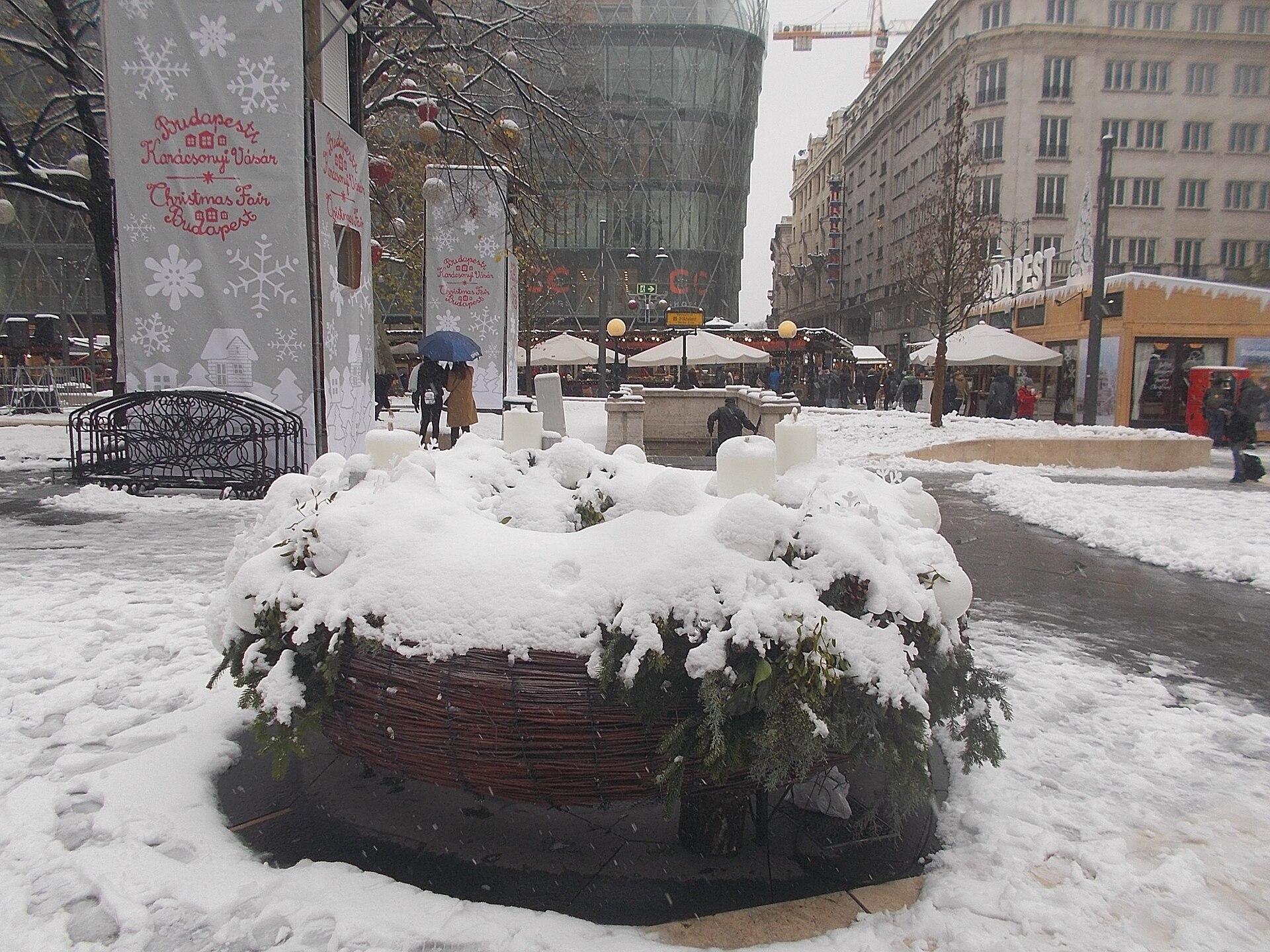
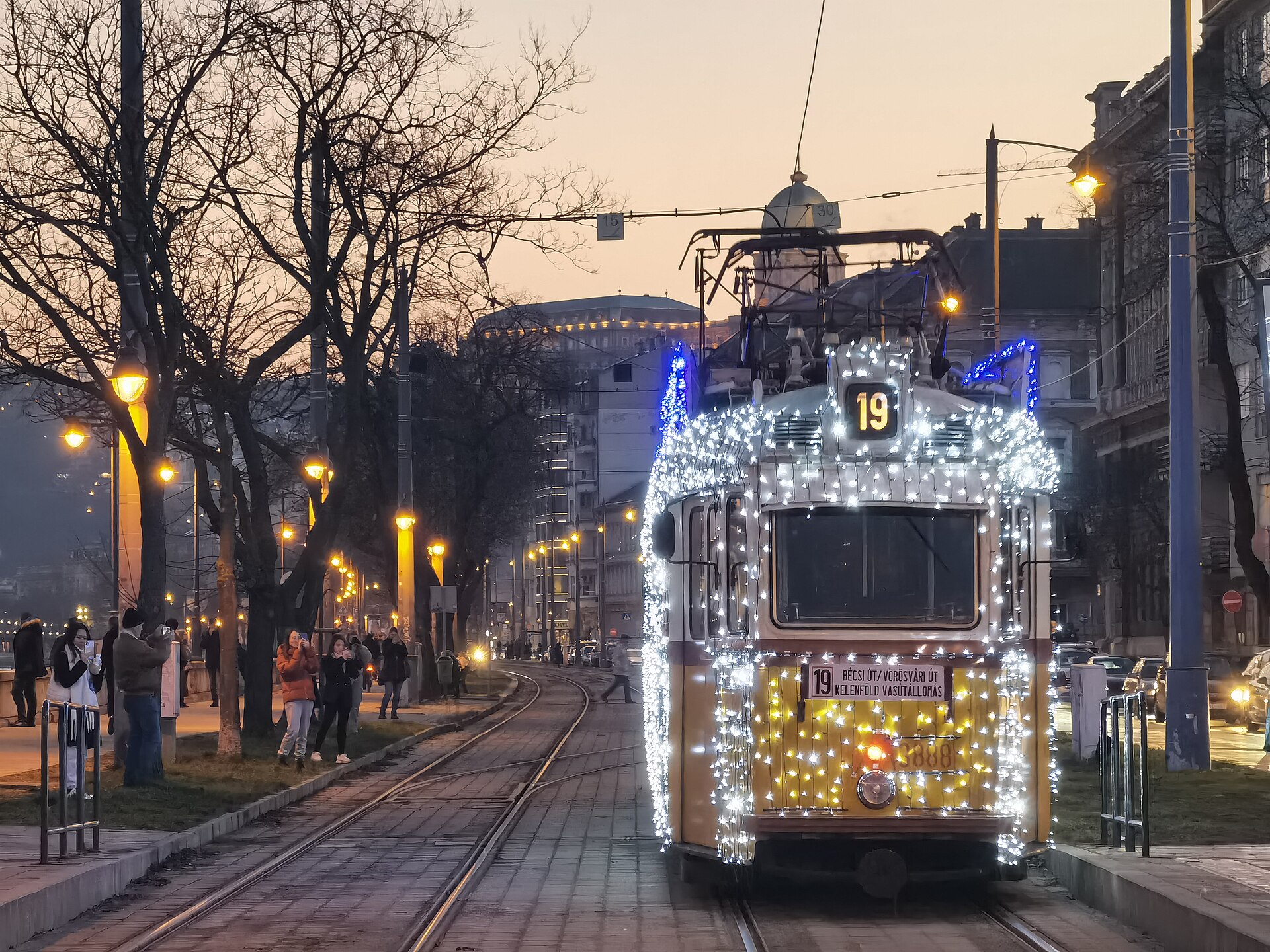
The last week of November brings the rest of the season. The City Park Ice Rink opens its 2026/27 season on 20 November. The light trams, ordinary trams covered in thousands of lights, start running in late November (they began on 28 November in 2025), and BKV announces each year’s start on its site. The Advent market in Óbuda’s Fő tér opens on 27 November 2026, and on Sunday 29 November, the first Sunday of Advent, the first candle is lit on the giant Advent wreaths. From here, Budapest in December takes over.
All Saints’ Day: visiting the cemeteries
On the evening of 1 November, Hungarian cemeteries are transformed. Families come to clean and decorate the graves of their relatives with chrysanthemums and wreaths, and to light candles, and by dusk the cemeteries are filled with thousands of small flames. It’s a family occasion, not a performance, but visitors who come quietly and respectfully are welcome, and it’s an unforgettable thing to see.
The Fiumei úti sírkert (Kerepesi Cemetery)
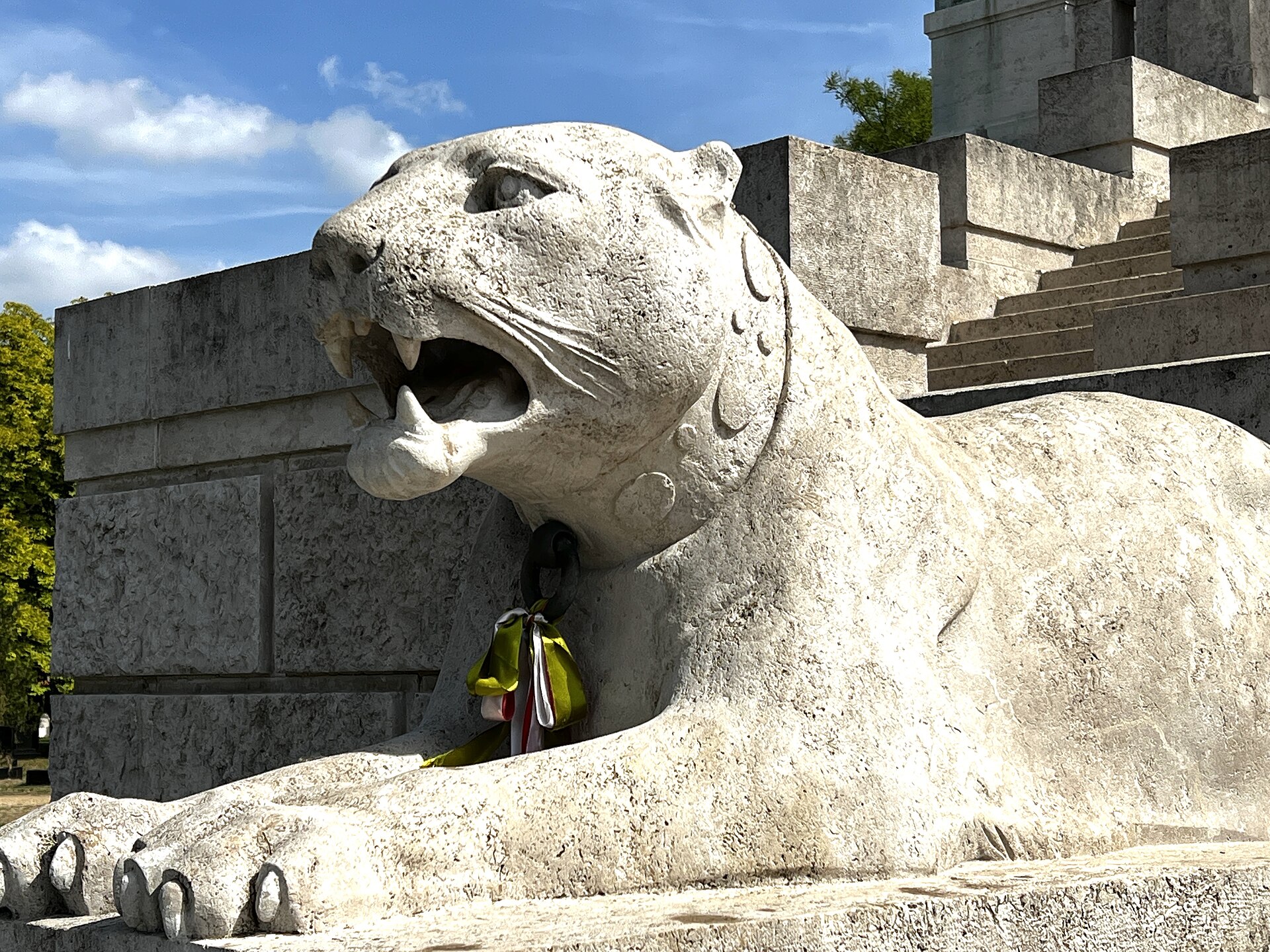
The best place to go is the Fiumei úti sírkert, still widely known by its old name, the Kerepesi temető, a short walk from Keleti station (M2 and M4). It’s Hungary’s national pantheon, a vast, leafy nineteenth-century cemetery full of grand tombs and monuments, where many of the country’s great figures are buried: the statesmen Lajos Kossuth, Ferenc Deák and Lajos Batthyány, each in a monumental mausoleum, the poets Attila József and Endre Ady, the novelist Mór Jókai and many more. On All Saints’ evening, the candles around these graves, left by people who never knew them, are a striking expression of national memory. It’s also a beautiful place to walk on any autumn day.
Farkasréti Cemetery
In Buda, the Farkasréti Cemetery in District XII is the resting place of Béla Bartók, among many other artists and musicians, and its mortuary chapel, designed by Imre Makovecz, with an interior of curving wooden ribs like the inside of a great ship or a whale, is one of the landmarks of Hungarian organic architecture.
How to visit respectfully
- Go at dusk, from about four o’clock, when the candles are lit and the effect is at its most beautiful.
- Keep your voice down, stay on the paths and don’t photograph people at family graves.
- If you’d like to take part, buy a candle at the gate and leave it at the grave of one of the national figures, or at a memorial.
- Dress warmly. It’s cold after dark, and you’ll be on your feet.
- Use public transport; the roads around the cemeteries are busy, and BKK runs extra services.
The history and culture guide has more on the people buried here.
St Martin’s Day: goose and the new wine
St Martin of Tours, the Roman soldier who cut his cloak in half to share it with a beggar, was born in what is now Szombathely in western Hungary, and Hungarians celebrate him on 11 November with a feast. According to legend, Martin hid in a goose pen to avoid being made a bishop, and the honking geese gave him away. Ever since, geese have paid for it on his day. There’s a Hungarian saying that whoever doesn’t eat goose on St Martin’s Day will go hungry all year.
In practice, Márton-nap is a celebration of goose and of the new wine, újbor, the first wine of the year’s harvest, which by tradition is tasted for the first time around this date. In 2025 a nationwide season of goose and new-wine menus and events, Libabor, ran from 1 to 17 November, with participating restaurants and wineries listed at libabor.hu. What to look for:
- Roast goose leg, sült libacomb, with braised red cabbage and potatoes, the classic St Martin’s dish.
- Goose soup, libaleves, a rich broth with vegetables.
- Goose liver, libamáj, a Hungarian speciality, served fried or as a terrine; some people avoid it on welfare grounds.
- Goose crackling, libatepertő, on bread with onions.
- New wine, light, fresh and fruity, sold by the glass in wine bars. The guide to Hungarian wine explains the regions, and the wine bar guide has the best places to try it.
Children also celebrate St Martin’s Day with lantern processions in the evening, especially in kindergartens and in the city’s German-speaking communities. The guide to traditional Hungarian food has more on goose and the rest of the Hungarian table.
The start of the Christmas season
From the middle of November, Budapest begins its transformation into one of Europe’s best Christmas cities. The two big markets open first, on Vörösmarty tér, with its rows of wooden stalls in front of the Gerbeaud café, and in front of St Stephen’s Basilica, which adds a light show on the facade and a small ice rink. Smaller neighbourhood markets follow at the end of the month, among them the Advent market in Óbuda, which opens on 27 November.
November is an excellent time to see the markets: they’re open, the stalls are fully stocked, and the crowds are smaller than in December, especially on weekdays. The catch is that, unlike December, the city hasn’t yet fully dressed up; the light trams and the ice rink only arrive at the end of the month. The Christmas markets guide covers what to eat, what to buy and how to avoid the worst crowds.
What’s open, what’s closed and what’s starting
- Thermal baths: the Gellért is closed for a renovation, with reopening planned for 2028, and the Király is closed indefinitely. Check each of the others on its own site before you go. November is one of the best months for the outdoor pools at the Széchenyi Baths and the rooftop pool at the Rudas Baths. The thermal baths guide compares them.
- Museums: open as normal, but many close one day a week, often Monday, so check before you go.
- Opera and concerts: the season is in full swing at the Opera House, the Liszt Academy and the Müpa.
- Fisherman’s Bastion: the upper terraces cost 1,700 Ft (€4.25), card only, from 9am to 7pm, and are free after that, when it’s long dark and the Parliament is lit up across the river. The lower terraces are free at any time.
- Gellért Hill: the Citadella park is free but keeps shorter winter hours from November.
- Christmas markets: the big two from mid-November; neighbourhood markets from late November.
- Ice rink and light trams: from the end of the month.
- Closed for the season: the Margaret Island musical fountain and the outdoor lidos, though the Palatinus on Margaret Island is open daily.
How to spend a November day
- Morning: start at a museum when it opens, or, if the day is clear, go straight up to the Castle District for the view before the fog rolls in again.
- Lunch: the main meal. Have it long, with soup and a glass of wine, and in mid-November make it goose.
- Afternoon: the baths, from about three until dark, when the steam rises off the outdoor pools in the cold air.
- Evening: a concert or the opera, a wine bar, or, from mid-month, a walk through the Christmas markets with a mug of mulled wine.
What November costs
- Hotels: among the lowest prices of the year in the first half of the month, especially midweek. Prices rise once the markets open, especially at weekends, and climb further in late November. The where to stay guide covers the neighbourhoods.
- Getting around: 500 Ft (€1.25) for a single ticket, 2,750 Ft (€6.90) for a 24-hour travelcard and 5,750 Ft (€14.40) for 72 hours, which cover the light trams too. The 100E airport bus is 2,500 Ft (€6.25) and isn’t covered by travelcards. The public transport guide explains the tickets.
- Baths: weekday tickets are cheaper than weekend ones at the big baths.
- Eating out: goose menus around St Martin’s Day are good value compared with the same dishes in Western Europe. Many restaurants now add a service charge (szervízdíj), often 12.5%; when it’s on the bill, you don’t need to tip on top.
Day trips for November
- Eger. The new wine is flowing in the cellars of the Valley of the Beautiful Women, and the town has a thermal bath for a cold afternoon. The Eger day trip guide.
- Vienna. Vienna’s Christmas markets also open in mid-November, less than three hours away by train. The Budapest to Vienna train guide.
- Szentendre. Atmospheric in the mist, with museums and galleries to fill a grey day. The Szentendre guide.
- Bratislava. An easy day trip by train, with its own Christmas market from late November. The Bratislava guide.
What to pack for November
- A warm, waterproof coat.
- Layers: a jumper or fleece, and thermals if you feel the cold, especially in the second half of the month.
- A hat, gloves and a scarf.
- Waterproof shoes or boots with grip, for wet leaves and wet cobbles.
- A compact umbrella.
- Swimwear and flip-flops for the baths.
The packing guide goes into more detail.
Is Budapest worth visiting in November?
Yes, if you go for the right reasons. November is grey, damp and dark early, and if you want sunshine, outdoor life or views, you’ll be disappointed. But if you want the city at its most local and atmospheric, at a low price, it’s one of the best-kept secrets of the year: candlelit cemeteries on All Saints’ Day, goose and new wine for St Martin’s, steaming baths in the cold, the opera and concerts in full season, and, from the middle of the month, the first Christmas markets without December’s crowds.
Our pick depends on what you’re after. For pure value and a city to yourself, come in the first two weeks, ideally around St Martin’s Day. For the start of the Christmas season, come in the last ten days, midweek, when the markets, the ice rink and the light trams are all running and prices are still below December’s. If you want autumn colour rather than fog, come earlier, in October, and if it’s full Christmas you want, come in December. Budapest in winter covers the cold months as a whole.
Practical tips
- Come in the first half of the month for the lowest prices.
- Book a goose dinner for the week of St Martin’s Day; the popular places fill up.
- Visit a cemetery at dusk on 1 November, quietly and respectfully.
- Remember that 1 November is a public holiday, so expect many shops to be closed.
- Check the Christmas market opening dates for the year before you book around them.
- If the city is fogbound, head up into the Buda Hills for the sun.
- Plan the baths for the late afternoon, when the steam and the dusk are at their best.
Óbuda is worth the HÉV ride for more than the Advent market. Our Óbuda guide has Aquincum’s winter hours, the Vasarely Museum and a half-day route that ends back on Fő tér in time for the stalls.
Frequently asked questions
Is November a good time to visit Budapest?
Yes, for value and atmosphere. The first half of the month has some of the lowest hotel prices of the year, the baths, museums and concerts are at their best, and there are All Saints’ Day and St Martin’s Day to enjoy. It’s grey and dark early, though, and the outdoor season is over.
What is the weather like in Budapest in November?
Cold and often grey, with an average high of 9.4 °C and a low of 3.1 °C (Pestszentlőrinc, 1991–2020 normals), falling through the month. Fog is common, rain falls on about seven days, and there are only about two hours of sunshine a day.
When do the Christmas markets open in Budapest?
On 13 November in 2026. The two biggest, on Vörösmarty tér and in front of St Stephen’s Basilica, open that day. Smaller neighbourhood markets open in late November.
What happens on All Saints’ Day in Budapest?
1 November is a public holiday when Hungarians visit their family graves. The Fiumei úti sírkert, the national pantheon near Keleti station, is the most moving place to go. Many shops close for the day.
What is St Martin’s Day in Hungary?
St Martin’s Day, Márton-nap, on 11 November, is celebrated with goose and the year’s new wine. Restaurants put on goose menus and wine bars pour the new vintage in the days around it.
Is Budapest cheap in November?
In the first half of the month, yes: hotel prices are among the lowest of the year. They rise once the Christmas markets open in mid-November, especially at weekends.
Does it snow in Budapest in November?
Occasionally, usually late in the month, but it rarely settles. Fog, drizzle and grey skies are far more typical.
What should I wear in Budapest in November?
A warm, waterproof coat, layers, a hat, gloves and a scarf, waterproof shoes with grip, and an umbrella. Pack swimwear for the baths.
Photo credits
The Danube in the fog from Gellért Hill: Danube (83953113) by Daniele Zanni, CC BY 3.0, via Wikimedia Commons.
The Kossuth Mausoleum: Detail du mausolee de Kossuth Lajos de Budapest by Christiane Angibous-Esnault, CC BY-SA 4.0, via Wikimedia Commons.
Advent wreath on Vörösmarty tér: Adventi koszorú és Vörösmarty tér M1 metro station, 2019 Lipótváros by Globetrotter19, CC BY-SA 3.0, via Wikimedia Commons.
Light tram on the Buda embankment: Budapest, Batthyány tér, fényvillamos, 3 by Random photos 1989, CC0, via Wikimedia Commons.