Budapest in July: Long Days, Empty City, Hot Baths
A planner for Budapest in July: sixteen-hour days and how to use them, the heat, how the city changes when locals leave, the thermal baths in a heatwave, the Grand Prix and what it costs.
In this guide
- July at a glance
- Long days: what to do with sixteen hours of light
- The weather, honestly
- The empty city: where Budapest goes in July
- Hot baths: how to do the thermal baths in a heatwave
- Go early
- Or go late
- Use the cooler pools
- Or skip the thermal water entirely
- Two that are closed
- July 2027, week by week
- 1–11 July: early summer at full volume
- 12–18 July: high summer
- 19–31 July: Grand Prix and Balaton season
- The Hungarian Grand Prix
- Eating and drinking in July
- Where to escape the heat
- What July costs
- What to pack for July
- Is Budapest worth visiting in July?
- Practical tips
- Frequently asked questions
- Photo credits
This article contains advertising. Our booking links are routed through a partner that adds commission tracking automatically, so if you book through one we earn a commission from the provider, at no extra cost to you. It never affects what we recommend. Affiliate disclosure
At ten to five on a July morning the sun is already up over Pest, the street sweepers are hosing down Andrássy út, and the only other people on the Chain Bridge are a couple of joggers and someone walking home from a very long night out. Sixteen hours later the light is still going, and the riverside terraces are just filling up. Budapest in July is a month of enormous days and serious heat, a city that half empties of its own residents while the tourist centre fills up, and a surprising truth about the thermal baths: they’re at their best when you’d think they’d be unbearable.
This page covers the weather and the remarkable daylight, how the city changes when the locals leave, how to use the baths in a heatwave, a week-by-week calendar for July 2027 including the Hungarian Grand Prix, what to eat and drink, where to escape to, and what it all costs. Prices were checked in September and October 2026; treat them as the right order of magnitude. For the summer as a whole, see Budapest in summer.
July at a glance
| What | July in Budapest |
|---|---|
| Average high / low | 28 °C / 15 °C, with heatwaves into the mid-30s |
| Rain | About 55 mm on around 6 days, mostly in short, sharp thunderstorms |
| Sunshine | About 9½ hours a day, the sunniest month of the year |
| Daylight | Almost 16 hours at the start of the month; sunrise before five, sunset after half past eight |
| Crowds | Busy in the tourist centre; noticeably quieter in the residential districts |
| Hotel prices | High, with a spike on the Grand Prix weekend |
| Key dates in 2027 | Hungarian Grand Prix on the last weekend of July or the first of August (provisional) · Budapest Summer Festival on Margaret Island all month |
| Most useful thing to pack | A refillable water bottle |
Long days: what to do with sixteen hours of light
July has the longest days of the main tourist season. These are the sunrise and sunset times for 2027:
| Date | Sunrise | Sunset | Daylight |
|---|---|---|---|
| 1 July | 04:50 | 20:45 | 15 h 55 |
| 15 July | 05:01 | 20:38 | 15 h 37 |
| 31 July | 05:19 | 20:21 | 15 h 02 |
Add the long twilight, and it’s light enough to read outside from about half past four in the morning until well after nine at night. Used well, that’s a gift. The way most visitors use it, sightseeing from ten until five in the full heat of the day and collapsing in the evening, wastes the best of it.
The better approach is a two-shift day. Do the first shift early, from about six or seven until eleven, when the air is cool, the light is soft and the city’s great sights are close to empty. The Castle District at seven on a July morning is a different place from the Castle District at eleven. Spend the hot middle of the day indoors, in the water or asleep, as plenty of locals do. Then do the second shift from about five until it’s dark: the river, the viewpoints, a long dinner outside, a drink in a ruin-bar garden or on a rooftop. Golden hour falls around eight, which suits a sunset walk up to the Citadella park on Gellért Hill or along the Buda embankment, looking back at the Parliament as it catches the last of the sun.
The weather, honestly
July is hot, and getting hotter. The long-term average high is 28 °C, but recent summers have brought regular spells of several days in the mid-30s, and the centre of Pest, all stone, asphalt and narrow streets, holds the heat long after dark. The overnight average of 15 °C is measured at a weather station out in the suburbs; in the centre during a heatwave, nights can stay well above 20 °C. It’s also the sunniest month, with about nine and a half hours of sunshine a day and a UV index that will burn you on the walk between the Basilica and the river.
Rain falls on about six days in the month, but rarely as a grey drizzle. It comes as a thunderstorm, usually in the late afternoon after a hot, heavy day: a darkening sky over the Buda Hills, a sudden wind that sends café parasols flying, twenty minutes of downpour and sometimes hail, and then a rinsed, cooler evening. If you’re on the water, on a bridge or on a hilltop when the sky turns, don’t wait around.
Two practical points follow. The first is air conditioning: check your room has it, and check it properly, because many older buildings and short-let flats rely on fans, and a night at 27 °C indoors ruins the next day. Ask whether the unit covers the bedroom. The second is water. Budapest’s tap water is safe to drink, the city has public drinking fountains, and during heat alerts misting gates appear on busy squares. Carry a bottle and refill it all day.
The empty city: where Budapest goes in July
The schools break up in the middle of June, the universities empty, Parliament goes into recess and most theatres close for the summer. The newspapers call it uborkaszezon, cucumber season, when nothing much happens and the news gets thin. And from July onwards, a good part of the city’s population starts to leave. Families go to Lake Balaton, to summer houses in the countryside or abroad, and on Friday afternoons the motorway to the lake fills with cars.
For a visitor, the effect is odd but mostly pleasant. The tourist centre, from Váci utca to the Castle District, is as busy as ever. But step a few streets away, into the residential parts of Districts VII, VIII, IX or XIII, or across into Buda’s leafy hills, and the city feels half asleep: quiet streets, easy tables at neighbourhood restaurants, half-empty trams, the sound of somebody’s radio through an open window. Early July is the best time to enjoy this, because the closures are still to come. From late July, and especially in August, more small restaurants, cafés and bakeries shut for a week or two of nyári szünet, the summer break, with a handwritten note on the door. If a particular place is the reason you’re crossing town, check it’s open.
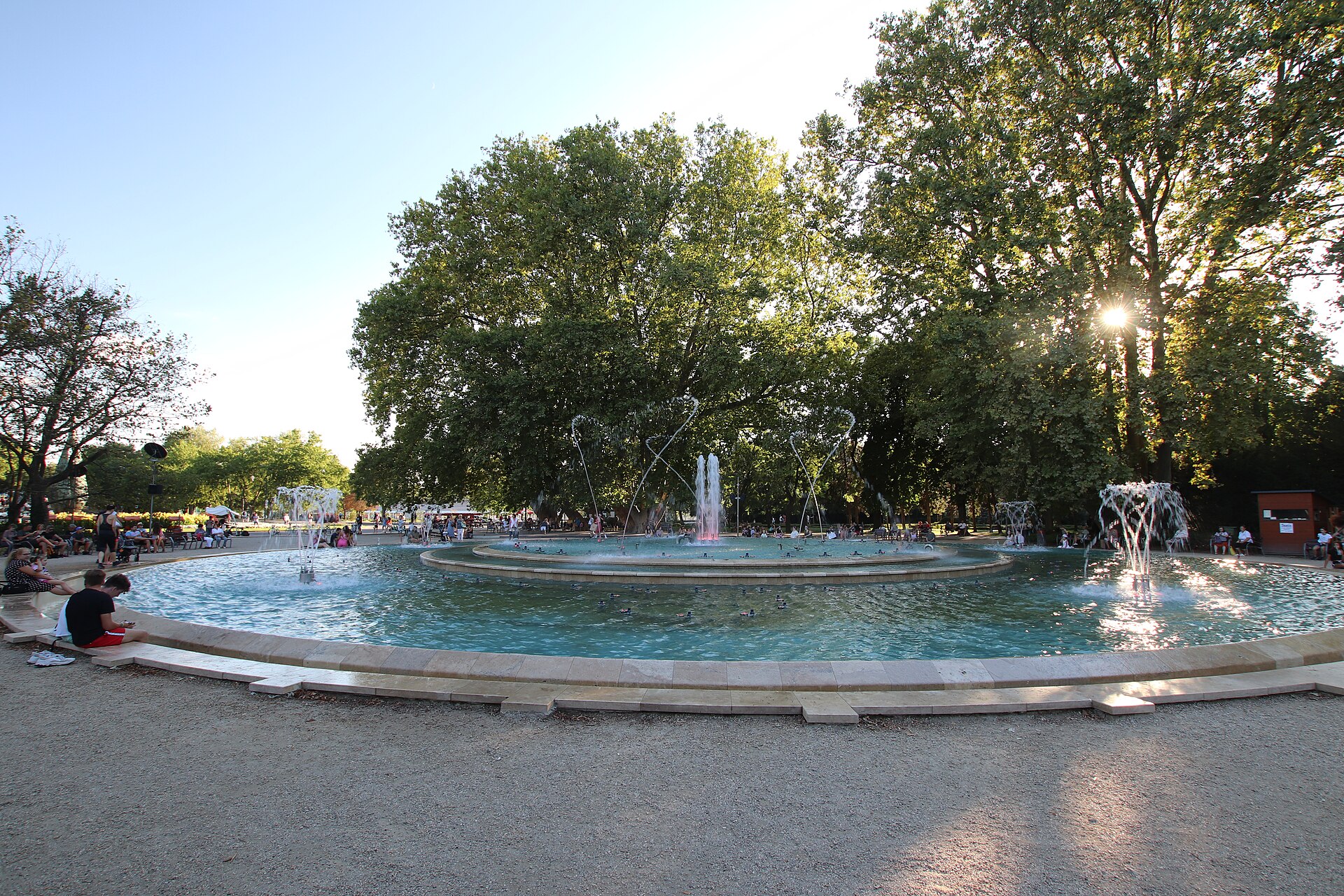
The culture doesn’t disappear, it moves outside. The Budapest Summer Festival fills the open-air theatre on Margaret Island with opera, musicals, ballet and concerts through July, and the island’s musical fountain plays its shows through the day and into the evening, with lights after dark.
Hot baths: how to do the thermal baths in a heatwave
It sounds absurd to sit in 38 °C water when it’s 34 °C outside, and at three in the afternoon it is. But the baths are some of the best places in the city to be in July, provided you use them the way Budapesters do: early, late, or in the cooler pools.
Go early
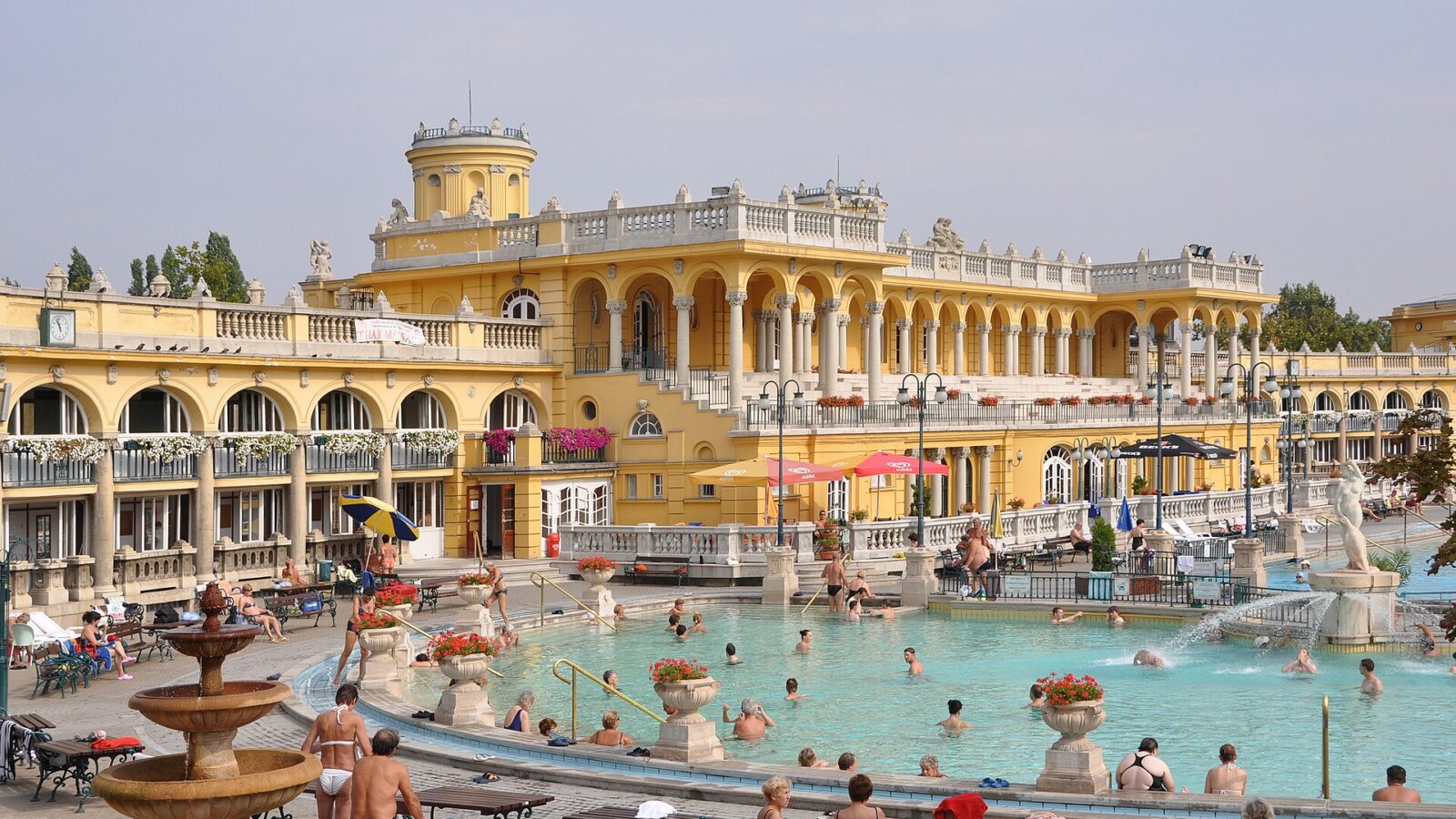
The baths open early, and a seven o’clock soak, before the heat and the crowds build, is one of the great July pleasures. The Rudas Baths, under Gellért Hill by the Elisabeth Bridge, open at 6am every day, and at that hour the Ottoman pool under its sixteenth-century dome is close to empty. On some weekdays the old Turkish section is single-sex (women only on Tuesdays, men only on Wednesdays), so check the schedule if you have your heart set on it. The Széchenyi Baths in City Park also open early on weekdays, and their big outdoor pools in the morning sunshine are glorious. For something calmer and more local, the Lukács Baths near Margaret Bridge open early too and are full of regulars doing their morning laps.
Or go late
The other cool time to bathe is at night. Rudas runs late-night bathing sessions, sold online only, and floating in the rooftop pool with the bridges lit up below is one of the most memorable things you can do in the city in summer. Check the current schedule on the baths’ own website. The Széchenyi’s Saturday-night party, the Sparty, runs through the summer too; it’s a club night in a thermal bath, loud and boozy, and the spa party guide explains what you’re getting into.
Use the cooler pools
Every big bath has a range of temperatures, and the swimming pools are kept far cooler than the thermal ones. In a heatwave, spend your time in those, keep your soaks in the hottest pools short, drink plenty of water and get out if you feel light-headed. The bath etiquette guide covers the rest of the unwritten rules.
Or skip the thermal water entirely
On the hottest afternoons, do what local families do and go to a strand, an open-air lido. The biggest and most central is the Palatinus on Margaret Island: a collection of outdoor pools, including a slide park and thermal pools, set among lawns and trees, open daily from 9am to 7pm. In 2026 an adult day ticket cost 3,800 Ft (€9.50) on weekdays and 4,200 Ft (€10.50) at weekends and on holidays, with a 2,500 Ft (€6.25) afternoon ticket valid for the last two hours before closing. Take a picnic, or do as everyone else does and eat lángos from the stand.
Two that are closed
Don’t plan around the Gellért Baths, with their famous wave pool: they closed in October 2025 for a renovation that won’t finish before 2028. The Király Baths, one of the city’s old Ottoman baths, have been closed since 2020 with no reopening date. The thermal baths guide compares the ones that are open.
July 2027, week by week
1–11 July: early summer at full volume
The first part of the month has the longest days and the city’s summer life in full swing: terraces, garden bars, the Summer Festival on Margaret Island, river cruises at full schedule. The neighbourhood restaurants are still open, the heat usually hasn’t reached its peak, and it’s the best stretch of July to explore the quieter districts. If you’re choosing dates within the month, this is our pick.
12–18 July: high summer
Mid-July is when heatwaves are most likely, and the weekend exodus to Balaton is in full flow. Plan the two-shift day seriously this week: up early, under cover from eleven to five, back out for the evening. The Danube is busy with sightseeing boats, and an evening cruise, with the breeze off the water and the bridges lit up, is a good way to end a hot day; the river cruise guide has the options.
19–31 July: Grand Prix and Balaton season
The Hungarian Grand Prix usually falls on the last weekend of July or the first of August. In 2026 it was held from 24 to 26 July; the 2027 race weekend is 30 July to 1 August. Hotel prices in Budapest jump that weekend whether or not you’re going. Down at the lake, the last Saturday of July is traditionally the night of the Anna Ball in Balatonfüred, a grand society ball that has been held since the nineteenth century, and the lake is at its busiest. Back in the city, the first summer-break notices start appearing on restaurant doors.
The Hungarian Grand Prix
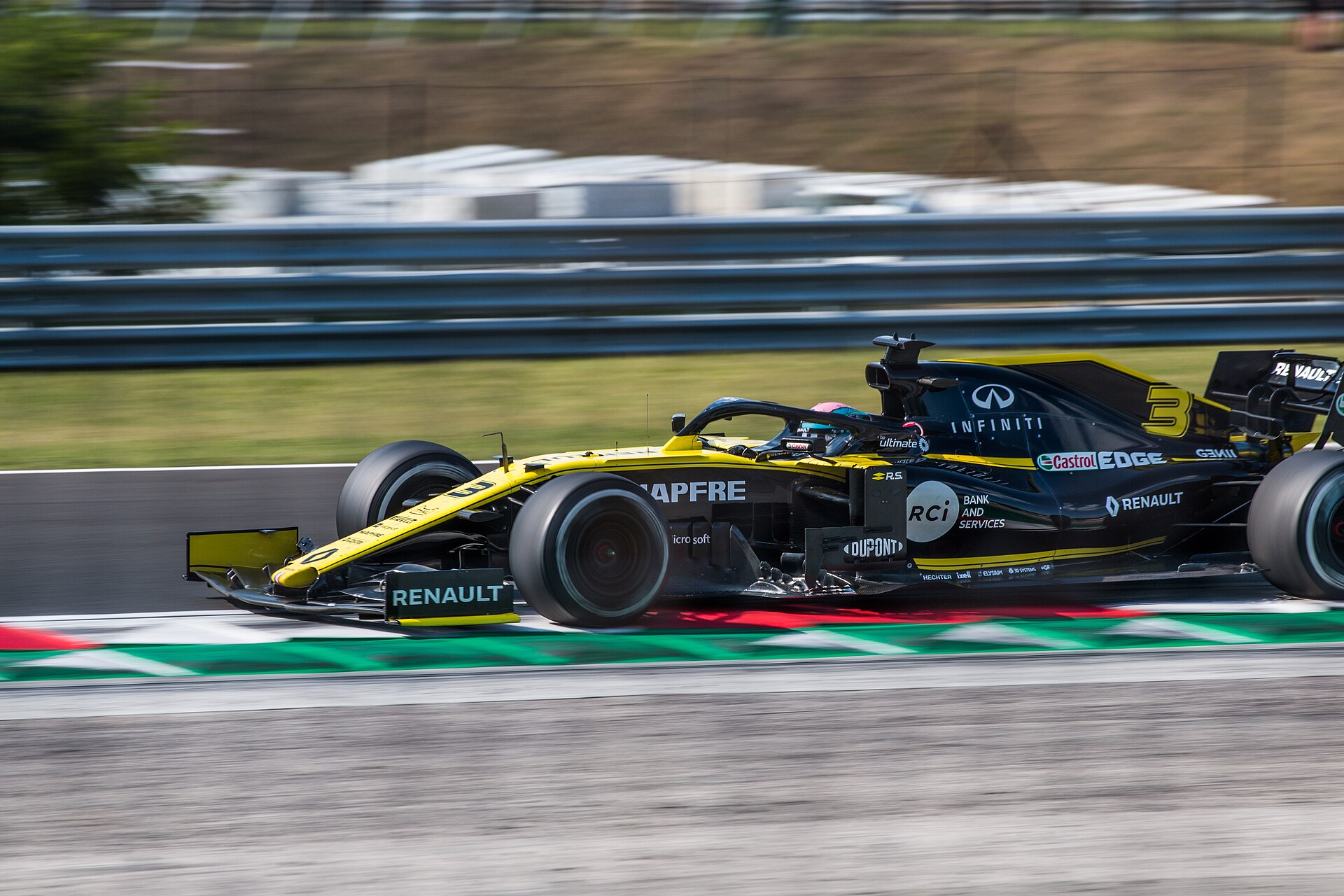
Formula 1 has raced at the Hungaroring, near Mogyoród, about 20 km north-east of the city centre, every year since 1986, when it became the first Grand Prix behind the Iron Curtain. The track is tight and twisty, with few places to overtake, set in a natural bowl that gives the grandstands and the grassy banks good views. Over the race weekend it draws big crowds from across Europe, many of them staying in Budapest, so the city’s hotels fill and prices rise.
If you’re going, the practicalities are heat and transport. The circuit has very little shade, and late July temperatures in the 30s are normal, so take a hat, sunscreen and more water than you think. Shuttle buses and trains connect the city with the circuit, and the Hungarian Grand Prix guide covers tickets, transport and where to sit. If you’re not going, simply avoid booking that weekend if you can.
Eating and drinking in July
Hungarian food is famous for being heavy, and in July even Hungarians don’t want much of it. The summer menu looks different:
- Fröccs. The national summer drink: white or rosé wine mixed with soda water, ordered by ratio. A kisfröccs is one decilitre of wine to one of soda, a nagyfröccs two to one, a hosszúlépés, the “long step”, one to two. It’s refreshing, cheap and, in the heat, much more sensible than a beer.
- Cold fruit soup. Hideg meggyleves, chilled sour-cherry soup with cream, is served as a starter all summer and tastes like a dessert. Try it at least once.
- Lángos. The deep-fried flatbread topped with garlic, sour cream and grated cheese is the official food of the Hungarian lido, eaten in a swimsuit with a fröccs.
- Ice cream. Budapest takes its fagyi seriously, and the queues outside the good ice-cream shops on a July evening are part of the city’s summer street life.
- Lecsó. By late July the peppers are coming in, and the pepper, tomato and onion stew appears on menus and in home kitchens.
Most of the city’s eating moves outdoors, onto terraces, into courtyards and into the ruin-bar gardens. The guide to traditional Hungarian food has the dishes, and the wine bar guide has the best places to try fröccs made with something better than the house white.
Where to escape the heat
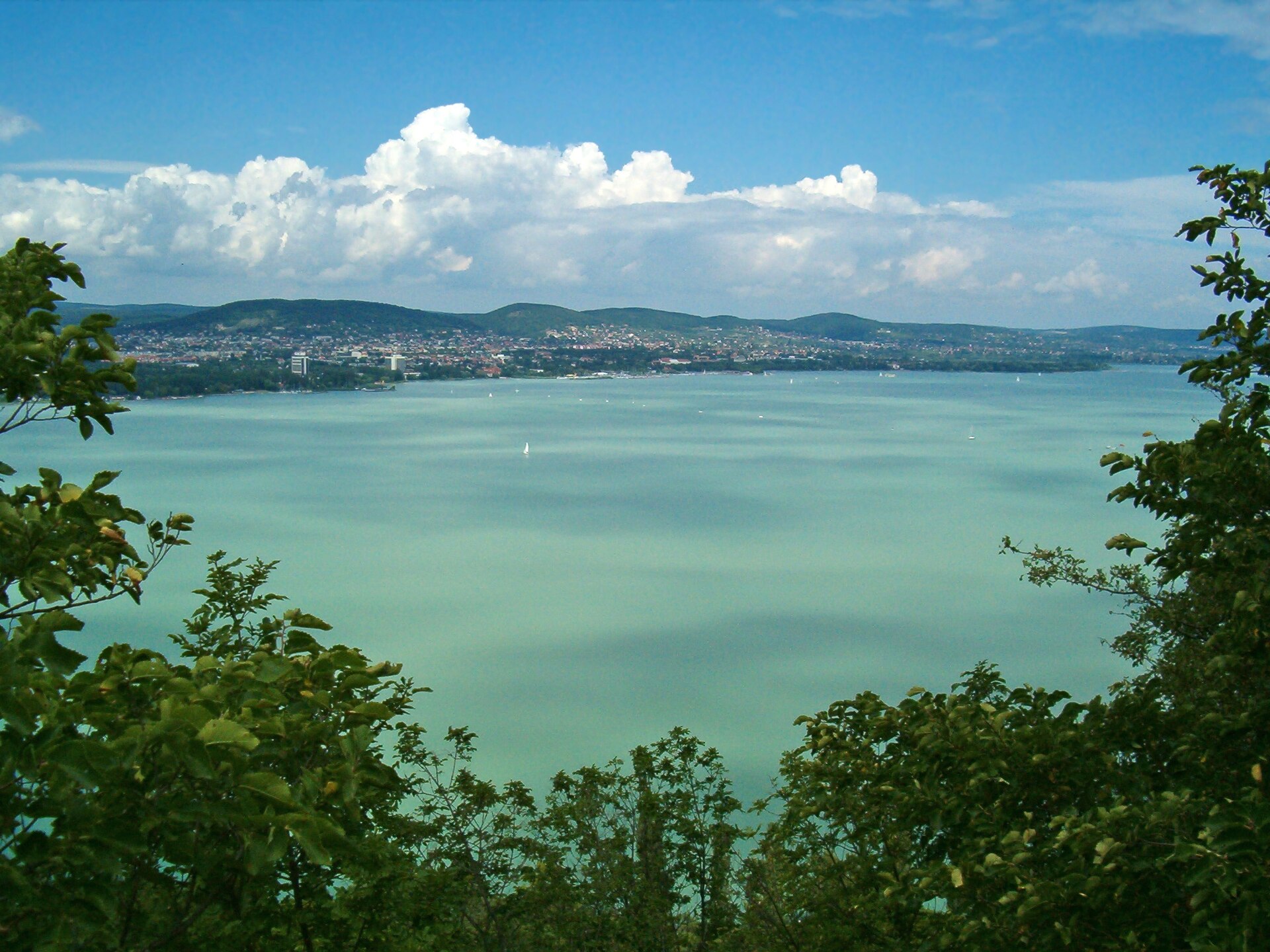
- Lake Balaton. Do what Budapest does. Central Europe’s largest lake is warm, shallow on the south shore and busy all summer, while the north shore has hills, vineyards and the Tihany peninsula. The nearest resorts are well under two hours away by train; book a seat reservation for weekend trains and go midweek if you can. The Balaton guide has the routes.
- The Danube Bend. Szentendre is 40 minutes away on the H5 HÉV from Batthyány tér, and Visegrád’s castle and the wooded hills around it are a breath of cooler air. The Danube Bend day trip covers the boats and trains.
- The Buda Hills. A few degrees cooler and covered in forest, and you don’t even have to leave the city. Ride the Children’s Railway, the narrow-gauge line staffed largely by schoolchildren, or walk the shaded paths around Normafa. Check yourself for ticks after a walk in the woods.
- Underground. The Hospital in the Rock beneath Buda Castle and the Pál-völgyi and Szemlő-hegyi caves in the Buda Hills stay cool however hot it is outside.
What July costs
- Hotels: high all month, with a sharp rise on the Grand Prix weekend. Early July is usually a little cheaper than late July and August. Book well ahead, check for air conditioning, and compare areas in the where to stay guide.
- Getting around: 500 Ft (€1.25) for a single ticket, 2,750 Ft (€6.90) for a 24-hour travelcard, 5,750 Ft (€14.40) for 72 hours. The 100E airport bus is 2,500 Ft (€6.25) and isn’t covered by travelcards. The public transport guide explains the options.
- Baths and lidos: the Palatinus was 3,800 Ft (€9.50) on weekdays and 4,200 Ft (€10.50) at weekends in 2026. The big thermal baths cost considerably more, with weekend surcharges; check the current prices on their websites, and buy Rudas night-bathing tickets online.
- Sights: the upper terraces of the Fisherman’s Bastion cost 1,700 Ft (€4.25), card only, between 9am and 9pm from June to September. The lower terraces are free at any hour, which makes them perfect for a dawn visit.
- Eating and drinking: a fröccs is one of the cheapest drinks on any menu. Many restaurants now add a service charge (szervízdíj), often 12.5%, and when it’s on the bill you don’t need to tip on top.
What to pack for July
- Light, loose clothing in natural fabrics, and enough to change during the day.
- A sun hat, sunglasses and high-factor sunscreen.
- A refillable water bottle.
- Comfortable sandals and a pair of closed shoes for the cobbles, the caves and the Buda Hills.
- Swimwear and flip-flops (bring your own, as they’re required in the baths), plus a quick-dry towel.
- Insect repellent for evenings by the river and on Margaret Island.
- A scarf or light layer to cover your shoulders in churches, and for over-cooled trains and museums.
- A compact umbrella for the afternoon storms.
The packing guide goes into more detail.
Is Budapest worth visiting in July?
Yes, if you can live with heat. July gives you the longest, sunniest days of the main season, a city that lives outdoors, warm evenings that go on for hours, and the baths at their most magical at dawn and after dark. It’s a little less crowded and a little cheaper than August, and the residential districts have a lovely, sleepy, end-of-term feel.
The honest drawbacks are the heat, which is real and now regularly in the mid-30s, the high hotel prices, the Grand Prix spike, and the slow closing-down of local life as the month goes on. If you want summer without the extremes, June is better; Budapest month by month compares them. If you’re deciding between July and August, July usually wins, unless Sziget or the St Stephen’s Day fireworks are the point of your trip, in which case Budapest in August has the details. And if you’d like summer warmth with a cooler edge, wait for September.
Practical tips
- Plan two shifts a day: sightseeing from early morning to about eleven, and from five until dark.
- Book a room with air conditioning that covers the bedroom.
- Go to the baths at opening time or book a night session, and keep soaks in the hot pools short.
- Check the Formula 1 calendar before you book, and avoid the race weekend unless you’re going.
- Watch the western sky in the late afternoon; summer storms arrive fast.
- Carry water all day, and refill it from the city’s fountains and taps.
- Check that small, local restaurants are open, especially late in the month.
Frequently asked questions
Is July a good time to visit Budapest?
Yes, if you don’t mind the heat. You get the longest, sunniest days, warm evenings and a city that lives outdoors, with slightly fewer crowds and lower prices than August. Heatwaves in the mid-30s are common, so plan around the middle of the day.
How hot is Budapest in July?
The average high is 28 °C, but spells of several days in the mid-30s are now normal, and the city centre stays warm at night. It’s the sunniest month, with about nine and a half hours of sunshine a day.
Is it too hot for the thermal baths in July?
Not if you go early or late. Rudas opens at 6am every day and runs late-night sessions, and the outdoor pools at the Széchenyi are wonderful in the morning. In the heat of the afternoon, try a lido such as the Palatinus on Margaret Island instead.
When is the Hungarian Grand Prix in 2027?
It’s expected on the last weekend of July or the first weekend of August. Provisional listings disagree, so check the official Formula 1 calendar; in 2026 it was held from 24 to 26 July.
Is Budapest crowded in July?
The tourist centre is busy, but many residents are away on holiday, so the residential districts and local restaurants feel quieter than usual. It’s less crowded than August.
What should I wear in Budapest in July?
Light, breathable clothes, a sun hat and comfortable sandals, with something to cover your shoulders in churches. Bring swimwear and flip-flops for the baths, and a compact umbrella for the afternoon thunderstorms.
How long are the days in Budapest in July?
Very long. On 1 July the sun rises at about 04:50 and sets at about 20:45, almost 16 hours of daylight, and even at the end of the month there are still about 15 hours.
Can you swim in Budapest in July?
Yes, at the city’s lidos and in the pools of the thermal baths. The Palatinus on Margaret Island is the biggest and most central lido. Swimming in the Danube itself isn’t safe in the city, because of the strong current and the boat traffic.
Photo credits
The outdoor pool at the Széchenyi Baths: Budapest Széchenyi Baths R01 by Marc Ryckaert ( MJJR ), CC BY 3.0, via Wikimedia Commons.
The Hungaroring: Daniel Ricciardo during Hungarian Formula 1 GP by Michał Obrochta, CC BY-SA 4.0, via Wikimedia Commons.
Lake Balaton from Tihany: Views of Balatonfüred and Lake Balaton from Tihany Peninsula, Hungary by Susulyka, CC BY-SA 4.0, via Wikimedia Commons.
The musical fountain on Margaret Island: Budapest fontanna muzyczna 02 by Andrzej Otrębski, CC BY-SA 4.0, via Wikimedia Commons.