Budapest in October: Autumn Colour and Thin Crowds
A planner for Budapest in October: the weather's two halves, the clock change, where to find the autumn colour, a week-by-week calendar, what 23 October means, food, costs and tips.
In this guide
- October at a glance
- The weather, honestly
- Thin crowds: what shoulder season really means here
- Where to find the autumn colour
- The Buda Hills, by train and chairlift
- Castle Hill and Gellért Hill
- Margaret Island
- City Park
- The Danube Bend
- October, week by week
- 1–11 October: the last of the long evenings
- 12–18 October: festival fortnight
- 19–25 October: Revolution Day
- 26–31 October: peak colour
- 23 October: what the day means
- What you’ll see
- For visitors: how to spend the day
- What’s open and what’s changing
- Eating and drinking in October
- What October costs
- Day trips for October
- What to pack for October
- Is Budapest worth visiting in October?
- Practical tips
- Frequently asked questions
- Photo credits
This article contains advertising. Our booking links are routed through a partner that adds commission tracking automatically, so if you book through one we earn a commission from the provider, at no extra cost to you. It never affects what we recommend. Affiliate disclosure
The first sign is the smell: woodsmoke from a chestnut seller’s brazier on a corner of the Grand Boulevard, drifting across a street that a fortnight earlier smelled of sun cream. Then the plane trees around the City Park lake start to turn, the Buda Hills go from green to rust and gold, and one morning there’s fog lying on the Danube, so thick that the Parliament seems to float. Budapest in October is the city settling into autumn: cooler than summer, with the leaves turning, and one date, 23 October, that every visitor should understand before they arrive.
This guide covers October’s weather (two quite different halves), the daylight and the clock change, where to find the autumn colour, a week-by-week calendar, what 23 October means and what happens on the day, what to eat, what it costs and whether it’s worth the trip. Prices were checked in September and October 2026; treat them as the right order of magnitude. To compare October with the months around it, see Budapest month by month.
October at a glance
| What | October in Budapest |
|---|---|
| Average high / low | 16.4 °C / 7.2 °C (1991–2020 averages), cooling as the month goes on |
| Rain | About 45 mm, falling on around 6 days |
| Sunshine | About 5 hours a day |
| Daylight | 11¾ hours on the 1st, about 10 by the 31st; the clocks go back on the last Sunday |
| Crowds | Moderate in the first half, thin by the last week, apart from the national holiday |
| Hotel prices | Close to September’s at first, easing steadily from mid-month |
| Key dates | SPAR Budapest Marathon festival (9–10 October 2027) · 23 October, national holiday · clocks back on Sunday 31 October 2027 |
| Best for | Walking, autumn colour, museums, the thermal baths, concerts |
The weather, honestly
October has two halves. The first often feels like a late extension of September; the second is properly autumnal, and mornings can be foggy along the river. The 1991–2020 averages for the month as a whole, a high of 16.4 °C and a low of 7.2 °C, describe neither half very well, so pack for both.
Rain is moderate: about 45 mm in the month, falling on around six days, so the odds on any given day are roughly one in five. It tends to come as a grey, drizzly day rather than a downpour, which is easy to plan around in a city with this many museums, coffee houses and thermal baths. What October lacks is sunshine, about five hours a day on average. When it is sunny, though, the low autumn light is beautiful, and the views from Castle Hill and Gellért Hill are sharper than at any time in summer, because the haze has gone.
Daylight shrinks steadily and then, on the last Sunday of the month, the clocks go back an hour and sunset jumps from about a quarter to six to a quarter to five. These are the times for 2026:
| Date (2026) | Sunrise | Sunset | Daylight |
|---|---|---|---|
| 1 October | 06:41 | 18:24 | 11 h 43 |
| 15 October | 07:01 | 17:57 | 10 h 56 |
| 24 October (last day of summer time) | 07:15 | 17:39 | 10 h 24 |
| 25 October (clocks go back) | 06:16 | 16:38 | 10 h 22 |
| 31 October | 06:25 | 16:28 | 10 h 03 |
In 2027 the clock change doesn’t come until 31 October, so the whole month keeps the later sunsets, with the sun still going down at about half past five on the 30th. Either way, plan the outdoor part of the day for the morning and early afternoon, and save the city’s indoor pleasures, the baths, concerts, museums and long dinners, for the evening.
Thin crowds: what shoulder season really means here
October is when Budapest exhales. The summer’s school-holiday crowds have gone, the river-cruise season is winding down, and the queues at the big sights shrink. You can walk into the Basilica at eleven in the morning, find a table at a famous coffee house without a wait, and have long stretches of the Castle District’s back streets to yourself.
It isn’t empty, though, and a few dates draw more people than others. The national holiday on 23 October falls on a Saturday in 2027, and that weekend brings visitors in from the rest of Hungary. School holidays, Hungarian and British, also put a few more families on the streets, so check their dates if you want the calmest week. Midweek, away from those dates, is when October is at its quietest.

Where to find the autumn colour
The colour builds through the month, and exactly when it peaks shifts from one year to the next. Five places to find it:
The Buda Hills, by train and chairlift
The best autumn half-day in Budapest takes you up into the forested hills on the western edge of the city using three different kinds of transport. Take tram 56 or 61 to Városmajor and ride the Cogwheel Railway, officially tram line 60 and covered by ordinary BKK tickets, up to Széchenyi-hegy. From there, the Children’s Railway, a narrow-gauge line run largely by schoolchildren, winds through beech and oak woods along the ridge; it needs its own ticket. Get off at János-hegy, the highest point in Budapest. The Elisabeth Lookout on the summit is closed for renovation, but the woods along the ridge turn gold and copper all the same. Then ride the Libegő, the chairlift, down to Zugliget, swinging slowly over the treetops, and catch a bus back into town. Chairlift tickets are sold at the machines and in the BudapestGO app, and the ride is free with a Budapest Card. The tram guide has more on the Cogwheel and the Children’s Railway.
Castle Hill and Gellért Hill
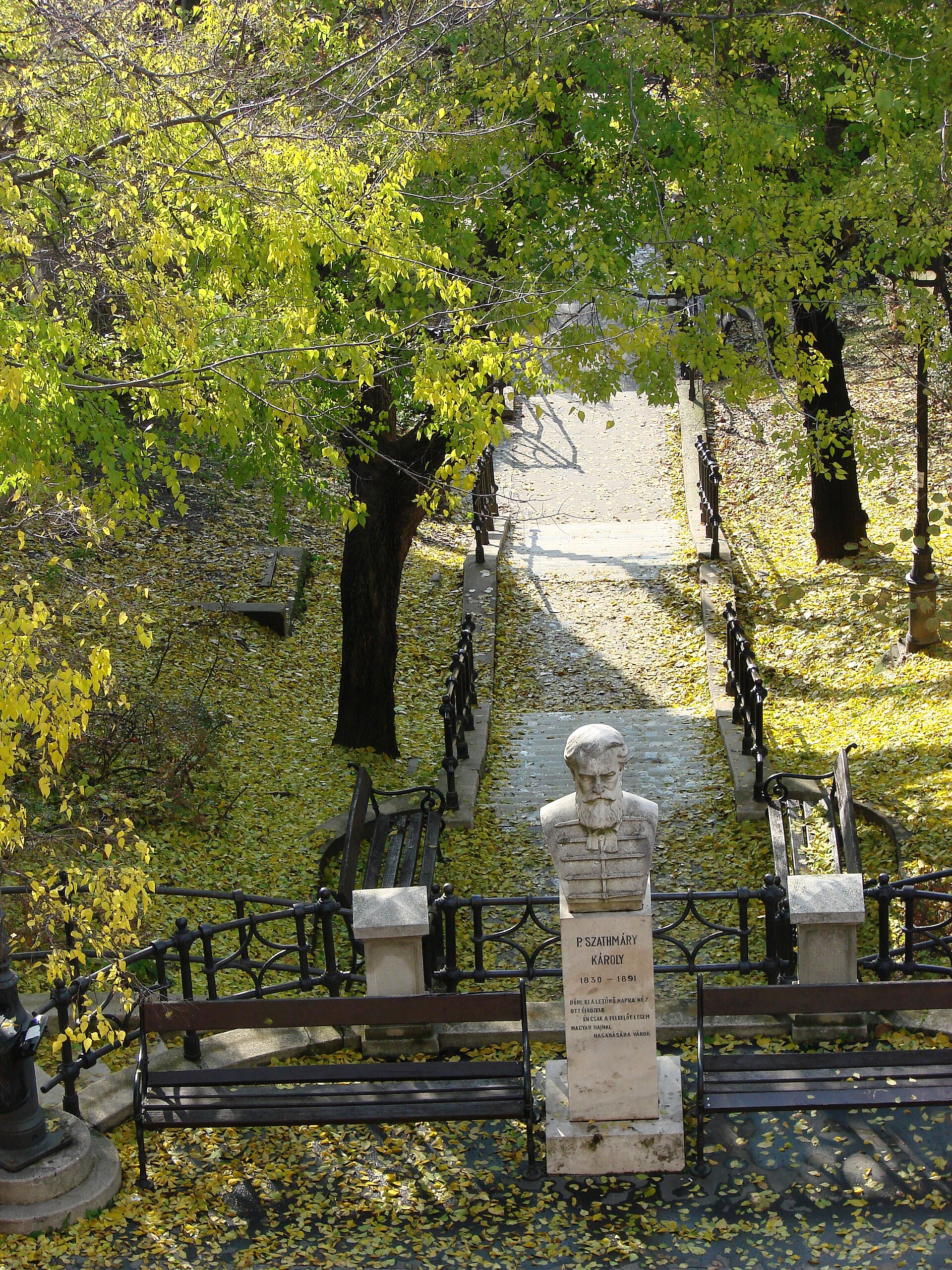
The slopes of the two hills that face the river are wooded, and in late October the paths and stairways that wind up them are carpeted with yellow leaves. Walk up to the Castle District from the Buda side rather than taking the funicular, and climb Gellért Hill by the paths from the Elisabeth Bridge. The Citadella park on the summit is free, and it stays open until midnight until the end of October.
Margaret Island
The island’s great plane trees and horse chestnuts turn in the second half of the month, and it’s lovely for a long walk or a run on the rubberised track that circles it. The musical fountain at the southern end usually keeps playing until the end of October, so a late-afternoon visit gets you both. The Margaret Island guide has the rest.
City Park
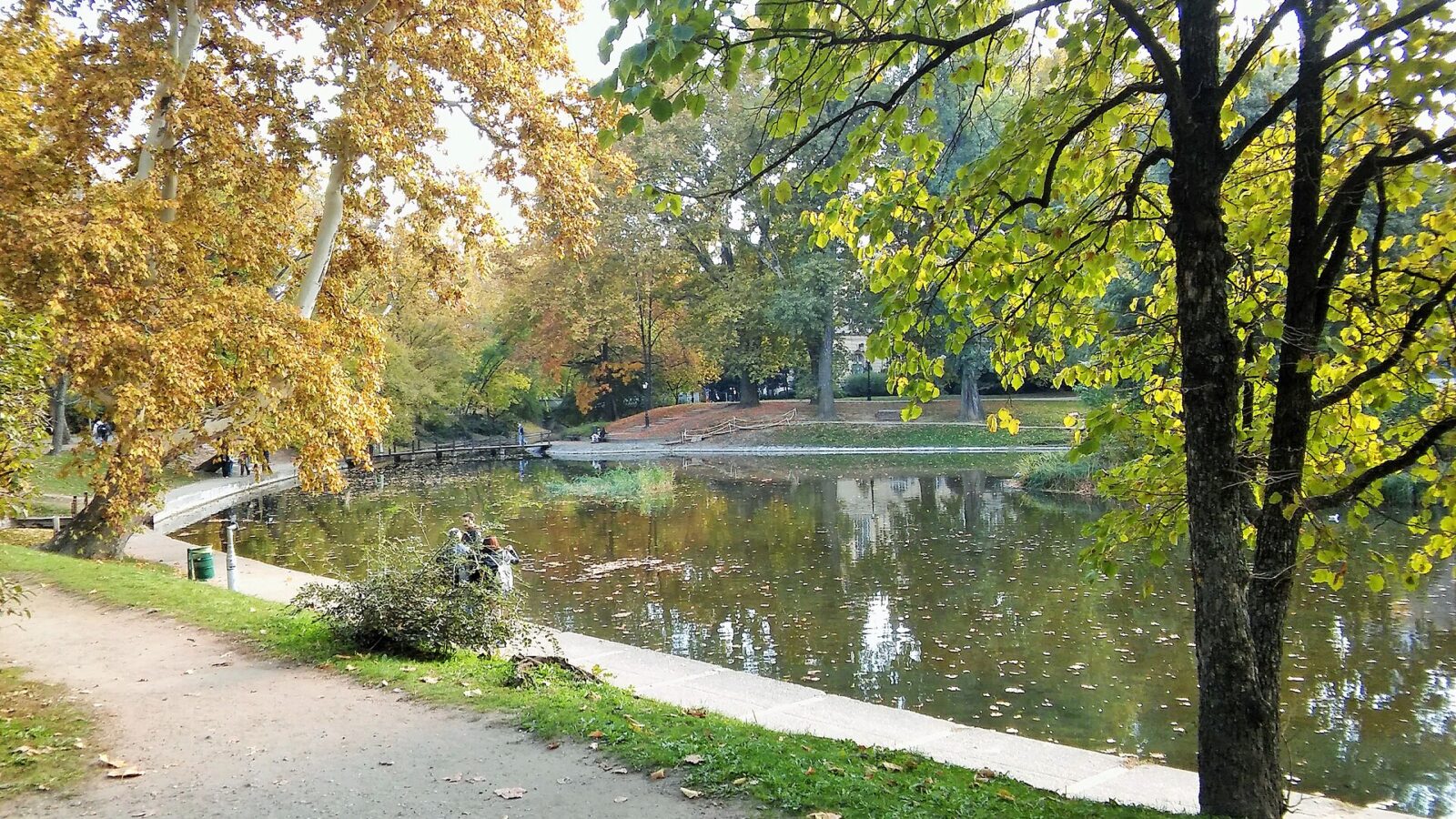
The lake behind Heroes’ Square is framed by old plane trees, and with Vajdahunyad Castle reflected in the water among the falling leaves, it’s one of the most photographed autumn scenes in the city. Come on a weekday morning, then warm up afterwards in the Széchenyi Baths next door.
The Danube Bend
For colour on a bigger scale, take the train or bus up to Visegrád, where the wooded Visegrád Hills and the Börzsöny face each other across the river bend. On a clear late-October day the view from the castle above the town is spectacular. The Danube Bend day trip guide explains how to get there.
October, week by week
1–11 October: the last of the long evenings
The month starts warm, often very pleasantly so. From 1 October the upper terraces of the Fisherman’s Bastion charge only until 7pm, rather than 9pm, and are free after that, which in October means a free visit after dark, with the Parliament lit up across the river. CAFe Budapest, the city’s big contemporary arts festival, brings new music, dance, theatre, film and visual art to venues across the city; check the festival’s own site for the next edition’s dates and programme. The SPAR Budapest Marathon festival returns on 9–10 October 2027, and roads close along its route, so read the organiser’s traffic notice if you have a train or flight to catch.
12–18 October: festival fortnight
Mid-October is the busiest stretch of the cultural calendar. Budapest Design Week, a programme of open studios, showrooms, exhibitions and workshops, ran from 8 to 19 October in 2025; its organisers’ site carries the dates of each edition. The concert season is in full swing at the Opera House, the Müpa arts centre and the Liszt Academy. The colour is building in the hills, the weather is often still kind: this is our favourite week of the month.
19–25 October: Revolution Day
The week is shaped by 23 October, the anniversary of the 1956 revolution and a national holiday, explained in the next section. In 2027 it falls on a Saturday.
26–31 October: peak colour
The last week can bring some of the best colour in the city’s parks. It’s cooler, and it may be grey, but on a bright day the city looks wonderful. In 2027 the clocks go back on Sunday 31 October, and the evenings suddenly close in an hour earlier. As the month ends the city’s florists fill with chrysanthemums and candles for All Saints’ Day on 1 November, when families visit the cemeteries. Budapest in November picks up the story from there.
23 October: what the day means
On 23 October 1956, a student demonstration in solidarity with the reformers in Poland swelled far beyond the students. People gathered outside the Parliament, a crowd at the edge of City Park pulled down the giant statue of Stalin, leaving only his boots, and shooting broke out at the radio station. Within days, an uprising had spread across the country, a new government under Imre Nagy announced that Hungary would leave the Warsaw Pact, and for a few extraordinary days it seemed the revolution had won. On 4 November, Soviet tanks rolled back into Budapest. Thousands were killed in the fighting, around 200,000 people fled the country, and Nagy was later tried in secret and executed.
Under communism the revolution could only be described as a counter-revolution. On 23 October 1989, its anniversary, the Republic of Hungary was proclaimed outside the Parliament, and in 1991 the National Assembly made the day a national holiday. It is one of three national days, along with 15 March and 20 August, and the most solemn of them.
What you’ll see
- Flags with a hole in the middle. The holed flag became the symbol of the 1956 revolution, and on the day you’ll see it hung from buildings across the city.
- Ceremonies at the Parliament. The state commemoration takes place on Kossuth Lajos tér in front of the Parliament, with a flag-raising and wreath-laying, and candles are left at memorials around the square.
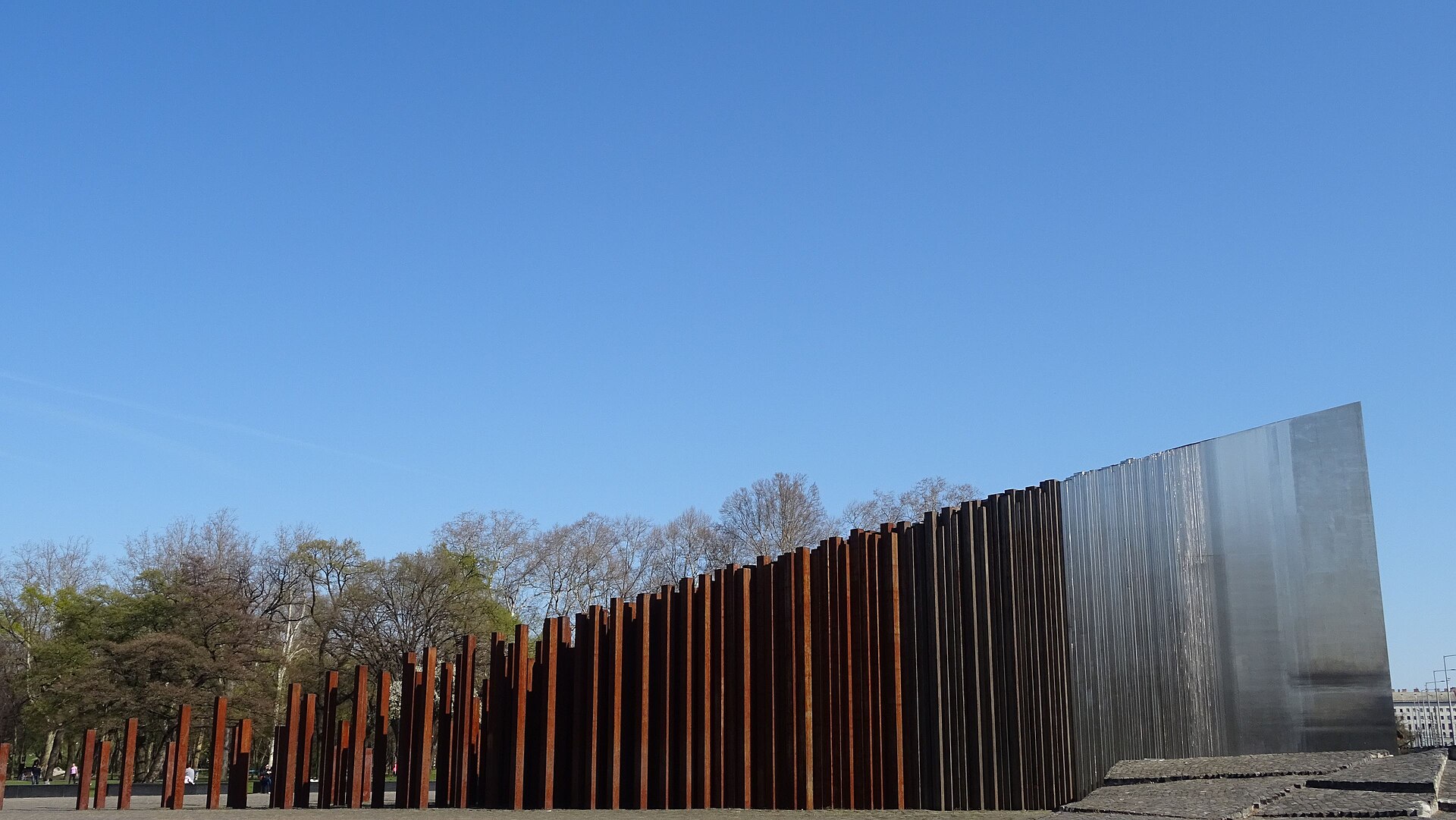
- Candles and wreaths at the memorials. At Corvin köz, where young fighters held out against Soviet armour, at the House of Terror on Andrássy út, and at the 1956 Memorial.
- Rallies. Political parties often use the day for large gatherings, so some central streets and squares may be closed.
For visitors: how to spend the day
It’s a public holiday, so most shops are closed, as on any Hungarian holiday, while restaurants and cafés stay open. The upper terraces of the Fisherman’s Bastion were free all day on 23 October 2026; the district’s Fisherman’s Bastion page on budavar.hu lists each year’s free days, and the museums announce any holiday offers on their own sites. For context, the House of Terror covers Hungary’s fascist and communist dictatorships, the second of which the revolution rose against, and Memento Park, on the city’s south-western edge, has a replica of Stalin’s boots among the statues removed from Budapest’s streets after 1989. The guide to communist Budapest puts them all in order, and makes a good plan for the day.
What’s open and what’s changing
- Fisherman’s Bastion: the upper terraces cost 1,700 Ft (€4.25), card only, from 9am to 7pm from 1 October, and are free outside those hours; they were also free all day on 23 October 2026. The lower terraces are free at any time.
- Gellért Hill: the Citadella park is free and open until midnight until the end of October, with shorter hours in winter.
- Margaret Island: the musical fountain usually runs until the end of October; check the board by the fountain for the day’s show times.
- Thermal baths: October is one of the best months for the baths. The outdoor pools at the Széchenyi steam in the cool mornings, and the rooftop pool at the Rudas has views over the autumn river. The Gellért Baths are closed for a renovation that won’t finish before 2028.
- Concerts and opera: the season is in full swing, so book ahead for the Opera and the bigger concerts.
- Christmas markets: not yet. The main markets open in mid-November.
Eating and drinking in October
October is when Hungarian food starts to make sense again. The goulash and the bean soups that feel heavy in July are exactly right on a cool, grey afternoon, and the menus change with the season:
- Roasted chestnuts and pumpkin. Street sellers set up their braziers in the second half of the month, selling paper cones of hot sült gesztenye and slabs of roasted pumpkin, sült tök, which is sweeter than you’d expect.
- Chestnut purée. Gesztenyepüré, sweetened chestnut purée piped into strands and topped with whipped cream, is a classic autumn dessert. Look for it in the city’s coffee houses and pastry shops.
- Soup. Gulyás, babgulyás (bean goulash) and Jókai bableves, a smoky bean soup with sausage, are the right lunch for the weather.
- The new wine. The harvest is in, and the first new wines of the year are on their way, ready to be celebrated on St Martin’s Day in November. In the meantime, October is a good month to explore the city’s wine bars and Hungary’s indigenous grapes, from Furmint to Kadarka; the guide to Hungarian wine is the place to start.
The guide to traditional Hungarian food has more on the dishes.
What October costs
- Hotels: rates move through the month, so compare a few dates if yours are flexible, and book early if you want the 23 October weekend. The where to stay guide covers the areas.
- Getting around: 500 Ft (€1.25) for a single ticket, 2,750 Ft (€6.90) for a 24-hour travelcard and 5,750 Ft (€14.40) for 72 hours, all valid on the Cogwheel Railway. The 100E airport bus costs 2,500 Ft (€6.25) and isn’t covered by travelcards. The public transport guide explains the tickets.
- The Buda Hills: the Children’s Railway and the chairlift need their own tickets, while the chairlift is free with the Budapest Card. Check current fares on the operators’ sites.
- Sights: the Fisherman’s Bastion’s upper terraces cost 1,700 Ft (€4.25), card only, until 7pm. St Stephen’s Basilica’s panorama terrace is open daily from 9am to 7pm.
- Eating out: many restaurants now add a service charge (szervízdíj), often 12.5%; when it’s on the bill, you don’t need to tip on top.
Day trips for October
- The Danube Bend. Visegrád’s castle and the wooded hills around it are at their best in late October, and Szentendre’s lanes are quiet after the summer. The Danube Bend guide.
- Eger. The harvest is mostly in, the cellars in the Valley of the Beautiful Women are full of new wine, and the baroque town is far calmer than in summer. The Eger day trip guide.
- Tokaj. For the wine-minded, this is the season of the aszú harvest, when the shrivelled, noble-rotted grapes that make Tokaji Aszú are picked by hand, berry by berry. It’s about two and a half hours from Budapest, so make it a long day or an overnight stay.
What to pack for October
- Layers: a T-shirt, a jumper and a jacket will cover most October days, often all on the same day.
- A warmer coat for the last week of the month and for the evenings.
- A compact umbrella or a waterproof jacket.
- Comfortable walking shoes with grip; wet leaves on the cobbles and the hill paths are slippery.
- A scarf, and light gloves if you’re coming at the end of the month.
- Swimwear and flip-flops for the baths.
The packing guide goes into more detail.
Is Budapest worth visiting in October?
Yes, and it’s underrated. October gives you most of what makes September special, with comfortable walking weather, beautiful light and the cultural season in full swing, at lower prices and with fewer people, plus the autumn colour, chestnuts on the street corners and steaming baths on cool mornings. The first half of the month is close to September at its best; the second half is quieter, cheaper and cooler, with the best of the colour.
The trade-offs are shorter, cooler days, more grey ones, and an evening that closes in early once the clocks change. If you want warmth, come in September. If you want the lowest prices, November is cheaper still, at the cost of the colour. Our pick for October is the middle of the month, around the 12th to the 22nd, when the festivals are on, the weather usually holds, the hills are turning and prices have begun to fall. The best time to visit guide compares the whole year.
Practical tips
- Plan outdoor sightseeing for the morning and early afternoon, and the baths, concerts and museums for the evening.
- Check the date of the clock change: Sunday 31 October in 2027 (it was 25 October in 2026).
- Check the marathon route if you’re travelling on the day of the race.
- Remember that shops close on 23 October, and that the centre can be busy with ceremonies and rallies.
- Go to the Buda Hills on a clear day; the views are the point.
- Book Opera and concert tickets ahead; the autumn season sells well.
- Pack for both halves of the month, especially if your trip straddles the middle.
Frequently asked questions
Is October a good time to visit Budapest?
Yes. The weather is mild and good for walking, the crowds are thinner than in summer, prices fall as the month goes on, and the autumn colour, the baths and the cultural season are all at their best. The second half of the month is cooler and greyer.
What is the weather like in Budapest in October?
Mild at first and cool by the end. Across the month the average high is 16.4 °C and the average low 7.2 °C (1991–2020), so bring layers.
When do the leaves change colour in Budapest?
Through October, with the timing shifting from year to year. The Buda Hills and the city’s parks are the places to watch.
What happens in Budapest on 23 October?
It’s the anniversary of the 1956 revolution and a national holiday. There are state ceremonies at the Parliament, candles at the memorials, and flags with a hole cut in the middle hung across the city. Most shops close, but restaurants and most sights stay open.
When do the clocks change in Budapest in October?
On the last Sunday of the month: 31 October in 2027, after 25 October in 2026. After the change, the sun sets at about a quarter to five.
Is Budapest crowded in October?
Less than in summer. The first half of the month is still fairly busy, but by the last week the crowds are thin, except over the 23 October holiday weekend and during the school holidays at the very end of the month.
What should I wear in Budapest in October?
Layers: a T-shirt, a jumper and a jacket, adding a warmer coat, a scarf and an umbrella in the second half of the month. Comfortable shoes with grip are essential.
Are the Christmas markets open in October?
No. Budapest’s main Christmas markets open in mid-November and run until around New Year.
Photo credits
Autumn around the City Park lake: Városliget ősz10 by 12akd, CC0, via Wikimedia Commons.
Autumn leaves below Castle Hill: Park and Autumn Foliage Viewed from Castle Hill – Buda Side – Budapest – Hungary by Adam Jones, Ph.D., CC BY-SA 3.0, via Wikimedia Commons.
The 1956 Memorial: 56-os emlékmu- Memorial for the 1956 Hungarian revolution 1 (17730988382) by VillageHero from Ulm, Germany, CC BY-SA 2.0, via Wikimedia Commons.
The Parliament from the Bastion: Budapest, view from the Fisherman’s Bastion to the Hungarian Parliament Building by Dguendel, CC BY 4.0, via Wikimedia Commons.