Budapest Attractions: Every Major Sight, Priced and Ranked
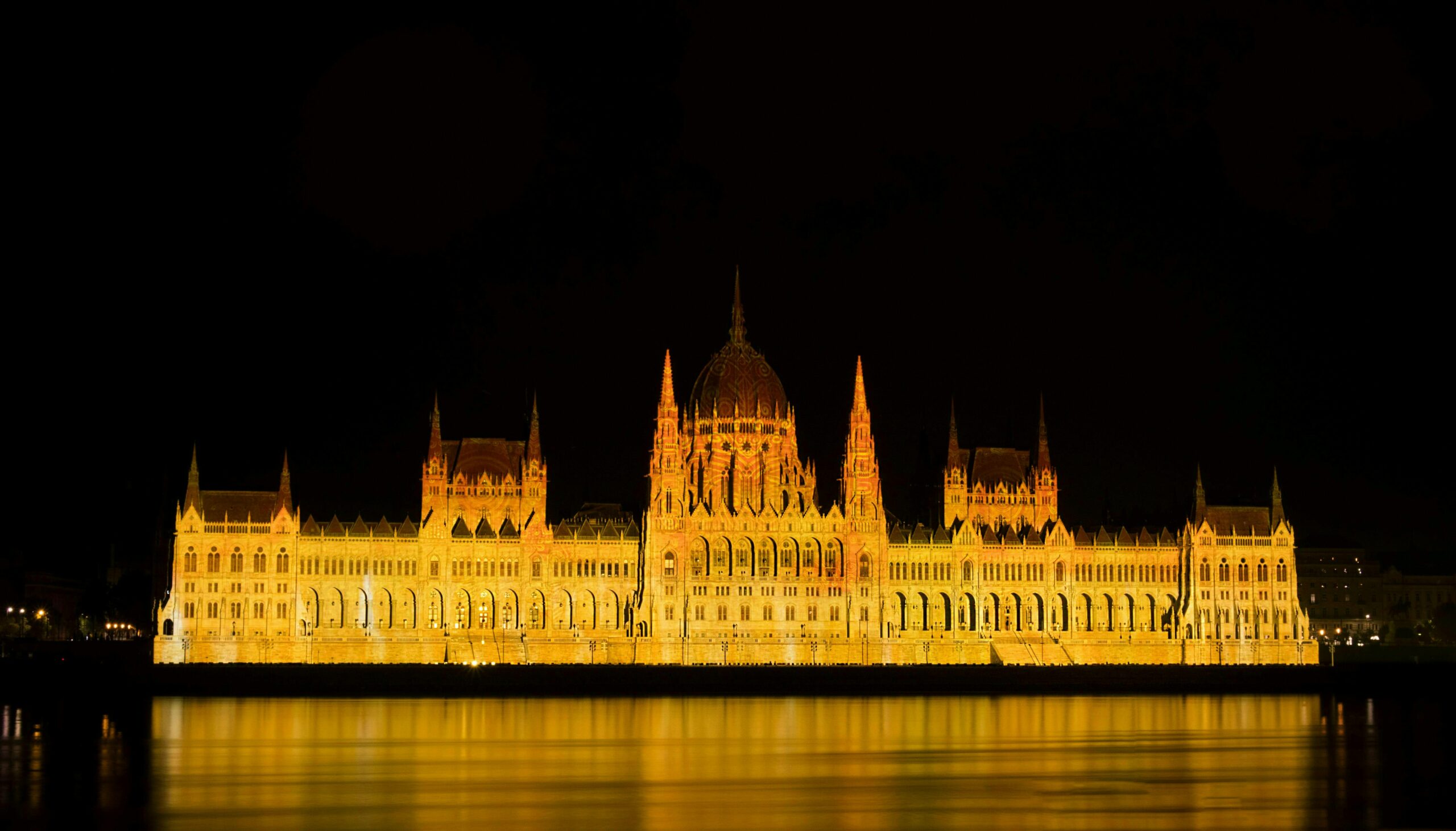
Stand on the Pest embankment at about half past four on a January afternoon and you can watch the whole city change register. The Parliament’s floodlights come on before the daylight has properly gone, so for maybe twenty minutes the building is lit and the sky behind Castle Hill is still blue, and every phone on the promenade goes up at once. It is a cheap trick of scheduling and it works every single time. That collision of the theatrical and the everyday is what makes budapest attractions unusual: the headline sights are genuinely spectacular, most of them are walkable from one another, and a surprising number cost nothing at all.
This page is the index to all of it — what each major sight costs, how long it actually takes, when to go, and, just as usefully, which ones you can skip without regret. Prices were checked in September 2026 and are given in forints with a euro conversion in brackets; treat them as the right order of magnitude rather than gospel, because Hungarian ticket prices move and the exchange rate moves with them. Where an operator does not publish a figure, we say so instead of guessing.
Budapest attractions at a glance: what things cost
Adult prices, rounded. Concessions for students, children and EU pensioners are widespread — usually 50%, sometimes more — and almost every ticketed site sells online for slightly less than at the door.
| Sight | Adult price | Time to allow | Worth it? |
|---|---|---|---|
| Fisherman’s Bastion — lower terraces | Free | 30 min | Yes, always |
| Fisherman’s Bastion — upper turrets | 1,700 HUF (≈ €4.30) | 15 min | Only for the photo |
| Matthias Church | ≈ 3,400 HUF (≈ €8.50) | 45 min | Yes |
| Hungarian Parliament tour | ≈ 4,000 HUF EU / ≈ 13,000 HUF non-EU | 45 min plus security | Yes — book ahead |
| St Stephen’s Basilica, terrace and treasury | Combined ticket — check current price | 1 hour | Yes, for the terrace |
| Széchenyi Baths | ≈ 12,000–14,000 HUF (≈ €30–35) | 3 hours minimum | Yes, once |
| Gellért Baths | Closed for renovation until around 2028 | — | Not until it reopens; try Rudas |
| Dohány Street Synagogue | ≈ 13,000 HUF (≈ €33) | 90 min | Yes, knowing what you pay for |
| House of Terror | ≈ 4,000 HUF (≈ €10) | 90 min | Yes |
| Hospital in the Rock | ≈ 8,000 HUF (≈ €20) | 1 hour, guided only | Yes |
| Buda Castle grounds | Free | 1 hour | Yes |
| Hungarian National Gallery | ≈ 4,000 HUF (≈ €10) | 2 hours | Depends on the exhibition |
| Shoes on the Danube Bank | Free | 20 min | Yes |
| Heroes’ Square | Free | 30 min | Yes |
| Margaret Island | Free | Half a day | Yes in summer |
| Great Market Hall | Free | 45 min | Yes, before 11am |
| Evening Danube cruise | ≈ 6,000–10,000 HUF (≈ €15–25) | 60–90 min | Yes — the cheap one |
| Castle Hill funicular, one way | ≈ 5,000 HUF (≈ €12.50) | 2 min | No |
Two numbers on that table do most of the work in a trip budget. The first is the Parliament’s split pricing — EU and non-EU citizens pay startlingly different amounts for exactly the same tour, and there is no way around it. The second is the funicular, which charges roughly the price of a decent lunch to save you a nine-minute walk. We will come back to both.
How the city is laid out, and why it matters
Budapest is two cities stitched together in 1873, and understanding that saves an enormous amount of walking. Buda, on the west bank, is the hilly half: Castle Hill and Gellért Hill rise straight out of the river, the streets are quieter, the restaurants are pricier and less interesting, and almost everything you want to see sits on or around those two hills. Pest, on the east bank, is flat, dense and gridded, laid out in ring roads and radial avenues in the late nineteenth century, and it holds the Parliament, the basilica, the synagogue, the market hall, the ruin bars, the coffee houses and roughly ninety per cent of the good dinners.
The practical consequence is that you cross the river deliberately, not incidentally. Most visitors do Castle Hill and Gellért Hill as a single Buda block — one morning or one afternoon — then spend the rest of their time in Pest. Zigzagging across the bridges all day is how people end up finished by four o’clock, and it is the commonest mistake in a first Budapest plan. Our Budapest itinerary planner sequences it properly, and if you have twenty-four hours and no slack, one day in Budapest is the ruthless version.
Districts are written in Roman numerals and locals use them constantly. District V is the smart centre of Pest; District VI runs up Andrássy Avenue; District VII is the old Jewish quarter and the party district; District I is Castle Hill; District XIV is City Park. If you learn nothing else, learn that a District VII address means walking home past ruin bars at two in the morning, which some people book for and others very much do not. The neighbourhood breakdown goes district by district, and where to stay in Budapest turns that into hotel choices.
Castle Hill: the Buda headline acts
Castle Hill is a limestone ridge about a kilometre long with a medieval street plan on top, and it carries four or five of the city’s signature sights within a few minutes of one another. In July it is also a slow-moving river of tour groups. Arrive at eight in the morning or after six in the evening and it is a completely different place.
Fisherman’s Bastion
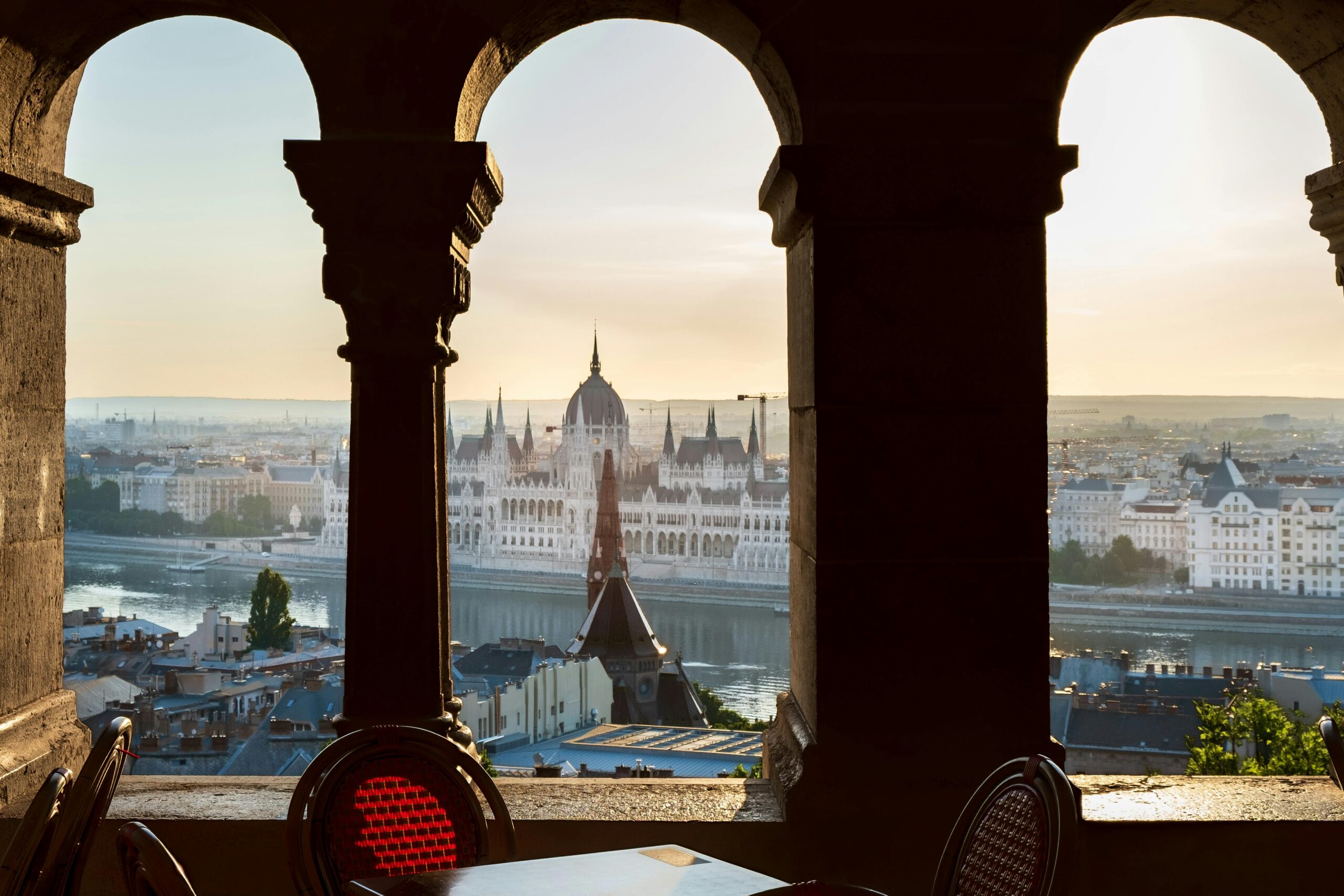
The white fairy-tale terrace with the seven pointed turrets — one for each of the Magyar tribes who arrived in the Carpathian Basin in 895 — was built between 1895 and 1902 as a viewing platform, not a fortification. It has never defended anything. What it does is frame the Parliament across the river better than anywhere else in the city, which is why it is on every postcard ever printed here.
Here is the part that costs people money unnecessarily. The lower terraces and the connecting stairways are free, open twenty-four hours a day, all year round. Only the seven upper turrets and the walkway between them are ticketed, at 1,700 HUF (around €4.30), card only — they do not take cash. The charging window runs 09:00–19:00 from 2 January to 31 May, 09:00–21:00 from 1 June to 30 September, and 09:00–19:00 from 1 October to 23 December. Outside those hours the upper level is free as well, and there is no charge at all on national holidays or between 24 and 31 December. The view from the free level is about ninety per cent of the view from the paid level. The remaining ten per cent is a slightly higher angle and fewer strangers in your photograph.
Sunrise here is the genuine article rather than an influencer invention: the light comes up behind Pest, hits the Parliament face-on, and for half an hour you have the terrace more or less to yourself. Our guide to Budapest photography spots has the timings season by season.
Matthias Church
Immediately behind the Bastion, and unmissable because of the roof — a diamond lattice of glazed Zsolnay tiles in gold, green and burnt orange that reads more like a Persian carpet than a piece of church architecture. The building is a nineteenth-century reimagining by Frigyes Schulek of a much older church, and the interior is the real surprise: not gloomy Gothic but wall-to-wall painted ornament in deep reds and blues, closer in feeling to a mosque than to a European cathedral, which is not an accident given the 145 years the Ottomans held this city.
Around 3,400 HUF gets you in; the tower climb is a separate timed small-group ticket up a genuinely tight spiral staircase. Allow forty-five minutes for the church, ninety if you do the tower. It closes to visitors during services, and the evening organ concerts are a far better use of the space than a daytime shuffle. The churches and basilicas guide covers what is on and when.
Buda Castle
The vast baroque palace at the southern end of the hill is less a castle than a container. It was gutted in the 1944–45 siege and rebuilt as a cultural complex, so today it holds the Hungarian National Gallery and the Budapest History Museum rather than any royal apartments. Expecting Versailles will disappoint you. Going for the National Gallery’s nineteenth-century Hungarian collection — Munkácsy, Szinyei Merse, Csontváry, painters most visitors have never heard of and several of whom are extraordinary — will not.
Walking the grounds, the courtyards, the Matthias Fountain and the long terrace above the Danube is free. You pay only to go inside a museum. Our full Buda Castle guide covers which wings earn the ticket, and the wider museums round-up puts them in context against the rest of the city’s collections.
Getting up the hill
Four options, in descending order of sense. Walk up from Clark Ádám tér — nine minutes, stepped, entirely manageable unless you have mobility issues. Take bus 16 from Deák Ferenc tér, or 16A and 116 from Széll Kálmán tér, all included in any ordinary transport ticket. Walk the gentler zigzag path up the southern flank from Dózsa György tér. Or pay roughly 5,000 HUF for a two-minute ride on the Budavári Sikló funicular, which in summer has a queue reliably longer than the walk it replaces. It is a handsome 1870 piece of engineering and it is a poor use of twelve euros. The public transport guide explains what your travel ticket does and does not cover.
Gellért Hill and the Citadella
South of the castle, Gellért Hill rises 235 metres straight off the river and gives you the wide view — both banks, all the bridges, Margaret Island upstream, the whole thing at once. The Liberty Statue on the summit, a woman holding a palm frond above her head, went up in 1947 to commemorate the Soviet liberation of the city and has since had its Soviet inscriptions and its accompanying Red Army soldier quietly removed. It is now simply the statue on the hill, which is a very Budapest solution to an awkward inheritance.
The climb takes twenty-five to thirty-five minutes from the Gellért Hotel side and is properly steep in places; the approach from the Elisabeth Bridge end is shorter but sharper. Bus 27 runs most of the way up from Móricz Zsigmond körtér if the gradient does not appeal. The Citadella fortress on top has been under long-running reconstruction and its opening status keeps changing — check before you count on going inside, but the viewing terraces around it are the actual point and those are free.
Halfway up on the river side is the Gellért Hill Cave Church, built into a natural cave in the 1920s, sealed behind a concrete wall by the communist authorities in 1951 and reopened in 1989. It takes fifteen minutes and hardly anyone goes in. Sunset from this hill is the best free hour in Budapest — our sunset spots guide says where exactly to stand, and free things to do in Budapest has plenty more in the same vein.
The Pest riverfront
The Hungarian Parliament
The third-largest parliament building in the world: 268 metres of neo-Gothic limestone along the Danube, finished in 1904, containing by the usual telling forty kilograms of gold leaf and 691 rooms. From the outside it is free and arguably better than the inside. The classic angle is from the Buda embankment or from Batthyány tér on the M2, and it is floodlit from dusk onwards.
Inside, you go on a guided tour only, in a fixed language slot, lasting about forty-five minutes and covering the grand staircase, the dome hall where the Holy Crown of Hungary sits under permanent guard, and one of the debating chambers. It is worth doing. Two warnings. First, pricing is split by citizenship: EU citizens pay around 4,000 HUF while non-EU visitors pay roughly three times that, and you need photo ID matching the name on the ticket. Second, English slots sell out days ahead in season and the on-the-day desk is not a plan. Book online, arrive thirty minutes early for airport-style security, bring the passport. Our Parliament visitor guide has the booking mechanics in full.
Shoes on the Danube Bank
Sixty pairs of iron shoes in 1940s styles, bolted to the stone embankment about three hundred metres south of the Parliament. They mark the place where Arrow Cross militiamen shot Jewish Hungarians into the river in the winter of 1944–45, having made them take their shoes off first because leather had value. There is no ticket, no barrier and no interpretation beyond a short bronze plaque in three languages.
It takes twenty minutes and it is the most affecting thing in the city. Go quietly, do not climb on them, and if you are pairing it with the Dohány Street Synagogue and the old ghetto on the same day, do this one first — it is the sharper of the two and it frames everything that follows. The Jewish Quarter guide carries the story on from there.
Andrássy Avenue, the Opera and the House of Terror
Andrássy Avenue runs two and a half kilometres arrow-straight from the edge of the centre out to Heroes’ Square, and it is a UNESCO-listed piece of nineteenth-century city planning: plane trees, embassies, first-floor balconies and, underneath it, the M1 metro. It is a pleasant forty-minute walk end to end and it strings together several sights on one line.
The Hungarian State Opera House reopened in 2022 after a five-year restoration and is now one of the most gilded interiors in the city. Guided tours run several times a day in multiple languages and usually finish with a short live vocal performance on the grand staircase, which sounds like a gimmick and is not. Better still, actual tickets to an actual performance start far lower than you would expect for a house of this quality — an upper-circle seat can cost less than the tour. If there is anything on that you can tolerate, buy a real ticket instead.
The House of Terror at Andrássy út 60 occupies the building used as headquarters by first the Arrow Cross and then the communist secret police, and the basement cells are original. It is an unashamedly partisan museum and it is upfront about it; go with that in mind and it is still one of the most powerful hours you will spend here. Around 4,000 HUF, ninety minutes, and the audio guide is worth it because the wall text is thin by design. Our House of Terror guide covers what to expect room by room, and communist Budapest puts it alongside the Memento Park statues and the rest of the surviving evidence.
The M1 beneath the avenue deserves a paragraph of its own. Opened in 1896, it is the oldest electrified underground line in continental Europe, the carriages are small and yellow, the stations are tiled and wood-panelled and only a few steps below street level, and the whole thing is a working museum you can ride on a normal ticket. It is one of the genuinely charming things to do in Budapest that costs nothing extra.
Heroes’ Square, City Park and the baths
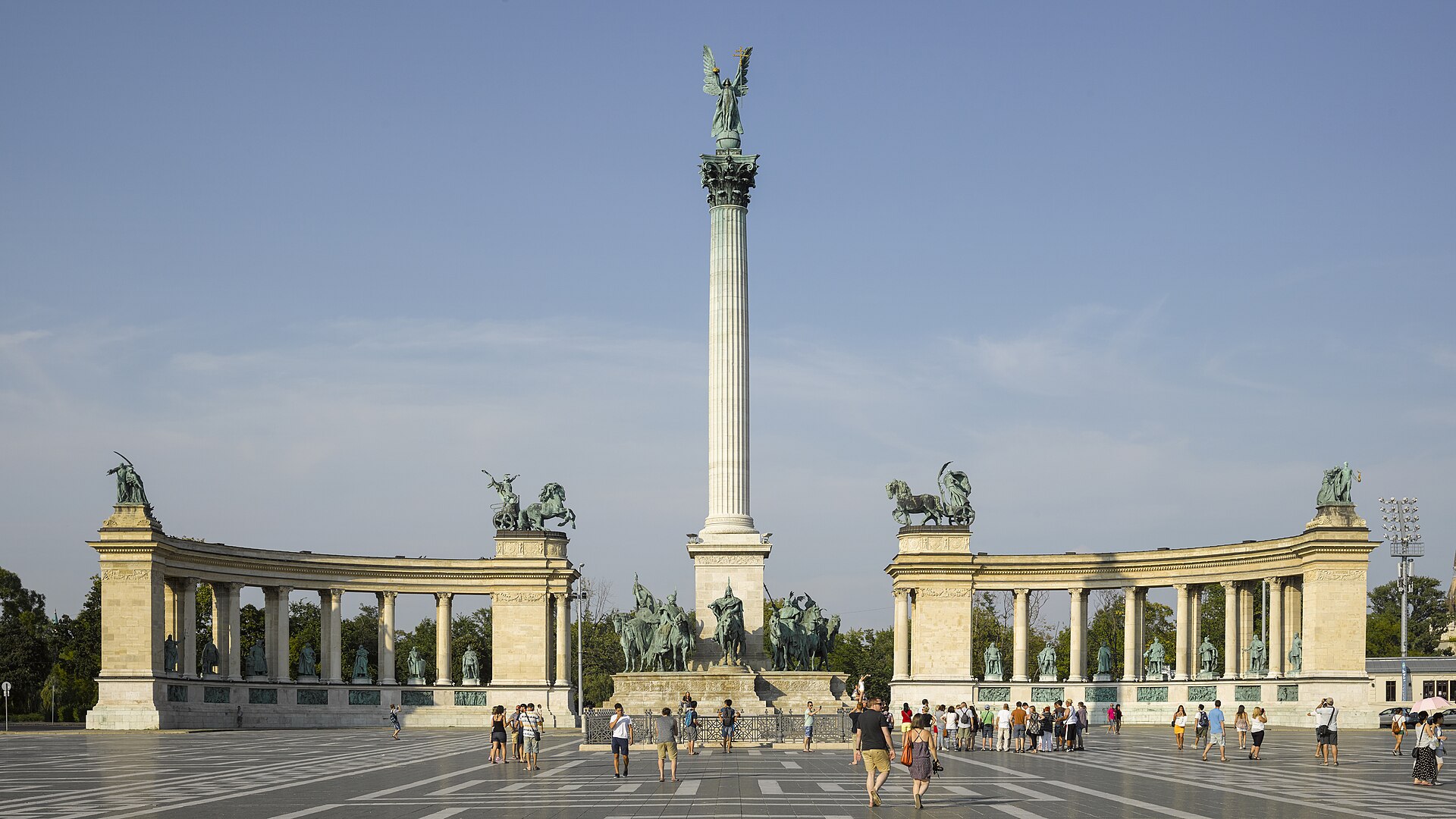
Andrássy ends at Heroes’ Square, an enormous open plaza laid out for the 1896 millennium celebrations, with the Archangel Gabriel on a 36-metre column in the middle and two curved colonnades holding fourteen bronze Hungarian rulers and statesmen. It is free, it is open, and it is best either early or after dark when the stone is lit. The Museum of Fine Arts sits on one side and the Kunsthalle on the other; the former has a serious Old Masters collection including a strong Spanish holding.
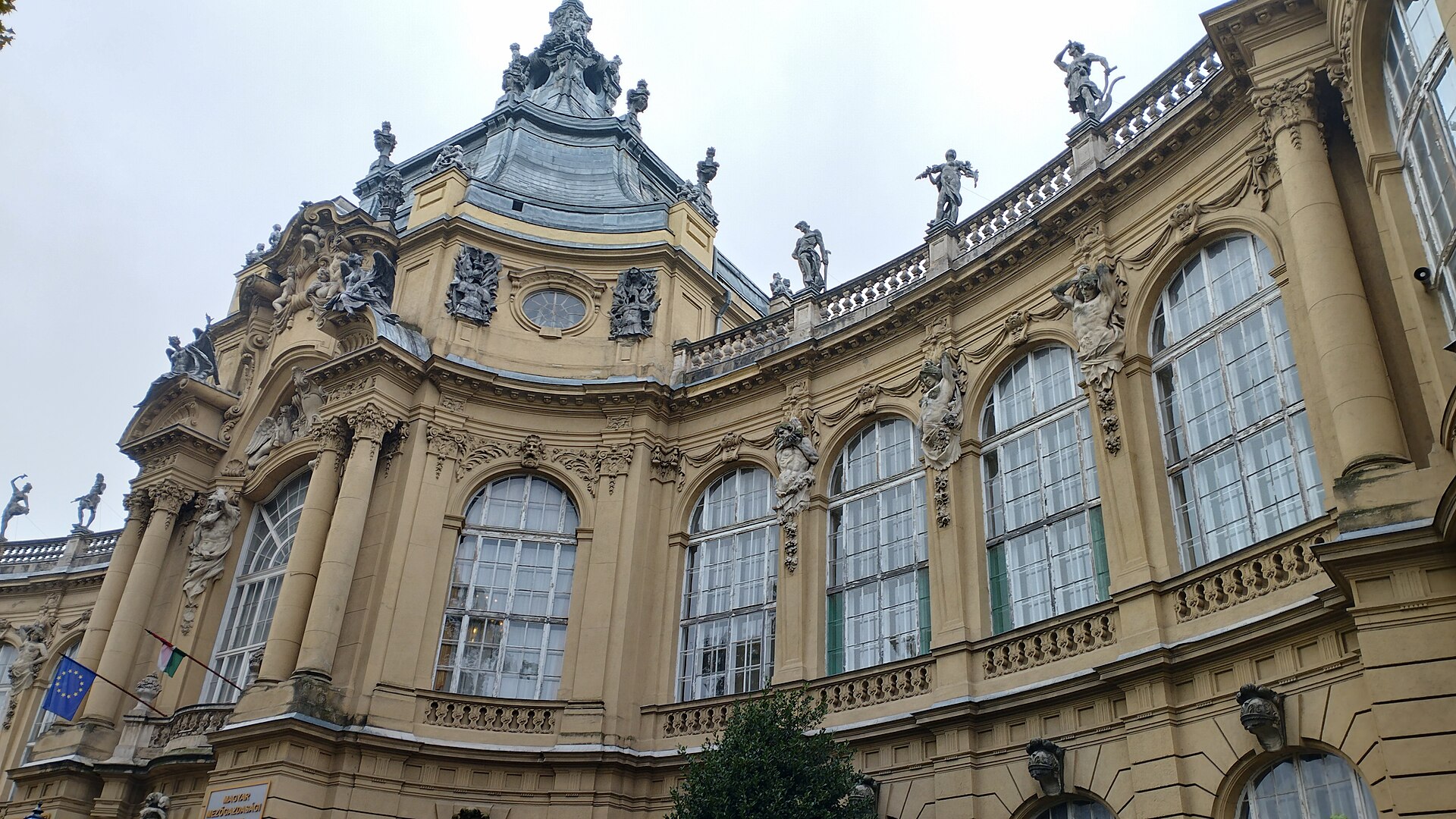
Behind the square, City Park (Városliget) is where Budapest keeps its odder assets. There is a boating lake that freezes into an outdoor ice rink each winter, the Budapest Zoo with its Art Nouveau elephant house, the new Museum of Ethnography under its sweeping green roof, the House of Music with the perforated golden canopy, and Vajdahunyad Castle — a deliberately fake castle built for the millennium as a plaster mash-up of Hungarian architectural styles, later rebuilt in stone because everyone liked it too much to pull down. It costs nothing to walk around and it is thoroughly enjoyable nonsense.
Széchenyi Baths
The yellow neo-baroque palace on the far side of the park is the one from the photographs — the outdoor pools steaming in winter, the men playing chess on floating boards. Fifteen indoor pools and three outdoor, water arriving at 74–77 °C from a well nearly 1,250 metres down, and a genuine local clientele alongside the visitors, particularly early on weekday mornings.
Expect somewhere around 12,000–14,000 HUF for a day ticket with a cabin, more at weekends, less if you book online in advance and go on a weekday. Allow three hours minimum; anything less and you have paid a lot for a warm sit-down. Bring flip-flops and a towel or pay to hire both. The Széchenyi guide has the ticket types decoded and the bath etiquette page covers the things nobody tells you, starting with the fact that a swimming cap is required in the lap pool and nowhere else.
Gellért, Rudas and the rest
Széchenyi is the famous one; it is not automatically the right one. Gellért is the beautiful one — Art Nouveau mosaic, stained glass, marble columns — but it closed on 1 October 2025 for a renovation expected to last until around 2028 indoors and 2029 outdoors, so for now it is one to admire from Liberty Bridge. Rudas is the historic one, an Ottoman octagonal pool under a domed cupola pierced with coloured glass, dating from 1550, plus a rooftop hot tub with a view straight down the Danube; note that several of the thermal sections still run single-sex days, so check before turning up as a couple. Lukács is where locals actually go, and it is cheaper. Király is the small Ottoman one.
Our thermal baths guide is the full comparison, with Gellért and Rudas covered individually. If you are travelling with children, which baths actually work with kids matters more than which is prettiest — several have age limits that catch families out at the door.
The Jewish Quarter and Dohány Street
District VII was the wartime ghetto and is now the most alive part of Pest — ruin bars in the courtyards of half-derelict apartment blocks, street food, murals, and the largest synagogue in Europe at the centre of it.
The Dohány Street Synagogue seats around three thousand people under a Moorish Revival roof with two onion-domed towers, and the ticket — around 13,000 HUF, which surprises people — covers the synagogue, the Hungarian Jewish Museum, the Heroes’ Temple, the Raoul Wallenberg Memorial Park with Imre Varga’s weeping willow of steel, and the cemetery in the courtyard, which exists because thousands died in the ghetto in the winter of 1944–45 and had to be buried where they fell. It is a memorial complex, not just a building, and the price makes sense once you understand that. Ninety minutes. Men are given a paper kippah at the door; shoulders and knees covered for everyone.
Afterwards, the streets around Kazinczy utca are the ruin-bar heartland — Szimpla Kert is the original and is worth seeing in daylight when it functions as a farmers’ market and a cafe rather than a crush. The full picture is in the ruin bars guide and the wider nightlife guide.
The Great Market Hall and the river
The Great Market Hall (Nagyvásárcsarnok) at the Pest end of Liberty Bridge is a cathedral of iron and Zsolnay tile from 1897, and it is free to walk into. Ground floor: paprika, salami, pickles, produce, fishmongers. Upper gallery: embroidery stalls and a row of hot food counters where the lángos is fried to order. Basement: a supermarket and a fish market. Go before eleven on a weekday and it is a working market. Go at two on a Saturday and it is a queue. Closed Sundays.
Prices upstairs run roughly 700–1,400 HUF for a lángos, which is fair for the setting, though you will eat better and cheaper at the neighbourhood markets. Our Central Market Hall guide covers which stalls are worth it, and the markets guide covers the ones locals use. For what to actually eat, the food guide and street food between them cover it.
Getting on the water
The stretch of Danube through the centre is a UNESCO World Heritage site and seeing it from river level after dark is one of the few tourist rituals here that is unambiguously worth doing. There are two ways to do it. A basic one-hour evening sightseeing cruise runs around 6,000–10,000 HUF, often with a drink included, and delivers the Parliament, the Chain Bridge and the castle all lit up. A dinner cruise costs several times that and the food is, almost universally, the weakest part of the evening.
The cheap and slightly smug alternative: the BKK public boat is part of the transport network and on some services costs no more than a normal ticket, though the timetable is thin and it does not run late. Our Danube boat tours guide lays out the operators, and the dinner cruise page is honest about which ones justify the money.
The bridges guide covers walking rather than sailing. The Chain Bridge, finished in 1849 and the first permanent link between Buda and Pest, reopened after a major renovation and is once again the walk to take at night. Liberty Bridge, in Art Nouveau green with mythical turul birds on the pillars, is the prettier one and occasionally closes to traffic in summer so people can sit on it.

Margaret Island
Two and a half kilometres of car-free park in the middle of the river, reached on tram 4 or 6, which stops in the centre of Margaret Bridge. It is free. There is a musical fountain that runs five shows a day and throws water about ten metres up, a five-kilometre rubberised running track that circles the island, the ruins of a thirteenth-century Dominican convent, a Japanese garden, a small petting zoo with fallow deer and peacocks, bike and pedal-cart hire, and the Palatinus complex of thermal and wave pools. In summer it is where the city goes to lie down. In February it is bleak and beautiful and empty.
Tickets, passes and queues
Three things to sort before you arrive, and no more than three.
- Parliament tour. The only sight here that genuinely sells out. Book the English slot online as soon as your dates are fixed.
- Széchenyi. Not because it sells out, but because online tickets are cheaper and you skip the cashier queue, which on a wet Saturday is a real queue.
- A transport pass. A 24-hour or 72-hour BKK travelcard, or the top-up option in the BudapestGO app. Buying single tickets one at a time is a false economy and the machines are slow.
Everything else you can walk up to. Matthias Church, the House of Terror, Hospital in the Rock and the synagogue all take same-day visitors outside the very peak of August, though Hospital in the Rock is guided-only on fixed departures so check the times.
Is the Budapest Card worth it?
Sometimes, and less often than the marketing implies. The card bundles unlimited public transport with free entry to fifteen to twenty museums, a free Danube cruise and a scatter of ten to fifteen per cent discounts, at roughly €40 for 24 hours, €55 for 48 and €65 for 72.
The thing that catches people: Széchenyi is not free with it. You get a modest discount, not entry. Since the baths are the single largest line in most Budapest budgets, that removes the saving people assume they are buying. The card starts to work from 48 hours upward, and only if you are genuinely museum-inclined and using transport heavily. If your plan is baths, views, walking and dinner — which is most people’s plan — buy a transport pass and pay at the door. We do the break-even arithmetic properly on the Budapest budget page.
The free half of the city
An unusual proportion of the best things here cost nothing. The lower terraces of Fisherman’s Bastion. The whole of Castle Hill outside the museums. Gellért Hill and the Liberty Statue. Heroes’ Square. Shoes on the Danube Bank. Margaret Island. The Great Market Hall. St Stephen’s Square. The Chain Bridge at night. The M1 stations, if you have a ticket anyway. Walking Andrássy end to end. The outside of the Parliament, which is the best view of it in any case.
You could build a genuinely good two-day trip out of that list alone and spend money only on food, transport and one bath. Free things to do in Budapest extends the list, and the hidden gems page covers what is left when you have done the obvious.
What is not worth it
Being useful means saying this part out loud.
- The funicular. Roughly €12.50 for two minutes and a queue, replacing a nine-minute walk or a bus ride you have already paid for. The view from inside it is mostly the tunnel wall.
- Dinner cruises, generally. You are paying restaurant prices for buffet food on a moving platform. Take the cheap sightseeing cruise and eat properly on land afterwards. Our restaurant picks will do more for the evening.
- Goulash on a tourist-strip menu board. Váci utca and the streets immediately around the basilica are full of laminated photo menus charging triple for a thin approximation. Walk five minutes further out. Traditional Hungarian food explains what to order and where.
- Street-hailed taxis. Overcharging is still routine. Use an app, a rank, or ask your hotel to call one — the travel tips page has the numbers.
- The upper turrets at Fisherman’s Bastion in high season. Not because 1,700 HUF is a lot, but because at midday in August you are paying to stand in a slower-moving crowd for a marginally better angle.
- Currency exchange near the sights. The kiosks on the tourist streets have terrible rates and a sign that hides the spread. Withdraw from a bank ATM instead — see the currency guide.
Two days, sequenced properly
If you do nothing else with this page, take the ordering.
Day one, Buda. Up to Castle Hill early — bus 16 or the walk from Clark Ádám tér — for Fisherman’s Bastion before the coaches. Matthias Church next door. Walk the castle terraces. Down the hill and south along the embankment, or bus 27 up Gellért Hill for the wide view. Cross Liberty Bridge into Pest in the late afternoon and finish at the Great Market Hall if it is still open, or straight to dinner in District VII if it is not.
Day two, Pest. Parliament tour at your booked slot. Walk south along the embankment to Shoes on the Danube Bank, then inland to St Stephen’s Basilica and up to the panorama terrace. Lunch. M1 up Andrássy to Heroes’ Square, City Park, and into Széchenyi for the late afternoon — the light at five in the outdoor pool is the photograph everyone wants. Evening: a Danube cruise, or ruin bars, or both in that order.
That is a full but not punishing two days, and it takes in almost everything on the table at the top. Three days lets you add the synagogue, the House of Terror and Margaret Island without rushing; our three-day itinerary does exactly that, and the weekend guide is the Friday-to-Sunday version.
Practicalities worth knowing
Accessibility. Castle Hill is cobbled and steep and that is not solvable, though buses 16, 16A and 116 get you to the top and the major museums have lifts and accessible entrances. Andrássy Avenue and the Pest embankment are flat and easy. The M4 is fully step-free; the M1 is largely not. Low-floor buses take wheelchairs via a centre ramp. Mainstream taxi firms do not run accessible vehicles.
Opening patterns. Most museums close on Mondays. The Great Market Hall closes Sundays. Churches close to sightseeing during services, which on Sunday mornings means most of the morning. Plan Mondays around the outdoor sights and the baths, which stay open.
Money. Hungary uses the forint, not the euro, and paying in euros where it is accepted means a bad rate. Cards work almost everywhere, including at Fisherman’s Bastion, which takes nothing else. Many restaurants now add a 12.5% service charge (szervízdíj) to the bill — when they do, no further tip is expected, and the number of visitors who tip twice is remarkable.
When to come. May, June and September are the sweet spot. July and August are hot, busy and expensive. Winter is cheap, atmospheric and made for thermal baths, and the Christmas markets are genuinely good rather than merely present. See the best time to visit for the month-by-month detail.
The basilica is the one entry on the table above where we could not pin a price to the operator’s own page, because it publishes its tariff only as images. Our St Stephen’s Basilica guide sets out the three ticket types, what each one actually includes, and which is worth buying.
If you are weighing a city pass against paying at the door, the arithmetic is worth doing rather than guessing. Our Budapest Card guide prices four real itineraries both ways and reaches an uncomfortable conclusion about the most common one.
One entry on the list above is not really sightseeing. Our Shoes on the Danube guide covers the memorial in the detail it deserves — the history, the design decisions behind the sixty pairs, and how to visit without being one of the people other visitors wince at.
Matthias Church is one of the better-value tickets on Castle Hill, and one of the easiest to mistime — it shuts at noon on Saturdays and weddings can close it without notice. Our Matthias Church guide has the current prices, the tower slots and what to look for inside.
Margaret Island is the entry on this list that rewards the most time and asks for the least money. Our Margaret Island guide covers the walk from end to end, the ruins and the water tower, and why allowing an hour is the standard mistake.
The Chain Bridge earns its place on the free half of the list, and it is a better experience now than at any point in living memory. Our Chain Bridge guide covers the renovation, the car ban, the 1849 story and the lions.
The synagogue is the priciest single ticket on the table above, and the one whose price is most often misjudged. Our Dohany Street Synagogue guide breaks the 13,000 HUF down across the six sites it actually covers.
Frequently asked questions
How many days do you need to see the main Budapest attractions?
Three full days covers the headline list without rushing: one for Buda, one for Pest and the baths, one for the Jewish Quarter, the museums and Margaret Island. Two days is enough for the essentials if you sequence them by riverbank rather than by interest. One day is possible but you will be choosing between the Parliament interior and a thermal bath, not doing both.
What is the single most impressive sight in Budapest?
The Parliament from the Buda side after dark, and it is free. If you mean a ticketed sight, the Parliament interior and Széchenyi Baths are the two most people remember, for entirely different reasons.
Are the Budapest thermal baths worth the money?
Once, absolutely — soaking outdoors at 38 °C in cold weather is the defining Budapest experience and there is nothing quite like it elsewhere in Europe. Twice in the same trip is where it stops being remarkable and starts being a warm bath. Pick the one that suits you: Széchenyi for scale and the photographs, Rudas for the Ottoman rooms and the rooftop, Lukács for the local feel and the lower price. Gellért, the one for the architecture, is closed for renovation until around 2028.
Do I need to book Budapest attractions in advance?
Only the Parliament tour reliably sells out, especially the English slots in summer, so book that as soon as you have dates. Booking the baths online saves money and a queue but is not essential. Everything else takes walk-ups outside peak August.
Is Fisherman’s Bastion free?
The lower terraces are free, open around the clock, and give you almost the whole view. Only the seven upper turrets are ticketed, at 1,700 HUF, card only, and only inside the charging window — 09:00–19:00 in winter and spring, 09:00–21:00 from June to September. Outside those hours, and on national holidays and between 24 and 31 December, even the upper level is free.
Which attractions are free in Budapest?
Fisherman’s Bastion’s lower terraces, all of Castle Hill outside the museums, Gellért Hill and the Liberty Statue, Heroes’ Square, Shoes on the Danube Bank, Margaret Island, the Great Market Hall, the exterior of the Parliament, the Chain Bridge and every bridge walk, and St Stephen’s Square. It is enough for a genuinely good short trip.
Is Budapest walkable?
Within each bank, very. Pest’s centre is flat and dense and you can cross most of the sightseeing area on foot in half an hour. Buda is hilly and the sights are up the hills, so use bus 16 or 27 rather than grinding up on foot twice in one day. Between the two, the bridges are pleasant walks in their own right.
What should I skip in Budapest?
The funicular, dinner cruises, tourist-menu goulash on Váci utca, street-hailed taxis and the exchange kiosks near the sights. None of them are scams exactly; they are simply poor value in a city that offers unusually good value everywhere else.
Is the Budapest Card worth buying?
Only from 48 hours upward, and only if you are visiting several museums and using transport heavily. The critical detail is that Széchenyi is not included — you get a small discount, not free entry — which removes the saving most people assume they are getting.
Photo credits
Heroes’ Square, Budapest: HUN-2015-Budapest-Heroes’ Square by Godot13, Attribution, via Wikimedia Commons.
Vajdahunyad Castle, City Park: Vajdahunyad castle 12 by Lessormore, CC BY 4.0, via Wikimedia Commons.